I’m Davis Mwangi, an Erasmus Mundus MSc student working at the intersection of biomaterials, biosensing, soft matter, and design. My background is in computer science and embedded systems, and I’m increasingly interested in how biological manufacturing can be used to create new materials, sensing systems, and design possibilities. Through HTBAA, I’m exploring how biology can become a manufacturing platform, from microbial pigments and bio-based materials to new approaches for architecture, healthcare, and sensing. This site documents my homework, laboratory work, experiments, and project development throughout How To Biomanufacture Almost Anything, Fall 2026.
Contact info
Homework, Labs, and Projects
See the nav bar on the left to look through my work for How To
Biomanufacture Almost Anything (Fall 2026)!
Subsections of DAVIS MWANGI — HTBAA Fall 2026
Week 1 HW: Final Project Ideas
1. What would I like to biomanufacture, and why?
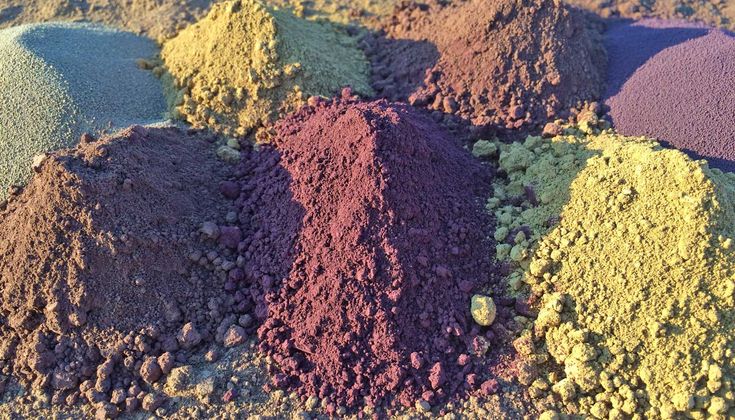
I would like to biomanufacture a pigment that can be formulated into paint for interior architectural surfaces, textiles and pharmaceutical products. Colour is fundamental across the pigment, paint, and coatings industries, where manufactured pigments provide the colour used in architectural paints, industrial coatings, automotive finishes, printing inks, plastics, textiles, and many other products. Paint is a complex formulation containing pigments, binders, solvents or carriers, fillers, and other additives. I would focus on biomanufacturing the colour-producing pigment itself, recovering and processing it into a usable powder or concentrate, and then incorporating it into an appropriate paint or coating formulation. In this way, the biological system would replace or complement the conventional pigment-production step. At the same time, existing formulation technologies could still turn that pigment into finished products for architectural, industrial, and other coating applications.
There is already experimental evidence that this general approach is possible. Duggirala et al. (2024) genetically engineered Escherichia coli to produce a magenta pigment. The cells were lysed, the pigment was separated from cellular material, filtered, dehydrated into a pigment powder, and then mixed with an acrylic medium to produce a biobased paint (Duggirala et al., 2024). The resulting biopaint was applied to acrylic paper and compared with a commercial acrylic paint over a 10-day period under room-temperature, heat, cold, and humidity conditions. The biopaint showed relatively stable spectral intensity under room temperature, heat, and humidity, while statistically significant changes in total, red, and blue spectral intensity were observed under cold conditions (Duggirala et al., 2024).
I am particularly interested in this idea because pigments and dyes are not niche materials; they are part of a large global manufacturing industry. The global dyes and pigments market was valued at approximately USD 46.84 billion in 2025 and is projected to reach USD 73.67 billion by 2034 (Fortune Business Insights, 2026). Pigments are used extensively in applications including paints and coatings, printing inks, and plastics, while dyes are especially important in textiles and related industries. At the same time, there is growing interest in shifting chemical manufacturing toward greener production routes, renewable feedstocks, and processes that reduce hazardous waste and environmental burden. Conventional synthetic colourant production and use can involve complex chemical processing, and the release of untreated or poorly treated coloured effluents, particularly from dye-intensive industries, has been associated with significant environmental impacts (Ardila-Leal et al., 2021).
This makes microbial pigment production interesting not simply because microorganisms can make colour, but because biomanufacturing offers the possibility of developing alternative routes for producing colourants using biological processes. Microorganisms can synthesize a wide range of pigments as primary or secondary metabolites, and these pigments are already being investigated for applications in textiles, food, cosmetics, pharmaceuticals, and paints (Barreto et al., 2023). However, production cost, yield, extraction, and scale-up remain important barriers to widespread commercialization.
2. What living system would I use?
For the initial proof of concept, I propose using an engineered microbial chassis such as Escherichia coli. This is a reasonable starting point because engineered E. coli has already been experimentally used to produce a coloured pigment that was recovered and incorporated into an acrylic paint (Duggirala et al., 2024).
At a high level, the system would work as follows:
Inputs: carbon source, nutrients, water, and engineered E. coli
Cell growth: the bacteria use the supplied nutrients and carbon source to grow.
Pigment biosynthesis: the engineered cells express the biological pathway responsible for producing the target coloured molecule.
Harvest and recovery: after cultivation, the cells are collected and disrupted if the pigment is intracellular. Cellular material is removed, and the pigment is recovered.
Output: a biomanufactured pigment in the form of a concentrated solution, powder, or other recoverable form suitable for further formulation.
Duggirala et al. (2024), for example, lysed engineered E. coli, separated the cellular material, filtered the pigment-containing solution, dehydrated it, and then incorporated the recovered pigment into an acrylic medium.
3. How would I use automation?
I would combine the engineered microbial system with a desktop liquid-handling robot such as an Opentrons during process development. The purpose of the automation would be to screen and optimize the culture conditions used for pigment production. A liquid-handling robot could prepare multiple cultures in parallel while systematically varying parameters such as carbon-source concentration, pH, and cultivation or induction conditions. For example: The system could automate media preparation, dispensing, culture setup, sampling, and preparation of samples for measurement. For each condition, I would evaluate cell growth, pigment concentration or yield, colour intensity, and production time.
The value of automation here is not simply reduced manual work. It enables systematic exploration of a larger process-design space and can improve experimental reproducibility. Petzold and Mukhopadhyay (2025) describe automated and high-throughput workflows as useful for exploring multiparametric biomanufacturing conditions and improving process development.
Once a suitable production condition had been identified, the form of automation would change. At larger scale, automation would focus on monitoring and controlling the bioreactor, particularly variables such as pH, temperature, dissolved oxygen, agitation, aeration, and nutrient feeding. Mirasol (2025) notes that commercial biomanufacturing already uses automation in upstream operations such as bioreactors and feeding systems, as well as downstream operations such as filtration and chromatography. Automated sampling, process monitoring, and control of critical process parameters are also increasingly important during scale-up.
4. How much would I need to make?
For my project, I define a meaningful first manufacturing scale as 1 kg of recovered dry pigment. This is larger than a laboratory proof of concept but still small enough to represent a pilot-scale batch that could be used for formulation and performance testing across applications such as paints and coatings, textiles, and other colourant systems. To estimate the fermentation volume required, I use the engineered Escherichia coli system reported by Li et al. (2026) as a quantitative benchmark. Their strain produced the blue microbial pigment indigoidine at a titer of 35.21 g/L in a 5 L fed-batch bioreactor.
The required culture volume can be estimated from:
V = m / Y
where:
V = required fermentation volume (L) m = target pigment mass (g) Y = pigment titer (g/L)
For a target of 1 kg = 1000 g:
V = 1000 g / 35.21 g/L
V ≈ 28.4 L
Therefore, if my microbial pigment system achieved a titer comparable to that reported by Li et al. (2026), producing 1 kg of pigment would require approximately 28 L of fermentation broth. This estimate assumes that the reported titer can be reproduced at a larger scale and does not account for losses during pigment extraction, purification, or drying. The actual culture volume required would therefore likely be greater than 28 L.
How long would it take?
To estimate production time, I use the same indigoidine-producing E. coli system reported by Li et al. (2026). Their engineered strain reached a titer of 35.21 g/L in fed-batch fermentation, with a volumetric productivity of 0.73 g/L/h (Li et al., 2026). From part (a), approximately 28.4 L of fermentation broth would theoretically be required to produce 1 kg of pigment, assuming the same titer and no downstream recovery losses. The total pigment production rate at this volume would be:
Production rate = productivity × fermentation volume
Production rate = 0.73 g/L/h × 28.4 L
Production rate ≈ 20.7 g/h
The time required to produce 1,000 g of pigment would therefore be:
Time = target pigment mass / production rate
Time = 1000 g / 20.7 g/h
Time ≈ 48.3 h
This can also be calculated directly from the reported titer and productivity:
Time = 35.21 g/L / 0.73 g/L/h ≈ 48.2 h
Therefore, if my microbial system achieved performance comparable to Li et al. (2026), a reactor with approximately 30 L of working fermentation volume could theoretically produce about 1 kg of pigment in roughly 48 hours, or two days, of fermentation. This estimate assumes that the productivity remains constant when scaling from the published 5 L bioreactor to a larger reactor. Li et al. used automated process control during fed-batch fermentation: dissolved oxygen was maintained between 30% and 40%, pH was automatically controlled at 6.8, and a glycerol-containing feed was automatically supplied during fermentation (Li et al., 2026). These are the types of controls I would also use during larger-scale production.
The reactor configuration would also affect the calendar time. For example, if only a 10 L working-volume reactor were available, approximately three batches would be required:
28.4 L / 10 L per batch ≈ 3 batches
If the batches were run sequentially:
3 × 48.2 h ≈ 145 h ≈ 6 days
Alternatively, three 10 L reactors operated in parallel could theoretically produce the same amount in approximately 48 hours.
The automation used during manufacturing would therefore differ from the automation used during process development. During prototyping, I would use a desktop liquid-handling platform such as Opentrons to screen culture conditions and identify favourable combinations of media composition, pH, and cultivation conditions. At manufacturing scale, automation would instead focus on fed-batch bioreactor control, particularly pH, dissolved oxygen, aeration, agitation, and nutrient feeding. The 48-hour estimate refers only to microbial production. Li et al. subsequently recovered indigoidine using cell disruption, centrifugation, several washing steps, purification, and heat drying, but they do not report a complete elapsed time for this downstream process. For a simple back-of-the-envelope project estimate, I would therefore allow approximately one additional day for harvesting, extraction, purification, and drying, giving an estimated total manufacturing time of approximately:
48 h fermentation + 24 h downstream processing ≈ 72 h, or approximately 3 days for a 1 kg batch.
The additional 24 hours is an engineering assumption, not a value reported by Li et al. Actual downstream processing time and pigment recovery efficiency would need to be measured experimentally.
Key assumptions
Target: 1 kg recovered pigment
Benchmark titer: 35.21 g/L (Li et al., 2026)
Benchmark productivity: 0.73 g/L/h (Li et al., 2026)
Required fermentation volume: ≈28.4 L
Estimated fermentation time: ≈48 h
Assumed downstream processing allowance: ≈24 h
Estimated total: ≈72 h, or 3 days
Scale-up does not reduce productivity.
The initial calculation assumes no pigment losses during recovery; in practice, more than 28.4 L would likely be required.
5. What don’t I know yet?
What pigment yield can the engineered microorganism achieve? The Duggirala et al. study demonstrates pigment production but does not report a quantitative recovered yield in g/L. The authors specifically identify relatively low pigment yield as a limitation.
How fast can the pigment be produced? I do not yet know the production rate or volumetric productivity of the proposed system in units such as g/L/h. Without this value, I cannot reliably estimate how long it would take to manufacture 1 kg of pigment.
How much pigment is lost during recovery and purification? The biological system may produce a certain quantity inside the cells, but only a fraction may ultimately be recovered as usable pigment. Recovery efficiency would need to be measured after cell lysis, separation, filtration, purification, and drying. Duggirala et al. used several downstream steps, including lysis, centrifugation, filtration, and dehydration.
Can the downstream extraction process be scaled efficiently? A laboratory process using centrifugation and membrane filtration may not translate directly to kilogram-scale production. Duggirala et al. describe extraction as labor-intensive and identify it as a challenge to scalability and commercial viability.
How should the recovered pigment be processed for use in formulations? I do not yet know the required particle size, degree of grinding, dispersion method, or final physical form of the pigment. The existing study observed a more globular texture than commercial paint and suggested that insufficient drying and grinding may have contributed.
Will the pigment be compatible with different downstream products? A pigment that works in an acrylic binder may not necessarily perform well in textile systems, inks, plastics, pharmaceutical formulations, or other coatings. I would need to investigate dispersion, chemical compatibility, colour strength, and stability in each intended formulation.
Can the process become economically competitive at scale? I do not yet know the cost per kilogram of recovered pigment. That would depend on fermentation yield, feedstock price, reactor productivity, downstream processing, labour, energy, equipment, and waste treatment. The existing biopaint study explicitly raises questions about scalability and commercial viability because of low yield and labor-intensive extraction.
Statement on use of Artificial Intelligence (AI)
Artificial intelligence (AI), specifically OpenAI’s ChatGPT, was used mainly to improve wording, clarity, and organization, and to assist with preliminary ideation.
References
Ardila-Leal, L. D., Poutou-Piñales, R. A., Pedroza-Rodríguez, A. M., & Quevedo-Hidalgo, B. E. (2021). A brief history of colour, the environmental impact of synthetic dyes and removal by using laccases. Molecules, 26(13), 3813. https://doi.org/10.3390/molecules26133813
Barreto, J. V. de O., Casanova, L. M., Neves Junior, A., Reis-Mansur, M. C. P. P., & Vermelho, A. B. (2023). Microbial pigments: Major groups and industrial applications. Microorganisms, 11(12), 2920. https://doi.org/10.3390/microorganisms11122920
Duggirala, R., Mikkilineni, P., & Croghan, I. (2024). De novo synthesis of biopaint using transformed bacteria: Analysis of spectral intensity trends and comparison to commercial paint. Advances in Bioscience and Biotechnology, 15, 543–555. https://doi.org/10.4236/abb.2024.1510034