Week 1 HW: Final Project Ideas
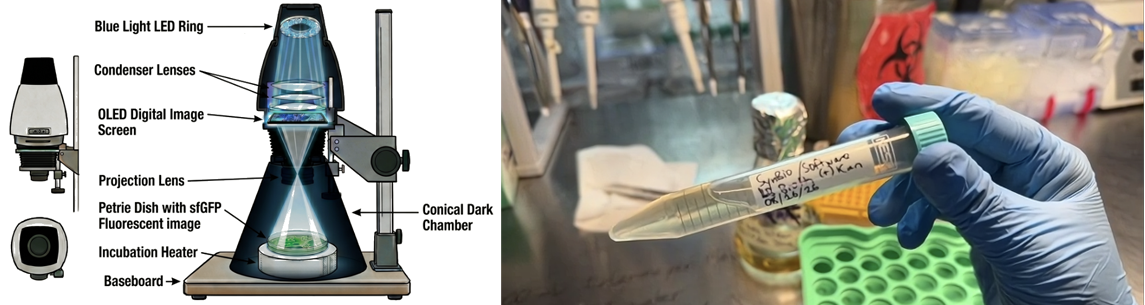
HTBAA Homework #1
Q1. What do you want to make?
I am making a scalable platform that uses optics and genetics to create light-responsive spatial images, also known as bacterial photography. This includes engineering biosensors and biocircuits that report as fluorescent proteins, as well as designing biofilm materials that record images based on spatial patterns of light and dark.
The Photoplasm device I created in HTGAA ‘26 has become a key component of the Genspace Community Project focused on synthetic biology and optogenetics. This activity aligns well with the original project, where I went from initial design (Aim 1)to an open-source build and test cycle (Aim 2).
We are now in week 14 of the community project, and the device has evolved closer and closer to a prototype that is suitable for Aim 3: scaling the device to the larger community.
Link: Genspace Community Project
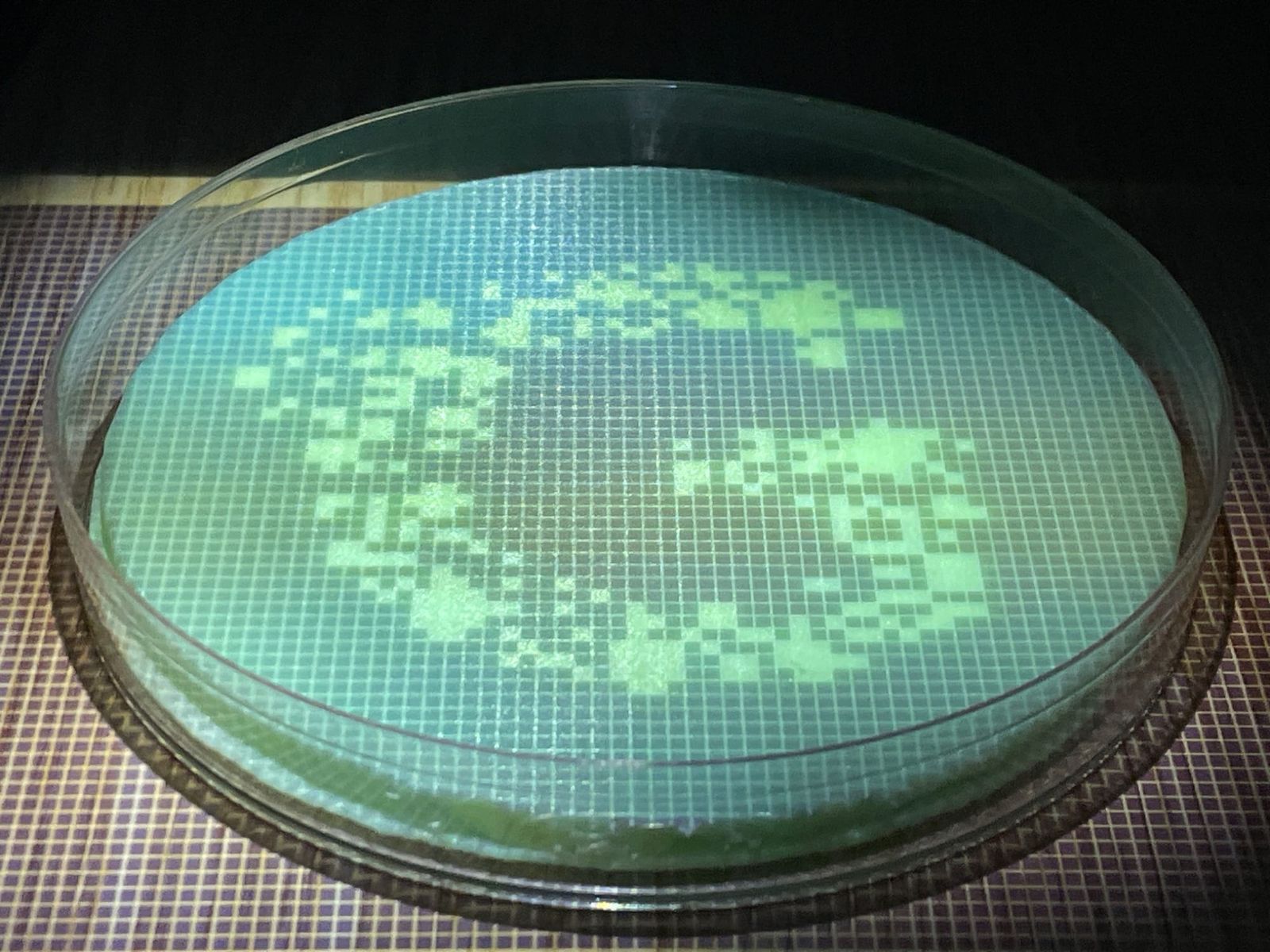
Photoplasm projecting image on plate
HTBAA is a perfect fit and natural progression for Photoplasm. We are actively in the design, build, test and analyze phase; We have data, successes, failures and end-user feedback.
I would like to branch the project into a cloud lab ecosystem where I may design and manufacture a cell-free protein system with a biofilm, as well as a living-cell culture that could reach industrial scale through automation. I will compare both to see which has the strongest application.
Q2. What living system could make it?
The current construct targets use of E. coli for the purpose of achieving a calibrated system that can create spatial images, as the baseline. Since the system is an incubator and light projector, the ability to grow and test different engineered microbes means that we can open up the path for experiments that use light-responsive and light-repressive circuits.
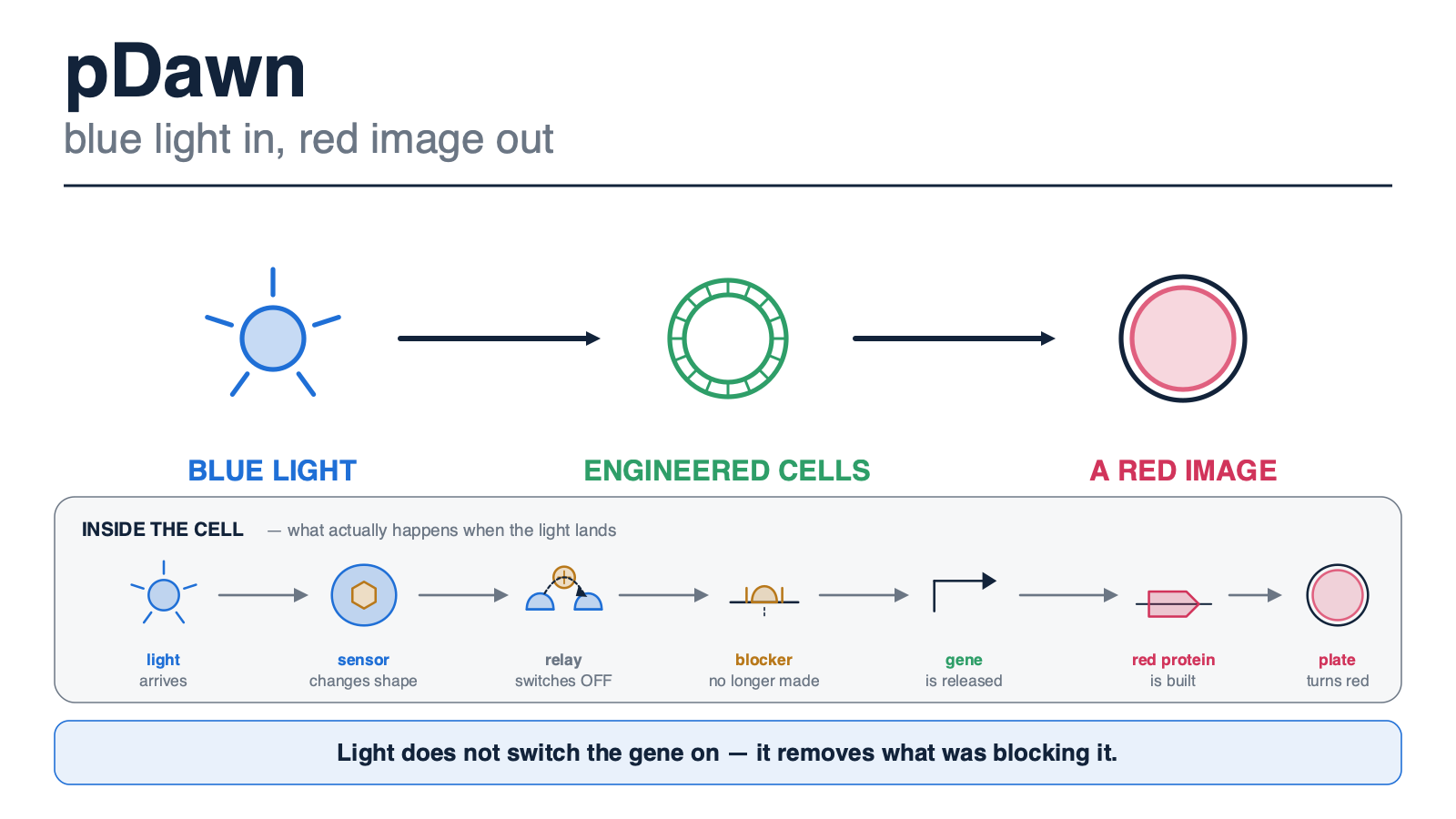
pDawn light responsive circuit
For example, we are currently using pDawn, since it represses transcription from the promoter for DsRed in the dark and, under ~470 nm blue light, begins to glow — based on the amount of light reaching an agar flood plate through a patterned image mask; like a film negative, but digital. We also have BioLight_GenV10, which is a clonal gene synthesized by Twist Bioscience — the culmination of Aim 1, and the start of Aim 2 once we quantify the device performance with pDawn and have created protocols for wet lab use in the community lab.
Q3. How could automation help you make it?
This is a two-part answer. Part 1 is the effective techniques of an automated provider like Twist Bioscience for a clonal gene. Part 2 is what happens after we have identified a strong candidate for propagation. I fully expect to achieve an image in a bacterial culture in the next 12 weeks, through the wonderful collaborative efforts with the Genspace Community Lab Project.
The automation I am referring to here is the propagation of the selected cultures into an increasing number of plates that can be used by local and remote participants experiencing Photoplasm. Rather than creating a stockpile, which can be expensive and carries a high risk of contamination or expiration, I want to explore on-demand plate making, exposure, incubation, visual monitoring in a closed loop, with data analysis — to optimize the system in near real time.
As stated in Aim 3 of Photoplasm, the collective neural network of active devices will contribute to the knowledge base of community participants, which range from curious new learners to expert scientists striving to achieve experimental results.
Q4. What would it take to make it at a meaningful scale?
To make this solution at a meaningful scale, I am following a methodology known as Design Thinking, where the persona of the end user comes first. Who is the target audience? What is the competitive and complementary landscape? What are the risks of not doing this?
I have built a fully functioning prototype of Photoplasm v1.0, which helped to identify essential updates ranging from safety, cost, mechanical, electrical and code-based rapid improvements. The scalability model is focused on going purposefully from rapid prototype to a streamlined manufacturing process.
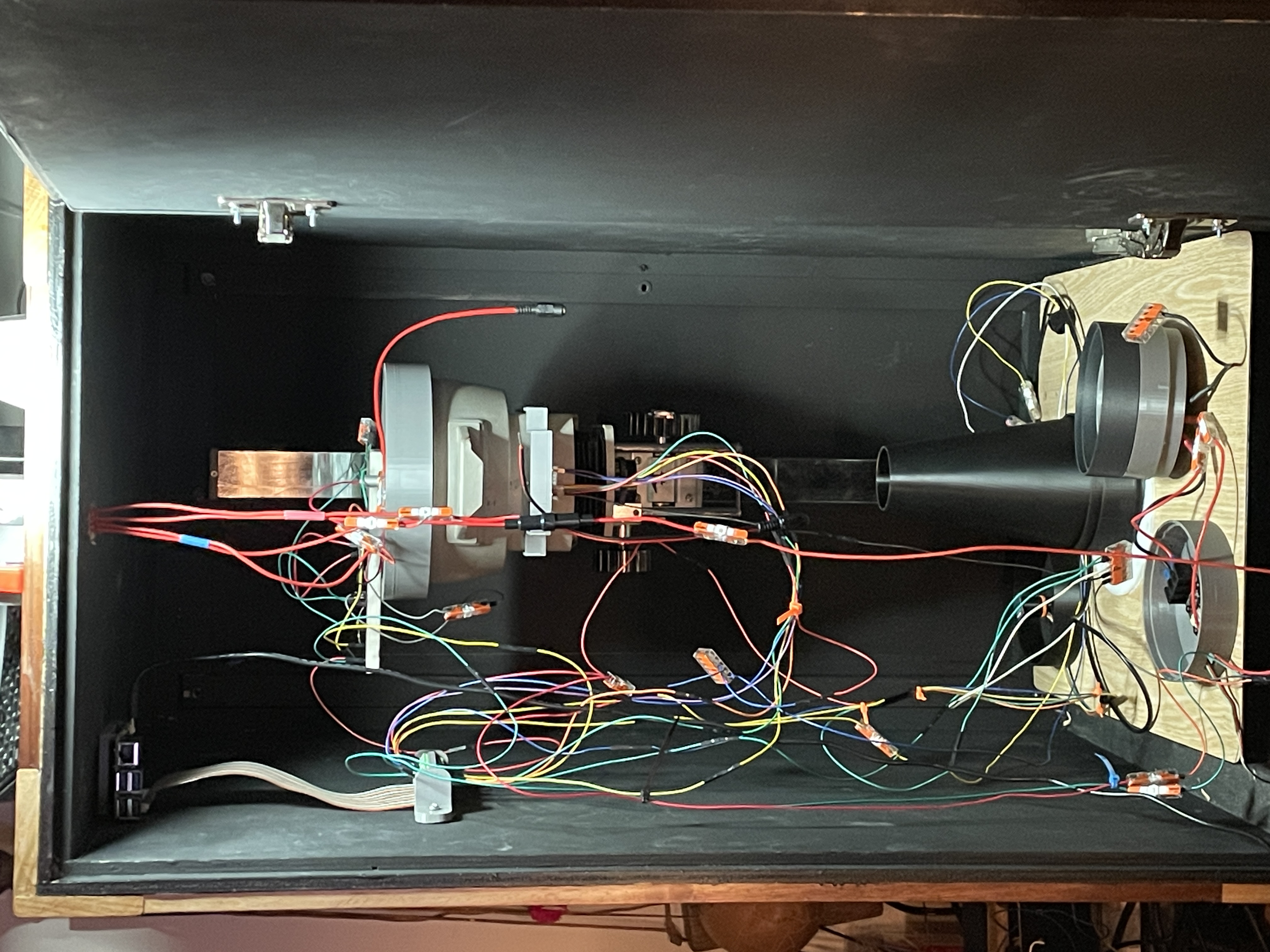
Photoplasm 1.0 in Enclosure
There is an important intermediate phase. The open-source version of Photoplasm is deemed just that — a fully open-source platform for anyone with access to GitHub to download. It is now supported by a robust interactive build guide, which has become a primary focus. If someone learns how to make one themselves, the scalability is inherent and individualized.
From a commercialization perspective, I am introducing a branch of the open-source project that strives to optimize, resize, and adapt to a robotic automation platform. Both can exist in harmony, as they have the same purpose only at different scale. For the open-source DIY version, it is fully accessible and has a learning component. For the high-volume automated production process, the medical-device-grade product can conduct rapid assays and would be fully compatible with the Reconfigurable Automation Cart platform.
There is even an exciting branch of the open-source project where I am building my own virtual cloud lab for prototype 1.0, which means that remote participants can experience Photoplasm from anywhere, leading to hybrid learning opportunities.
HTBAA and my final project are focused on scalability through emerging cloud labs, with potential for cell-free protein systems to greatly increase scalability and productivity, and to launch a massively adopted optogenetics platform for learning and industrial use.
(1) What you would like to biomanufacture and why?
Describe the target product or output you would like to make. Why are you interested in making it? Your motivation might be utilitarian — for example, addressing a problem in health, sustainability, food, energy, or manufacturing — but it does not need to be. Your project might instead have a social, cultural, artistic, or personal motivation. Clearly articulate what you want to make, who or what it is for, and why you think it is interesting or important.
Now that we have described a platform for optogenetics in cloud labs, I want to focus on the essential construct: a light-responsive cell-free system that can be applied to a substrate suitable for use in the next evolution of Photoplasm.
Think of this as a type of film with specific characteristics, similar to how the photographic film industry used batch manufacturing of film. For example, if we were targeting a therapeutic application, the resulting substrate may use the same light-responsive biocircuit to deliver a manufactured product on demand — reducing overproduction, increasing shelf life, and personalizing the delivery.
I want to biomanufacture a cell-free system that is light-responsive and has the ability to modify the reporter to be fluorescent, with digital images as the observable record. Then, lean into reporters that bind to materials as a substrate of record.
My primary focus is on the creation of photographic fine art, to bring social awareness and accessibility to the community through venues such as makerspaces, wet labs, galleries, and museums. Not just my own fine art, but the creative expression of the wider public audience — very much how photography has been used to capture moments. This may be our synthetic biology moment, made possible by cloud automation.
My “why” goes back to the Design Thinking approach to understanding the persona — the named person who would benefit from the product. A learner exploring their career path; an artist seeking inspiration from nature; a maker building a tool for exploration; and an accessible experience for people of varying abilities, that is, Universal Design.
My personal interest in automated biomanufacturing would be greatly enhanced by observing a live facility, to better understand the scale, operating requirements, and engineering knowledge.
(2) What living system would you use?
Propose at least one living-system manufacturing chassis that could produce your target — for example, a microbial, mammalian, or cell-free system. At a high level, describe how the system would make your target product. What goes into the system? What biological process or processes occur? What comes out? You do not need to design the complete biological system yet. Make reasonable assumptions where necessary and identify them.
I think a cell-free protein system applied to a biofilm will become a primary use case, and the use of E. coli as a living cell may become an economical and scalable automation solution. So there are two unique constructs to use. I will be researching exactly how we may go from a cell-free reagent to a material substrate that can hold an image.
Biofilm in this instance is any substrate coated or manufactured with a light-responsive surface: an agar lawn, a paper-based lawn, or even a ceramic coated with a sample. The cell-free protein system would be activated by distilled water and produce a recorded image on a variety of materials.
| Living cell construct | Cell-free construct | |
|---|---|---|
| Role | Economical, scalable automation solution | Cell-free protein system applied to a biofilm — the primary use case |
| Status | Current calibration baseline, using pDawn | Research direction |
When I refer to the substrate, I intend to make my own paper and apply an agarose medium with a bacterial flood, to see if I can record an image onto recycled mashed fiber paper — which in itself is a fine art medium.
A cell-free protein system could help to accelerate an automated production process. I am very interested in pDawn-Ag43, since that means we continue our pDawn calibration with regard to swappable fluorescent reporters and a swappable structural output.
I am specifically interested in the calcium carbonate and curli route: I have been exploring the use of clay with kiln-fired glazes that react with biochemical residues to create highly expressive color mutations in a permanent, fired medium. We have a kiln, we have glaze, and we have Photoplasm — another reason why we need a way to biomanufacture the light-responsive spatial imaging systems.
The “take something with you” mentality applies to the need for a physical artifact, when created by the individual. That defines the experiential process and artistic expression. Virtual and digital expreiences can also lead to an artifact, such as a shared image which will be available through camera optics found in the device.
The cell-free system is the light-sensing element, with a promoter and a fluorescent reporter: a DNA sequence transcribed and translated to protein in a cell-free protein synthesis reaction. From an example perspective, putting a cell-free reaction into a substrate and exposing it to light may lead to a unique definition of a recorded film layer.
I am steering away from spores and mycelium at this level, though an inert form may lead to a follow-on discussion. Again, keeping scope closer to the production of a digital image or a manufactured substrate as the permanent record.
| Stage | Content |
|---|---|
| Inputs | DNA sequence — light-sensing element, promoter, fluorescent reporter; cell-free extract and energy mix; patterned light through an image mask; a substrate — agar, handmade paper, or fired clay |
| Process | Transcription and translation in the cell-free reaction, gated by light dose through the mask |
| Outputs | Primary: the digital image as the observable record. Secondary, next phase: the physical substrate carrying the recorded image |
We are currently using pDawn as the calibration reference. My own construct, BioLight_GenV10, is a clonal gene synthesized by Twist Bioscience; its design source is the eLightOn system of Li et al. I want to make a plasmid with cut sites that rely on Golden Gate or Gibson assembly, to be able to try different reporters. The 470 nm figure is the input — it is what Photoplasm currently emits.
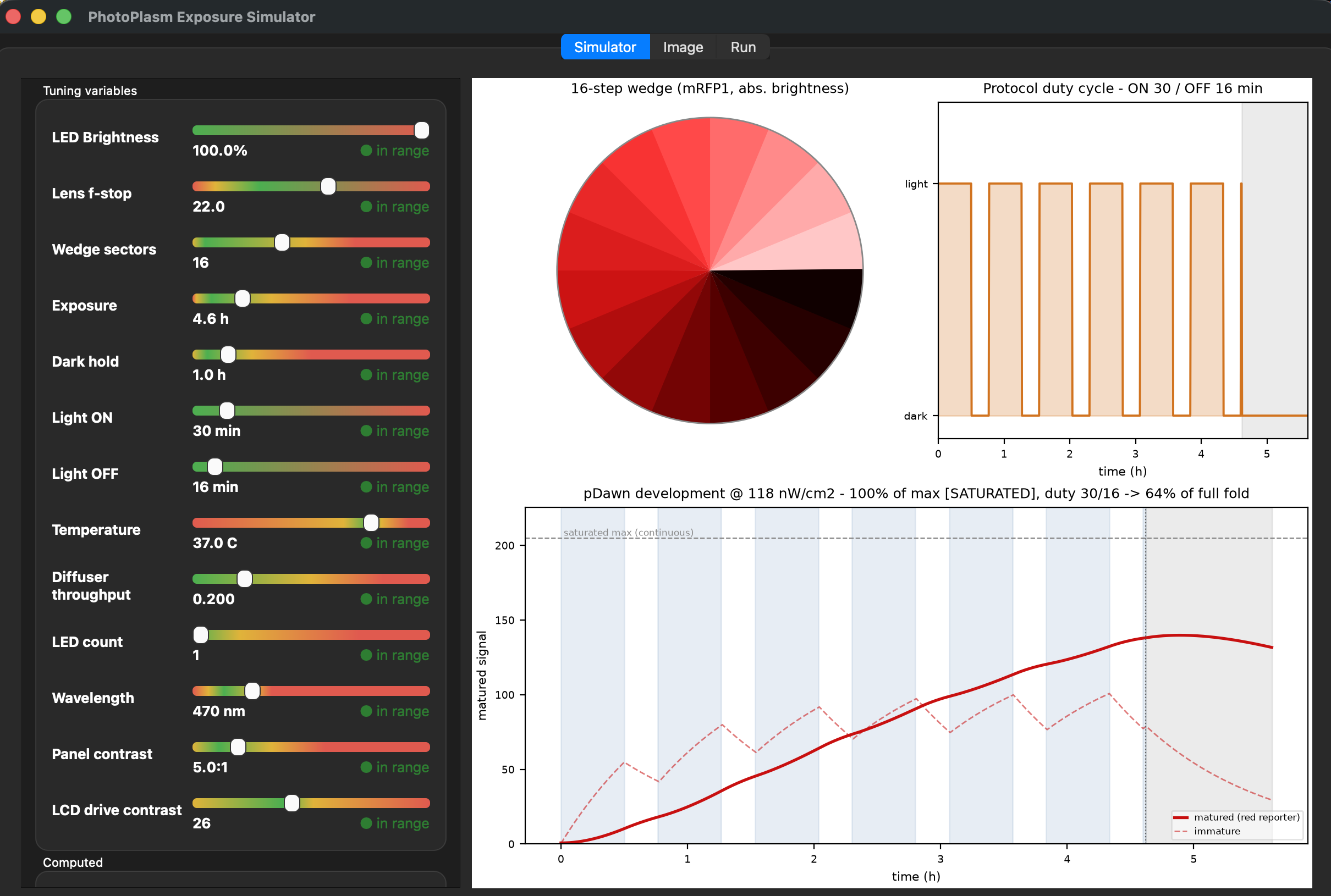
Photoplasm 1.0 Device Simulator
(3) How would you use automation?
Identify at least one automation technology that you would combine with your living system. This could include a large-scale Cloud Lab, a desktop liquid-handling robot such as an Opentrons, a programmable microfluidics platform such as Nuclera’s, or another automation technology. Describe what part of the biomanufacturing workflow you would automate and why. For example, you might automate liquid handling, culturing, assembly, screening, sampling, measurement, optimization, or another step.
The RAC is the Robotic Automation platform from Ginkgo Bioworks — the Reconfigurable Automation Cart. The use of Twist is fully compatible, as they synthesize clonal genes which would be the provider for my downstream colony propagation or other synthetic biology constructs including cell-free systems.
I am seeking to use Ginkgo’s RAC system to create plates with an agarose lawn containing my engineered and selected light-responsive culture. Then, through petri dish handling robotics, transfer into a cylindrical light-emitting projector, the Photoplasm “Beam.” The device includes an incubator module. I may be able to modify the device to reside inside an existing incubator RAC module, leading to multiple runs in one enclosed unit. The Photoplasm “Beam” is a branch, and will contain its own optical stack, deviating from the original 1.0 darkroom enlarger into a fully self-contained manufacturing specification. The addition of RAC protocols means the design will be directly influenced by — and integrated with — the RAC from the start: the beginning of device development with a standardized automation platform. There will always be an open-source “builder” version using petri dishes. I do like the idea of a rectilinear mode for well plates, but I still see potential in the petri dish form factor — the analogy is to photographic film formats, small, medium and large: 35 mm, 4×5, 2¼ square. We will likely stay round as an aesthetic.
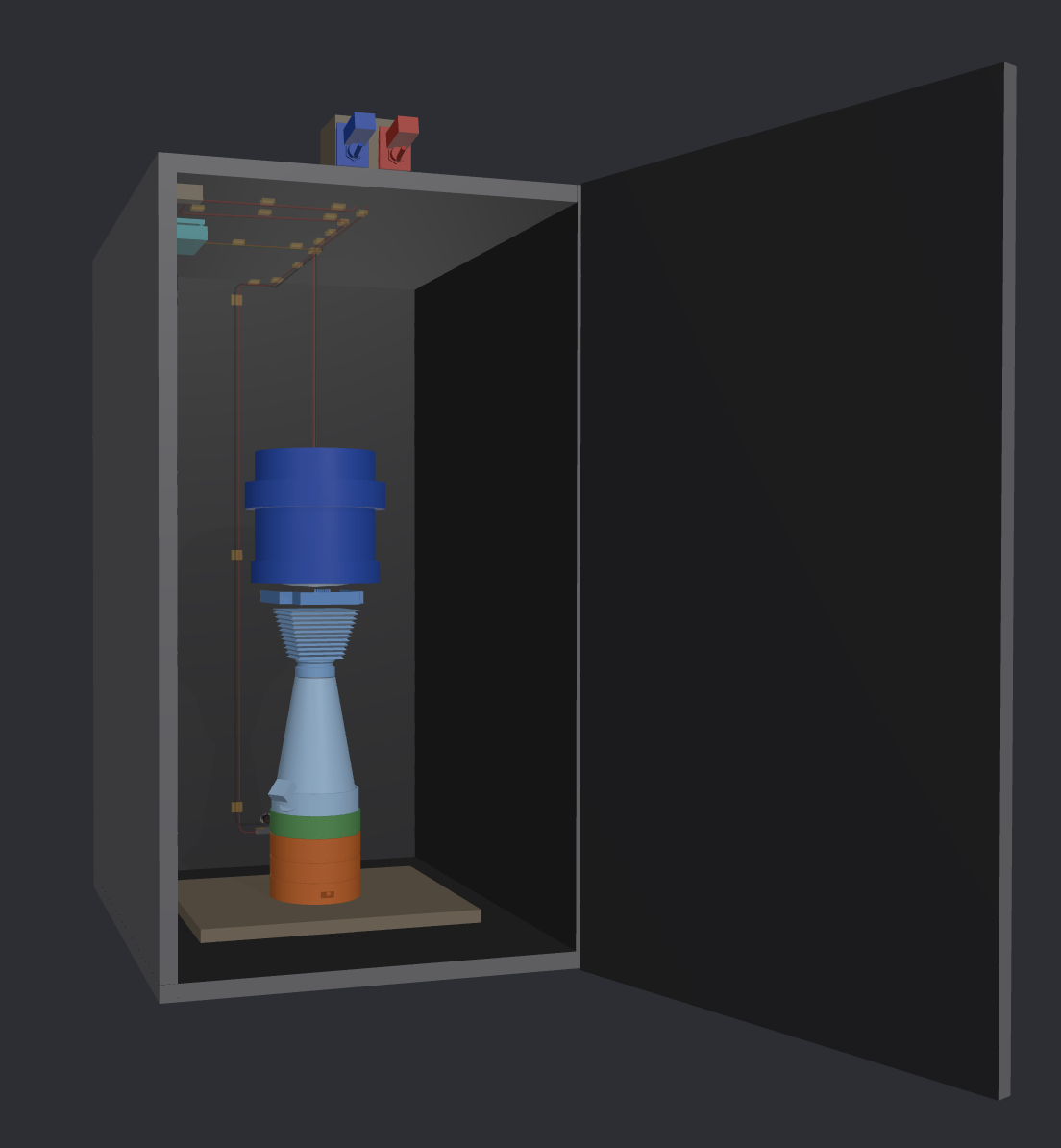
Photoplasm 1.0 Interactive 3D Visualization
The key is to provide repeatable, automated plating and light-responsive spatial imaging in a robotic pipeline, to increase consistent throughput.
The device includes an image monitoring and capture phase, which leads to remote monitoring. There is no human in the readout; camera sensors in the “Beam” do the work. It is a neural network of connected Photoplasm devices, with opt-in — or out — to participate in a larger knowledge base. The device will capture logs that can also be used for diagnostics in a customer support model.
| Workflow step | Automated here | Mechanism |
|---|---|---|
| Liquid handling | Plate creation — agarose lawn seeded with the selected light-responsive culture | RAC liquid handling |
| Transfer | Plate into the exposure device | Petri dish handling robotics |
| Culturing | Incubation during and after exposure | Beam incubator module, or a host incubator RAC module |
| Measurement | Image monitoring and capture; remote monitoring; device log capture | Camera sensors in the Beam; on-device logging |
| Optimization | Closed-loop adjustment in near real time; pattern-finding across pooled results | Data analysis on captured images; a neural network of connected Photoplasm devices |
(4) How much would you need to make, and how long would it take?
Perform a back-of-the-envelope calculation estimating what it would take to manufacture your target at a meaningful scale.
(a) How much? Define a scale relevant to your project and calculate approximately how much of your target product you would need to manufacture. If you are producing an art or design artifact, define an appropriate scale yourself. Clearly show your calculation, including units, assumptions, and sources for important numbers.
The scale for this project is: how many light-responsive exposures can be incubated? In a wet lab, one at a time, with one machine, operator attended — that is about 2 per a normal eight-plus-hour day, five days a week. With automation, the system runs 24/7, so one device can produce 4–6 images per day, seven days a week. With two machines and an optimized metabolic load, perhaps we strive for 3 hours for a high-contrast, high-fold-ratio result, running 24×7 with an image queue in the automation pipeline. There is a linear curve as more devices are introduced, but the data set grows with every shared result.
Photoplasm 1.0 Exposure Time
A typical roll of film was 36 exposures, limited by the length of film compacted into a light-tight canister. That is the unit adopted here: one roll = 36 exposures, and the production target is one roll per day. In our model, a group of 6 each making one image in a classroom or group setting means that every day we can create one image every 4 hours with one purpose-made device. If we had 6 devices, or “Beams,” in an automated RAC, we could reach 36 images per day. So building one locally and six remotely means a group of six can build, calibrate and test, then quickly ramp up.
| Operating point | Per hour | Per day | Per month | Per year |
|---|---|---|---|---|
| Manual, attended, 1 device | 0.08 | 2 | 43 | 520 |
| Automated, 1 device, 4 h cycle, 24/7 | 0.25 | 6 | 180 | 2,190 |
| Automated, 6 devices, 4 h cycle, 24/7 | 1.5 | 36 = one roll per day | 1,080 | 13,140 |
| Automated, 6 devices, 3 h target, 24/7 | 2.0 | 48 | 1,440 | 17,520 |
Exposures. A month is 30 operating days and a year 365 for the automated rows; the attended row runs 21.7 working days a month and 260 a year.
| Cohort of 6, one image each | Time to serve the cohort |
|---|---|
| On 1 device at 4 h | 24 hours — a full day |
| On 6 devices at 4 h | 4 hours — one cycle, whole cohort at once |
One exposure = one flood plate = one image. Cycle time is an anticipated 4–6 hours for exposure on flood plates; actual time will be observed. Throughput figures assume 24/7 operation and 100% yield.
The 4–6 hour cycle is cited from pDawn from The ODIN, a bacterial culture that expresses DsRed. For BioLight_GenV10, the design source is Li et al.’s eLightOn system, which indicates a 4–6 hour incubation with a duty cycle of light on/off pulses to support the ratio of light-emitting protein to non-emitting protein. The definitive answer will come from our calibration protocol.
If we host the device in the cloud, that is a fixed throughput that can grow as demand increases. If someone wants to build the open-source device, they may benefit from repeated cloud experiments. The platform then becomes a DIY kit — which is where a non-replicating cell-free system comes in, as a differentiator: it ships no living organism, so it reaches venues a living-system kit cannot. The ability to ship as a kit to a school with an educational component means that optogenetics reaches the classroom, and the cloud lab is waiting for your next scalable production: a pipeline that extends into the community and feeds the cloud lab. Low volume, high cost for the cell-free route; high volume, low cost for living cells. Both are applicable.
(b) How long? Using your proposed living system and automation technology, estimate how long it would take to manufacture that amount. Consider quantities such as production rate, yield, volume, number of parallel experiments or reactors, automation throughput, or whatever parameters are most appropriate for your system. You may discover that the automation technology you would use to prototype your system is very different from what you would use to manufacture at scale. If so, describe both.
At six devices on a 4-hour cycle, one roll of 36 exposures takes one day.
| Devices | 4 h cycle | 3 h cycle |
|---|---|---|
| 1 | 6.0 days | 4.5 days |
| 2 | 3.0 days | 2.2 days |
| 6 | 1.0 day | 0.8 days |
In rolls, at six devices on a 4-hour cycle: one roll per day, 30 rolls per month, 365 rolls per year. At the 3-hour target: 40 rolls per month and 487 per year.
These differ in kind, not degree. Photoplasm 1.0 is built upon a retrofitted photographic darkroom enlarger, operated by hand. The Beam is designed for automation from the first drawing, with its own optical stack and a self-contained manufacturing specification, integrated with a standardized automation platform from the start.
“One-day Photoplasm Lab” is very similar to the one-hour photo lab model.
(5) What don’t you know yet?
After completing your analysis, identify the 2–3 biggest technical unknowns, bottlenecks, or assumptions in your proposed biomanufacturing system. What would you need to learn, measure, or experimentally determine to know whether your idea could actually work?
What does success look like? Material handling of a form factor through the RAC system. Can we load a cylindrical “Beam” with success? This precedes the biological experimentation, and it can be modeled and achieved in less than 14 weeks. In parallel, we explore the synthetic biology and proceed with the community optogenetics project, to inform the result.
My next unknown will be related to cell-free systems. What sequence I choose will be based on research, prior knowledge of canonical systems, cost of manufacturing, and the path to engineering, synthesizing, lysating, reconstituting, and calibrating with the light-responsive device.
Another unknown is what the pipeline would look like to create a living cell culture that has a light-responsive biosensor expressing a color reporter, in a cloud lab infrastructure. What would the cost comparison be to cell-free? With an expectation that living cells may be less expensive to produce, what is the trade-off in terms of accessibility and sustainability outside of a lab? Is there a dual pathway?
In summary, for this section, I will analyze living cell systems and cell-free protein systems in automated cloud labs, to optimize manufacturing time, cost, and quality. This comparison will allow me to make strategic design decisions that could lead to a successful launch of a solution founded on open-source principles, with opportunities for funding models to support delivery at scale.
The definitive answer on cycle time will come from our calibration protocol.
Learning as a Solution
The biomanufacturing pipeline I am proposing is supported by an experiential learning platform, which provides resources that inform the practitioner about optogenetics. The Photoplasm device and synbio concepts reside in a growing online library of connected learning activities which show how to build the device itself, and will include visual explorations of light-responsive genetic circuits and sensors. For HTBAA, I plan on introducing the digital twin of the device for instructional learning, which will lead to wider adoption and understanding, as well as remote operation and simulation. Once the device is built and can be used as a learning tool in a makerspace setting, the ability for participants to create physical artifacts derived from optogenetics supports the idea of “learning by doing.”
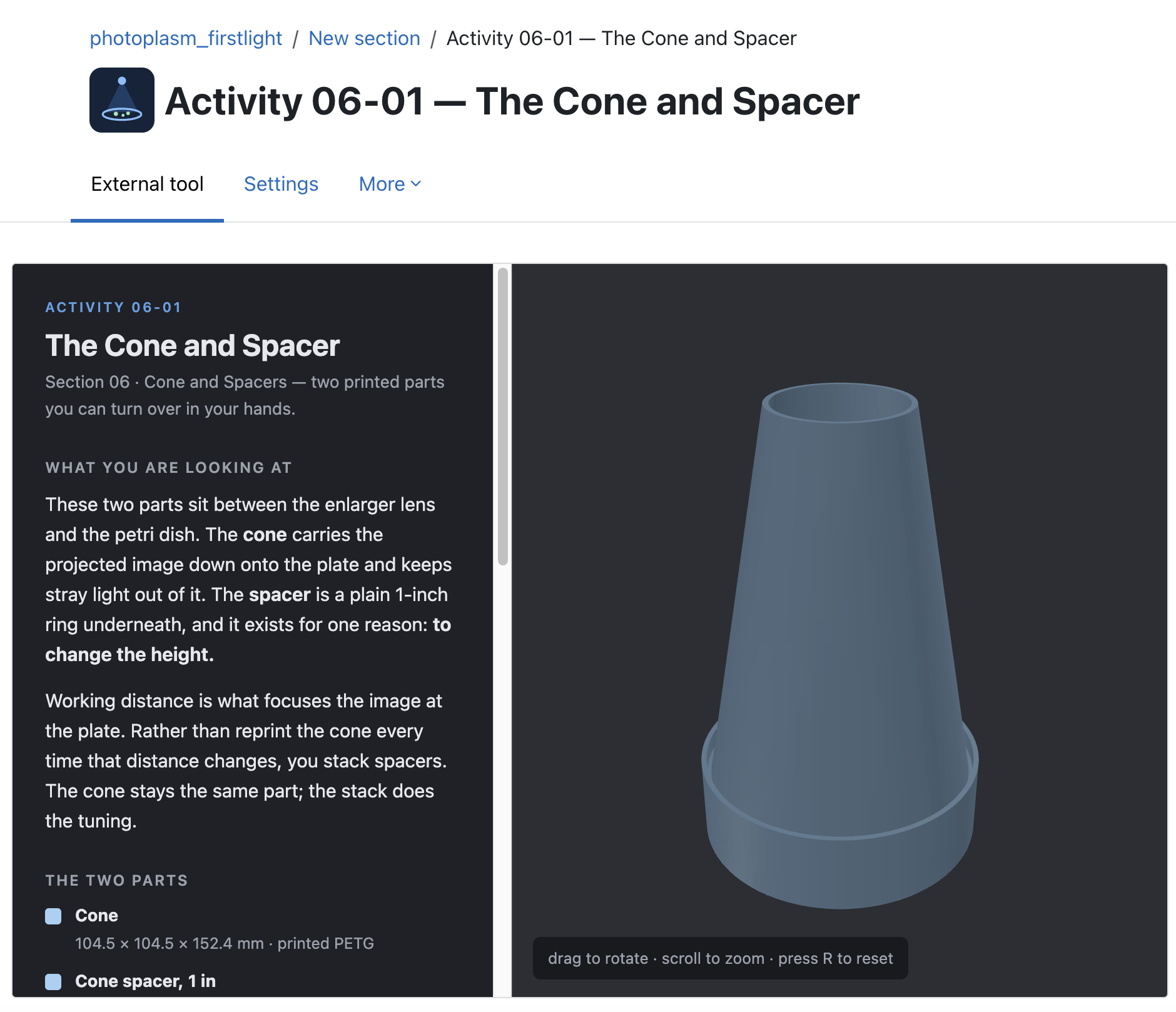
Photoplasm 1.0 Interactive eLearning Module
Conclusion
What I am doing is setting the stage for the return of the historical neighborhood photo lab, where you would go get your film developed, then return to pick up your photos — sometimes in an hour or less! If the future of AI and personalized therapeutics stands, one day your corner optogenetics lab will have your order synthesized and waiting. I plan to build out the model and allow innovation to reach the community — in the same way the photo lab and darkroom became a premier creative destination, supported by the photographic industry. In a way, we are going from analog to digital, and back to analog.
HTBAA Homework #1 — Ai Framework with Claude Science (Opus 5)
The authoring framework was defined incrementally by the author across 120 prompts in one session, each new rule stated as an instruction, applied immediately, versioned, and logged — so the method was built from the work rather than imposed on it.
- Session — 120 authored prompts, 1,087 total message records, 32 artifacts, 2026-09-17 to 09-20.
- Agent role — mentor, not author: structure, verification and questions, with no assignment content unless co-authoring was requested, and every rule tagged handout-binding, author-binding or agent-advisory.
- Baseline — the author’s first answers to the four framing questions frozen verbatim, with 10 revisions recorded beneath them as timestamped addenda, for authorship provenance.
- Documents — a clean submission draft in the author’s voice (v1.36) kept separate from a working file, a mentor memory, and a verbatim record of every prompt.
Citations
Original references — provided with the course
Assigned readings and course materials issued with the assignment. Author lists follow the publisher record.
Asin-Garcia, E., Fawcett, J. D., Batianis, C., & Martins dos Santos, V. A. P. (2025). A snapshot of biomanufacturing and the need for enabling research infrastructure. Trends in Biotechnology, 43(5), 1000–1014. https://doi.org/10.1016/j.tibtech.2024.10.014
Averesch, N. J. H., Berliner, A. J., Nangle, S. N., Zezulka, S., Vengerova, G. L., Ho, D., Casale, C. A., Lehner, B. A. E., Snyder, J. E., Clark, K. B., Dartnell, L. R., Criddle, C. S., & Arkin, A. P. (2023). Microbial biomanufacturing for space-exploration—what to take and when to make. Nature Communications, 14, 2311. https://doi.org/10.1038/s41467-023-37910-1
Petzold, C. J., & Mukhopadhyay, A. (2025). From bench to biofactory: High-throughput technologies and automated workflows to accelerate biomanufacturing. Current Opinion in Biotechnology, 94, 103320. https://doi.org/10.1016/j.copbio.2025.103320
Rasor, B. J., Vögeli, B., Landwehr, G. M., Bogart, J. W., Karim, A. S., & Jewett, M. C. (2021). Toward sustainable, cell-free biomanufacturing. Current Opinion in Biotechnology, 69, 136–144. https://doi.org/10.1016/j.copbio.2020.12.012 ¹
Yap, W. S., Choudhury, D., & Suntornnond, R. (2023). Towards biomanufacturing of cultured meat. Trends in Biotechnology, 41(3), 292–294. https://doi.org/10.1016/j.tibtech.2023.01.014
Ye, J.-W., Lin, Y.-N., Yi, X.-Q., Yu, Z.-X., Liu, X., & Chen, G.-Q. (2023). Synthetic biology of extremophiles: A new wave of biomanufacturing. Trends in Biotechnology, 41(3), 342–357. https://doi.org/10.1016/j.tibtech.2022.11.010
Zhang, Y.-H. P., Sun, J., & Ma, Y. (2017). Biomanufacturing: History and perspective. Journal of Industrial Microbiology & Biotechnology, 44(4–5), 773–784. https://doi.org/10.1007/s10295-016-1863-2
How to BioManufacture (Almost) Anything — Class #1 Reading List [Annotated project reading list]. Internal working document.
Conducted research — located during this work
Sources found independently in the course of answering the assignment, resolved against GenBank, Crossref, PubMed and Europe PMC rather than from recall.
Ginkgo Bioworks. (n.d.). Hardware — RACs & Tiles. https://www.ginkgo.bio/product/hardware
Ginkgo Bioworks. (n.d.). Yeast heat shock transformation on a flexible Reconfigurable Automation Cart (RAC) system [Tech note]. https://www.ginkgo.bio/tech-notes/yeast-heat-shock-transformation-on-a-flexible-reconfigurable-automation-cart-rac-system
Gregorio, N. E., … Oza, J. P. (2020). Unlocking applications of cell-free biotechnology through enhanced shelf life and productivity of E. coli extracts. ACS Synthetic Biology, 9(4). https://doi.org/10.1021/acssynbio.9b00433
Huang, A., … Collins, J. J. (2018). BioBits Explorer: A modular synthetic biology education kit. Science Advances, 4(8), eaat5105. https://doi.org/10.1126/sciadv.aat5105
Huang, A., … Stark, J. C. (2022). Implementing hands-on molecular and synthetic biology education using cell-free technology. Methods in Molecular Biology. https://doi.org/10.1007/978-1-0716-1998-8_25
Jayaraman, P., Yeoh, J. W., Jayaraman, S., Teh, A. Y., Zhang, J., & Poh, C. L. (2018). Cell-free optogenetic gene expression system. ACS Synthetic Biology, 7(4), 986–994. https://doi.org/10.1021/acssynbio.7b00422
Möglich, A. (n.d.). pDawn (Plasmid #43796) [Plasmid]. Addgene. http://n2t.net/addgene:43796 (RRID:Addgene_43796)
Multamäki, E., et al. (2022). Optogenetic control of bacterial expression by red light. ACS Synthetic Biology. https://doi.org/10.1021/acssynbio.2c00259
Expression vector pDawn, complete sequence (GenBank accession JN579121.1) [Nucleotide record]. National Center for Biotechnology Information. https://www.ncbi.nlm.nih.gov/nuccore/JN579121.1
Ohlendorf, R., Vidavski, R. R., Eldar, A., Moffat, K., & Möglich, A. (2012). From dusk till dawn: One-plasmid systems for light-regulated gene expression. Journal of Molecular Biology, 416(4), 534–542. https://doi.org/10.1016/j.jmb.2012.01.001
Shivakumar, T., … Williams, P. M. (2025). A design of experiments approach for enhancing room temperature stability of a lyophilised and paper-based bacterial cell-free system. Bioengineering, 12(3), 223. https://doi.org/10.3390/bioengineering12030223
Smith, M. T., … Bundy, B. C. (2014). Lyophilized Escherichia coli-based cell-free systems for robust, high-density, long-term storage. BioTechniques, 56(4), 186–193. https://doi.org/10.2144/000114158
Stark, J. C., … Jewett, M. C. (2018). BioBits Bright: A fluorescent synthetic biology education kit. Science Advances, 4(8), eaat5107. https://doi.org/10.1126/sciadv.aat5107
Stark, J. C., … Jewett, M. C. (2019). BioBits Health: Classroom activities exploring engineering, biology, and human health with fluorescent readout. ACS Synthetic Biology, 8(5). https://doi.org/10.1021/acssynbio.8b00381
Williams, L. C., Gregorio, N. E., So, B., Kao, W. Y., Kiste, A. L., Patel, P. A., Watts, K. R., & Oza, J. P. (2020). The Genetic Code Kit: An open-source cell-free platform for biochemical and biotechnology education. Frontiers in Bioengineering and Biotechnology, 8, 941. https://doi.org/10.3389/fbioe.2020.00941
Yang, J., & Lu, Y. (2022). Optical sensing in cell-free expression. Methods in Molecular Biology, 2433, 343–349. https://doi.org/10.1007/978-1-0716-1998-8_21
Zhang, P., Yang, J., Cho, E., & Lu, Y. (2020). Bringing light into cell-free expression. ACS Synthetic Biology, 9(8), 2144–2153. https://doi.org/10.1021/acssynbio.0c00211