I am a year 2 medical student from Yogyakarta Indonesia. I love synthetic biology and would like to find ways to implement it in medicine and clinical practice.
Contact info
Homework, Labs, and Projects
See the nav bar on the left to look through my work for How To
Biomanufacture Almost Anything (Fall 2026)!
Subsections of Farrel Alfaza Marsetyo — HTBAA Fall 2026
Week 1 HW: Final Project Ideas
(1) What you would like to biomanufacture and why?
I want to make a modular production system for rare disease drugs. Rare disease, and their drugs known as orphan drugs are heavily financially disincentivized for big pharma since it’s not profitable. Why is it not profitable? High research price, specialized equipment needed to make it (big pharma are geared to make high demand drugs, and their production infrastructure reflects it), and low demand. Research price will possibly be reduced faster by AI use in biomedical research, but what about production costs? I believe that a modular production system based on living systems and synthetic biology principles could solve this problem. Lowering cost and making orphan drugs more accessible.
Who is it for? Fundamentally it is for the patients and their loved ones, while this system could also be marketed to pharma companies to increase their outreach and scalability. I think mainly however this would be an open source platform so that more people could access it. Orphan drugs are very diverse however, and not all orphan drug types are feasible to be produced this way, at least meaningfully. Although theoretically I want this platform to be able to produce all orphan drugs in the world, however, early proof-of-concept prototypes must focus on an orphan drug(s) with these criterias:
The drug is part of a drug class that is used to treat diseases (not just rare ones); this is to ensure that the production system could be adapted to produce other drugs when demand is specifically low for a specific rare disease.
The drug is able to be produced from commonly obtainable precursors (no rare elements etc).
Current available drugs are already generics that could be produced by anyone.
Optional: the drug is a biologics
With these criterias in mind, I have decided to build a project about the bioproduction of Enzymes for Enzymes Replacement Therapy (ERT) of lysosomal storage disorders.
Why this disease specifically? These drugs are manufactured on the same CHO (Chinese Hamster Ovary) cell line platform and is a biologics, which means that different drugs only need different GOI being inserted into the cells. Additionally, the addressable price gap is huge, as patients are currently paying close to 200-500K yearly for ERT. Furthermore, a lot of the enzymes being used in ERT already have generic status and thus regulatory permission are less of a challenge compared to brand drugs.
(2) What living system would you use?
As these enzymes are currently produced on a CHO cell line platform, early prototypes could probably benefit in using the same platform. However, cell lines are significantly expensive compared to commonly used bacterial systems such as E. coli or cell-free systems. Therefore, in further iteration of this project, efforts to adapt the production circuit to bacterial and/or cell free systems should be done to increase scalability. This would include further research in trying to adapt the glycosylation pattern of the enzymes to match human glycosylation, adapting codon usage to mirror those used in bacteria/cell free systems, and also screen for potentially immunogenic/allergenic sequences and particles produced by the bacterial and cell free systems.
(3) How would you use automation?
Automation would be integral to both the production process and research process.
A production line-style automated stepwise chemical modification of the biologics would be ideal, as the modular nature of the enzymes means that to add other chemical parts, we only need to add a new production line on top of the already existing ones. Furthermore, a module dedicated to the quality control, containing something like a living detection system (antibody-producing systems, etc) would be ideal to detect both enzyme quality, correct enzyme folding, glycosylation, presence of inhibitors/contaminants and so much more. However, there needs to be more research in terms of how specifically this kind of system could be implemented, which process is better automated, and which expression system is the best for this kind of setup.
(4) How much would you need to make, and how long would it take?
How much enzymes is needed to treat 1000 people? Let’s take the example of Gaucher’s disease, one of the diseases that could be treated using ERT. Gaucher’s dieases has a global prevalence of around 0.9 per 100.000 people, which means that globally there is an estimated 72,000 to 125,000 people with the disease worldwide. An ERT regiment for a patient with Gaucher’s disease according to FDA/EMA product label includes imiglucerase (Cerezyme) infusion every 2 weeks, with 15-60 units given per kilogram per infusion, depending on disease severity and response. THis would means that every patients would need to recieve 2275 - 9100 units of imiglucerase per month, or 27300 to 19200 units per year per person. For one person, this would means around 1-2.7 grams of pure protein per year.
To treat 1000 people therefore, the system would need to produce 1000 - 2700 grams of protein per year.
To treat an area around the size of Massachussets (assuming 7 million population, therefore around 63 patients), the system would need to produce 63 - 170 grams per year
To treat all Gaucher’s disease patients, the system would need to produce 72000 to 337500 grams of protein per annum.
How long would it need to achieve those numbers? Current production rate of imiglucerase is around 2.5 kg per year (estimated from sales, with an estimated of 1000-1500 patients on imiglucerase globally), this is not ideal if we’d like to treat all Gaucher’s disease patients. Assuming perfect efficiency, an E. coli production system could theoretically produce 100-150 mg of protein per liter per hour, assuming we’re using the Gingko RAC System which has around 35 L capacity, each reactor would be able to produce 84 - 126 grams per day, which means a maximum of 3780 grams per month and 45360 grams yearly. Which is already more than enough to treat all people with Gaucher’s disease in Massachussets. Two of such reactors with a total maximum output of ~90000 grams per annum would be enough to treat all Gaucher’s disease patients worldwide.
(5) What don’t you know yet?
There are a few crucial things that is still unknown for this project to come into fruition.
Exact molecular mechanism and modularity of the ERT is still unknown and needs to be studied further.
Exactly how automation could help this production process is still not clear, this needs to be clarified before actually implementing the process.
Real-world inefficiencies are not taken into account for the calculation process and therefore the numbers could potentially not represent actual reality.
1. What molecule are you expressing? A protein, an RNA, or an enzyme (or small set of enzymes) for a pathway. If your HW1 product is a material, food, or chemical, identify the protein(s) that produce it and design for those.
I’m expressing a polypeptide enzyme, for this project I’m planning to express one specific enzyme for one specific disease, but in the future I plan to expand it to a class of similar enzymes that targets a number of rare diseases. The specific enzyme I’m planning to express is imiglucerase (brand name Cerezyme)
2. What is the sequence? Give the protein or RNA sequence, or the specific gene, you will encode, and say where it comes from (a database accession such as UniProt or NCBI, a known part, or de novo). Cite it.
2. What host or chassis? The living system from HW1, for example E. coli, S. cerevisiae, CHO or another mammalian line, or a cell-free system. Your host drives almost every part choice that follows.
The chassis is CHO (chinese hamster ovary) cell line
3. Where does the product need to go? Cytoplasm, secreted, membrane, or a compartment? This decides whether you need a signal peptide or targeting sequence.
As this enzyme is supposed to be injected cleanly (as naked protein molecule) into the bloodstream intravenously, therefore to aid the expression and purification process it is better for the enzyme to be secreted into the extracellular space. Some other reasons (courtesy of Claude)
Post-translational processing requires the secretory pathway. GBA needs N-linked glycosylation (which happens in the ER and Golgi) to get those terminal mannose residues that let macrophages take it up via the mannose receptor. Cytoplasmic expression bypasses the ER/Golgi entirely, so you’d get an unglycosylated, non-functional-for-therapeutic-purposes protein.
Proper folding and disulfide bonds. Your sequence has multiple cysteines (I count several C’s scattered through it) that likely form disulfide bonds. This chemistry happens in the oxidizing environment of the ER, not the reducing environment of the cytoplasm. Cytoplasmic expression would likely give you a misfolded, insoluble, or aggregated protein.
Purification logistics. If secreted into the CHO culture medium, you harvest by simply collecting the supernatant and purifying from there (chromatography steps). Cytoplasmic expression means you’d need to lyse cells, and you’d have to purify away from thousands of intracellular host cell proteins, which is messier and lower yield for a protein like this.
This is literally how Cerezyme/imiglucerase is made industrially — CHO cells secrete the recombinant enzyme into the medium, which is then purified through multiple chromatography steps before formulation.
Part 2: Design your genetic parts
Element
Choice
Source
Reasoning
Promoter (+ enhancer / intron if used)
CMV
Eason Shetty
Human CMV Promoter, commonly used for high-yield expression in CHO Cells.
5’ UTR with Kozak
Consensus kozak sequence
Povea-DBLCL-repository
Standard kozak sequence, to allow expression in eukaryotic cells. More robust Kozak sequence for CHO Cells specifically coming soon.
Good terminator and polyA signal for eukaryotic expression
Part 3: Assemble your construct
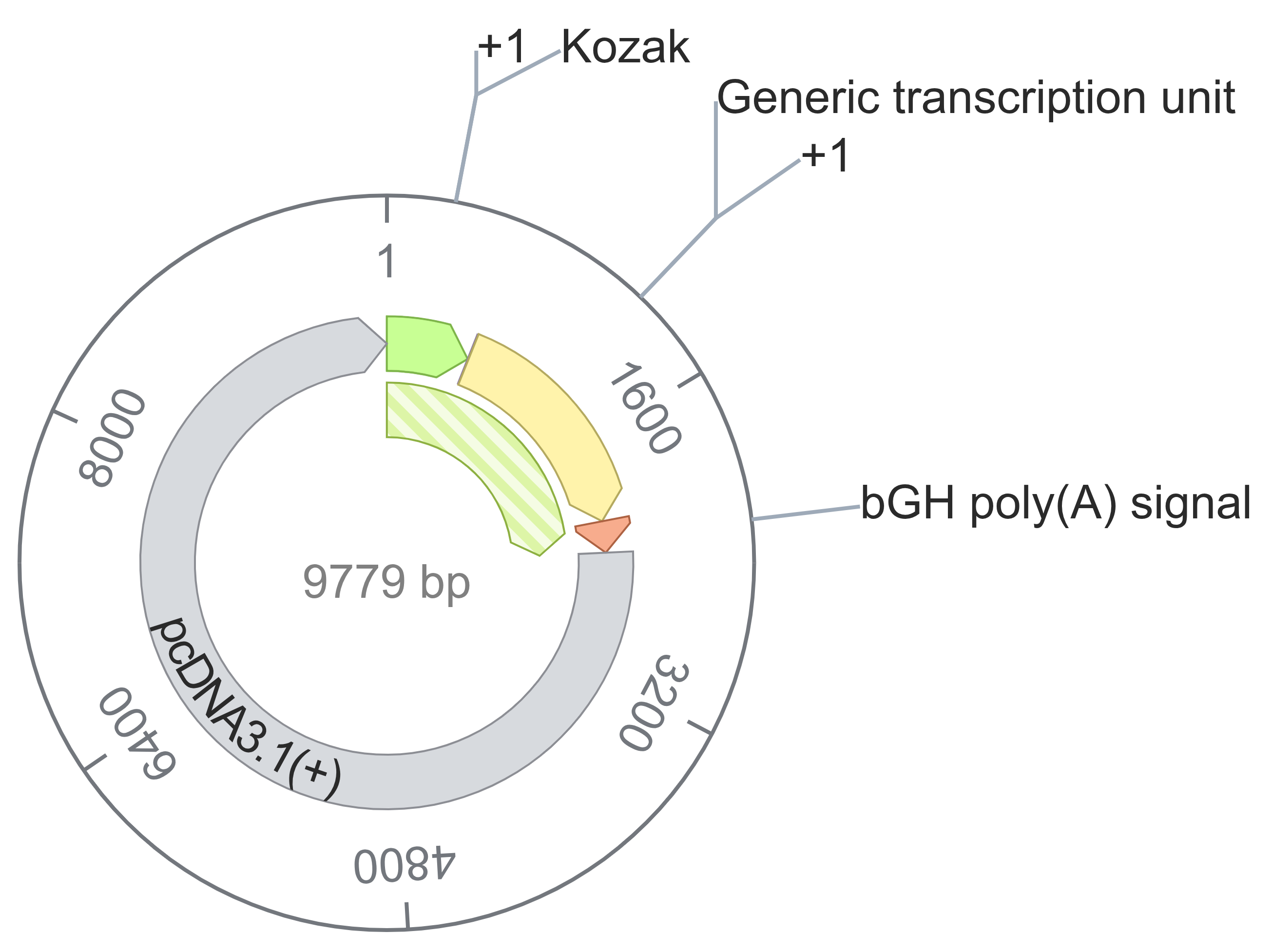
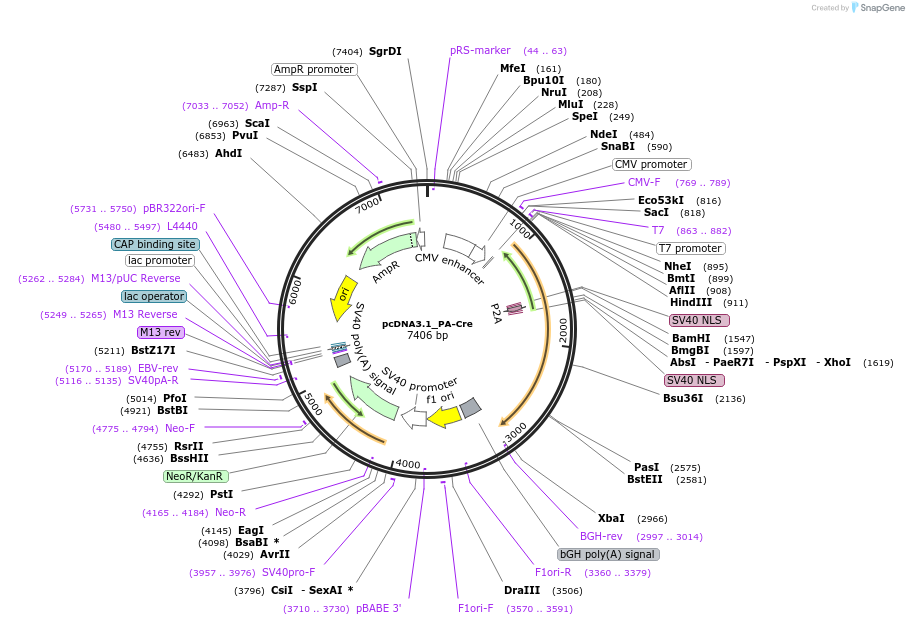
Expression construct for Imiglucerase constitutive expression on CHO cells. The construct consists of an imiglucerase CDS expressed under a CMV promoter with bGH poly(A) signal terminator and an N-terminus IgG kappa secretion tag from Mus musculus.
Future considerations : I’m planning to be able to swap the CDS easily in the future, so I’m considering on adding a BsaI or BbsI cut site with a BioBrick prefix to the CDS part so that it could be easily swapped with a simple GoldenGate reaction. Inspired by iGEM Gifu 2023
Part 4: Optimize and quality-check
Codon-optimize your CDS for your chosen host. Compare before and after: what changed, and why does codon usage matter for expression in this organism? Note any constraints you applied (e.g. avoiding certain restriction sites, GC content).
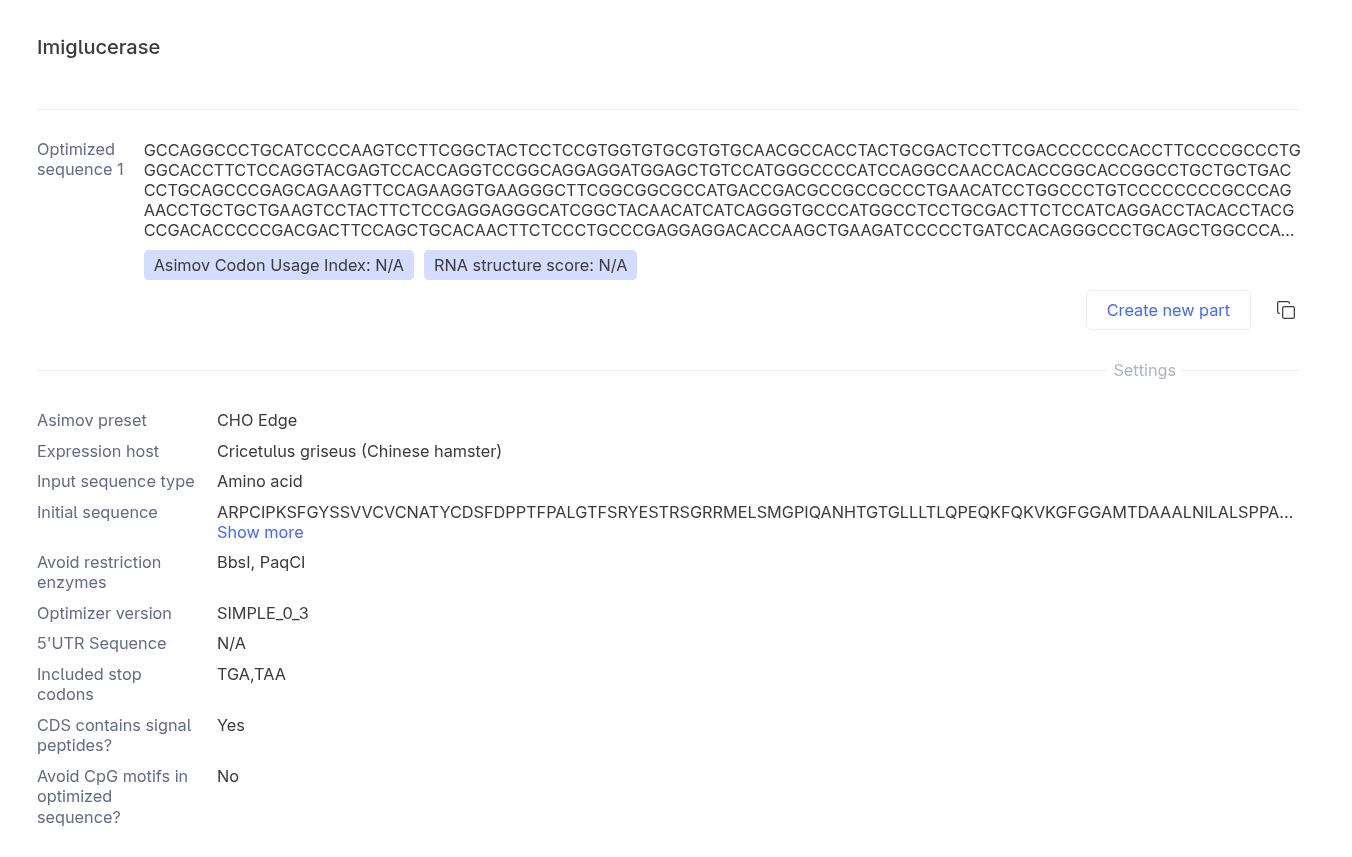
Asimov tools are used codon optimize and create CDS from kegg.jp. Protein sequences are put into the tool and settings are set for CHO cells. Stop codons are set for TAA and TGA. Constraints are automatically applied by the system, excluding BsaI, BsmbI, PaqCI, and BbsI, which I assumed is in adherence to the RFC1000 standard (GoldenGate/Loop) and the GoldenBraid assembly standard.
Search your sequence (BLAST / sequence search) against known sequences. Is your CDS what you think it is? Is it identical to a natural gene, or novel? What is the closest match?
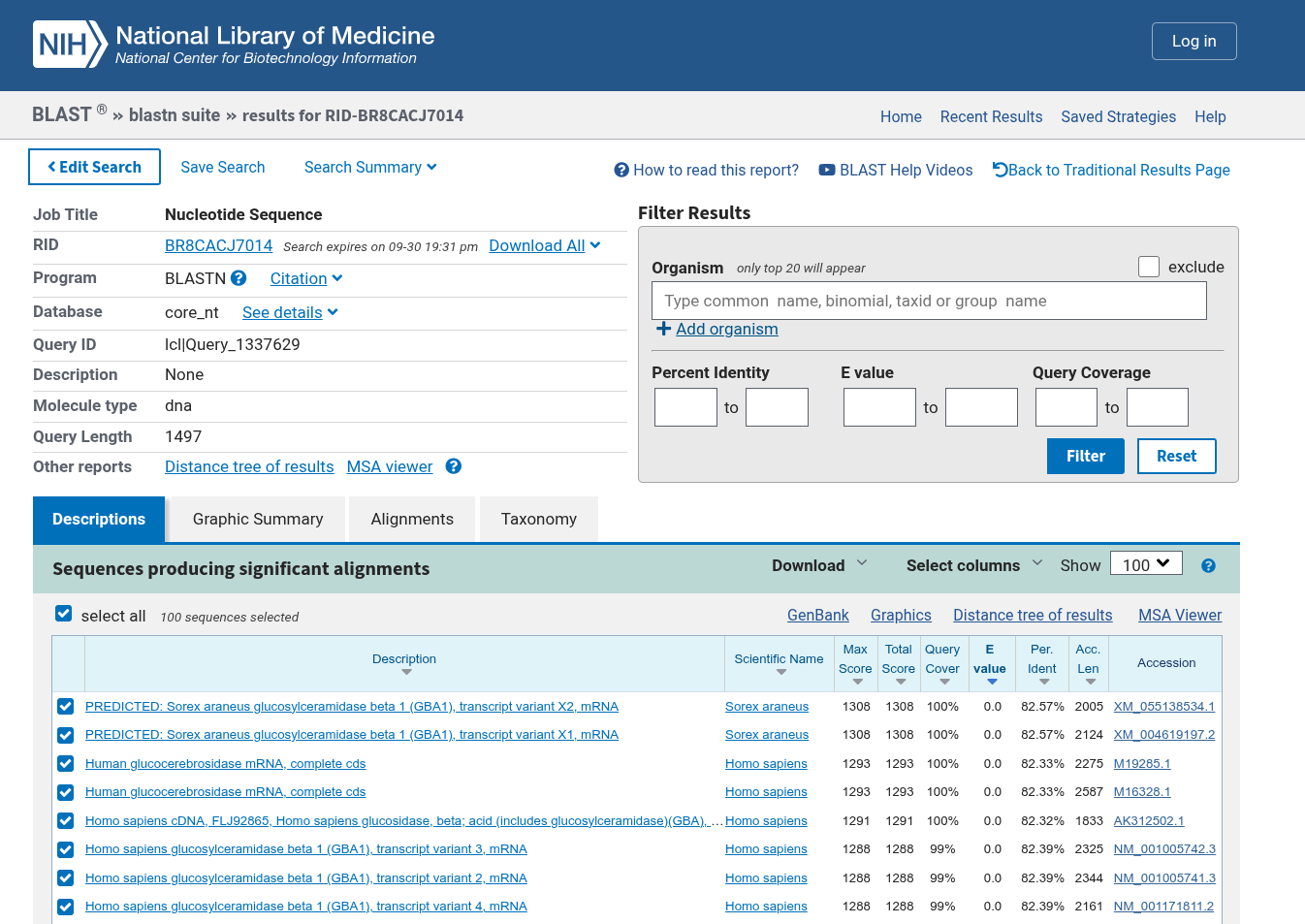
BLAST results shows 100% hit to a few top targets. The CDS is identical to Sorex araneus glucosylceramidase beta 1 (GBA1) transcript variants X1 and X2 mRNA. It is also identical to Human glucocerebrosidase mRNA, complete cds. This result is expected since the enzyme should also be naturally expressed in human.
Run the safety screen on your construct. Summarize what it checks for and what it reports. If it flags something, explain whether it is expected for your design and how you would respond.
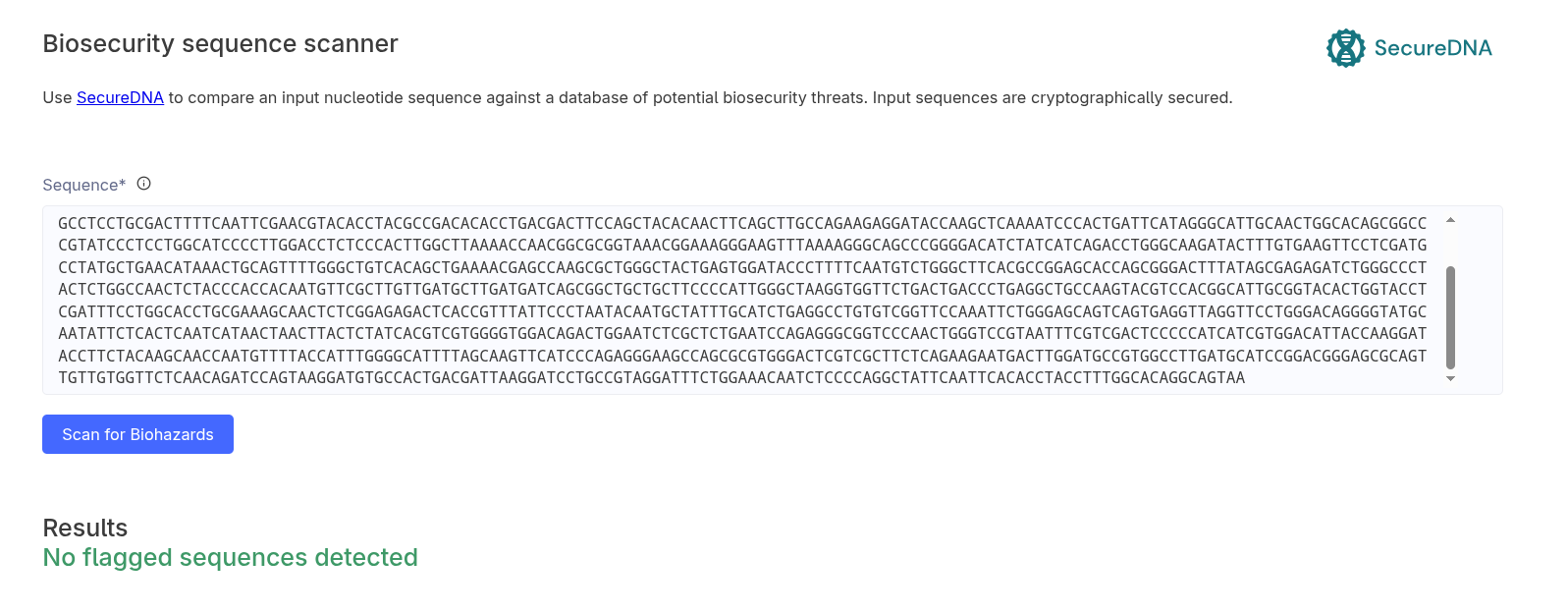
Safety screen was done using the SecureDNA tool on asimov. The safety screening shows no positive hit and showed that the sequence is safe to use.
Part 5: From design to build
How would you build it? Would you order it as synthetic DNA, assemble it from smaller fragments (e.g. Gibson assembly), or build it from a pool of oligos synthesized on a chip? Justify your choice given your construct’s length and complexity. What does synthesis constrain? Synthesis has error rates and struggles with certain sequences. Does your design contain anything hard to synthesize? How would error correction or fragment-based assembly change your approach? Prototype vs. scale. Mirroring HW1: the way you’d build one construct to test your idea may differ from how you’d produce DNA at the scale your product needs. Briefly describe both if they differ.
I plan to assemble it from smaller fragments in the modular spirit of synthetic biology. This is because I’m planning to make the expression system modular so that it could synthesize more than my current protein proof-of-concept (imiglucerase). Other considerations to think of:
Using modular parts means that when the system needs to be optimized, changing the parts is as simple as running another GoldenGate/GoldenBraid reaction in a tube and a thermocycler instead of designing multiple primers as in Gibson Assembly
The shorter length of my total construct makes this approach much more sensible since shorter fragments are more amenable towards a digest-ligate approach
Modularity means that the platform is easily expanded and compounded by other researchers and firm which would increase its scalability.
Synthesis constraints : so far I’m not aware of any synthesis contraints present on my sequence, a quick brainstorm with claude shows these general constraints in gene synthesis
**Sequence composition issues**

1. **High/low GC content.** Regions above ~65% GC or below ~30% GC are harder to synthesize accurately. High-GC regions are prone to incomplete deprotection/coupling during oligo synthesis and to secondary structure; low-GC regions can have weak, unstable duplexes during assembly.
2. **Homopolymer runs.** Long stretches of a single base (e.g., poly-A, poly-T, poly-G >8-10 bases) cause slippage errors during synthesis and sequencing verification.
3. **Repetitive sequences.** Tandem repeats, direct repeats, or near-identical sequences at a distance can cause mis-annealing during PCR-based assembly steps, leading to deletions or recombination between repeats.
4. **Secondary structure.** Sequences that fold into hairpins, stem-loops, or cruciforms (common in high-GC or palindromic regions) block polymerase progression during assembly and PCR amplification.

**Structural/genetic elements**

5. **Palindromic sequences,** especially long inverted repeats, can form hairpins that stall synthesis or cause the sequence to be unstable once cloned into a plasmid (bacteria may actively delete or recombine them).
6. **Restriction sites you didn't want,** if your assembly method uses Type IIS enzymes (Golden Gate, etc.) — internal cut sites for your chosen enzyme will fragment the sequence unexpectedly. This is a design problem more than a synthesis-difficulty one, but it can hold up a build.
7. **Toxic or growth-inhibitory sequences to the host** (usually _E. coli_ during cloning/propagation) — some ORFs, promoters, or membrane-disrupting peptides are toxic when expressed even at leaky basal levels, causing plasmid instability, mutation, or clone dropout during the bacterial amplification step that follows chemical synthesis.

**Practical vendor thresholds**

8. **Sequence length** — very long constructs (multi-kb) require more assembly/ligation steps, each with failure probability, compounding difficulty.
9. **Uniqueness/junction design** in multi-fragment assembly — poor junction sequences between fragments (e.g., unintended homology) can cause mis-assembly.
A cursory check on my construct shows that the whole sequence has a GC content of 51.29% which falls neatly within the ~30-59% constraint. However, an online GC content checker tool detected a potentilal CpG island in base 611-824, with a GC content of 57.9%. The GC content is still within the acceptable limits, however, downstream expression in CHO cells could potentially face problems, are CpG island are prone to methylation and silencing. Further changes are needed to improve this part of the sequence.
DNA Synthesis : synthesizing DNAs needed for industrial-level drug production is impossible with current synthesizers. However, using cell-based replicating mechanism is quite more economical compared to synthesizers. Therefore, to address the amount of DNA Needed, I’m planning on puting the construct on two backbones:
Backbone 1 : the main backbone, for expression in CHO cells.
Backbone 2 : replication backbone, for expression and replication in E. coli
A Backbone which can be replicated in both CHO cells and E. coli
After some reading, I ended up using the pcDNA1.3(+) plasmid developed by Kawano et al. (2016), since it is able to be replicated in both E. coli and CHO Cells. The actual details regarding restriction sites and construct integration will need to be addressed at a later date.
E. coli cells such as DH5-alpha who had been selected from transformation efficiency or …, selected for DNA replication are perfect for this application. This is also in line with the modular principle of the sequence build philosphy since it could be easily swapped between backbones inside the GoldenGate/GoldenBraid system.
Part 6: What don't you know yet?
Aproximate level of protein expression and whether its actually expressed: expression in eukaryotes are significantly more complex than in E. coli, and simple changes in UTRs for example could mean significant differences in expression yield. In the other hand, the Kernel software doesn’t have a simulation for expression in CHO cells ready to use, so I have no idea what to tweak in terms of which part i better be using, unless I have more time to dive more into the exact specification of each parts. The CpG part in the sequence is also a cause for concern if I want to make this system a constitutively expressed one.
The practicality of CHO cell expression. Aside from the actual expression, the maintenance of mammalian cells are notoriously more difficult than bacterial ones. Constant monitoring and adeqauate levels of antibacterials and antifungals at all times are necessary. On top of that, plasmid delivery into the cells are also still a big question for me, will it be something like a liposomal vector or something like an AAV vector. Also the purification downstream of the process is still a big question.
How to address this gap : read out on some parts used in CHO cell expressions, possibly from the iGEM Registry or other websites. Also read on the Gingko RAC specification, especially how they handle mammalian cells. Additionally, I need to run the numbers on CHO cells production of biologics.
> 1. What molecule are you expressing? A protein, an RNA, or an enzyme (or small set of enzymes) for a pathway. If your HW1 product is a material, food, or chemical, identify the protein(s) that produce it and design for those.
I’m expressing a polypeptide enzyme, for this project I’m planning to express one specific enzyme for one specific disease, but in the future I plan to expand it to a class of similar enzymes that targets a number of rare diseases. The specific enzyme I’m planning to express is imiglucerase (brand name Cerezyme)
2. What is the sequence? Give the protein or RNA sequence, or the specific gene, you will encode, and say where it comes from (a database accession such as UniProt or NCBI, a known part, or de novo). Cite it.
2. What host or chassis? The living system from HW1, for example E. coli, S. cerevisiae, CHO or another mammalian line, or a cell-free system. Your host drives almost every part choice that follows.
The chassis is CHO (chinese hamster ovary) cell line
3. Where does the product need to go? Cytoplasm, secreted, membrane, or a compartment? This decides whether you need a signal peptide or targeting sequence.
As this enzyme is supposed to be injected cleanly (as naked protein molecule) into the bloodstream intravenously, therefore to aid the expression and purification process it is better for the enzyme to be secreted into the extracellular space. Some other reasons (courtesy of Claude)
Post-translational processing requires the secretory pathway. GBA needs N-linked glycosylation (which happens in the ER and Golgi) to get those terminal mannose residues that let macrophages take it up via the mannose receptor. Cytoplasmic expression bypasses the ER/Golgi entirely, so you’d get an unglycosylated, non-functional-for-therapeutic-purposes protein.
Proper folding and disulfide bonds. Your sequence has multiple cysteines (I count several C’s scattered through it) that likely form disulfide bonds. This chemistry happens in the oxidizing environment of the ER, not the reducing environment of the cytoplasm. Cytoplasmic expression would likely give you a misfolded, insoluble, or aggregated protein.
Purification logistics. If secreted into the CHO culture medium, you harvest by simply collecting the supernatant and purifying from there (chromatography steps). Cytoplasmic expression means you’d need to lyse cells, and you’d have to purify away from thousands of intracellular host cell proteins, which is messier and lower yield for a protein like this.
This is literally how Cerezyme/imiglucerase is made industrially — CHO cells secrete the recombinant enzyme into the medium, which is then purified through multiple chromatography steps before formulation.
Part 2: Design your genetic parts
Element
Choice
Source
Reasoning
Promoter (+ enhancer / intron if used)
CMV
Eason Shetty
Human CMV Promoter, commonly used for high-yield expression in CHO Cells.
5’ UTR with Kozak
Consensus kozak sequence
Povea-DBLCL-repository
Standard kozak sequence, to allow expression in eukaryotic cells. More robust Kozak sequence for CHO Cells specifically coming soon.
Good terminator and polyA signal for eukaryotic expression
Part 3: Assemble your construct
Expression construct for Imiglucerase constitutive expression on CHO cells. The construct consists of an imiglucerase CDS expressed under a CMV promoter with bGH poly(A) signal terminator and an N-terminus IgG kappa secretion tag from Mus musculus.
Future considerations : I’m planning to be able to swap the CDS easily in the future, so I’m considering on adding a BsaI or BbsI cut site with a BioBrick prefix to the CDS part so that it could be easily swapped with a simple GoldenGate reaction. Inspired by iGEM Gifu 2023
Part 4: Optimize and quality-check
Codon-optimize your CDS for your chosen host. Compare before and after: what changed, and why does codon usage matter for expression in this organism? Note any constraints you applied (e.g. avoiding certain restriction sites, GC content).
Asimov tools are used codon optimize and create CDS from kegg.jp. Protein sequences are put into the tool and settings are set for CHO cells. Stop codons are set for TAA and TGA. Constraints are automatically applied by the system, excluding BsaI, BsmbI, PaqCI, and BbsI, which I assumed is in adherence to the RFC1000 standard (GoldenGate/Loop) and the GoldenBraid assembly standard.
Search your sequence (BLAST / sequence search) against known sequences. Is your CDS what you think it is? Is it identical to a natural gene, or novel? What is the closest match?
BLAST results shows 100% hit to a few top targets. The CDS is identical to Sorex araneus glucosylceramidase beta 1 (GBA1) transcript variants X1 and X2 mRNA. It is also identical to Human glucocerebrosidase mRNA, complete cds. This result is expected since the enzyme should also be naturally expressed in human.
Run the safety screen on your construct. Summarize what it checks for and what it reports. If it flags something, explain whether it is expected for your design and how you would respond.
Safety screen was done using the SecureDNA tool on asimov. The safety screening shows no positive hit and showed that the sequence is safe to use.
Part 5: From design to build
How would you build it? Would you order it as synthetic DNA, assemble it from smaller fragments (e.g. Gibson assembly), or build it from a pool of oligos synthesized on a chip? Justify your choice given your construct’s length and complexity. What does synthesis constrain? Synthesis has error rates and struggles with certain sequences. Does your design contain anything hard to synthesize? How would error correction or fragment-based assembly change your approach? Prototype vs. scale. Mirroring HW1: the way you’d build one construct to test your idea may differ from how you’d produce DNA at the scale your product needs. Briefly describe both if they differ.
I plan to assemble it from smaller fragments in the modular spirit of synthetic biology. This is because I’m planning to make the expression system modular so that it could synthesize more than my current protein proof-of-concept (imiglucerase). Other considerations to think of:
Using modular parts means that when the system needs to be optimized, changing the parts is as simple as running another GoldenGate/GoldenBraid reaction in a tube and a thermocycler instead of designing multiple primers as in Gibson Assembly
The shorter length of my total construct makes this approach much more sensible since shorter fragments are more amenable towards a digest-ligate approach
Modularity means that the platform is easily expanded and compounded by other researchers and firm which would increase its scalability.
Synthesis constraints : so far I’m not aware of any synthesis contraints present on my sequence, a quick brainstorm with claude shows these general constraints in gene synthesis
**Sequence composition issues**

1. **High/low GC content.** Regions above ~65% GC or below ~30% GC are harder to synthesize accurately. High-GC regions are prone to incomplete deprotection/coupling during oligo synthesis and to secondary structure; low-GC regions can have weak, unstable duplexes during assembly.
2. **Homopolymer runs.** Long stretches of a single base (e.g., poly-A, poly-T, poly-G >8-10 bases) cause slippage errors during synthesis and sequencing verification.
3. **Repetitive sequences.** Tandem repeats, direct repeats, or near-identical sequences at a distance can cause mis-annealing during PCR-based assembly steps, leading to deletions or recombination between repeats.
4. **Secondary structure.** Sequences that fold into hairpins, stem-loops, or cruciforms (common in high-GC or palindromic regions) block polymerase progression during assembly and PCR amplification.

**Structural/genetic elements**

5. **Palindromic sequences,** especially long inverted repeats, can form hairpins that stall synthesis or cause the sequence to be unstable once cloned into a plasmid (bacteria may actively delete or recombine them).
6. **Restriction sites you didn't want,** if your assembly method uses Type IIS enzymes (Golden Gate, etc.) — internal cut sites for your chosen enzyme will fragment the sequence unexpectedly. This is a design problem more than a synthesis-difficulty one, but it can hold up a build.
7. **Toxic or growth-inhibitory sequences to the host** (usually _E. coli_ during cloning/propagation) — some ORFs, promoters, or membrane-disrupting peptides are toxic when expressed even at leaky basal levels, causing plasmid instability, mutation, or clone dropout during the bacterial amplification step that follows chemical synthesis.

**Practical vendor thresholds**

8. **Sequence length** — very long constructs (multi-kb) require more assembly/ligation steps, each with failure probability, compounding difficulty.
9. **Uniqueness/junction design** in multi-fragment assembly — poor junction sequences between fragments (e.g., unintended homology) can cause mis-assembly.
A cursory check on my construct shows that the whole sequence has a GC content of 51.29% which falls neatly within the ~30-59% constraint. However, an online GC content checker tool detected a potentilal CpG island in base 611-824, with a GC content of 57.9%. The GC content is still within the acceptable limits, however, downstream expression in CHO cells could potentially face problems, are CpG island are prone to methylation and silencing. Further changes are needed to improve this part of the sequence.
DNA Synthesis : synthesizing DNAs needed for industrial-level drug production is impossible with current synthesizers. However, using cell-based replicating mechanism is quite more economical compared to synthesizers. Therefore, to address the amount of DNA Needed, I’m planning on puting the construct on two backbones:
Backbone 1 : the main backbone, for expression in CHO cells.
Backbone 2 : replication backbone, for expression and replication in E. coli
E. coli cells such as DH5-alpha who had been selected from transformation efficiency or …, selected for DNA replication are perfect for this application. This is also in line with the modular principle of the sequence build philosphy since it could be easily swapped between backbones inside the GoldenGate/GoldenBraid system.
Part 6: What don't you know yet?
1. Aproximate level of protein expression and whether its actually expressed: expression in eukaryotes are significantly more complex than in E. coli, and simple changes in UTRs for example could mean significant differences in expression yield. In the other hand, the Kernel software doesn't have a simulation for expression in CHO cells ready to use, so I have no idea what to tweak in terms of which part i better be using, unless I have more time to dive more into the exact specification of each parts. The CpG part in the sequence is also a cause for concern if I want to make this system a constitutively expressed one.
2. The practicality of CHO cell expression. Aside from the actual expression, the maintenance of mammalian cells are notoriously more difficult than bacterial ones. Constant monitoring and adeqauate levels of antibacterials and antifungals at all times are necessary. On top of that, plasmid delivery into the cells are also still a big question for me, will it be something like a liposomal vector or something like an AAV vector. Also the purification downstream of the process is still a big question.
How to address this gap : read out on some parts used in CHO cell expressions, possibly from the iGEM Registry or other websites. Also read on the Gingko RAC specification, especially how they handle mammalian cells. Additionally, I need to run the numbers on CHO cells production of biologics.
Week 3 HW: Cell-Free Protocols
ASSIGNMENT: CFPS REACTION DESIGN FOR SFGFP, PETASE, RETEPLASE
A. COMPARE CELL-FREE REACTION COMPOSITIONS (20 minutes)
Why does the concentration of potassium glutamate and magnesium glutamate differ between compositions? Which is more sensitive?
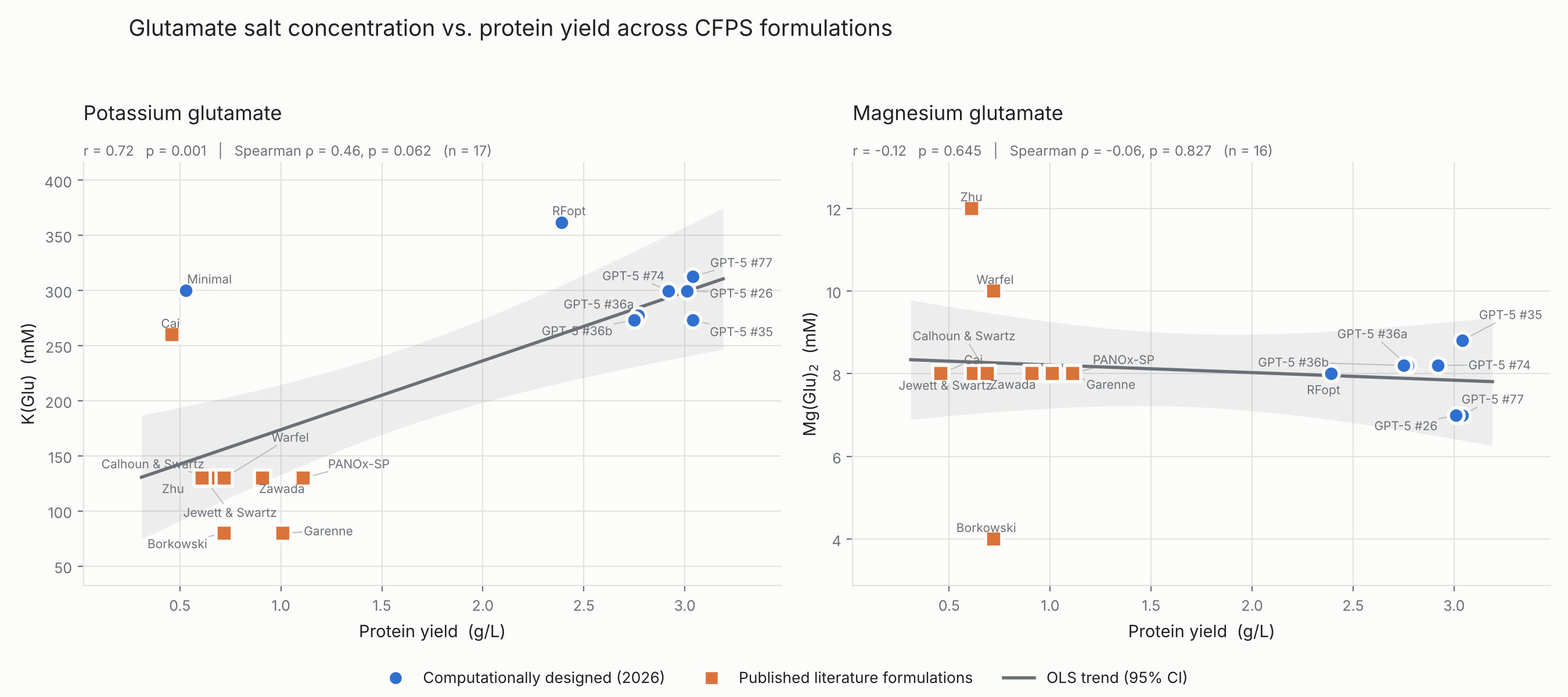
Ions can help or hinder protein expression in a system. In living cells ions could act as osmolyte which could disrupt osmotic balance between the cell and its environment, but as the cell free system is free of any semipermeable membrane this concern is irrelevant. However, ions could also act as other things, including cofactors to enzymes (especially metal ions), act as a barrier in vital processes that needs different concentration gradients (such as ATP producing systems), or disrupt ionic bonds between amino acid side chains in a protein. Potassium and Magnesium both are cations, and both have extensive biological functions. Potassium acts as the primary intercellular solute in many cells, while magnesium acts as cofactor for many enzymes and as a mimic for calcium. Therefore, I hypothesize that changes magnesium will have a greater effect towards the overall yield and thus is more sensitive. To test this, I plotted the Mg-Glu and K-Glu concentrations of each CFPS formulations in a graph and test their effect towards yield (with the help of claude), the resulting image is as follows:
The graph shows that changes in Potassium ions correlates significantly with protein yield in the various CFPS formulations, whereas Magnesium ions concentration does not correlate with CFPS yield This shows that only potassium correlates with yield, which invalidated my hypothesis. This could be because
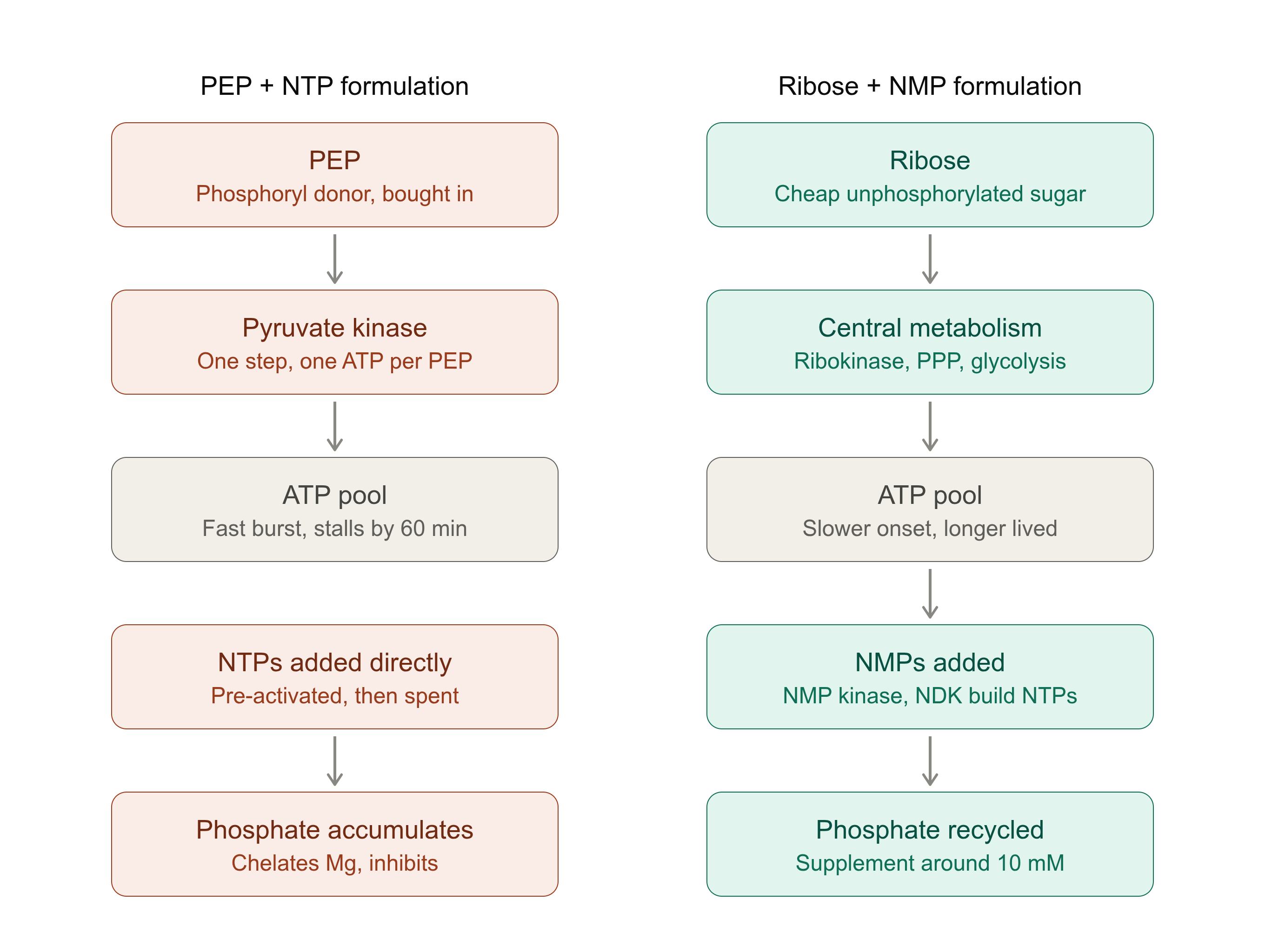
Explain how a PEP+NTP reaction formulation is different from a Ribose+NMP reaction formulation.
These two mainly differs in how the system regenerates its NTPs for mRNA synthesis and energy. PEP uses phospoenolpyruvate that is then broken down into pyruvate which then yield high levels of ATP quickly, since only one reaction step is needed to create pyruvate. However, PEP system leads to phospate accumulation and AMP as a byproduct which could potentially result in CFS yield inhibition. Ribose+NMP on the other hand, generates energy much more slowly, but more sustainably with ribose acting as a non phosporylated backbone for energy generation and NTP production. Here’s a diagram comparing the two systems.
Choose two cell-free reaction compositions from the literature, compare and contrast the choice of reagents and the concentration of reagents.
I will compare the earlier PANOx-SP and the optimized Rfopt formulation as described in the article by Olsen et al. 2026 as follows:
Table 1 (extract) — PANOx-SP vs RF_opt
Cell-free reagent formulations, from Olsen et al., Nat Commun17, 3478 (2026).
doi:10.1038/s41467-026-69605-8
Parameter
PANOx-SP (Jewett & Swartz)
RF_opt (this work)
CFE cost ($reagent/g protein)
$4083
$60
Reagent cost ($/L_CFE)
$4535
$143
Yield determined in this work (g/L)
1.11 ± 0.13
2.39 ± 0.28
Reported yield (g/L)
0.7
—
Component
PANOx-SP
RF_opt
Mg(Glu)₂
8
8
NH₄(Glu)
10
—
K(Glu)
130
362
Amino acids
2
5
Phosphate
—
15
Ribose
—
50
HEPES
57
75
Putrescine
1
—
Spermidine
1.5
0.13
Folinic acid
0.03
2.05
tRNA
0.17
—
CoA
0.27
—
NAD
0.4
—
PEP
30
—
Oxalic acid
4
—
ATP
1.2
—
CTP
0.85
—
GTP
0.85
—
UTP
0.85
—
AMP
—
3
CMP
—
2.15
GMP
—
2.15
UMP
—
2.15
Units: all concentrations in mM, except folinic acid and tRNA (mg/mL).
— indicates the component is absent from that formulation.
The starkest difference between the two formulation is of course the energy generation system used in both. The PANOx system uses a PEP-NTP system while the Rfopt uses a Ribose-NMP system. Furthermore, both differs in electrolytes used, PANOx uses ammonium glutamate, which RFopt has none of, and RFopt uses 3 times the amount of potassium glutamate compared to PANOx. Cofactors and coenzymes are also different between the two, as PANOx has more tRNA, CoA, and NAD, also putrescine; all of which are not present in RFopt. Spermidine on the otherhand is 10x more concentrated on PANOx compared to RFopt, while twice the amount of folinic acid is in RFopt compared to PANOXsp.
B. DESIGN ONE REACTION COMPOSITION FOR EACH OF THE THREE PROTEINS (40 minutes)
Sign in to coopetition.htgaa.org and publish your first unique 20 µL CFPS reaction composition for each of the following (don’t worry, you can resubmit later):
For each composition, specify the reagents you would adjust from the relevant categories, including salts, energy sources, building blocks, cofactors, and redox components.
My approach my general rationale is to slightly tweaks the top performing formulations available on the coopetition website. My idea is that since they are already the top performing ones, radical changes would more likely to result in reduced yield compared to if just small changes are made. The top performing formulations are all part of Smith et al. (2026)’s GPT-generated formulation, especially #77 #26 #35 and #74. As a benchmark, I also included the RFopt by Olsen et al. (2026). The consensus for both would then be tweaked according to the oxidative condition that each target protein needs.
CFPS compositions — GPT-5 designs vs RF_opt
Exported from the HTGAA Cell-Free Reaction Designer (coopetition.htgaa.org/cfps).
Blank = component absent from that formulation.
Reagent
Unit
GPT-5 #77
GPT-5 #26
GPT-5 #35
GPT-5 #74
RF_opt (2026)
K(Glu)
mM
200
200
200
200
200
Mg(Glu)₂
mM
8.85
8.85
8.85
8.85
8.85
Amino acids
mM
4.1
3.2
4.8
4.8
5
Tyrosine
mM
4.1
3.2
1.2
1.2
5
Cysteine
mM
4
3.2
5
4
5
HEPES pH 7.5
mM
45
50
67.5
75
75
Phosphate (di:mono)
mM
5.6
7.5
7.5
15
15
Phosphate (mono:di)
mM
5.6
7.5
7.5
Glucose
mM
6.9
8.3
8.3
10
Sodium pyruvate
mM
9.1
Ribose
mM
77.4
69.9
40
40
50
Nicotinamide
mM
3.1
4
4
4
4
Spermidine
mM
1.2
1.2
Oxaloacetic acid
mM
5
Adenosine
mM
0.4
Guanine
mM
0.2
0.6
Catalase
U/mL
187.5
AMP
mM
0.6
0.8
0.5
1.5
3
CMP
mM
0.4
0.5
1
1
2.15
GMP
mM
0.5
1
2.15
UMP
mM
0.4
0.5
1
1
2.15
Rows absent from all five formulations (NH₄(Glu), PEP, 3-PGA, NTPs, tRNA, CoA, NAD,
folinic acid, oxalate, putrescine, GSSG/GSH, DsbC, maltodextrin, and others) are omitted.
For sfGFP I opted on using one of the GPT formulation as a basis, especially GPT #77 and #35 which has the highest yield. Compared to human-design RFopt, I noticed that the GPT designs often has a higher level of ribose and glucose and thus I incorporated that feature into this formulation. The GPT designs are also quite modest in terms of NMP, and thus I use that as a basis, while maximizing its amount, following the logic that higher concentrations means higher chance that a reaction will occur and higher yield.
The PETase formulation was built on the same GPT #35 basis but optimised for PETase salt optima. As PETase only have a single sulfide bridge, I thought that not much adjustment is needed for the oxidizing part of the reagents.
The reteplase part is about adjusting the redox-related components. This includes the gluthationes and the catalases, which I matched to the reteplase ribose formulation. The rest of the formulation is identical to the GPT#35.