I am very interested in designing metabolic pathways to produce desired compounds using various organisms! As far as my background, I have a bachelor’s in Microbiology with a minor in Chemistry from Clemson University. Recently been making videos on personal lab projects that I am interested in check them out and my other socials while you are here!
See the nav bar on the left to look through my work for How To
Biomanufacture Almost Anything (Fall 2026)!
Subsections of Flavoris — HTBAA Fall 2026
Week 1 HW: Final Project Ideas
1. What you would like to biomanufacture and why?
I would like to be able to biomanufacture essential oils, particularly the aromatic compounds responsible for the scents and properties of different oils. I have always enjoyed the scents of essential oils and have been interested in their many applications, including fragrances, personal care products, and other consumer products.
I am particularly interested in exploring whether compounds that are normally obtained from plants could instead be produced using other biological systems. This makes essential oils an interesting target for biomanufacturing because it could connect my interest in natural products with synthetic biology and fermentation.
My motivation for this project is primarily personal rather than utilitarian. I am interested in essential oils and how they are produced, and I think it would be fascinating to explore how biological systems could be engineered to produce these compounds. Ultimately, I would like to develop a way to produce useful and appealing aromatic compounds through a controlled biological manufacturing process.
2. What living system would you use?
I would like to use either a fast growing plant species, such as Nicotiana, or a microbial system such as bacteria or yeast. Each approach has advantages and challenges that I would like to explore.
Using a plant as the manufacturing chassis would allow the plant’s natural metabolic pathways to produce the compounds that make up the essential oil. A fast growing species such as Nicotiana could potentially be grown at relatively high density, allowing a larger amount of plant material to be produced for extraction. After the plants have grown and produced the desired compounds, the plant material could be harvested and the essential oil extracted using an established method such as steam distillation. One advantage of this approach is that the downstream extraction process would be similar to methods already used in the essential oil industry.
An alternative would be to use bacteria or yeast in a fermentation system. In this case, the microorganism could potentially be engineered to produce the desired aromatic compounds through its own metabolic pathways. Nutrients and other required components would be supplied to the fermentation vessel, the microorganism would grow and produce the target compounds, and the resulting compounds would then be recovered from the fermentation system.
One of my main concerns with a microbial system would be whether the essential oil compounds could become toxic to the microorganism. Because many of these compounds can affect cell membranes and other cellular processes, there may be a concentration at which continued production becomes detrimental to the host. One possible solution could be to continuously or periodically remove the product from the fermentation system as it is produced. This could reduce the concentration of the product in contact with the cells and potentially allow production to continue for a longer period.
For an initial project, I would be interested in comparing these approaches and determining whether a plant system or a microbial fermentation system would be more practical for producing a specific essential oil compound.
3. How would you use automation?
Automation could be used with any of the living system options I proposed. For a bacterial or yeast system, liquid handling robots could be used to automate tasks such as preparing growth media, inoculating cultures, transferring samples, and feeding cultures. A bioreactor could also automate environmental conditions such as temperature, pH, oxygen levels, and nutrient availability during fermentation.
Automation could be particularly useful for sampling and measurement during fermentation. For example, samples could be automatically collected at regular intervals and analyzed to determine the concentration of the desired essential oil compound. This information could then be used to automatically adjust the fermentation conditions or determine when product should be removed from the system. In a continuous fermentation system, automation could control the addition of nutrients and removal of culture or product to maintain conditions that support continued production. This could help maintain a productive culture while also preventing the concentration of the essential oil compound from becoming harmful to the microorganism.
Automation could also be applied to the plant system. Automated growing systems could control environmental conditions such as light, temperature, humidity, watering, and nutrient delivery. Cameras or other sensors could monitor plant growth and health, allowing the system to identify when plants are ready for harvesting. Automated harvesting and extraction could then potentially be used to process the plant material and recover the essential oil.
Overall, I would use automation to create a system in which growth, production, sampling, measurement, and product recovery could occur with minimal manual intervention. This would allow many cultures or plants to be monitored simultaneously and would make it easier to collect consistent data and optimize the conditions for essential oil production.
4. How much would you need to make, and how long would it take?
Because essential oils are complex mixtures of many different compounds, I will use limonene, a major component of several essential oils, as a representative target compound rather than attempting to calculate production of an entire essential oil. For this back-of-the-envelope calculation, I will focus on the microbial fermentation approach because there is published production data for limonene using engineered E. coli, which allows me to make a more realistic estimate.
4a. How much?
My initial goal would be to produce 1 kg of purified limonene as a demonstration of a scalable biomanufacturing process. I chose 1 kg because it represents a meaningful amount of product while still being a reasonable target for a hypothetical scale up from laboratory production.
A published study using engineered E. coli reported a limonene titer of 3.6 g/L and a space-time yield of 0.15 g/L/hour. (Rolf et al., 2020)
Using the reported limonene titer, the approximate fermentation volume required to produce 1 kg of limonene would be:
Target production = 1 kg = 1,000 g limonene
Published titer = 3.6 g limonene/L
1,000 g ÷ 3.6 g/L = 277.8 L
Therefore, I would need approximately 278 L of fermentation capacity to theoretically produce 1 kg of limonene at the published titer.
This calculation assumes that the published 3.6 g/L titer could be maintained when scaling the process from the approximately 3 L reactor used in the study to approximately 278 L. This represents roughly a 90-fold increase in fermentation volume, so the actual production volume could be higher if productivity decreases during scale up.
4b. How long?
The same study that was mentioned in the previous question reported a space-time yield of 0.15 g/L/hour. Using the estimated 278 L of fermentation capacity, the expected production rate would be:
278 L × 0.15 g/L/hour = 41.7 g/hour
The amount produced over 24 hours would therefore be:
41.7 g/hour × 24 hours = 1,000.8 g
This is approximately 1 kg of limonene.
The study’s optimized fermentation also produced limonene for approximately 24 hours, reaching its final reported concentration at the end of the fermentation. Therefore, based on these published results, I would estimate approximately 24 hours of active fermentation to produce 1 kg of limonene at the theoretical 278 L scale. (Rolf et al., 2020)
However, the total manufacturing time would be longer than the 24-hour fermentation itself because it would also require time for inoculum preparation, sterilization, fermentation setup, product recovery, purification, and cleaning. In addition, maintaining the same production rate at a roughly 90-fold larger scale is an assumption that would need to be experimentally validated.
For prototype scale development, I would use a desktop liquid handling robot and small fermentation vessels to test different engineered strains and fermentation conditions in parallel. This would allow many conditions to be screened before moving to a larger production system.
For manufacturing at scale, I would use industrial bioreactors with automated control of temperature, pH, oxygen, agitation, and nutrient feeding. I would also use automated sampling and product monitoring, along with in situ product removal. The latter would be particularly useful for limonene because the published process used a two liquid phase system to capture limonene as it was produced. This could help reduce product accumulation in the culture and allow the microorganisms to continue producing limonene.
5. What don’t you know yet?
There are several things I would need to determine experimentally before I could know whether this biomanufacturing system would actually work at a larger scale. The three biggest unknowns for me are the tolerance of the organism to a desired aromatic compound, whether the production rate can be maintained during scale up, and how efficiently the desired aromatic compound can be recovered from the fermentation system.
Source:
Rolf, J., Julsing, M. K., Rosenthal, K., & Lütz, S. (2020). A Gram-Scale Limonene Production Process with Engineered Escherichia coli. Molecules, 25(8), 1881. https://doi.org/10.3390/molecules25081881
Week 2 HW: DNA Design
Part 0: Set up in Kernel
Repository: HTBAA26_Genspace
Folder: Flavoris Belue
Part 1: Define your expression target
What molecule are you expressing?
I am looking to express the terpene limonene. The following proteins are involved in the metabolic pathway needed for the production of limonene from acetyl-CoA:
atoB — Acetyl-CoA acetyltransferase
Converts acetyl-CoA into acetoacetyl-CoA
HMGS — HMG-CoA synthase
Converts acetoacetyl-CoA to HMG-CoA
HMGR — HMG-CoA reductase
Converts HMG-CoA to mevalonate. In this system, an N-terminally truncated HMGR is used
MK — mevalonate kinase
Phosphorylates mevalonate
PMK — phosphomevalonate kinase
Carries out the next phosphorylation step in the mevalonate pathway
PMD — Diphosphomevalonate decarboxylase
Produces the isoprenoid precursor IPP
idi — isopentenyl diphosphate isomerase
Interconverts IPP and DMAPP so both precursor pools are available
trGPPS — truncated geranyl pyrophosphate synthase
Combines IPP and DMAPP to produce GPP, the direct precursor to limonene. The construct uses a truncated, codon-optimized version
LS — limonene synthase
Converts GPP into (S)-limonene. The system uses a truncated, codon-optimized Mentha spicata enzyme lacking its plastid targeting sequence
What is the sequence?
Any mutations or truncated proteins differing from the wild-type are based on the pJBEI-6410 system that produced limonene in E. coli (Alonso-Gutierrez et al.). NCBI or UniProt Accession numbers are provided for the wild-type variants of the proteins listed, with any truncation or mutations mentioned with their associated protein.
atoB - UniProt Accession #: P76461
HMGS - NCBI Accession #: AAG02422.1
HMGR - NCBI Accession #: AAG02423.1
MK - NCBI Accession #: NP_013935.1 (protein used contains the R364S mutation)
PMK - NCBI Accession #: NP_013947.1
PMD - NCBI Accession #: NP_014441.1
idi - NCBI Accession #: NP_417365.1
trGPPS - NCBI Accession #: AAN01134.1 (truncated, removes the first 84 aa, the plastid-targeting N terminus.)
LS - NCBI Accession #: AAC37366.1 (truncated, without the plastidial targeting sequence (no plastids in E. coli), the first 57 amino acids at the N terminus are removed.)
What host or chassis?
Escherichia coli
Where does the product need to go?
Cytoplasm. Limonene synthase and the rest of the metabolic pathway can operate intracellularly.
Part 2: Design your genetic parts
Part Type/Short Name
Sequence
Justification
Promoter - BBa_K3257005 (LacUV5)(iGem)
tttacactttatgcttccggctcgtataatg
This promoter contains LacI/lac-operator regulation, and allows IPTG control of precursor supply for limonene production.
RBS - atoB (Alonso-Gutierrez et al.)
aggaggaatataaa
This RBS supports translation initiation of atoB by E. coli ribosomes, enabling the first enzymatic step in the introduced pathway supplying limonene precursors.
This terminator promotes termination of the transcript in E. coli.
Promoter - BBa_K4047032 (iGem)
ttgacaattaatcatccggctcgtataatg
The trc promoter drives expression of MK, PMK, PMD, and idi in E. coli, with LacI/lac operator regulation allowing IPTG control of limonene precursor production.
RBS - MK (Alonso-Gutierrez et al.)
aggaggaaataacc
This RBS supports translation of MK in E. coli, enabling the first phosphorylation step that converts mevalonate toward limonene precursors.
This CDS enables E. coli to convert mevalonate-5-phosphate into mevalonate-5-diphosphate, supplying the substrate for IPP formation in the limonene pathway.
RBS - PMD (Alonso-Gutierrez et al.)
aggaggattatgag
This RBS supports translation initiation of PMD in E. coli, allowing production of the enzyme that generates IPP for limonene biosynthesis.
This CDS encodes diphosphomevalonate decarboxylase, which converts mevalonate-5-diphosphate into IPP in E. coli to supply a building block for limonene.
RBS - idi (Alonso-Gutierrez et al.)
aggaggtaatgata
This RBS supports translation initiation of idi in E. coli, enabling production of the enzyme that interconverts the IPP and DMAPP precursors needed for limonene synthesis.
This CDS encodes an isomerase that interconverts IPP and DMAPP, helping provide both substrates required to make the GPP precursor of limonene.
Terminator - BBa_K3228006 (iGem)
cgcaaaaaaccccgcttcggcggggttttttcgc
This terminator promotes termination of the transcript in E. coli.
Promoter - BBa_K4047032 (iGem)
ttgacaattaatcatccggctcgtataatg
This trc promoter drives trGPPS and limonene synthase expression in E. coli, with LacI/lac operator regulation allowing IPTG control of the final steps in limonene biosynthesis.
RBS - BBa_M50062 (iGem)
aggagatatacat
This RBS supports translation initiation of trGPPS in E. coli, enabling production of the enzyme that supplies GPP directly to limonene synthase.
This double terminator combines rrnB T1 and T7Te to promote transcription termination after limonene synthase in E. coli.
Backbone - pBbA5a (Alonso-Gutierrez et al.)
Full backbone sequence available upon request
This backbone provides a p15A replication origin, ampicillin resistance, and LacI, supporting plasmid maintenance, selection, and regulated expression of the limonene pathway in E. coli.
Part 3: Assemble your construct
This design contains the complete metabolic pathway required to produce limonene from acetyl-CoA in E. coli. The construct includes the mevalonate pathway enzymes to generate the isoprenoid precursors IPP and DMAPP, followed by GPPS to produce GPP and limonene synthase to convert GPP into limonene.
Part 4: Optimize and quality-check
Codon-optimize your CDS for your chosen host.
The nucleotide sequence of the gene changed after codon optimization, while the amino acid sequence remained the same. Codon usage matters for expression in E. coli because several of the genes used in the limonene production pathway are not native to E. coli. Different organisms preferentially use certain codons more frequently than others, so codon optimization can improve translation efficiency and protein expression in the chosen host. I did not apply any additional constraints during codon optimization.
Search your sequence (BLAST / sequence search) against known sequences.
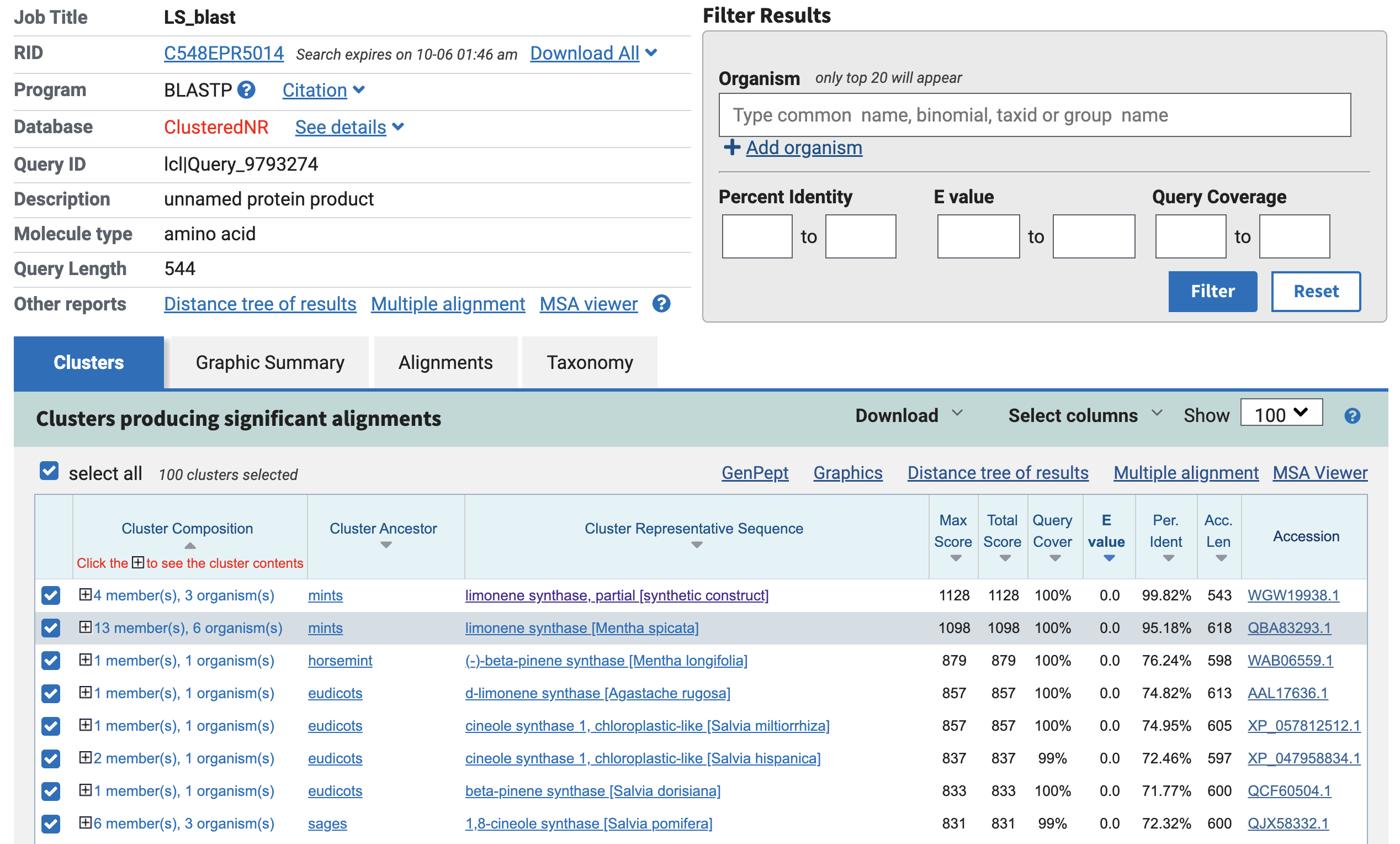
I chose to perform BLAST using the limonene synthase amino acid sequence because I did not obtain useful results when searching with the DNA sequence. This may be because the DNA sequence in my construct is both truncated and codon optimized for expression in E. coli, making it less similar at the nucleotide level to the native Mentha spicata gene. The amino acid sequence, however, is largely preserved despite the DNA sequence changes.
The top BLAST result was limonene synthase from a synthetic partial construct, which is consistent with the truncated limonene synthase used in my genetic construct. The next closest result was the wild-type limonene synthase from Mentha spicata, the organism from which the enzyme was originally derived. Based on these results, the sequence matches the protein I expected it to be.
Run the safety screen on your construct.
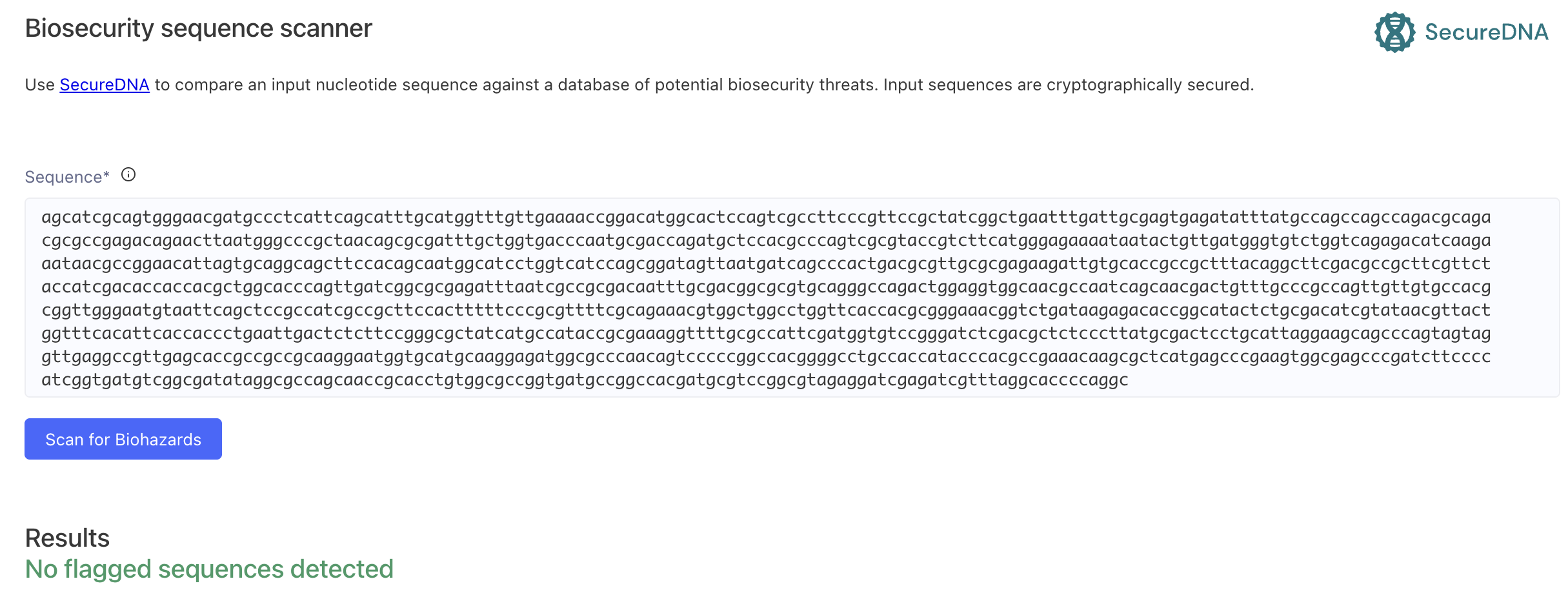
The safety screen compares the genetic construct against a database of sequences associated with potential biosecurity concerns. I ran the screen on my complete genetic construct, and the Biosecurity Sequence Scanner reported that no flagged sequences were detected. Based on this result, none of the sequences in my construct were identified as potential biosecurity threats.
Part 5: From design to build
How would you build it?
Because the complete pJBEI-6410 plasmid already exists, I would most likely obtain the full plasmid directly rather than rebuild it from scratch. However, if I needed to build the construct myself, I would order the pathway as several synthetic DNA fragments and assemble them into the plasmid backbone using Gibson assembly. Synthetic DNA would allow me to specify the exact engineered sequences needed, including codon optimization for E. coli and the truncated versions of proteins such as GPPS and limonene synthase. Gibson assembly would be useful for this relatively large multigene construct because it allows several overlapping DNA fragments to be assembled seamlessly in a single reaction (Gibson et al., 2009).
What does synthesis constrain?
One concern with synthesizing a construct of this size is the possibility of errors being introduced during DNA synthesis. The construct also contains repeated regulatory elements, such as promoters and similar RBS sequences, which could make some regions more difficult to synthesize or assemble correctly. I would therefore order the construct as smaller fragments rather than attempting to synthesize the entire plasmid as one piece. Each fragment could be sequence verified before or after assembly, and error correction methods could also be used if necessary. Carr et al. demonstrated that error correction can substantially decrease the frequency of errors in de novo synthesized DNA, which becomes increasingly important as the length of the DNA being synthesized increases (Carr et al., 2004).
Prototype vs. scale.
For the initial prototype, I would either obtain the existing pJBEI-6410 plasmid or assemble one verified construct from synthetic DNA fragments and transform it into E. coli for testing. At manufacturing scale, I would not need to continuously synthesize new copies of the plasmid. Once a correct construct and production strain were established, the verified strain could be expanded for fermentation. If I were instead screening many different pathway variants during optimization, pooled or chip based DNA synthesis could be useful because it allows many different sequences to be produced and tested in parallel (Kosuri et al., 2010).
Part 6: What don’t you know yet?
One major unknown is whether all of the pathway enzymes will be expressed at the correct levels. Even though the promoters and RBSs come from a published construct, the pathway may still become unbalanced if one enzyme is expressed too strongly or too weakly. I would test this by measuring limonene production and pathway intermediates, then compare design variants with different promoter or RBS strengths if necessary.
Another unknown is whether all of the heterologous proteins, especially GPPS and limonene synthase, will fold correctly and remain active in E. coli. Codon optimization can improve expression, but it does not guarantee that the proteins will be soluble or functional. I would test this by measuring protein expression and solubility and by measuring limonene production as a functional readout of the pathway.
A third concern is whether carrying and expressing such a large multigene plasmid will create too much metabolic burden or become unstable in E. coli. I would monitor growth rate, plasmid retention, and limonene production over multiple generations. If stability or growth became a problem, I could reduce expression levels, divide the pathway between multiple plasmids, or consider integrating some of the genes into the chromosome.
Sources:
Alonso-Gutierrez, J. et al. Metabolic engineering of Escherichia coli for limonene and perillyl alcohol production. Metabolic Engineering 19, 33–41 (2013). https://doi.org/10.1016/j.ymben.2013.05.004
Carr, P. A. et al. Protein-mediated error correction for de novo DNA synthesis. Nucleic Acids Research 32, e162 (2004). https://doi.org/10.1093/nar/gnh160
Gibson, D. G. et al. Enzymatic assembly of DNA molecules up to several hundred kilobases. Nature Methods 6, 343–345 (2009). https://doi.org/10.1038/nmeth.1318
Week 3 HW: Cell-Free Protocols
CFPS REACTION DESIGN FOR sfGFP, PETASE, RETEPLASE
A. COMPARE CELL-FREE REACTION COMPOSITIONS
1. Why does the concentration of potassium glutamate and magnesium glutamate differ between compositions? Which is more sensitive?
The concentrations of potassium glutamate and magnesium glutamate vary between CFPS formulations because the optimal concentrations depend on the other components in the reaction, especially the energy source being used. Potassium helps maintain an environment similar to the E. coli cytoplasm, while magnesium is important for transcription, translation, and ATP-dependent reactions.
Magnesium glutamate is more sensitive to changes in concentration. In PANOx-SP, increasing magnesium glutamate from 20 mM to 28 mM reduced protein expression to only 39% of the maximum yield. In comparison, increasing potassium glutamate from 175 mM to 225 mM still maintained about 92% of the maximum yield. This shows that magnesium has a much narrower optimal concentration range and needs to be adjusted more carefully, while potassium can tolerate a wider range of concentrations without significantly affecting protein production.
Reference: Jewett & Swartz (2004), Tables I and II.
2. Explain how a PEP+NTP reaction formulation is different from a Ribose+NMP reaction formulation.
A PEP + NTP formulation provides the reaction with nucleotide triphosphates (ATP, GTP, CTP, and UTP) that can be used directly for transcription, while phosphoenolpyruvate (PEP) is used to regenerate ATP needed for protein synthesis. Although this provides a readily available source of energy and nucleotides, PEP and NTPs are relatively expensive. The breakdown of PEP also causes phosphate to accumulate, which can eventually inhibit protein synthesis.
A Ribose + NMP formulation takes a different approach by using less expensive nucleotide monophosphates (AMP, CMP, GMP, and UMP) along with ribose. Instead of supplying all the nucleotides in their triphosphate form, this formulation relies more on the metabolic activity and enzymes already present in the cell extract to regenerate the NTPs and ATP needed for transcription and translation. The main advantage of this approach is that it can significantly reduce reagent costs while maintaining protein production.
3. Choose two cell-free reaction compositions from the literature, compare and contrast the choice of reagents and the concentration of reagents.
I chose to compare the PANOx-SP formulation from Jewett and Swartz (2004) with the optimized RFopt formulation from Olsen et al. (2026). Both formulations use E. coli cell extract, amino acids, and potassium and magnesium glutamate to support transcription and translation. However, the concentrations of these components are quite different. PANOx-SP uses 175 mM potassium glutamate, 20 mM magnesium glutamate, and 2 mM of each amino acid. In comparison, RFopt uses a much higher concentration of potassium glutamate at 362 mM, but a lower concentration of magnesium glutamate at 8 mM. It also uses 5 mM of each amino acid.
One of the biggest differences between the two formulations is how they supply energy and nucleotides for protein synthesis. PANOx-SP uses 33 mM PEP to regenerate ATP and directly supplies NTPs, including 1.2 mM ATP and 0.85 mM each of GTP, CTP, and UTP. It also includes additional reagents such as tRNA, NAD, and CoA. On the other hand, RFopt does not use PEP or added NTPs. Instead, it uses 50 mM ribose, 10 mM glucose, and NMPs, including 3 mM AMP and 2.15 mM each of CMP, GMP, and UMP. RFopt also includes 75 mM HEPES and 15 mM phosphate to help maintain the reaction conditions.
Overall, PANOx-SP relies more on supplying high energy substrates and additional reagents, while RFopt uses less expensive components and relies more on the metabolic activity of the cell extract. Olsen et al. (2026) showed that this approach could maintain ATP levels for longer, reduce phosphate accumulation, and significantly lower reagent costs without sacrificing protein production.
Reagent
PANOx-SP (2004)
RFopt (2026)
Potassium glutamate
175 mM
362 mM
Magnesium glutamate
20 mM
8 mM
Ammonium glutamate
10 mM
Not added
Amino acids
2 mM each
5 mM each
PEP
33 mM
Not added
Glucose
Not added
10 mM
Ribose
Not added
50 mM
ATP
1.2 mM
Not added
GTP, CTP, UTP
0.85 mM each
Not added
AMP
Not added
3 mM
GMP, CMP, UMP
Not added
2.15 mM each
HEPES buffer
Not added
75 mM
Phosphate
Not added
15 mM
Spermidine
1.5 mM
0.13 mM
Putrescine
1 mM
Not added
Oxalate
2.7 mM
Not added
NAD
0.33 mM
Not added
Coenzyme A (CoA)
0.26 mM
Not added
Added tRNA
0.171 mg/mL
Not added
Nicotinamide
Not added
4 mM
B. DESIGN ONE REACTION COMPOSITION FOR EACH OF THE THREE PROTEINS
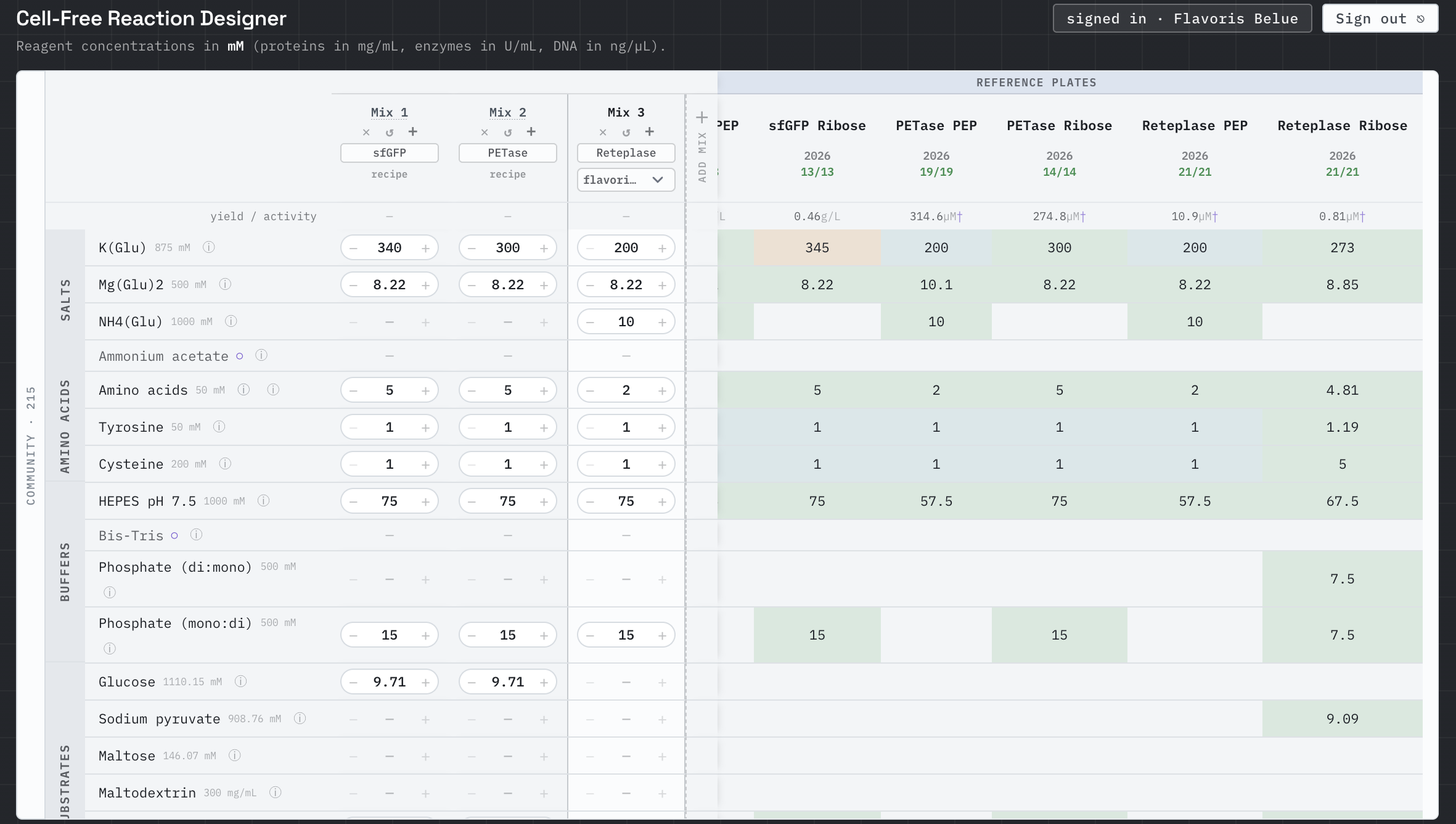
Sign in to coopetition.htgaa.org and publish your first unique 20 µL CFPS reaction composition for each of the following:
sfGFP
PETase
Reteplase
My CFPS reaction compositions:
As a HTBAA research team, we will have the opportunity to suggest new reagents to add to the cell-free reagent inventory. Contribute (or upvote) at least one reagent to the “Community Reagents” section of the website and provide a short rationale. Include in your homework documentation how you decided on that specific reagent and provide links to any relevant research.
My Reagent Suggestion:
I chose to suggest GroEL/GroES after considering the difference between protein expression and functional protein production. Our inventory already includes energy substrates, nucleotides, and DsbC, but a separate GroEL/GroES supplement would provide another way to address folding and aggregation.
I looked for research that tested chaperones directly in cell-free protein synthesis. Niwa et al. (2012) studied approximately 800 aggregation prone E. coli proteins and found that GroEL/GroES improved the solubility of many proteins.
The study used a purified, chaperone-free system rather than our lysate-based system, so its results do not prove that supplementation will help our targets. My proposal is to test whether additional folding support increases enzyme activity enough to justify its cost. For Reteplase, this would supplement, not replace, the conditions needed for correct disulfide formation.
C. ASIMOV KERNAL
Build T7 compatible plasmids for cell-free expression using the amino acid coding sequences below:
Bonus question: design a T7 helper plasmid that you could add to the cell-free reaction to improve the yield of functional reteplase (general chaperones, disulfide-bond machinery, etc).
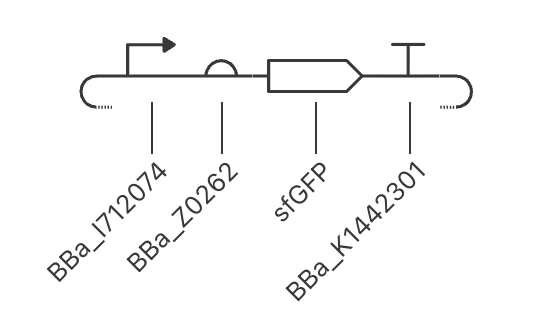
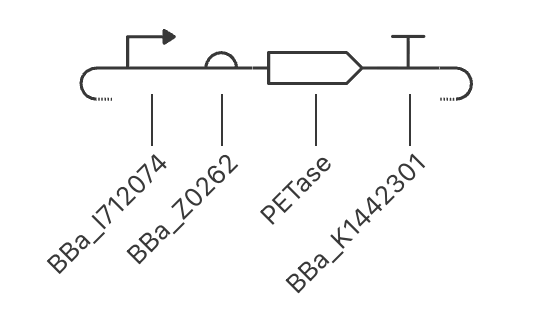
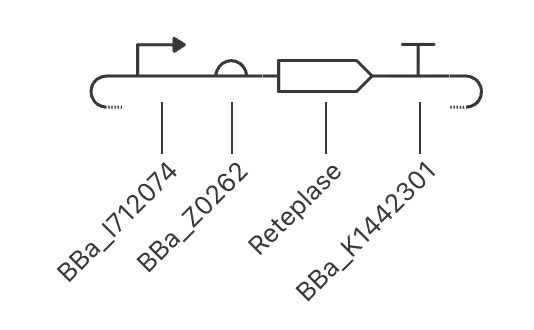
I designed a T7 helper plasmid encoding the E. coli chaperones GroES and GroEL. The expression cassette contains a T7 promoter, ribosome binding sites for each gene, and a T7 terminator. This would allow both chaperones to be produced alongside Reteplase in the cell-free reaction.
My rationale is that Reteplase production can be limited by folding and aggregation, not just protein synthesis. GroEL/GroES would provide general folding support, while the existing DsbC, glutathione, and oxidizing lysate would support its nine disulfide bonds. I would retain those components rather than treating the helper as a replacement.
This is an experimental hypothesis. Excessive helper expression could compete with Reteplase for translation resources and ATP. I would compare several helper DNA levels with no helper and matched empty vector controls, judging success by Reteplase enzyme activity rather than total protein alone.