Week 3 HW: Cell-Free Protocols
CFPS REACTION DESIGN FOR sfGFP, PETASE, RETEPLASE
A. COMPARE CELL-FREE REACTION COMPOSITIONS
1. Why does the concentration of potassium glutamate and magnesium glutamate differ between compositions? Which is more sensitive?
The concentrations of potassium glutamate and magnesium glutamate vary between CFPS formulations because the optimal concentrations depend on the other components in the reaction, especially the energy source being used. Potassium helps maintain an environment similar to the E. coli cytoplasm, while magnesium is important for transcription, translation, and ATP-dependent reactions.
Magnesium glutamate is more sensitive to changes in concentration. In PANOx-SP, increasing magnesium glutamate from 20 mM to 28 mM reduced protein expression to only 39% of the maximum yield. In comparison, increasing potassium glutamate from 175 mM to 225 mM still maintained about 92% of the maximum yield. This shows that magnesium has a much narrower optimal concentration range and needs to be adjusted more carefully, while potassium can tolerate a wider range of concentrations without significantly affecting protein production. Reference: Jewett & Swartz (2004), Tables I and II.
2. Explain how a PEP+NTP reaction formulation is different from a Ribose+NMP reaction formulation.
A PEP + NTP formulation provides the reaction with nucleotide triphosphates (ATP, GTP, CTP, and UTP) that can be used directly for transcription, while phosphoenolpyruvate (PEP) is used to regenerate ATP needed for protein synthesis. Although this provides a readily available source of energy and nucleotides, PEP and NTPs are relatively expensive. The breakdown of PEP also causes phosphate to accumulate, which can eventually inhibit protein synthesis.
A Ribose + NMP formulation takes a different approach by using less expensive nucleotide monophosphates (AMP, CMP, GMP, and UMP) along with ribose. Instead of supplying all the nucleotides in their triphosphate form, this formulation relies more on the metabolic activity and enzymes already present in the cell extract to regenerate the NTPs and ATP needed for transcription and translation. The main advantage of this approach is that it can significantly reduce reagent costs while maintaining protein production.
3. Choose two cell-free reaction compositions from the literature, compare and contrast the choice of reagents and the concentration of reagents.
I chose to compare the PANOx-SP formulation from Jewett and Swartz (2004) with the optimized RFopt formulation from Olsen et al. (2026). Both formulations use E. coli cell extract, amino acids, and potassium and magnesium glutamate to support transcription and translation. However, the concentrations of these components are quite different. PANOx-SP uses 175 mM potassium glutamate, 20 mM magnesium glutamate, and 2 mM of each amino acid. In comparison, RFopt uses a much higher concentration of potassium glutamate at 362 mM, but a lower concentration of magnesium glutamate at 8 mM. It also uses 5 mM of each amino acid.
One of the biggest differences between the two formulations is how they supply energy and nucleotides for protein synthesis. PANOx-SP uses 33 mM PEP to regenerate ATP and directly supplies NTPs, including 1.2 mM ATP and 0.85 mM each of GTP, CTP, and UTP. It also includes additional reagents such as tRNA, NAD, and CoA. On the other hand, RFopt does not use PEP or added NTPs. Instead, it uses 50 mM ribose, 10 mM glucose, and NMPs, including 3 mM AMP and 2.15 mM each of CMP, GMP, and UMP. RFopt also includes 75 mM HEPES and 15 mM phosphate to help maintain the reaction conditions.
Overall, PANOx-SP relies more on supplying high energy substrates and additional reagents, while RFopt uses less expensive components and relies more on the metabolic activity of the cell extract. Olsen et al. (2026) showed that this approach could maintain ATP levels for longer, reduce phosphate accumulation, and significantly lower reagent costs without sacrificing protein production.
| Reagent | PANOx-SP (2004) | RFopt (2026) |
|---|---|---|
| Potassium glutamate | 175 mM | 362 mM |
| Magnesium glutamate | 20 mM | 8 mM |
| Ammonium glutamate | 10 mM | Not added |
| Amino acids | 2 mM each | 5 mM each |
| PEP | 33 mM | Not added |
| Glucose | Not added | 10 mM |
| Ribose | Not added | 50 mM |
| ATP | 1.2 mM | Not added |
| GTP, CTP, UTP | 0.85 mM each | Not added |
| AMP | Not added | 3 mM |
| GMP, CMP, UMP | Not added | 2.15 mM each |
| HEPES buffer | Not added | 75 mM |
| Phosphate | Not added | 15 mM |
| Spermidine | 1.5 mM | 0.13 mM |
| Putrescine | 1 mM | Not added |
| Oxalate | 2.7 mM | Not added |
| NAD | 0.33 mM | Not added |
| Coenzyme A (CoA) | 0.26 mM | Not added |
| Added tRNA | 0.171 mg/mL | Not added |
| Nicotinamide | Not added | 4 mM |
B. DESIGN ONE REACTION COMPOSITION FOR EACH OF THE THREE PROTEINS
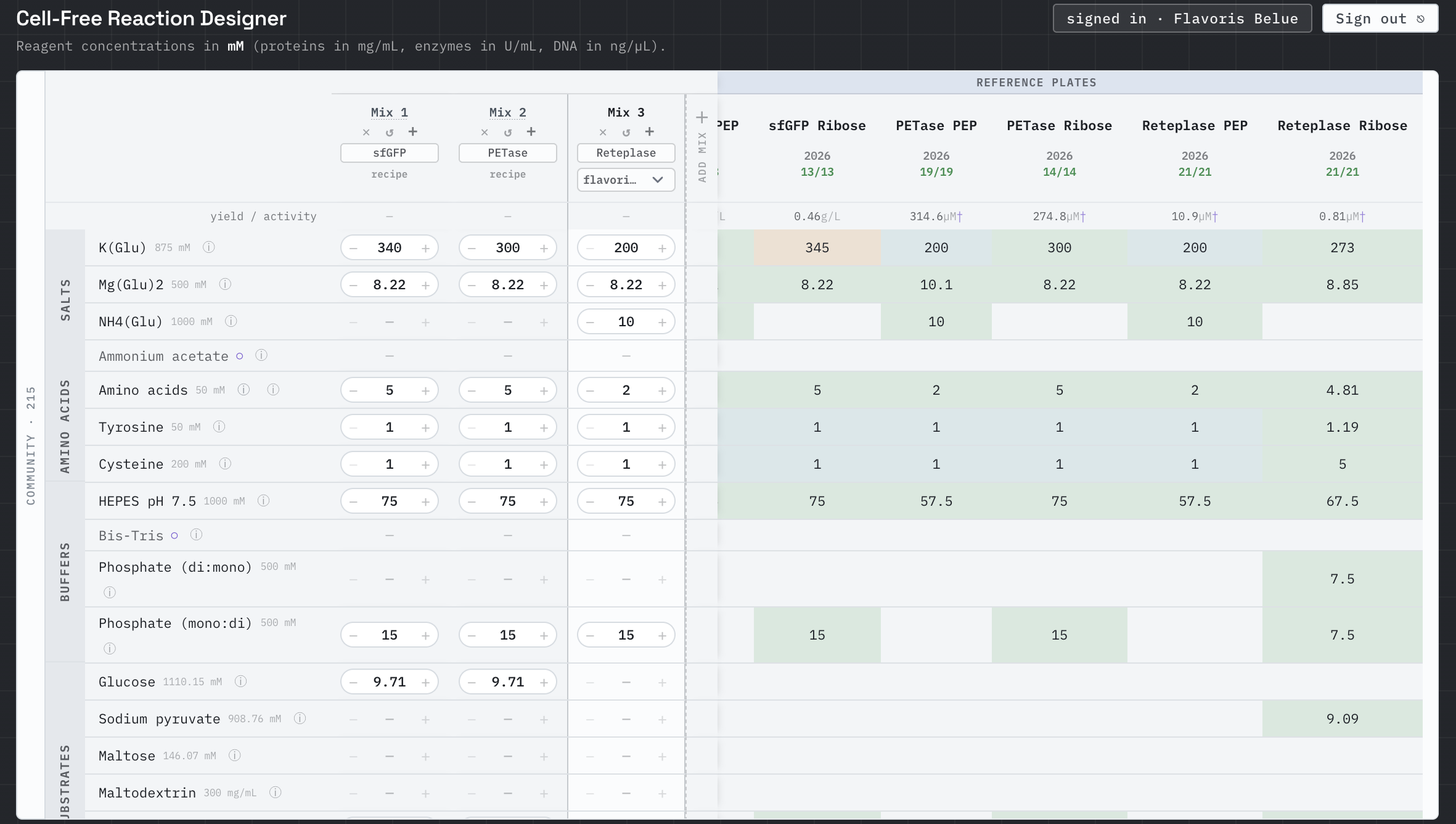
Sign in to coopetition.htgaa.org and publish your first unique 20 µL CFPS reaction composition for each of the following:
- sfGFP
- PETase
- Reteplase
My CFPS reaction compositions:
As a HTBAA research team, we will have the opportunity to suggest new reagents to add to the cell-free reagent inventory. Contribute (or upvote) at least one reagent to the “Community Reagents” section of the website and provide a short rationale. Include in your homework documentation how you decided on that specific reagent and provide links to any relevant research.
My Reagent Suggestion:

I chose to suggest GroEL/GroES after considering the difference between protein expression and functional protein production. Our inventory already includes energy substrates, nucleotides, and DsbC, but a separate GroEL/GroES supplement would provide another way to address folding and aggregation.
I looked for research that tested chaperones directly in cell-free protein synthesis. Niwa et al. (2012) studied approximately 800 aggregation prone E. coli proteins and found that GroEL/GroES improved the solubility of many proteins.
The study used a purified, chaperone-free system rather than our lysate-based system, so its results do not prove that supplementation will help our targets. My proposal is to test whether additional folding support increases enzyme activity enough to justify its cost. For Reteplase, this would supplement, not replace, the conditions needed for correct disulfide formation.
C. ASIMOV KERNAL
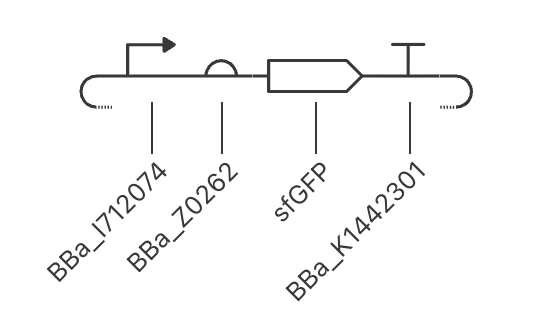
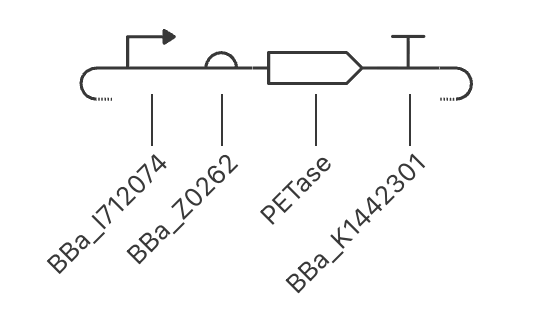
Build T7 compatible plasmids for cell-free expression using the amino acid coding sequences below:
sfGFP:
PETase:
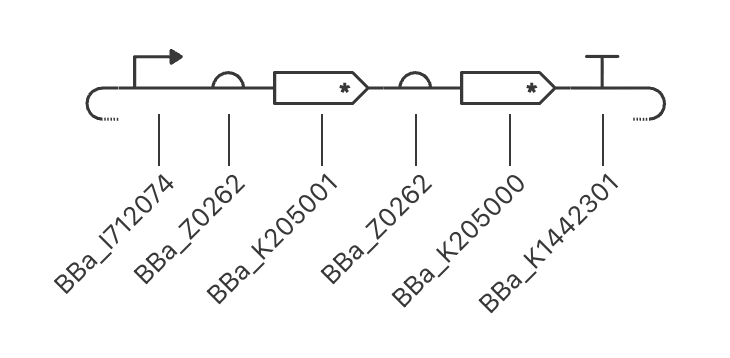
Reteplase:
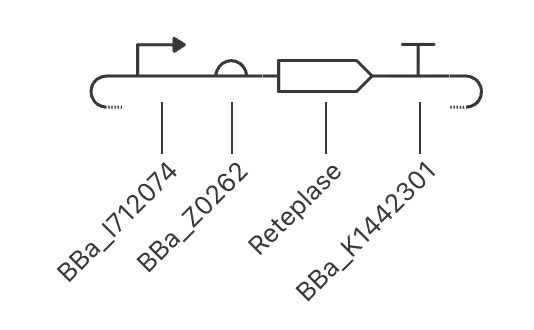
Bonus question: design a T7 helper plasmid that you could add to the cell-free reaction to improve the yield of functional reteplase (general chaperones, disulfide-bond machinery, etc).
I designed a T7 helper plasmid encoding the E. coli chaperones GroES and GroEL. The expression cassette contains a T7 promoter, ribosome binding sites for each gene, and a T7 terminator. This would allow both chaperones to be produced alongside Reteplase in the cell-free reaction.
My rationale is that Reteplase production can be limited by folding and aggregation, not just protein synthesis. GroEL/GroES would provide general folding support, while the existing DsbC, glutathione, and oxidizing lysate would support its nine disulfide bonds. I would retain those components rather than treating the helper as a replacement.
This is an experimental hypothesis. Excessive helper expression could compete with Reteplase for translation resources and ATP. I would compare several helper DNA levels with no helper and matched empty vector controls, judging success by Reteplase enzyme activity rather than total protein alone.