Week 9 HW: Genetic Circuit Design
Question 1. Design a neuromorphic genetic circuit that successfully classifies uveal melanoma from healthy cells. Your design should include TNSF10 and TRPM1 as inputs (e.g., X1 and X2 from the video example) , neuromorphic genetic circuitry that classifies cancer from healthy cells (e.g., an ERN and ERN target), and a molecular output that can treat/cure this cancer (think of strategies to either kill or reprogram the cancer, simulate the immune system, etc).
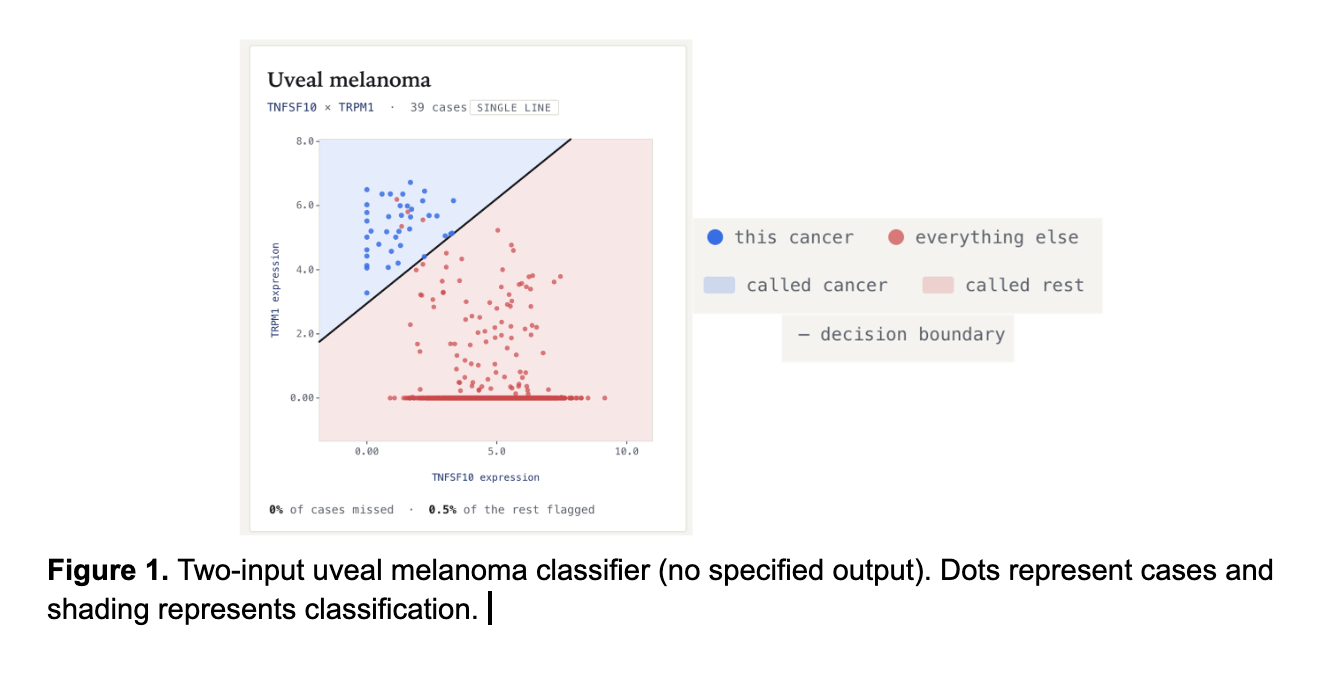
For my circuit (the figure below), I used X1 to represent TNFSF10 expression and X2 to represent TRPM1 expression. I wanted the output to be strongest when TRPM1 was high and TNFSF10 was low, since that’s where most of the uveal melanoma samples fall in the figure from the homework questions (the figure above).
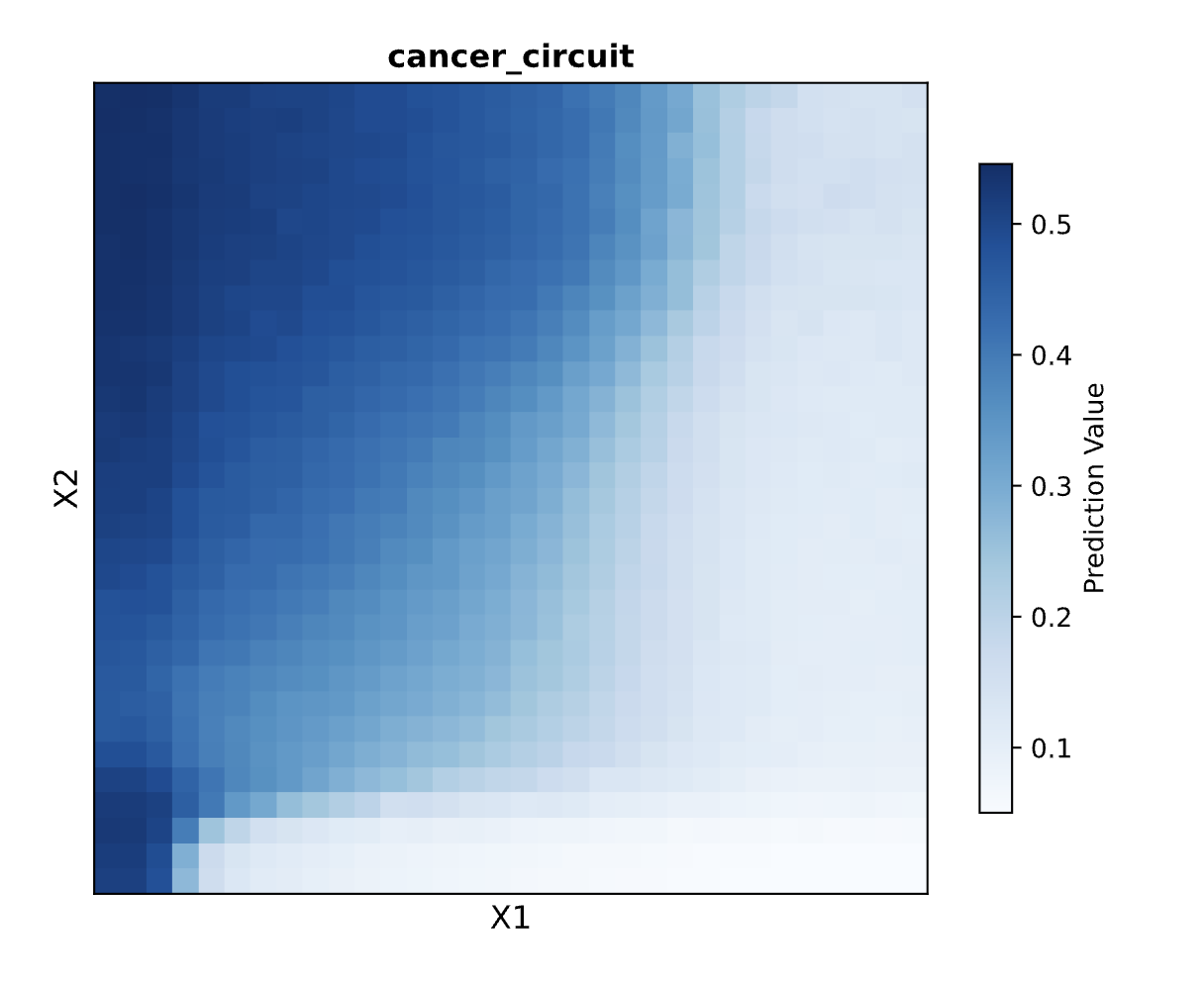
I used mNeonGreen to see the response in the Neuromorphic Wizard. As X1 increases, the circuit makes more CasE, which cuts the mNeonGreen RNA and lowers the signal. As X2 increases, the circuit makes more Csy4, which cuts the RNA for CasE and lets more of the green signal come through. The darkest blue in the upper left of my heatmap matches the pattern I was looking for. For a therapeutic output, I’d propose CXCL10, a signaling molecule that could help draw activated T cells toward the tumor. Study on CXCL10 and T cell recruitment
Question 2. Pick a disease that you think could be treated or cured with a cell therapy. Then, research whether there are distinct biological markers (ideally 2 or 3 markers) that distinguish a diseased state from a non-diseased state. It’s important that the levels of these markers are characterized beyond just high/low levels: Look for data that measure the exact levels of the markers you choose. Make an input/output scatterplot or similar graph that incorporates your markers and classifies whether that point is considered diseased or not.
Finally, design a neuromorphic genetic circuit that incorporates sensing of your chosen markers, neuromorphic genetic circuitry that classifies disease vs. non-disease, and a molecular output that could treat/cure your disease of choice.
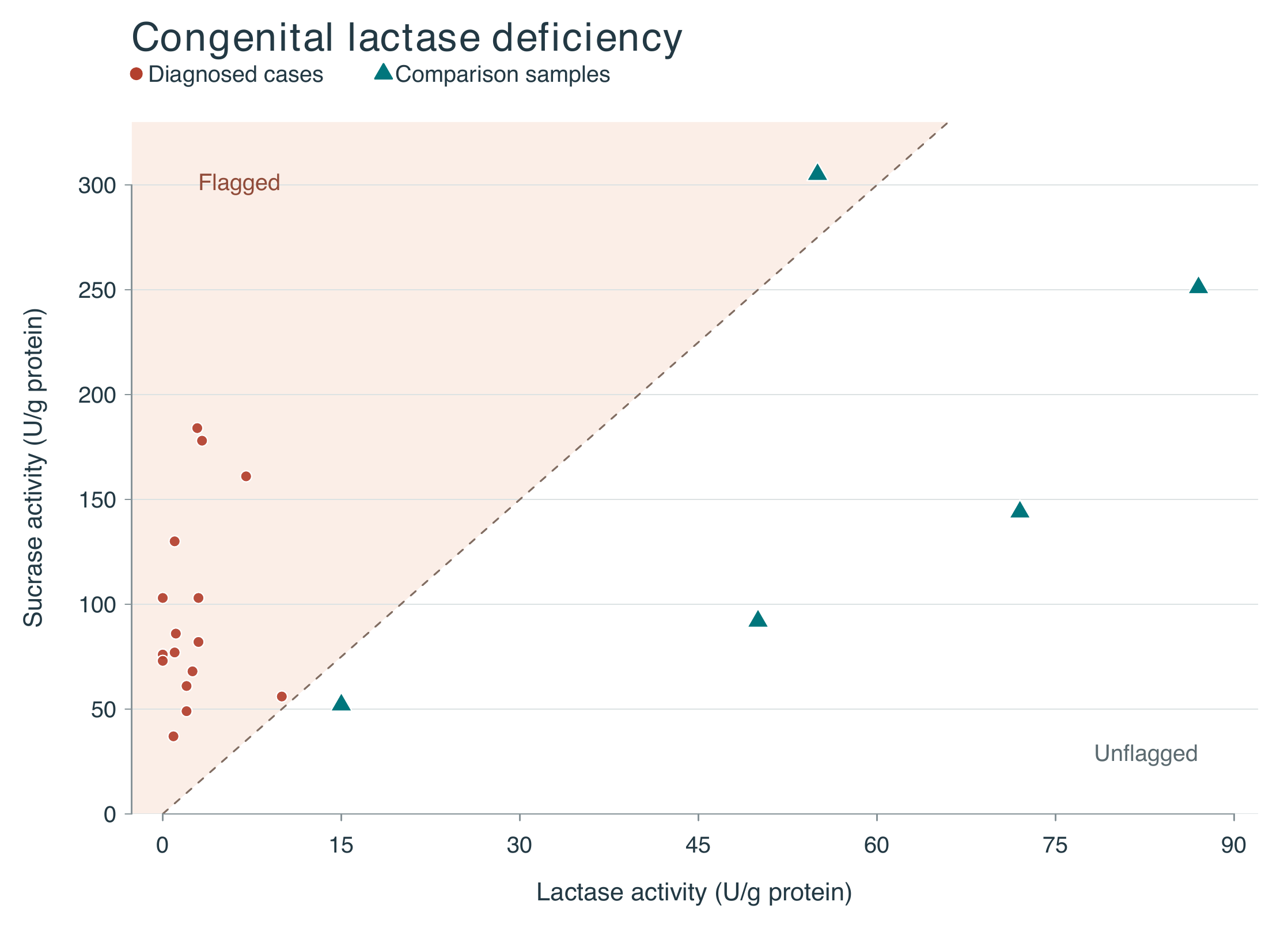
I chose congenital lactase deficiency because I wanted to explore how a cell could help someone digest the lactose in milk. My two markers are lactase activity and sucrase activity. Lactase breaks down lactose, and sucrase breaks down sucrose, so comparing them helped me see when someone had trouble breaking down one sugar but could still digest the other. Each point on my graph represents one person. For this model, I flagged a sample when its lactase activity was one fifth or less of its sucrase activity. All 16 children with the condition fell in the shaded region, along with one of the five comparison samples from a separate study. For my proposed therapy, I’d design the circuit so that sensing this pattern reduces how much lactase RNA gets cut. That would let the cell make more lactase right where it’s needed in the small intestine.
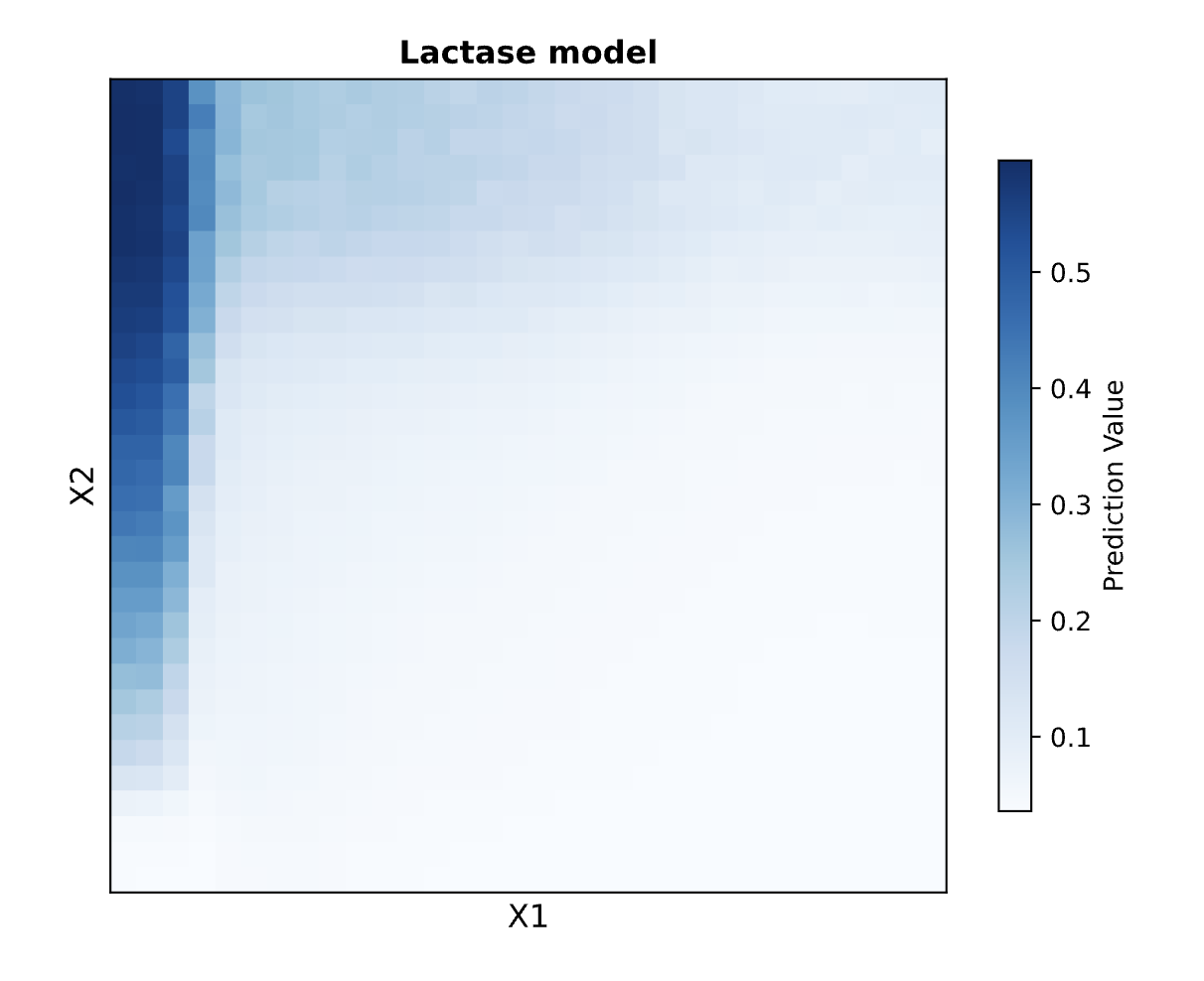
For my circuit, I’d use X1 to represent lactase activity and X2 to represent sucrase activity. I’d propose giving a cell in the small intestine two sensors, one that signals how quickly lactase breaks down its probe and another that does the same for sucrase. My goal would be for the cell to produce more lactase in the shaded part of my graph, where lactase activity is at most one fifth of sucrase activity. The circuit uses two RNA cutting enzymes to get that response. X1 drives CasE, which cuts the output RNA, and X2 drives Csy4, which cuts the RNA that makes CasE. When lactase activity is low compared with sucrase activity, more output RNA should survive. In the Neuromorphic Wizard I’d use the green reporter to see that response. In the proposed therapy, the output would be active lactase so the cell could help break down lactose from a meal.
Question 3. So far we’ve only focused on how neuromorphic genetic circuits can be used in medicine. Choose a non-medical application that uses a neuromorphic genetic circuit of your own design. Like the previous questions, specify what your circuit design senses, the neuromorphic genetic circuitry, and the output of your circuit.
To satisfy my interest in flower design, I’d want to create a snapdragon that starts out pale and develops magenta stripes as the bud opens. I’d use two inputs so I could control where the color appears and when it starts to show. My first input, X1, would follow the activity of a gene called Venosa, which marks cells along the petal veins. In those cells, my circuit would produce the RNA for DFR, an enzyme the flower uses to make anthocyanin pigment. My second input, X2, would follow the activity of PAL, a gene whose activity peaks earlier in bud development. I’d use that signal to produce Csy4, an enzyme that cuts a matching target site in the DFR RNA. As the bud matures and the early signal fades, more DFR RNA would stay intact along the veins. I’d expect the stripes to start faint and gradually deepen to magenta, with the space between them staying pale.