Week 2 HW: DNA DESIGN
HTBAA Homework #2: Recombinant Taq DNA Polymerase Expression Construct
Part 0: Kernel setup
I created the Kernel repository Gracious Osaibhue Isoah and the folder Parts folder for parts and Construct folder for construct in the HTBAA 2026 workspace.
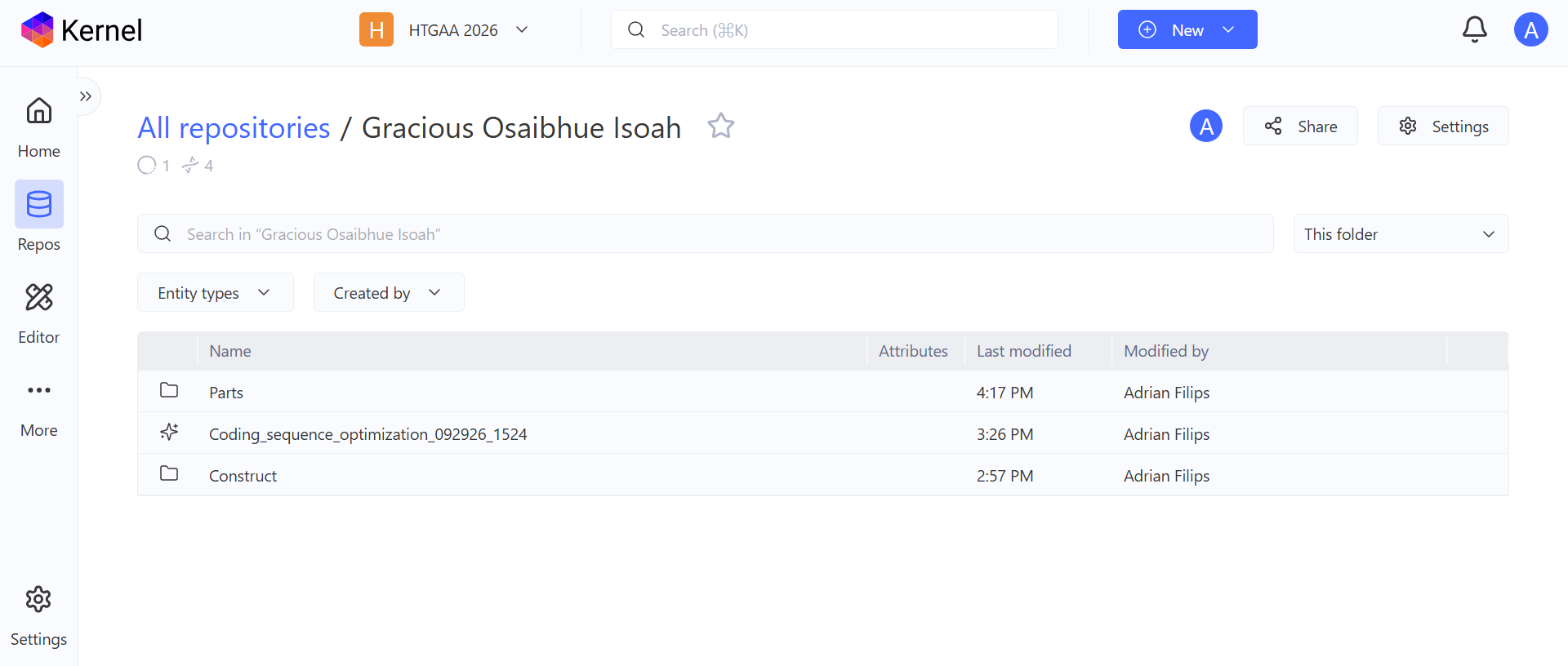
Figure 1. Kernel repository and project folder created for the Taq DNA polymerase expression-construct design.
Part 1: Define the expression target
My product is recombinant Taq DNA polymerase, a thermostable DNA polymerase used for PCR and other DNA-amplification applications. The direct expression target is the Taq polymerase coding sequence, which encodes DNA polymerase I from Thermus aquaticus.
My host organism is Escherichia coli. The intended location of the product is the cytoplasm, which makes this an intracellular-expression construct. This is appropriate because Taq polymerase is a soluble enzyme. After expression, the E. coli cells can be collected and lysed, and the enzyme can be purified from the intracellular soluble protein fraction. I therefore did not include a secretion signal peptide, membrane-targeting sequence, or other localization tag.
The Taq polymerase DNA coding sequence was obtained from the iGEM Registry of Standard Biological Parts.
- iGEM part name: BBa_J435042
- Sequence type: Coding Sequence
- Source organism of the original enzyme: Thermus aquaticus
- Protein encoded: thermostable DNA polymerase I, commonly called Taq DNA polymerase
The natural Taq DNA polymerase protein is 832 amino acids long. For my final construct, I will use an E. coli-codon-optimized DNA version of the iGEM Taq polymerase coding sequence while preserving the intended amino-acid sequence. Taq DNA polymerase is a thermostable enzyme derived from T. aquaticus and is commonly produced recombinantly in E. coli.
Part 2: Design the genetic parts
My expression cassette contains the following parts in the 5′→3′ direction:
Promoter → RBS → N-terminal His tag → Taq polymerase CDS → Terminator
I included a vector backbone that which contains the origin of replication and selection marker needed to maintain the plasmid in E. coli.
Promoter + RBS
- Part type: Promoter
- Part name: Promoter
- Sequence source: iGEM PART REGISTRY
I selected an inducible E. coli promoter because it allows cells to grow before Taq polymerase production is turned on. This gives more control than continuous constitutive expression and may reduce the metabolic burden associated with producing a large recombinant protein. The RBS is required for efficient translation initiation in E. coli. It should be positioned upstream of the translation start site at an appropriate spacing so that the ribosome can bind and begin translation of the His-tag–Taq polymerase fusion.
His tag
- Part type: N-terminal protein-affinity tag
- Part name: His tag
- Sequence source: iGEM PART REGISTRY
I included an N-terminal polyhistidine tag to simplify purification of recombinant Taq polymerase. The His tag can bind nickel- or cobalt-based immobilized-metal affinity purification resins, making it possible to isolate the enzyme from the E. coli protein mixture after cell lysis.
The His tag must remain in the same reading frame as the Taq polymerase CDS. There must be no stop codon between the His tag and the Taq CDS, because the goal is to create one continuous His-tagged Taq polymerase protein.
Taq polymerase CDS
- Part type: Coding sequence
- Part name: Taq Polymerase CDS
- Sequence source: iGEM PART REGISTRY
- Original biological source: Thermus aquaticus
This CDS encodes Taq DNA polymerase, a thermostable DNA polymerase. I selected this CDS because it directly produces my intended product—the enzyme.
For production in E. coli, I will codon-optimize this CDS while retaining the intended Taq polymerase amino-acid sequence. The optimized DNA is expected to differ from the original iGEM DNA sequence at synonymous codons but should encode the same protein.
Terminator
- Part type: Transcription terminator
- Part name: pET-28a Terminator
- Sequence source: iGEM PART REGISTRY
The terminator provides a defined end for transcription. It should help prevent RNA polymerase from reading through the Taq polymerase CDS into downstream vector DNA and should improve the predictability of the expression cassette.
Vector backbone
- Part type: Plasmid backbone
- Source: iGEM PART REGISTRY
I will use an E. coli-compatible plasmid backbone that provides an origin of replication and an antibiotic-resistance marker. The origin allows the plasmid to replicate in E. coli, while the selectable marker allows cells carrying the construct to be selected during cloning and growth.
Part 3: Assemble the construct
The final construct is arranged in the following 5′→3′ order:
Promoter + RBS → Start codon / N-terminal His tag → Taq polymerase CDS → Stop codon → Terminator
The expression cassette is located within an E. coli plasmid backbone containing an origin of replication and antibiotic-selection marker.
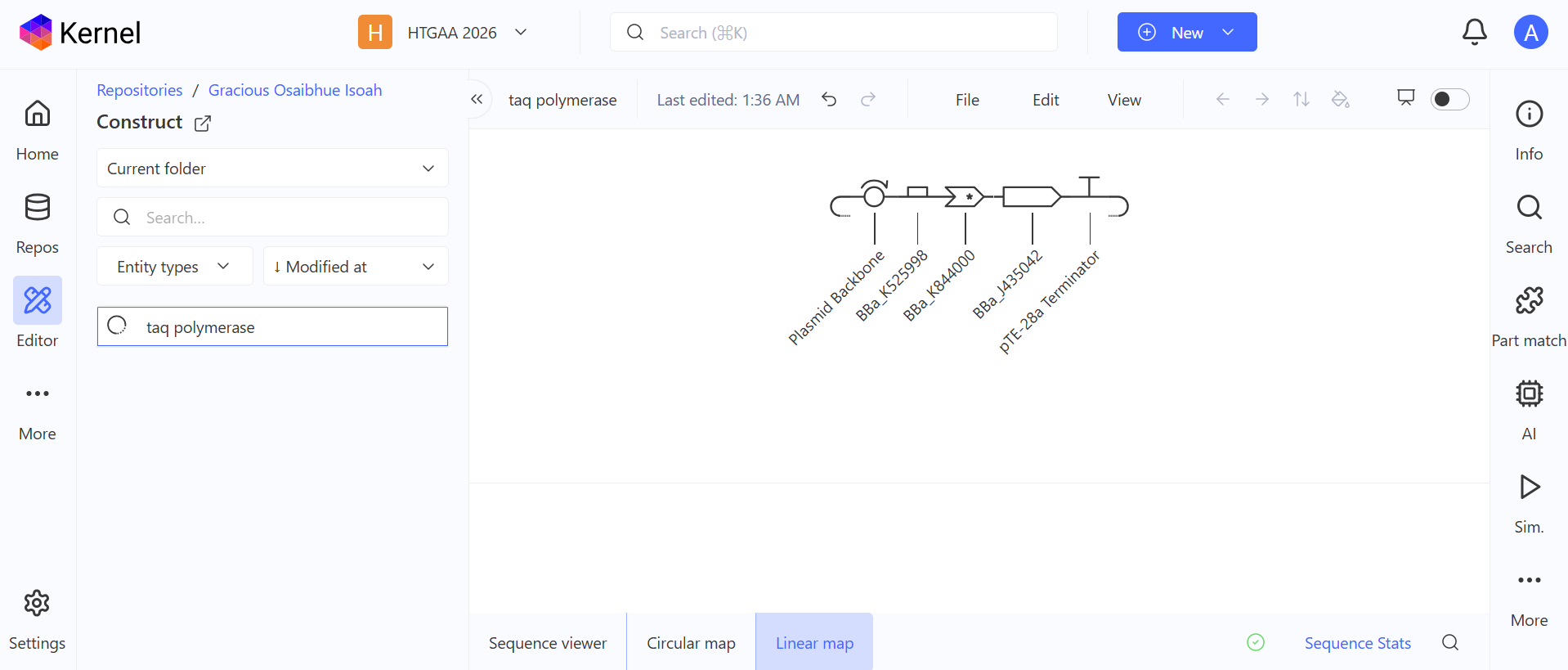
Figure 2. Kernel construct map of the E. coli expression plasmid encoding N-terminally His-tagged Taq DNA polymerase.
I checked the construct in Kernel to confirm the following:
- The promoter is upstream of the RBS and coding sequence.
- The RBS, His tag, Taq CDS, and terminator are all oriented in the intended 5′→3′ direction.
- The His tag and Taq CDS are in the same reading frame.
- The coding region has an appropriate start codon.
- The coding region has a stop codon after the Taq polymerase CDS.
- There are no accidental internal stop codons in the reading frame.
- The terminator occurs after the Taq CDS.
- The plasmid map shows the regulatory parts and CDS in the expected order.
The expected final protein is: N-terminal His tag–Taq DNA polymerase.
Part 4: Optimize and quality-check
Codon optimization
I used Kernel’s codon-optimization tool to optimize the iGEM-derived Taq polymerase CDS for expression in E. coli.
Kernel codon optimization tool results
The purpose of codon optimization is to improve compatibility between the Taq polymerase DNA sequence and E. coli translation. Different organisms prefer different synonymous codons and have different abundances of tRNAs. The original Taq sequence comes from Thermus aquaticus, a thermophilic bacterium, so its native codon usage may not be ideal for high-level protein production in E. coli.
The codon-optimization process should preserve the Taq polymerase amino-acid sequence while changing selected codons. I would avoid unwanted restriction sites, long repeated regions, extreme GC-content regions, and sequence features that could interfere with synthesis, cloning, or translation initiation.
Sequence search
I used Kernel’s sequence search to compare the Taq polymerase CDS with known sequences.
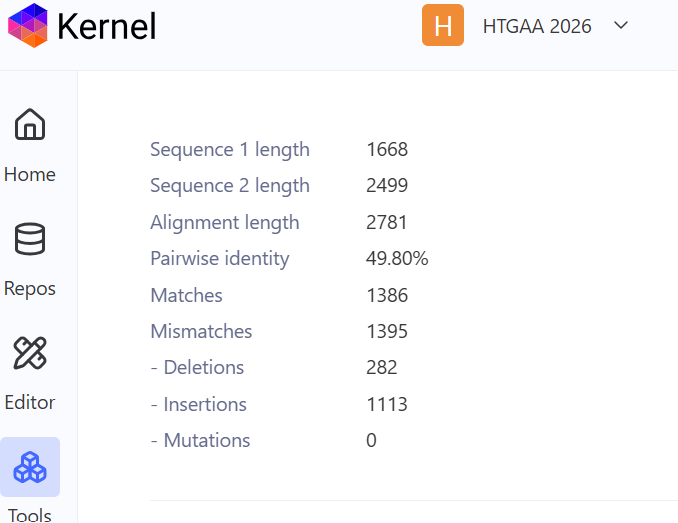
Figure 3. Sequence-search result supporting the identity of the Taq DNA polymerase coding sequence.
I expect the unoptimized iGEM CDS to match Taq polymerase or DNA polymerase I from Thermus aquaticus. After codon optimization, the DNA sequence may no longer be identical to the natural DNA sequence, but the translated protein sequence should still match the intended Taq polymerase sequence.
A successful sequence-search result would support the conclusion that my construct contains the intended polymerase gene rather than an incorrect or incomplete coding sequence.
Safety screen
I ran Kernel’s safety screen on the following sequence:
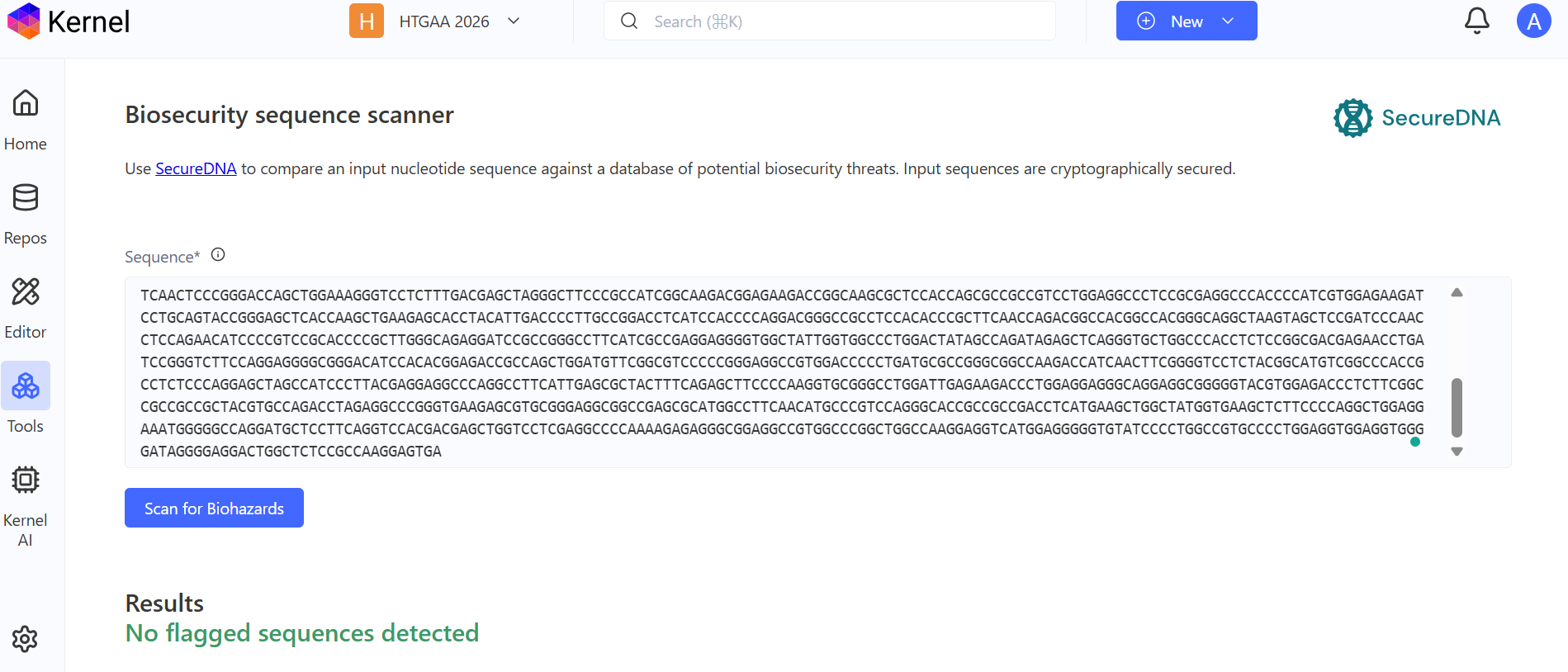
Figure 4. Kernel safety-screen result for the His-tagged Taq DNA polymerase expression construct.
Kernel’s safety screen should be used to identify whether a sequence has features or database similarities that need further review. My construct is intended to express Taq polymerase, a well-known thermostable DNA-processing enzyme, in E. coli. It is not designed to encode a toxin, virulence factor, pathogen, or secreted biological agent.
If the tool flags the Taq polymerase sequence because it matches a known natural enzyme, that match would be expected. If it identifies an unexpected sequence feature, I would inspect the flagged region, compare it with the intended iGEM part, and consult the instructor or an appropriate biosafety reviewer before proceeding.
Biosafety level and iGEM screening rules
My planned host is a non-pathogenic laboratory strain of E. coli, such as an E. coli K-12 cloning strain or an appropriate E. coli expression strain. The expected containment category is Biosafety Level 1 (BSL-1), provided that the final host is a standard non-pathogenic laboratory strain and the work follows my institution’s approved biosafety procedures.
My construct expresses Taq DNA polymerase from Thermus aquaticus. The protein is intended to remain intracellular and be purified from lysed E. coli cells. The construct is not designed to produce a toxin, virulence factor, pathogen, or product for environmental release.
The biosafety boundaries of this design are:
- The engineered E. coli cells are intended only for controlled laboratory use.
- The cells and plasmid should not be released into the environment.
- Standard BSL-1 procedures should be followed.
- The antibiotic markers, Amplicilin and Teracycline, are used only to select plasmid-containing cells.
- Changes to the host, vector, target gene, or intended application would require a new biosafety review.
Part 5: From design to build
Prototype construction strategy
For an initial prototype, I would order the codon-optimized Taq polymerase expression cassette as synthetic DNA. Depending on the size limit and options of the DNA-synthesis provider, I would order either:
- A synthesized Taq polymerase insert containing the His tag and cloning overlaps, then insert it into the expression-vector backbone.
- A fully synthesized plasmid containing the promoter, RBS, His tag, Taq polymerase CDS, terminator, backbone, origin of replication, and selection marker.
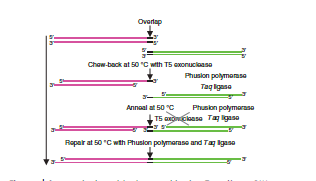
Figure 5. Gibson assembly strategy for inserting the Taq polymerase expression cassette into an E. coli plasmid backbone.
For an insert plus backbone workflow, I would use Gibson assembly. Gibson assembly is an isothermal, overlap-based method for joining DNA fragments. The method uses a 5′ exonuclease to create compatible single-stranded overlaps, a DNA polymerase to fill gaps after annealing, and a DNA ligase to seal the final DNA backbone.
This is a suitable approach for my construct because the Taq polymerase expression cassette can be joined to a plasmid backbone without relying on a particular set of restriction-enzyme sites. Gibson et al. showed that overlapping DNA fragments can be assembled in a single isothermal reaction and described applications ranging from small plasmids to very large DNA assemblies.
After cloning, I would transform the assembled plasmid into an E. coli cloning strain, select colonies using the backbone’s antibiotic marker, isolate plasmid DNA, and sequence-verify the complete Taq polymerase coding region and all assembly junctions.
Part 6: What I do not know yet
Expression level and burden
One uncertainty is whether the selected promoter and RBS will produce the right amount of Taq polymerase.
Very weak expression could result in low enzyme yield. Very strong expression could slow cell growth, stress the cells, or produce insoluble protein.
To test this, I would compare several induction conditions and measure:
- Cell growth.
- Total Taq protein expression.
- Soluble Taq protein expression.
- Polymerase activity in cell lysates or purified samples.
Solubility and folding
A second uncertainty is whether Taq polymerase will fold into an active and soluble form in E. coli.
High protein expression does not necessarily mean the protein is functional. Some of the protein could form insoluble aggregates or be inactive.
To test this, I would:
- Lyse induced cells.
- Separate soluble and insoluble fractions.
- Analyze both fractions by SDS-PAGE.
- Purify the His-tagged protein from the soluble fraction.
- Test DNA polymerase activity using a PCR-based or primer-extension assay.
- Test whether activity remains after high-temperature incubation.
Effect of the N-terminal His tag
A third uncertainty is whether the N-terminal His tag affects Taq polymerase activity, stability, or yield.
The tag should simplify purification, but placing a tag near the N-terminus may affect protein folding or function.
To test this, I would compare:
- The N-terminally His-tagged construct.
- A no-tag Taq polymerase construct.
- If necessary, a C-terminally tagged construct.
I would compare protein yield, solubility, purification recovery, and polymerase activity. If the His tag reduces activity, I would move it to a different position or remove it from the final production construct.
AI-use disclosure
I used Perplexity AI to help organize the homework write-up.