Week 3 HW: CELL FREE PROTEIN SYNTHESIS
A. COMPARE CELL-FREE REACTION COMPOSITIONS
- Why does the concentration of potassium glutamate and magnesium glutamate differ between compositions? Which is more sensitive?
Potassium glutamate and magnesium glutamate are water-soluble ionic salts added to the buffer of cell-free protein synthesis to mimic the cytoplasmic environment of the cell. They provide critical ions like Mg²⁺ and K⁺ at concentrations required for transcription, translation, ribosome function, and energy metabolism. Glutamate is generally a more physiologically suitable counter-anion than chloride for many bacterial CFPS systems. CFPS yields are known to be more sensitive to magnesium glutamate. It provides a more constrained variable, Mg²⁺. In a study by Cai et al., changes of about 1-2 mM in concentration can increase/decrease protein yield. Free Mg²⁺ is a core component of the translation machinery. It stabilizes rRNA and the functional structure of RNA. Other CFPS reagents, including ATP, GTP, and nucleic acids, bind to Mg²⁺ due to its chelating effect.
Explain how a PEP+NTP reaction formulation is different from a ribose+NMP reaction formulation.
PEP (phosphoenolpyruvate) + NTP (nucleotide triphosphate) reaction formulation is a high-energy phosphate-containing metabolite that can be metabolized to produce ATP. This formulation helps to synthesize protein more reliably by providing the reaction system with the nucleotides it needs for transcription. The ribose+NMP formulation system takes advantage of the cells’ metabolic machinery. The system is designed to generate and recycle its nucleotide pool. An NMP formulation provides lower phosphorylated nucleotide precursors, which the cell-free system can potentially convert into the higher-energy nucleotide forms.
1. Choose two cell-free reaction compositions from the literature, and compare and contrast the choice of reagents and the concentration of reagents.
| Reagents | Jewett and Swartz | Cai et al. |
|---|---|---|
| Mg(Glu)₂ | 8 | 8 |
| NH₄(Glu) | 10 | |
| K(Glu) | 130 | 260 |
| Phosphate | 15 | |
| Amino acids | 2 | 2 |
| Ribose | 30 | |
| HEPES | 57 | |
| Putrescine | 1 | |
| Spermidine | 1.5 | 1.5 |
| Folinic acid | 0.03 | |
| tRNA | 0.17 | |
| CoA | 0.27 | |
| NAD | 0.4 | |
| PEP | 30 | |
| Oxalic acid | 4 | 4 |
| GSSG | 2 | |
| ATP | 1.2 | |
| CTP | 0.85 | |
| GTP | 0.85 | |
| UTP | 0.85 | |
| AMP | 1.2 | 1.2 |
| CMP | 0.86 | |
| GMP | 0.86 | |
| UMP | 0.86 |
Build T7-compatible plasmids for cell-free expression.
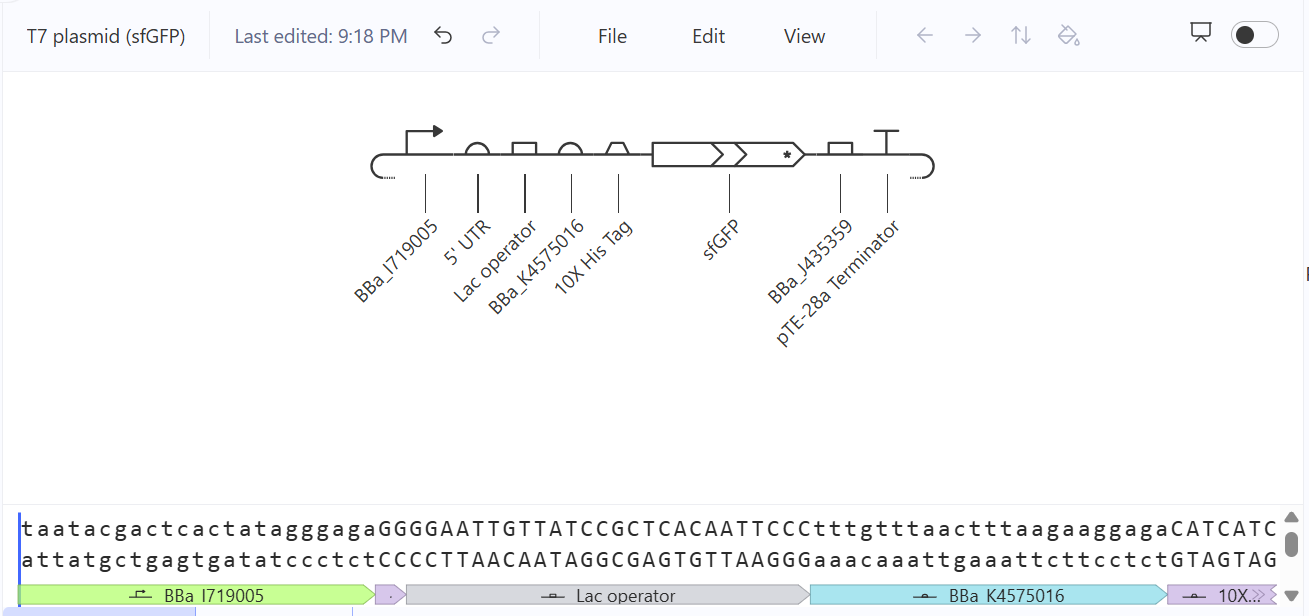 Figure 1: An image of the T7 compatible plasmid for sfGFP
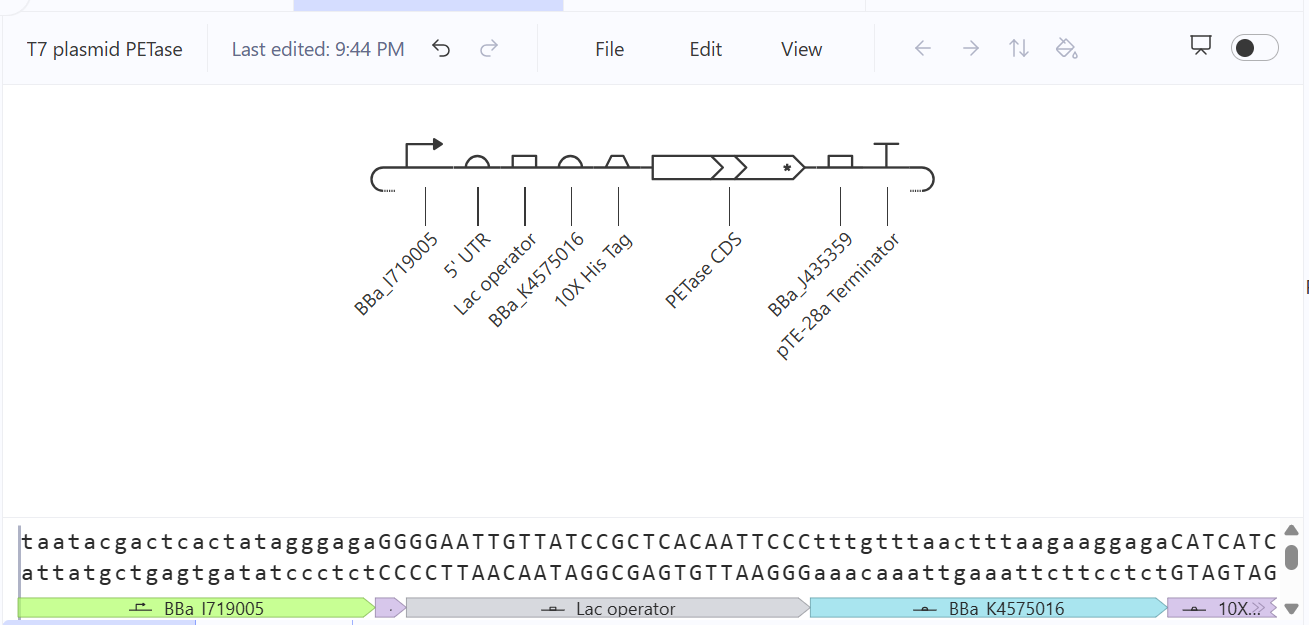 Figure 1: An image of the T7 compatible plasmid for PETase
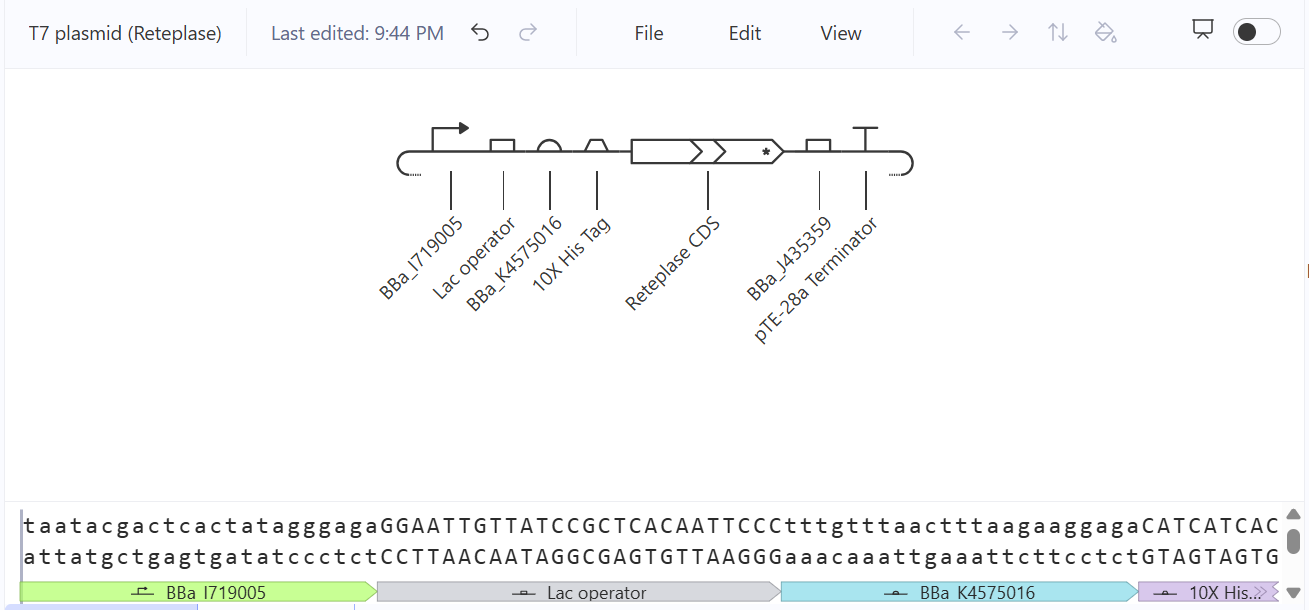 Figure 1: An image of the T7 compatible plasmid for Reteplase