Henrietta Scholtz — HTBAA Fall 2026
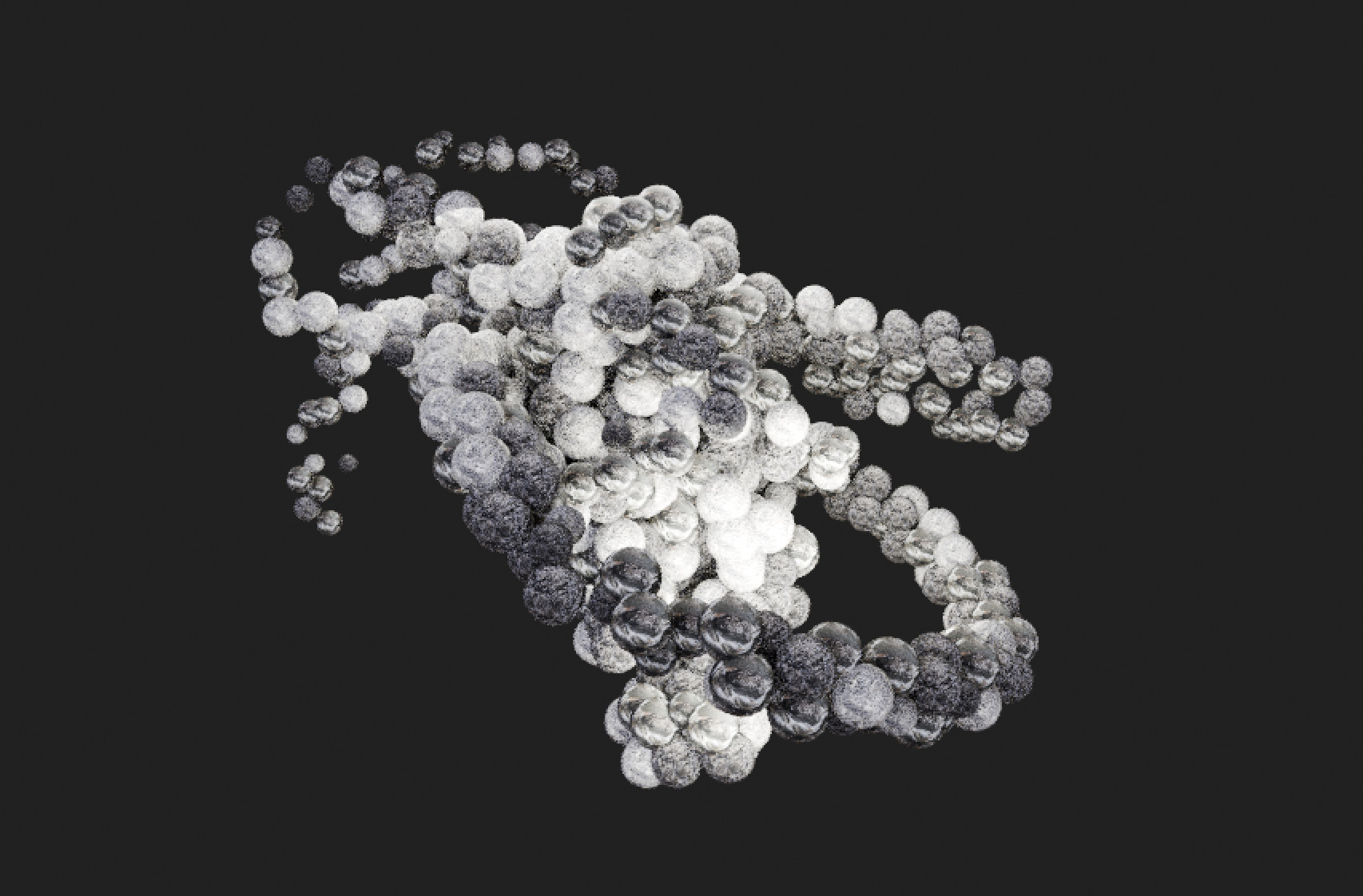
A non-refrigerated, dry-stable oxytocin formulation for postpartum hemorrhage, obstetric emergencies, and PTSD in low-resource settings. This project began as a research narrative driven by curiosity rather than a predetermined application. In the course of that work, a novel engineered protein with no direct natural counterpart emerged as a candidate stabilizing carrier, and it occurred to me that something like this, if it works, could matter in exactly the settings where cold chain access is most limited. The protein has never been made or tested in this context, which means the application is genuinely open.
E. coli. The carrier and oxytocin are expressed together, purified, and lyophilized into a dry powder that reconstitutes on demand.
An Opentrons liquid-handling robot for parallel expression and stability screening at the prototyping stage. Once a working condition is established, the natural path to scale is a fed-batch bioreactor with automated monitoring and harvesting, which handles the transition from bench to meaningful production volume.
A reasonable starting target would be enough to supply a single district health system for a year, on the order of hundreds to low thousands of doses. The standard dose for postpartum hemorrhage is 10 IU per WHO guidelines, and the quantities involved are small enough that even a modest bioreactor run should cover this range, though actual yield and timeline would depend heavily on expression optimization.
Whether the carrier preserves oxytocin bioactivity after drying and reconstitution. Whether thermostability is sufficient for real-world storage conditions. What regulatory category applies.
World Health Organization. (2023). WHO Model List of Essential Medicines. Geneva: WHO.
Asin-Garcia, E., Fawcett, J. D., Batianis, C., & Martins dos Santos, V. A. P. (2025). A snapshot of biomanufacturing and the need for enabling research infrastructure. Trends in Biotechnology.
Petzold, C. J., & Mukhopadhyay, A. (2025). From bench to biofactory: High-throughput technologies and automated workflows to accelerate biomanufacturing. Current Opinion in Biotechnology.
Tunnacliffe, A., & Wise, M. J. (2007). The continuing conundrum of the LEA proteins. Naturwissenschaften.