Week 1 HW: Final Project Ideas
(1) What would you like to biomanufacture and why?
Describe the target product or output you would like to make.
Why are you interested in making it? Your motivation might be utilitarian—for example,
addressing a problem in health, sustainability, food, energy, or manufacturing—but it does not
need to be. Your project might instead have a social, cultural, artistic, or personal motivation.
Clearly articulate what you want to make, who or what it is for, and why you think it is interesting
or important.
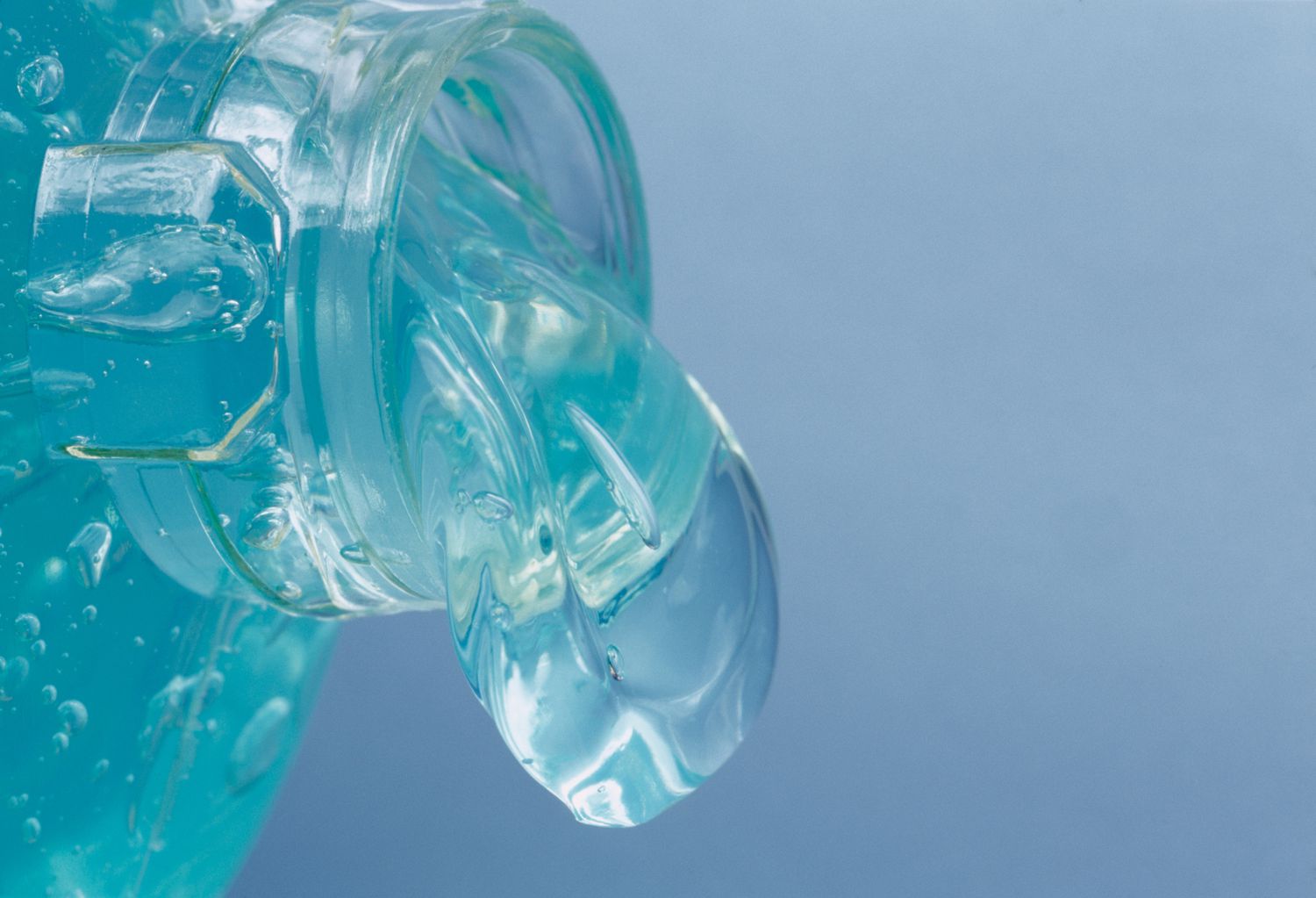
I would like to explore biomanufacturing a biodegradable hydrogel that could be used as
a wound-care material. Hydrogels are soft, water-containing materials that can help
maintain a moist environment around a wound. I am interested in this because wound
care is an area where materials science and medicine overlap. I have
become interested in how scientific ideas can be turned into practical tools that improve
healthcare.
My goal would be to investigate whether a biological system could produce the material that forms the basis
of a wound-care hydrogel. I think this is interesting because it would combine biology,
materials science, and engineering. I would also want to investigate whether the material
could be produced efficiently enough to make it useful at a larger scale.
(2) What living system would you use?
Propose at least one living-system manufacturing chassis that could produce your target—for
example, a microbial, mammalian, or cell-free system.
At a high level, describe how the system would make your target product. What goes into the
system? What biological process or processes occur? What comes out?
You do not need to design the complete biological system yet. Make reasonable assumptions
where necessary and identify them.
For a first prototype, I would propose using a microbial system, such as bacteria, to
produce a biological polymer that could be processed into a hydrogel. Bacteria can grow
using nutrients supplied to them and can produce molecules or materials as part of their
normal biological processes.
At a high level, nutrients would be supplied to the bacteria, the bacteria would grow and
produce the desired polymer, and the polymer would then be collected and processed
into a hydrogel. I would need to determine which bacterial system and polymer would be
most appropriate for this application. I would also need to test whether the resulting
material has useful properties, such as its ability to hold water and maintain its structure.
(3) How would you use automation?
Identify at least one automation technology that you would combine with your living system.
This could include a large-scale Cloud Lab, a desktop liquid-handling robot such as an
Opentrons, a programmable microfluidics platform such as Nuclera’s, or another automation
technology.
Describe what part of the biomanufacturing workflow you would automate and why. For
example, you might automate liquid handling, culturing, assembly, screening, sampling,
measurement, optimization, or another step.
I would use an automated liquid-handling system to test
different conditions for producing the polymer. The robot could prepare cultures with
different nutrient concentrations, transfer liquids between samples, and collect samples
at different times.
Automation would be useful because I could test many conditions more consistently
than I could by doing every step manually. For example, I could compare different
nutrient concentrations and growth times to determine which conditions result in the
greatest amount of polymer production. This would allow me to collect quantitative data
and use the results to improve the production process.
For a prototype, I would use a small automated system with multiple experimental
cultures. At a larger manufacturing scale, I would likely need larger bioreactors and
automated systems designed to control and monitor many cultures at once.
(4) How much would you need to make, and how long would it take?
Perform a back-of-the-envelope calculation estimating what it would take to manufacture your
target at a meaningful scale.
(a) How much?
For this estimate, I will define a meaningful scale as enough hydrogel to make 100
prototype wound-care patches.
Assumption: each prototype patch requires approximately 5 g of hydrogel.
10 patches × 5 g/patch = 50 g of hydrogel
Therefore, I would need approximately 500 g of hydrogel for 100 prototype patches.
This is an estimate rather than a clinical requirement. The actual amount needed would
depend on the size and thickness of the final material.
To determine how much biological production would be required, I would then need an
experimentally measured yield, such as grams of polymer produced per liter of bacterial
culture. Since I do not yet know this value, I would use an assumed yield for an initial
engineering estimate and replace it with experimental data later.
Define a scale relevant to your project and calculate approximately how much of your target
product you would need to manufacture.
For example, if you are producing a medicine, you might estimate the amount required to treat
1,000 people, everyone in Massachusetts, or everyone in the world. If you are producing a
building material, you might calculate the amount required for one structure or an entire
neighborhood. If you are producing an art or design artifact, define an appropriate scale
yourself.
Clearly show your calculation, including units, assumptions, and sources for important numbers.
(b) How long?
Using your proposed living system and automation technology, estimate how long it would take
to manufacture that amount.
Consider quantities such as production rate, yield, volume, number of parallel experiments or
reactors, automation throughput, or whatever parameters are most appropriate for your system.
You may discover that the automation technology you would use to prototype your system is
very different from what you would use to manufacture at scale. If so, describe both.
Again, we are looking for a reasonable engineering estimate. Show your assumptions and
calculations.
For an initial estimate, suppose the biological system produced 5 g of usable polymer
per liter of culture and that each production batch contained 2 L of culture.
2 L × 5 g/L = 10 g of polymer per batch
To produce 50 g:
50 g ÷ 10 g/batch = 5 batches
If one batch took approximately 48 hours to grow and the batches were produced one
after another, the total production time would be:
5 batches × 48 hours = 240 hours
240 hours ÷ 24 = 10 days
This shows why scaling and parallelization would be important. Instead of running all 5
batches sequentially, multiple bioreactors could operate at the same time.
These numbers are only an engineering estimate. The actual production rate, yield, batch
time, and number of reactors would need to be determined experimentally.
- What don’t you know yet?
After completing your analysis, identify the 2–3 biggest technical unknowns, bottlenecks, or
assumptions in your proposed biomanufacturing system.
I would need to experimentally measure how much polymer is
produced under different growth conditions.
A second unknown is whether the polymer would actually have the properties needed for
a hydrogel. Producing a material is not enough; I would need to test characteristics such
as water absorption, structure, and stability.
A third unknown is whether the process could be scaled efficiently. Conditions that work
in a small laboratory culture may not work the same way in a much larger bioreactor. I
would need to determine how production changes with culture size and whether
automation could maintain consistent conditions at a larger scale. I also need more general
information on how wound-healing hydrogels are created.
Week 2 HW: DNA Design
The name of my repository: Ira-Dhawan-hydrogel-project2026
The name of my folder: IraDhawanHydrogel
What molecule are you expressing?
I am expressing a protein that forms the hydrogel mesh, CsgA. This is the major curli amyloid subunit, which self-assembles outside the cell into a water-retaining hydrogel that can serve as the basis for a wound-care material. This directly impelents my week 1 idea.
What is the sequence? Give the protein or RNA sequence, or the specific gene, you will encode, and say where it comes from (a database accession such as UniProt or NCBI, a known part, or de novo). Cite it.
Sequence: E. Coli CsgA protein, UniProt accession P0AEK3. I will use the full 151 amino acid sequence which includes the natural signal peptide. Source: UniProt database, known natural part, not de novo.
What host or chassis? The living system from HW1, for example E. coli, S. cerevisiae, CHO or another mammalian line, or a cell-free system. Your host drives almost every part choice that follows.
E. coli- same microbial system I proposed in Week 1. It’s fast, well-characterized, and naturally produces curli.
Where does the product need to go? Cytoplasm, secreted, membrane, or a compartment? This decides whether you need a signal peptide or targeting sequence.
Sectreted/extracellular. Hydrogel must form outside the cell,so I need a signal peptide. CsgA already has its native Sec signal peptide (amino acids 1-20). So if I use PelB, I will note it. So targeting - secreted to periplasm/extracellular via Sec pathway.