Week 2 HW: DNA Design
Building the CsgA-PhoA Bone-Mimetic Circuit 🦴
Jump to: Strain choice · Motivation · Circuit design · Build steps · Debugging · Open question · AI usage · References
🧫 Strain choice
Bauer et al. used E. coli K-12 W3110 for their alkaline phosphatase biofilm mineralization work, but didn’t explain why. [1]
Mamat et al. originally used KPM318 for endotoxin-free protein production, but it had growth defects above 40°C. They switched to a more robust strain, KPM335. [2]
Justification for using KPM335. KPM335 is a later strain in the same detoxification series as KPM318. It carries the same lipid A modifications that reduce endotoxicity, but was selected because it doesn’t have the temperature-sensitive growth defect of KPM318. Mamat et al. tested LPS from KPM318, KPM335, and KPM404 side by side in human macrophages and confirmed KPM335 keeps the reduced immunostimulatory LPS profile while growing normally at higher temperatures. [2] That’s the paper to cite for justification, since it’s the same source that generated the strain. I haven’t found a separate paper that independently used KPM335 for curli or biofilm work, so right now the only real citation is Mamat et al. itself.
💡 Motivation
Last week TA Ada asked me whether my construct would be too brittle since it’s kind of like a ceramic. Thank you Ada! It made me think more about that.
Bone is made of organic and inorganic substrates. Type I collagen makes up a large part of the organic side.
That made me wonder if bacteria could secrete collagen too, or at least something mimetic. Osteoblasts build bone in two phases: first secrete a layer of collagen, then mineralize it.
Wild type E. coli can’t produce collagen. It lacks the enzymes needed for secondary modification. Prolyl-4-hydroxylase (P4H) is a tetramer, and simple cells like E. coli don’t have the machinery to make it. So scientists have turned to collagen-like proteins that don’t need hydroxylation, like curli. [3]
To mimic actual bone production, the DNA shouldn’t be transcribed within the same operon. It’s better for the genes to have separate sequences so they can replicate independently and be isolated in time. In the future I’d also like to add quorum sensing so the cells automatically detect when to continue.
🧬 Initial circuit design
(failed somewhere, explained below)
🧩 Why pBad, pTet, pTetR, BBa_B0015, BBa_B0034?
These are standardized, pre-tested parts.
pBad turns on when you add arabinose. I used it to control CsgA-DDDEEK.
pTet turns on when you add aTc. I used it to control phoA.
🦴 Why (DDDEEK)₃ on the CsgA linker?
DDDEEK shows excellent adsorption on the hydroxyapatite (HA) surface. Yang et al. showed DDDEEKC-modified tannic acid coats HA surfaces effectively, using (DDDEEKC)₃. [5] The full text is paywalled, so I’m going off the abstract. I’ll try DDDEEK for now, and leave DDDEEKC for the future.
🛑 Why double stop codon instead of single, and why TAATGA instead of TGATAA or TGATGA?
Ribosomes sometimes skip single stop codons by accident. It’s harder to skip two. Chance decision for now. I still need to ask someone or test it myself. Not sure if TAATAA would work better than TAATGA, but my hypothesis is TAATGA performs better.
🔀 Why pTet instead of something like the lac operon?
I don’t know for sure yet. I asked Claude AI and it says pTet is generally considered “tighter” (better OFF state, cleaner ON switch) for a two-gene circuit like this. I can’t find papers backing that up online, so it looks anecdotal and experience-based rather than something I can cite.
🧪 Plasmid source
Instead of pulling parts from public repositories separately, I used a plasmid that already expresses both csgA and phoA together. Addgene plasmid #170787, Rec-PhoA/CsgA, a gift from Urartu Seker. [6][7]
🛠️ Build steps
Step 1. Got the plasmid sequence. Rec-PhoA/CsgA, Addgene #170787, downloaded as a GenBank file.
Rec-PhoA/CsgA on Addgene (#170787) Addgene-verified full sequence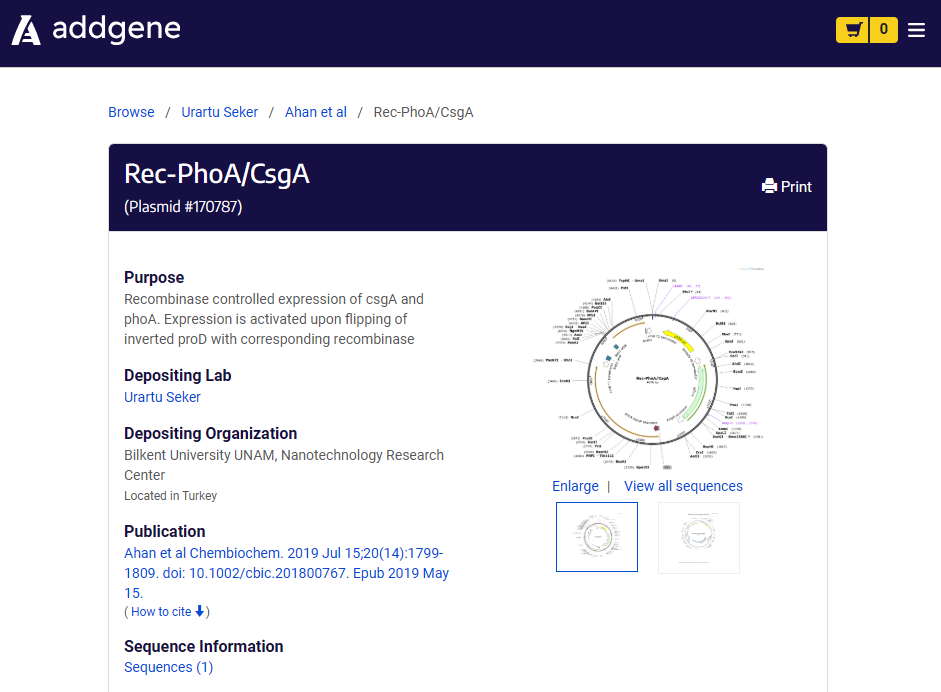
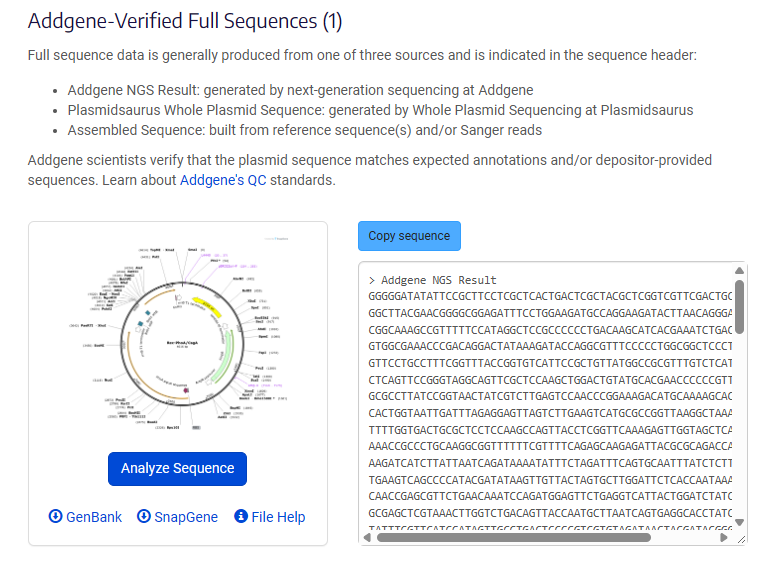
Step 2. Imported it into Kernel.
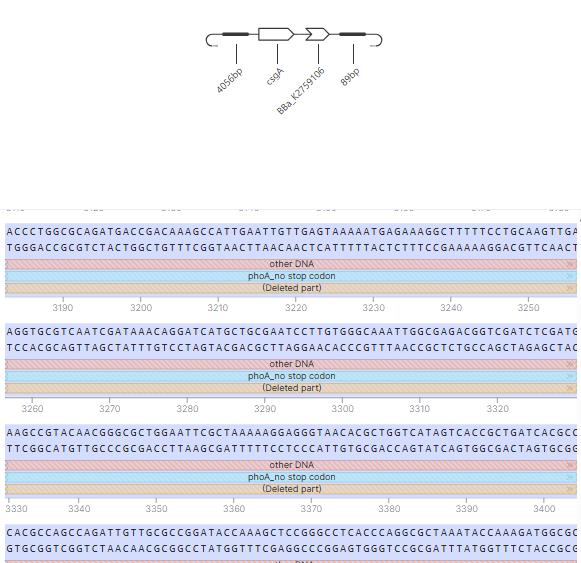
csgA imported and annotated in Kernel
Step 3. Isolated phoA and csgA as parts, then merged them into a full plasmid. Simulation caught a bug here, see Debugging the simulation below for the fix.
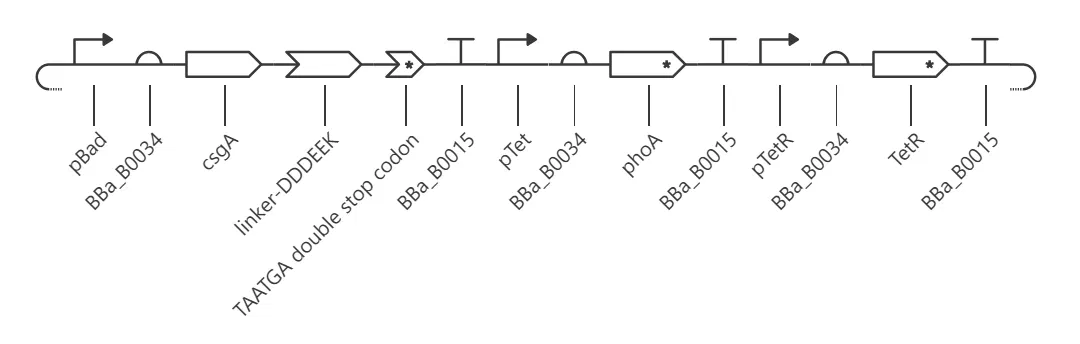
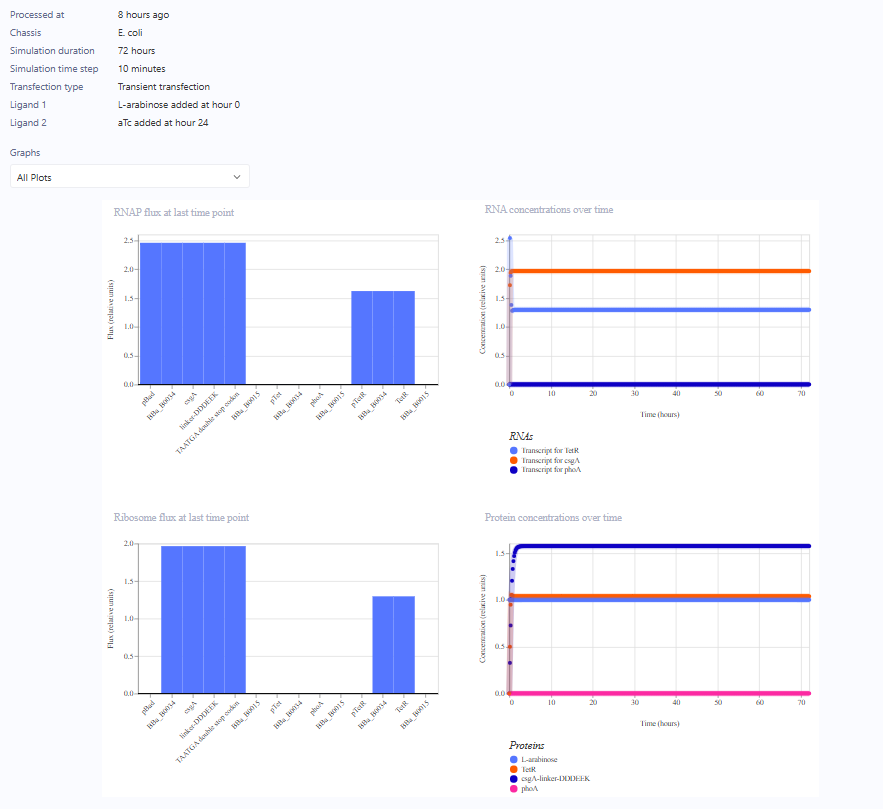
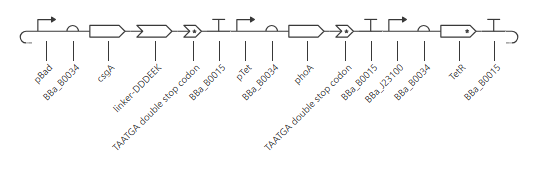
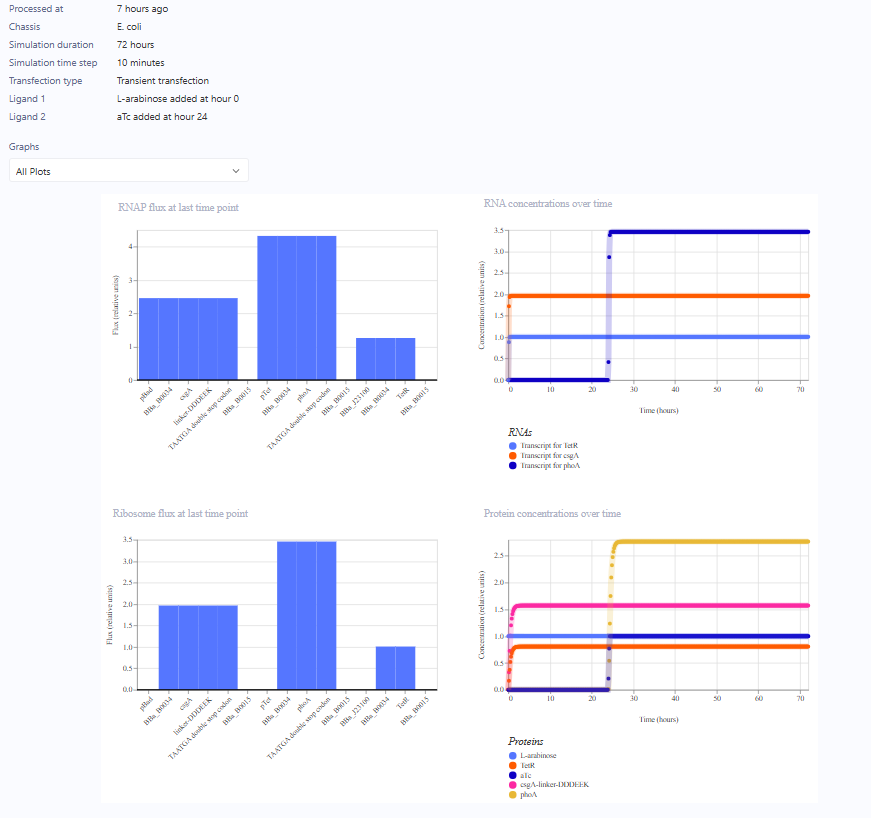
Simulation setup: E. coli, 72 h, arabinose at 0 h + aTc at 24 h Circuit map, first attempt Result: phoA never turns on (the bug) Circuit map, fixed (pTetR swapped for BBa_J23100) Result: phoA turns on at hour 24 as intended Fixed construct, annotated sequence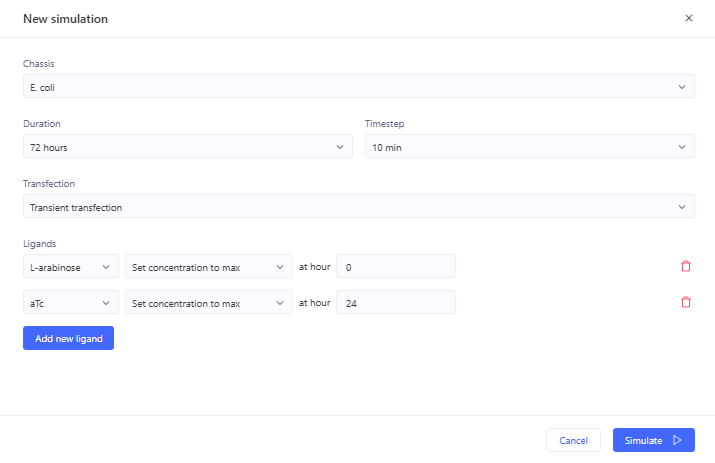
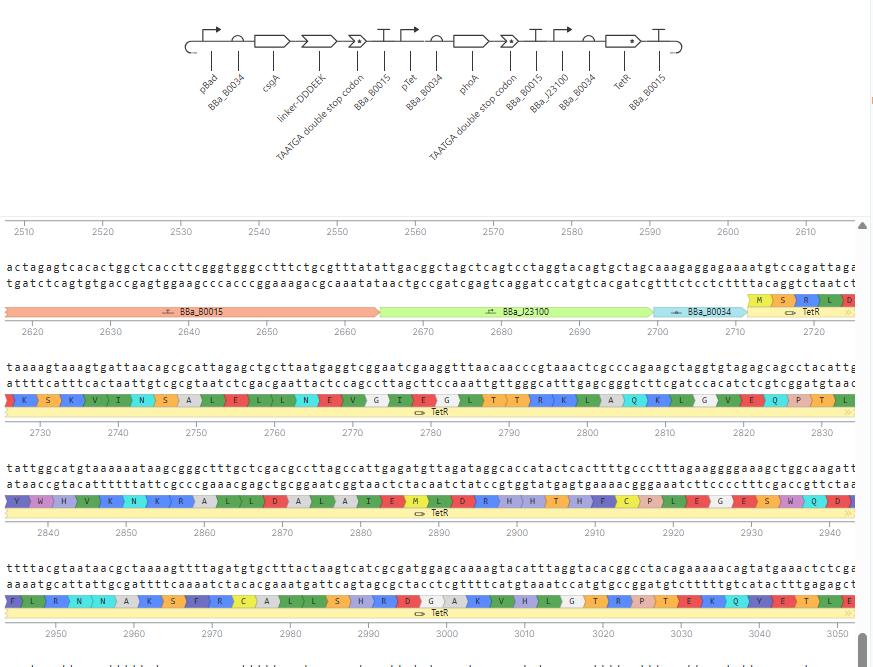
Step 4. Final check. Ran the finished sequence through a biosecurity scan before moving on. No flagged sequences.
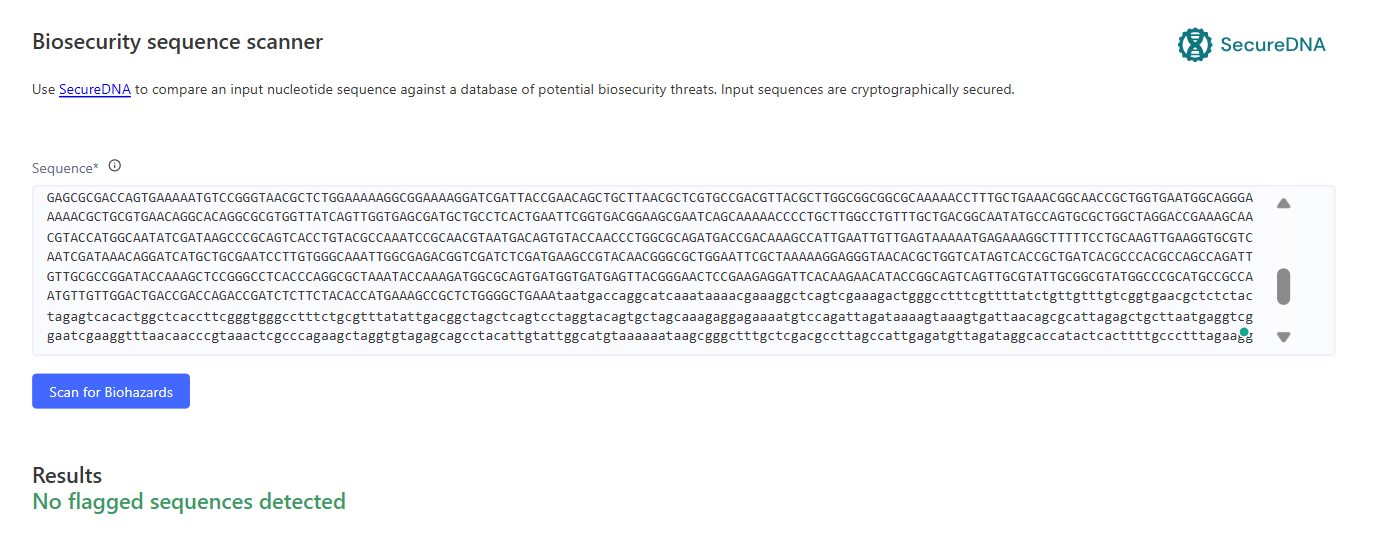
SecureDNA biosecurity scan: no flagged sequences
🐛 Debugging the simulation
🐛 Bug found. Ran the simulation, it didn’t work.
TetR part description says it binds the TetO operator sequence within the Tet promoter, also called pTet or pTetR. That means Kernel’s part library treats pTet and pTetR as the same regulatory element, both containing TetO. That’s not what I designed for.
My intended architecture was pTetR as a plain constitutive promoter driving TetR continuously, unaffected by TetR itself, and pTet as the actual TetR-repressible promoter driving phoA, repressed until aTc shows up.
Checked the pTetR part description directly. It also says TetO, repressed by TetR, also called pTet. Confirmed. pTetR and pTet are literally the same repressible promoter, and I used it for both jobs. My TetR-supply cassette was self-repressing. At the start no TetR exists yet, so its own promoter is unrepressed, some TetR gets made, then that TetR starts repressing its own promoter too, not just phoA’s. That caps TetR production instead of giving the clean constitutive supply I wanted.
This likely explains why the combined-ligand run broke specifically. If TetR levels ended up lower or mistimed, there might not have been enough TetR to properly repress pTet/phoA before the arabinose-driven cassette started pulling ribosomes and RNAP toward csgA-DDDEEK, straining shared transcription and translation capacity in a way the single-ligand run never had to deal with.
✅ Fix. Replace pTetR in cassette 3 with a genuine constitutive promoter, something like a J23-series promoter from the iGEM registry, commonly used for supplying constitutive repressor expression.
Also removed the original TAA stop codon from the phoA sequence and put in the double stop codon instead.
❓ Open question
Simulation should run clean now. After it succeeds I need to import it into a chassis. Plasmid or direct genome integration? Still confused about this.
Plasmids are faster to build and test, give higher copy number and stronger expression, and are easy to swap out if a cassette needs revision, which matters while I’m still debugging things like the pTetR issue above. The tradeoff is plasmid loss without selection pressure and burden on the cell from maintaining and replicating extra DNA copies.
Genome integration gives single-copy, stable, uniform expression without needing antibiotic selection, and is more realistic for anything meant to persist over many generations, like an engineered biofilm. The tradeoff is it’s slower to build and harder to modify once integrated.
Given I’m still in the iteration and debugging phase, plasmid first makes sense. Move to genome integration once the circuit logic is confirmed stable, especially before adding quorum sensing later.
🤖 AI usage
AI (Claude) was used to:
- teach me how to use Asimov Kernel
- do a bit of literature search for me (I did check the references and skim the papers)
- answer my intensive questions preliminarily
- transform my ugly markdown into a beautiful one with CSS and HTML :) On that last point, yes, that’s accurate. The badges, callout boxes, image grids, and jump links throughout this page were added by Claude on top of my original text.
📚 References
[1] Bauer, L. J., Zorzetto, L., Scoppola, E., Wagener, Y., Mantouvalou, I., & Bidan, C. M. (2026). Zinc and hydroxyapatite co-localize during in vitro E. coli biofilms mineralization. Scientific Reports, 16(1), 2059. https://doi.org/10.1038/s41598-025-33942-3
[2] Mamat, U., Wilke, K., Bramhill, D., Schromm, A. B., Lindner, B., Kohl, T. A., Corchero, J. L., Villaverde, A., Schaffer, L., Head, S. R., Souvignier, C., Meredith, T. C., & Woodard, R. W. (2015). Detoxifying Escherichia coli for endotoxin-free production of recombinant proteins. Microbial Cell Factories, 14(1). https://doi.org/10.1186/s12934-015-0241-5
[3] Ramshaw, J. A. M., Glattauer, V., & Werkmeister, J. A. (2025). Progress on production of collagen-like proteins by expression in Escherichia coli. Progress in Biomedical Engineering, 7(3), 032007. https://doi.org/10.1088/2516-1091/ade106
[4] Miller, A. L., Bessho, S., Grando, K., & Tükel, Ç. (2021). Microbiome or Infections: Amyloid-Containing Biofilms as a Trigger for Complex Human Diseases. Frontiers in Immunology, 12. https://doi.org/10.3389/fimmu.2021.638867
[5] Yang, X., Huang, P., Wang, H., Cai, S., Liao, Y., Mo, Z., Xu, X., Ding, C., Zhao, C., & Li, J. (2017). Antibacterial and anti-biofouling coating on hydroxyapatite surface based on peptide-modified tannic acid. Colloids and Surfaces B: Biointerfaces, 160, 136-143. https://doi.org/10.1016/j.colsurfb.2017.09.006
[6] Ahan, R. E., Saltepe, B., Apaydin, O., & Seker, U. O. S. (2019). Cellular biocatalysts using synthetic genetic circuits for prolonged and durable enzymatic activity. ChemBioChem, 20(14), 1799-1809. https://doi.org/10.1002/cbic.201800767
[7] Rec-PhoA/CsgA was a gift from Urartu Seker (Addgene plasmid # 170787 ; http://n2t.net/addgene:170787 ; RRID:Addgene_170787)