Subsections of Week-02-Hw-Dna-Designs
Week 2 HW: DNA Design
Programmable CHO cell-state control for biomanufacturing
Jennifer Zayetsy Almeyda Tejada
My project asks whether synthetic gene regulation combined with AI-guided cell-state modeling can be used to program CHO cells to transition from a growth-oriented state to a production-oriented state during biomanufacturing.
For this homework, I reduced the larger project to a smaller and experimentally interpretable proof-of-concept genetic circuit. The current construct uses constitutive expression of rtTA3G together with a TRE3G-controlled XBP1s reporter cassette. Doxycycline provides an external timing input, allowing the production-associated module to be activated at a selected point during culture.
Importantly, this first construct is not meant to claim that XBP1s alone represents the optimal production state. Instead, it is a first biologically informed design based on existing knowledge that can be built and measured while I develop the AI component of the project over the next weeks.
1. Project focus: dynamically engineering CHO cell state
Growth and recombinant-protein production can impose different demands on a mammalian production cell. Rather than forcing CHO cells to remain in one engineered state throughout culture, I am interested in whether their state could be changed over time: first supporting cell growth and biomass accumulation, and later favoring the cellular programs needed for recombinant-protein production.
The long-term idea is therefore:
For the first proof of concept, I chose XBP1s as a candidate regulator of a production-supporting state because it is a transcription factor associated with the unfolded protein response and secretory program. Previous work has also explored engineering regulators such as XBP1s and MYC in CHO cells, supporting the idea that manipulating host-cell state can affect growth and recombinant-protein production.
The initial circuit is:
Without doxycycline, TRE3G should remain minimally active. Following doxycycline addition, rtTA3G activates TRE3G, increasing expression of XBP1s together with the mScarlet reporter.
A future version of the system could combine production-state activation with repression of growth-associated programs such as MYC, for example using CRISPRi. I did not include this module in the current construct because a CHO-specific MYC regulatory target and guide still need to be selected and validated.
2. Where AI fits into the project
AI is intended to play two related roles in the project.
AI role 1: modeling and prioritizing CHO cellular states
This is the main direction I want to develop over the next weeks.
The current XBP1s design was selected by combining existing biological knowledge about CHO engineering, growth, secretion, and recombinant-protein production. However, there are many possible regulators and combinations that could be engineered. Rather than choosing all of these manually, I would like to use existing CHO omics and perturbation datasets to model cellular states associated with variables such as:
- growth and viable cell density,
- cell-cycle state,
- secretory capacity,
- stress and unfolded-protein-response programs,
- cell-specific productivity,
- recombinant-protein titer and quality.
Conceptually:
The goal is therefore not to ask AI to invent a genetic circuit directly. Instead, the model would help prioritize cellular states and regulatory programs worth testing experimentally.
The XBP1s switch designed here is an initial hypothesis and provides a simple system in which the timing of a candidate production-associated state can already be controlled.
AI role 2: optimizing the engineered system
Once experimental measurements are available, AI could also be incorporated into a design-build-test-learn cycle.
For example, the variables explored could include:
Measurements from each design could then be used to prioritize the next set of experiments. A later version of the project could explore a more autonomous sense-and-respond circuit, but I first want to understand the behavior of a simpler externally inducible system.
3. Expression target
Host / chassis: CHO cells (Cricetulus griseus)
Primary regulator: human spliced X-box-binding protein 1, XBP1(S)
Reference protein: NCBI NP_001073007.1
Reference transcript: NCBI NM_001079539.2
XBP1s is an intracellular transcription factor. Therefore, it should remain inside the cell and does not require a secretion signal peptide.
The construct also expresses rtTA3G, which serves as the doxycycline-responsive transcriptional controller, and mScarlet, which provides a fluorescent readout of induction.
4. BioParts
| Layer | Kernel part / identifier | Source | Role / justification |
|---|---|---|---|
| Promoter + enhancer | CMV_enhancer_promoter_pcDNA3.1 | pcDNA3.1(+) | Provides constitutive mammalian expression of the Tet controller. |
| Controller CDS | rtTA3G_252544 / optimized derivative | Addgene #252544 | Tet-On 3G transactivator used to activate TRE3G in response to doxycycline. |
| Poly(A) | bGH_polyA_252544 | Addgene #252544 | Provides transcript termination and polyadenylation for the rtTA3G cassette. |
| Inducible promoter | TRE3G_promoter_252544 | Addgene #252544 | Provides doxycycline-dependent control of the production-state module. |
| Translation-initiation context | Extended_Kozak_K4_Li2024 | Li et al., 2024 | Extended Kozak sequence for efficient mammalian translation initiation. |
| Regulatory CDS | XBP1s_human | NCBI NP_001073007.1; sequence also compared with Addgene #63680 | Encodes human spliced XBP1. No signal peptide is included because XBP1s functions intracellularly. |
| 2A peptide | T2A_252544 | Addgene #252544 | Allows XBP1s and the reporter to be expressed from the same ORF while producing separate proteins. |
| Reporter | BBa_K4765022 (mScarlet) | Kernel / BioBrick part used in the construct | Fluorescent readout of TRE3G activation. |
| Poly(A) | SV40_polyA_pcDNA3.1 | pcDNA3.1(+) | Provides 3’ transcript processing and termination for the inducible cassette. |
| Backbone context | pcDNA3.1(+) | pcDNA3.1(+) | Reusable mammalian-expression vector context rather than designing a new backbone from scratch. |
A note on intracellular versus secreted proteins
When I initially explored Kernel’s CHO codon-optimization preset, the preset automatically enabled its signal-peptide option. I did not want this for XBP1s or rtTA3G because both proteins function intracellularly. I therefore retained Cricetulus griseus as the expression organism while turning signal-peptide handling off.
This distinction will become important later in the project: the bispecific antibody chains are secreted proteins and therefore do require signal peptides, whereas the cell-state regulators do not.
5. Construct assembly
The proof-of-concept construct contains two expression cassettes.
Cassette 1 — Tet controller
Cassette 2 — inducible production-state module
The two-cassette architecture separates the constitutive controller from the inducible output. rtTA3G is produced constitutively, while doxycycline determines when it activates TRE3G.
Because XBP1s is upstream of T2A, it should not contain a stop codon between XBP1s and T2A. The reporter is the terminal CDS and should contain the terminal stop before the downstream poly(A) element.
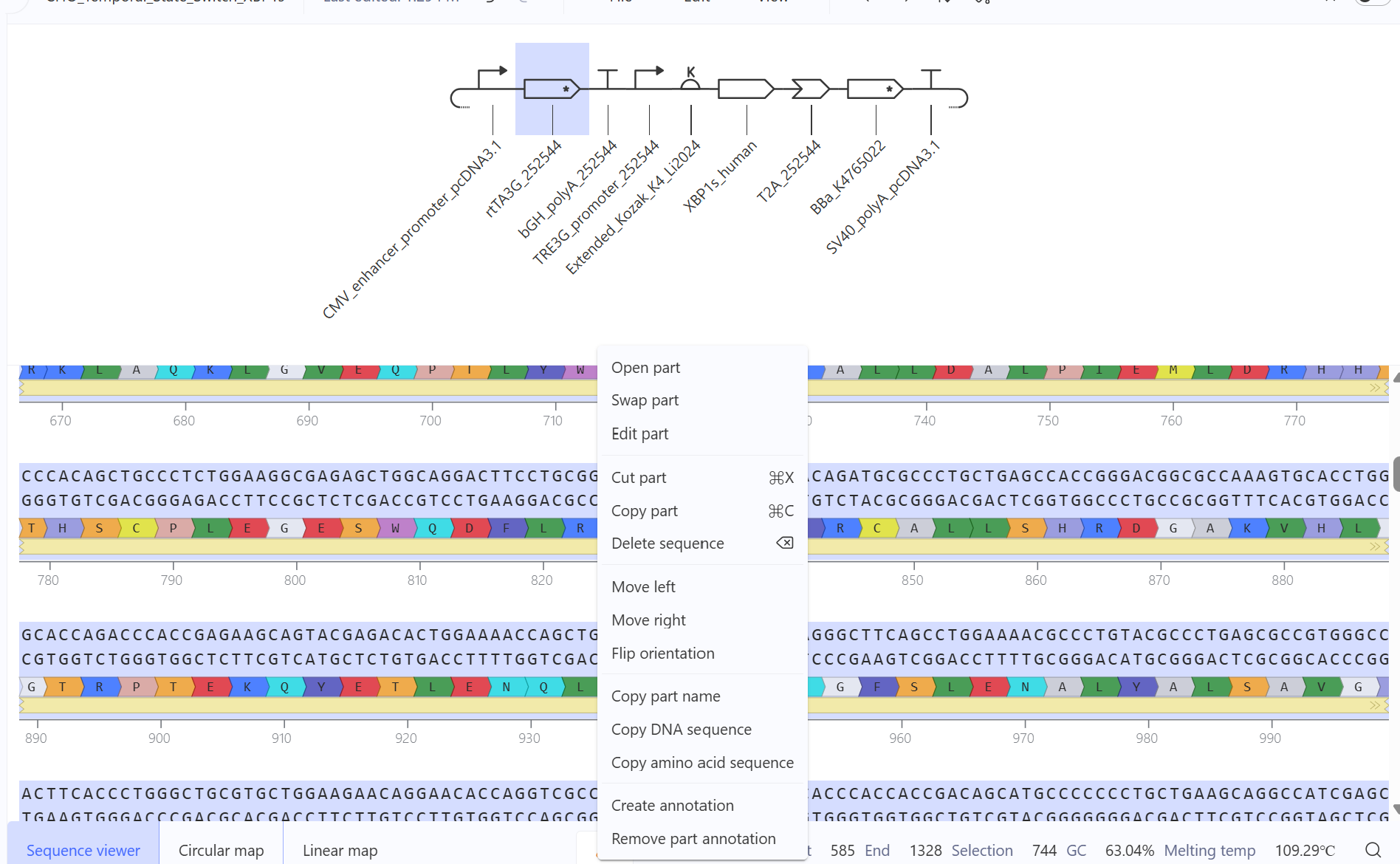
Figure 1. Kernel construct showing the two-cassette proof-of-concept architecture.
Backbone
For the vector context, I selected pcDNA3.1(+), a mammalian expression vector. I reused an existing backbone rather than designing one from scratch.
The vector contains bacterial propagation and selection features, including a bacterial origin of replication and AmpR. Ampicillin resistance is used for bacterial plasmid propagation and is not the CHO expression target. The backbone also provides mammalian-vector features appropriate for the expression context.
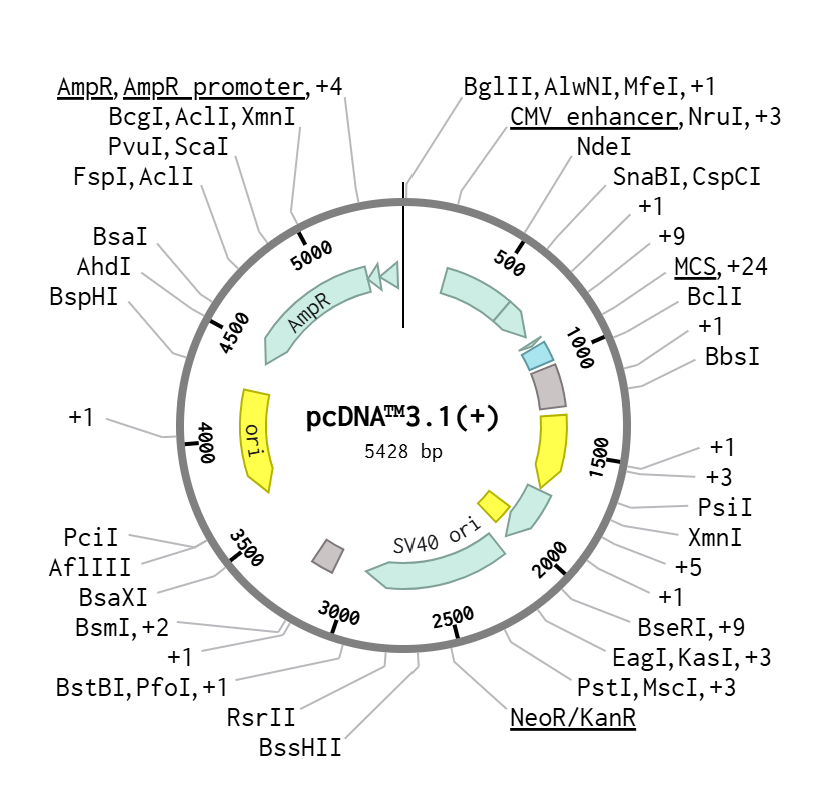
Figure 2. pcDNA3.1(+) backbone considered for the construct.
6. Codon optimization
I used Kernel’s coding-sequence optimization tool with Cricetulus griseus (Chinese hamster) as the expression organism.
For the intracellular regulators, I used the following logic:
Codon optimization changes synonymous codon choices in the DNA while aiming to preserve the encoded protein. Therefore, I expected the optimized DNA sequence to differ from the starting sequence even if the protein remained unchanged.
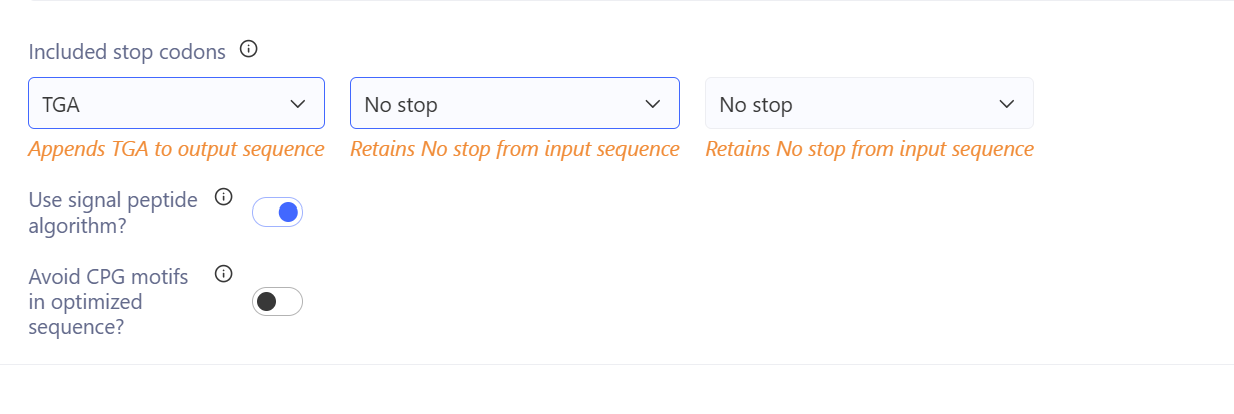
Figure 3. Kernel codon-optimization settings used for the CHO expression context.
An important design constraint was the position of stop codons. A standalone CDS such as rtTA3G should contain its terminal stop before the poly(A) element. In contrast, XBP1s is directly upstream of T2A and therefore should not terminate before the T2A sequence.
The optimization step also illustrated why automated sequence optimization still requires biological interpretation. A preset should not be accepted automatically when one of its assumptions, such as signal-peptide handling, does not match the biology of the protein being expressed.
7. Sequence comparison and BLAST
I first compared the starting and optimized XBP1s nucleotide sequences. The DNA sequences differed substantially after codon optimization, which is expected when synonymous codons are changed.
I then searched the optimized nucleotide sequence against human nucleotide sequences using BLASTN. Under the search conditions used, BLASTN returned no significant similarity. Because codon optimization can substantially change nucleotide identity while preserving the encoded protein, I next translated the CDS and performed a BLASTP search.
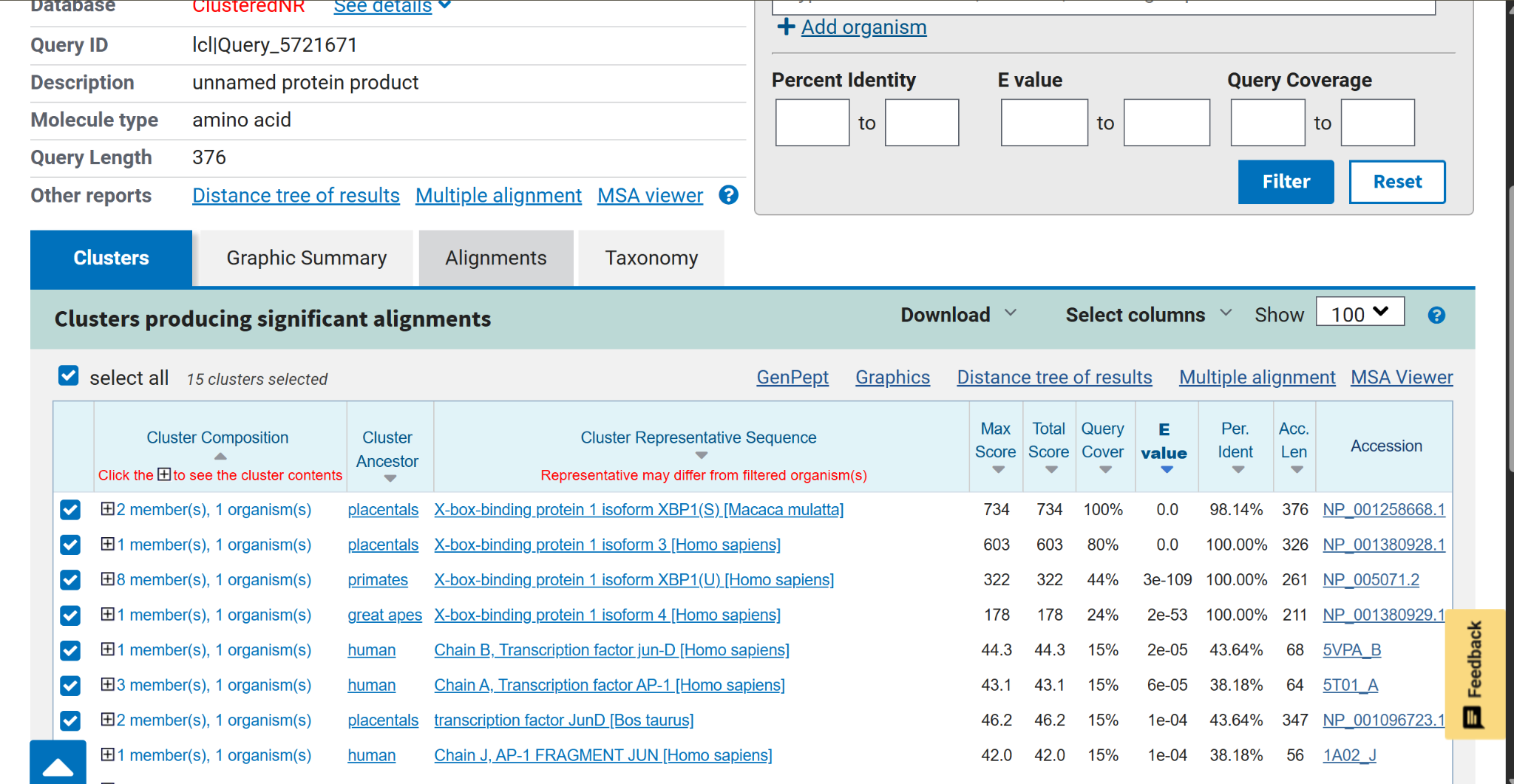
Figure 4. BLASTP results for the translated XBP1s design.
BLASTP recovered X-box-binding protein 1 proteins among the strongest matches. The displayed human XBP1 isoform 3 hit (NP_001380928.1) aligned over 301 amino acids with:
- 301/301 identities (100%)
- 0 gaps
- E-value = 0.0
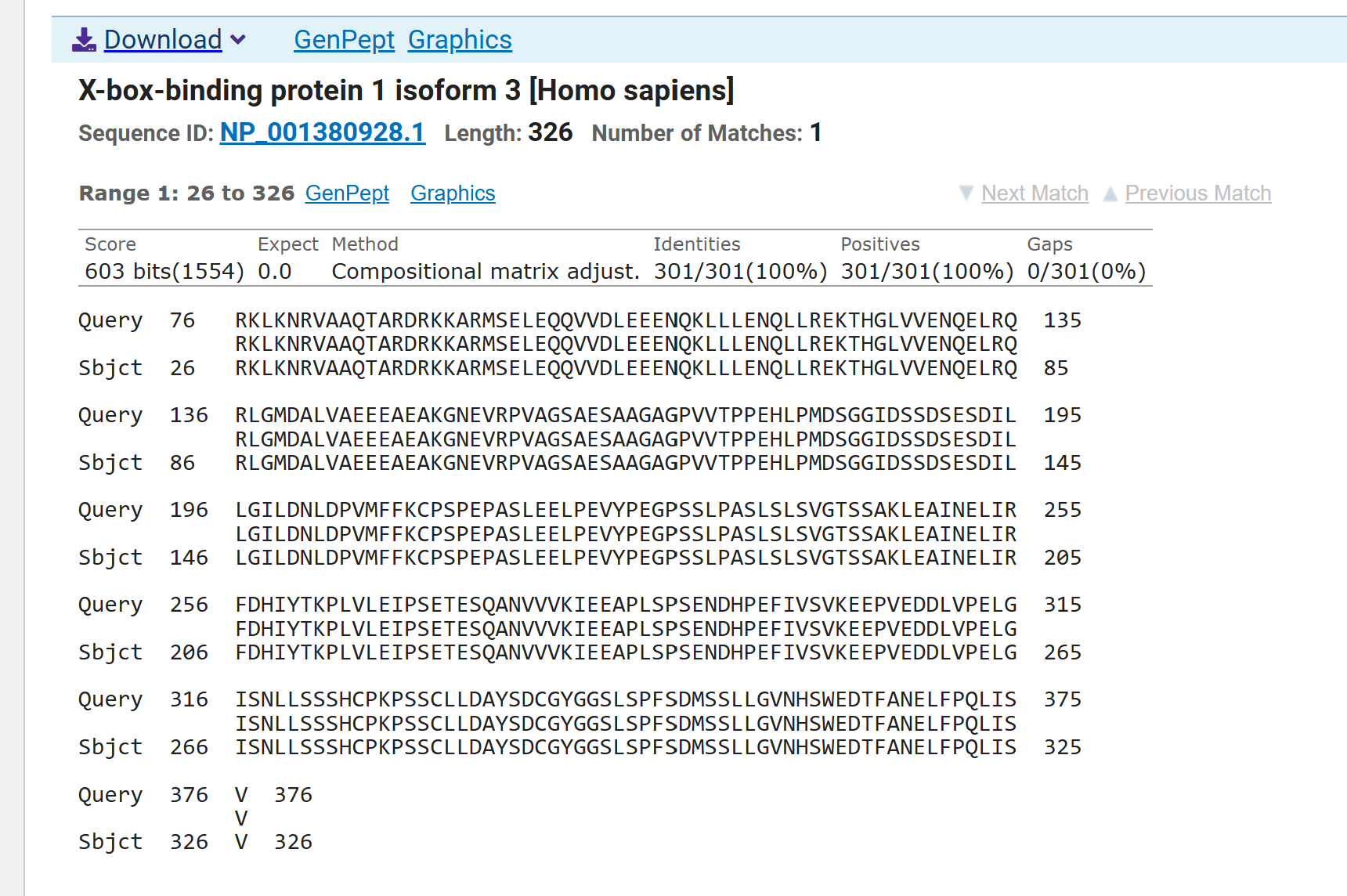
Figure 5. Alignment to human XBP1 isoform 3.
The query itself was 376 amino acids, so I interpret this result as 100% identity across the displayed 301-amino-acid aligned region, rather than claiming that the entire query is 100% identical to this particular human isoform.
Together, the nucleotide and protein searches illustrate an important consequence of codon optimization: the engineered CDS can differ substantially from the natural nucleotide sequence while retaining the expected protein identity in the aligned region.
8. Biosecurity sequence screening
I screened the assembled nucleotide sequence using Kernel’s SecureDNA biosecurity sequence scanner. The tool compares an input nucleotide sequence against a database of potential biosecurity threats.
The scan returned:
No flagged sequences detected
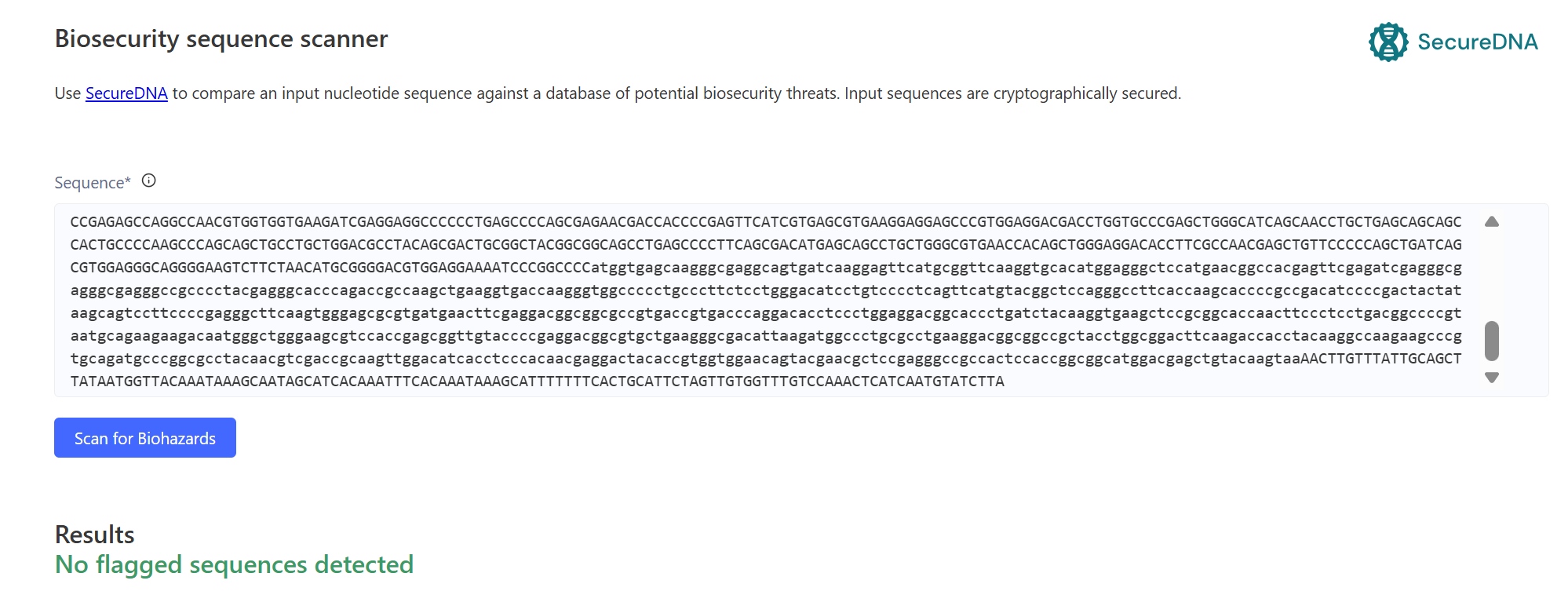
Figure 6. Kernel/SecureDNA biosecurity screening result.
Therefore, no sequence-level biosecurity concern was identified by this screening tool for the submitted construct.
9. From design to build
A sequence in Kernel is not yet physical DNA. For a first experimental prototype, I would reuse a validated mammalian-expression backbone and assemble the expression region from a small number of sequence-verified synthetic DNA fragments rather than synthesizing an entire plasmid as one monolithic sequence.
One possible strategy would be Gibson assembly or a related seamless assembly method. This would allow individual fragments to be ordered, sequence-verified, and replaced independently if a synthesis or assembly problem occurred.
Synthesis constraints
Several sequence properties can complicate DNA synthesis or assembly, including repetitive regulatory regions, high-GC segments, secondary-structure-prone sequences, and unwanted restriction sites. TRE-containing regions are also repetitive by design.
For the optimized CDSs, BbsI and PaqCI were selected as sequences to avoid. If a fragment proved difficult to synthesize, I would consider splitting it into smaller overlapping fragments or making synonymous sequence changes that preserve the encoded protein.
This relates to Carr et al. (2004), which describes protein-mediated error correction for de novo DNA synthesis and illustrates why synthesis errors must be considered during the transition from digital sequence to physical DNA.
Prototype versus scale
For the prototype, I would build a small number of plasmid variants and first test whether the switch behaves as expected. Measurements would include reporter induction, XBP1s expression, growth, viability, and production-related phenotypes at different induction times.
At a larger design-build-test-learn scale, I would instead test a library of regulatory perturbations and expression architectures. Laboratory automation could standardize culture, induction, sampling, and measurements, while an AI model could prioritize which combinations should be tested in subsequent rounds.
This also connects to the logic of Elowitz and Leibler (2000): the behavior of a synthetic regulatory network has to be experimentally characterized rather than inferred only from its sequence.
10. What I still do not know
1. Does XBP1s induction actually create a useful production-supporting state in this CHO/product context?
XBP1s is a biologically motivated hypothesis, not a guaranteed optimum.
I would test several induction conditions and measure XBP1s expression, reporter signal, viable cell density, cell-specific productivity, product titer, correct assembly, and aggregation.
2. What is the best switching time?
Inducing the production-associated state too early could interfere with biomass accumulation, while inducing too late could reduce the benefit of the switch.
I would therefore compare multiple values of induction_time and use these measurements as part of the future modeling/DBTL dataset.
3. Is production-state activation alone sufficient?
The longer-term idea is a transition between cellular states, not simply XBP1s overexpression.
A future version could therefore combine XBP1s activation with repression of a growth-associated program such as MYC. Before adding this module, I would need to identify and validate an appropriate CHO-specific genomic target and guide for CRISPRi.
For this reason, I deliberately did not invent a CHO MYC guide for the current homework construct.
11. Bispecific antibody design as a secondary extension
In parallel with the host-cell circuit, I also explored a difficult-to-express bispecific antibody as a possible product whose manufacturing could eventually be improved by the engineered CHO state.
This is a secondary extension of the project rather than the main focus of this homework. The main design developed here is the CHO cell-state circuit.
A representative architecture I explored was a GD2 x GPC2 asymmetric IgG1-like bispecific, combining a GD2-binding hu3F8 arm and a GPC2-binding D3 arm with strategies intended to reduce incorrect chain pairing.
Conceptually, the four-chain product would contain:
| Chain | Conceptual architecture |
|---|---|
| GD2 heavy chain | signal peptide -> hu3F8 VH -> IgG1 CH1 -> hinge/Fc heterodimerization arm |
| GD2 light chain | signal peptide -> hu3F8 VL -> Ckappa |
| GPC2 crossover heavy chain | signal peptide -> D3 VH -> crossover constant-domain architecture -> hinge/Fc partner |
| GPC2 crossover light chain | signal peptide -> D3 VL -> complementary crossover constant-domain architecture |
Unlike XBP1s and rtTA3G, these antibody chains are secreted proteins, so they require entry into the secretory pathway.
This product context is useful because a complex antibody introduces additional manufacturing phenotypes beyond total expression, including:
Ultimately, the host-engineering question becomes not simply whether an engineered CHO state produces more protein, but whether it improves the amount and quality of correctly assembled product.
12. Next steps
The immediate next step is to move beyond the initial biologically informed XBP1s hypothesis and develop the AI-guided cell-state prioritization component.
The workflow I want to explore is:
Candidate inputs could eventually include:
Candidate state/readout variables include:
This would allow the project to compare a baseline, a static engineered state, and a dynamic engineered state while keeping the product and CHO background as consistent as possible.
13. References
NCBI. X-box binding protein 1 (XBP1), human. NP_001073007.1.
Addgene. pCMV5-Flag-XBP1s, plasmid #63680. https://www.addgene.org/63680/
Addgene. pKG04154_Bxb1-GT_(TRE3G-mScarlet-WPRE)-CAG-rtTA-T2A-mTagBFP2-bGH, plasmid #252544. https://www.addgene.org/252544/
SnapGene. pcDNA3.1(+) sequence and map. pcDNA3.1(+)
Elowitz, M. B. & Leibler, S. A synthetic oscillatory network of transcriptional regulators. Nature 403, 335–338 (2000). doi:10.1038/35002125
Stanton, B. C. et al. Genomic mining of prokaryotic repressors for orthogonal logic gates. Nature Chemical Biology 10, 99–105 (2014). doi:10.1038/nchembio.1411
Carr, P. A. et al. Protein-mediated error correction for de novo DNA synthesis. Nucleic Acids Research 32, e162 (2004).
Bauer, N. et al. A genome-wide CRISPR/Cas9 screen identifies regulators of antibody production in Chinese hamster ovary cells. Synthetic Biology 7, ysac026 (2022). doi:10.1093/synbio/ysac026
14. AI use
AI client: ChatGPT (OpenAI)
AI was used to help organize the design logic, compare possible part architectures, interpret Kernel outputs, and structure the written documentation. Biological sequences, accession identifiers, construct maps, codon-optimization outputs, BLAST results, and biosecurity results were checked against the corresponding databases or software outputs rather than treated as AI-generated evidence.
A representative prompt was:
Help me organize and refine my HTBAA project on mammalian-cell biomanufacturing. I want to explore whether synthetic biology can engineer CHO cells that dynamically transition between growth- and production-oriented states, combining synthetic gene regulation, host-cell engineering, transcriptomic/perturbation analysis, AI-based prediction of cellular states, AI-guided experimental design, and laboratory automation.