Week 1 HW: Final Project Ideas
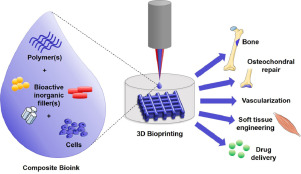 Image source: Heid, S., & Boccaccini, A. R. (2020)
Topic: Biomanufacturing a Hyaluronic Acid as a material for Arthritis treatment
(1) What you would like to biomanufacture and why?
Arthritis is a medical condition that affects joints and causes degeneration of cartilage and bone and has a high effect in our society affecting the quality of life of the patient leading to possible disability and chronic pain.
According to Tiku and Sabaawy (2015) regarding osteoarthritis, it generates a high healthcare burden because of its constant treatment and degeneration and current increase of healthcare cost.
Cartilage regeneration is an important topic for this disease since cartilage does not regenerate on its own, this happens because cartilage has no blood supply and very few cells which lead to poor repair of the damaged cartilage and the generation of scar-type tissue like for example fibrocartilage (Harb M, 2026).
Biofabrication is a novel technology that uses a combination of a natural or synthetic scaffold with biological elements like cells, growth factors, etc to fabricate tissues or organs. This technology holds high potential because it can allow the replacement of damaged tissues. Cartilage is a simple tissue and consists of only one cell type; this makes it a perfect target for biofabrication.
Extrusion-based 3D printing is a type of biofabrication that consists in the deposition of soft hydrated biomaterial with embedding cells or other biological substances. It has become a popular option for tissue engineering and requires the development of a bioink.
Bioinks consist of natural or synthetic polymers that can be combined with cells or other biological elements. Bioinks must have optimal characteristics like optimised diffusivity, permeability and controlled biodegradability.
Several polymers have been proposed for the production of bioinks. Hyaluronic Acid (HA) is a polysaccharide with significant application in cartilage tissue because of biocompatibility and anti-inflammatory role in joints (Wang et al 2022). This polysaccharide consists of a combination of repeating disaccharide units of D-glucuronic acid and N-acetyl-D-glucosamine and its molecular weight changes depending on the tissue of origin. For bioink fabrication HA combinations have been studied by changing the molecular weight of the polymer and testing mixture with different additives. Modification of HA bioinks can lead to different effect in tissues, for example low molecular weight HA is related with promoting the production of inflammatory mediators while high molecular weight HA is related with reducing this production (Petta et al., 2020)
For that reason, the following project aims to produce and test different versions of Hyaluronic acid and their suitability as a polymer for bioinks productions. This objective is related to the goal of producing an optimal bioink that can be used for cartilage regeneration as a treatment of arthritis.
(2) What living system would you use?
According to Sze et al (2016) there are two main production processes employed for HA production: From animal tissues or through expression systems in Streptococcus. Both strategies face safety challenges and for that reason current investigations consider the production of HA via cell-free system or through the use of a genetic modified organism that doesn’t produce endotoxins. For this project I propose the use of a cell-free system of Hyaluronic acid since it would allow a fine modification of parameters for getting multiple variants and it could be automated for multiple screening and testing. For the production of this cell-free HA it will be required the use of their monosaccharides GlcNAc and GlcA and the enzymatic system required for the synthesis of the polymer. Yao et al (2025) has proposed a cell free methodology of HA that consist in a the production of UDP-GlcA and UDP-GlcNA using an ATP/UTP system that can be regenerated and then using this precursor with the cell-free biosynthesis system for HA production. For this process I assume the use of a similar system using recombinant Hyaluronic Acid Synthases (HAS) and purifying the HA for their modification adding methacrylated group for their correct formulation as bioink
(3) How would you use automation?
Since the following project aims to produce different versións of methacrylated HA and test their suitability as bioink, the following project requires the use of automated systems to produce multiple candidates and test their viscosity and biocompatibility. Moreover, automatization can be used to modify the conditions of the synthesis giving us freedom to explore multiple variations or include additives that can help to optimize the product.
As a basic pipeline I proposed the following system:
- A cell-free system for HA synthesis
- A purification step to get HA and separate it according to their molecular weight using for example a chromatography column.
- A chemical system for the addition of methacrylated group to the HA
- A final system for testing the viscosity of the product and other parameters for an optimal bioink
- An optional system for in vitro o in vivo testing of HA suitability for cartilage
(4) How much would you need to make, and how long would it take?
Yao et al (2025) reports a production of cell-free HA of 1.28 g/L in 24 hours. The HA produced were between the range of 1,28 x 10⁴ to 1.02 x 10⁶ Da and 65.9% of substrate conversion.
For this project the following aim is to generate enough amounts of HA to test multiple candidates. Since automation systems often assume a requirement of 10ug to 100ug per test I would require at least that amount per candidate to perform one experiment.
Considering at least 5 candidates of different molecular weights x 3 levels of methacrylation and 3 different concentrations between 10 - 100 ug it would be required 45 different formulations and 135 for triplicates.
Depending on the yield of the different molecular weights it would be necessary at least the batches of HA indicating at least 24 hours or production followed by at least 24 hours of purification and 24 hours of methacrylation and 24 hours of testing. Multiple batches could be required to meet enough amount of HA per molecular weight. These calculations assume precursors and enzyme availability.
5. What don’t you know yet?
The following challenges have been identified and must be addressed
Molecular Weight Diversity: It would be required an analysis of the abundance of each molecular Weight and an optimized purification protocol for their correct separation
Methacrylation Degree: Testing different methacrylation degrees would be necessary to see its relationship with the molecular weight of HA
Enzyme production: It would be required to study the production of enough enzymes and precursors since this step is required for the HA cell free synthesis.
References:
Tiku, M. L., & Sabaawy, H. E. (2015). Cartilage regeneration for treatment of osteoarthritis: a paradigm for nonsurgical intervention. Therapeutic advances in musculoskeletal disease, 7(3), 76-87.
Harb, M., MD. (2026, August 25). Can arthritis be reversed? What regrows cartilage. Matthew Harb, M.D. https://www.matthewharbmd.com/learn/can-arthritis-be-reversed
Wang, M., Deng, Z., Guo, Y., & Xu, P. (2022). Designing functional hyaluronic acid-based hydrogels for cartilage tissue engineering. Materials Today Bio, 17, 100495.
Petta, D., D’amora, U., Ambrosio, L., Grijpma, D. W., Eglin, D., & D’este, M. (2020). Hyaluronic acid as a bioink for extrusion-based 3D printing. Biofabrication, 12(3), 032001.
Sze, J. H., Brownlie, J. C., & Love, C. A. (2016). Biotechnological production of hyaluronic acid: a mini review. 3 Biotech, 6(1), 67.
Yao, Z. Y., Gong, J. S., Yang, X., Shen, J., Yu, M. J., Su, C., … & Shi, J. S. (2025). Exploring cell-free systems for enhanced synthesis of hyaluronic acid. ACS Sustainable Chemistry & Engineering, 13(46), 20194-20203.
Ursini, O., Grieco, M., Sappino, C., Capodilupo, A. L., Giannitelli, S. M., Mauri, E., … & Cortese, B. (2023). Modulation of methacrylated hyaluronic acid hydrogels enables their use as a 3D cultured model. Gels, 9(10), 801.
AI Usage: I used Claude (Anthropoc) as a help for thinking and cross-validation of the project. No generated text was used in this assignment and the prompts used were for overview and state-of-art revision and logical consistency.