Welcome to my little corner of HTGAA, where I’ll be documenting my journey through synthetic biology, biomanufacturing, and everything in between.
About me
I’m Jose David Toledo Novoa, a fourth-year Bioengineering student at the University of Engineering and Technology (UTEC) in Lima, Peru.
I’m especially interested in exploring how we can engineer biological systems to create useful technologies, from proteins to new biological materials.
Through *HTBAA, I’m hoping to learn more about synthetic biology, gain hands-on experience, and meet people who share my curiosity about engineering biology.
What I’m curious about
🧬 Synthetic Biology : Designing and engineering biological systems.
🔬 Protein Engineering : Exploring how proteins can be designed and modified for different applications.
💻 Bioinformatics : Using computational tools to better understand biological systems.
🧪 Genetic Engineering : Learning how we can modify living systems to develop new technologies.
But there’s more to me than science!
I also really enjoy working, meeting new people, and discovering new places. Through a Work and Travel program, I had the opportunity to live and work in Kellogg, Idaho, where I got to experience a completely different environment and develop a love for snowy landscapes.
I’m always excited to take on new experiences, whether that’s working abroad, learning something new in the lab, or exploring a new place.
Beyond the Lab
A few things about me:
🍣 I’m a huge sushi lover. I could honestly eat it every day.
❄️ I love snow! Living in Idaho made me appreciate snowy landscapes even more.
🍳 I really enjoy cooking and experimenting with new recipes.
🧱 I’m a big LEGO fan. I love building things and figuring out how they work.
🏴☠️ I love one piece! my fav anime of all time!
🌎 I love working, traveling, meeting new people, and trying new things.
I guess I just really enjoy learning and creating, whether it’s in the lab or somewhere completely different!
Explore my work
This is where I’ll document my progress throughout HTGAA, from my first project ideas to my final project.
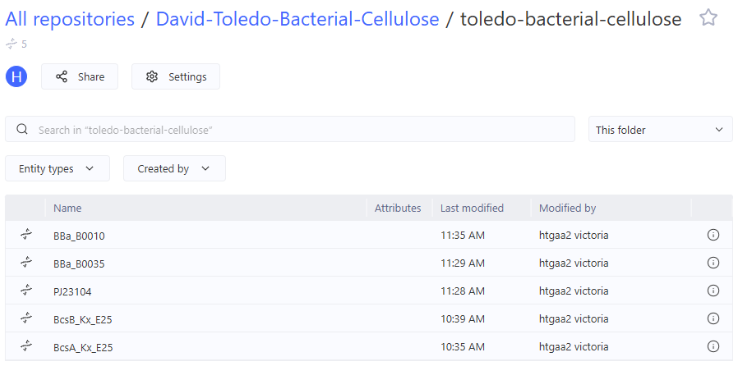
HTBAA Homework #2: DNA Design Part 0: Set up in Kernel My project is stored in the David-Toledo-Bacterial-Cellulose repository, inside the toledo-bacterial-cellulose folder.
Part 1: Define your expression target Expression target My project aims to produce bacterial cellulose for wound-dressing applications. Since cellulose itself is not a protein, I chose to express BcsA and BcsB, two core components of the bacterial cellulose synthase complex.
Week 3 — Cell-Free Reaction Design 3. Assignment: CFPS Reaction Design for sfGFP, PETase, and Reteplase The objective of this assignment was to design three cell-free protein synthesis (CFPS) reaction compositions, one for each target protein: sfGFP, PETase, and Reteplase.
The main challenge was not simply to maximize protein production, but to reduce the cost of producing functional protein. For this reason, I compared different energy systems, considered the folding requirements of each protein, and identified reagents that could potentially be reduced without significantly affecting protein activity.
Some of my favorite memories, adventures, and people!
❄️ My snowy adventures
My Work and Travel experience in Kellogg, Idaho.
❤️ My favorite person
Making memories together!
🌎 Good times with friends
Some of my favorite moments with friends.
Thanks for stopping by!
Subsections of David Toledo | HTGAA 2026
Week 1 HW: Final Project Ideas
HTBAA Homework #1 DAVID TOLEDO
1. What do you want to make? →
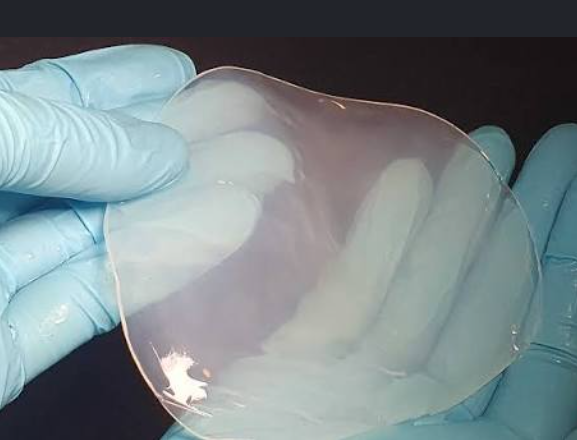
I would like to biomanufacture bacterial cellulose hydrogel sheets that could be developed into wound dressings. As a Bioengineering student, I am particularly interested in how biological systems can be used to create materials with biomedical applications. I find it fascinating that a living microorganism can produce a material that we could potentially use to support human health. Bacterial cellulose has several interesting properties, including its ability to retain water and form a three-dimensional network of nanofibers. These characteristics make it a promising material for wound-dressing research. This was actually a related idea of a project I’ve been working on more related to diabetes wounds in the Cleveland Clinic hackathon that is currently going on in my college.
For more detailed info check the postulation document! (it’s in spanish btw):
My initial goal would be to manufacture small, consistent sheets measuring 10 × 10 cm. I would like to investigate their water retention, mechanical properties, and suitability as a potential wound-dressing material.Eventually, I would also be interested in exploring whether the cellulose could be combined with engineered proteins or other biological molecules to give it additional functions. For this first project, however, I would focus on producing and characterizing the cellulose itself, rather than developing a clinically approved medical product.
2. What living system could make it? →
I would use the bacterium Komagataeibacter xylinus, which is known for its ability to produce bacterial cellulose. There’s a lot of investigations about this and the one we initially thought to use in our project was this one :
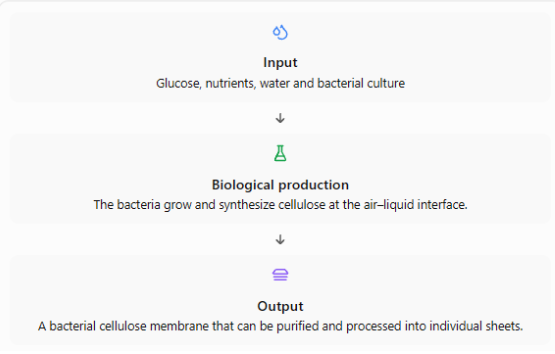
The process would be:
I would begin with static cultivation, allowing the bacteria to form a cellulose membrane at the surface of the culture medium. After cultivation, the material would be harvested, purified, washed and cut into the desired dimensions.Static cultivation is particularly interesting because it can produce continuous cellulose films, although it presents challenges related to production area and processing time.My initial assumption is that the selected bacterial strain could produce enough cellulose to form a continuous sheet with suitable mechanical properties.
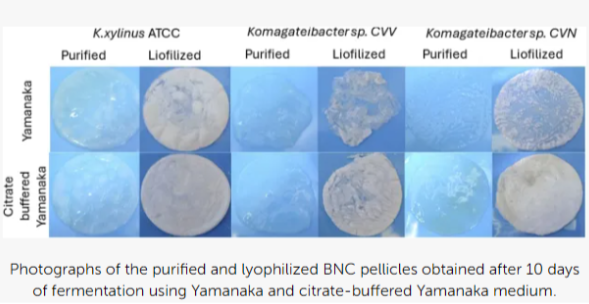
Photograms of the purified and lyophilized BNC pellicles obtained after 10 days of fermentation using Yamanaka and citrate-buffered Yamanaka medium.
3. How could automation help you make it? →
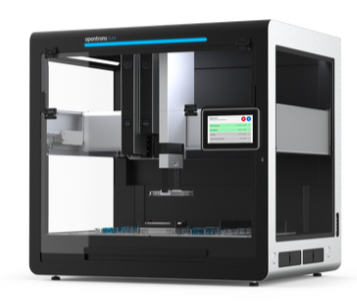
I would initially use an Opentrons Flex liquid-handling robot to automate part of the experimental workflow.
During the early stages, I would need to compare different culture conditions to determine which ones produce cellulose most efficiently. For example, I could investigate how changes in nutrient concentration, pH and culture composition affect cellulose production.The Opentrons system could help prepare experimental media and distribute precise liquid volumes across multiple samples. Its programmable liquid-handling capabilities make it suitable for this type of laboratory workflow. I would also like to automate data collection, using sensors to monitor variables such as temperature and pH.The main advantage would be reproducibility. Instead of preparing every experiment manually, I could compare multiple conditions while reducing variation introduced by manual liquid handling.At a larger manufacturing scale, I would need a different automation system, such as programmable pumps to fill larger cultivation trays and automated systems for harvesting and processing the cellulose.The Opentrons robot would therefore be used mainly for research and optimization, not for filling industrial-scale production vessels.
4. What would it take to make it at a meaningful scale?
a. How much?
For my initial project, I would like to produce 100 experimental bacterial cellulose wound-dressing sheets, each measuring 10 × 10 cm. I chose this scale because it would allow me to evaluate the material’s properties, compare production conditions, and investigate whether the manufacturing process could produce consistent results. These would be research samples, not dressings ready for clinical use.
For this preliminary estimate, I will assume that each sheet contains approximately 0.5 g of dry bacterial cellulose. Producing 100 sheets would therefore require 50 g of dry cellulose. However, some material would likely be lost during harvesting, purification, cutting, and quality control. Assuming a 20% loss, I would need to produce approximately 62.5 g of dry bacterial cellulose.
A 2024 study reported a bacterial cellulose yield of approximately 7 g/L after six days of cultivation using Komagataeibacter xylinus under specific culture conditions. For my project, I will assume a more conservative yield of 5 g/L after seven days. Based on this assumption, producing 62.5 g of cellulose would require approximately 12.5 liters of bacterial culture.
These values are preliminary estimates. The actual cellulose yield, material losses, and amount required per sheet would need to be determined experimentally.
b. How long would it take?
I would initially use shallow cultivation trays measuring 20 × 20 cm, each containing approximately 400 mL of culture medium. Since I would need 12.5 liters of culture, this would require approximately 32 cultivation trays operating simultaneously. Each tray would provide enough surface area to produce a cellulose membrane that could theoretically be divided into four 10 × 10 cm sheets, assuming sufficient thickness and uniformity.
I estimate that cellulose production would take approximately seven days. I would then allow three additional days for harvesting, purification, cutting, and preliminary quality control.
Therefore, the entire production process would take approximately 10 days, assuming that all trays can be cultivated in parallel and the processing equipment has sufficient capacity.
At this scale, automation could help prepare and distribute the culture medium, monitor cultivation conditions, and reduce variability between batches. For example, a liquid-handling robot could prepare different media formulations during the experimental stage, while programmable pumps and sensors could support larger-scale cultivation.
One important limitation is that bacterial cellulose production depends not only on culture volume but also on the available cultivation surface area. Producing larger quantities would require more trays, additional space, or a different cultivation system.
Overall, this pilot-scale experiment would help me determine whether bacterial cellulose could be produced consistently before considering a larger manufacturing process.
5. What i dont kow yet
1. Can I consistently produce cellulose with the required properties?
I would need to determine whether different cultivation conditions produce significant differences in cellulose thickness, mechanical strength and water retention.Producing cellulose is one thing, but producing hundreds of nearly identical sheets is another.
2. How can I increase production without compromising material quality?
Static cultivation requires a relatively large surface area. I would need to investigate whether cultivation trays could be stacked or redesigned to improve space efficiency while maintaining sufficient oxygen availability and consistent cellulose production.
3. Can the material be safely developed into a wound dressing?
Producing cellulose does not automatically make it suitable for medical use. I would need to investigate purification, removal of bacterial residues, sterilization, biocompatibility and the effects of processing on the material’s properties. I would also need to evaluate whether the manufacturing process could meet the quality requirements of a medical product before considering any clinical application.
REFERENCES USED:
Núñez D, Oyarzún P, Cáceres R, Elgueta E and Gamboa M (2024) Citrate-buffered Yamanaka medium allows to produce high-yield bacterial nanocellulose in static culture using Komagataeibacter strains isolated from apple cider vinegar. Front. Bioeng. Biotechnol. 12:1375984. doi: 10.3389/fbioe.2024.1375984.
Dong Hoon Hur, Hong-Soon Rhee, Jae Hyung Lee, Woo Yong Shim, Tae Yong Kim, Sang Yup Lee, Jin Hwan Park, Ki Jun Jeong,Enhanced production of cellulose in Komagataeibacter xylinus by preventing insertion of IS element into cellulose synthesis gene, Biochemical Engineering Journal, Volume 156, 2020, 107527, ISSN 1369-703X, https://doi.org/10.1016/j.bej.2020.107527.
Hodel, K. V. S., Machado, B. A. S., Sacramento, G. d. C., Maciel, C. A. d. O., Oliveira-Junior, G. S., Matos, B. N., Gelfuso, G. M., Nunes, S. B., Barbosa, J. D. V., & Godoy, A. L. P. C. (2022). Active Potential of Bacterial Cellulose-Based Wound Dressing: Analysis of Its Potential for Dermal Lesion Treatment. Pharmaceutics, 14(6), 1222. https://doi.org/10.3390/pharmaceutics14061222
AI AND PROMPTS USED
I used Chatgpt to organize my brainstorming ideas. (The prompts were in Spanish)
Prompt 1:
Te paso la primera tarea de HTBAA. Me interesa bastante la parte de biomateriales, SynBio y protein engineering. También estoy trabajando en un proyecto relacionado con heridas diabéticas.Veamos qué podríamos biomanufacturar que conecte con eso. Algo que se pueda plantear desde un living system y que tenga sentido llevarlo a una escala mayor pero nada muy complicado obviamente
Prompt 2
Me gusta lo de la celulosa bacteriana. Podríamos enfocarnos en producir las membranas como material base para apósitos como mi trabajo con cleveland no se si lo recuerdaes .La parte de incorporar otras moléculas la podemos dejar como algo a futuro porque creo que es mas dificil. Por ahora quiero que el objetivo sea producir el material y evaluar sus propiedades ayúdame a ordenar esa idea para la primera pregunta.
Prompt 3
Para el living system, yo se que hay uno que se llama aldo como komagatoiber o algo asi.Quiero explicar el proceso desde el medio de cultivo hasta obtener las membranas. Input, producción y output, sin entrar todavía en un protocolo experimental completo.Revisa que tenga sentido y ayúdame a redactarlo.
Prompt 4
Para automatización, estaba pensando en trabajar con diferentes condiciones de cultivo. Concentración de nutrientes, pH, temperatura y ver cómo afectan la producción de celulosa. Mi profe cuando hacia ideas de clevelan menciono a Opentrons para poder preparar las muestras. después cambiaría al pasar a una escala mayor obaiemtne pero es bueno para empezar .No quiero que quede como que el robot hace absolutamente todo el proceso.
Prompt 5
No me queda muy clara esta parte de meaningful scale. Podríamos empezar con unas 100 membranas de 10 × 10 cm, algo como un lote piloto para caracterización.Ayúdame a desarrollar los cálculos. Necesitamos considerar la cantidad de celulosa seca, el rendimiento del microorganismo, volumen de cultivo, pérdidas y tiempo de producción. Que los números tengan sentido y estén respaldados o identificados como supuestos.
Prompt 6
Para los unknowns, creo que lo principal sería conseguir membranas uniformes, mantener el rendimiento al escalar y asegurar que el material pueda utilizarse en una aplicación biomédica. Ayúdame a ordenar estos puntos. Quiero que quede claro qué tendría que medir o validar experimentalmente.
Prompt 7
Ya tenemos la idea general. Ahora ayúdame a ordenar todo en inglés siguiendo las preguntas del homework. Mantén la conexión con mi proyecto de heridas diabéticas y los aspectos técnicos que hemos discutido. En la parte de meaningful scale, explica los cálculos en texto, sin fórmulas de LaTeX. Que se entienda de dónde salen las cantidades y cuáles son supuestos. No lo hagas demasiado formal. Quiero que mantenga un estilo de estudiante universitario, técnico pero fácil de entender.
Week 2 HW: DNA Design
HTBAA Homework #2: DNA Design
Part 0: Set up in Kernel
My project is stored in the David-Toledo-Bacterial-Cellulose repository, inside the toledo-bacterial-cellulose folder.
Part 1: Define your expression target
Expression target
My project aims to produce bacterial cellulose for wound-dressing applications. Since cellulose itself is not a protein, I chose to express BcsA and BcsB, two core components of the bacterial cellulose synthase complex.
BcsA is the catalytic subunit responsible for cellulose biosynthesis, while BcsB is another core component of the cellulose synthase machinery.
Rather than reconstructing the complete cellulose biosynthesis pathway, my initial design focuses on expressing these two core components while using the native cellulose synthesis, export, and organization machinery already present in Komagataeibacter xylinus.
Sequence source
I used the native bcsA and bcsB coding sequences from Komagataeibacter xylinus E25. The complete genome of this strain is available through NCBI under accession CP004360.1.
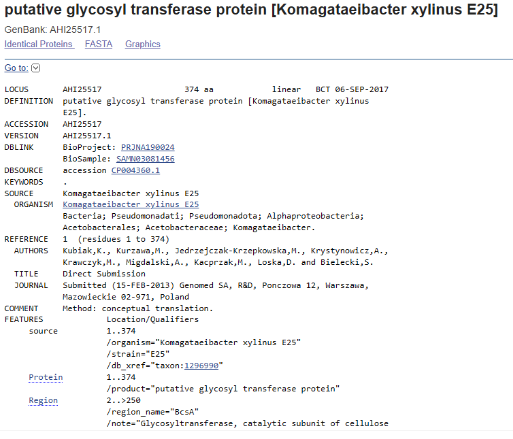
BcsA corresponds to locus tag H845_451 and encodes a 745-amino-acid cellulose synthase catalytic subunit. Its GenBank protein accession is AHI24410.1, and its coding sequence corresponds to CP004360.1:474401–476638.
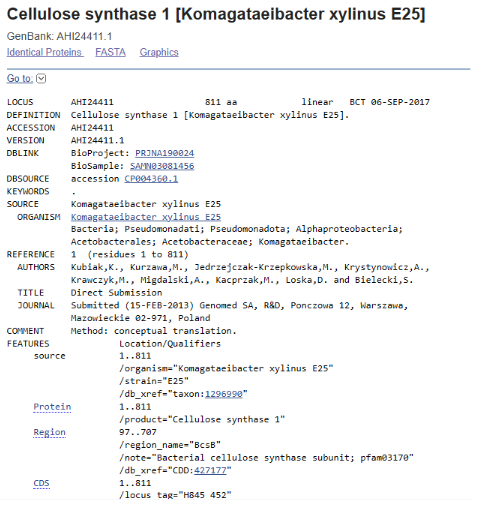
BcsB corresponds to locus tag H845_452 and encodes an 811-amino-acid cellulose synthase subunit. Its GenBank protein accession is AHI24411.1, and its coding sequence corresponds to CP004360.1:476625–479060.
Both native coding sequences were retrieved from NCBI and imported into Kernel as CDS (+start +stop) parts.
Host/chassis
I selected Komagataeibacter xylinus as the host because it is naturally capable of producing bacterial cellulose and was already the living system selected in Homework #1.
Using the native cellulose-producing host allows the designed construct to operate alongside the endogenous machinery involved in cellulose synthesis, export, and organization.
Product localization
BcsA and BcsB function as components of the cellulose synthase machinery associated with the bacterial cell envelope rather than as freely secreted proteins. The cellulose produced by this machinery is subsequently translocated and assembled outside the cell with the participation of the remaining native Bcs components.
For this initial design, I therefore do not add an artificial secretion signal to BcsA or BcsB, since the construct is intended to work with the native cellulose biosynthesis machinery of K. xylinus.
Part 2: Design your genetic parts
For the expression construct, I designed the following basic cassette:
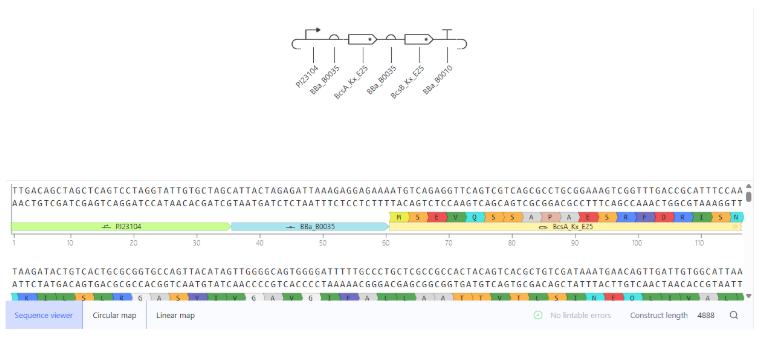
PJ23104 drives constitutive transcription of the cassette, while an independent BBa_B0035 RBS is positioned upstream of each coding sequence to support translation of both BcsA and BcsB. BBa_B0010 is positioned downstream of BcsB to terminate transcription.
I inspected the assembled sequence in Kernel’s Sequence Viewer. Both BcsA and BcsB were imported from their native NCBI coding sequences as CDS (+start +stop) parts, preserving their expected start and stop codons and reading frames.
Kernel translated the coding regions in the Sequence Viewer and reported “No lintable errors” for the assembled construct. The construct map was also inspected to confirm that all parts were in the intended order and forward orientation.
The expression cassette is intended to be inserted into the pSEVA331Bb-derived vector context described in Part 2.
Part 4: Optimize and quality-check
Codon optimization
I tested Kernel’s codon optimization tool using the native BcsA coding sequence.
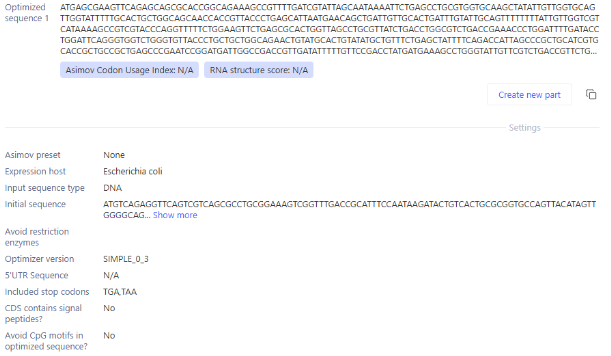
Kernel does not currently provide Komagataeibacter xylinus as an expression host. Therefore, I performed an exploratory optimization of BcsA using Escherichia coli as the expression host rather than replacing the native sequence in my final construct.
Kernel generated an alternative codon-optimized sequence using the Simple v0.3 algorithm.
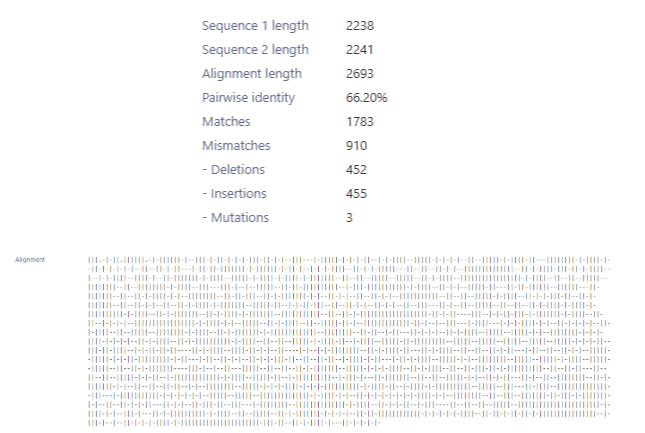
A nucleotide pairwise alignment between the native and optimized BcsA sequences gave 66.20% pairwise identity, showing that substantial synonymous recoding can occur when adapting a gene to a different host.
Codon usage matters because organisms differ in their preferred synonymous codons, which can influence translation efficiency and protein expression.
Because BcsA and BcsB in my design are already native sequences from K. xylinus E25, and Kernel cannot optimize specifically for this host, I retained the native CDS sequences in the final construct rather than using the E. coli-optimized sequence.
Sequence similarity search
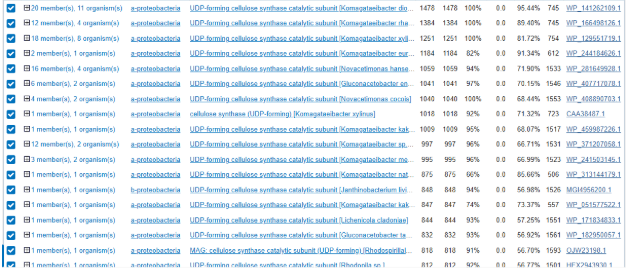
I performed a BLASTp search of BcsA (AHI24410.1) against the NCBI ClusteredNR database.
The search returned multiple significant matches to UDP-forming cellulose synthase catalytic subunits. The highest-ranked cluster showed 100% query coverage, 95.44% sequence identity, and an E-value of 0.0. Additional high-scoring homologs were found among Komagataeibacter species.
These results are consistent with BcsA being a naturally occurring cellulose synthase protein rather than a novel engineered protein and support the functional annotation used in the construct.
Biosecurity screening
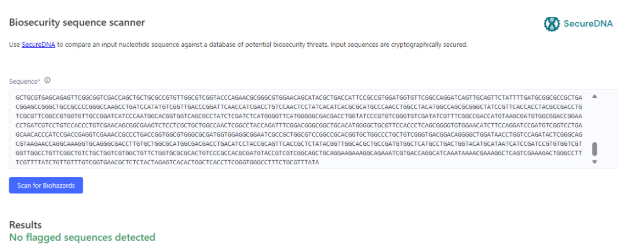
I screened the complete 4,888 bp BcsAB expression construct using Kernel’s SecureDNA biosecurity sequence scanner.
SecureDNA compares nucleotide sequences against its biosecurity screening system for potentially concerning sequences.
The scan returned “No flagged sequences detected.” Therefore, no biosecurity flags requiring redesign were identified for the submitted construct.
Part 5: From design to build
Build strategy
My final expression cassette is 4,888 bp long. For an initial prototype, I would not synthesize the entire construct as one long DNA molecule. Instead, I would order the design as a small number of synthetic DNA fragments and assemble them into the pSEVA331Bb-derived vector using Gibson Assembly.
Each fragment would be designed with overlapping ends compatible with its neighboring fragment and with the linearized vector. Gibson Assembly is appropriate for this design because it allows multiple DNA fragments with overlapping ends to be joined into a single construct in one assembly reaction.
Gibson et al. demonstrated this approach for assembling DNA molecules considerably larger and more complex than the cassette designed here (Gibson et al., 2009).
I would prefer this strategy over building the construct directly from an oligonucleotide pool. Oligo-pool approaches are especially useful when many different sequences need to be synthesized in parallel, whereas this project currently requires only one defined BcsA/BcsB expression cassette.
Synthesis constraints and error correction
DNA synthesis is not error-free, and longer sequences increase the chance that at least one synthesis error will occur.
My construct also contains two relatively large coding regions, BcsA and BcsB, so dividing the cassette into smaller synthetic fragments would make synthesis and verification more manageable.
Sequence-dependent properties such as repetitive regions, extreme GC content, or secondary structure can also make synthesis and assembly more difficult. Before ordering the fragments, I would therefore use the synthesis provider’s sequence screening to identify problematic regions and, where possible, introduce synonymous changes that preserve the encoded protein.
After assembly, the resulting construct would be sequence-verified before being introduced into K. xylinus.
Error correction could also be incorporated before final assembly. Carr et al. demonstrated that mismatch-recognizing proteins can enrich correctly synthesized DNA by identifying and removing error-containing molecules, illustrating how error-correction methods can improve the fidelity of de novo synthesized DNA (Carr et al., 2004).
Prototype versus scale
For the prototype, I would synthesize one set of fragments, assemble the BcsA/BcsB cassette into the selected vector, verify the assembled sequence, and test the resulting construct in K. xylinus.
At this stage, the main objective is to determine whether increased expression of BcsA and BcsB actually improves bacterial cellulose production.
At larger scale, I would not continuously synthesize new DNA for every cellulose production batch. Once a validated construct and strain are obtained, the DNA design becomes a reusable biological production system.
Scaling would therefore focus on maintaining the engineered strain and increasing bacterial cellulose cultivation rather than repeatedly synthesizing the 4,888 bp construct.
If I later wanted to test many promoter, RBS, or BcsA/BcsB variants in parallel, higher-throughput DNA synthesis approaches would become more useful. For example, Kosuri et al. described selective amplification of DNA from high-density oligonucleotide pools as a scalable strategy for producing many different synthetic genes simultaneously (Kosuri et al., 2010).
Part 6: What don’t you know yet?
1. Will PJ23104 provide an appropriate expression level in K. xylinus?
The first uncertainty is whether the constitutive PJ23104 promoter will provide an appropriate level of BcsA and BcsB expression in K. xylinus.
Stronger expression is not necessarily equivalent to higher cellulose production, since excessive expression could impose a metabolic burden on the cells.
I would test this by comparing the current construct with variants containing promoters of different strengths. Expression could be measured at the RNA level using RT-qPCR, while growth and cellulose production would be measured in parallel.
This would allow me to identify whether increasing BcsA/BcsB expression actually improves production without strongly affecting cell growth.
2. Will the additional BcsA and BcsB function correctly with the native cellulose synthesis machinery?
My design assumes that additional BcsA and BcsB can interact correctly with the endogenous cellulose synthesis machinery already present in K. xylinus.
However, because cellulose synthesis depends on a larger membrane-associated complex, increasing only these two components may not increase the activity of the complete system.
I would compare the engineered strain with the unmodified K. xylinus strain under the same cultivation conditions. In addition to confirming expression of BcsA and BcsB, I would measure cellulose production to determine whether the additional copies produce a functional improvement.
3. Will the construct actually increase bacterial cellulose production and preserve the desired material properties?
Even if the construct increases expression of BcsA and BcsB, the most important unknown is whether this translates into more useful bacterial cellulose.
I would therefore compare the engineered and control strains using cellulose yield after a defined cultivation period. I would also compare properties relevant to the wound-dressing application, such as membrane thickness, water retention, and mechanical strength.
If expression increases but cellulose production does not, this would indicate that BcsA/BcsB expression is not the main limiting step and that other components of the cellulose biosynthesis pathway or cultivation conditions should be investigated next.
References
Carr, P. A. et al. (2004). Protein-mediated error correction for de novo DNA synthesis. Nucleic Acids Research, 32, e162. https://doi.org/10.1093/nar/gnh160
Gibson, D. G. et al. (2009). Enzymatic assembly of DNA molecules up to several hundred kilobases. Nature Methods, 6, 343–345. https://doi.org/10.1038/nmeth.1318
Kosuri, S. et al. (2010). Scalable gene synthesis by selective amplification of DNA pools from high-fidelity microchips. Nature Biotechnology, 28, 1295–1299. https://doi.org/10.1038/nbt.1716
Kong, D. S. et al. (2007). Parallel gene synthesis in a microfluidic device. Nucleic Acids Research, 35, e61. https://doi.org/10.1093/nar/gkm121
Tian, J. et al. (2004). Accurate multiplex gene synthesis from programmable DNA microchips. Nature, 432, 1050–1054. https://doi.org/10.1038/nature03151
Elowitz, M. B. & Leibler, S. (2000). A synthetic oscillatory network of transcriptional regulators. Nature, 403, 335–338. https://doi.org/10.1038/35002125
Stanton, B. C. et al. (2014). Genomic mining of prokaryotic repressors for orthogonal logic gates. Nature Chemical Biology, 10, 99–105. https://doi.org/10.1038/nchembio.1411
Week 3 HW: Cell-Free Protocols
Week 3 — Cell-Free Reaction Design
3. Assignment: CFPS Reaction Design for sfGFP, PETase, and Reteplase
The objective of this assignment was to design three cell-free protein synthesis (CFPS) reaction compositions, one for each target protein: sfGFP, PETase, and Reteplase.
The main challenge was not simply to maximize protein production, but to reduce the cost of producing functional protein. For this reason, I compared different energy systems, considered the folding requirements of each protein, and identified reagents that could potentially be reduced without significantly affecting protein activity.
I used the CFPS Coopetition platform to explore the reference formulations and submit my experimental designs.
A. Compare Cell-Free Reaction Compositions
A.1. Why does the concentration of potassium glutamate and magnesium glutamate differ between compositions? Which is more sensitive?
Potassium glutamate and magnesium glutamate are both important for protein synthesis, but they have different functions.
Potassium glutamate helps maintain an ionic environment similar to the bacterial cytoplasm, supporting the activity of the transcription and translation machinery. Magnesium ions, on the other hand, are directly involved in ribosome stability, RNA structure, and interactions with nucleotides.
Their optimal concentrations can change depending on the lysate, energy system, and other reagents present in the reaction.
Magnesium glutamate is generally more sensitive. A small change in magnesium concentration can significantly affect protein synthesis because magnesium interacts with ATP, RNA, and other negatively charged molecules. Potassium glutamate usually has a broader range of acceptable concentrations.
Therefore, magnesium concentration must be carefully considered when modifying a CFPS formulation.
A.2. Explain how a PEP+NTP reaction formulation is different from a Ribose+NMP reaction formulation.
The main difference between these formulations is how they supply energy and nucleotides for transcription and translation.
PEP+NTP formulations directly provide nucleotide triphosphates (ATP, CTP, GTP, and UTP), while phosphoenolpyruvate (PEP) supports ATP regeneration. This system provides readily available energy and nucleotide substrates, but several of its components can be relatively expensive.
Ribose+NMP formulations instead use ribose as a metabolic substrate and nucleotide monophosphates (AMP, CMP, GMP, and UMP). These components are generally less expensive, but the reaction depends more heavily on the metabolic enzymes remaining in the lysate to regenerate the nucleotides required for transcription.
The trade-off is therefore between reagent cost and metabolic dependence.
For this homework, this distinction was especially important because the reference data showed that different proteins responded differently to the two energy systems.
Protein
PEP reference
Ribose reference
sfGFP
0.61 g/L
0.46 g/L
PETase
314.6 µM product
274.8 µM product
Reteplase
10.9 µM product
0.81 µM product
The PETase and Reteplase values represent assay product measurements associated with enzymatic activity, not protein concentration or titer.
The Ribose formulation appeared relatively promising for sfGFP and PETase, while the difference was much greater for Reteplase. This influenced my decision to retain the PEP energy system for the Reteplase design.
A.3. Choose two cell-free reaction compositions from the literature, compare and contrast the choice of reagents and the concentration of reagents.
I compared the traditional PANOx-SP formulation described by Jewett and Swartz (2004) with the more recent cost-optimization approach discussed by Olsen et al. (2026).
PANOx-SP uses phosphoenolpyruvate as an energy source and supplies nucleotide triphosphates directly. It also includes salts, amino acids, and supporting components such as NAD, CoA, spermidine, putrescine, and oxalate. These components help create an environment that supports sustained transcription and translation.
In contrast, cost-oriented CFPS formulations investigate whether reagent concentrations can be reduced or alternative energy and nucleotide systems can be used while maintaining sufficient protein production.
Aspect
Traditional PANOx-SP
Cost-oriented CFPS
Main objective
Support robust protein synthesis
Improve protein yield relative to reagent cost
Energy system
PEP-based
May use alternative, less expensive substrates
Nucleotides
NTPs
NTPs or lower-cost nucleotide alternatives
Supporting reagents
Relatively comprehensive mixture
Components evaluated for possible reduction
Optimization strategy
Maintain a productive biochemical environment
Identify which reagents justify their cost
The important difference is not that one formulation is universally better than the other. Instead, they represent different optimization priorities.
This comparison helped me understand why removing a reagent is not automatically an improvement. A cheaper reaction may still be less cost-effective if functional protein production decreases too much.
B. Design One Reaction Composition for Each of the Three Proteins
B.1. Experimental design strategy
I submitted three experimental CFPS compositions through the Coopetition platform.
Each reaction has a total volume of 20 µL (20,000 nL), including:
5,000 nL of lysate
2,000 nL of DNA template
2,000 nL of base buffer
11,000 nL of additional reagents and nuclease-free water
All reagent volumes were selected in increments of 25 nL.
Instead of using the same strategy for every protein, I adapted each composition to the protein’s folding requirements and the reference data.
Target: Superfolder green fluorescent protein (sfGFP)
Design objective: Reduce the cost of a functional sfGFP reaction by simplifying a Ribose+NMP formulation.
sfGFP is a relatively robust protein that does not require disulfide-bond formation. Because of this, I considered it a suitable target for testing a simplified reaction composition.
I selected a Ribose+NMP energy system and reduced several supplementary components compared with the reference formulation. The idea was to take advantage of the metabolic capacity of the lysate while avoiding reagents that might contribute relatively little to functional protein yield.
Submitted composition:
Reagent
Volume (nL)
Lysate
5,000
sfGFP DNA template
2,000
Base buffer
2,000
Amino acid mix 17
400
AMP
600
CMP
425
GMP
425
UMP
425
Ribose
1,125
Potassium glutamate
975
Magnesium glutamate
100
Nuclease-free water
6,525
Total
20,000
Hypothesis
A simplified Ribose+NMP formulation may reduce the cost of functional sfGFP production while maintaining sufficient protein yield. Even if the final sfGFP concentration is lower than that of the reference, the formulation could still be more cost-effective if the reduction in reagent cost is proportionally greater.
Expected outcome
I expect this formulation to provide a useful test of how much the reaction can be simplified before functional sfGFP production becomes too low.
Composition 2 — PETase: Reduced DsbC in a Ribose+NMP Formulation
Sample ID:david_toledo_petase_low_dsbc_ribose_v1
Target: PETase (TfCut2)
Design objective: Reduce the cost of folding assistance while maintaining PETase enzymatic activity.
Unlike sfGFP, PETase contains one disulfide bond. Therefore, correct folding is more important when evaluating its activity.
One reagent that attracted my attention was DsbC, a disulfide-bond isomerase that helps correct incorrectly paired disulfide bonds. DsbC is also particularly expensive in the available reagent inventory.
I decided to test whether PETase could maintain sufficient activity with a lower DsbC concentration.
Submitted composition:
Reagent
Volume (nL)
Lysate
5,000
PETase DNA template
2,000
Base buffer
2,000
Amino acid mix 17
400
AMP
600
CMP
425
GMP
425
UMP
425
Ribose
1,500
Potassium glutamate
1,475
Magnesium glutamate
225
DsbC
200
Nuclease-free water
5,325
Total
20,000
Main modification: DsbC was reduced from 5 µM to 1 µM.
Hypothesis
Reducing DsbC concentration from 5 µM to 1 µM may substantially lower the reaction cost without causing an equally large decrease in PETase activity.
Since PETase contains only one disulfide bond, it may require less folding assistance than a more structurally complex protein such as Reteplase.
Expected outcome
The experiment will help determine whether lower DsbC concentrations are sufficient to produce functional PETase and whether the cost reduction compensates for any loss of activity.
Composition 3 — Reteplase: PEP+NTP with Reduced DsbC
Sample ID:david_toledo_reteplase_pep_low_dsbc_v1
Target: Reteplase
Design objective: Reduce the cost of DsbC while preserving an energy and redox environment suitable for oxidative protein folding.
Reteplase was the most challenging target because it contains nine disulfide bonds that must form correctly for the protein to be functional.
The reference results also showed a large difference between the two energy systems: the PEP formulation produced a much stronger activity-associated signal than the Ribose formulation.
For this reason, I decided not to replace the PEP+NTP system. Instead, I focused on a more controlled modification: reducing DsbC while preserving the other components of the reference formulation.
Submitted composition:
Reagent
Volume (nL)
Lysate
5,000
Reteplase DNA template
2,000
Base buffer
2,000
PEP
6,000
ATP
250
CTP
175
GTP
175
UTP
175
Amino acid mix 17
400
Magnesium glutamate
225
Ammonium glutamate
200
HEPES-KOH
550
CoA
100
NAD
75
Folinic acid
50
Potassium oxalate
150
Putrescine
50
Spermidine
125
DsbC
600
Oxidized glutathione (GSSG)
475
Reduced glutathione (GSH)
200
Nuclease-free water
1,025
Total
20,000
Main modification: DsbC was reduced from 5 µM to 3 µM.
I preserved the GSSG/GSH redox system because Reteplase requires an oxidizing environment to form its disulfide bonds.
Hypothesis
Reducing DsbC from 5 µM to 3 µM may improve the cost per unit of functional Reteplase activity while maintaining enough disulfide isomerase activity for correct protein folding.
Expected outcome
I expect this experiment to reveal whether a moderate reduction in DsbC is compatible with functional Reteplase production. Because this protein has nine disulfide bonds, a loss of activity is possible, and the cost-effectiveness of the formulation must be determined experimentally.
B.2. Comparison of the three designs
Protein
Energy system
Main optimization
Primary concern
sfGFP
Ribose+NMP
Simplify the reagent mixture
Maintaining sufficient protein yield
PETase
Ribose+NMP
Reduce DsbC to 1 µM
Maintaining enzymatic activity
Reteplase
PEP+NTP
Reduce DsbC to 3 µM
Correct oxidative folding
The three formulations follow the same general goal but address different biochemical challenges.
For sfGFP, I prioritized simplifying the reaction. For PETase, I explored whether folding assistance could be reduced. For Reteplase, I preserved the reference energy and redox systems while making a smaller adjustment to an expensive reagent.
These designs have been submitted, but their performance has not yet been experimentally measured.
B.3. Community Reagents
I reviewed the reagent proposals submitted by other participants and voted for FkpA (E. coli chaperone), proposed by Xiangtao Shi.
I selected FkpA because it may help reduce protein aggregation and assist folding, potentially complementing DsbC.
This is particularly relevant to Reteplase, where producing the protein is not sufficient; the protein must also fold into an active structure.
The proposal also referenced research showing that FkpA and DsbC can work together to improve folding and assembly of complex proteins in cell-free systems.
I considered this a useful approach because it addresses a different part of the folding problem. DsbC helps rearrange incorrectly formed disulfide bonds, while FkpA can provide additional folding assistance.
My vote was successfully registered on the Community Reagents platform.
B.4. CFPS Coopetition Forum
Forum:cfps-coopetition
Still working on it jejej
C. Asimov Kernel — Optional
haven’t done this yet T_T
D. Discussion and Conclusions
This assignment helped me understand that CFPS optimization depends on more than simply selecting the cheapest available reagents.
The best formulation depends on the protein being produced, the metabolic capacity of the lysate, the energy system, and the requirements for correct folding.
The reference results suggested that Ribose+NMP systems may be worth exploring for proteins such as sfGFP and PETase, while Reteplase benefits substantially from the PEP-based formulation.
Another important consideration was the cost of DsbC. Because this reagent is expensive, reducing its concentration could potentially improve reaction economics. However, its contribution to functional protein production must be evaluated experimentally, particularly for Reteplase.
Overall, my three submitted compositions explore the balance between reagent cost and protein functionality using different approaches.
The next step will be to compare their experimental performance against the reference formulations and determine whether the proposed changes actually improve the cost per unit of functional protein.
E. Use of AI
I used ChatGPT (GPT-6, OpenAI) as a research assistant during the design process.
The tool helped me compare CFPS energy systems, understand the functions of individual reagents, calculate reaction volumes and final concentrations, and develop hypotheses for the three experimental compositions.
Examples of prompts used during the process include:
“Compare PEP+NTP and Ribose+NMP systems for cell-free protein synthesis.”
“Help me design a low-cost sfGFP formulation using Ribose and nucleotide monophosphates.”
“Could reducing DsbC from 5 µM to 1 µM improve the cost-effectiveness of PETase production?”
“How can I reduce DsbC in a Reteplase reaction while preserving the conditions required for disulfide-bond formation?”
“Check that the reagent volumes add up to exactly 20,000 nL.”
The proposed compositions and scientific reasoning were reviewed before submission. Experimental performance remains to be validated.
F. References
Jewett, M. C., & Swartz, J. R. (2004). Mimicking the Escherichia coli cytoplasmic environment activates long-lived and efficient cell-free protein synthesis. Biotechnology and Bioengineering, 86(1), 19–26. https://doi.org/10.1002/bit.20026
Olsen et al. (2026). Design-driven optimization of low-cost reagent formulations for reproducible and high-yielding cell-free gene expression. Nature Communications. https://doi.org/10.1038/s41467-026-69605-8
Silverman, A. D., Karim, A. S., & Jewett, M. C. (2020). Cell-free gene expression: an expanded repertoire of applications. Nature Reviews Genetics, 21, 151–170. https://doi.org/10.1038/s41576-019-0186-3