Week 1 HW: Final Project Ideas
What you would like to biomanufacture and why?
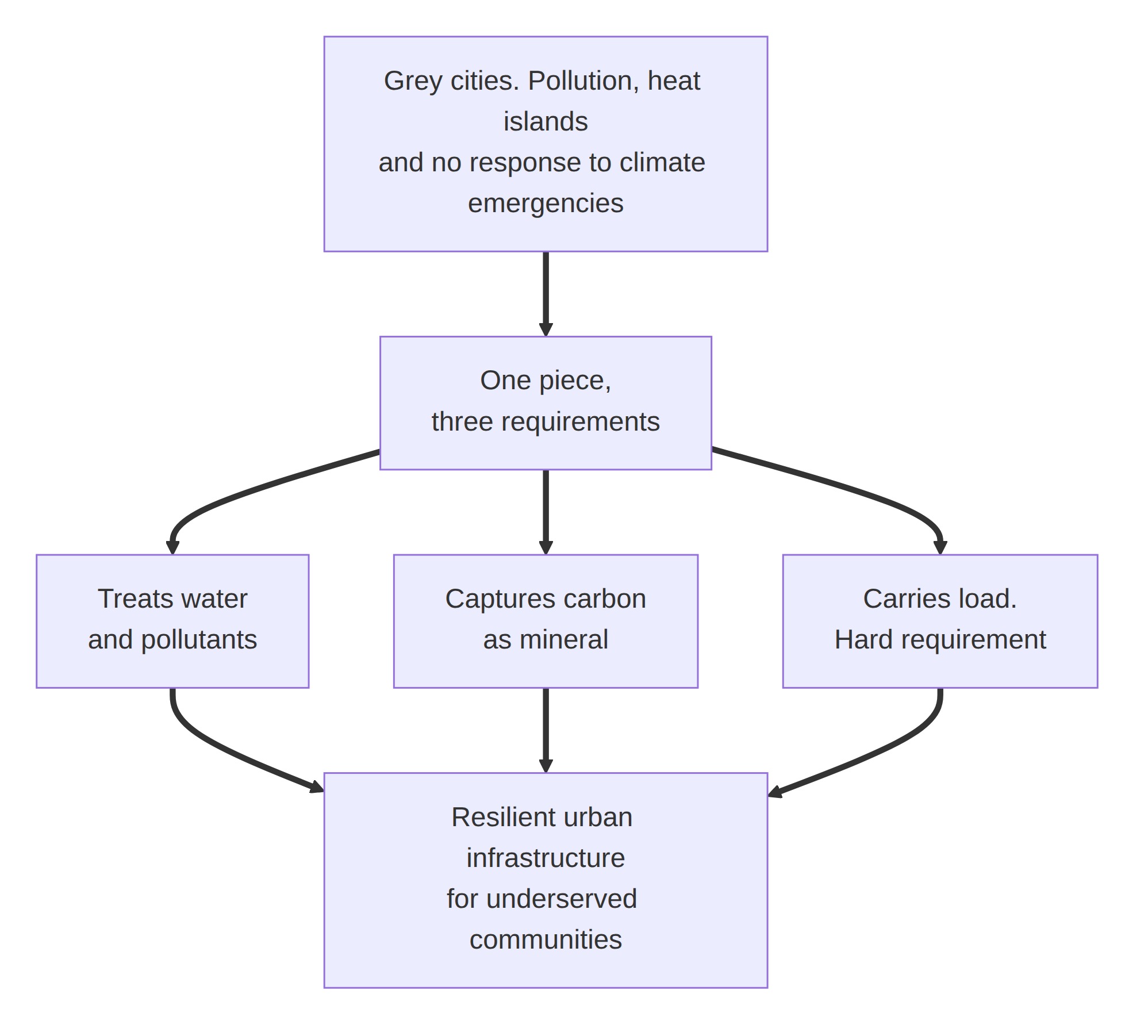
I find the problem of our buildings pressing. Rather than contributing to the health and improvement of our urban ecosystems, their production generates high levels of pollutants and contributes to a vast sprawl of grey cities that cannot respond to climate emergencies and that create heat islands. With everything that has been developed recently, it is time to build not only so as not to pollute, but to gradually return the quality of our urban environments to ecosystems where nature and development can coexist healthily.
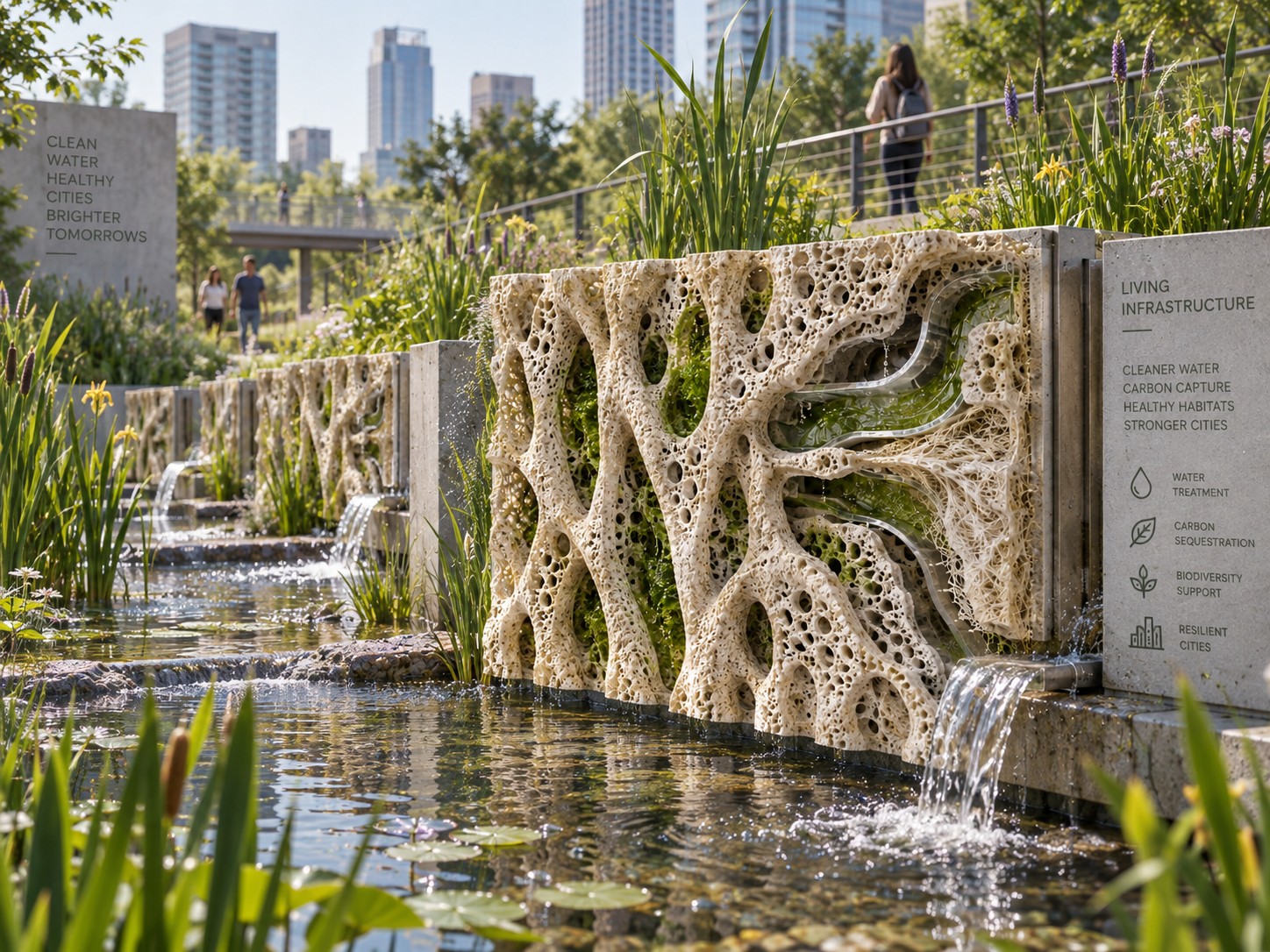
Out of that problem, my interest is to create a prototype of a resilient infrastructure for the improvement of our cities: a piece that treats pollutants and captures carbon, that handles water in urban settings, and that can serve the communities with the least access to sanitation — where a construction element that also cleans is worth more than one that only encloses. A resistant but adaptable infrastructure that fuses biotechnological elements by adapting the particular functions of photosynthesis, bioremediation and metabolism, through microorganisms living together inside a ribbed coral structure that grows and anchors itself to the site, offering safe construction alternatives that give something back to our urban ecosystems and transform them.
What living system would you use?
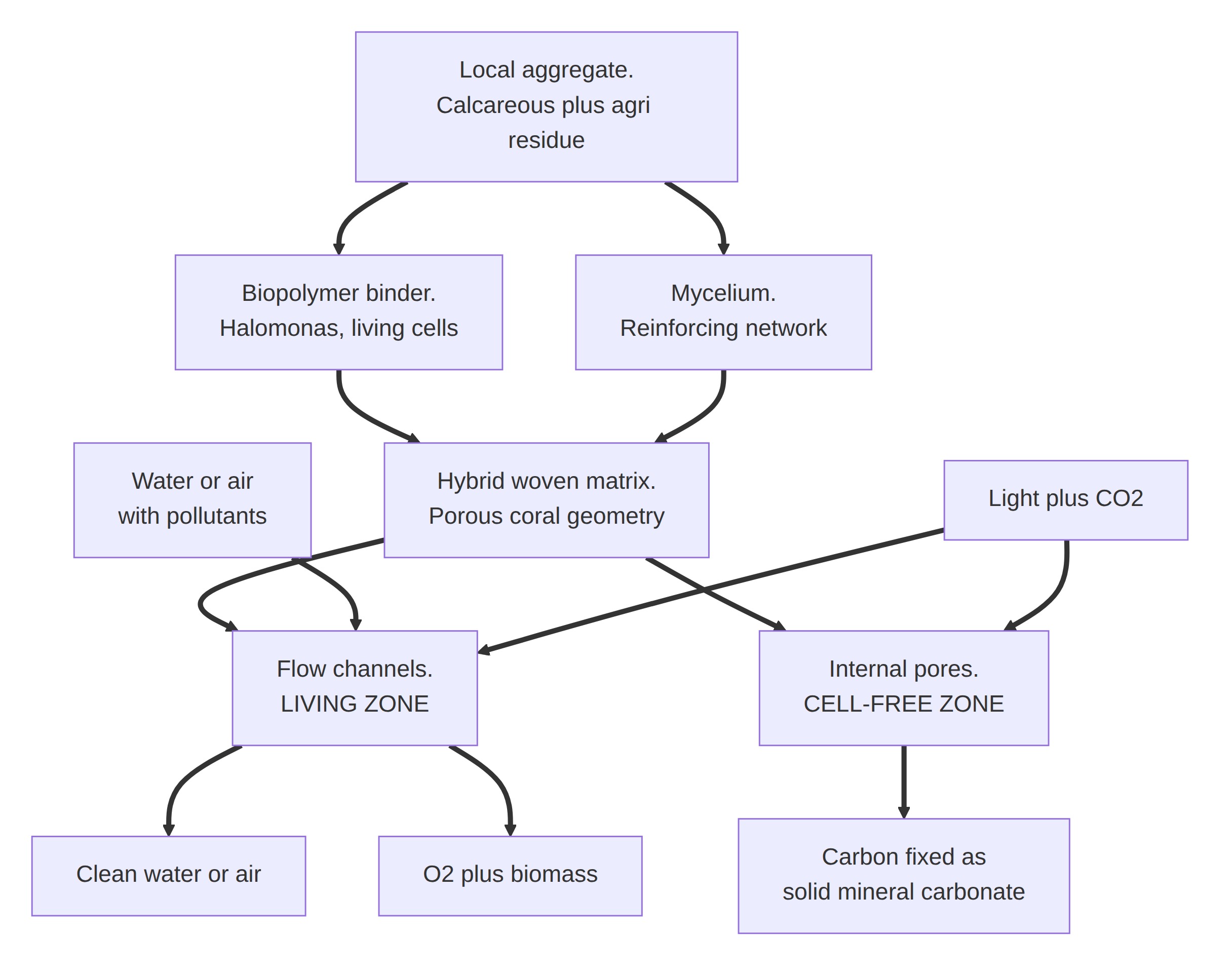
I propose a system with two parts, following the logic of cultured-meat biomanufacturing: an infrastructure that hosts, and a biological phase that works. The infrastructure is a hybrid matrix of local aggregate bound with a biopolymer binder and woven internally by a mycelium network, with a porous coral geometry whose channels act as a circulation system for water or air depending on where the piece is installed. As with the cultured-meat scaffold, it is a design object with simultaneous requirements: porosity so that the biological phase can live, rigidity so that the piece can resist, and a final property for the user which here is not flavour but the capacity to clean and to capture carbon.
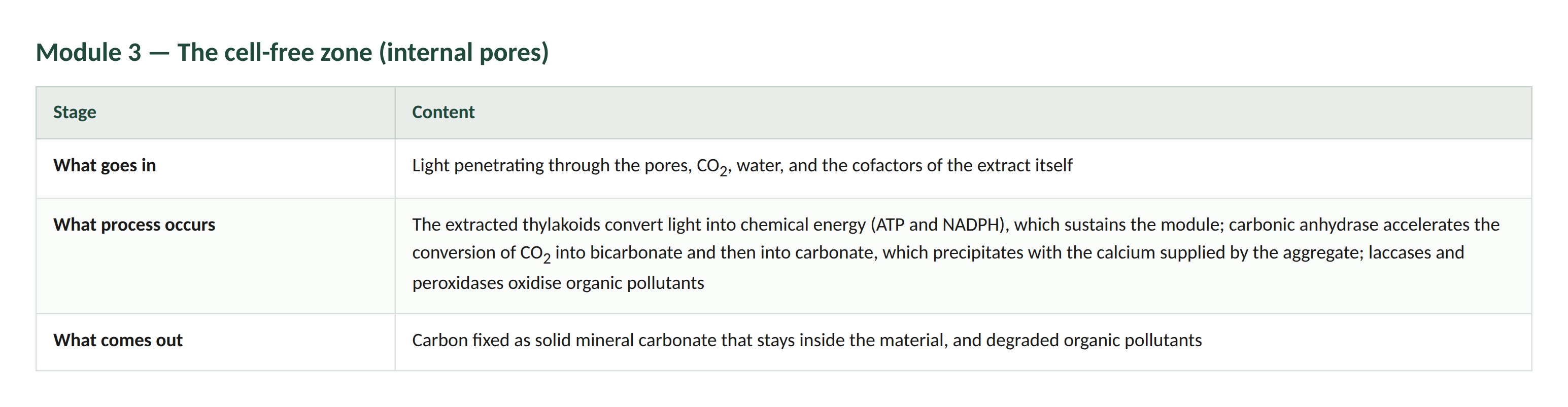
The biological phase consists of extremophilic microalgae used in two states depending on the zone. In the flow channels, where there is water and light, the whole living organism is used: there, bioremediation happens in full — adsorption onto the cell wall, internal accumulation and metabolic transformation — and the biofilm replenishes itself. Inside the material, where nothing living can be sustained, the alga enters as a cell-free extract: the cells are lysed and the thylakoids, carbonic anhydrase, laccases and peroxidases are immobilised on the pores. Light, CO₂, water and contaminated air or water go in; conversion of light into chemical energy, carbon fixation, catalysed hydration of CO₂ to carbonate and enzymatic oxidation of organic pollutants take place; oxygen, carbon fixed within the material, and air or water with a lower pollutant load come out.
To arrive at the right alga I follow five steps: select a robust microalga for its tolerance to heat, pH or salinity; study its actual capacity to remove pollutants; extract and stabilise its biomass in vitro; integrate the extracted component into the matrix; and test, beginning with the infrastructure alone before measuring the assembly. The extraction step is carried out hot if the microalga is thermophilic, because the enzymes of interest then survive while the rest denatures: this purifies the extract without chromatography and avoids having to work in a sterile environment, which is the cost that would make a cell-free system unviable.
The carbon-fixation module builds on the CETCH cycle, a synthetic pathway assembled in vitro with enzymes from nine organisms across the three domains of life, which in 2020 was combined with photosynthetic membranes inside ninety-micron droplets to achieve light-driven CO₂ fixation. That work is my precedent that a light-powered, cell-free carbon-fixation module is feasible. My variant proposes that the membranes come from the extremophilic microalga rather than from a plant, so that the resulting artificial chloroplast tolerates hot processing. The scale matches: one pore of my matrix is the size of one of those droplets.
Where the captured carbon ends up. This is a decision, not an open option. The CETCH cycle yields glyoxylate, an organic molecule that leaves the material dissolved; carbonic anhydrase instead takes CO₂ to bicarbonate and then to solid carbonate, which stays inside the piece. I choose the second route: the captured carbon is mineralised in place. The thylakoids supply energy and drive the local conditions; carbonic anhydrase does the conversion; the carbon remains as mineral.
Mineral carbonate needs a cation to precipitate, so the aggregate is not neutral in this choice: a calcareous local aggregate — limestone fines, marble dust, crushed construction waste — supplies the calcium and closes the loop, because the captured CO₂ then precipitates as additional mineral binder within the pore. Carbon capture and mechanical consolidation become the same event rather than two competing functions, which matters given that strength is a hard requirement of this system.
I assume that the photosynthetic apparatus retains activity when immobilised on the pore surface, that the pH of the matrix is compatible with the chosen enzymes, and that the film can be recharged. The most important unverified assumption is the working life of the catalyst: without a cell there is no repair of the photosystem and no automatic correction of metabolic errors, and that is the variable that would decide whether the system works.
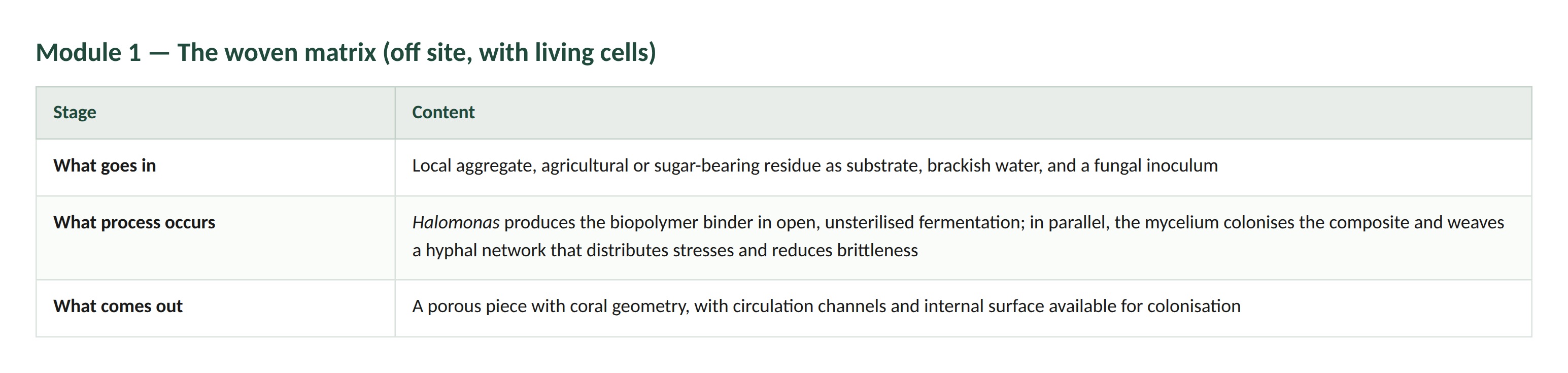 The mycelium here is what the coral project calls biological glue: it reinforces the matrix from within and improves cohesion between particles. It is what turns an aggregate-and-binder composite into a woven structure
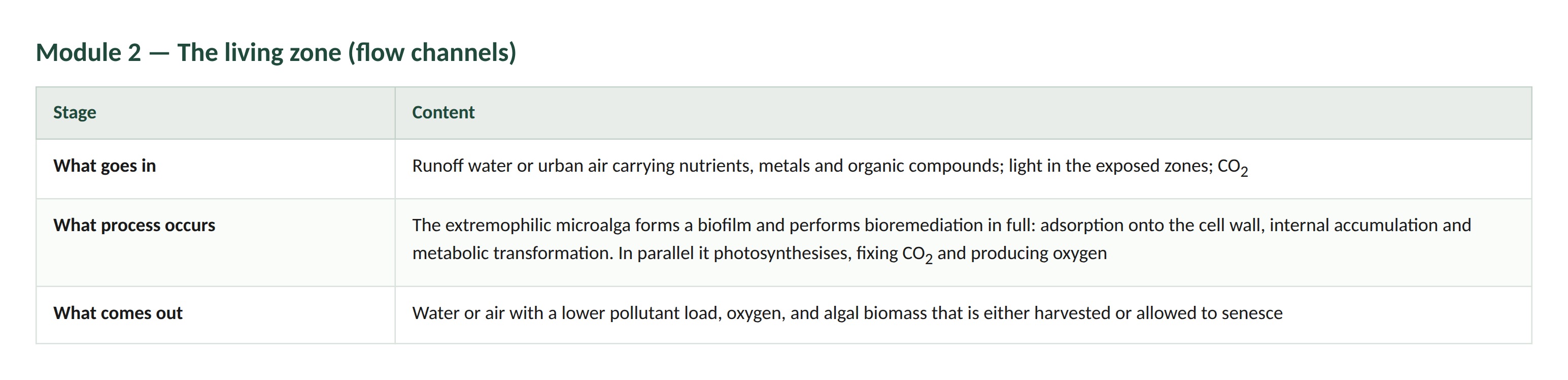 This zone justifies keeping the whole organism: the three mechanisms of bioremediation — bioadsorption, bioaccumulation and biotransformation — only work in full with a living cell. And it replenishes itself.
How would you use automation?
I would combine two technologies that only make sense together: a digital twin of the piece, and an automated workflow of miniaturised high-throughput assays. What I automate is the loop between the two, that is, the design–build–test–learn cycle.
The step of the workflow that I automate is the screening of formulations and their measurement: preparation of mixtures with a liquid-handling robot, inoculation and parallel culture on test specimens with controlled light and flow, and automatic sampling and reading of the effluent, of biomass via chlorophyll, and of enzymatic activity. I choose that step because that is where the design space lies: my factorial design alone — geometry, biological combination, inoculation strategy and nutritional condition — yields 36 treatments and 324 experimental units in a single round, and that is with the combinations already filtered. Petzold and Mukhopadhyay put the general problem at roughly 10²⁴ possible variants for the engineering of a single metabolic pathway. That space cannot be covered by hand.
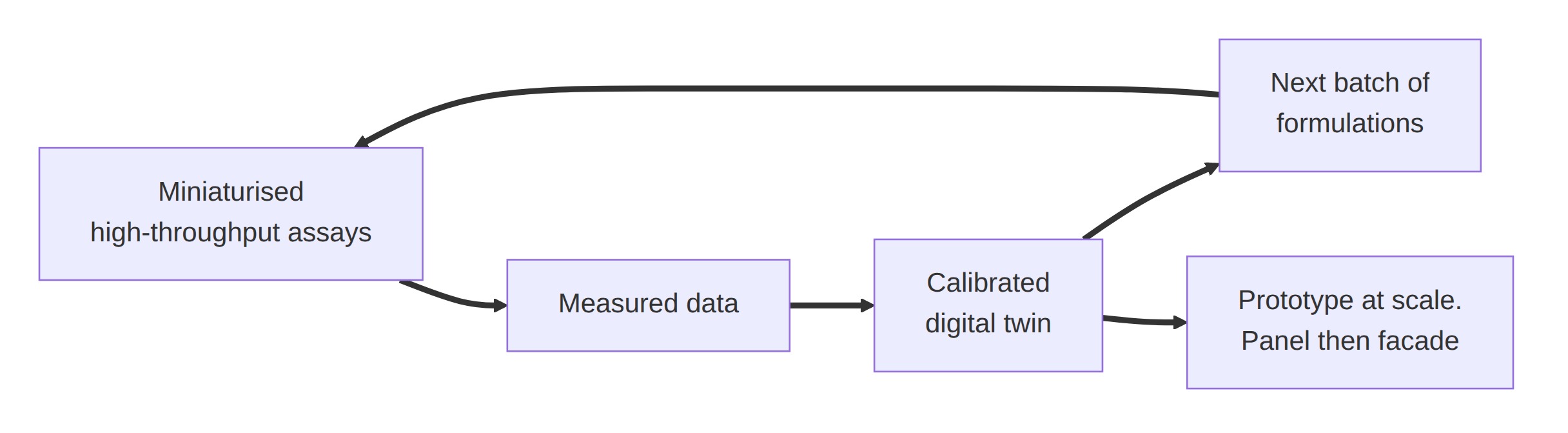
The order matters, and it is a loop rather than a queue. A digital twin without measured data is not a twin but a rendering: simulating a material that does not yet exist requires measured parameters — composite strength, algal removal rate, actual permeability of the geometry — and those come only from physical experiments.
Miniaturised high-throughput assays → Measured data → Calibrated digital twin → Proposes the next batch of formulations → (back to the assays) Calibrated digital twin → Prototype at scale: panel or façade
What the digital twin is, concretely
It is not a program you buy: it is three coupled models that share the same geometry.
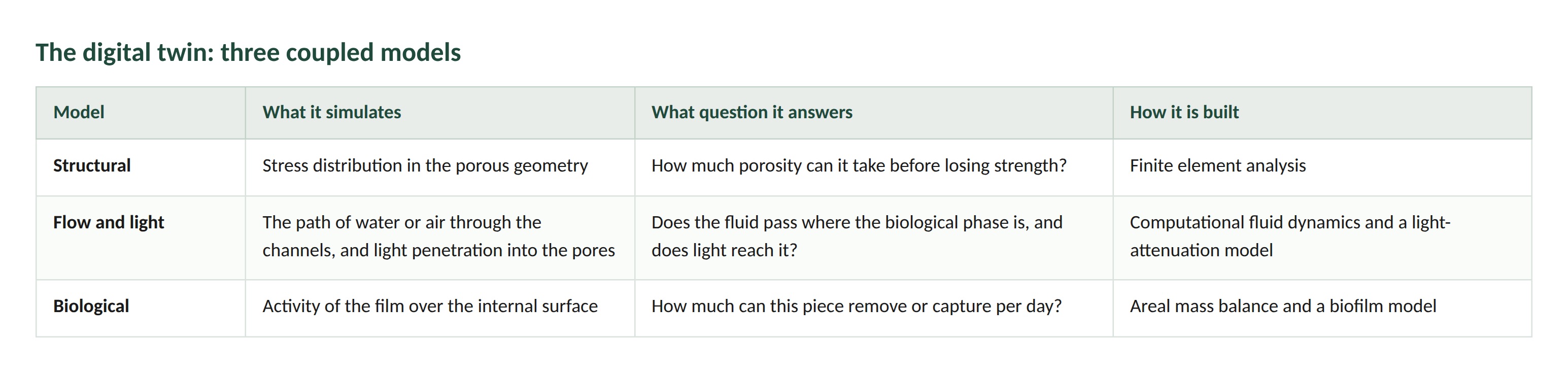
The biological model also incorporates a physical limit: the substrate enters the film by diffusion and is consumed as it penetrates, so beyond a certain thickness the film is inert. The design consequence is that the capacity of the system is governed by the internal surface, not by the volume of biomass — and internal surface is precisely the variable that geometry controls. Simulating before fabricating makes it possible to discard unviable geometries without building them, and to scale in stages — test specimen, 30 × 30 cm panel, façade module — checking at each jump whether the areal rate measured at the small scale holds at the large one.
How much would you need to make, and how long would it take?
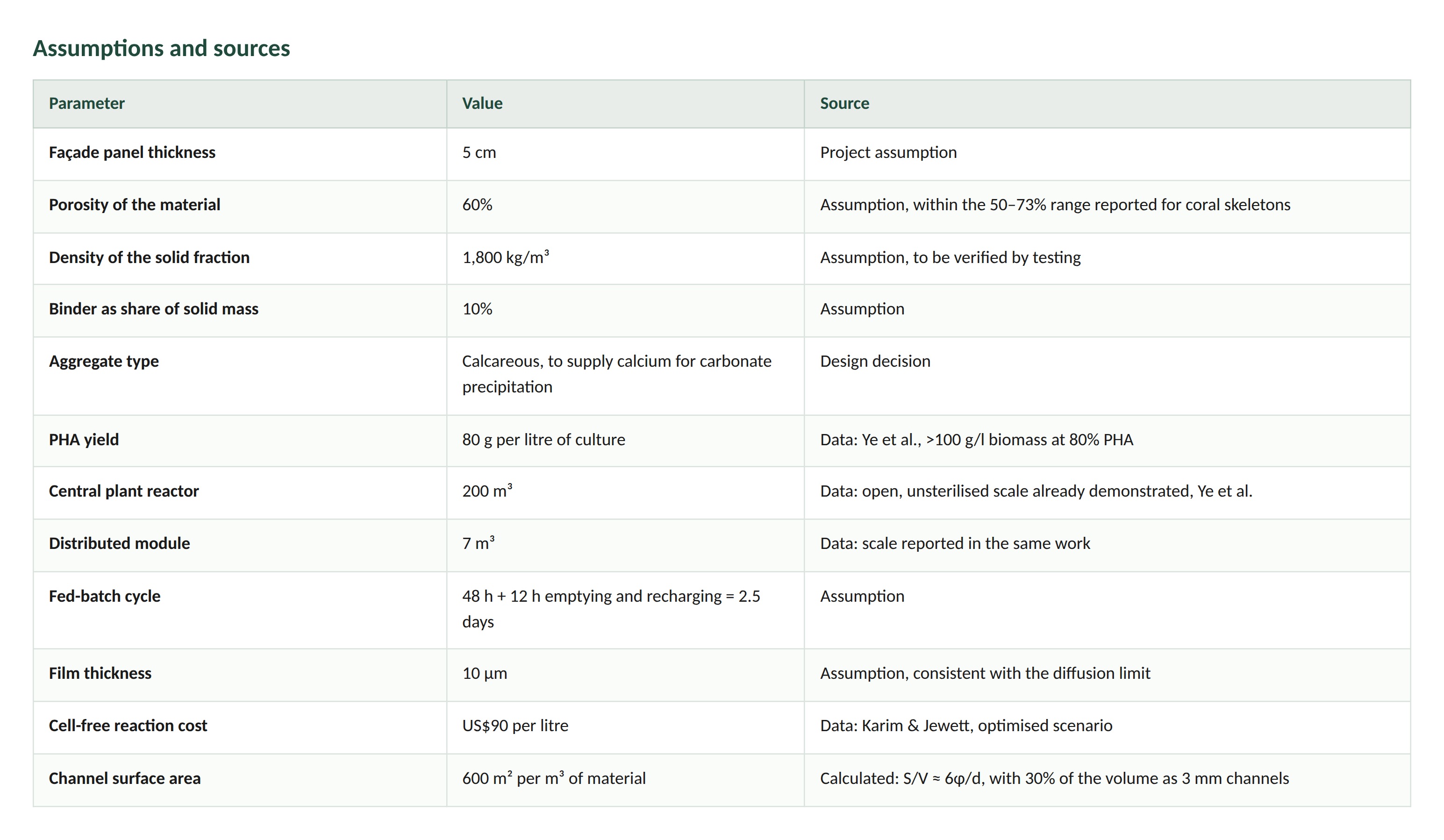
A note on cost first. The figure of US$90 per litre from Karim and Jewett is the cost of the cell-free reaction, not of the material. Applied to the mass of the wall, a façade would cost millions. Applied only to the volume of the film — a layer of microns over the channel walls — the figure becomes manageable. The whole calculation depends on keeping that distinction.


(a) How much — Scale 1: a 500 m² façade
I define two scales. The unit is a 500 m² façade with 5 cm panels and 60% porosity: 25 m³ gross, 10 m³ of solid, 18 tonnes of material and, with the binder at 10% of the mass, 1.8 tonnes of biopolymer. At the yield reported for Halomonas bluephagenesis — more than 100 g/l of biomass at 80% PHA, that is 80 g per litre of culture — that comes to 22,500 litres of culture. The cell-free film covers only the walls of the circulation channels, some 15,000 m² of internal surface, and at 10 microns thick it requires 150 litres of extract, which at the optimised cost of 90 dollars per litre comes to 13,500 dollars, roughly 27 dollars per square metre of façade.
Cement displaced. An equivalent panel in concrete would weigh some 60 tonnes and contain around 7 tonnes of cement. At an intensity of 0.6 to 0.9 tonnes of CO₂ per tonne of cement, the façade would avoid on the order of 4 to 6 tonnes of CO₂.
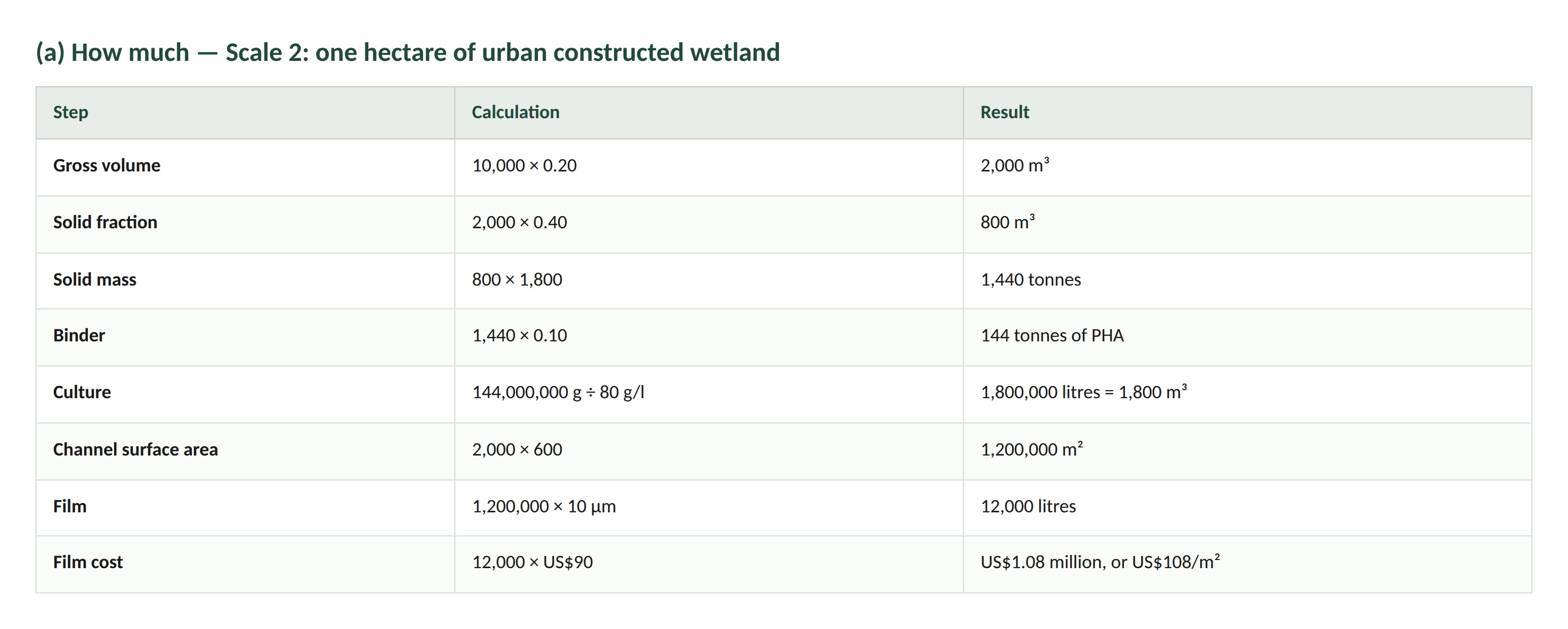
(a) How much — Scale 2: one hectare of urban constructed wetland
The same logic applied to 10,000 m² with an average bed thickness of 20 cm:
(b) How long
With a fed-batch cycle of 2.5 days, a distributed 7 m³ module produces 560 kg per batch and a 200 m³ central plant produces 16 tonnes. The façade is resolved in four module batches, or in less than one central batch; the hectare requires nine central batches, roughly 22 days. A single central plant of the size already demonstrated in open fermentation produces, per year, the binder for about a thousand façades or thirteen hectares of wetland. Prototyping and production are not the same technology. For prototyping I would use 7 m³ modules next to each residue source, which allow different local substrates to be tested, together with liquid-handling robotics and miniaturised assays. For production at scale I would use a 200 m³ central plant in open continuous fermentation, and a 20 m³ cell-free reactor with thermophilic enzymes purified by heat treatment.
What the calculation reveals
The calculation exposes a design constraint I had not anticipated. The specific surface of a porous solid is approximately 6φ/d, so 100-micron micropores offer some 36,000 m² per m³ against the 600 m² per m³ of millimetric channels. Coating that entire surface with extract would cost around 810,000 dollars per façade instead of 13,500. The conclusion is that the cell-free film must be restricted to the channel walls, which coincides with the diffusion limit: neither light nor flow reaches the deep micropores.
Finally, the areal rate of capture or removal per square metre per day is not available in the literature I consulted, and is precisely what the automated screening measures. Inverting the question: for the façade to capture one tonne of CO₂ per year, each square metre of channel must fix about 0.18 grams per day. That is the threshold the assays would have to exceed.
The estimate leaves out downstream processing, which according to Asin-Garcia et al. accounts for between 15% and 90% of total production cost; the substrate balance, that is, how many tonnes of local residue are needed to feed the culture; the development time, which for the artemisinin-producing yeast ran to some 150 person-years; and ageing, since the calculation covers first installation and not maintenance.
What don’t you know yet?
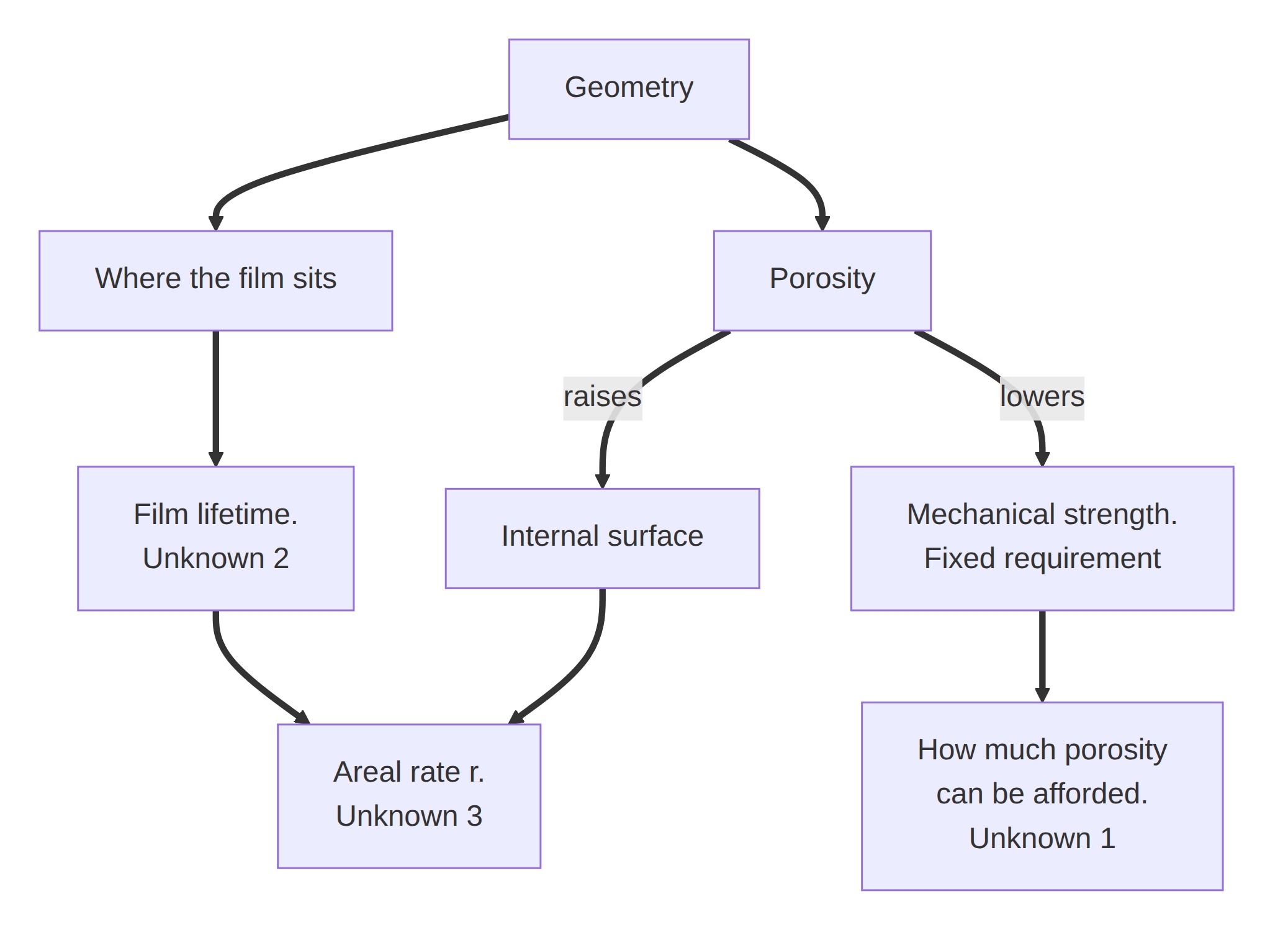
The three largest unknowns in my system are, in order of consequence: whether the geometry holds, how long the film lasts, and how much it captures per square metre.
The first is a design conflict, not a detail: remediation capacity depends on internal surface, which grows with porosity, while mechanical strength falls with it. The readings on coral skeletons describe that inverse relationship, but nobody has measured the curve for a composite of local aggregate with a biopolymer binder and mycelium reinforcement, because it does not exist. I would need to establish the compressive and flexural strength curve between 40% and 70% porosity, with and without mycelium, dry and wet, and after wetting and drying cycles, and compare it against the code requirements for the intended use. Strength here is a constraint, not an outcome: the piece has to be structural. So the variable that yields is porosity. The real question is how much porosity the material can afford while still meeting the requirement, and the risk is that at the minimum viable porosity the internal surface is too small for the biological phase to do anything worth doing. Two things work in my favour: the mycelium network, which raises cohesion without adding mass, and the mineralisation of captured CO₂ as carbonate, which consolidates the piece over time instead of competing with its strength.
The second follows directly from having chosen a cell-free system: without a cell there is no self-repair, and photosystem II photodamages without the replacement cycle it has inside the organism. Karim and Jewett list catalyst stability as an explicit limitation. I would need to measure residual enzymatic activity per unit of surface against time, under realistic humidity and radiation cycles; the only reference available — 87.9% of activity retained after four cycles for carbonic anhydrase — is from the laboratory. If activity falls below half within a year, the film changes from a component into a consumable, and the economics change with it.
The third is the only figure I could not take from the literature: the areal rate of capture and removal, because it depends on the specific combination of organism, light and flow. It is exactly what the automated screening described in answer 3 produces. The threshold is calculated: for a 500 m² façade to capture one tonne of CO₂ per year, each square metre of channel must fix 0.18 grams per day. If it falls short, the project retains the argument of displaced cement and that of water remediation, but loses the carbon-capture argument.
The three are coupled. Porosity raises biological capacity and lowers strength; the life of the film depends on where it sits; and the areal rate depends on whether flow and light reach it. There is a three-variable optimum that cannot be found by testing one at a time, and finding it is exactly what coupling the digital twin with the automated screening is for.
Declaration of AI use