Week 1 HW: Final Project Ideas
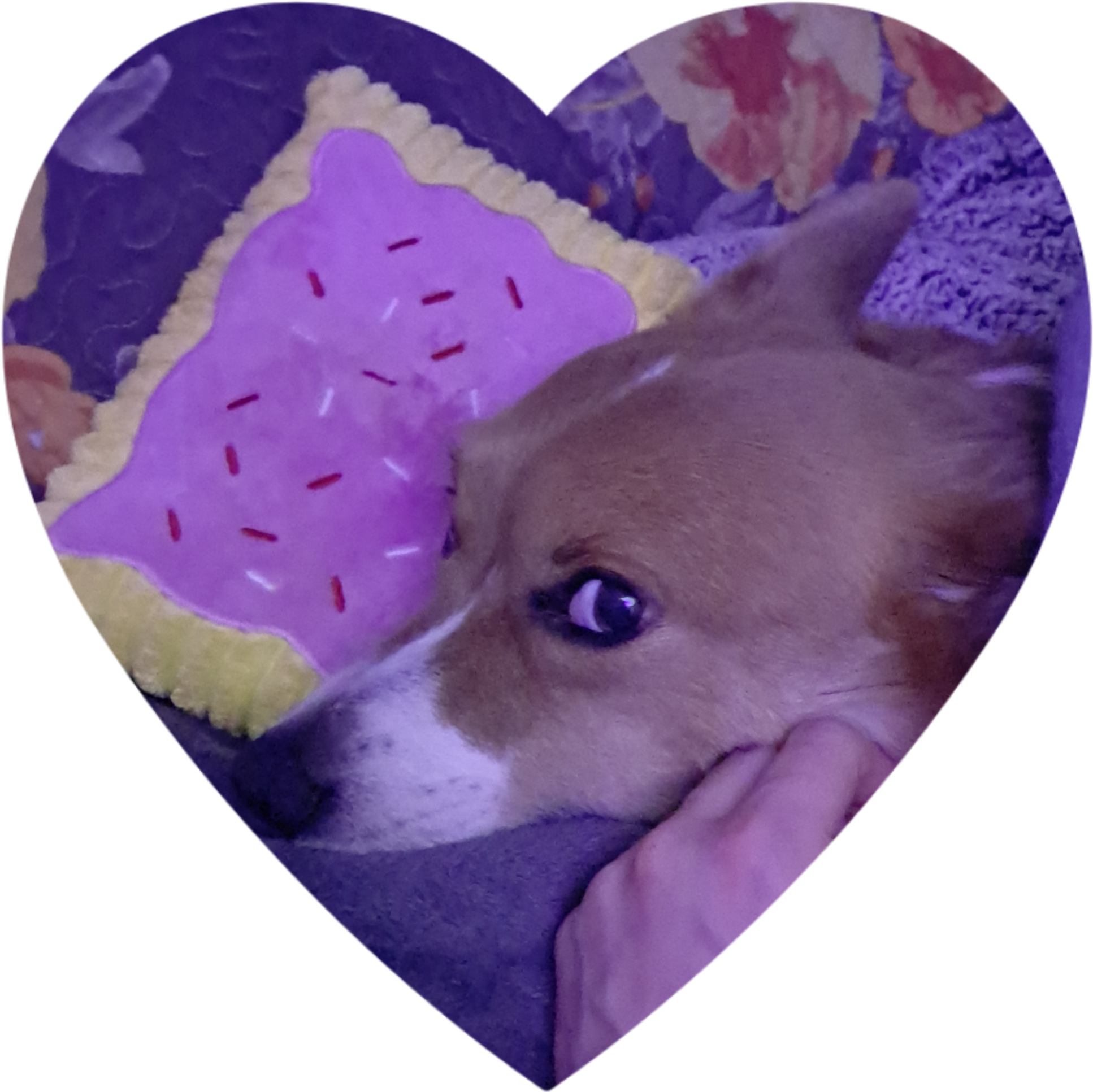
Kim Waggoner:
HTBAA Homework #1 Due: Tuesday September 22, by 2:30p ET
For your first homework, propose and describe one idea for something you would like to biomanufacture. This could be medicine, material, food, energy, an art, design, or architectural artifact, or beyond. Draw from your own background and interests for inspiration.
The goal of this assignment is not to develop a complete or technically optimized manufacturing process. Instead, we want you to begin connecting four fundamental questions:
What do you want to make? →
What living system could make it? →
How could automation help you make it? →
What would it take to make it at a meaningful scale?
Include in detail:
(1) What you would like to biomanufacture and why?
Describe the target product or output you would like to make. Why are you interested in making it? Your motivation might be utilitarian—for example, addressing a problem in health, sustainability, food, energy, or manufacturing—but it does not need to be. Your project might instead have a social, cultural, artistic, or personal motivation. Clearly articulate what you want to make, who or what it is for, and why you think it is interesting or important.
I’d like to see if it’s possible to make a mycelium based dog chew, possibly as an insert for an inedible TPE shell, if it’s not feasible to get a mycelium material to be as indestructible as needed. (Bonus idea: possibly biomanufacturing resin for a TPE/similar shell.) This would be important to me because my dog keeps breaking his teeth on chews that are supposed to be safe for him, and puts on weight from eating calorically dense softer chews too quickly. (He steals them from his sister.) If you could make a sustainable, cruelty free chew that’s safe and even nutritious for dogs, I think that’d be really cool. It sounds like the route of growing the mycelium into moulds leaves room for a wide array of shapes. Ideally, the toy will be tough enough to resist quick tearing or crumbling, but springy enough to prevent dental injury as seen with yak chews, antlers, bones, some collagen chews, etc. Chunks that do break off would be easily digestible and impart only health benefits to the puppy, with as low a risk as regular kibble for splintering or intestinal blockages.
(2) What living system would you use? Propose at least one living-system manufacturing chassis that could produce your target—for example, a microbial, mammalian, or cell-free system. At a high level, describe how the system would make your target product. What goes into the system? What biological process or processes occur? What comes out? You do not need to design the complete biological system yet. Make reasonable assumptions where necessary and identify them.
This would be fungal, and I think the mycelium would likely be part of the end product, however it has occurred that I should investigate the possibilities of using other biomanufactured materials (from a different chassis) to help engineer a better final material for this purpose. This could mean combining a slurried fungus with a type of biomanufactured resin, possibly- haven’t dug that deeply into this yet
Inputs- possibly the potato starch stuff, energy for heat, moisture,
Pleurotus ostreatus, better known as oyster mushroom, is a popular strain for producing engineered mycelial materials, and I have found some research in adjusting its characteristics by controlling factors such as feeding substrate, temperature, and humidity. I am curious if this could also be altered through genetic engineering- according to — the resulting mechanical properties reflect differences in in the amounts of polysaccharides, lipids, proteins, and chitin in the mycelium. Knowing a little about the behavior of fungal hyphae, I’m also curious if the growth pattern itself is just as relevant to the resulting material characteristics.
This strain also seems like a good choice for the purpose of dog chews, as it is an edible fungus, however my familiarity with them in the kitchen leads me to think more of bracket fungi like Trametes versicolor, a.k.a. turkey tail, or Ganoderma lucidum, a.k.a. reishi, which should also be safe to ingest. Of course, multiple varieties of insert for different level chewers could be neat, too, or the finished mycelial materials could potentially be layered or otherwise combined. (I have a hunch that will make it worse though)
(3) How would you use automation? Identify at least one automation technology that you would combine with your living system. This could include a large-scale Cloud Lab, a desktop liquid-handling robot such as an Opentrons, a programmable microfluidics platform such as Nuclera’s, or another automation technology. Describe what part of the biomanufacturing workflow you would automate and why. For example, you might automate liquid handling, culturing, assembly, screening, sampling, measurement, optimization, or another step.
This is tricky, as I’m not familiar with many of these processes yet- my mind first goes to systems simply put in place to maintain temperature, humidity, and feed rate for cultivating the mycelium, as well as to a sterile system for inoculating whatever it will be grown on/in. Perhaps some sort of closed loop system to adjust conditions based on the growth stage of the mycelium could also be implemented. Some form of sampling and testing for quality control could also be viable.
(4) How much would you need to make, and how long would it take? Perform a back-of-the-envelope calculation estimating what it would take to manufacture your target at a meaningful scale. (a) How much? Define a scale relevant to your project and calculate approximately how much of your target product you would need to manufacture. For example, if you are producing a medicine, you might estimate the amount required to treat 1,000 people, everyone in Massachusetts, or everyone in the world. If you are producing a building material, you might calculate the amount required for one structure or an entire neighborhood. If you are producing an art or design artifact, define an appropriate scale yourself. Clearly show your calculation, including units, assumptions, and sources for important numbers.
Let’s say 100 chew toys to sell at a fundraiser for a local animal shelter!
Cylinder Volume: pi * (r2) * h
Radius = 0.5in = 0.0127m
Height = 6in = 0.1524m
Pi * (0.0127)2 * (0.1524) = 0.00016129m3 = 0.016129cm3
Density of, let’s say turkey tail mushroom: (I’m still trying to find information here)
Turkey tail density (g/m3) * toy volume(m3) = Required mass produced per unit
Total for fundraiser = 100 * per unit mass
Based on what I’ve looked up, these fungi can be grown into a mould, so not much subtractive manufacturing to be done? There might be a bit to make it fit a TPE shell if that’s necessary. Assuming there will be a decent amount that needs to be chucked for structural issues/inconsistent results.
(b) How long? Using your proposed living system and automation technology, estimate how long it would take to manufacture that amount. Consider quantities such as production rate, yield, volume, number of parallel experiments or reactors, automation throughput, or whatever parameters are most appropriate for your system. You may discover that the automation technology you would use to prototype your system is very different from what you would use to manufacture at scale. If so, describe both. Again, we are looking for a reasonable engineering estimate. Show your assumptions and calculations.
Well, this goes a lot of different ways. If mycelium is being directly cultivated, weeks- after an initial colonisation period that will be longer than subsequent gaps between flushes. That could be a real issue, but hopefully it is one that can be tweaked.
Automated process for inoculation, cultivation, and quality control could help avoid contamination, which I understand is one of the main hurdles with mycelial cultivation.
- What don’t you know yet? After completing your analysis, identify the 2–3 biggest technical unknowns, bottlenecks, or assumptions in your proposed biomanufacturing system.
There is so, so much I don’t know yet, but reading the papers this week has been very eye opening and has led me to many more papers I’m currently trying to get through. I’m excited to get my bearings here. What would you need to learn, measure, or experimentally determine to know whether your idea could actually work? Bottlenecks - time Would need to test strength and elasticity of the finished product for sure, as well as customer (canine) satisfaction.
Sources:
https://pubs.rsc.org/mh/article-abstract/doi/10.1039/d6mh01176d/1285688/Bottom-up-fabrication-of-high-strength-mycelium?redirectedFrom=fulltext - Paper about reishi, need full access https://www.sciencedirect.com/science/article/pii/S2214799324000699 - turkey tail paper https://patents.google.com/patent/US20080145577A1/en - Ecovative patent