🧬 Week 1 Homework — Two Ideas, One Goal: Biomanufacturing for Real-World Impact
Exploring how biology can help solve practical challenges in biotechnology and healthcare.
For my first HTBAA assignment, I found myself thinking about two different ideas that connect my background in Biomedical Engineering, my professional experience, and my interest in making biotechnology more accessible.
Rather than choosing just one at this early stage, I wanted to share both. Although they address very different challenges, they are driven by the same question:
How can we use living systems to develop affordable, practical, and meaningful solutions for problems that matter?
🌱 My Two Project Ideas
🌡️ Idea 1 — BioColdTrace
A biological time–temperature indicator for cold-chain monitoring
Could a tiny biological system reveal whether a temperature-sensitive product has experienced harmful thermal exposure?
Inspired by my experience working with fetal bovine serum, this project explores using microorganisms to transform cumulative temperature exposure into a persistent, visible signal.
Focus: Microbial biosensing · Cold-chain monitoring · Biological kinetics · Automation
🩹 Idea 2 — PhageGuard
Bacteriophage-based wound dressings for rural communities in Colombia
Could bacteriophages be incorporated into affordable wound dressings to help control bacterial infections and explore alternatives to conventional antimicrobial treatments?
Inspired by the challenges of accessing healthcare in rural Colombia and my node’s experience working with bacteriophages, this project explores combining phage biomanufacturing with biocompatible materials for localized wound care.
Focus: Bacteriophages · Antimicrobial resistance · Biomaterials · Rural healthcare · Biomanufacturing
💡 Why explore both?
BioColdTrace connects directly with my professional experience in biotechnology and quality control, while PhageGuard reflects my interest in biomedical innovation, microbiology, and developing healthcare solutions with a potential social impact in Colombia.
Both ideas are still exploratory, and I see HTBAA as an opportunity to understand their scientific feasibility, investigate possible biological manufacturing systems, and learn how automation could help transform an initial concept into a reproducible biomanufacturing process.
Two different ideas, but one shared motivation: making biotechnology useful, accessible, and relevant to real-world needs.
🌡️ Project 1 — BioColdTrace
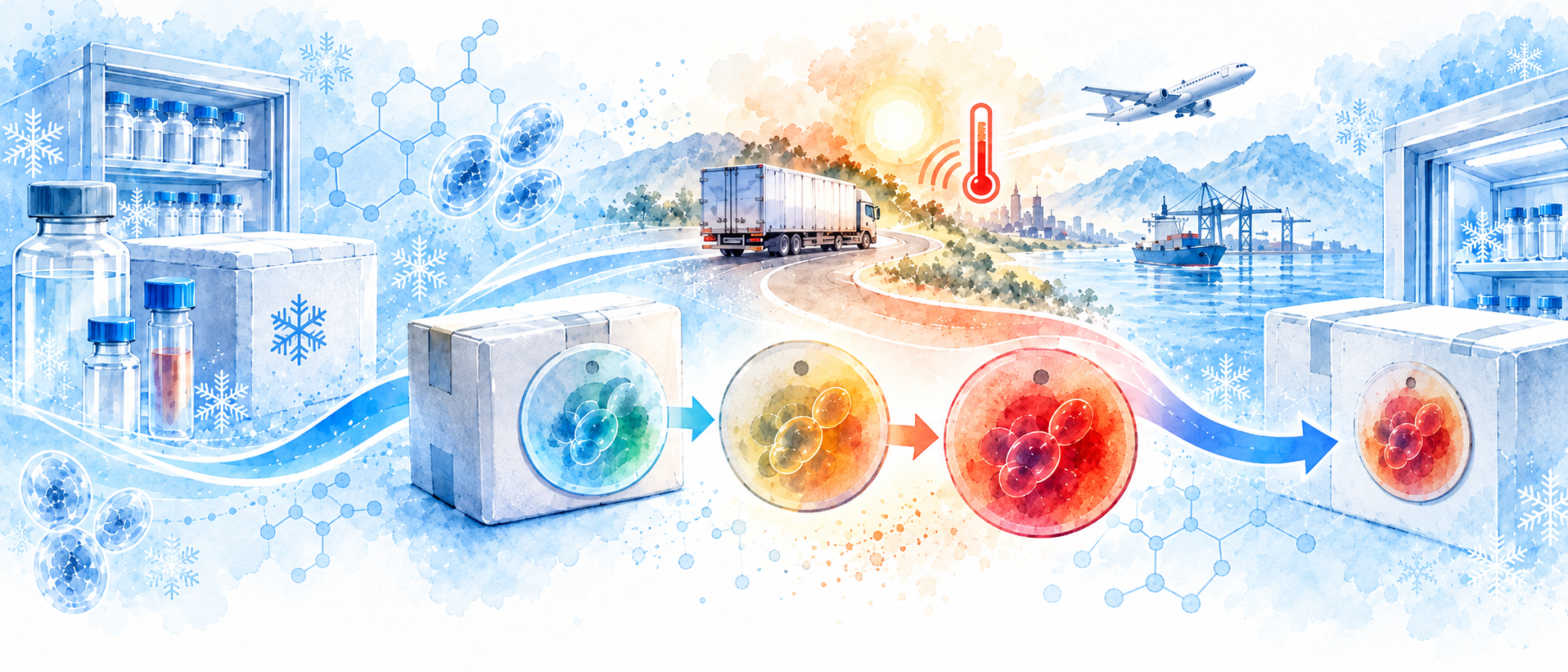
Can a tiny living system reveal what happened before a product reached us?
1. 🌍 What would I like to biomanufacture, and why?
What if a product could carry a small biological memory of what happened to it before it reached us?
I would like to develop BioColdTrace, a low-cost biological Time Temperature Indicator (TTI) designed to convert cumulative thermal exposure into a persistent and visible signal.
The idea is partly inspired by my work with fetal bovine serum (FBS), a widely used component in biotechnology for which temperature control during transportation, processing, and storage is essential. A material can arrive cold while still having experienced an important temperature excursion earlier in its journey.
BioColdTrace would not try to reconstruct the entire temperature history. Instead, it would try to answer a simpler question:
Has enough thermal exposure accumulated to trigger a meaningful warning?
The concept could eventually be adapted to many cold-chain products after product-specific calibration:
🧪 Biotechnology: Enzymes, antibodies, media components, and other sensitive reagents.
🧬 Diagnostics: Samples moving from collection points to centralized laboratories.
🥛 Food: Dairy, meat, seafood and other refrigerated products.
🐄 Veterinary and rural supply chains: Temperature-sensitive biological products transported over long distances.
💉 Biologics and vaccines: As a complementary indicator where validated for a specific product.
🎓 Education & community biotech: An accessible system for teaching metabolism, sensing and biomanufacturing.
Existing time–temperature indicators have already been applied across food and cold-chain monitoring contexts [4], while Vaccine Vial Monitors provide a well-established example of cumulative heat-exposure indication for vaccines [5].
This makes the question behind the project especially interesting to me:
Who gets access to quality information when sophisticated monitoring cannot be placed on every individual product?
How would it compare with what already exists?
| 📊 Electronic data logger | 🏷️ Existing TTIs | 🦠 BioColdTrace — proposed | |
|---|---|---|---|
| Exact temperature history | ✅ Yes | ❌ Usually no | ❌ No |
| Cumulative thermal exposure | Calculated from data | ✅ Yes | ✅ Intended |
| Visual result without software | Usually no | ✅ Often yes | ✅ Intended |
| Battery/electronics required | Usually yes | Usually no | No |
| Can travel with individual products | Possible, but adds cost/logistics | ✅ Yes for some TTIs | ✅ Design goal |
| Product-specific calibration | Digital thresholds can be configured | ✅ Already possible | ✅ Biological tuning would be explored |
| Cost profile | Higher upfront cost; may be reusable depending on the device | Varies widely depending on technology and supplier | Designed for low-cost production using simple biological components; cost still to be validated |
| Main advantage | Complete quantitative history | Simple cumulative indication | Potentially open, biologically tunable, and locally manufacturable |
Importantly, existing TTIs already solve several of these problems very well. So BioColdTrace only becomes interesting if biology adds something genuinely useful.
My hypothesis is that its value could come from four characteristics:
🎛️ Tunable — changing strain, cell concentration, nutrients, or reporter chemistry could modify response kinetics.
🔓 Open — the formulation could potentially be reproduced and modified using accessible biotechnology infrastructure.
📦 Unit-level — a small, inexpensive indicator could travel with individual packages.
🧬 Biological — rather than simply recording temperature, the system would use biological kinetics to integrate time and temperature into one response.
The goal is therefore not to make a cheaper thermometer. It is to explore whether biology can provide a useful new way of making cold-chain information accessible.
2. 🦠 What living system would I use?
My starting chassis would be the yeast Saccharomyces cerevisiae.
I chose it for practical and biological reasons:
- it is inexpensive and easy to culture;
- it grows on relatively simple media;
- it is one of the most extensively characterized microorganisms in biotechnology;
- many genetic and synthetic-biology tools already exist for it;
- its growth and fermentation kinetics are strongly affected by temperature;
- yeast has already been explored as a chassis for biological sensing. [3–5]
Published work shows that S. cerevisiae grows and ferments substantially more slowly at low temperatures than around its preferred growth range. That difference is exactly what I would try to exploit. [4]
How could BioColdTrace work?
The first prototype could be deliberately simple:
🦠Yeast + nutrient source + colorimetric reporter
→ ❄️ Cold: slow metabolism
→ 🌡️ Warm excursion: metabolism accelerates
→ 🧪 Biochemical change accumulates
→ 🎨 Color signal appears and remains
The key feature I would look for is memory.If a product is exposed to warmer conditions and is later returned to refrigeration, the signal should not simply disappear. Cooling should slow further activity, while the change already generated should remain visible.
Possible readouts could include changes in pH, redox state, or another metabolically generated signal coupled to a colorimetric reporter. I would not assume in advance which mechanism is best; comparing those possibilities would be part of the project.
I also do not want to assume that S. cerevisiae is necessarily the final chassis.
If its response is too slow, too variable, or poorly matched to relevant cold-chain conditions, another microorganism or even a cell-free system could ultimately be more appropriate.
That makes chassis selection itself one of the most interesting parts of the project.
And, on a more personal note, starting with a fungus feels fitting because my dad is a biology teacher and a lifelong fungi enthusiast I know I can count on his curiosity, enthusiasm, and support as I explore this project.
4. 🤖 How would I use automation?
For BioColdTrace, I see automation mainly as a way to move from one formulation that seems to work to a systematically tested biological system.
I would combine three different environments:
🧪 Local experimentation
At my workplace, I already have access to basic laboratory infrastructure including microbial culture, incubation, micropipettes, centrifugation, pH measurement, absorbance/transmittance measurements, and standard laboratory equipment.
This gives me a realistic way to begin testing questions such as:
- Does yeast produce a measurable temperature-dependent response?
- Which reporter gives the clearest signal?
- Does the signal remain after the system returns to refrigeration?
- How reproducible is the response?
In other words:
My local laboratory can help me ask: “Does it work?”
🤖 HTBAA remote automation
As a Committed Listener, I would also have the opportunity to design experiments that can be executed remotely through the automation infrastructure used in the HTBAA labs.
The course specifically describes global students designing experiments, receiving assigned wells in automated plates, having experiments executed at MIT or Ginkgo, and receiving the resulting data back. Multiple experimental rounds may also be possible.
I would use that experience to learn how to translate biological questions into robotic protocols and systematic screening workflows.
For BioColdTrace, a screening matrix could compare variables such as:
yeast concentration × nutrient level × reporter condition × thermal profile
Rather than changing one variable at a time, automation could make it possible to compare many combinations with greater reproducibility. Where compatible instruments are available, automated optical measurements could also help generate quantitative response curves.
💻 From experiments to decisions
The resulting data could feed into a simple Python/Jupyter workflow:
thermal exposure → measured response → response curve → threshold → formulation comparison
This would allow each experimental round to inform the next one.
The course also introduces desktop liquid-handling robots, Cloud Labs, and programmable microfluidics, so later in the semester I would like to explore whether miniaturization could reduce reagent volumes or eventually allow several biological response formulations to be incorporated into one indicator.
🌍 Where the node becomes important
What I would value most is having a community and instructors who can help me decide:
Which biological variables are worth testing?
Which chassis or reporter makes the most sense?
What should I automate first?
What result would actually be scientifically meaningful?
Depending on the node’s capabilities, additional local experimentation may also be possible, but I know that course does not guarantee that for every project.
So I see the three roles as complementary:
Local lab → Does it work?
HTBAA automation → How can I test many versions systematically?
Node → Which questions and design choices are most worth pursuing?
5. ❓ What don’t I know yet?
At this stage, the most important unknowns are not small technical details. They are the questions that will determine whether BioColdTrace is actually worth pursuing.
1. Can a biological response be matched to a meaningful cold-chain failure?
A color change alone is not enough. The response kinetics would eventually need to correspond to the thermal sensitivity of a real product.
For example:
Should the indicator respond to several hours at room temperature?
A short high-temperature excursion?
Repeated smaller excursions?
I do not yet know how closely a biological response can be tuned to those different thermal histories. This is probably the most important calibration problem in the project.
2. Is S. cerevisiae actually the right biological system?
Yeast is an attractive starting chassis because it is accessible, inexpensive, and well characterized.
But I still need to determine whether it can provide:
- sufficient activity at relevant temperatures;
- a clear difference between cold and warm conditions;
- reproducible kinetics;
- a persistent and easily readable signal.
If it cannot, another microorganism, an engineered strain, or a cell-free system may ultimately be more appropriate.
The microbial manufacturing, cell-free, genetic circuit, and non-model organism modules of HTBAA could help me evaluate those alternatives throughout the semester.
3. Can the system become a practical indicator rather than only an interesting biological experiment?
Even if the biology works, a real indicator would still need:
shelf stability · controlled activation · containment · signal persistence · reproducibility · miniaturization
I am particularly interested in learning whether tools introduced later in the course — including automated screening, measurement, and microfluidics — could help address some of these challenges.
And behind all three questions is an even larger one:
Does biology provide enough additional value to justify using it instead of an existing chemical TTI or electronic data logger?
BioColdTrace would only be worth developing if its biological nature creates a meaningful advantage, whether through tunability, accessibility, open manufacturing, or the ability to match specific thermal-response profiles.
I want to know whether biology can turn thermal history into useful, accessible, and actionable information.
That is the question I hope to explore throughout HTBAA.
📚 References
[1] Liu, Y., Li, L., Yu, Z., Ye, C., Pan, L., & Song, Y. (2023). Principle, development and application of time–temperature indicators for packaging. Packaging Technology and Science, 36(1 0), 833–853.
https://doi.org/10.1002/pts.2761
[2] World Health Organization. (2021). Vaccine vial monitor (VVM). World Health Organization.
https://www.who.int/publications/m/item/vaccine-vial-monitor
[3] Kavšček, M., Stražar, M., Curk, T., Natter, K., & Petrovič, U. (2015). Yeast as a cell factory: current state and perspectives. Microbial Cell Factories, 14, 94.
https://doi.org/10.1186/s12934-015-0281-x
[4] García-Ríos, E., Morard, M., Parts, L., Liti, G., & Guillamón, J. M. (2017). The genetic architecture of low-temperature adaptation in the wine yeast Saccharomyces cerevisiae. BMC Genomics, 18, 159.
https://doi.org/10.1186/s12864-017-3572-2
[5] Dhakal, S., & Macreadie, I. (2022). The Use of Yeast in Biosensing. Microorganisms, 10(9), 1772.
https://doi.org/10.3390/microorganisms1009177
🩹 Project 2 — PhageGuard
Could we use bacteriophages to make wound care more accessible in rural Colombia?
1. 🌍 What would I like to biomanufacture, and why?
What if a simple wound dressing could do more than cover an injury? What if it could use biology to help fight harmful bacteria?
I would like to develop PhageGuard, a potentially affordable wound dressing incorporating bacteriophages into a biocompatible material, such as a hydrogel, to explore a new approach to localized bacterial infection control.
The idea is inspired by two things that I find particularly meaningful: my interest in biomedical engineering and biotechnology, and the healthcare challenges faced by rural communities in Colombia.
In agricultural environments, farmers and rural workers may experience cuts, abrasions, and other injuries during their daily activities. Exposure to soil, water, animals, and agricultural equipment can introduce microorganisms into wounds.
Although many minor injuries heal without complications, some can become infected. When access to healthcare is limited by distance, transportation, or economic barriers, obtaining timely assessment and treatment may be difficult.
This made me think about a question:
Could we use biotechnology to develop more accessible wound-care materials for communities where healthcare resources are limited?
🦠 Why bacteriophages?
Bacteriophages, or simply phages, are viruses that infect bacteria.
Unlike broad-spectrum antibiotics, individual bacteriophages generally recognize specific bacterial hosts. Some phages follow a lytic cycle, infecting susceptible bacteria and ultimately causing their destruction.
This specificity is scientifically interesting because it creates the possibility of targeting particular bacterial pathogens while potentially limiting effects on unrelated microorganisms.
However, it also introduces an important limitation: a bacteriophage that is effective against one bacterial strain may not work against another.
Bacteriophages are being investigated as potential tools against antibiotic-resistant bacterial infections. The World Health Organization identifies antimicrobial resistance as a major global public health challenge, including resistance in pathogens such as Pseudomonas aeruginosa and Staphylococcus aureus [1].
My idea would be to explore whether selected lytic bacteriophages could be incorporated into a wound dressing while maintaining their biological activity.
Importantly, I would not assume that PhageGuard could prevent every wound infection, replace antibiotics, or safely treat wounds without medical evaluation.
Instead, I would investigate whether a phage-loaded material could eventually become a targeted, complementary antimicrobial technology, following appropriate preclinical and clinical validation.
🩹 What exactly would PhageGuard be?
The proposed product would combine three components:
1. 🧬 Bacteriophages
Selected lytic phages capable of recognizing bacterial strains relevant to wound infections.
2. 🧪 A biocompatible material
A hydrogel or another suitable wound-dressing matrix that could protect the phages, support their stability, and potentially enable localized release.
3. 📦 An accessible dressing format
A practical, individually packaged material designed with affordability, portability, storage stability, and ease of use in mind.
The long-term goal would be a dressing that could complement existing wound-care strategies in settings where access to advanced healthcare may be limited.
How would it compare with existing approaches?
| Feature | 🩹 Conventional dressing | 🧪 Antimicrobial dressing | 🦠 PhageGuard — proposed |
|---|---|---|---|
| Physical wound protection | ✅ Yes | ✅ Yes | ✅ Design goal |
| Targeted action against specific bacteria | ❌ Usually no | Varies by technology | ✅ Intended |
| Uses biological antimicrobial agents | ❌ No | Depends on formulation | ✅ Yes |
| Active against antibiotic-resistant strains | Not inherently | Depends on agent and organism | Potentially, if the phage is active against the strain |
| Broad antimicrobial coverage | ❌ No | Possible | Limited by phage host range |
| Requires identification of target bacteria | No | Usually not | May be necessary |
| Low-cost manufacturing | Possible | Depends on technology | Design goal; not yet demonstrated |
| Clinical validation | Established for approved products | Product-specific | Still required |
Importantly, antimicrobial wound dressings already exist, including products based on silver, iodine, and other antimicrobial technologies.
So PhageGuard would not be interesting simply because it is antimicrobial.
Its potential value would come from combining biological specificity, biomaterials, and potentially adaptable manufacturing.
Why is this idea particularly interesting to me?
Beyond its potential application in rural Colombia, PhageGuard connects several areas that I want to explore more deeply:
🧬 Microbiology and bacteriophages: Understanding how viruses interact with bacterial hosts.
🩹 Biomedical engineering: Designing functional biomaterials for healthcare applications.
🤖 Automation: Using systematic experimentation to compare materials, formulations, and biological performance.
🌱 Accessible biotechnology: Exploring whether advanced biological technologies can eventually be adapted to communities with limited healthcare resources.
🤝 My HTBAA node: My node has experience working with bacteriophages, which makes this project especially exciting. I would love to learn from that experience and explore whether it could help transform the idea into a scientifically meaningful research project.
Ultimately, the question that motivates me is:
Can we make sophisticated biological technologies useful in places where sophisticated healthcare infrastructure is not always available?
2. 🦠 What living system would I use?
My proposed biological manufacturing system would be a bacteriophage–bacterial host platform.
Unlike BioColdTrace, where a microorganism directly generates a measurable response, PhageGuard would use microorganisms to manufacture the active biological component of a biomedical material.
🧬 The biological chassis
The central manufacturing system would involve a suitable bacterial host and a compatible bacteriophage.
The bacterium would act as the manufacturing chassis.
The bacteriophage would be the desired biological output.
This distinction is important because bacteriophages cannot reproduce independently. They depend on susceptible bacterial cells to produce new viral particles.
At a conceptual level, the process would involve:
🦠 Suitable bacterial host
↓
🧬 Compatible lytic bacteriophage
↓
🔬 Phage replication inside bacterial cells
↓
🧪 Recovery and purification of phage particles
↓
🩹 Incorporation into a biocompatible dressing
↓
📦 PhageGuard prototype
The manufacturing process would need to include appropriate quality control, removal of bacterial impurities, and verification of phage identity and activity.
Which bacteriophages would I consider?
I would initially investigate the scientific and clinical relevance of phages targeting bacteria commonly associated with wound infections.
Two potential research targets are:
🧫 Staphylococcus aureus
A clinically important Gram-positive bacterium associated with skin and soft-tissue infections. Certain strains, including methicillin-resistant S. aureus (MRSA), present important treatment challenges.
🧫 Pseudomonas aeruginosa
A Gram-negative opportunistic pathogen associated with difficult-to-treat wound infections, including burns and chronic wounds. Some strains demonstrate resistance to multiple antibiotics.
Both organisms appear in the WHO’s 2024 priority pathogens framework [1].
However, I would not attempt to develop a broad phage cocktail against multiple pathogens immediately.
My first research objective would be much narrower:
Can a suitable bacteriophage remain biologically active after being incorporated into a wound-dressing material?
A single well-characterized, non-engineered lytic phage could be sufficient for investigating that question in an appropriately equipped and authorized research environment.
The final choice of phage and host would depend on strain characterization, biosafety requirements, available expertise, and the capabilities of the collaborating node.
🧪 Why use a hydrogel?
Hydrogels are three-dimensional polymer networks capable of retaining substantial amounts of water.
They are particularly interesting in biomedical engineering because their properties can be adjusted for different applications, including wound dressings and controlled delivery systems.
For PhageGuard, a hydrogel could potentially serve several functions:
- Provide a physical matrix for incorporating bacteriophages.
- Help maintain an environment compatible with phage stability.
- Allow investigation of how phages are retained or released.
- Support the development of a flexible material appropriate for wound-care applications.
Potential material families worth investigating include alginate-based and other biocompatible hydrogel systems.
However, not every hydrogel is compatible with every bacteriophage.
Polymer chemistry, pH, charge, processing conditions, and storage environment may affect phage activity.
Published research has already explored phage-containing hydrogels and other topical delivery systems, with promising preclinical findings but important remaining challenges in formulation, stability, and clinical translation [2,3].
How could PhageGuard work?
The proposed mechanism would be:
🩹 Phage-loaded wound dressing
→ 💧 Contact with an appropriate local environment
→ 🧬 Release or availability of viable phages
→ 🦠 Encounter with susceptible target bacteria
→ 🔬 Phage-mediated bacterial infection and lysis
→ 📉 Potential reduction in susceptible bacterial populations
This is a proposed mechanism, not a demonstrated therapeutic outcome for PhageGuard.
An important distinction is that phages would not manufacture the hydrogel itself.
Instead, the project would combine two manufacturing elements:
Biomanufacturing: Producing bacteriophages using biological systems.
Biomaterial fabrication: Incorporating the purified biological product into a suitable dressing matrix.
I find this particularly interesting because it brings microbial manufacturing and biomedical materials together in a single product concept.
3. 📦 How much would I need to make, and how long would it take?
For this assignment, I would define a small but meaningful initial manufacturing goal:
Produce 1,000 experimental PhageGuard dressing units as a hypothetical pilot-scale batch.
This would not mean manufacturing 1,000 clinically usable products immediately.
Rather, it would provide a useful engineering scenario for understanding the relationship between biological manufacturing, formulation, and production scale.
📐 3.1 How much would I need?
For a simplified calculation, I would assume:
- Target output: 1,000 dressing units.
- Nominal dressing area: 5 cm × 5 cm.
- Hydrogel equivalent per dressing: 2 mL.
- Illustrative phage-containing fraction: 0.5 mL per dressing.
These numbers are engineering assumptions for the homework, not clinically validated specifications.
The total hydrogel volume would be:
1,000 dressings × 2 mL/dressing = 2,000 mL
Total hydrogel equivalent: 2 L
The total phage-containing formulation volume would be:
1,000 dressings × 0.5 mL/dressing = 500 mL
Total phage-containing formulation: 0.5 L
The remaining formulation volume would be contributed by the compatible dressing matrix and other validated components.
The fraction of phage-containing formulation and the biologically active quantity per dressing would ultimately depend on stability, release behavior, and preclinical dose-response studies.
I would not assume that a given phage concentration is therapeutically effective simply because it can be incorporated into the hydrogel.
⏱️ 3.2 How long would manufacturing take?
I would divide the process into three broad stages:
| Manufacturing stage | Illustrative planning estimate |
|---|---|
| Biological production, recovery, and quality testing | 5–10 working days |
| Hydrogel preparation and dressing fabrication | 2–3 working days |
| Packaging, verification, and preliminary release testing | 2–5 working days |
| Total sequential estimate | 9–18 working days |
These estimates are hypothetical planning assumptions rather than experimentally measured manufacturing rates.
In practice, the timeline would depend on:
- Biological yield and batch reproducibility.
- Purification and impurity-removal requirements.
- Phage stability during processing.
- Dressing fabrication throughput.
- Quality-control testing and acceptance criteria.
- Whether different manufacturing stages can overlap.
For example, if a pilot fabrication system could prepare 100 dressing units per working day, producing 1,000 units would require:
1,000 units ÷ 100 units/day = 10 working days
If the system could prepare 250 units per working day:
1,000 units ÷ 250 units/day = 4 working days
The second scenario illustrates how increasing fabrication capacity could reduce processing time.
However, the throughput numbers are assumed. They would need to be verified experimentally, and increased fabrication speed would not necessarily accelerate biological production or product-release testing.
What changes at larger scale?
An important lesson from HTBAA is that the equipment used to discover a promising formulation may not be appropriate for manufacturing the final product.
At the research stage, small-volume experiments would help evaluate material compatibility, reproducibility, and stability.
At larger scale, the process would require appropriately validated biological production, purification, material manufacturing, and packaging systems.
The challenge would not simply be producing more bacteriophages.
It would be producing consistent, well-characterized, safe, and stable dressing units.
That is the kind of manufacturing problem I would like to understand better throughout the course.
4. 🤖 How would I use automation?
For PhageGuard, I see automation as a way to connect two areas that are often studied separately:
Biological production and biomaterial formulation.
I would not begin by attempting to automate the entire manufacturing process.
Instead, I would use automation to answer smaller, well-defined questions about the compatibility of bacteriophages with different materials and conditions.
🧪 1. Experimental design
The first step would be developing a structured Design of Experiments (DoE) framework.
Rather than choosing one hydrogel formulation and hoping it works, I would compare several material characteristics systematically.
An initial screening matrix could explore:
polymer family × material composition × storage condition × evaluation time
The primary outcomes would include:
- Physical integrity of the hydrogel.
- Changes in material properties during storage.
- Compatibility with a model biological component.
- Reproducibility between formulations.
Where authorized phage research is possible, a separate study could investigate whether validated formulations preserve phage activity.
This separation would be useful because it would allow me to learn about the biomaterial even if phage experiments were not available through the course infrastructure.
🤖 2. Automated liquid handling
Desktop liquid-handling robots, such as Opentrons, could help prepare multiple small-volume formulations with greater consistency.
Potential applications include:
- Dispensing compatible hydrogel precursors.
- Preparing structured experimental matrices.
- Creating technical replicates.
- Standardizing sample distribution.
- Reducing variability in formulation preparation.
For early course-based experiments, I would prioritize noninfectious materials and safe model systems.
Handling bacteriophages and bacterial hosts would require suitable facilities, supervision, and authorization.
📊 3. Automated characterization
Automation could also support repeated measurements of material performance.
Depending on available instruments, useful measurements could include:
💧 Swelling behavior: How much liquid a material absorbs.
🧪 Material stability: Whether the formulation changes over time.
📏 Physical consistency: Whether independently prepared samples behave similarly.
🔬 Biological compatibility: Whether a suitable model biological component maintains its expected properties.
For actual bacteriophage formulations, specialist laboratories would also need to evaluate biological activity and purity using validated methods.
I would not assume that conventional optical absorbance measurements alone can establish phage infectivity or therapeutic potency.
💻 4. From experiments to decisions
I would use Python or Jupyter Notebook to organize and analyze the experimental results.
A simple workflow might look like:
material formulation → measured properties → stability profile → formulation comparison → next experiment
The objective would be to move from subjective observations to quantitative and reproducible design decisions.
For example, a formulation that looks physically attractive but fails to preserve biological activity would not be a successful candidate.
Similarly, a formulation that maintains biological activity but lacks suitable mechanical or storage properties might not become a practical dressing.
I would want to evaluate both sides of the problem.
🔬 5. Could microfluidics help?
HTBAA also introduces programmable digital microfluidics and cell-free manufacturing.
I would be interested in exploring whether small-volume automated platforms could eventually help compare material formulations while reducing reagent consumption.
However, I recognize that not every microfluidic platform is suitable for preparing hydrogels or handling intact phages.
The immediate objective would therefore be to understand which available automation technologies are compatible with the physical and biological requirements of the project.
🌍 Where my node becomes especially important
One reason I am particularly excited about PhageGuard is that my node has previous experience working with bacteriophages.
I think this could make the project especially valuable as a learning opportunity.
I would love to understand:
- What types of bacteriophage research have already been conducted at the node?
- What biological and experimental challenges did the team encounter?
- Which questions would be realistic for a student project?
- Could the node help evaluate the feasibility of a phage–biomaterial research approach?
- Would it be more useful to begin with phage stability, material compatibility, or biological characterization?
I do not assume that access to the node automatically means I can perform every proposed experiment.
Similarly, HTBAA remote laboratories provide opportunities to learn automation, but they do not necessarily support direct bacteriophage production or infection assays.
I would see the different research environments as complementary:
HTBAA automation → How can I compare formulations systematically?
Node expertise → What can I realistically investigate about bacteriophages?
Biomedical engineering → How can those findings inform the design of a functional material?
My goal would be to develop a project that is scientifically interesting while remaining realistic about available infrastructure, expertise, and biosafety requirements.
5. ❓ What don’t I know yet?
At this stage, PhageGuard is a research concept rather than a validated wound-care technology.
I think its feasibility depends on answering three particularly important questions.
1. 🦠 Can bacteriophages provide sufficiently useful antibacterial coverage?
Bacteriophage specificity is one of the most attractive characteristics of this approach, but also one of its biggest limitations.
A phage may be highly effective against a susceptible bacterial strain while having little or no activity against closely related strains.
This raises several questions:
Which bacterial pathogens should PhageGuard target first?
Would one bacteriophage be sufficient, or would several eventually be necessary?
How could we account for differences between bacterial strains and the possible development of phage resistance?
I would initially focus on one well-defined biological target rather than attempting to develop a universal antimicrobial dressing.
The PhagoBurn clinical trial, which investigated bacteriophage therapy for P. aeruginosa burn wound infections, illustrates both the promise and the difficulties of translating phage biology into a reproducible therapeutic product [4].
I would also need to understand how phage selection, genetic characterization, and safety assessment influence manufacturing decisions.
2. 🧪 Can a biomaterial preserve phage activity during manufacturing and storage?
This may be the most interesting engineering challenge of the project.
A bacteriophage can have excellent antibacterial activity under laboratory conditions but become unsuitable for a final product if it loses activity during incorporation, drying, packaging, or storage.
I would want to investigate:
- Which material properties affect biological stability?
- Can an appropriately designed matrix preserve phage activity over time?
- How do storage conditions influence the formulation?
- Can release behavior be controlled without compromising biological function?
- Could a practical formulation eventually avoid demanding cold-chain requirements?
This last question is particularly meaningful for rural healthcare.
A material that requires highly controlled storage conditions might be difficult to distribute in remote areas.
However, ambient-temperature stability would need to be demonstrated rather than assumed.
Published work on phage-loaded hydrogels shows that formulation chemistry and storage conditions can substantially influence bacteriophage stability [2,3].
This makes the interaction between the phage and the material a central research problem, not a minor formulation detail.
3. 🩹 Can PhageGuard become a safe, affordable, and clinically meaningful product?
Even if a formulation preserves bacteriophage activity, several important challenges would remain.
A real wound dressing would need:
biocompatibility · appropriate purity · reproducibility · suitable packaging · shelf stability · validated antimicrobial performance · clinical safety and efficacy
The manufacturing process would also need to address possible impurities originating from bacterial production.
Additionally, I would need to understand the regulatory pathway for a product that combines a biologically active agent with a medical dressing.
This is particularly important because PhageGuard would not be equivalent to a conventional passive wound dressing.
The intended antimicrobial action would likely introduce additional therapeutic and regulatory considerations.
From an accessibility perspective, I would also need to investigate the actual cost of:
- Producing and purifying bacteriophages.
- Preparing the biomaterial.
- Performing quality-control testing.
- Packaging and distributing the final product.
- Maintaining stability during storage and transportation.
A product is not truly accessible simply because its raw materials are inexpensive.
Its complete manufacturing and distribution process must also be feasible.
🌱 The bigger question
Behind all three challenges, there is a broader question that I find especially important:
Can we transform the biological specificity of bacteriophages into a practical biomedical material without losing the accessibility that originally motivated the idea?
PhageGuard would only be worth developing if it could demonstrate a meaningful advantage over existing wound-care technologies for a clearly defined use case.
I also recognize that therapeutic bacteriophages are not a substitute for basic wound hygiene, established infection-prevention practices, appropriate antibiotics, or timely medical assessment.
For that reason, the first realistic milestone would not be a product ready for use by farmers.
It would be a laboratory proof of concept showing that a biocompatible material can preserve the relevant biological properties of a well-characterized bacteriophage, under suitable research conditions.
If that initial question can be answered, future work could investigate antimicrobial performance, manufacturing reproducibility, safety, and clinical relevance.
I want to explore whether bacteriophages, biomaterials, and automated biomanufacturing can come together to create a new approach to accessible wound care.
What makes this project especially exciting to me is the possibility of learning from a node already experienced in bacteriophage research while connecting that knowledge to my background in Biomedical Engineering.
Ultimately, I would love to see biotechnology contribute to practical healthcare solutions for rural communities in Colombia.
That is the motivation I would like to bring into HTBAA.
📚 References
[1] World Health Organization. (2024). WHO bacterial priority pathogens list, 2024: Bacterial pathogens of public health importance to guide research, development and strategies to prevent and control antimicrobial resistance.
https://www.who.int/publications/i/item/9789240093461
[2] Insights into the Preparation of and Evaluation of the Bactericidal Effects of Phage-Based Hydrogels. (2024). Review of phage-containing hydrogel formulations and their potential biomedical applications.
https://pmc.ncbi.nlm.nih.gov/articles/PMC11394800/
[3] Novel delivery systems for phages and lysins in the topical management of wound infections: A narrative review. (2025). Review of biomaterial-based systems for topical phage delivery.
https://pmc.ncbi.nlm.nih.gov/articles/PMC11808012/
[4] Jault, P., et al. (2019). Efficacy and tolerability of a cocktail of bacteriophages to treat burn wounds infected by Pseudomonas aeruginosa (PhagoBurn): A randomised, controlled, double-blind phase 1/2 trial. The Lancet Infectious Diseases, 19(1), 35–45.
https://doi.org/10.1016/S1473-3099(18)30482-1
[5] Current Knowledge and Perspectives of Phage Therapy for Combating Refractory Wound Infections. (2024). Review of bacteriophage therapy and delivery approaches for difficult-to-treat wound infections.
https://pmc.ncbi.nlm.nih.gov/articles/PMC11122179/