Week 5 HW: Digital Microfluidics

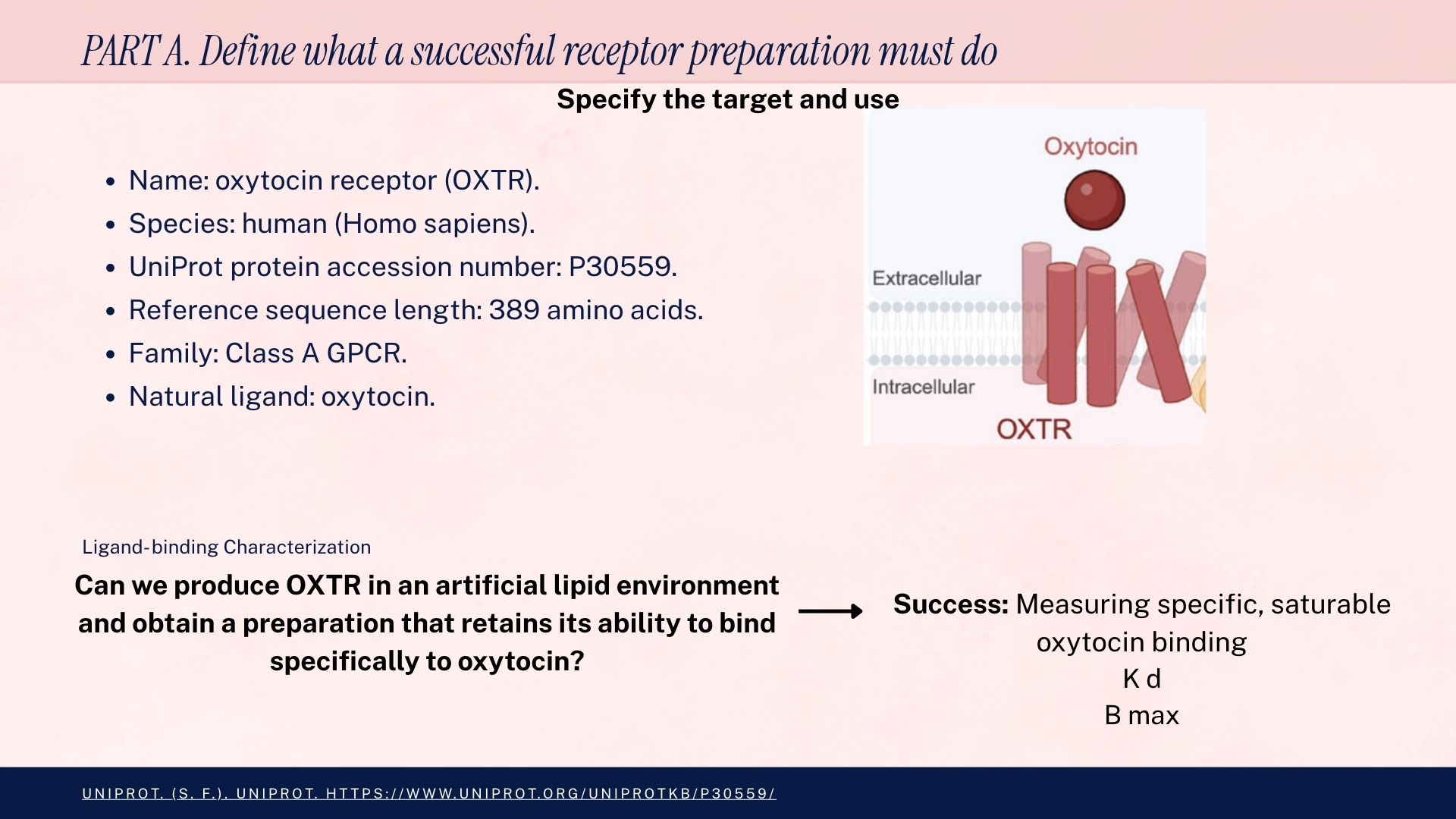
The target is the human oxytocin receptor (OXTR), a class A G protein-coupled receptor (GPCR) involved in oxytocin-mediated signaling and milk ejection. The canonical human protein sequence is available in UniProt under accession P30559 and contains 389 amino acids.
The selected downstream objective is ligand-binding characterization. The central question is whether OXTR can be produced in a nanodisc environment while retaining its ability to bind oxytocin specifically.
Success will be evaluated by measuring specific, saturable oxytocin binding, estimating binding parameters such as the apparent dissociation constant ((K_d)) and binding capacity ((B_{\max})).
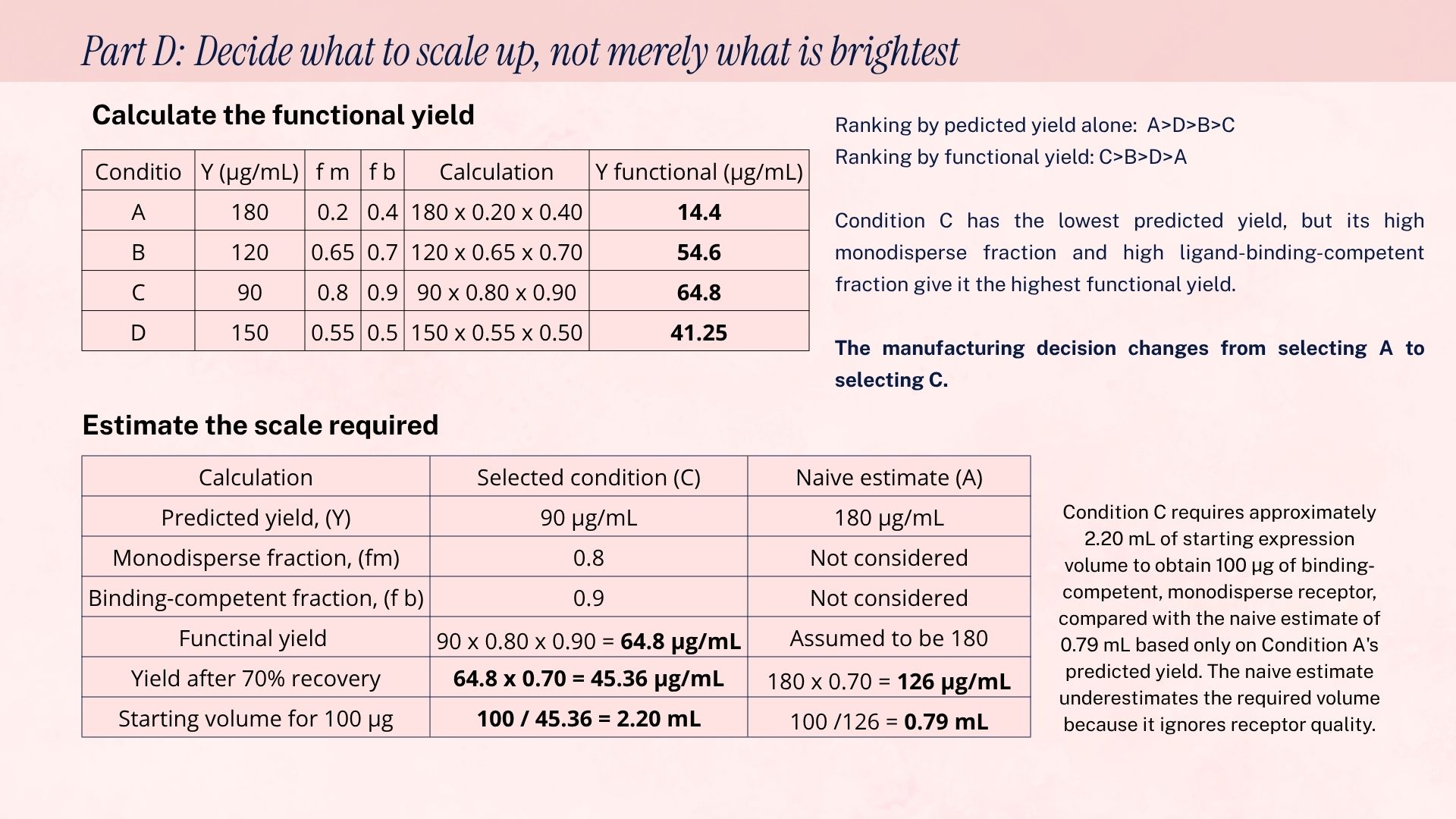
Protein concentration alone is insufficient because the total amount of receptor does not establish how much is correctly folded or capable of ligand binding. A preparation may have a high apparent yield but contain aggregated, misfolded, or functionally impaired receptor.
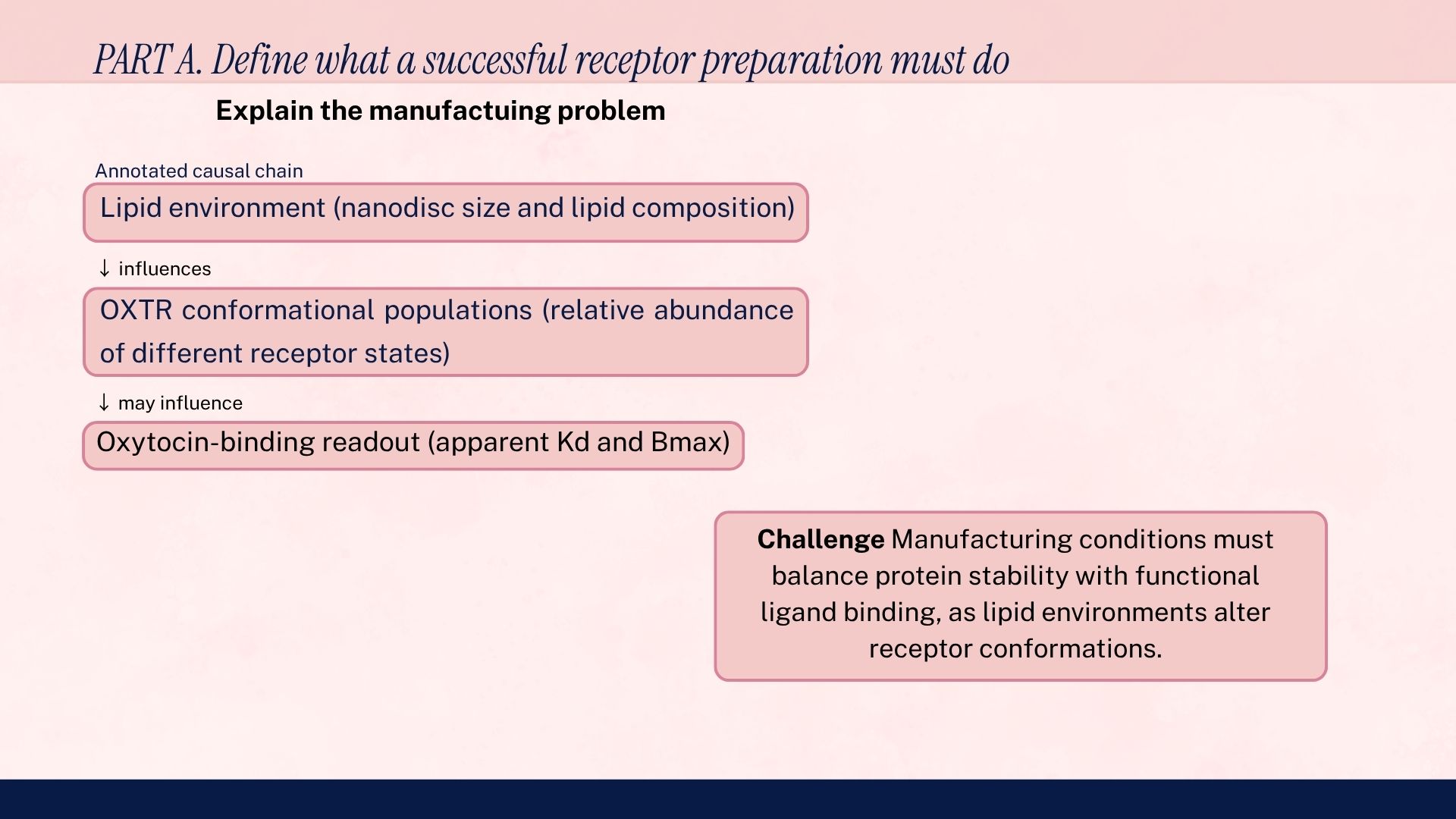 OXTR is a membrane protein, its stability and conformational behavior may depend on the surrounding lipid environment.
Changes in nanodisc size or lipid composition could improve receptor stability and recovery during production while shifting the receptor’s conformational populations. Such a shift could alter the measured oxytocin-binding properties or make the preparation less representative of the receptor in its native membrane environment. Consequently, manufacturing conditions should be evaluated not only for protein yield and stability but also for their effects on ligand binding.
The selected stabilization strategy is the use of a bound ligand during receptor preparation. Ligand binding can stabilize particular conformational states of a GPCR, potentially facilitating receptor handling and structural characterization. However, ligand-induced stabilization may favor a specific receptor conformation and may not preserve the full conformational flexibility required for native receptor function.
Because the primary objective is to characterize oxytocin binding, the preparation must be evaluated for specific ligand binding under controlled assay conditions. Any oxytocin remaining from the stabilization step must be considered because it could interfere with subsequent binding measurements. A receptor preparation suitable for structural characterization should not automatically be considered suitable for studying activation or G-protein coupling; those properties require additional functional assays.
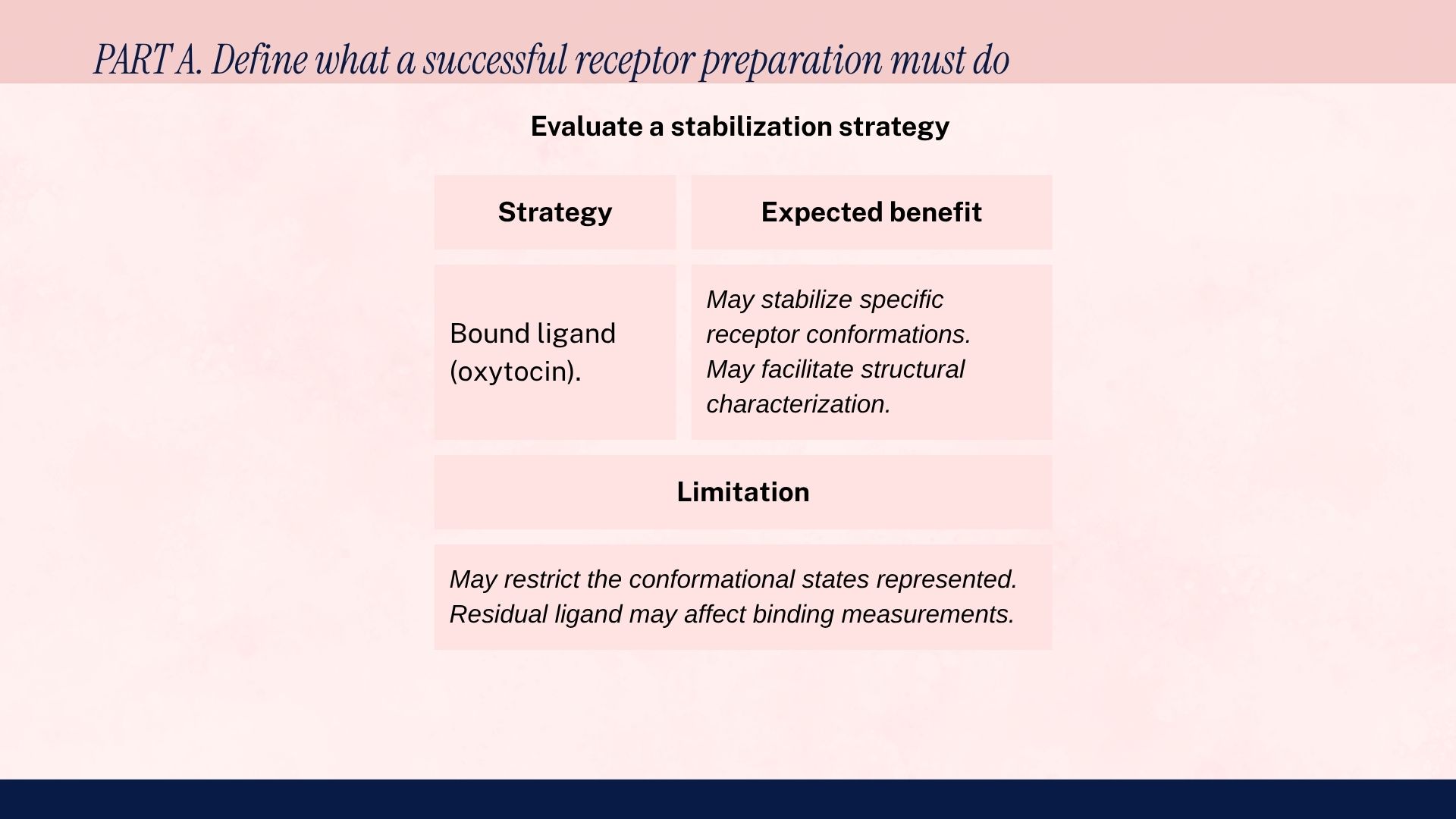 For our stabilization strategy, we propose using a bound ligand, specifically oxytocin, to potentially stabilize the oxytocin receptor, OXTR, during preparation.
Ligand binding can favor specific conformational states of a G protein-coupled receptor, which may help improve its stability and facilitate structural characterization.
However, there is an important limitation. Stabilizing a particular conformation does not necessarily mean that the receptor retains its full functional flexibility. Additionally, residual oxytocin from the preparation could interfere with subsequent ligand-binding measurements.
Therefore, we would need to control the presence of residual ligand and experimentally validate specific oxytocin binding. We should also remember that a structurally stable receptor is not necessarily functionally competent for activation or G-protein coupling, which would require additional assays.
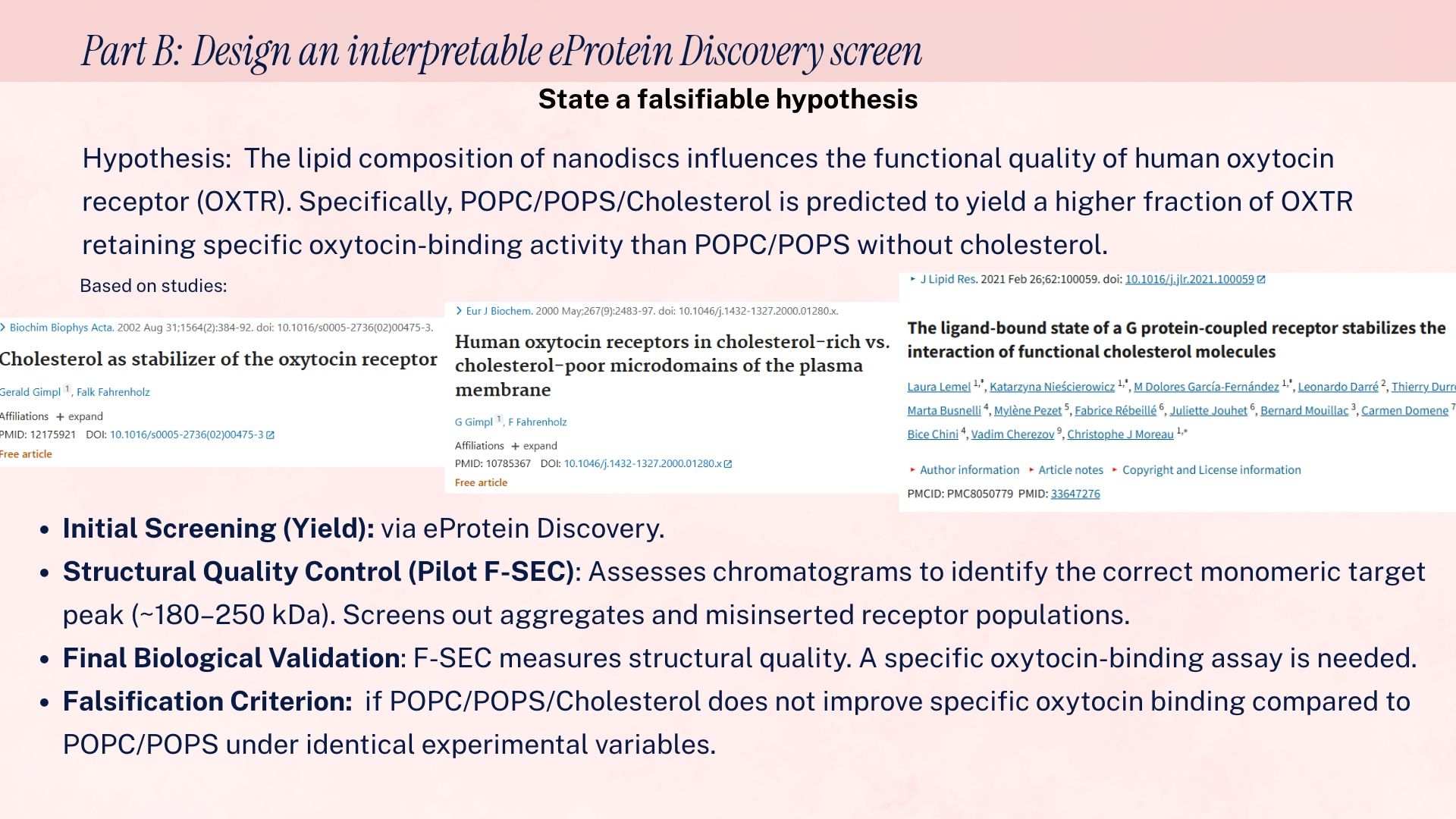 Hypothesis: The lipid composition of nanodiscs influences the functional quality of human oxytocin receptor (OXTR). Specifically, POPC/POPS/Cholesterol is predicted to yield a higher fraction of OXTR retaining specific oxytocin-binding activity than POPC/POPS without cholesterol.
This hypothesis is based on studies showing that cholesterol stabilizes human OXTR and modulates its ligand-binding properties (Gimpl and Fahrenholz, 2000, 2002; Lemel et al., 2021). Nuclera also identifies cholesterol-containing nanodiscs as a relevant option for cholesterol-dependent GPCRs. However, these sources do not establish that this specific formulation will outperform POPC/POPS in the eProtein Discovery system. The prediction must therefore be tested experimentally.
Initial screening readout: The eProtein Discovery screen will provide predicted protein yield and purifiability information. These results will be used to identify promising receptor–nanodisc combinations, rather than selecting a condition based on yield alone.
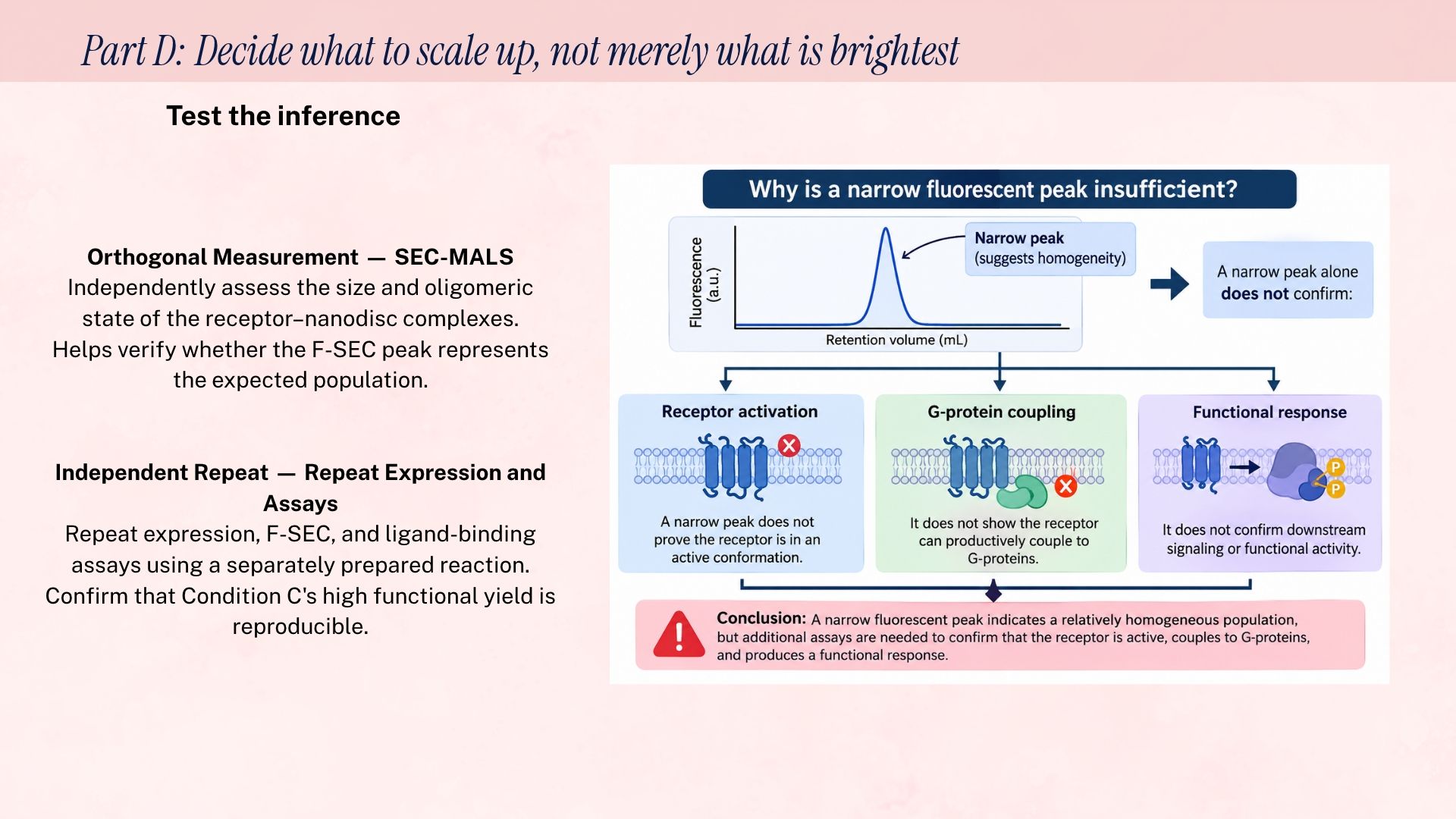
Secondary structural-quality readout: Selected conditions will undergo pilot fluorescence size-exclusion chromatography (F-SEC). Following the Nuclera GPCR cryo-EM guidance, the chromatograms will be assessed for the expected monomeric GPCR–nanodisc peak, aggregated material, and peaks associated with potentially misinserted or lower-quality receptor populations. The condition with the strongest appropriate monomeric peak will be prioritized for further evaluation.
F-SEC provides a quality-related screening readout but does not independently demonstrate specific oxytocin binding. Therefore, the biological hypothesis will ultimately be tested using a specific oxytocin-binding assay on the selected preparations.
The hypothesis would not be supported if POPC/POPS/Cholesterol failed to improve specific oxytocin binding relative to POPC/POPS when the MSP format and other experimental variables were held constant.
 Experimental rationale
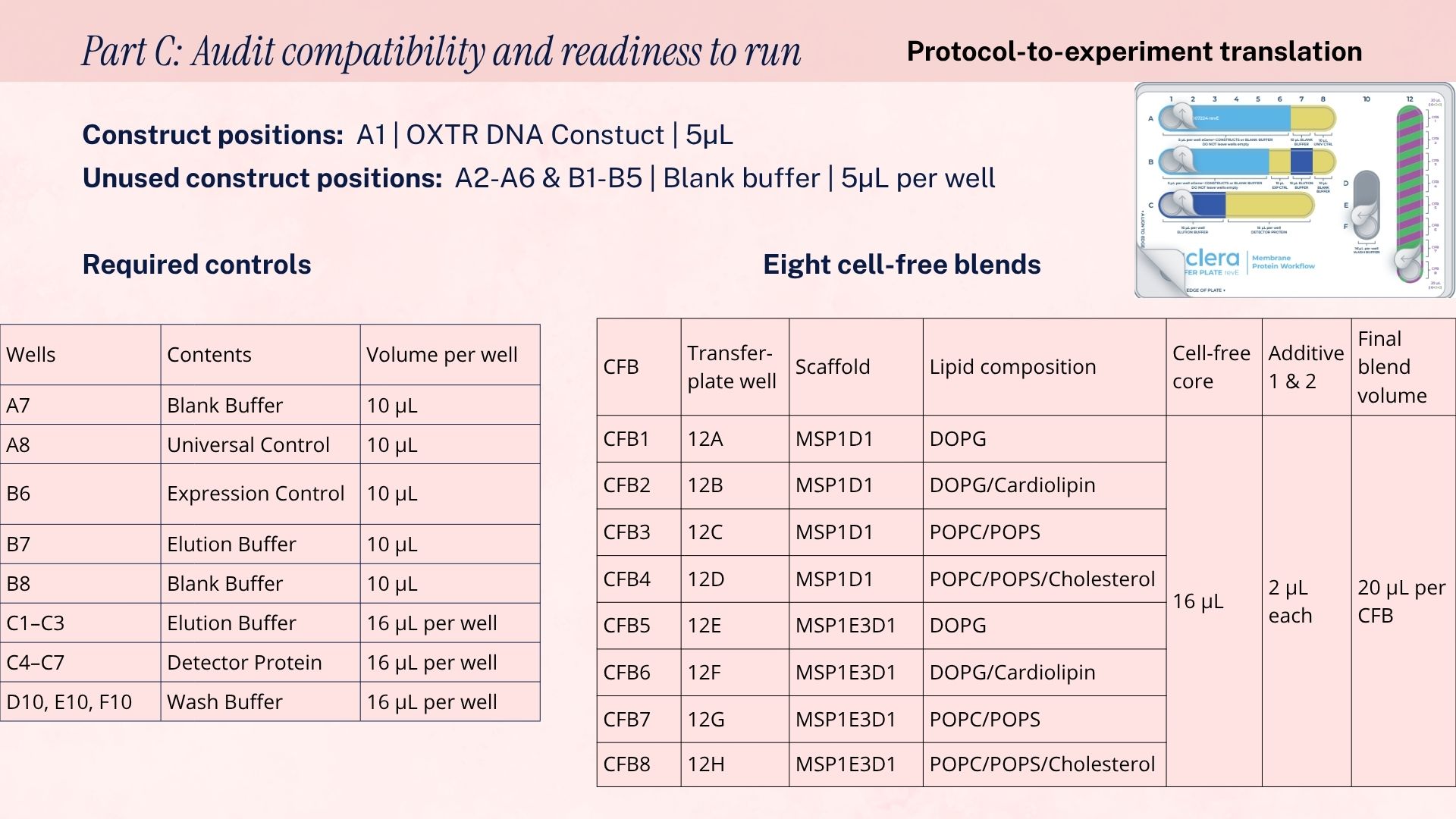
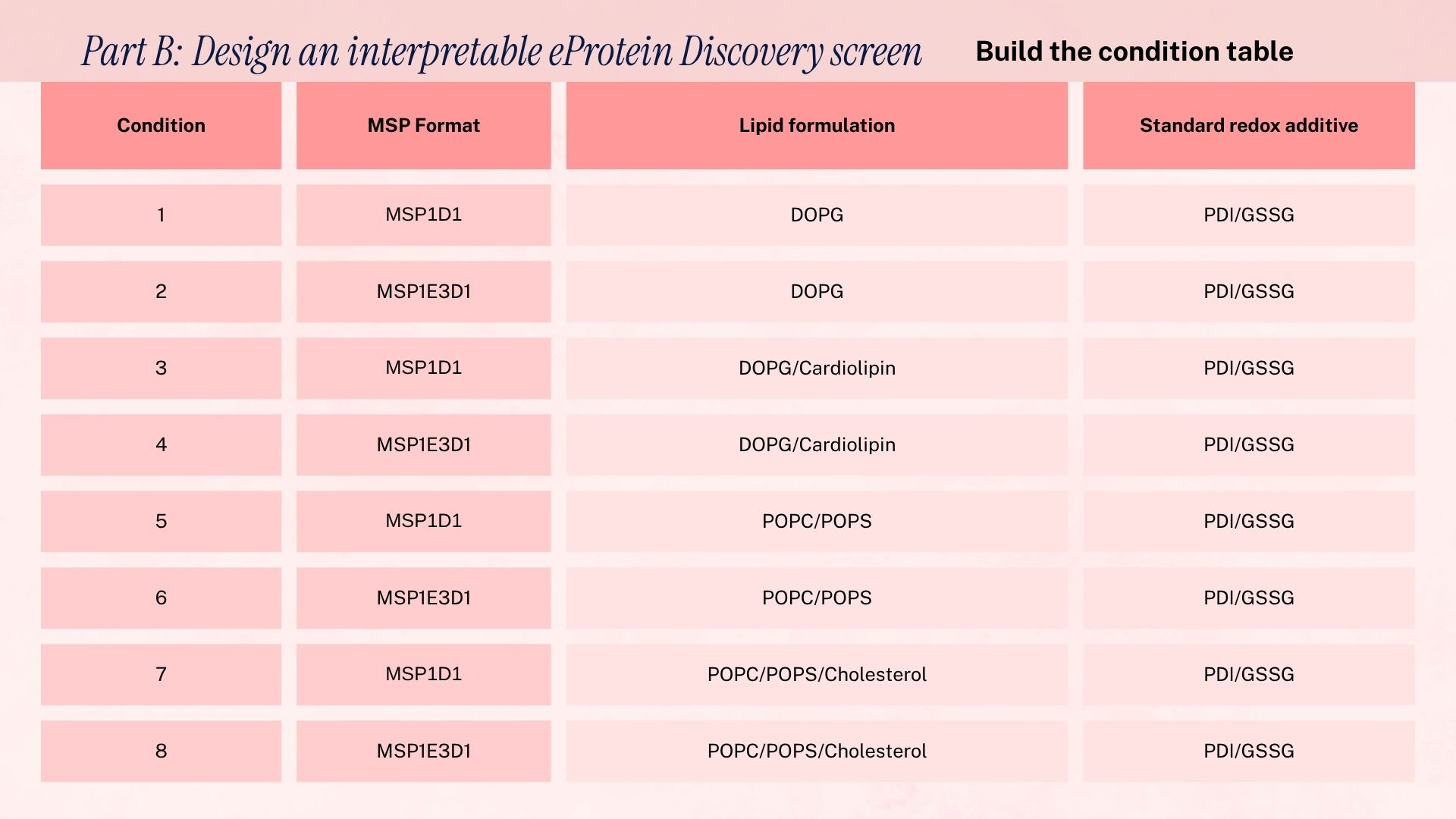
The eight-condition design separates the effects of MSP format and lipid composition. Comparing conditions with the same lipid formulation but different MSP formats tests the effect of scaffold size. Comparing POPC/POPS with POPC/POPS/Cholesterol within each MSP format tests the predicted effect of cholesterol while keeping the scaffold constant.
The initial eProtein Discovery results will be used to identify promising conditions. In accordance with the Nuclera GPCR cryo-EM guidance, four conditions should then be selected for pilot F-SEC: the highest-yielding condition, the same lipid formulation in the alternative MSP format, MSP1E3D1-DOPG, and MSP1D1-DOPG, avoiding duplicates where applicable.
The F-SEC results will determine which preparation has the most promising monomeric GPCR–nanodisc population for scale-up. Specific oxytocin-binding measurements will then be required to test the biological hypothesis. All eight conditions will use PDI/GSSG, the same receptor construct, and constant protocol-specified components to avoid confounding the effects of lipid composition with changes in redox support or DNA input.