Week 1 HW: Final Project Ideas
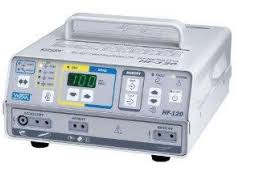
Automated Biomanufacturing of Tissue-Mimicking Phantoms for Electrosurgical Device Testing
1. What do you want to make and why?
I want to develop a multilayer tissue-mimicking phantom for testing and optimizing electrosurgical devices.
The goal is to create a standardized material that reproduces selected electrical, mechanical, and thermal properties of soft biological tissues. This would allow electrosurgical experiments to be performed under more controlled and reproducible conditions.
My motivation comes from my experience developing a closed-loop electrosurgical system. During electrosurgical experiments, biological tissue can introduce variability between samples, making it difficult to compare device parameters, control strategies, and tissue responses. A standardized tissue-mimicking material could provide a more reproducible platform for evaluating electrosurgical power delivery, temperature response, cutting, and coagulation.
I am particularly interested in developing a multilayer phantom inspired by breast tissue, with different regions representing skin, adipose tissue, and breast tissue. In a later version, a region with different material properties could be incorporated to represent a tumor or lesion.
Previous research has demonstrated that tissue-mimicking phantoms can be engineered with tunable electrical, mechanical, and thermal properties. Gellan-gum-based phantoms, for example, have been developed by modifying their composition to obtain properties that approximate biological tissues [1]. More recently, conductive hydrogel and ionogel phantoms have been developed specifically for electrosurgical training and testing, including multilayer models designed to reproduce tissue stratification [2].
My long-term goal is to create a reproducible material platform that can reduce dependence on biological tissue for repeated electrosurgical testing and support the optimization of electrosurgical devices and control strategies.
2. What living system would make it?
I would use a microbial production system (specifically the bacterium Sphingomonas elodea) to produce a polysaccharide-based biomaterial, with gellan gum as an initial candidate. What goes in: A liquid culture medium containing a carbon source (such as glucose), a nitrogen source, and inorganic salts.
The biological process: The S. elodea will undergo aerobic fermentation in a bioreactor. As the bacteria metabolize the glucose, they synthesize and secrete a high-molecular-weight exopolysaccharide (gellan) into the surrounding broth as a protective mechanism.
What comes out: A highly viscous fermentation broth. To isolate the target product, the bacteria are removed, and the pure gellan gum is precipitated out of the broth using an alcohol like isopropanol, yielding a dry biopolymer powder. This powder is then rehydrated with specific ionic crosslinkers to form the tissue phantoms.
Gellan gum is a microbial polysaccharide that can form hydrogels with tunable mechanical and electrical properties. Previous studies have investigated gellan-gum-based tissue phantoms as materials for reproducing relevant properties of biological tissues [1,3].
3. How would automation help?
Automation could be used throughout the manufacturing and testing workflow.
First, automated liquid handling could prepare many different biomaterial formulations by varying parameters such as polymer concentration, ionic content, water content, and crosslinking conditions. I would use a desktop liquid-handling robot, such as an Opentrons OT-2, to automate the high-throughput preparation of hundreds of candidate biomaterial formulations, precisely varying the gellan concentration, water content, and ionic crosslinkers to tune the electrical and thermal properties.
Second, automated dispensing or additive manufacturing could fabricate the phantom layer by layer, allowing different compositions to be assigned to different tissue regions. Once a formulation is optimized, I would use an automated robotic bioprinter (such as a CELLINK dual-printhead system) to extrude the phantom layer-by-layer. This allows different anatomical compositions (e.g., highly conductive glandular tissue vs. highly resistive adipose tissue) to be precisely assigned to specific spatial regions, mimicking the stratification of real breast tissue.
Third, automated characterization could measure relevant electrical, mechanical, and thermal properties of each formulation.
Finally, these measurements could be incorporated into a feedback loop to select and refine formulations:
Design → Manufacture → Measure → Compare → Adjust → Manufacture again
The electrosurgical testing stage could also be automated. The phantom could be exposed to controlled electrosurgical conditions while sensors measure variables such as electrical response and temperature. These measurements could then be used to evaluate whether the phantom reproduces the desired tissue-like response.
This closed-loop approach would combine biomanufacturing, automation, materials characterization, and control systems.
4. How much and how long?
(a) How much? To define a meaningful scale, I am estimating the production of 1,000 multilayer breast phantoms to supply a large-scale electrosurgical validation study or a multicenter device trial.
Volume: An average breast model is approximately 500 mL in volume.
Total hydrogel: 1,000 phantoms × 500 mL = 500 Liters.
Biomaterial required: Gellan gum phantoms typically require a concentration of ~2% w/v (20 grams per Liter) to match the mechanical stiffness of soft tissue.
Total scale: 500 L × 20 g/L = 10 kg of pure gellan gum (b) How long? I would envision the project in four stages:
- Material formulation and screening: approximately 2–3 months.
- Automated phantom fabrication: approximately 2–3 months.
- Electrical, mechanical, and thermal characterization: approximately 2–3 months.
- Electrosurgical validation and optimization: approximately 2–4 months. This would correspond to an initial prototype development period of approximately 6–12 months.
And after atomation help:
Biomanufacturing Time: Sphingomonas elodea yields approximately 15 g/L of gellan in industrial fermentation. To produce 10 kg, we need a bioreactor working volume of roughly 660 Liters (accommodated by a standard 1,000 L bioreactor). A typical aerobic fermentation batch takes about 48 to 72 hours. Downstream processing (precipitation and drying) adds another 48 hours.
Automated Fabrication Time: Using a bioprinting array with 5 parallel extrusion robots, assuming each phantom takes 1 hour to print, the throughput is 5 phantoms/hour. Printing 1,000 phantoms would take 200 hours (about 8.3 days of continuous operation).
Total Time: Fermentation (3 days) + Downstream Processing (2 days) + Automated Printing (8.3 days) = approximately 13.3 days to go from bacterial culture to 1,000 finished electrosurgical phantoms.
5. What are the 2–3 biggest unknowns or bottlenecks?
1. Matching multiple tissue properties simultaneously
The first major unknown is whether a biologically produced material can simultaneously reproduce the electrical, mechanical, and thermal properties that are relevant to electrosurgery.
Changing one component of the formulation may improve one property while negatively affecting another. Although previous studies demonstrate that gellan-gum-based phantoms can have tunable properties, achieving the specific combination required for a breast-tissue model and electrosurgical applications remains an engineering challenge [1,3].
2. Reproducing the electrosurgical response of real tissue
An important question is whether the phantom can reproduce relevant phenomena such as electrical current distribution, heating, coagulation, cutting behavior, and thermal effects.
Previous work has demonstrated the feasibility of conductive tissue-mimicking phantoms for electrosurgical applications, but further validation would be required for a breast-tissue-specific model [2].
3. Reproducibility and durability
The final bottleneck is whether the phantom can be manufactured consistently and remain stable during storage and repeated testing.
If two phantoms produced from the same formulation behave differently, they would not provide a reliable platform for comparing electrosurgical devices or control strategies.
Therefore, batch-to-batch reproducibility, material stability, mechanical degradation, and changes in electrical properties during storage and repeated testing would need to be evaluated.
References
Chen, R. K., & Shih, A. J. (2013). Multi-modality gellan gum-based tissue-mimicking phantom with targeted mechanical, electrical, and thermal properties. Physics in Medicine & Biology, 58(16), 5511–5525. https://doi.org/10.1088/0031-9155/58/16/5511
Migliorini, F., et al. (2024). Conductive Gel Phantoms for Training in Electrosurgery. Advanced Materials Interfaces. https://doi.org/10.1002/admi.202400246
Brzozowski, P., Penev, K. I., & Mequanint, K. (2021). Gellan gum gel tissue phantoms and gel dosimeters with tunable electrical, mechanical and dosimetric properties. International Journal of Biological Macromolecules, 180, 332–338. https://doi.org/10.1016/j.ijbiomac.2021.03.047