Week 2 HW: DNA Design
Part 0: Set Up in Kernel
- Repository & Folder Location: My project repository and folder in the HTBAA 2026 Workspace is located at: HTBAA26_WilliamandMary / Mariana Catalina Pemberthy Mantilla.
Part 1: Define Your Expression Target
- What molecule are you expressing? I am expressing a set of three metabolic enzymes (PhaA, PhaB and PhaC) that form the core biosynthetic pathway to manufacture polyhydroxyalkanoate (PHA) bioplastic for absorbent fibers and waterproof backing films in zero-waste menstrual pads.
- What is the sequence?
- Organism Source: Cupriavidus necator (formerly Ralstonia eutropha) H16.
- Database Accession Numbers:
phaC(PHA synthase): UniProt P23608 (NCBI Gene ID: 1080383).phaA(3-ketothiolase): UniProt P14611 (NCBI Gene ID: 1080381).phaB(Acetoacetyl-CoA reductase): UniProt P14697 (NCBI Gene ID: 1080382).
- What host or chassis? Escherichia coli BL21(DE3). In Cell-Free Metabolic Engineering (CFME), this host chassis is grown in cultures to overexpress the target pathway enzymes; then, cells are lysed to harvest an active enzyme extract for in vitro biomanufacturing.
- Where does the product need to go? In Vitro Reaction Solution (Cytoplasmic Extract). The target enzymes accumulate inside the host cell cytoplasm during extract preparation and operate freely in the open cell-free reaction vessel. No secretion signal tag or membrane-targeting sequence is required.
Part 2: Design Your Genetic Parts
Every genetic construct requires specific control elements assembled around the coding sequences. Below is the parts table corresponding to the five individual parts created in Kernel for high-level expression in E. coli BL21(DE3):
| Part Name | Layer / Part Type | Sequence Source / Origin | Justification |
|---|---|---|---|
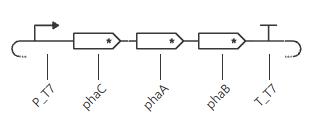
P_T7 | Promoter (Start Switch) | Bacteriophage T7 promoter (TAATACGACTCACTATAGGG) | A strong promoter recognized specifically by T7 RNA Polymerase in E. coli BL21(DE3) to drive high-level mRNA transcription. |
phaC | Coding Sequence (CDS (+start +stop)) | UniProt P23608 (C. necator) | DNA coding sequence for PHA Synthase, which polymerizes monomers into solid bioplastic. |
phaA | Coding Sequence (CDS (+start +stop)) | UniProt P14611 (C. necator) | DNA coding sequence for 3-ketothiolase, which condenses initial acetyl-CoA building blocks. |
phaB | Coding Sequence (CDS (+start +stop)) | UniProt P14697 (C. necator) | DNA coding sequence for acetoacetyl-CoA reductase, which charges monomers with NADPH energy. |
T_T7 | Terminator (Stop Switch) | Bacteriophage T7 terminator | A transcription “STOP” signal that halts mRNA transcription cleanly at the end of the operon. |
Part 3: Assemble Your Construct
1. Polycistronic Construct Architecture (5’ → 3')
Inside Kernel, the five modular parts were assembled in linear 5’ → 3’ order within the pET-28a(+) construct:
Part 4: Optimize and quality-check
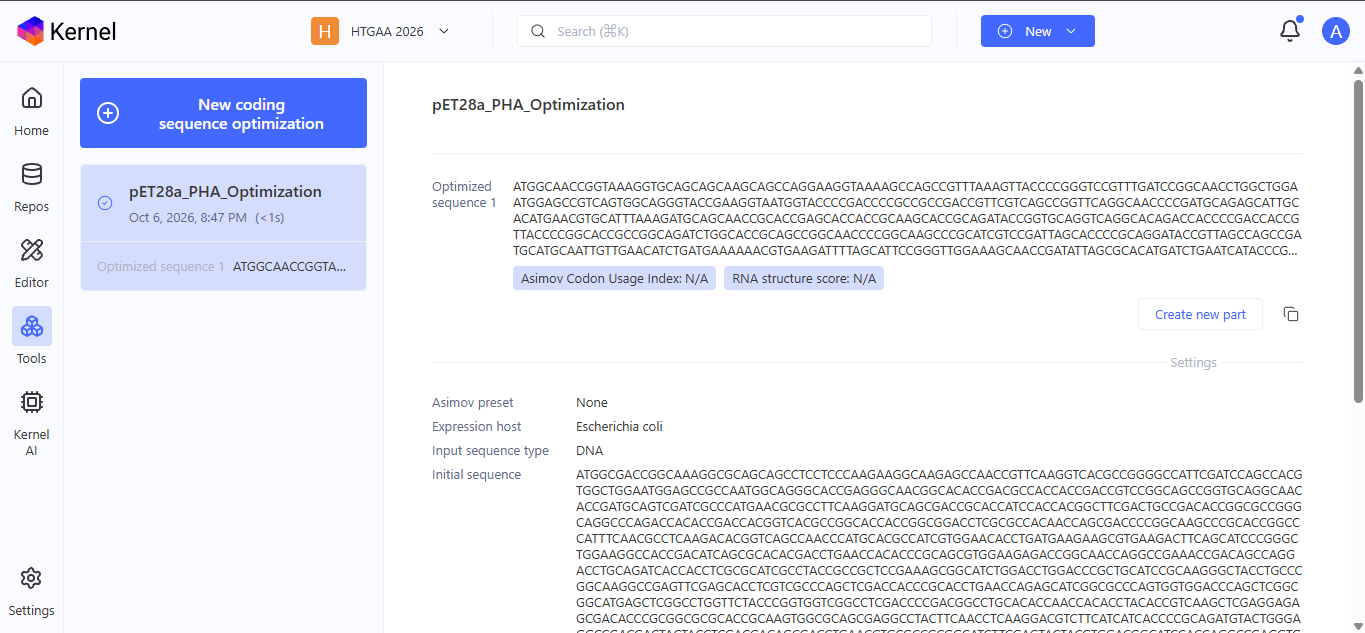
1. Codon Optimization
I used the coding sequence optimization tool in Kernel to optimize the DNA sequence for the phaC that result in:
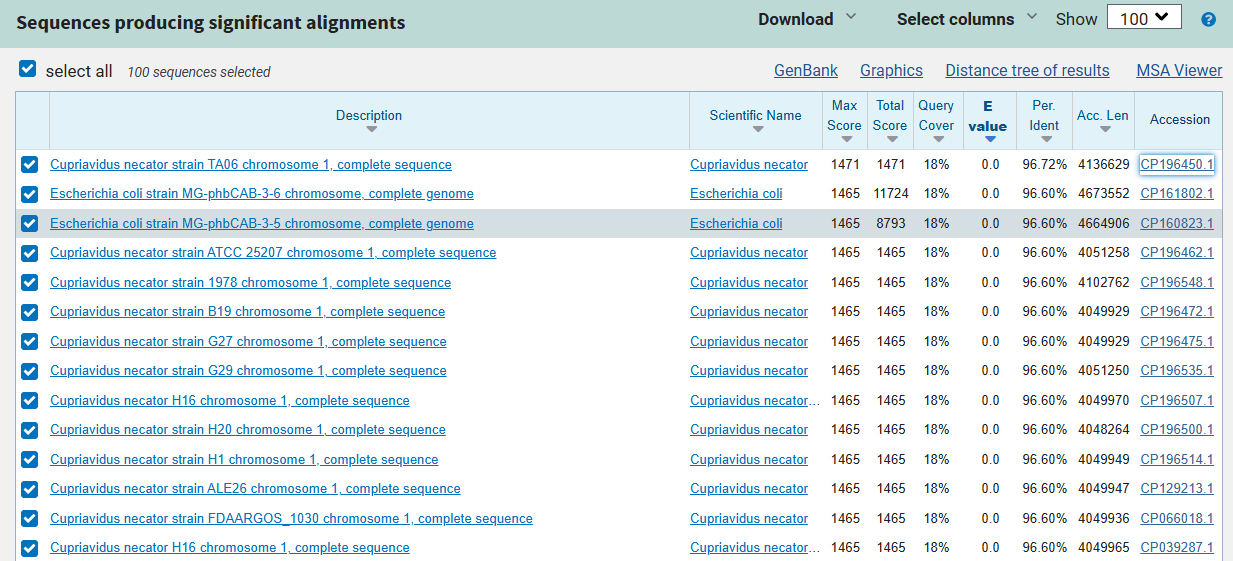
2. BLAST SEARCH
I searched my sequence and the result was identical to known sequences since I used known genes:
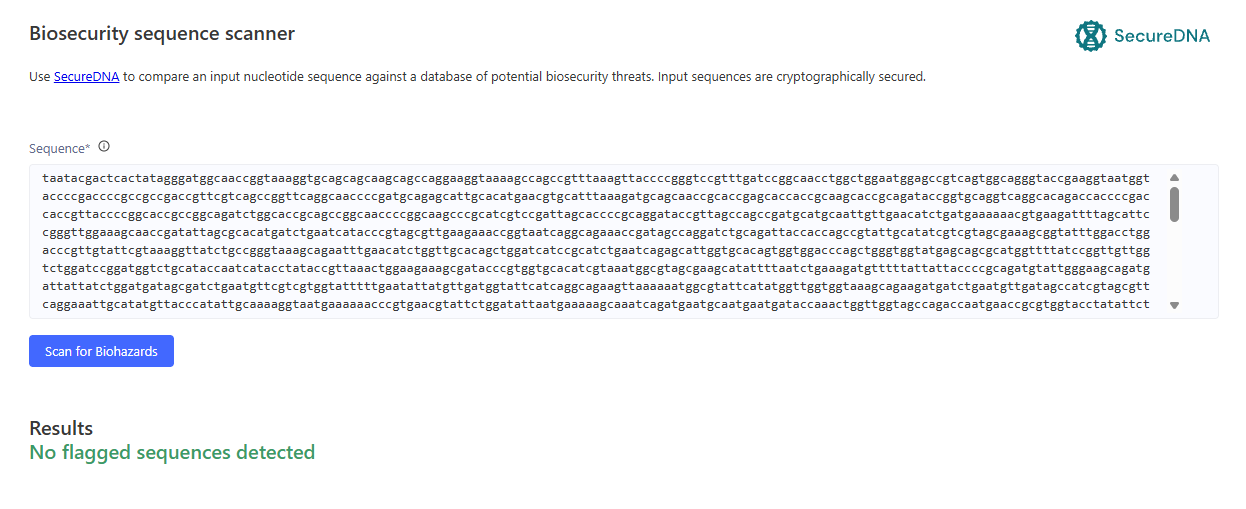
3. Safety screen
Note: I used the same Gemini LLM notebook for the first homework assignment, along with the additional readings, to get better responses. I used it to comprehend and assemble every part, little by little.