Tech Professionals🚀| CEO de GenIA | Full Stack Developer | Big data | #Experience : 16+ Years | #skillset : Android Studio, Java, CSS3, JS, R, Python | ⏳ Crecimento empresarial con IA, para empresas competitivas🚀
YouTube
(end of comment block with sample social media links)
Homework, Labs, and Projects
See the nav bar on the left to look through my work for How To
Biomanufacture Almost Anything (Fall 2026)!
Subsections of <Marlene Salinas Duran> — HTBAA Fall 2026
Week 1 HW: Final Project Ideas
(1) What you would like to biomanufacture and why?
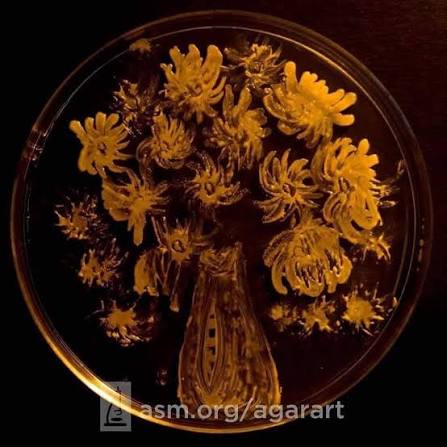
I would like to biomanufacture a fungal artwork in which a filamentous fungus produces visual patterns as it grows on a controlled surface, such as a culture plate.
I am interested in this idea because, as a systems engineer, I am interested in how complex patterns can emerge from simple rules. Fungal growth offers a biological example of this process, where environmental conditions and physical constraints can influence the patterns produced by a living organism.
The goal is to create an artwork in which the final pattern is generated partly by the design of the system and partly by the biological growth itself, connecting biotechnology, art, and computational thinking.
(2) What living system would you use?
I would use a filamentous fungus, specifically Aspergillus nidulans, as the biological manufacturing chassis. I would use a laboratory strain and grow it on a suitable agar-based medium inside a culture plate.
The input would be the fungal inoculum, nutrients, and controlled environmental conditions. The fungus would grow by producing and extending hyphae, forming a mycelial network that gradually develops into visible patterns. The output would therefore be the fungal colony itself, which would serve as the biological component of the final artwork.
I assume that a suitable laboratory strain of A. nidulans can be obtained and maintained under appropriate laboratory conditions.
(3) How would you use automation?
I would use a desktop liquid-handling robot such as an Opentrons to automate parts of the preparation and inoculation workflow. The robot could help prepare consistent culture conditions and apply the fungal inoculum to multiple plates in a reproducible way.
I would also automate image capture at regular intervals to record how each colony develops over time. This would allow the resulting patterns to be compared computationally and could help identify which conditions produce the most interesting or reproducible artwork.
The main purpose of automation would be to improve consistency, reduce manual work, and generate standardized data for analyzing fungal growth.
(4) How much would you need to make, and how long would it take?
(4) How much would you need to make, and how long would it take?
This is my first approach to a biotechnology research project, so I am using AI as my main support for finding relevant literature, identifying assumptions, and making these preliminary engineering estimates. These numbers would need to be validated experimentally.
(a) How much?
For a meaningful artistic scale, I would aim to produce 100 individual fungal artworks, with one culture plate representing one piece.
Assuming a standard 90 mm Petri dish requires approximately 18–20 mL of agar medium, I can estimate:
100 plates × 20 mL = 2,000 mL = 2 L of culture medium
I would prepare approximately 2.2 L to allow for a 10% margin of loss during preparation.
For inoculation, a published fungal-art method using Aspergillus nidulans used approximately 30–50 µL of fungal inoculum per artwork. Using the upper value:
100 plates × 50 µL = 5,000 µL = 5 mL of inoculum
These values are only a starting estimate; the actual quantities would depend on the final design of the artwork and the selected strain.
(b) How long?
The published A. nidulans fungal-art method reported visible artwork development within approximately 24–72 hours, depending on the design and conditions. I would therefore use 72 hours (3 days) as a conservative initial estimate for one production cycle.
For the automation step, I would use an Opentrons OT-2 with an 8-channel pipette. The OT-2 can dispense volumes within the range needed for a 50 µL inoculation, and its 8-channel configuration allows eight transfers to be handled in parallel.
For 100 artworks:
100 plates ÷ 8 plates per batch ≈ 13 batches
The liquid-transfer step should therefore take much less time than the biological growth itself. I estimate that the active automated inoculation would take well under a few hours, assuming appropriate plate handling and loading. The main manufacturing time would be the approximately 3 days of fungal growth.
At a larger scale, I would keep the same biological process but use parallel incubation and automated imaging so that many plates could develop simultaneously. For example, if the facility could incubate 25 plates at once:
100 plates ÷ 25 plates/batch = 4 batches
4 batches × 3 days = approximately 12 days
This estimate shows that scaling the artwork is mainly a question of increasing parallel capacity rather than making the fungus grow faster.
(5) What don’t you know yet?
There are three main technical unknowns in my proposed system:
How reproducible the fungal patterns would be. I do not yet know whether Aspergillus nidulans would produce sufficiently similar patterns under the same conditions, or how much natural variation would occur between plates.
How controllable the pattern formation would be. I need to determine which environmental or physical conditions can influence the shape and development of the fungal colony enough to produce intentionally designed patterns.
Whether the proposed automation workflow is practical. I need to experimentally determine whether automated inoculation and image collection can be performed consistently without interfering with fungal growth.
These questions would be addressed through small-scale experiments comparing different conditions and measuring the resulting growth patterns. As this is my first biotechnology project, these experiments would also help me understand which assumptions in my current design are realistic and which need to be changed.