Week 2 HW: DNA Design
HTBAA Homework #2 — Writeup
Matthew Woslum · September 29, 2026
Project: DNA Watermarking of Biomanufactured Bone (HW1 follow-up)
Design framing
My construct is a minimal mammalian expression plasmid for HEK cells that expresses sfGFP as a fluorescent confirmation of successful delivery, and carries a unique, non-coding synthetic watermark sequence detectable by PCR/sequencing.
Important note for Part 6:
A transient plasmid watermark is diluted ~2-fold per cell division and is effectively gone within days-to-weeks of culture — long before mineralization completes. Therefore this plasmid is a prototype / ** proof of concept** that validates the editing step, not the final authentication mechanism for the final product. Permanent product authentication requires the watermark to be integrated into the host genome (CRISPR knock-in). An integrated watermark in cells embedded in mineral should persist essentially as long as the material itself: hydroxyapatite in bone binds DNA strongly. This construct is the simple, first version. Part 6 talks about the knock-in step as the key follow-up.
Part 0: Set up in Kernel
Logged in via the Biopunk node login. Repository: Woslum-Watermarking, folder: DNA-Watermarking.
Part 1: Define your expression target
Molecule(s): one protein (sfGFP, reporter) plus one non-coding DNA element (synthetic watermark). The watermark is DNA, not RNA/protein — it only needs to be present and PCR-detectable; it does not need to be expressed. Placing it outside the transcription unit avoids any effect on sfGFP expression.
Sequences:
- sfGFP: engineered variant of Aequorea victoria GFP, 238 aa, from Pedelacq et al., Nat. Biotechnol. 24, 79–88 (2006). Sequence obtained from Kernel.
ATGCGTAAAGGCGAAGAGCTGTTCACTGGTGTCGTCCCTATTCTGGTGGAACTGGATGGTGATGTCAACGGTCATAAGTTTTCCGTGCGTGGCGAGGGTGAAGGTGACGCAACTAATGGTAAACTGACGCTGAAGTTCATCTGTACTACTGGTAAACTGCCGGTACCTTGGCCGACTCTGGTAACGACGCTGACTTATGGTGTTCAGTGCTTTGCTCGTTATCCGGACCATATGAAGCAGCATGACTTCTTCAAGTCCGCCATGCCGGAAGGCTATGTGCAGGAACGCACGATTTTCCTTTAAGGATGACGGCACGTACAAAACGCGTGCGGAAGTGAAATTTGAAGGCGATACCCTGGTAAACCGCATTGAGCTGAAAGGCATTGACTTTAAAGAAGACGGCAATATCCTGGGCCATAAGCTGGAATACAATTTTAACAGCCACAATGTTTACATCACCGCCGATAAACAAAAAAATGGCATTAAAGCGAATTTTAAAATTCGCCACAACGTGGAGGATGGCAGCGTGCAGCTGGCTGATCACTACCAGCAAAACACTCCAATCGGTGATGGTCCTGTTCTGCTGCCAGACAATCACTATCTGAGCACGCAAAGCGTTCTGTCTAAAGATCCGAACGAGAAACGCGATCATATGGTTCTGCTGGAGTTCGTAACCGCAGCGGGCATCACGCATGGTATGGATGAACTGTACAAATGATGA
- sfGFP: engineered variant of Aequorea victoria GFP, 238 aa, from Pedelacq et al., Nat. Biotechnol. 24, 79–88 (2006). Sequence obtained from Kernel.
- Watermark: de novo, ~300 bp synthetic sequence. Designed to be unique: no significant BLAST hit against the human genome (RefSeq)(see Part 4), balanced GC, no long homopolymers/repeats, and free of the restriction sites used for cloning. Generated randomly, then filtered with these requirements.
- De novo watermark sequence:
GTAGCGTGCTGTGCGTTCCCACGAATACGGTCCTTGATGATGTGATCAGCTTGATGTGATTCATTATCGGCTGTGCAAAACAAACCTAAGAGAGATACCAGCCCATGCACGTGATCGCACTGACAGTTAGATTAGAGGACGGAAGATGCAACGCGATTCTGATACGTCCTAGGGCGCGAAATCAAAGGCTAGCGTTGCTCGCTTTTAATCTACCCTCGGCTCAACTATTTCTAGCTCTCTTTTAACGCCAGCGGAAGCATGGAATGAGCGGGCCCACTCACGTTTGCTAAGCATAATTCG
- De novo watermark sequence:
Chassis: HEK293 cells. Mammalian host drives promoter choice (CMV), Kozak context, and a poly(A) signal.
Product localization: sfGFP is a small (~27 kDa) cytoplasmic protein. It does not need a signal peptide (not secreted) or an NLS. This plain cytoplasmic reporter is simple and sufficient for confirming delivery.
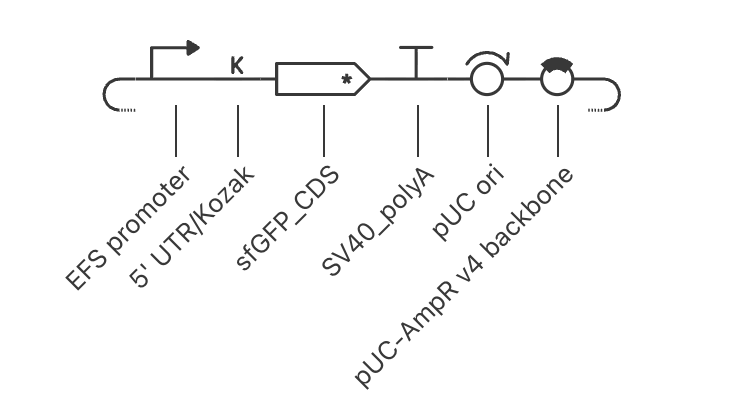
Part 2: Genetic partsOrder Part (type) Kernel Part Justification 1 hEF1a (constitutive) EFS Promoter Human Elongation Factor 1 alpha. Long-term transcriptional activity. (CMV is sometimes epigenetically silenced.) 2 5’ UTR + Kozak (GCCACCAUGG) 5’ UTR + Kozak Efficient translation initiation in mammalian cells 3 sfGFP CDS + start/stop sfGFP CDS Bright, fast-folding, low-aggregation reporter 4 SV40 poly(A) signal SV40_poly(A) Clean 3’ end, stable mRNA in mammalian cells 5 Watermark (non-coding DNA) De novo (this work) Unique, non-expressed authentication signature; placed downstream of poly(A), outside the transcript 6 Backbone: pUC ori + AmpR Standard cloning vector E. coli propagation for plasmid production; no mammalian selection marker, to keep the construct minimal
Part 3: Assemble the construct
Construct WM-sfGFP-v1 in Kernel, 5’→3’: hEF1a → 5’UTR/Kozak → sfGFP CDS → SV40 poly(A) → watermark → pUC ori/AmpR backbone.
- Reading frame check: CDS begins at the Kozak ATG and ends with a single stop codon; no internal stops in the assembled sequence.
- Construct map in Kernel confirms part order and orientation.
Part 4: Optimize and quality-check
- Codon optimization: the sfGFP CDS was human-codon-optimized in Kernel (sfGFP is from a cnidarian; human codon usage improves translation in HEK cells). Constraints applied: avoid the restriction sites used in cloning; keep GC 40–60%. No codons were changed.
- BLAST/sequence search: sfGFP matches A. victoria GFP-derived reporters (expected — confirms identity); the watermark has no significant hits, confirming it is novel and suitable as an authentication signature.
- Safety screen: ran Kernel’s Biosecurity scanner on the full construct; it checks for pathogen sequences, toxins, and other regulated elements.
- Results: No flagged sequences detected
Part 5: From design to build
- Prototype (one construct to test): the plasmid is ~4 kb. Simplest route is ordering the whole expression cassette as one synthetic double-stranded DNA plasmid directly from a synthesis vendor.
- Synthesis constraints: current synthesis is reliable to ~1–2 kb per fragment with low error rates; long homopolymers, extreme GC, and repeats are difficult. Our design avoids these (balanced GC, no homopolymers, watermark filtered for repeats), so a single-fragment order is feasible.
- Scale (DNA at product scale): if every production run needs unique watermarked plasmid at scale, chip-based oligo-pool synthesis with selective amplification is far cheaper per base than one-at-a-time gene synthesis: Kosuri et al. (Nat. Biotechnol. 28, 1295–1299, 2010) amplified complex chip-derived oligo pools for gene assembly, and Tian et al. (Nature 432, 1050–1054, 2004) showed accurate multiplex gene synthesis from programmable microchips. Fragment-based Gibson assembly of pooled amplicons also bridges prototype to scale.
Part 6: What I don’t know yet
Transient vs. integrated watermark — the biggest unknown, and it decides whether the product itself can be authenticated.
A transient plasmid does not replicate with the host genome and is diluted ~2-fold per division; it is effectively undetectable within days-to-weeks, long before mineralization completes. So this construct can only validate the editing step. An integrated watermark is a different story, though. Genomic DNA encapsulated in hydroxyapatite should persist as long as the material. Bone mineral binds DNA strongly and shields it from nucleases and oxidation. For long term authentication, I would need to integrate this watermark into the osteocyte genome using CRISPR or some other gene editing tool.
How I would find out: build an integrating version (CRISPR knock-in of the watermark cassette) alongside this transient plasmid; mineralize both; extract DNA at intervals over the culture; quantify watermark copies by qPCR; and confirm detection sensitivity by spiking known cell numbers into mineralized bone. Then observe which delivery gives a PCR-detectable signature in the final product, and for how long.
Will sfGFP signal survive processing? GFP fluorescence is lost in cross-linked/ mineralized material, so it validates editing during development, but not the final product. DNA-level watermark is the real end-product signature (see #1). Next step: confirm watermark detectability by PCR/qPCR from mineralized samples.
Is expression level/toxicity OK? Constitutive CMV expression of GFP is usually benign in HEK, but expression burden could matter at production scale. Next step: measure fluorescence across time and passage, and compare CMV vs. a weaker promoter (hPGK) as a tunable variant.
AI use
- AI (Kernel AI / Kimi) was used to critique and simplify the initial draft design, design a safe non-coding watermark sequence, and to reason about watermark stability in mineralized matrix. All design choices were verified and re-derived by me.