Week 3 HW: Cell-Free Protocols
Author: Dr. Michellie Hernandez, MD Assisted by ChatGPT for tutorial and broaden understanding. Content ideation and creation was done without AI and solely done by Dr. Michellie Hernandez
Release date: October 5, 2026
A. COMPARE CELL-FREE REACTION COMPOSITIONS
Why does the concentration of potassium glutamate and magnesium glutamate differ between compositions? Potassium Glutamate PanOx system: 200 mM PanOx SP system: 175 mM Cytomim system: 130 mM
Magnesium Glutamate PanOx system: 0 PanOx SP system: 20 mM Cytomim system: 8 mM
Which is more sensitive? Maximum protein synthesis yield decreases at higher or lower concentrations from those listed above on each of the systems.
“Glutamate is the principal anion produced as a result of osmotic stress in E. coli, and it has been shown that protein – nucleic acid interactions are more favorable in glutamate than in acetate salt solutions (Record et al., 1998b, Jewett et. al 2004)”
Protein synthesis yield varies by concentrations of potassium and magnesium per system.
Explain how a PEP+NTP reaction formulation is different from a Ribose+NMP reaction formulation. PEP+NTP reaction formulation utilizes PEP as the energy reagent with NTP reagents. Ribose+NMP reaction formulation utilizes ribose as the energy source reagent and utilizes NMP reagents. Per Smith et. al (2026), GMP can replace GTP and AMP can replace ATP without a loss in protein titer. However CMP cannot replace CTP nor UMP replace UTP without a change in titer. Thus partial replacement of NTP by NMP can yield a more cost effective reaction formulation. Hence I propose a reaction formulation of a combination of NTP and NMP; specifically containing GMP, AMP, CTP and UTP reagents.
“In concurrence with Olsen et al.,42 GPT-5 concluded that use of NTPs is not a cost-effective route to high protein titers and that NMPs yield a better specific cost. The model also noted that NMPs cannot be fully replaced by the corresponding nucleosides or bases, but partial replacement does reduce costs while preserving titers. Again, this finding agrees with Olsen et al., who note that GMP may be replaced by guanine and ribose without loss of titer, a result we confirmed (Tables 1 and 2, reaction compositions 177786377 and 179366574). GPT-5 also found that AMP may be partially replaced by adenosine (Tables 1 and 2, reaction composition 1793122_35). In Step 5, reactions with adenosine had a median titer of 0.279 (95% confidence interval 0.273–0.285) and those without had a median titer of 0.138 (95% confidence interval 0.136–0.139). However, attempts to replace CMP and UMP with their pyrimidine nucleoside counterparts failed. (Smith et. al 2026).”
Choose two cell-free reaction compositions from the literature, compare and contrast the choice of reagents and the concentration of reagents.
Cytomim system is a cell free system that allows pyruvate as an energy source and closely resembles the E. coli natural cytoplasm environment (Jewett et. al 2004). The cytomim does so by synthesizing chloramphenicol acetyltransferase (CAT) and removing PEG, pH buffers and polyethylene glycol from the PANOx system. Acetate accumulates in the Cytomim system. Optimal pH for CAT production is 6.8. Cytomim has a 5-fold yield increase of CAT production in comparison to the PANOx system, but has the same yield as the PANOx-SP system. Unnatural reagents that are useful: oxalic acid. Genetically engineered E. coli removing the pps gene will reduce the need for oxalic acid (Jewett et. al 2004). I propose that the E. coli lysate be obtained from genetically engineered E. coli that has removed the pps gene from the E. coli genome. I propose we then reevaluate the yield of the Cytomim system in this genetically modified E. coli lysate. Concentration of reagents: 1.2 mM adenosine triphosphate (ATP); 0.85 mM each of GTP, UTP, and CTP; 34 Ag/mL folinic acid; 170.6 Ag/mL of E. coli tRNA mix- ture; 13.3 Ag/mL plasmid; 100 Ag/mL T7 RNA polymerase; 5 AM L-[U-14C]-leucine; 2 mM each of 20 unlabeled amino acids; 0.33 mM nicotinamide adenine dinucleotide (NAD); 0.26 mM coenzyme-A (CoA); and 0.24 volume of S30 extract.
PANOx energy regeneration system (Kim et. al 2001) utilizes phosphoenolpyruvate (PEP) as the energy source, but the accumulation of phosphate and acidic environment hinders protein synthesis.
“In the PANOx energy regeneration system, 57 mM HEPES – KOH (pH 7.5), 2% (w/v) polyethylene-glycol 8000 (PEG), 200 mM potassium glutamate, 80 mM ammonium acetate, 16 mM magnesium acetate, 33 mM PEP, and 2.7 mM sodium oxalate were added. In the PANOx-SP system, 175 mM potassium glutamate, 10 mM ammonium glutamate, 20 mM magnesium glutamate, 33 mM PEP, 1.5 mM spermidine, 1 mM putrescine, and 2.7 mM sodium oxalate were added. Solutes added to the Cytomim system included 130 mM potassium glutamate, 10 mM ammonium glutamate, 8 mM magnesium glutamate, 33 mM sodium pyruvate, 1.5 mM spermidine, 1 mM putrescine, and 4 mM sodium oxalate. There was approximately an additional 3.3 mM magnesium, 14.4 mM potassium, 2.4 mM Tris, and 23.5 mM acetate in each reaction originating from the cell extract (Jewett et. al 2004).”
B. DESIGN ONE REACTION COMPOSITION FOR EACH OF THE THREE PROTEINS
Concentration Rank of sfGFP Composition:
- Potassium Glutamate 279.84 mM
- HEPES-KOH pH 7.5 57.50 mM
- Ammonium Glutamate 10.00 mM
- Magnesium Glutamate 8.22 mM
- Potassium phosphate 1.6:1 monobasic:dibasic (molar ratio) 5.00 mM
- 17 Amino Acid Mix 2.81 mM
- Glucose 2.78 mM
- Spermidine 1.56 mM
- Putrescine Dihydrochloride 1.25 mM
- NAD 375.00 uM
- Coenzyme A 250.00 uM
- AMP 125.00 uM
- CMP 125.00 uM
- GMP 125.00 uM
- UMP 125.00 uM
- Adenosine 62.50 uM
- Cytidine 62.50 uM
- Guanosine 31.25 uM
- Uridine 31.25 uM
- Folinic Acid 0.025 g/L
- Water 6.575 uL|
Reagent supplement JSON of sfGFP: { “sample_id”: “michellie_hernandez_2026-10-04_0aqv1h”, “sample_type”: “experimental”, “reagent_list”: { “adenosine”: 50, “amino_acid_mix_17”: 725, “ammonium_glutamate”: 200, “amp”: 25, “base_buffer”: 2000, “cmp”: 25, “coa”: 100, “cytidine”: 50, “folinic_acid”: 50, “glucose”: 50, “gmp”: 25, “guanosine”: 25, “hepes_koh”: 550, “kpo_monobasic_mix”: 200, “lysate”: 5000, “magnesium_glutamate”: 225, “nad”: 75, “nuclease_free_water”: 6575, “potassium_glutamate”: 1825, “putrescine”: 50, “spermidine”: 125, “template_sfgfp”: 2000, “ump”: 25, “uridine”: 25 }, “metadata”: { “ai_model”: “”, “protein_target”: “sfGFP”, “acknowledgements”: “”, “comments”: "" } } |
Composition PETase
Concentration Rank of PETase composition
- HEPES-KOH pH 7.5 57.50 mM
- Magnesium Glutamate 10.10 mM
- Ammonium Glutamate 10.00 mM
- Glucose 5.55 mM
- Potassium Oxalate 4.38 mM
- Oxidized Glutathione (GSSG) 4.04 mM
- 17 Amino Acid Mix 2.00 mM
- Spermidine 1.56 mM
- ATP 1.25 mM
- Putrescine Dihydrochloride 1.25 mM
- PEP mono (0.1M stock) 1.00 mM
- CTP 875.00 uM
- GTP 875.00 uM
- UTP 875.00 uM
- NAD 375.00 uM
- Coenzyme A 250.00 uM
- DsbC (E. coli, 25.5 kDa) 1.13 uM
- Folinic Acid 0.025 g/L
- Water 7.200 uL
Reagent supplement JSON of PETase composition { “sample_id”: “michellie_hernandez_2026-10-05_scv2ia”, “sample_type”: “experimental”, “reagent_list”: { “amino_acid_mix_17”: 400, “ammonium_glutamate”: 200, “atp”: 250, “base_buffer”: 2000, “coa”: 100, “ctp”: 175, “dsbc_ecoli”: 225, “folinic_acid”: 50, “glucose”: 100, “gtp”: 175, “hepes_koh”: 550, “lysate”: 5000, “magnesium_glutamate”: 300, “nad”: 75, “nuclease_free_water”: 7200, “oxidized_glutathione”: 475, “pep_mono”: 200, “potassium_oxalate”: 175, “putrescine”: 50, “spermidine”: 125, “template_petase”: 2000, “utp”: 175 }, “metadata”: { “ai_model”: “”, “protein_target”: “PETase”, “acknowledgements”: “”, “comments”: "" } }
Composition Reteplase:
Concentration Rank of Reteplase Composition
- HEPES-KOH pH 7.5 57.50 mM
- Ammonium Glutamate 10.00 mM
- Magnesium Glutamate 8.22 mM
- Glucose 5.55 mM
- Oxidized Glutathione (GSSG) 4.04 mM
- Potassium Oxalate 3.75 mM
- 17 Amino Acid Mix 2.00 mM
- Spermidine 1.56 mM
- ATP 1.25 mM
- Putrescine Dihydrochloride 1.25 mM
- CTP 875.00 uM
- GTP 875.00 uM
- UTP 875.00 uM
- NAD 375.00 uM
- Coenzyme A 250.00 uM
- DsbC (E. coli, 25.5 kDa) 5.00 uM
- Folinic Acid 0.025 g/L
- Water 6.725 uL
Reagent supplement JSON of Reteplase Composition { “sample_id”: “michellie_hernandez_2026-10-04_lm3vpf”, “sample_type”: “experimental”, “reagent_list”: { “amino_acid_mix_17”: 400, “ammonium_glutamate”: 200, “atp”: 250, “base_buffer”: 2000, “coa”: 100, “ctp”: 175, “dsbc_ecoli”: 1000, “folinic_acid”: 50, “glucose”: 100, “gtp”: 175, “hepes_koh”: 550, “lysate”: 5000, “magnesium_glutamate”: 225, “nad”: 75, “nuclease_free_water”: 6725, “oxidized_glutathione”: 475, “potassium_oxalate”: 150, “putrescine”: 50, “spermidine”: 125, “template_reteplase”: 2000, “utp”: 175 }, “metadata”: { “ai_model”: “”, “protein_target”: “Reteplase”, “acknowledgements”: “”, “comments”: "" } }
▸Concentration Rank of Reteplase Composition ⧉
- Potassium Glutamate 200.00 mM
- HEPES-KOH pH 7.5 57.50 mM
- Magnesium Glutamate 20.10 mM
- Ammonium Glutamate 10.00 mM
- Cysteine 5.00 mM
- Oxidized Glutathione (GSSG) 4.46 mM
- 17 Amino Acid Mix 4.00 mM
- Potassium Oxalate 3.75 mM
- Spermidine 1.56 mM
- AMP 1.50 mM
- GMP 1.50 mM
- Putrescine Dihydrochloride 1.25 mM
- Tyrosine pH 12 1.00 mM
- CTP 875.00 uM
- UTP 875.00 uM
- Folinic Acid 52.81 uM
- DsbC (E. coli, 25.5 kDa) 1.00 uM
- Ribose 3.125 g/L
- Glucose 1.000 g/L
- CMP 0.0 nM
- UMP 0.0 nM
- Guanine 0.0 nM
- Potassium phosphate dibasic 0.0 nM
- Potassium phosphate monobasic 0.0 nM
- Nicotinamide 0.0 nM
- Water 5.175 uL
Reagent supplement JSON of Reteplase Composition
{ “sample_id”: “michellie_hernandez_2026-10-06_gt4yxb”, “sample_type”: “experimental”, “reagent_list”: { “amino_acid_mix_17”: 1200, “ammonium_glutamate”: 200, “amp”: 300, “base_buffer”: 2000, “ctp”: 175, “cysteine”: 400, “dsbc_ecoli”: 200, “folinic_acid”: 50, “glucose”: 100, “gmp”: 300, “hepes_koh”: 550, “lysate”: 5000, “magnesium_glutamate”: 700, “nuclease_free_water”: 5175, “oxidized_glutathione”: 525, “potassium_oxalate”: 150, “putrescine”: 50, “ribose”: 625, “spermidine”: 125, “template_reteplase”: 2000, “utp”: 175 }, “metadata”: { “ai_model”: “”, “protein_target”: “Reteplase”, “acknowledgements”: “”, “comments”: "" } }
Comment
– Substituted ATP for AMP and GTP for GMP, but maintained CTP and UTP due to results in Smith et. al 2026. Thus last composition combines ribose NMP with partial NTP to include in the composition: AMP, GMP, CTP and UTP. Composition was adjusted to reflect in sfGFP, Petase and Reteplase in the coopetition platform.
Suggestion of new reagents to add to the cell-free reagent inventory
Template GSSG Redox category Reasoning: To experiment determine whether or not the hypothesis of adding a template of enzymatic reagents may reduce costs. We can test with another enzymatic reagent that is not already added to the lysate, as DsbC is already in the repletase lysate. We can add to the GSSG template a tag and regulatory enzymes to the plasmid so that translation the GSSG only occurs when needed, instead of producing GSSG constantly. The regulatory gene ideally will respond to an external additive that is added to the well or in response to measurements of GSSG within the well.
C. ASIMOV KERNAL (OPTIONAL)
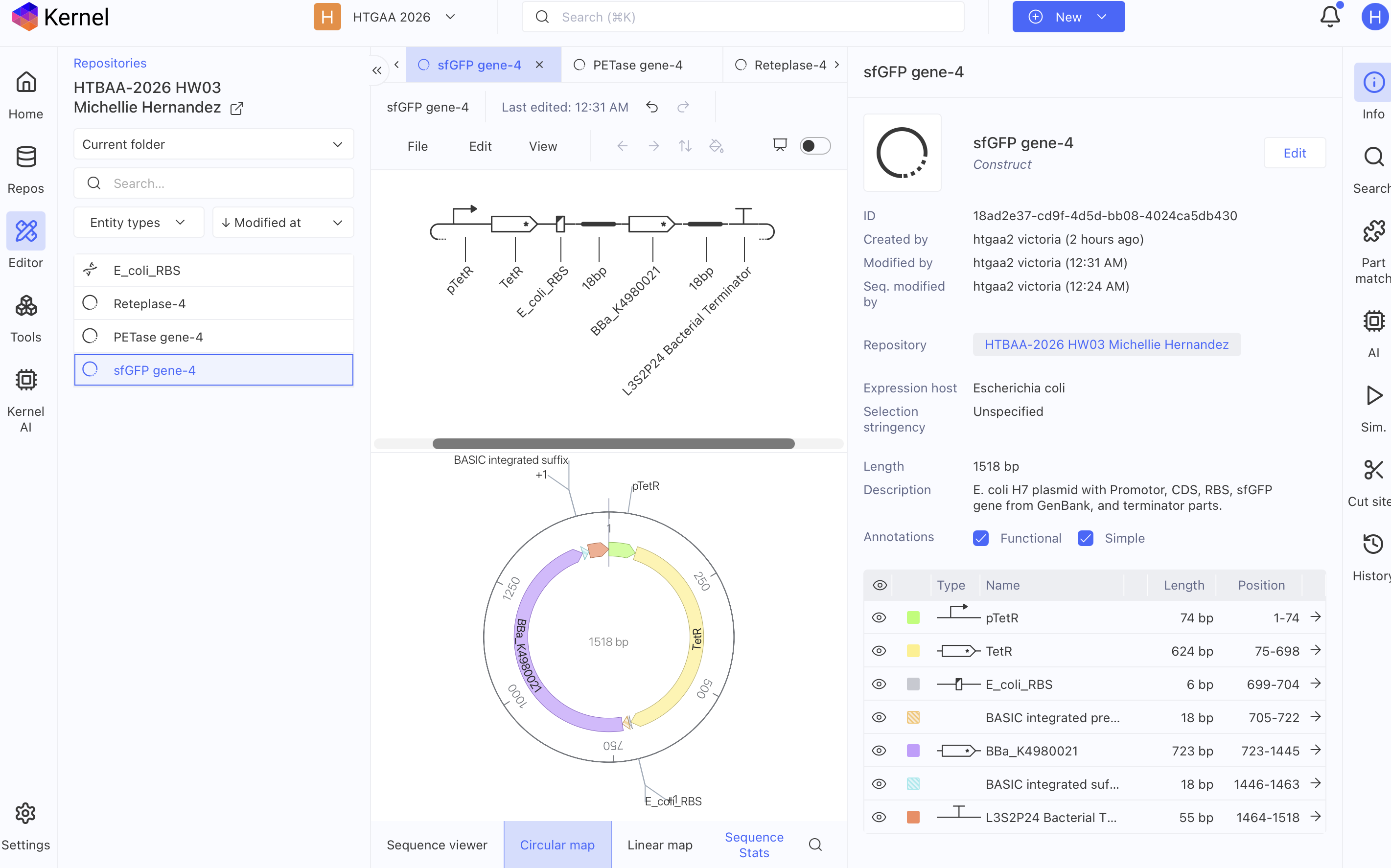
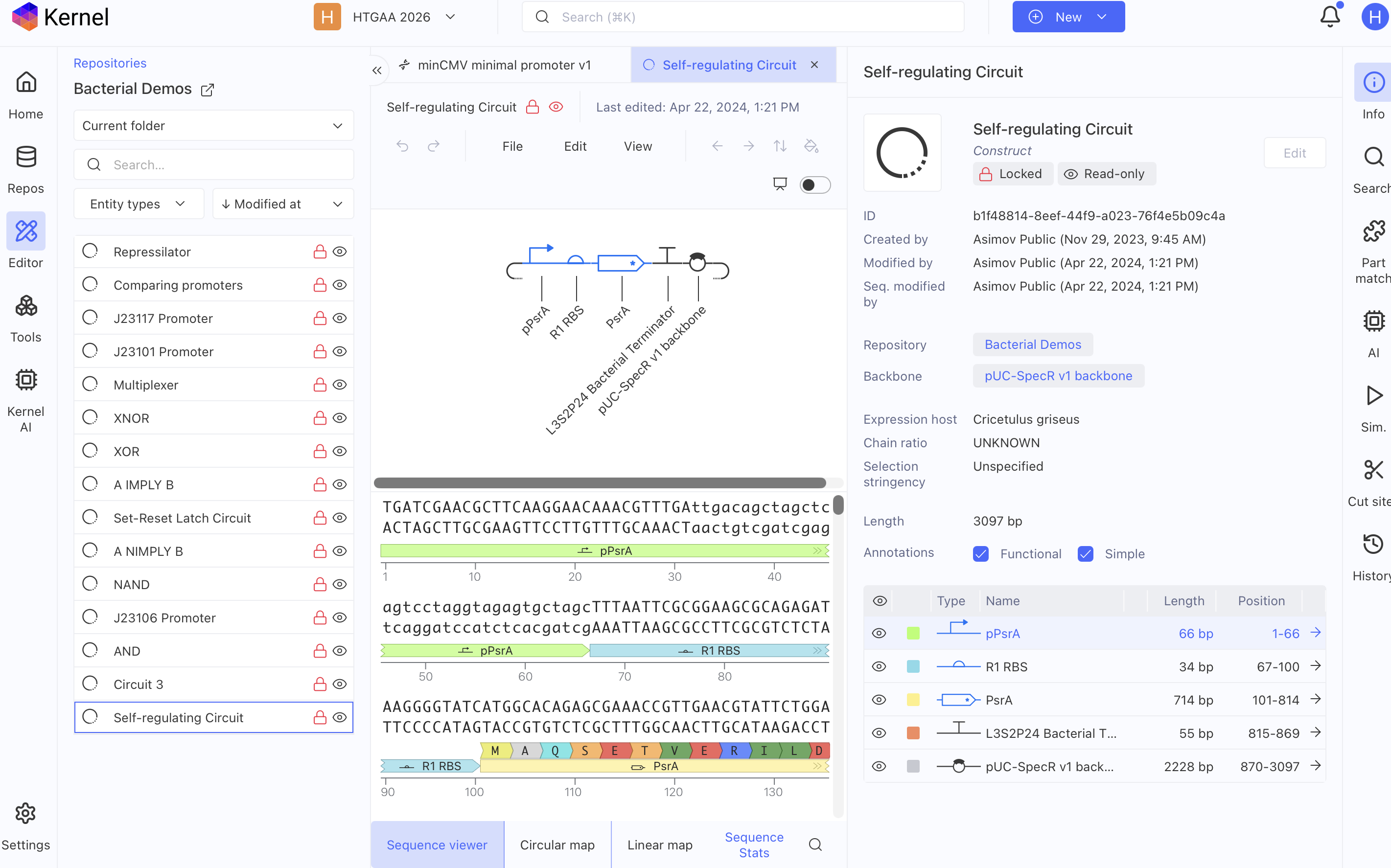
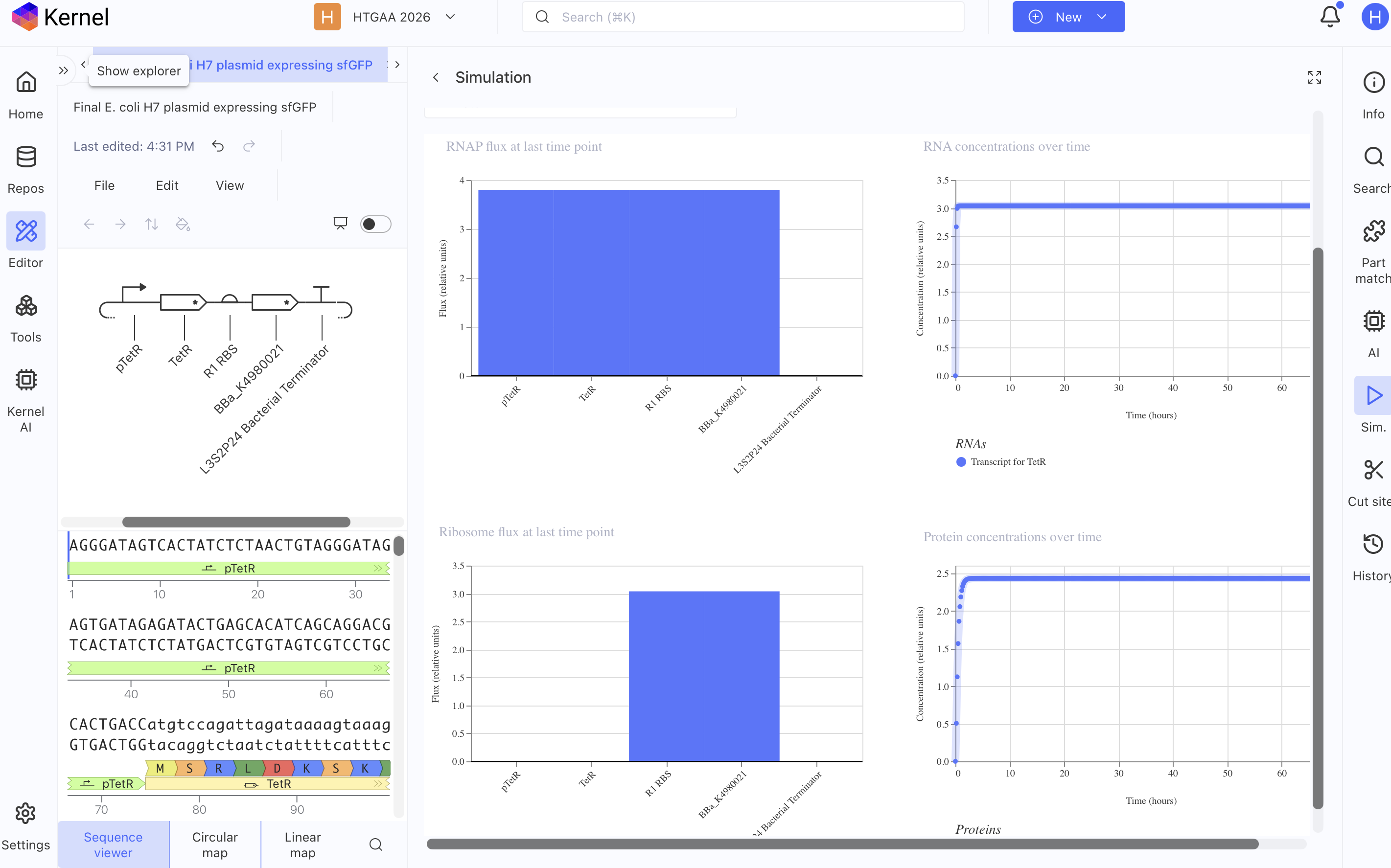
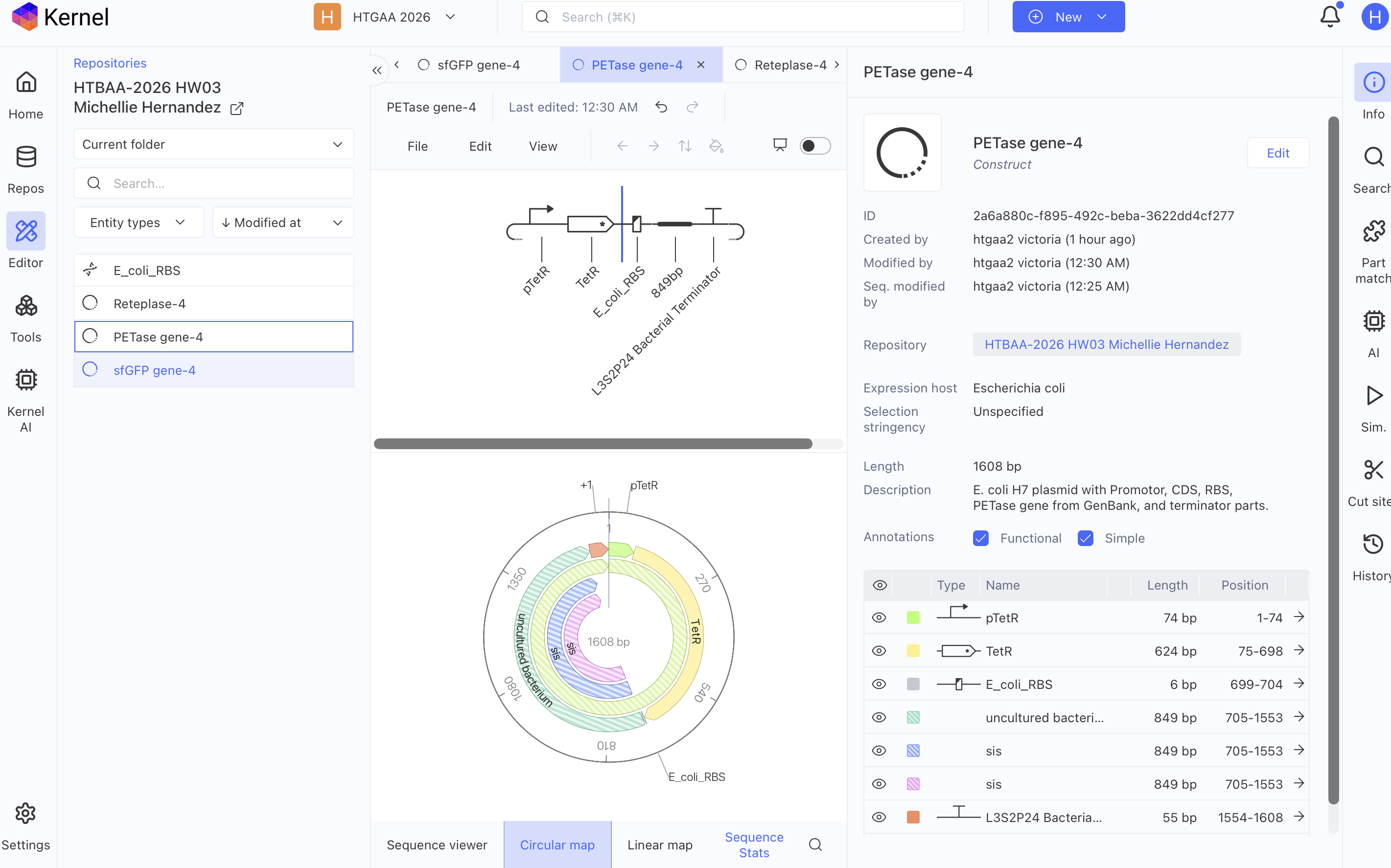
Build T7 compatible plasmids for cell-free expression using the amino acid coding sequences below:
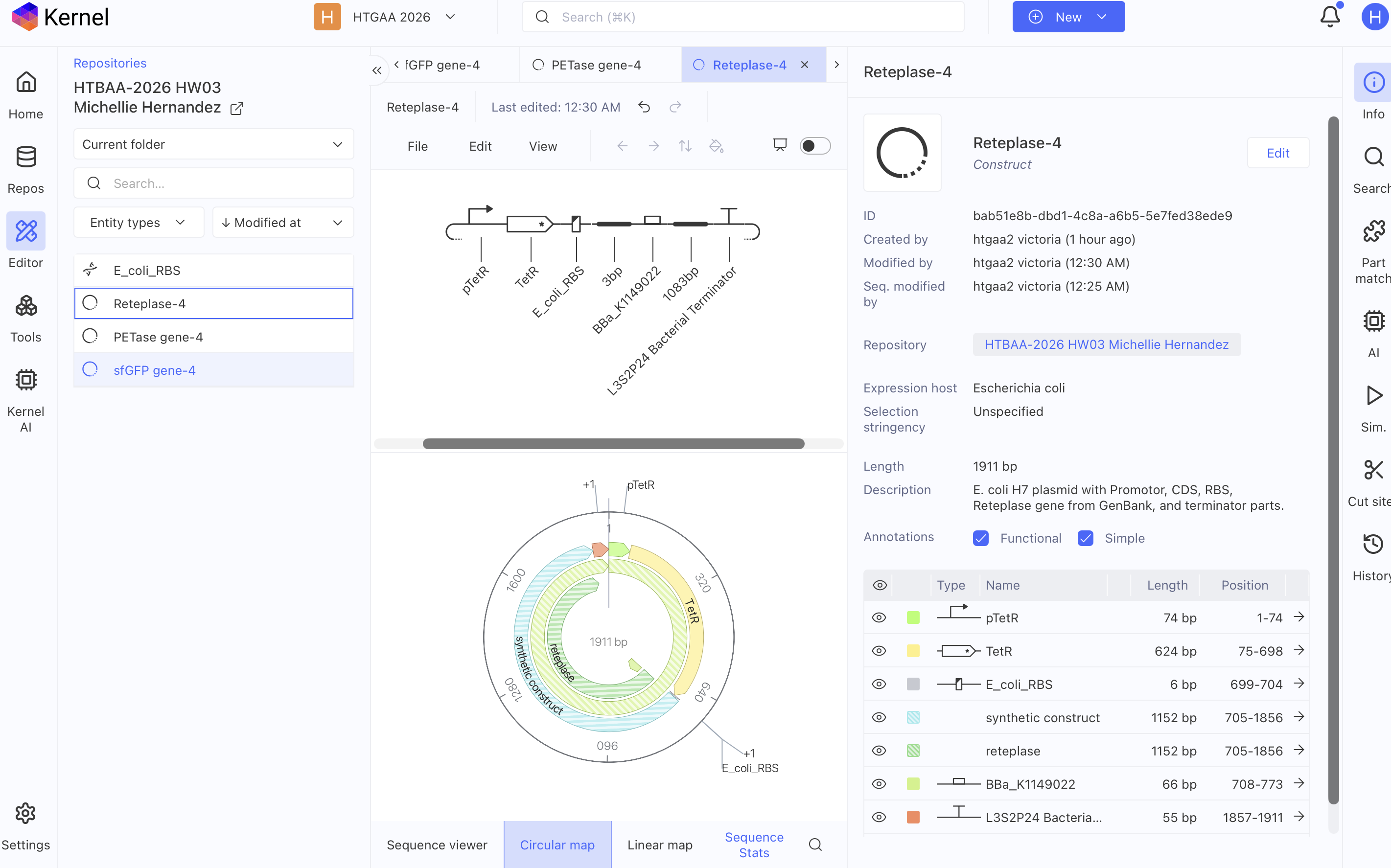
- Use of AI
You are encouraged to use AI and online tools for this assignment to assist your reagent composition development process. As you will present your work during recitation, you must be able to explain and justify the reasoning behind your design.
If you use AI, ensure that you cite the AI client and your prompts used.
Rosalind AI in HGTAA
– Rosalind, How does glutamate affect the protein synthesis yield?
– Roselind, how does glutamate affect the protein synthesis yield?
– Whether leftover metabolites accumulate in cell-free system from the use of NMP that can inhibit protein synthesis
– Whether AMP use makes the formulation cheaper.
– Whether ribose in the Ribose+NMP formulation serves as the energy source, and which paper covers the formulation.
– Whether the cost-effective formulation must be a combination of GMP, AMP, CTP, and UTP?
Chat GPT
– Review oxidation reduction reaction inside the Endoplasmic reticulum and Golgi apparatus
– What makes the interior of the Golgi apparatus more oxidizing than the cytosol? What chemicals or molecules allow a more oxidizing environment?
– What must a E. coli H7 plasmid contain so that the E. coli can translate a mammalian protein?
– Does a cds do the function of ATG and stop codon?
– Which organism produces petase naturally?
– Which organism produces sfGFP naturally?
– Which organism produces reteplase naturally?
- REFERENCES AND RESOURCES
Smith, A. A., et al. (2026). Using a GPT-5-driven autonomous lab to optimize the cost and titer of cell-free protein synthesis (Ginkgo Bioworks × OpenAI). bioRxiv preprint. DOI: 10.64898/2026.02.05.703998. https://www.biorxiv.org/content/10.64898/2026.02.05.703998v1
Olsen, M. L., Copeland, C. E., Sundberg, C. A., Aw, R., Shaver, Z. M., Rao, G., Swartz, J. R., Karim, A. S., &
Jewett, M. C. (2026). Design-driven optimization of low-cost reagent formulations for reproducible and high-yielding cell-free gene expression. Nature Communications. DOI: 10.1038/s41467-026-69605-8.
Jewett, M. C., & Swartz, J. R. (2004). Mimicking the Escherichia coli cytoplasmic environment activates long-lived and efficient cell-free protein synthesis. Biotechnology and Bioengineering, 86(1), 19–26. DOI: 10.1002/bit.20026.
Silverman, A. D., Karim, A. S., & Jewett, M. C. (2020). Cell-free gene expression: an expanded repertoire of applications. Nature Reviews Genetics, 21, 151–170. DOI: 10.1038/s41576-019-0186-3.
Rasor, B. J., Vögeli, B., Landwehr, G. M., Bogart, J. W., Karim, A. S., & Jewett, M. C. (2021). Toward sustainable, cell-free biomanufacturing. Current Opinion in Biotechnology, 69, 136–144. DOI: 10.1016/j.copbio.2020.12.012.