Week 2 HW
Part 0: Set up in Kernel
My work is located in the HTBAA 2026 workspace, in the repository Mohammed Irfan B under the folder HW_2
Part 1: Define your expression target
What molecule are we expressing?
My HW1 product beef muscle tissue enriched in omega-3 fatty acids and pre-loaded with β-carotene is not itself a single molecule we can express. Instead, we are engineering the bovine muscle progenitor cells to produce the enzymes that synthesize these two components. This gives us five target proteins, organized into two functional modules:
Module 1 — Omega-3 enrichment (1 enzyme):
- FAT-1, an ω-3 fatty acid desaturase that converts ω-6 fatty acids already present in the cell (e.g., linoleic acid) into ω-3 fatty acids. Native mammalian cells cannot perform this conversion, so this enzyme is the sole driver of the omega-3 phenotype.
Module 2 — β-carotene biosynthesis (4 enzymes, one pathway):
- CrtE (GGPP synthase), CrtB (phytoene synthase), CrtI (phytoene desaturase), and CrtY (lycopene β-cyclase), acting sequentially to convert endogenous farnesyl pyrophosphate (FPP) into β-carotene. All four are required — bovine cells lack the entire carotenoid pathway, and CrtE specifically is included to boost the geranylgeranyl pyrophosphate (GGPP) supply beyond what the cell’s native prenylation pathway (via GGPS1) provides.
What is the sequence?
| Gene | Protein | Accession | Organism |
|---|---|---|---|
| fat-1 | ω-3 fatty acid desaturase | UniProt Q9NEQ0 | Caenorhabditis elegans |
| crtE | Geranylgeranyl pyrophosphate synthase | GeneBank BAA14124.1 | Pantoea ananatis |
| crtB | 15-cis-phytoene synthase | GeneBank BAA14128.2 | Pantoea ananatis |
| crtI | Phytoene desaturase | GeneBank BAA14127.1 | Pantoea ananatis |
| crtY | Lycopene β-cyclase | GeneBank BAA14126.1 | Pantoea ananatis |
What host or chassis?
Bovine (Bos taurus) muscle progenitor cells (satellite-cell derived), consistent with our HW1 cultivated meat platform. Kernel’s codon optimization tools do not include a Bos taurus table so I used GenSmart (GenScript), which does support Bos taurus.
Where does the product need to go?
- FAT-1 remains at the ER membrane.
- CrtE, CrtB, CrtI, and CrtY are cytoplasmic.
Part 2: Design Your Genetic Parts
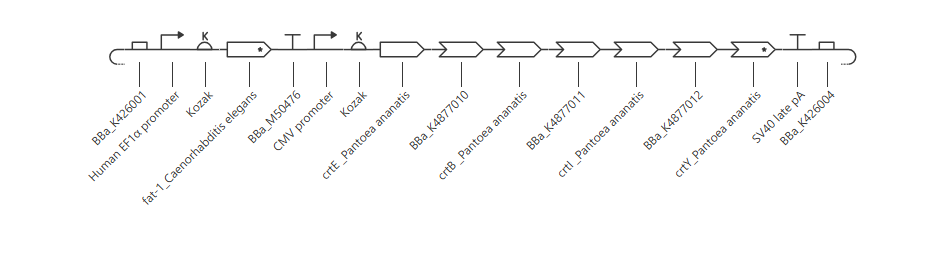
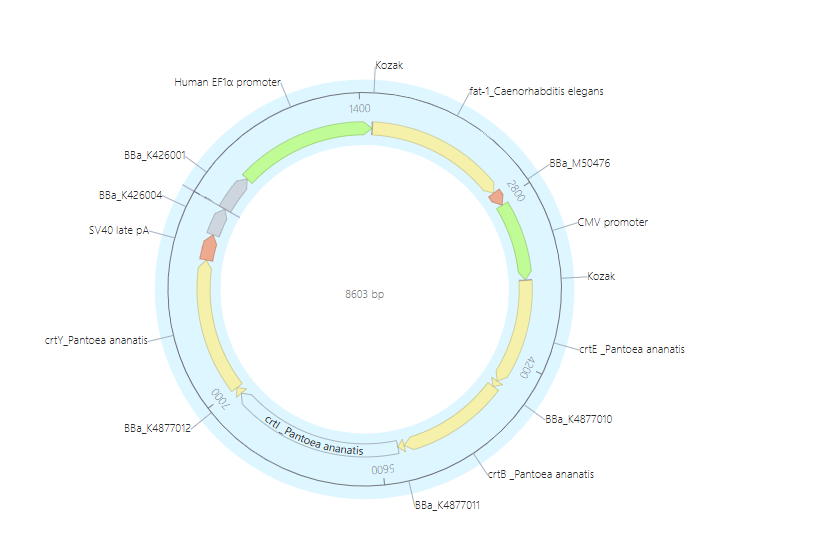
My host is eukaryotic (bovine muscle progenitor cells), so I designed against the eukaryotic column of the parts table. My construct has two independent expression units — one for FAT-1, one for the four-gene β-carotene cassette — both carried on a single PiggyBac vector
Unit 1: FAT-1 (omega-3 desaturase)
| Layer | Part | Source | Justification |
|---|---|---|---|
| Promoter | EF1α | BBa_25GHPWMW │ https://registry.igem.org/parts/bba-25ghpwmw | I chose EF1α because it resists silencing over passage and stays active through both proliferation and differentiation, which matters since I need sustained expression as progenitor cells mature into muscle. |
| 5′ UTR / Kozak | Kozak consensus | GCCACC | - |
| CDS | fat-1 (+start, +stop) | UniProt Q9NEQ0 (C. elegans), codon-optimized for Bos taurus | This is my sole enzyme for the omega-3 module. |
| Targeting | None | — | |
| Terminator | Human BGH polyA | BBa_M50476 (from Kernal) | This cleanly ends the FAT-1 transcript and is a standard, well-characterized mammalian polyA signal. |
Unit 2 : β-carotene biosynthesis
| Layer | Part | Sequence / source | Justification |
|---|---|---|---|
| Promoter | CMV | BBa_26G9KUXQ │ https://registry.igem.org/parts/bba-26g9kuxq | The CMV promoter is a strong constitutive mammalian promoter that drives high-level transcription of downstream genes in a wide range of mammalian cells synthesis and risks recombination. |
| Kozak | Kozak consensus | GCCACC | - |
| CDS 1 | crtE (+start, -stop) | https://www.ncbi.nlm.nih.gov/nuccore/D90087.2/ | GGPP synthase — boosts the cell’s GGPP pool beyond what native prenylation (GGPS1) supplies, feeding the carotenoid pathway. |
| Linker 1 | P2A | BBa_K4877010 (from Kernal) | Self-cleaving peptide that lets one mRNA produce four separate proteins without a proteolytic cleavage step. |
| CDS 2 | crtB (-start, -stop) | UniProt A0ACE3JQ15, codon-optimized | Phytoene synthase — converts GGPP to phytoene. No independent start/stop; it continues the same open reading frame after the ribosome skip. |
| Linker 2 | T2A | BBa_K4877011 (from Kernal) | A second, sequence-distinct 2A, chosen deliberately different from P2A so the construct doesn’t contain two identical linker repeats. |
| CDS 3 | crtI (-start, -stop) | https://www.ncbi.nlm.nih.gov/nuccore/D90087.2/ | Phytoene desaturase — converts phytoene to lycopene. |
| Linker 3 | E2A | BBa_K4877012 | Keeps all three linkers in this chain non-identical, for the same repeat-avoidance reasoning as above. |
| CDS 4 | crtY (-start, +stop) | https://www.ncbi.nlm.nih.gov/nuccore/D90087.2/ | Lycopene β-cyclase — the final step, producing β-carotene. |
| Terminator | SV40 late polyA | BBa_K5316011 │ https://registry.igem.org/parts/bba-k5316011 | Ends this unit’s transcript. I used a different polyA from bGH (Unit 1) for the same repeat-avoidance reason as the promoters. |
Vector backbone (shared, not part of either expression unit)
| Layer | Part | Source | Justification |
|---|---|---|---|
| Backbone | ColE1 origin + AmpR | Existing PiggyBac donor vector | Needed only to propagate and select the plasmid in E. coli during cloning — this part never enters the bovine genome. |
| Flanking ITRs | PiggyBac 5′ and 3′ terminal repeats | 3’ : https://parts.igem.org/Part:BBa_K426004 4’: https://parts.igem.org/Part:BBa_K426001 | These are the transposase recognition sites; everything between them, including both expression units, gets excised and integrated into the Host genome . |
Part 3: Assemble Your Construct
I assembled my construct, by joining the FAT-1 unit and the β-carotene unit together inside a single PiggyBac vector, flanked by the 5′ and 3′ terminal repeats. Both units run in the same direction, with the FAT-1 cassette first, followed by the four-gene crtE-2A-crtB-2A-crtI-2A-crtY cassette, all sitting inside a backbone that carries the origin of replication and ampicillin resistance needed to grow the plasmid in E. coli.
Before finalizing, I checked that the reading frame stays intact all the way through the β-carotene chain — one start codon at the beginning of crtE, one stop codon at the end of crtY, and no stray stops hiding at any of the three 2A junctions in between, since a stop codon there would have cut off translation early and left the downstream enzymes unmade. The FAT-1 cassette was simpler to check, since it’s a single self-contained gene with its own start and stop.
Linear View
Circular View
Part- 4 : Optimize and quality-check
Part 4: Optimize and Quality-Check
Codon optimization
For codon optimization, I used GenScript’s GenSmart tool rather than Kernel’s built-in optimizer, because GenSmart offers Bos taurus directly as a host option, while Kernel did not have a bovine codon table available. I input the protein sequences for all five genes (fat-1, crtE, crtB, crtI, crtY), taken from their respective UniProt entries, rather than the native nucleotide sequences from C. elegans and P. ananatis. This was a deliberate choice: since my goal was bovine-optimized DNA, starting from the protein and letting GenSmart reverse-translate it directly against the Bos taurus codon table is more direct than optimizing the native bacterial/nematode DNA, which would carry over codon biases from the wrong organism as a starting point.
One consequence of this approach is that I don’t have a true “before” DNA sequence to compare against for GC content or length — there was no original bovine-context DNA sequence to begin with, only the source organism’s native gene, which isn’t a meaningful baseline for codon usage in a mammalian host. So rather than reporting a before/after GC-content shift, I’m reporting the output GC content of each optimized sequence directly:
Fat-1: 57.46%
crtE: 64.34%
crtB: 64.08%
crtI: 61.52%
crtY: 63.79%
All five stayed within or near the typical mammalian coding-sequence range (roughly 55-65% GC), which is what I’d expect from bovine-optimized output. Base pair length did not change relative to each protein’s amino acid count (length = 3 × number of residues, +3 for a stop codon where applicable), confirming the optimization only reassigned codons and did not insert or delete any coding content.
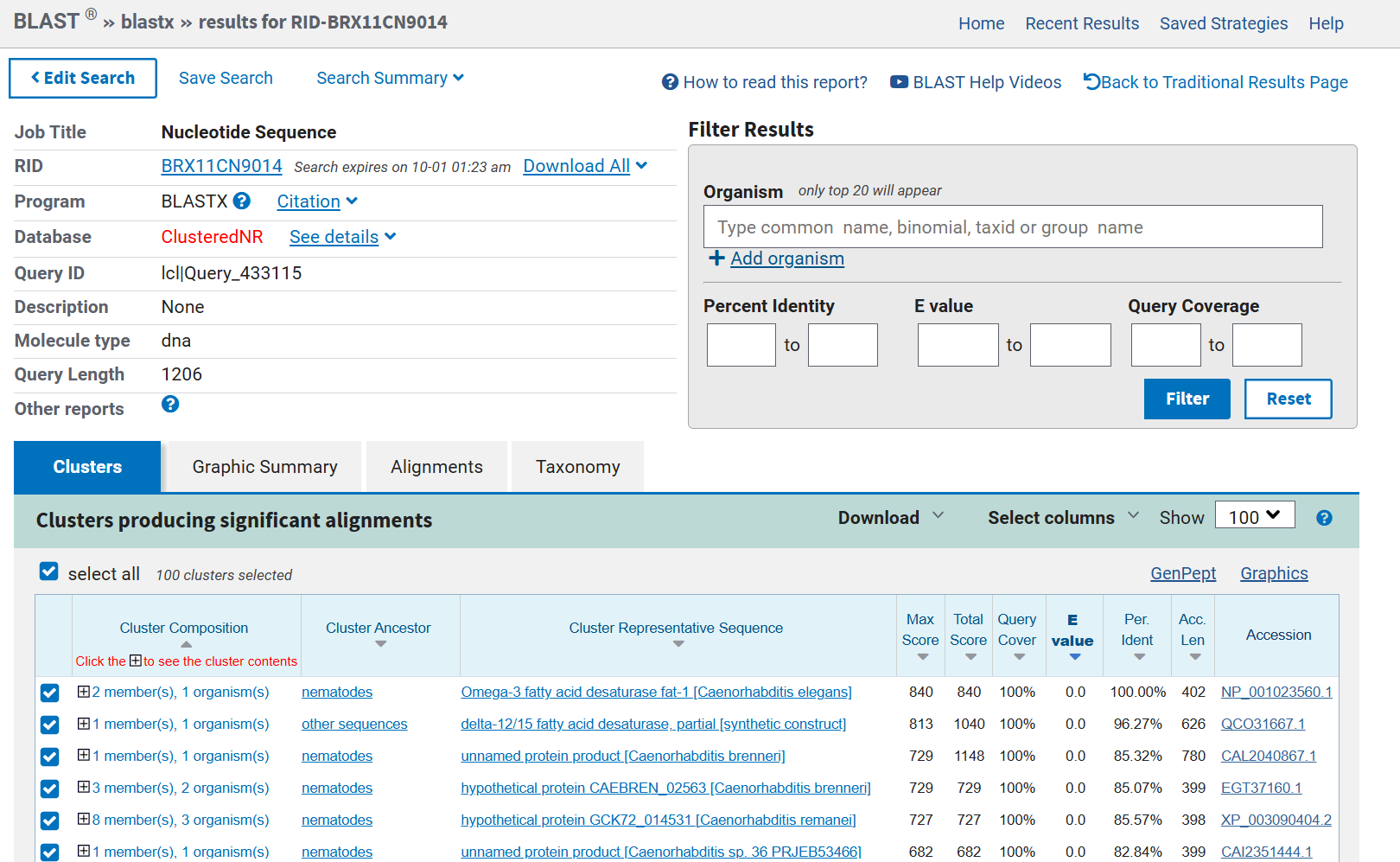
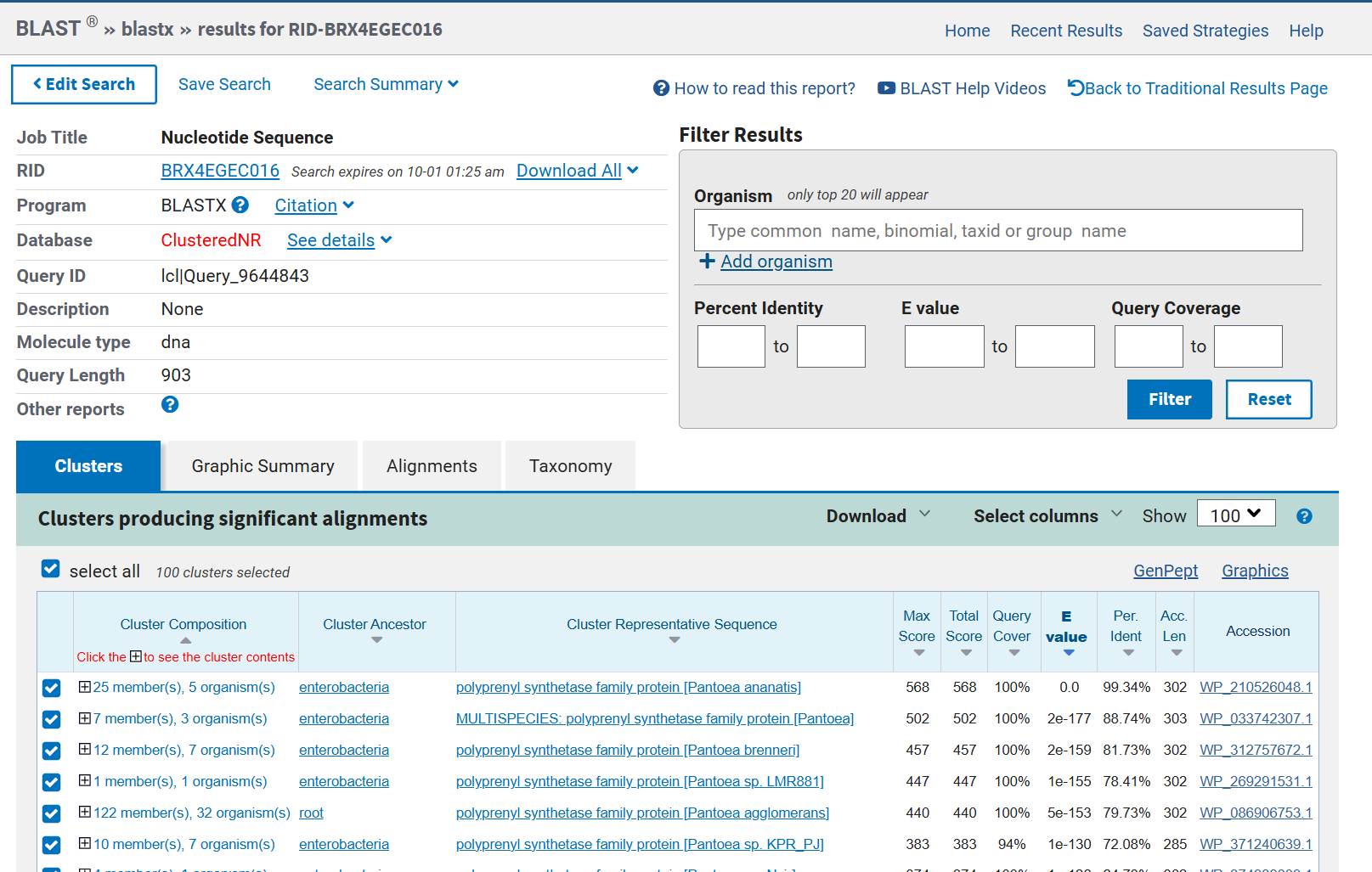
BLAST :
Fat-1
crtE
crtB
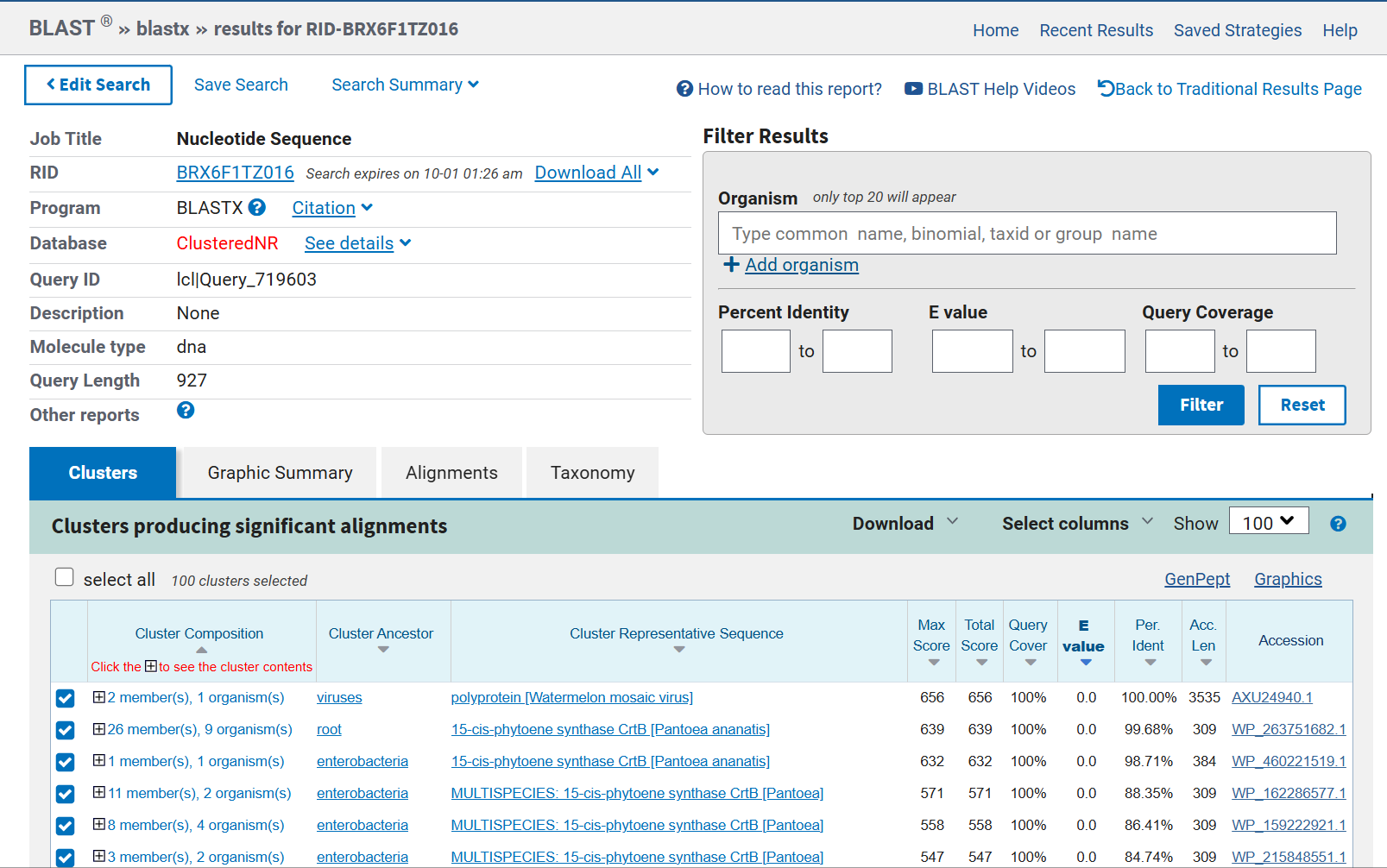
crtI
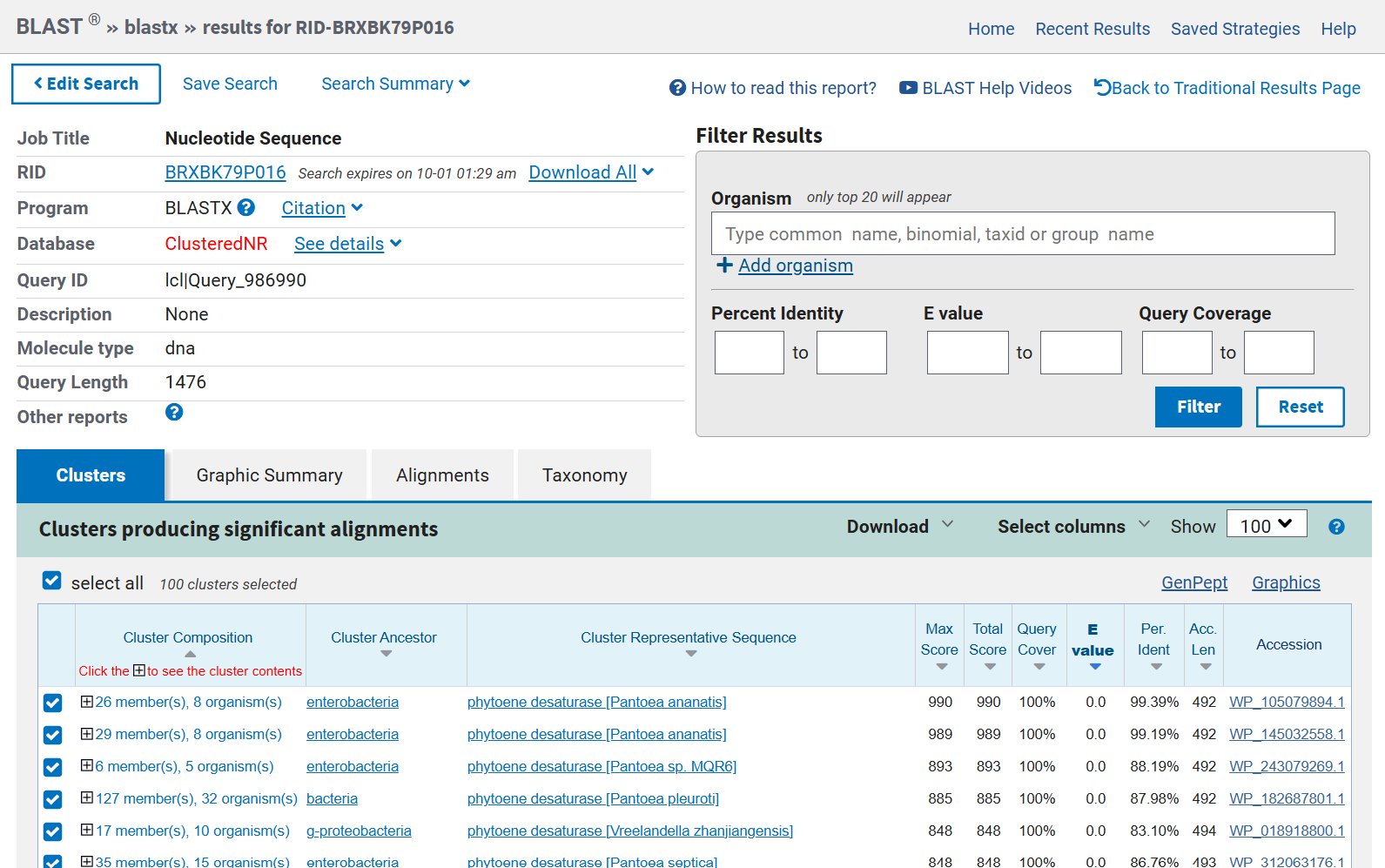
crtY
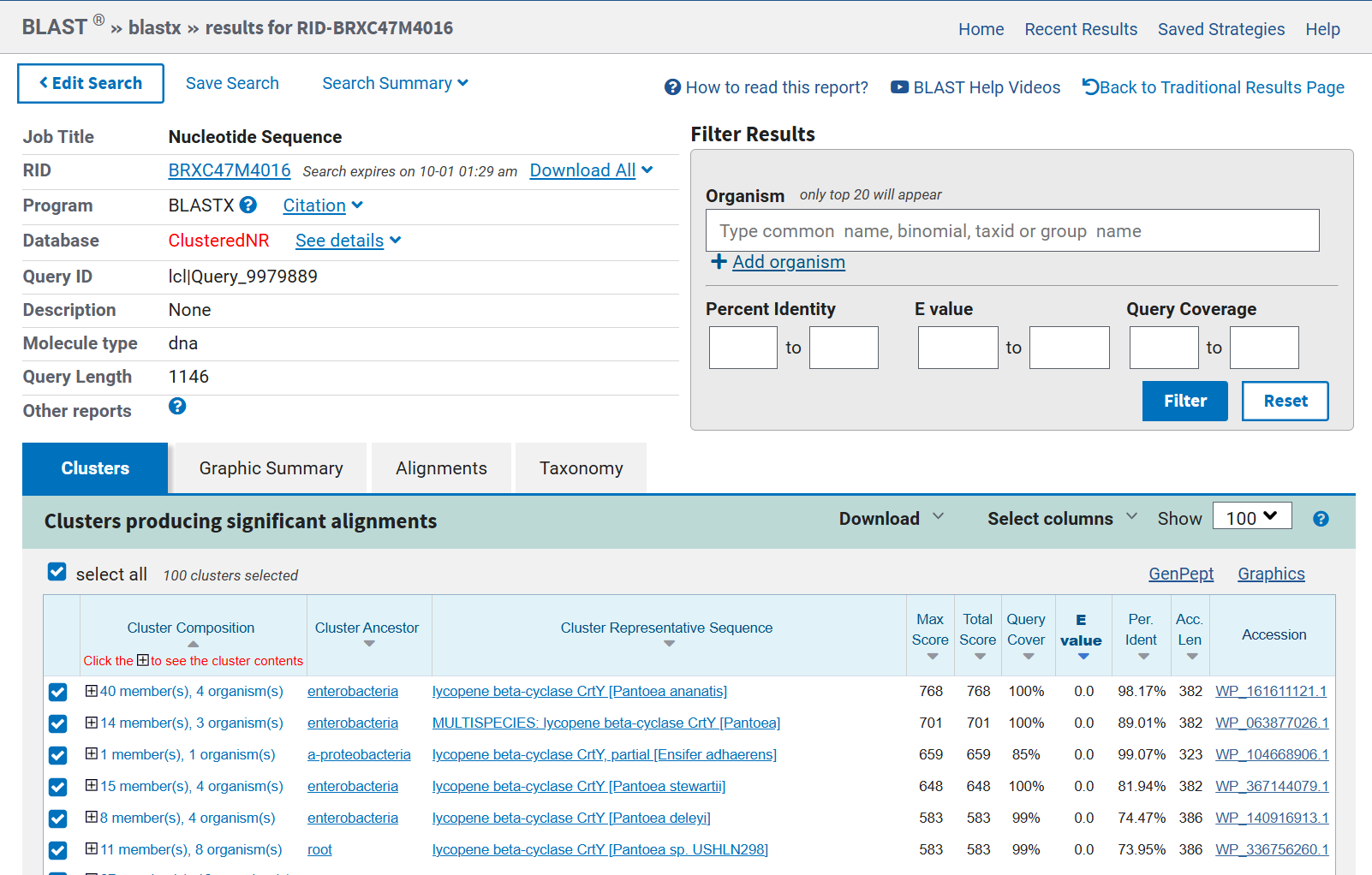
Biosecurity:
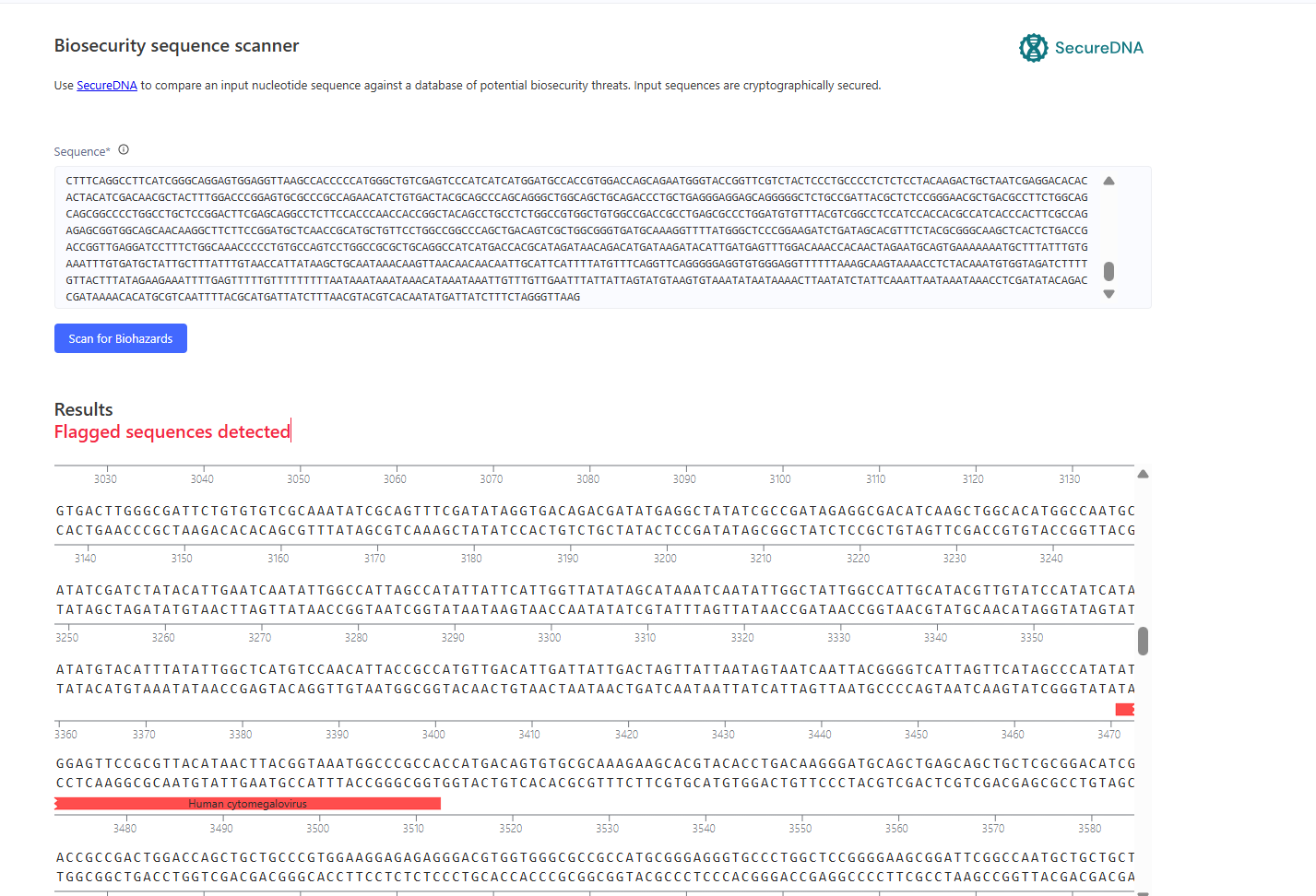
I screened my full construct (both expression units plus PiggyBac ITRs and PuroR cassette) using the SecureDNA Biosecurity Sequence Scanner. The scan returned “Flagged sequences detected”, with one hit annotated as Human cytomegalovirus at approximately positions 3,470-3,515 of the scanned sequence.
What the flag corresponds to: On inspection, the flagged region is the CMV immediate-early enhancer/promoter, which I had placed upstream of the β-carotene cassette (Unit 2). It is a non-coding regulatory element, not a viral gene encoding a virulence factor, toxin, or replication machinery. None of my coding sequences (fat-1, crtE, crtB, crtI, crtY, PuroR) were flagged. They encode a nematode desaturase, bacterial carotenoid enzymes, and a puromycin acetyltransferase.
Risk assessment: I think this is a low-risk flag. The CMV promoter is very widely used in mammalian expression vectors, and my construct contains no CMV structural or replication genes, so it can’t produce infectious virus.
Part 5: From design to build
How would I build it?
My construct is roughly 13 kb (about 10-11 kb between the ITRs plus the bacterial backbone). For the prototype I would order it as 4-6 synthetic DNA fragments (1-3 kb each) and assemble them into a PiggyBac backbone by Gibson or Golden Gate assembly. Ordering the full 13 kb as one clone is possible but costlier, slower, and more likely to fail on repeats and high-GC regions. A chip oligo pool would be overkill for a single construct. I would only use it later to screen variant libraries, such as promoter strengths to tune FAT-1 expression against metabolic burden.
What does synthesis constrain?
Three parts of my design may be hard to synthesize:
- High GC content: the crt genes are 61-64% GC, which can cause secondary structure and poor yield.
- Repeats: the three 2A peptides encode similar motifs, and reusing a promoter or polyA across both units would create larger repeats. I used different parts for each unit to avoid this.
- PiggyBac ITRs: inverted repeats that can form hairpins and are awkward to synthesize and clone.
I would run a synthesis-feasibility check and re-optimize flagged windows with synonymous codons. Fragment-based assembly also confines any difficult region to one small fragment. Because synthesis has error rates, I would sequence-verify every assembled clone and pick a correct one rather than trust the pool.
Prototype vs. scale
The two differ, and that works in my favor. The HW1 target of ~272 tonnes/year is a cell scale, not a DNA scale. Because the construct integrates into the bovine genome via PiggyBac, I build and verify it once, at microgram scale.
- Prototype: co-transfect the plasmid with PiggyBac transposase, select with puromycin, and screen clones on the Opentrons platform.
- Scale: the best clone becomes a master cell bank that seeds every 20,000 L batch, with no new DNA synthesis per batch. The scale-up risks are about the cells: stability of the integrated construct, copy number, and re-sequencing the bank to confirm no mutations accumulate.
Part 6: What don’t I know yet?
- 1. Will the four-enzyme β-carotene cassette work in bovine cells? I don’t know whether the bacterial enzymes (CrtE, CrtB, CrtI, CrtY) will all be made in the right amounts and be active in a mammalian host. The 2A peptides are never 100% efficient, so some enzymes may stay fused, and the ones downstream of a 2A site are often expressed at lower levels. Uncleaved fusions or unbalanced ratios could stall the pathway at phytoene or lycopene instead of reaching β-carotene. Bovine cells may also not supply enough FPP or GGPP precursor. I would test this by western blot, and by measuring pathway intermediates and β-carotene by HPLC. If needed, I would reorder the genes or tune expression empirically.
- 2. Will FAT-1 shift the fatty-acid profile enough to matter? FAT-1 is a nematode enzyme that has to fold and function in the bovine ER membrane. Even if it does, the shift depends on how much omega-6 substrate the cells have, so the omega-3/omega-6 ratio may change less than I hope. I would measure the fatty-acid profile by GC-MS in engineered versus unmodified cells, and compare growth and differentiation to check for metabolic burden, as in HW1.
- 3. Will expression stay stable over time? PiggyBac integrates at random sites with variable copy number, so expression will differ between clones. Silencing over many passages, or during differentiation into muscle, could switch the transgenes off. Codon optimization alone can’t answer this. I would screen multiple clones, re-measure expression at late passages and after differentiation, and sequence the master cell bank before scale-up.
- Biggest question overall: can I get β-carotene and omega-3 production at meaningful levels without slowing growth or blocking differentiation? The first experiment is the same as in HW1: compare engineered and unmodified cells under identical conditions.