Week 2 HW: DNA Design
Repository : Muhammad Ridwan Adyatama
Part 1: Define your expression target
1. What molecule are you expressing? A protein, an RNA, or an enzyme (or small set of enzymes) for a pathway. If your HW1 product is a material, food, or chemical, identify the protein(s) that produce it and design for those.
A recombinant protein. An unglycosylated coral mucin-like scaffold designed for subsequent in vitro enzymatic glycosylation. This is the protein backbone that will be added with coral species-specific glycans in the next step of biomanufacturing using cell-free system.
2. What is the sequence? Give the protein or RNA sequence, or the specific gene, you will encode, and say where it comes from (a database accession such as UniProt or NCBI, a known part, or de novo). Cite it.
de-novo sequence based on Thobor et al., 2024 research (DOI: 10.1038/s41598-024-64828-5)
GGTTCCACACCGAGTACCTCTACGGCTCCCAGTACGTCTACCCCATCGACTAGCACAGCGCCTGGCGGAGGGAGTACCCCATCCACTTCGACAGCGCCTTCCACATCGACTCCCTCTACGTCAACCGCACCGGGTGGCGGATCCACTCCCAGTACGTCTACCGCACCGAGTACCTCTACGCCTTCGACAAGCACTGCCCCAGGGGGTGGCAGTACGCCTTCCACATCGACTGCCCCATCCACTTCGACACCGTCTACCTCAACGGCTCCCGGAGGGGGTTCCACACCGAGTACCTCTACGGCTCCCAGTACGTCTACCCCATCGACTAGCACAGCGCCTGGCGGAGGGAGTACCCCATCCACTTCGACAGCGCCTTCCACATCGACTCCCTCTACGTCAACCGCACCGGGTGGCGGATCCACTCCCAGTACGTCTACCGCACCGAGTACCTCTACGCCTTCGACAAGCACTGCCCCAGGGGGTGGCAGTACGCCTTCCACATCGACTGCCCCATCCACTTCGACACCGTCTACCTCAACGGCTCCCGGAGGGGGTTCCACACCGAGTACCTCTACGGCTCCCAGTACGTCTACCCCATCGACTAGCACAGCGCCTGGCGGAGGGAGTACCCCATCCACTTCGACAGCGCCTTCCACATCGACTCCCTCTACGTCAACCGCACCGGGTGGCGGATCCACTCCCAGTACGTCTACCGCACCGAGTACCTCTACGCCTTCGACAAGCACTGCCCCAGGGGGTGGCAGTACGCCTTCCACATCGACTGCCCCATCCACTTCGACACCGTCTACCTCAACGGCTCCCGGAGGGGGTTCCACACCGAGTACCTCTACGGCTCCCAGTACGTCTACCCCATCGACTAGCACAGCGCCTGGCGGAGGGAGTACCCCATCCACTTCGACAGCGCCTTCCACATCGACTCCCTCTACGTCAACCGCACCGGGTGGCGGATCCACTCCCAGTACGTCTACCGCACCGAGTACCTCTACGCCTTCGACAAGCACTGCCCCAGGGGGTGGCAGTACGCCTTCCACATCGACTGCCCCATCCACTTCGACACCGTCTACCTCAACGGCTCCCGGAGGGGGTTCCACACCGAGTACCTCTACGGCTCCCAGTACGTCTACCCCATCGACTAGCACAGCGCCTGGCGGAGGGAGTACCCCATCCACTTCGACAGCGCCTTCCACATCGACTCCCTCTACGTCAACCGCACCGGGTGGCGGATCCACTCCCAGTACGTCTACCGCACCGAGTACCTCTACGCCTTCGACAAGCACTGCCCCAGGGGGTGGCAGTACGCCTTCCACATCGACTGCCCCATCCACTTCGACACCGTCTACCTCAACGGCTCCCGGAGGG
Note that the sequence before does not include pelB signal sequence and codons
2. What host or chassis? The living system from HW1, for example E. coli, S. cerevisiae, CHO or another mammalian line, or a cell-free system. Your host drives almost every part choice that follows.
Escherichia coli (K-12 derivative, e.g., BL21(DE3) or SHuffle for periplasmic expression). It offers gast growth, low cost, scalable fermentation, well-characterized periplasmic secretion via PelB signal, and is compatible with downstream osmotic shock purification
3. Where does the product need to go? Cytoplasm, secreted, membrane, or a compartment? This decides whether you need a signal peptide or targeting sequence.
It’s gonna be localized in perisplasmic space. Periplasmic export via PelB signal peptide enables osmotic shock purification, reducing contamination from cytoplasmic proteins. It also avoids inclusion body formation in cytoplasm (common for repetitive, aggregation-prone proteins). Disulfide bond formation possible in SHuffle strains if needed. Thus, the construct must include an N-terminal PelB signal and be cloned into a vector that supports periplasmic export (e.g., pET22b(+)).
Part 2: Design your genetic parts
| Element | Choice | Source | Reasoning |
|---|---|---|---|
| Promoter (+ enhancer / intron if used) | T7 promoter | Benjamin Arias Almeida | Strong, IPTG-inducible T7 promoter for high-level expression in BL21 DE3 |
| etc. | Lac operator | Xiaoyi Feng | Lac operator to control the expression of synthetic coral mucin. |
| Ribosome Binding Site | Shine-Dalgarno sequence | iGEM Registry BBa_K4930009 | Ensures that ribosomes correctly initiate protein synthesis at the appropriate start codon on the mRNA in bacterial translation |
| Secretion tags | Pelb signal sequence | iGEM Registry BBa_26I1NMYV | Directs recombinant protein to periplasm via Sec pathway; enables osmotic shock purification. |
| CDS | de-novo design | based on Thobor et al., 2024 | Ser/Thr-rich tandem repeats (≈45% Ser+Thr) to mimic coral mucin acceptor sites plus proline for rigidity, glycine for flexibility |
| Terminator | T7 terminator | BioClub Tokyo | Strong rho-independent terminator to prevent readthrough transcription into vector backbone. |
Part 3: Assemble your construct
All parts assembled within the pET22b(+) backbone context.

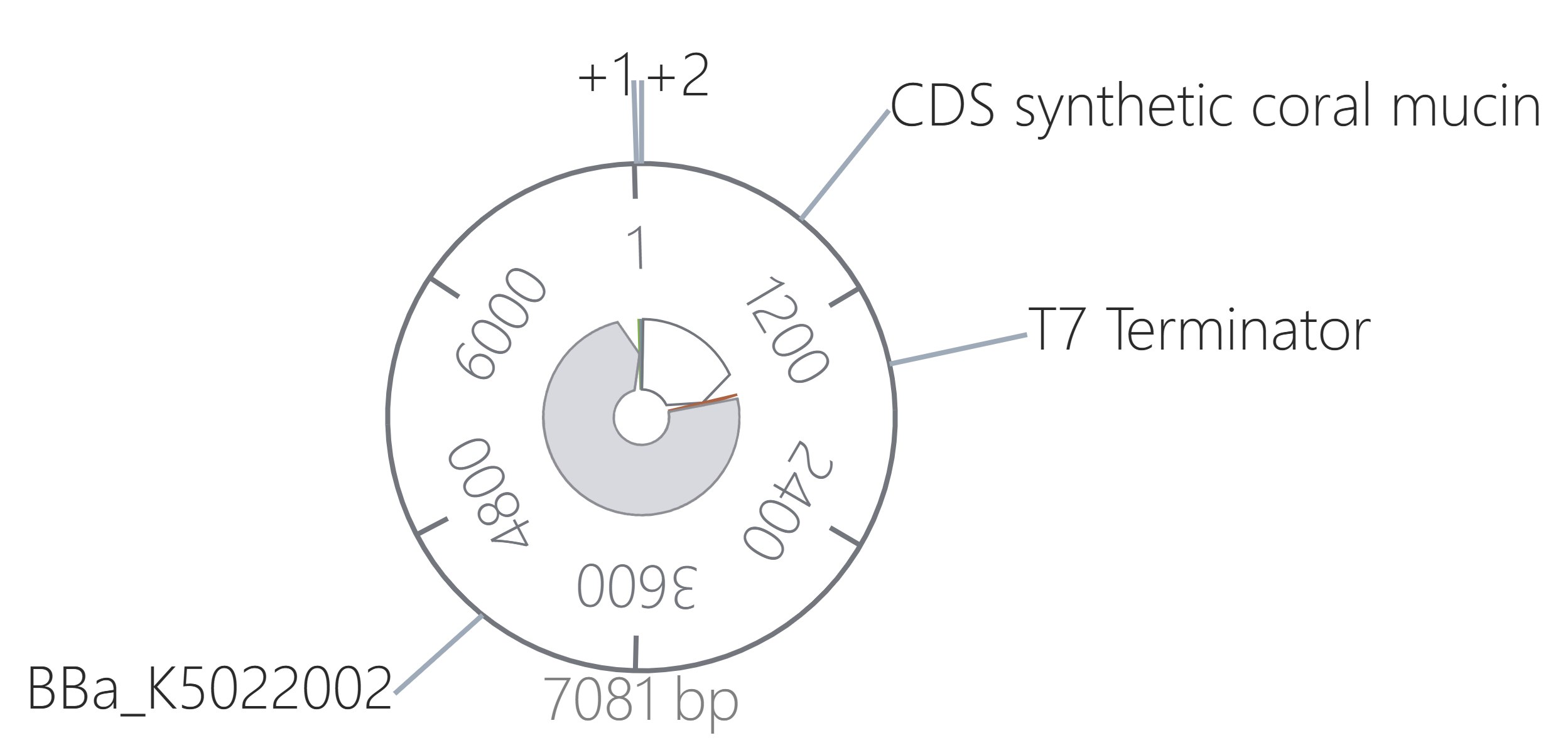
This construct expresses a periplasmic, His-tagged coral mucin scaffold under T7 control. The PelB signal directs secretion to the periplasm, where the protein can be purified by osmotic shock and Ni-NTA chromatography. The T7 terminator ensures clean transcription termination.
Part 4: Optimize and quality-check
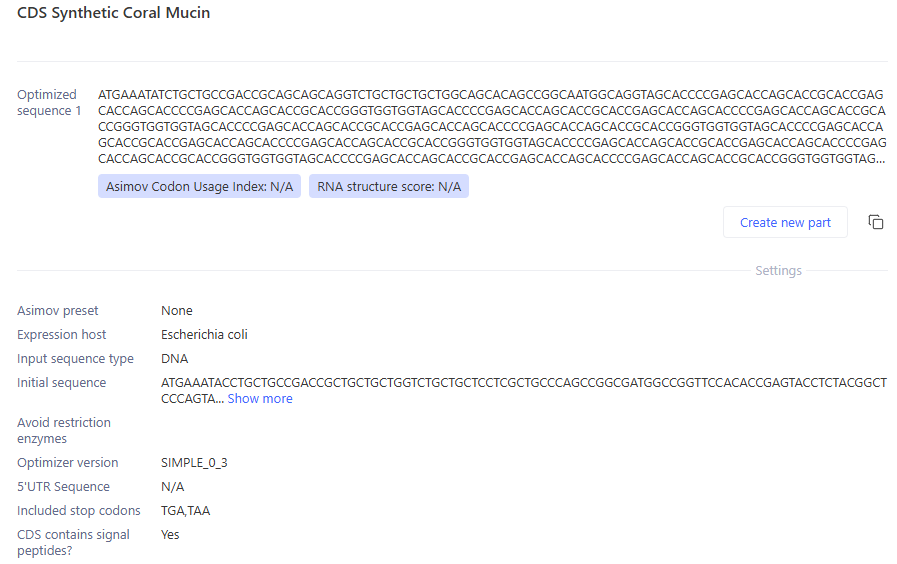
Codon-optimize your CDS for your chosen host. Compare before and after: what changed, and why does codon usage matter for expression in this organism? Note any constraints you applied (e.g. avoiding certain restriction sites, GC content).
E. coli has biased tRNA pools; rare codons (e.g., AGG/AGA for Arg, CUA for Leu) cause ribosome stalling, truncated proteins, and low yields. Codon optimization increases translation efficiency and protein solubility, critical for a repetitive, aggregation-prone scaffold.
The optimization successfully replaced rare codons with E. coli-preferred synonyms. For Tyr, it changed TAC to TAT, for Pro, it changed CCA and CCT to CCG, for Ser it changed the originals to AGC and TCC. All of the changed codons are now optimized as the new ones are preferred in E. coli
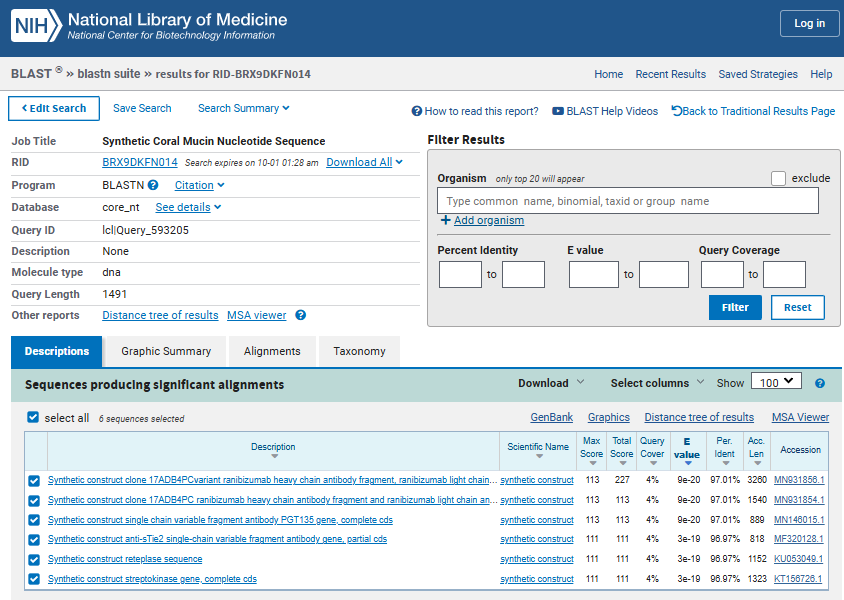
Search your sequence (BLAST / sequence search) against known sequences. Is your CDS what you think it is? Is it identical to a natural gene, or novel? What is the closest match?
There is no exact matches as expected from a de novo synthetic gene. The CDS is novel, not identical to any natural gene. This confirms we are engineering a synthetic mimic, not cloning a native coral gene.
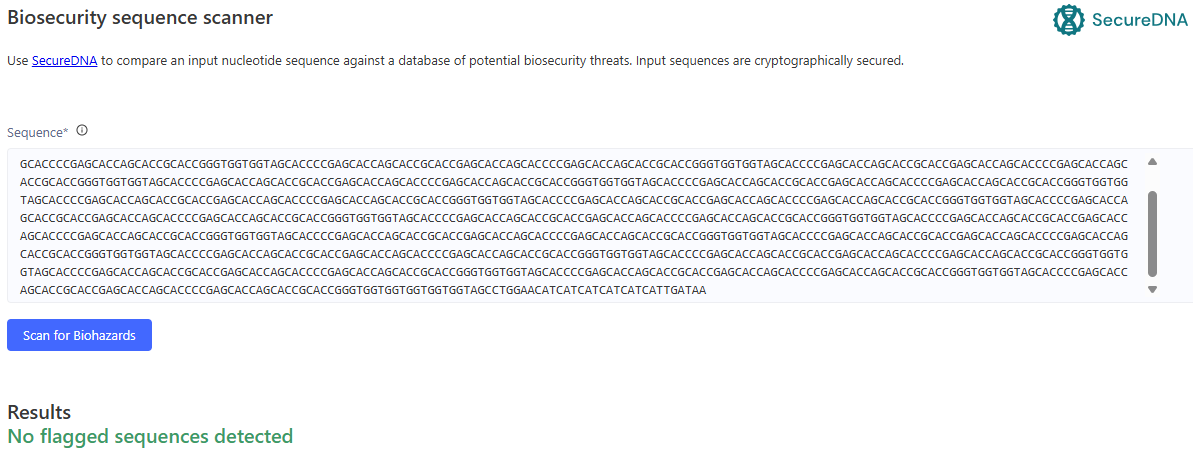
Run the safety screen on your construct. Summarize what it checks for and what it reports. If it flags something, explain whether it is expected for your design and how you would respond.
None as construct contains only standard lab parts. There is no changes needed as the construct passes safety screening for BSL-1 lab use. No toxin, allergen, or pathogenicity concerns.
Part 5: From design to build
How would you build it? Would you order it as synthetic DNA, assemble it from smaller fragments (e.g. Gibson assembly), or build it from a pool of oligos synthesized on a chip? Justify your choice given your construct’s length and complexity. What does synthesis constrain? Synthesis has error rates and struggles with certain sequences. Does your design contain anything hard to synthesize? How would error correction or fragment-based assembly change your approach? Prototype vs. scale. Mirroring HW1: the way you’d build one construct to test your idea may differ from how you’d produce DNA at the scale your product needs. Briefly describe both if they differ.
I would order it as synthetic DNA (from gene synthesis) from a vendor (e.g., Twist Bioscience, GenScript, IDT). Repetitive CDS (20× tandem repeats) is challenging for PCR-based assembly due to recombination and slippage, but commercial gene synthesis providers routinely handle repetitive sequences up to 5–10 kb using chip-based oligo pools and error correction
Constraints might be at repetitive sequences, GC content, homopolymers, and secondary structure.
Error rates of chemical synthesis is about ~1 error per 300–1,000 bp. For the CDS, I expect 1–5 errors per clone. I would sequence 6–10 colonies to find error-free clone, or request clonal isolation + NGS validation from vendor
For prototype scale I would order synthetic CDS as gBlocks or chip-synthesized oligo pool (~$200–500), clone into pET22b via Gibson assembly, transform into E. coli, sequence 6 clones, and express in 50 mL cultures, purify via osmotic shock + Ni-NTA.
For scaled (industrial production, >100 L fermentation), I would do de novo gene synthesis of full plasmid with error-corrected, clonal isolation, remove AmpR (replace with auxotrophic marker or antibiotic-free selection) for regulatory compliance, use high-copy origin (e.g., pUC-derived) for maximal yield, and codon-optimize further based on empirical expression data (e.g., adjust rare codons in repeat regions)
Part 6: What don't you know yet?
- Expression level & solubility. Repetitive Ser/Thr proteins often aggregate or express poorly in E. coli, even with codon optimization.
- Periplasmic export efficiency. PelB signal may not efficiently secrete a 45 kDa repetitive protein. it could accumulate in cytoplasm or form inclusion bodies.
- Glycosylation site accessibility. In vitro GTs may not access Ser/Thr residues if scaffold folds into aggregates or beta-sheets.