Week 2 HW: DNA Design
1. What molecule are you expressing?
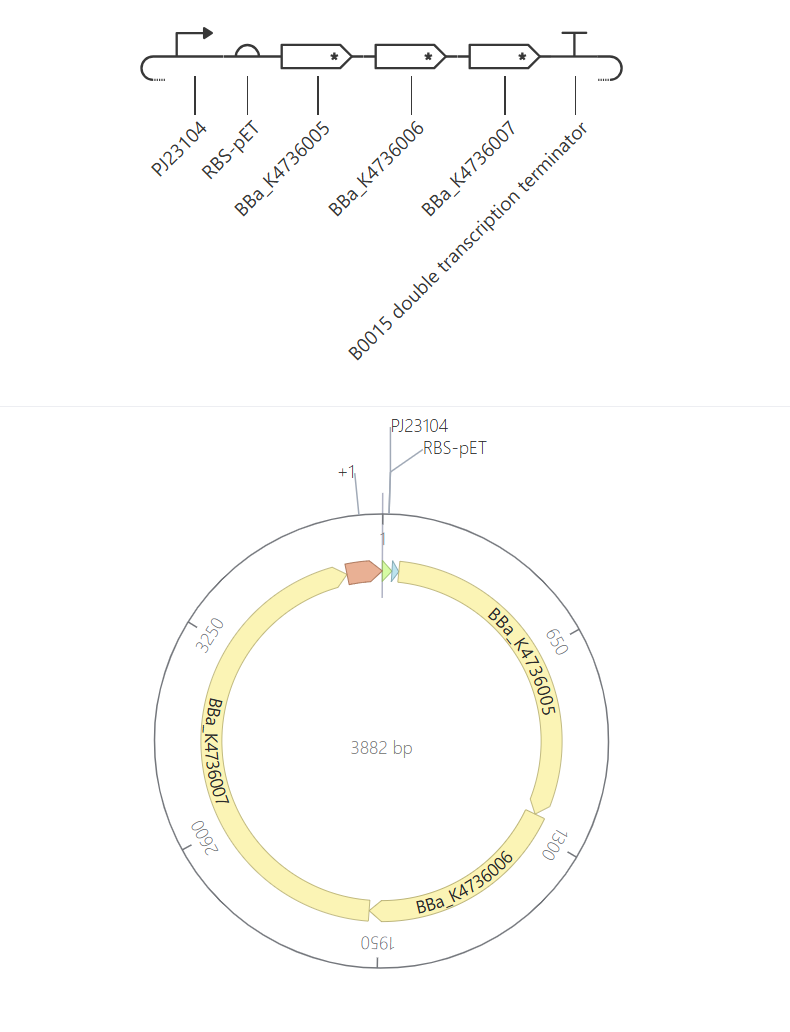
The target product is polyhydroxybutyrate (PHB), a biodegradable polymer. Because PHB is a material rather than a single protein, the genetic construct is designed to express the three enzymes of the PHB biosynthesis pathway:
PhaA — acetyl-CoA acetyltransferase PhaB — acetoacetyl-CoA reductase PhaC — PHB synthase
Together, these enzymes convert acetyl-CoA into PHB. The three-enzyme pathway is also associated with PHB production in Methylocystis and other PHB-producing bacteria.
2. What is the sequence?
The construct encodes the phaA, phaB and phaC coding sequences. For the initial design, the sequences are taken from known database/BioBrick parts available in Kernel, rather than designed de novo.
The selected PhaA sequence is from Cupriavidus necator and is an unmodified coding sequence for acetyl-CoA acetyltransferase. The PhaB and PhaC sequences are also selected as known PHB-pathway parts from the Kernel library.
Because these genes originate from organisms other than the final Methylocystis chassis, the CDSs will subsequently be codon-optimized for the host as part of Part 4.
3. What host or chassis?
The proposed chassis is a PHB-producing Methylocystis sp. methanotroph.
Methylocystis is a Type II methanotroph capable of using methane as a carbon and energy source, and members of the genus naturally produce PHB. For example, Methylocystis sp. MJC1 has demonstrated substantial PHB production from methane.
The host is therefore important to the design because the promoter, RBS, codon usage and other expression elements need to be compatible with a bacterial Methylocystis chassis.
4. Where does the product need to go?
Cytoplasm / intracellular accumulation.
PHB is accumulated inside the bacterial cells as intracellular polymer granules, rather than being secreted outside the cell. Therefore, the construct does not require a signal peptide or secretion sequence.
The PHB will subsequently need to be recovered from the biomass as part of the downstream process; the genetic construct itself is designed for intracellular PHB production.
CODON OPTIMISATION
The selected Methylocystis chassis was not available as a codon-optimization target in Kernel. Therefore, a host-specific optimization could not be directly performed. The CDSs were retained as the starting sequences, and optimization for a closely related methanotroph would be considered in a future design iteration.