Week 1 HW: Final Project Ideas
(1) What you would like to biomanufacture and why?
I want to engineer a microbial chassis for low molecular weight hyaluronic acid production. Hyaluronic acid (HA) is a glycosaminoglycan distinguished by its high water loading capacity - it can hold up to 1000 times its own weight in water. It is found naturally across vertebrate species where it plays a vital role in hydration, healing, fluid balance, and structural cushioning. Its behaviour is largely a function of its molecular weight with high MWs having more structural and lubricating roles while low MWs have greater permeability and participate in cellular signalling, wound healing, and molecular transport. Its widespread presence in the body gives it diverse biomedical applications. Low MW-HA (<300 kDa) is used often in dermatology as well as cosmetics for its hydration and anti-aging effects. It is also being explored for engineering nanoparticles, liposomes, and micelles for drug delivery with 200 kDa HA having high affinity to the CD44 receptor on cancer cells (Yasin et al., 2022) (Fakhari & Berkland, 2013). As of 2025, hyaluronic acid has a global market value of USD 11.5 billion with dermal fillers and cosmetic applications holding a bulk of the market share (Grand View Research, 2026). This marks the importance of developing a sustainable and safe mechanism for efficient hyaluronic acid production.
My interest in producing low MW-HA stems from my research group’s larger goal of producing defined molecular weight hyaluronic acid. I am also very eager to engineer a HA producing strain outside of the natural HA producers by taking into account all the relevant genes and fluxes worth optimising. Finally, I get a particular sense of satisfaction from manufacturing a compound that I see so often in all my skincare products.
- Yasin, A., Ren, Y., Li, J., Sheng, Y., Cao, C., & Zhang, K. (2022). Advances in hyaluronic acid for biomedical applications. Frontiers in Bioengineering and Biotechnology, 10, 910290. https://doi.org/10.3389/fbioe.2022.910290
- Fakhari, A., & Berkland, C. (2013). Applications and emerging trends of hyaluronic acid in tissue engineering, as a dermal filler, and in osteoarthritis treatment. Acta Biomaterialia, 9(7), 7081–7092. https://doi.org/10.1016/j.actbio.2013.03.005
- Grand View Research. (2026). Hyaluronic acid market size, share & trends analysis report, 2026–2033. https://www.grandviewresearch.com/industry-analysis/hyaluronic-acid-market
(2) What living system would you use?
Currently, large-scale production of hyaluronic acid is done using streptococcus species which naturally produce high MW-HA. After production, the high MW-HA is enzymatically cleaved to produce lower MWs. This means of production is unfavourable due to the pathogenic nature of streptococcus as well as the co-production of endotoxins (Soundiriraj et al., 2026). For this reason, I want to work on using a generally recognised as safe (GRAS) organism for industrial scale synthesis to alleviate some of the downstream purification concerns. I also want to reduce the need for post-production processing by consciously limiting the MW-HA to a narrow range as opposed to purifying out the range I want after.
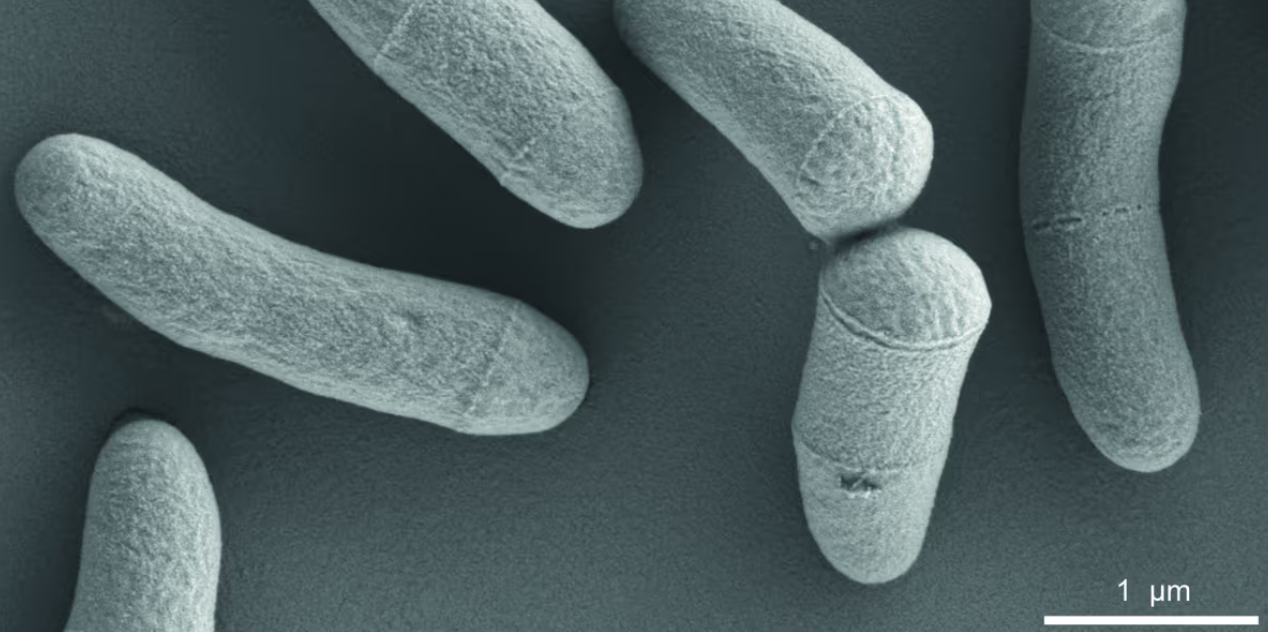
The microbial chassis I have chosen for this project is Corynebacterium glutamicum as it has previously been reported to produce hyaluronic acid at a lower MW than the other tested GRAS organisms. Additionally, C. glutamicum is already a major industrial workhorse for the production of amino acids, carotenoids, and biofuels among other things. C. glutamicum is a non-sporulating, gram-positive, facultative anaerobe that is preferred for its stress tolerance, usage of diverse carbon substrates, ability to reach high cell densities, and well characterised genetic and metabolomic pathways (Becker et al., 2018) (Wolf et al., 2021).
The precursors for hyaluronic acid production, UDP-glucuronic acid and UDP-N-acetyl-glucosamine are already produced in C. glutamicum as components of the cell wall. The only missing enzyme for HA synthesis is hyaluronan synthase (HasA) that links the precursors together to make an alternating chain of glucuronic acid and N-acetyl-glucosamine units. While hyaluronic acid synthesis is theoretically possible with just the addition of HasA, the output has been low as the insufficient amount precursors compensate either on cell-growth or HA production. For this reason, many studies have co-expressed genes from the Streptococcus has operon; most commonly UDP-glucose dehydrogenase (HasB) and/or UDP-glucose pyrophosphorylase (HasC) are coexpressed to increase the existing levels of UDP-glucuronic acid which is largely the limiting precursor. Additionally, production of UDP-glucuronic acid requires NAD+, making it favourable for hosts to have a Δldh that increases the NAD+/NADH ratio as necessary. Finally, different Streptococcus species have minor differences in their HasA enzyme that ultimately determines the maximum length that the HA chain can reach. This makes it important to test different HasA enzymes to determine which is capable of producing the desired range of MWs under the tested conditions (Soundiriraj et al., 2026).
Taking all the above into account, I intend to focus on adding hasA-hasB into C.glutamicum with the hasA gene sequences taken from differing sources. These sources would include S. pyogenes, S. uberis, S. parauberis, and S. zooepidemicus. Previous literature has found that HasA from S. pyogenes produced the lowest MW HA in *L.lactis), approximately 0.3 MDa (Soundiriraj et al., 2026). By using C. glutamicum I hope to bring this number lower as well as improve the generated yield. Additionally I plan to test a Δldh strain for differences in production titre as is frequently reported in microbial HA production studies. While first testing these conditions using a pXMJ19 vector with the hasA-hasB genes under a strong IPTG-inducible tac promoter, I ultimately want to integrate the genes into the chromosome using a pK18mobsacB suicide vector to create a stable HA producing host.
- Soundiraraj, S., Ravishankar, N., Jeeva, P., et al. (2026). Tailored molecular weight hyaluronic acid production by engineered Lactococcus lactis. Microbial Cell Factories, 25, 64. https://doi.org/10.1186/s12934-026-02945-8
- Becker, J., Rohles, C. M., & Wittmann, C. (2018). Metabolically engineered Corynebacterium glutamicum for bio-based production of chemicals, fuels, materials, and healthcare products. Metabolic Engineering, 50, 142–163. https://doi.org/10.1016/j.ymben.2018.07.008
- Wolf, S., Becker, J., Tsuge, Y., Kawaguchi, H., Kondo, A., Marienhagen, J., Bott, M., Wendisch, V. F., & Wittmann, C. (2021). Advances in metabolic engineering of Corynebacterium glutamicum to produce high-value active ingredients for food, feed, human health, and well-being. Essays in Biochemistry, 65(2), 197–212. https://doi.org/10.1042/EBC20200134
(3) How would you use automation?
Since I plan on testing at least 8 different strain variants (HasA from 4 different sources x Δldh /wild-type C. glutamicum) and different fermentation substrates, I would use an Opentrons automated liquid handling robot through the screening and sampling stages to reduce manual burden and experimental variability. Here I would automate the dispensing of substrate media, antibiotics, IPTG, and the inocula into 96-deep-well plates such that the various experimental conditions can be tested parallelly. This would also benefit the periodic testing of OD600 through plate-readers. Additionally HA titre could be quantified easily from the 96 well-plates directly using the CTAB turbidimetric method while quantifying the MW would have to be done separately by HPLC (Wen et al., 2010).
- Wen, C., Xu, H. M., Sun, Y. F., Wang, Y., & Chen, Z. Y. (2010). Efficient quantification of hyaluronic acid in fermentation broth by modified CTAB method. China Biotechnology, 30(2), 89–93.
(4) How much would you need to make, and how long would it take?
(a) How much? Previously HA production titers from strains similar to the ones I will be testing were 21.6 g/L for a MW range from 1.28 MDa to 260 kDa. This was achieved using a 5L fermenter with 2L working volume and 48 h of fed-batch fermentation (Cheng et al., 2017). Since I plan on producing HA around the smaller MW range, I expect our titre to be increased from this amount to roughly 25 g/L as a result of increased precursor availability. Ideally, I want to produce 1 kg of purified low-MW HA as a proof of concept study. Ambitiously assuming that I can produce 25 g/L of HA using the published data (Cheng et al., 2017) as a benchmark, I would require roughly 40L of fermentation broth to produce 1 kg of HA. If I assume I have a 20% downstream loss (as downstream recovery is not often reported), I can produce 1 kg of HA using 50L of fermentation broth. If aeration can be optimized to maintain this 25g/L production, I can scale up production from a 5L fermenter to a 70L fermenter with ~50L working volume.
(b) How long? 1 kg of HA could be produced in 48 h using a 70L fermenter with two additional days for harvesting, purification, and characterisation (Cheng et al., 2017). The prototyping stage could take weeks to identify a productive HA producing strain. With automation testing various conditions in parallel, I expect the screening time to be reduced: 3 weeks for developing the strains (constructing plasmids and primers, assembling the plasmids and inserts, transforming and validating the resultant strains), 2 weeks for 96 well plate screening and identifying promising strains, 4 days to characterise the HA produced by each of the strains, and 4 weeks to optimise fermenter conditions. Overall, I optimistically expect this process to take roughly 9-10 weeks
- Cheng, F., Luozhong, S., Guo, Z., Yu, H., & Stephanopoulos, G. (2017). Enhanced biosynthesis of hyaluronic acid using engineered Corynebacterium glutamicum via metabolic pathway regulation. Biotechnology Journal, 12(10), 1700191. https://doi.org/10.1002/biot.201700191
(5) What don’t you know yet?
My three biggest technical unknowns are
(a) Can different HasA variants actually produce different MW-HA as previously reported in L. lactis? Since this is the first study testing HasA from different sources, it would be interesting to know whether the previously reported patterns with S. pyogenes producing the lowest MW repeats itself or whether HA-MW below 300 kDa can be achieved at all in our experimental conditions with C. glutamicum. Whether the HA-MW can be produced in a narrow range without outliers is also something to watch out for (Soundiriraj et al., 2026).
- Soundiraraj, S., Ravishankar, N., Jeeva, P., et al. (2026). Tailored molecular weight hyaluronic acid production by engineered Lactococcus lactis. Microbial Cell Factories, 25, 64. https://doi.org/10.1186/s12934-026-02945-8
(b) Is the gene combination selected from the has operon appropriate for the desired production values? While this is uncertain, previous studies testing 8 different has operon combinations found that hasAB and hasABC were the best performing in C. glutamicum (Chen et al., 2017).
- Cheng, F., Luozhong, S., Guo, Z., Yu, H., & Stephanopoulos, G. (2017). Enhanced biosynthesis of hyaluronic acid using engineered Corynebacterium glutamicum via metabolic pathway regulation. Biotechnology Journal, 12(10), 1700191. https://doi.org/10.1002/biot.201700191
(c) Can production successfully be scaled up from pilot-scale 2 L working volume studies to 50 L without compromising on titre As previous studies have mostly been pilot scale studies with smaller volume fermenters, the problem of aeration, heating, mixing, and nutrient gradient optimisation arise again
AI agent: ChatGPT