Week 1 HW: Final Project Ideas
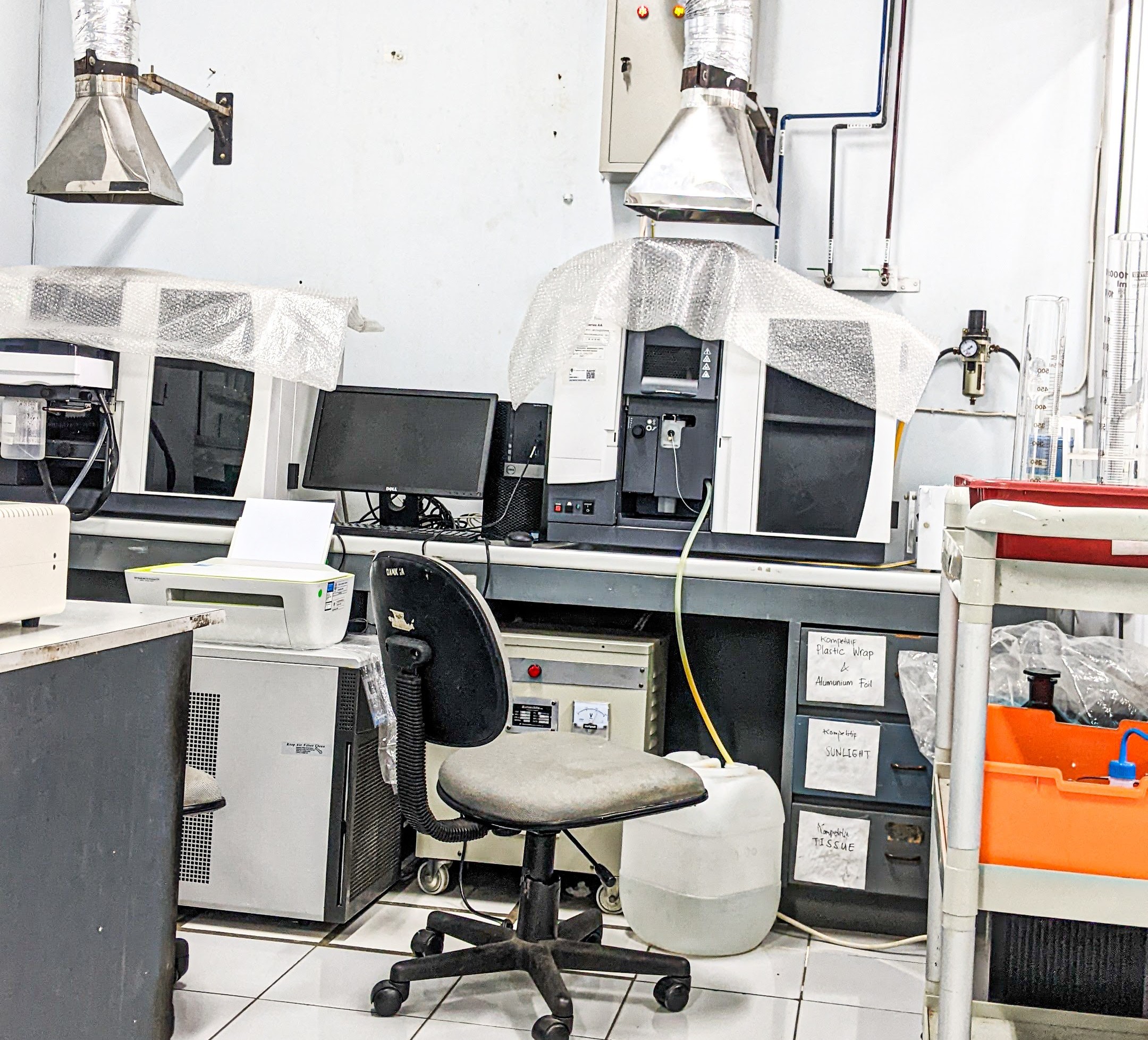
Biomanufacturing a Biochar-Supported Microbial Inoculant: A Prototype Concept for Maize under Water Limitation in Sumbawa
Naufal Tsabitul Azmi · HTBAA 2026 · Homework #1
Draft status. This is a design-stage proposal, not a validated agronomic recommendation. Values labeled as assumptions are intentionally explicit so they can be replaced by experimental data.
Project at a glance
| Item | Proposed design |
|---|---|
| Product | RootGuard: a biochar-supported microbial inoculant |
| Candidate organism | Strain-selected Bacillus subtilis |
| Carrier | Co-pyrolyzed cocoa pod husk and okara |
| First goal | Reproducible viable-cell loading and survival |
| Intended application | Maize under water limitation in Sumbawa |
| Evidence status | Design-stage proposal; benefit and biofilm formation remain unvalidated |
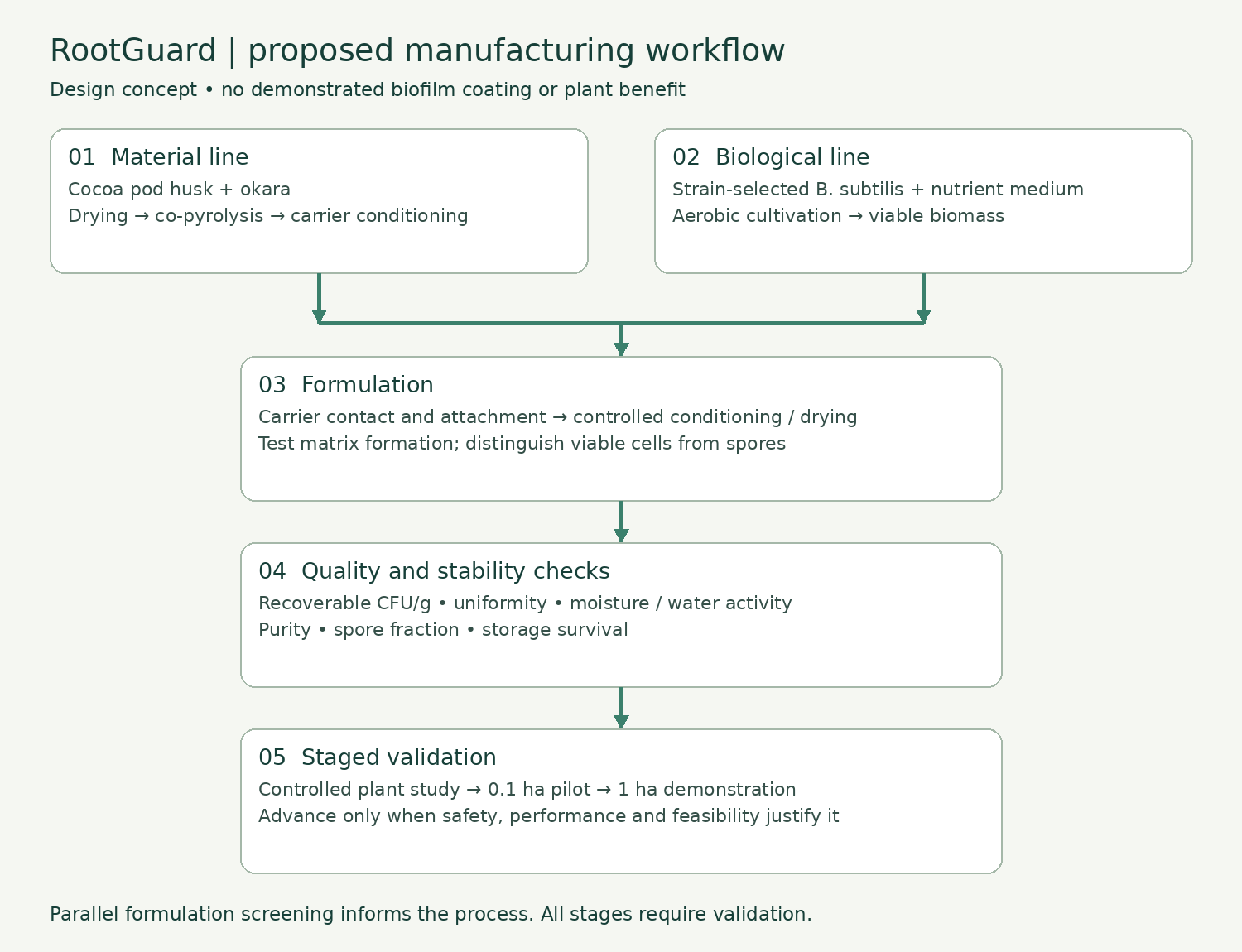
Figure 1. Proposed workflow, not experimental results. Carrier production is separate from microbial cultivation; biochar is a physical carrier, not the primary microbial feedstock.
1. What I want to biomanufacture
I would like to biomanufacture a standardized root-zone microbial inoculant for maize production under water limitation in Sumbawa, Indonesia. The working name for this product is RootGuard. Its target format is a dry, handleable particulate formulation made from a composite biochar carrier produced by co-pyrolyzing cocoa pod husk and okara, and loaded with a candidate bacterial strain selected for its biofilm-forming potential. My provisional chassis is Bacillus subtilis, although the final strain would be selected only after strain-level testing confirms its identity, biosafety, compatibility with maize, reproducible growth, ability to attach to the carrier, and survival during formulation and storage. RootGuard would be placed near the maize root zone at planting or during early growth. At this stage, cell attachment and biofilm development remain design hypotheses rather than established product properties.
The intended long-term beneficiaries are smallholder maize farmers in drought-prone areas. During initial validation, however, the immediate users would be a university research team and partner maize growers participating in a controlled demonstration in Sumbawa. This distinction is important because RootGuard is still an experimental manufacturing concept, not a proven agricultural product or a commercial recommendation.
The problem is important because the biological potential of a beneficial microorganism is irrelevant if the cells cannot survive formulation, storage, transportation, and field application. I therefore want to design and test RootGuard for reproducible viable-cell loading, storage stability, simple root-zone application, and eventual affordability. These are design requirements rather than properties that have already been demonstrated. The composite biochar could provide a porous carrier made from agricultural residues that I would seek to source locally if their supply and quality are suitable. I would then test whether attachment to this carrier and possible extracellular-matrix development can improve the recovery and stability of viable cells during formulation and application. In this way, the concept connects microbial biomanufacturing, circular use of biomass residues, and drought-resilient agriculture.
My motivation comes from both laboratory and field experience. During an earlier environmental microbiology research experience at BRIN (National Research and Innovation Agency - Indonesia), I learned how to measure microbial water-quality problems, but measurement alone did not create an intervention. Later, while working as an Agricultural Expert on an agrivoltaic project in Sumbawa, I conducted on-site assessments of soil and water conditions and assisted the team in developing sustainable cultivation strategies. That experience showed me how dryland conditions and climate stress can make agricultural production vulnerable. Together, these experiences moved me from diagnosing environmental constraints toward asking whether beneficial microorganisms could be manufactured in a stable formulation that can be tested under field-relevant conditions.
I am not yet claiming that RootGuard will increase maize yield. The first goal is to manufacture a reproducible formulation, determine whether it can maintain recoverable viable cells during handling and storage, and evaluate whether it produces a measurable biological response under controlled water limitation. Initial testing would compare the formulated inoculant with free cells matched by viable-cell dose, a carrier-only formulation matched by carrier mass, and an untreated control. Only evidence from these staged comparisons would justify larger dose-response, field-yield, cost, biosafety, and regulatory studies.
2. What living system would I use?
For the first design iteration, I would use one candidate Bacillus subtilis strain as both the microbial manufacturing chassis and the active biological ingredient. The exact strain has not yet been selected. It would only advance after strain-level confirmation of identity, biosafety, maize compatibility, reproducible growth, attachment, and survival during formulation. Some B. subtilis strains can produce extracellular matrix, structured biofilms, and stress-resistant spores, and plant-associated biofilm formation has been demonstrated under specific conditions (Beauregard et al., 2013). These properties vary among strains and environments, however, and in-vitro biofilm behavior does not reliably predict long-term maize-root colonization (Gastélum et al., 2024). I therefore treat them as selection criteria, not guaranteed species-level traits.
What goes into the biological system? The biological inputs would include an authenticated starter culture, water, sterile air or oxygen, and an aqueous growth medium supplying carbon, nitrogen, minerals, and other nutrients required for microbial growth. The cocoa-pod-husk–okara biochar would be produced, characterized, and conditioned separately. It would enter after cultivation as a physical carrier rather than as the primary metabolic feedstock for the bacterium.
What biological processes occur? During aerobic cultivation, the bacterium would use the medium nutrients to produce viable biomass. Depending on the strain and culture conditions, part of the population may also produce extracellular matrix or differentiate into spores. The resulting culture would then be contacted with the conditioned carrier so that cells or spores could adsorb and attach to its surface. Additional incubation might promote matrix production and early biofilm development, but attachment time alone would not establish that a mature biofilm coating had formed. The formulation would subsequently undergo a controlled conditioning or drying step intended to preserve viability.
Because sporulation itself may strongly influence drying and storage survival, I would measure both total recoverable viable cells and the heat-resistant spore fraction. This would help distinguish survival associated with spores from any additional protection associated with attachment or extracellular-matrix formation.
What comes out? The immediate biological output would be viable B. subtilis biomass, potentially containing defined proportions of vegetative cells, spores, and extracellular material. After carrier contact and conditioning, the target output would be a biochar-supported B. subtilis root-zone inoculant. Intended quality attributes would include confirmed strain identity, recoverable viable-cell concentration, spore fraction, purity, moisture or water activity, formulation uniformity, storage stability, and the absence of unacceptable contaminants.
The main assumptions are that a suitable strain can be identified, that the conditioned biochar does not inhibit it, that sufficient attachment and viability can be retained during formulation, and that the resulting material is compatible with maize and appropriate for environmental application. At this stage, I would therefore describe the product as a prototype biochar-supported Bacillus subtilis inoculant. Biofilm coating, shelf-life stability, and plant benefit remain testable hypotheses rather than established product properties.
3. How would I use automation?
At the prototype stage, if available through the course or a partner laboratory, I would use an Opentrons Flex or a functionally equivalent liquid-handling robot to automate the liquid portion of formulation screening. Automation would reduce repeated pipetting variation, preserve plate maps and sample metadata, and help run a traceable Design–Build–Test–Learn cycle (Asin-Garcia et al., 2025; Petzold & Mukhopadhyay, 2025; Opentrons, 2026).
After strain-level selection and biosafety review, a first screening campaign would use one pre-selected Bacillus subtilis candidate. The screen would compare three cocoa-pod-husk biochar ratios, two viable-cell loadings, and two osmotic conditions. Each of the 12 treatment combinations would be evaluated in three independent runs using separately prepared cultures and coating steps, producing 36 experimental observations:
3 carrier ratios × 2 viable-cell loadings × 2 osmotic conditions × 3 independent biological replicates = 36 experimental observations.
The osmotic condition would be a laboratory screening challenge, not a simulation of drought in soil. Medium blanks, ratio-matched carrier-only controls, free-cell controls, and spike-recovery controls would be added outside the 36 treatments. Biochar would be sieved, homogenized, and pre-weighed because a settling particulate solid cannot be transferred reliably through standard pipette tips. The robot would dispense medium, inoculum, and osmotic solutions; execute sampling and assay transfers; prepare serial dilutions from recovered cells; and record sample identifiers, culture batch, carrier lot, and transfer sequence. It would automate the liquid phase, not pyrolysis or raw-solid handling.
The main ranking measure would be recoverable CFU per gram after the challenge, supported by recovery relative to the delivered cell dose and assay reproducibility. A plate reader could be used for biochar-free controls or a matrix-validated clarified sample, but dark and adsorptive biochar may bias optical and colorimetric signals. Carrier blanks and recovery controls would therefore be essential, and key results would be confirmed through viable counts and, where available, microscopy. The output would be a ranked set of formulation conditions, not a claim that a mature biofilm had formed.
At manufacturing scale, the automation target would shift from screening throughput to batch consistency. A sensor-controlled aerobic bioreactor would regulate temperature, pH, agitation, airflow, and dissolved oxygen; a metered mixer would control culture-to-carrier addition; and moisture monitoring plus digital batch records would support reproducible drying and release decisions. If my selected Node is online or has no wet-lab facility, the automated screen would require course cloud-lab access or a partner laboratory. The course-scale goal is gram-scale learning; pyrolysis, a 60 L culture, and one-hectare production are later partner- or pilot-scale activities.
4. How much would you need to make, and how long would it take?
A) How much
I define a meaningful future deployment scale as enough product for a one-hectare maize demonstration. I use 60,000 planting points per hectare as a conservative planning density: it is within the range evaluated in a semi-arid maize study and slightly below Indonesian guidance of about 66,000–75,000 plants per hectare (Haarhoff & Swanepoel, 2022; Indonesian Ministry of Agriculture, 2022). It is not a locally validated recommendation for Sumbawa, and one plant per planting point is assumed.
As a planning assumption, I use a row spacing of 0.75 m and an intra-row spacing of 0.22 m, with one plant per planting point:
N = 10,000 m² / (0.75 m × 0.22 m) ≈ 60,606 planting points.
I round this to 60,000 planting points. Densities around 60,000 plants per hectare have been evaluated in semi-arid maize studies, whereas Indonesian guidance more commonly reports approximately 66,000-75,000 plants per hectare using 70-75 cm × 20 cm spacing. I therefore treat 0.75 m × 0.22 m as a provisional demonstration layout rather than a locally validated recommendation for Sumbawa [1,2].
I provisionally assume an application rate of 5 g of dry-equivalent finished product per planting point:
M_product = 60,000 planting points × 5 g/point = 300,000 g = 300 kg.
The 5 g dose is an engineering assumption, not an agronomic recommendation. It represents a concentrated root-zone inoculant rather than a bulk biochar soil amendment. A dose-response experiment should determine whether a lower or higher amount is required.
At a provisional batch-release target of 10⁸ CFU/g, the batch would require:
N_CFU = 300,000 g × 10⁸ CFU/g = 3 × 10¹³ recoverable CFU.
If the aerobic culture reaches 10⁹ CFU/mL and the overall recovery from broth cells to culturable units in the conditioned product is 50%, the theoretical minimum culture volume would be:
V = (3 × 10¹³ CFU) / (10⁹ CFU/mL × 0.50) = 60,000 mL = 60 L.
The implied culture-to-product ratio is:
R = 60,000 mL / 300,000 g = 0.20 mL/g = 20% v/w.
This ratio is a result of the CFU mass balance, not an independently validated formulation ratio. Katsenios et al. used 10% v/w culture-to-carrier loading, equivalent to approximately 0.1 mL/g, which is the same order of magnitude but not the same value. Their rinsed and dried biochar formulations contained approximately 1.0-2.9 × 10⁷ CFU/g rather than more than 10⁸ CFU/g. Separately, Vlajkov et al. reported 8.34 log CFU/g on Bacillus-loaded soybean biochar, but used a much more liquid-intensive 5% w/v carrier-in-broth immobilization method. These studies support feasibility only in broad terms and do not validate the RootGuard ratio or target [3,4].
The proposed 0.2 mL/g process is also not a direct scale-up of the research proposal’s 1:20 w/v immersion protocol, which corresponds to 20 mL culture per gram of carrier and would imply approximately 6,000 L for 300 kg. It is instead a provisional low-liquid coating process. Uniform wetting, attachment efficiency, free-cell carryover, and viable recovery must therefore be demonstrated during the formulation screen.
The 60 L value is therefore a theoretical minimum. A production plan would need additional culture for sampling, transfer losses, coating non-uniformity, and equipment hold-up. A preliminary 10-20% overage would increase the planned charge to approximately 66-72 L, and the nominal reactor volume would need to be larger than its required harvestable working volume.
For a first carrier mass estimate, I approximate the 300 kg dry-product mass as carrier mass and neglect the smaller contributions of microbial biomass, binder, protectant, and residual formulation solids. To remain consistent with the proposed co-pyrolysis workflow, I use a provisional 1:1 dry-feedstock mixture; the formulation screen in Question 3 would determine whether another ratio should replace it. If co-pyrolysis is provisionally assigned an overall 40% dry-basis biochar yield:
M_feedstock = 300 kg mixed biochar / 0.40 = 750 kg dry feedstock.
At a 1:1 dry-feedstock ratio: 375 kg cocoa pod husk + 375 kg okara.
A 40% yield is a rounded planning value that is broadly plausible for cocoa pod husk under selected pyrolysis conditions, but it has not been demonstrated for the proposed okara feedstock or for the combined process [5]. The final calculation must therefore use measured yields for each feedstock. It must also distinguish dry feedstock from wet incoming material, especially because fresh okara may require substantial dewatering and drying.
B) How long
The manufacturing concept contains two production lines: a material line that produces conditioned biochar and a biological-formulation line that produces the culture and applies it to the carrier. The automation used at the prototype stage would differ from the equipment used at the one-hectare deployment scale.
Material line
The material line converts dried cocoa pod husk and okara into conditioned biochar. Assuming two small pyrolysis units with a combined throughput of 100 kg of dry feedstock per operating day, including heating, cooling, unloading, and routine handling:
T_material = 750 kg / (100 kg/day) = 7.5 days ≈ 8 operating days.
This estimate begins with dried feedstock. It excludes the potentially substantial time and energy required to dewater and dry wet okara, as well as downtime, failed runs, sieving losses, and carrier quality-control delays.
Biological and formulation line
At manufacturing scale, the biological line would use a sensor-controlled aerobic bioreactor rather than the prototype liquid-handling robot described in Question 3. The estimate also assumes that the mixer and dryer can process the required formulation in one adequately sized lot. Mixing 300 kg of dry carrier with 60 L of culture creates approximately 360 kg of wet formulation before drying; an 18-24 hour step would therefore require average wet-material handling of approximately 15-20 kg/h, together with sufficient moisture-removal capacity. Once conditioned carrier is available, I provisionally estimate:
8-12 hours for seed preparation;
20-24 hours for aerobic cultivation;
24-48 hours for carrier contact, cell attachment, and possible early biofilm development;
18-24 hours for controlled mixing, conditioning, and drying; and
8-12 hours for initial quality-control sampling and packaging, with release pending viable-count and contamination confirmation.
T_biological = (8–12) + (20–24) + (24–48) + (18–24) + (8–12) h = 78–120 h = 3.25–5 days.
Thus, the biological and formulation line requires approximately 3.25-5 days when released carrier inventory is already available. Complete batch release may take longer because viable-count and contamination assays can require additional incubation time.
Integrated schedule and reactor scenarios
If the material and biological operations are fully sequential, the estimated operating time is:
T_sequential = 8 days + 3.25–5 days = 11.25–13 days ≈ 11–13 days.
If seed preparation and cultivation begin during the final days of carrier production, the remaining carrier-contact, drying, and initial-QC steps require approximately 2.1-3.5 additional days after the last carrier lot becomes available. The resulting critical-path estimate is therefore approximately 10-12 calendar days. A shorter 9-11 day schedule would require batchwise carrier contact and drying to begin before the entire material lot is complete, together with sufficient parallel downstream capacity.
If only one 10 L working-volume reactor were available, the theoretical 60 L requirement would require:
n_batches = 60 L / (10 L/batch) = 6 batches.
T_fermentation_only = 6 × (20–24 h) = 120–144 h = 5–6 days.
This is fermentation time alone; seed preparation, cleaning, sterilization, cooling, transfer, and downstream processing would increase the total. To avoid holding the earliest culture for several days, each 10 L culture batch could be processed with approximately 50 kg of carrier-dominated product as it becomes available. Six batches cover only the theoretical 60 L minimum; a 10-20% culture overage would require approximately seven to eight 10 L batches. Six parallel 10 L working-volume reactors could restore the single-cycle fermentation timeline for the theoretical minimum, but only if parallel seed preparation and sufficient mixing and drying capacity were also available.
The automation also changes with scale. At the HTBAA Node, an Opentrons system would automate formulation screening and measurements. At pilot scale, the important automation would be a sensor-controlled aerobic bioreactor, mass-controlled carrier mixing, moisture-controlled drying, scheduled sampling, and digital batch records.
Overall, the one-hectare target requires approximately 300 kg of product, at least 60 L of culture, and 750 kg of dry starting feedstock under the stated assumptions. The largest uncertainties are the effective field dose, culture titre, recovery after formulation, co-pyrolysis yield, and actual mixer and dryer throughput.
5. What do I not know yet
A. Strain identity biosafety and maize compatibility
The first major unknown is whether a selected Bacillus subtilis strain would be biologically suitable and safe for this product. A strain that grows well, forms spores, or produces biofilm-related material under laboratory conditions may not remain viable on the carrier, colonize maize roots, or provide a reproducible benefit under water limitation. These characteristics are also strain-specific and cannot be inferred from the species name alone.
To resolve this unknown, I would first confirm the strain’s identity and biosafety status and then measure culture growth, recoverable CFU after formulation, attachment to the carrier, and root colonization under controlled water stress. A greenhouse experiment would compare untreated plants, carrier alone, free bacterial cells, and the formulated inoculant. Plant measurements could include survival, biomass, soil or root-zone moisture, and selected plant-water-status indicators. The strain would only be advanced if it is safe, remains recoverable after formulation, and produces a reproducible response beyond the carrier-only and free-cell controls.
B. Formulation potency uniformity and shelf life
Can the low-liquid coating process repeatedly produce a uniform inoculant that retains a useful viable count after drying and storage? The provisional 1:1 carrier ratio, 0.2 mL culture per gram of product, 50% overall recovery, and 10⁸ CFU/g batch-release target used in Question 4 have not been validated. Using the automated screening workflow in Question 3, I would compare carrier ratio, protectant, inoculum loading, contact condition, and drying endpoint. I would measure total viable CFU introduced, recoverable CFU/g after drying, moisture, water activity, contamination, and particle-size consistency. After small-scale screening, independent pilot batches would be sampled at multiple mixer locations to quantify within-batch and between-batch variation. Storage tests under relevant ambient and warm conditions would establish the viable-count decay rate; carrier and storage conditions are known to affect Bacillus recovery from biochar formulations. Batch-release and end-of-shelf-life criteria would be defined separately. If 10⁸ CFU/g is required at application, the release value would need an evidence-based overfill. Carrier blanks, matrix-recovery controls, and viable counts would be used because biochar-derived material can add optical background and bias absorbance-based measurements. If measured process recovery differs from 50%, the 60 L culture estimate in Question 4 would be recalculated.
C. Agronomic dose to scale feasibility
What is the lowest effective dose under Sumbawa-relevant water stress, and can that dose be produced from the proposed waste carrier at a practical scale? The assumptions of 5 g per planting point, 40% composite biochar yield, 750 kg of dry feedstock, and 100 kg/day processing capacity remain unvalidated. After a strain and formulation pass the first two gates, I would run one randomized greenhouse dose-response experiment. It would compare untreated plants, carrier-only controls matched by carrier mass, free-cell controls matched by viable-cell dose, and the biochar-supported inoculant at several application rates under water stress, with a well-watered comparison where practical. A primary plant endpoint would be defined in advance, supported by measurements such as soil moisture, plant water status, biomass, and strain-specific root-zone recovery. The lowest effective dose would then be tested in a 0.1-hectare pilot before a one-hectare demonstration. In parallel, I would measure incoming feedstock moisture, okara drying energy, the dry-basis co-pyrolysis yield of the selected cocoa-pod-husk and okara blend, usable-carrier recovery, pH, electrical conductivity, relevant contaminants, phytotoxicity, material losses, and full-cycle throughput. Published cocoa-pod-husk yields make 40% plausible as a planning value, but they do not validate the proposed blended process. The system would advance only if the biological benefit can be achieved at a dose compatible with acceptable material, energy, time, safety, transport, and application requirements.
Together, these three gates would determine whether the concept can progress from a candidate strain to a reproducible product and finally to a responsibly manufactured field intervention.
6. AI use disclosure
AI client: OpenAI Codex, accessed 20–22 September 2026. I used it to compare my previous essays and research proposal with the Homework 1 brief, develop and compare alternative responses, check engineering calculations and supporting sources, edit the Word draft, and convert the final material into Markdown and a conceptual workflow figure for the course website. The RootGuard concept, personal experiences, and final decisions are my own. AI generated no experimental data or results, and I remain responsible for reviewing, understanding, and presenting the final work.
Representative prompts included:
Compare the Homework 1 brief with my previous essays, personal statement, and research proposal, and identify what is answered or missing.
Revise the five answers for consistency, scientific caution, calculation clarity, and feasibility within an HTBAA Node.
Audit the calculations, assumptions, citations, references, and AI disclosure.
Convert the final draft into Markdown and prepare a conceptual workflow figure for the course website.
References
Asin-Garcia, E., Fawcett, J. D., Batianis, C., & Martins dos Santos, V. A. P. (2025). A snapshot of biomanufacturing and the need for enabling research infrastructure. Trends in Biotechnology, 43(5), 1000-1014. https://doi.org/10.1016/j.tibtech.2024.10.014
Beauregard, P. B., Chai, Y., Vlamakis, H., Losick, R., & Kolter, R. (2013). Bacillus subtilis biofilm induction by plant polysaccharides. Proceedings of the National Academy of Sciences, 110(17), E1621–E1630. <DOI: 10.1073/pnas.1218984110>
Gastélum, G., Ángeles-Morales, A., Arellano-Wattenbarger, G., Coronado, Y., Guevara-Hernandez, E., & Rocha, J. (2024). Biofilm formation and maize root-colonization of seed-endophytic Bacilli isolated from native maize landraces. Applied Soil Ecology, 199, 105390. <DOI: 10.1016/j.apsoil.2024.105390>
Katsenios, N., et al. (2026). Biochar and zeolite as carriers of PGPB strains: impact on the physiology, productivity and quality characteristics of industrial tomato. Scientific Reports, 16, 27218. https://doi.org/10.1038/s41598-026-57816-4
Petzold, C. J., & Mukhopadhyay, A. (2025). From bench to biofactory: high-throughput technologies and automated workflows to accelerate biomanufacturing. Current Opinion in Biotechnology, 94, 103320. https://doi.org/10.1016/j.copbio.2025.103320
Phares, C. A., Amoakwah, E., Danquah, A., Afrifa, A., Beyaw, L. R., & Frimpong, K. A. (2022). Biochar and NPK fertilizer co-applied with plant growth promoting bacteria (PGPB) enhanced maize grain yield and nutrient use efficiency of inorganic fertilizer. Journal of Agriculture and Food Research, 10, 100434. https://doi.org/10.1016/j.jafr.2022.100434
Ghysels, S., Acosta Ortiz, N., Estrada Leon, A., Pala, M., De Vrieze, J., Ronsse, F., & Rabaey, K. (2020). Integrating anaerobic digestion and slow pyrolysis improves the product portfolio of a cocoa waste biorefinery. Sustainable Energy & Fuels, 4(7), 3712-3725. https://doi.org/10.1039/D0SE00689K
Haarhoff, S. J., & Swanepoel, P. A. (2022). Plant population and row spacing affects growth and yield of rainfed maize in semi-arid environments. Frontiers in Plant Science, 13, 761121. <DOI: 10.3389/fpls.2022.761121>
Opentrons. Flex Robot product information. https://opentrons.com/products/opentrons-flex-robot