I am an engineer in the Founders’ Office at Lemnisca in Bengaluru,
India, where we are working on how synthetic biology companies approach scale-up — combining machine
learning models with a scale-down to scale-up approach. The role is less a title than a function: show
up wherever the highest-leverage problem is, and solve it with whatever discipline fits.
The route here was not a straight line. At BITS Pilani I took an integrated dual degree — an
M.Sc. in Biological Sciences alongside a B.E. in Electronics & Instrumentation Engineering. The
biology half gave me real bench time: hands-on exposure to the instruments and methods of a synthetic
biology lab, and to some of the downstream steps. I then spent close to three years as a full-stack
software engineer at Societe Generale, building and maintaining compliance applications used by the
bank’s regulatory teams — Spring Boot microservices, REST endpoints, CI/CD pipelines, and the
observability stack wrapped around them.
Two different worlds, but the question underneath both turned out to be the same one: how do you take
something novel and meaningful, and make it usable at scale? Along the way there were detours I am
glad I took — a quant analyst stint building market-data pipelines and back-testing scripts, an early
engineering internship at a microbiome-testing company, and a few years at BITS helping run the Center
for Entrepreneurial Leadership, co-creating a makerspace inside the library, and organizing a 48-hour
hackathon that turned several classmates into founders.
Why I am here
We have limited resources on this planet, and any technology that genuinely creates abundance becomes
something humanity can flourish on. I think bioengineering has that scope, and I think we are still at
the tip of the iceberg. That is the bet I want to spend my twenties on.
Concretely, I am here for two things: the self-driving lab — how high-throughput automated
experimentation can make innovation faster and more reliable — and the discipline of designing for
manufacture from the very first experiment. On automation I will be honest: I am close to a novice, and
I am working through Industry 4.0 and ISA-95 to catch up. Coming from the software side, I am used to
shipping to production at scale; I want to learn what that sentence means when the thing being shipped
is alive.
Current final-project direction: a living pH homeostat — an
engineered auxiliary microbe that senses sustained pH excursions inside a fermentation and damps them
from within the culture.
Experimenting → Building → Learning. Still in the loop.
See the nav bar on the left to look through my work for How To
Biomanufacture Almost Anything (Fall 2026)!
Subsections of Nikhil Bhamwani — HTBAA Fall 2026
Week 1 HW: Final Project Ideas
Living pH Homeostat
An Engineered Auxiliary Microbe for Autonomous Fermentation pH Stabilization
Concept proposal • Fall 2026
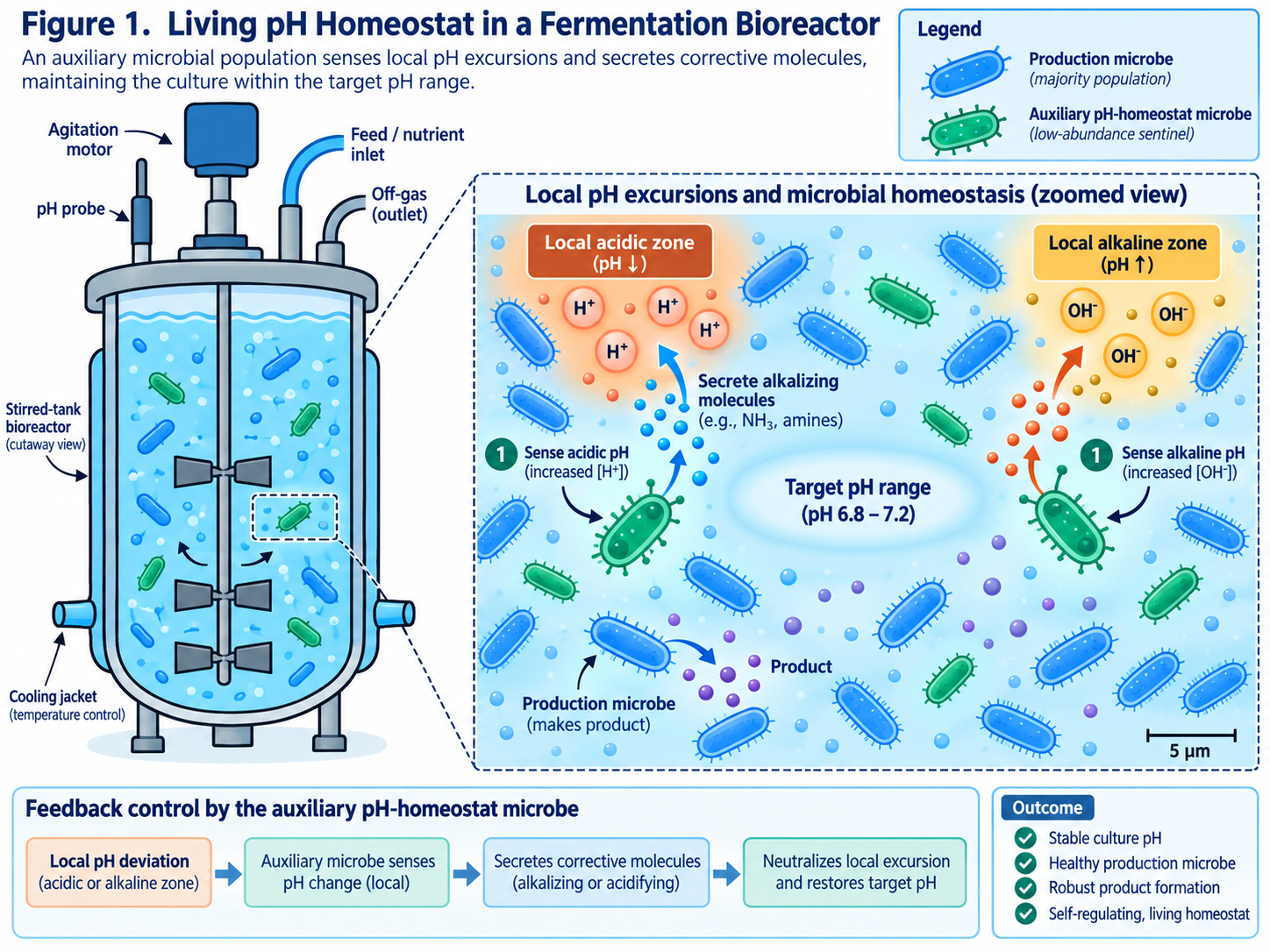
Figure 1. The concept in one picture. The auxiliary “homeostat” strain lives dispersed
throughout the vessel, so it meets local pH excursions where they actually happen, rather than
where the single bulk probe is mounted.
Concept in one sentence
Engineer a low-abundance microbial “pH homeostat” that senses sustained extracellular pH
excursions and activates acidifying or alkalizing metabolism to damp them, while a separate
production microbe remains focused on making the desired product.
1. What would I like to biomanufacture, and why?
I would like to biomanufacture a living pH-control module: an engineered microbial strain that acts
as an auxiliary population inside a fermentation. Its job would not be to make the commercial product.
Instead, it would sense when extracellular pH moves outside an intended operating band and activate
metabolism that pushes the environment back toward that band.
The motivation is scale-up. Large bioreactors are not perfectly homogeneous. Mixing becomes slower
as volume increases, and cells can pass through short-lived local regions with different pH, dissolved
oxygen, or substrate concentrations. Published scale-down studies have recreated pH differences of up to
about 0.9 pH units, and CHO studies have shown that repeated excursions as small as 0.4 pH units can
alter cell physiology and process performance [2–4].
Today, pH is normally controlled by a probe, controller, and acid/base addition system. My proposal is
not to replace that safety-critical hardware initially. The near-term goal is to add a biological
layer that can damp sustained or spatial pH excursions from within the culture itself. The long-term
question is whether distributed living controllers could reduce the severity of local pH hotspots that a
single bulk probe may not capture.
This is the distinction drawn in Figure 1: one probe reports a single bulk value, while a dispersed
sentinel population is present inside the zones the probe cannot see.
2. What living system would I use?
Initial chassis: engineered Escherichia coli.E. coli is attractive for a first prototype because
its genetics are well characterized, it grows quickly, and published synthetic pH-control circuits
already exist in this organism [1,5].
The biological design would contain three functional layers:
pH sensing — promoters or regulatory elements whose activity changes when extracellular pH becomes
too acidic or too alkaline.
Decision threshold — the circuit remains largely inactive inside the acceptable pH range and turns
on only when a threshold is crossed.
Actuation — the activated pathway generates an acidifying or alkalizing effect through cell
metabolism or an expressed enzyme.
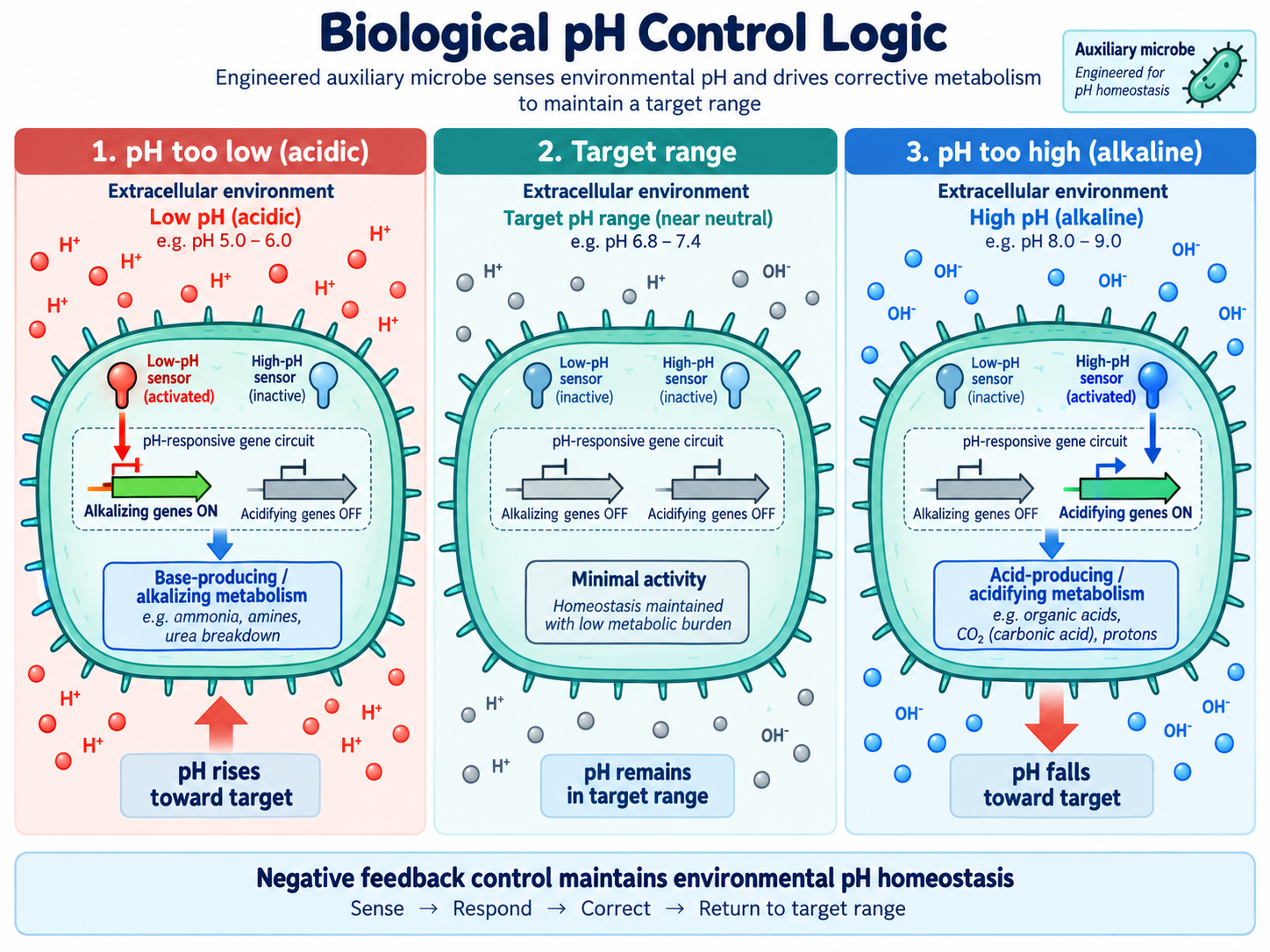
Figure 2. The control logic as three states. The middle panel is the one that matters most for
metabolic burden: inside the acceptable band both sensors are inactive and the circuit does close to
nothing.
flowchart LR
  A["Extracellular pH<br/>excursion"] --> B["1. Sensing<br/>pH-responsive promoters"]
  B --> C["2. Decision threshold<br/>silent inside the operating band"]
  C --> D["3. Actuation<br/>acidifying / alkalizing metabolism"]
  D -->|"pushes pH back<br/>toward the band"| A
Published precedent
The key precedent is Li et al. (2020), who built a Genetic pH Shooting (GPS) system in E. coli by
coupling pH-responsive promoters to acid- or base-producing genes. Their engineered strains could
self-adjust extracellular pH, and the combined circuit was tested during lycopene fermentation at 3 L
working volume. In that study, the acid-responsive promoter was mainly active around pH 5–6 and the
alkaline-responsive promoter around pH 8–10; therefore, the paper does not demonstrate precision
control around pH 7 ± 0.05 [1].
A 2026 study provides a second proof that engineered bacteria can actively modulate extracellular pH.
Kuang et al. placed urease under light control in E. coli; urease generated ammonia from urea to
raise pH, while native metabolism drove re-acidification when urease activity fell. The system could
repeatedly switch extracellular pH states over multiple cycles [5].
Critical assumption for my project
Published work has demonstrated pH self-regulation inside the engineered production strain.
My proposal adds a new architectural assumption: the pH-control circuit can be placed in a
separate, low-abundance auxiliary strain without the helper population materially changing the
growth, yield, or metabolism of the production strain. This has not been established by the papers
cited here and must be tested.
3. How would I use automation?
Automation would be used mainly for design-build-test-learn screening rather than for the final
large-scale pH control loop. A liquid-handling robot (for example, an Opentrons-type platform) could
prepare a matrix of media conditions and promoter/circuit variants across 96-well plates, standardize
inoculation, and perform repeated sampling. Plate-reader measurements of growth and reporter output,
combined with direct pH measurements, would identify circuits with useful thresholds and low background
activity.
flowchart TD
  S1["1. Characterize sensing alone<br/>across a pH series"] --> S2["2. Test one-sided actuation<br/>recovery from an acidic excursion"]
  S2 --> S3["3. Combine acid- and<br/>base-correcting functions"]
  S3 --> S4["4. Test as low-abundance co-culture<br/>with a production organism"]
Running the stages in this order reduces the chance of confusing sensing failure, actuator
failure, and co-culture interactions with one another.
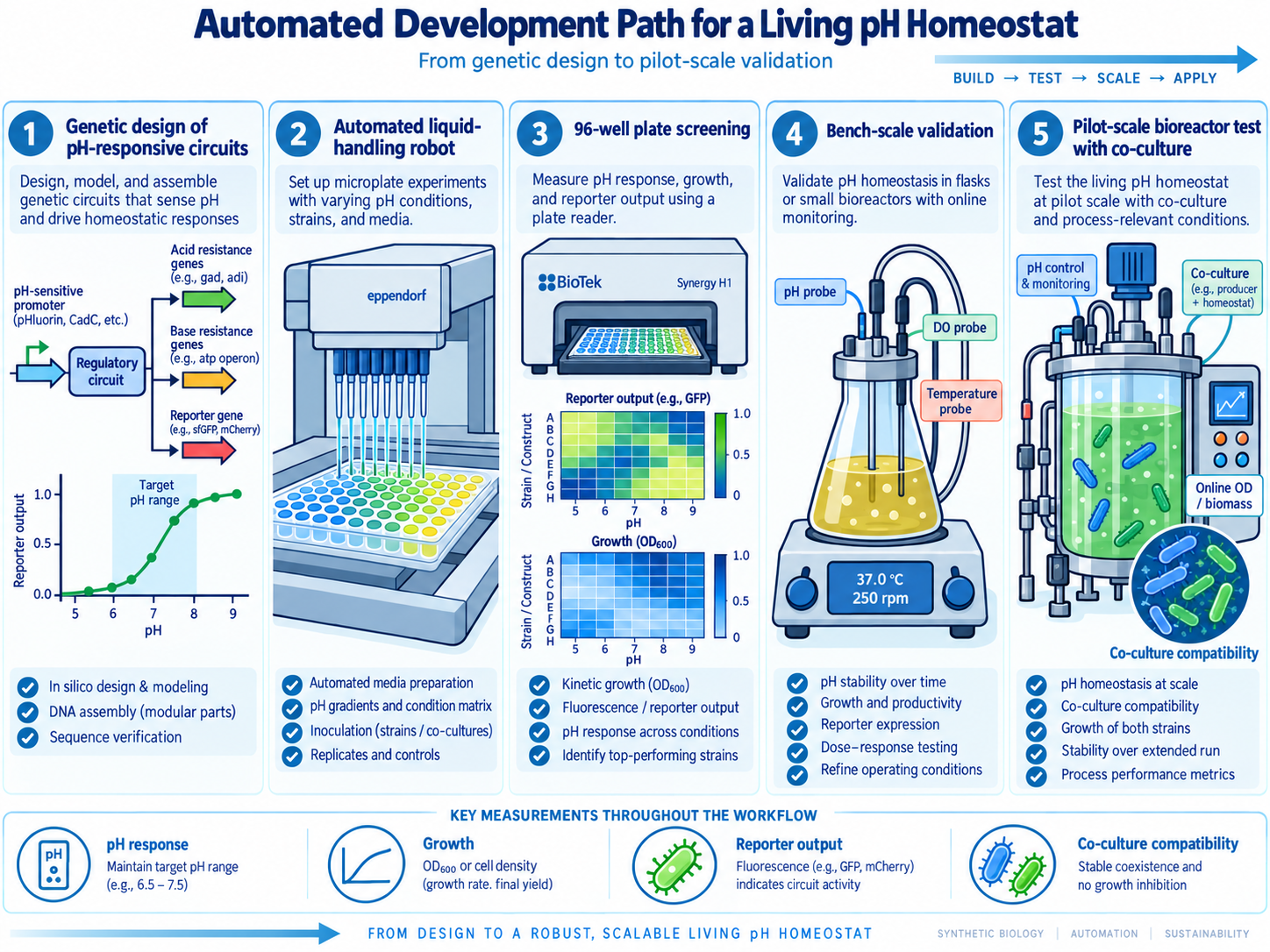
Figure 3. Where automation earns its place. Stages 2 and 3 are the throughput bottleneck, and
stage 5 is where the co-culture assumption in the callout above finally gets tested.
4. How much would I need to make, and how long would it take?
4a. Meaningful prototype scale
For Homework #1, I define a meaningful first scale as enough auxiliary cells to inoculate a 10 L
pilot-scale fermentation and maintain a small sentinel fraction for a 20 h run. There is no
published value showing the minimum helper-cell fraction required for this architecture, so the
following calculation is explicitly a design assumption rather than an established biological
requirement.
Quantity
Working assumption / source
Back-of-envelope result
Reactor working volume
10 L
10,000 mL
Production-culture density
109 cells/mL (order-of-magnitude assumption)
1013 total production cells
Auxiliary-cell target
1% of production-cell concentration (assumption)
107 helper cells/mL
Total helper cells required
107 cells/mL × 10,000 mL
1011 helper cells
Seed-culture density
>109 CFU/mL is achievable in an overnight E. coli culture [6]
≈100 mL seed can contain >1011 cells
4b. How long?
Under optimal rich-medium laboratory conditions, E. coli can double in about 20 min and an overnight
culture can exceed 109 CFU/mL [6]. If a seed started with 107 viable cells, reaching 1011 cells
would require about 14 doublings: 14 × 20 min ≈ 4.7 h under ideal exponential growth.
That is a theoretical lower bound. Recombinant expression, lag phase, media limitations, and the
pH-control circuit may slow growth, so a practical plan would allocate an overnight expansion
(about 12–16 h) to prepare the helper inoculum. The 20 h production-run duration is a project design
assumption, not a claim from the cited literature.
5. What do I not know yet?
Can the controller respond near the desired setpoint with useful resolution?
The strongest published GPS demonstration used broad acidic and alkaline response windows. It does not
establish ±0.05 pH control around neutral pH. New sensing elements, promoter engineering, or a
deliberately wider acceptable band may be required.
Will the feedback dynamics be stable?
Gene expression and metabolism are slower than an electronic pH controller. Delay between sensing and
chemical correction could cause weak response, overshoot, or oscillation. The 2026 optogenetic work
specifically used enzyme degradation to improve switching dynamics, showing that response timing is a
real engineering variable [5].
Can an auxiliary strain control pH without damaging the production process?
The helper will consume nutrients and may secrete metabolites beyond the intended actuator. Its
abundance, growth rate, and metabolic burden must be constrained, and its effect on product yield and
quality must be measured. This is the largest unproven assumption in the co-culture version.
10-week feasibility boundary
A complete industrial pH homeostat is not a realistic 10-week deliverable. A defensible 10-week
demonstration would be narrower: show that an engineered E. coli circuit can (i) report a defined pH
excursion and (ii) produce a measurable one-sided extracellular pH correction in a small, controlled
culture.
A stretch goal would be to test the same circuit at low abundance in a simple two-strain co-culture
and quantify whether it changes the partner strain’s growth. Precise neutral-pH control, industrial-scale
gradient correction, and long-term co-culture stability should remain future research questions.
Assumptions used in this proposal
A separate auxiliary pH-control strain can eventually be made compatible with a production strain.
This is a hypothesis, not demonstrated by the cited GPS paper.
A 1% helper-to-producer cell ratio is used only for the back-of-envelope manufacturing calculation;
the functional minimum ratio is unknown.
A production-culture density of 109 cells/mL is used as an order-of-magnitude prototype assumption
and will vary strongly by host and process.
The illustrative 10 L, 20 h fermentation is a chosen prototype scale, not a literature-derived
requirement.
The first prototype aims to damp meaningful pH excursions, not maintain pH 7.00 ± 0.05.
Conventional pH probes and acid/base addition remain the safety/reference control in early experiments.
References
Li C, Gao X, Peng X, et al. Intelligent microbial cell factory with genetic pH shooting (GPS) for cell
self-responsive base/acid regulation. Bioresources and Bioprocessing. 2020. PMID: 33138821.
https://doi.org/10.1186/s40643-020-00348-8
Cortés JT, Flores N, Bolívar F, Lara AR, Ramírez OT. Physiological effects of pH gradients on
Escherichia coli during plasmid DNA production. Biotechnology and Bioengineering.
2016;113(3):598–611. https://doi.org/10.1002/bit.25817
Arulrajah P, Lievonen AE, Subaşı D, Pagal S, Weuster-Botz D, Heins A-L. Scale-down bioreactors —
comparative analysis of configurations. Bioprocess and Biosystems Engineering.
2025;48(10):1619–1635. https://doi.org/10.1007/s00449-025-03182-w
Paul K, Böttinger K, Mitic BM, et al. Development, characterization, and application of a
2-Compartment system to investigate the impact of pH inhomogeneities in large-scale CHO-based
processes. Engineering in Life Sciences. 2020;20(8):368–378.
https://doi.org/10.1002/elsc.202000009
Kuang J, Armendarez OJ, Chang W-T, et al. Engineering an Optogenetic pH-Modulator in Bacteria.
Advanced Science. 2026;13(42):e24319. https://doi.org/10.1002/advs.202524319
Green MR, Sambrook J. Growth and Maintenance of Escherichia coli Laboratory Strains.
Current Protocols. 2021. PMCID: PMC8006063.
AI use disclosure
AI client: OpenAI ChatGPT (GPT-5.6 Sol). AI was used to critique the concept, identify relevant
published precedents, distinguish evidence from assumptions, and draft/structure this Homework #1
response. Literature claims were checked against the cited papers or PubMed/PMC records.
Prompt used (abridged): “Prepare the Homework #1 document for an engineered pH homeostat. Keep
statements scientific and technically meaningful, ground facts and thoughts in published research
papers, avoid wild assumptions, and explicitly list every assumption used.”