Week 1 HW: Final Project Ideas
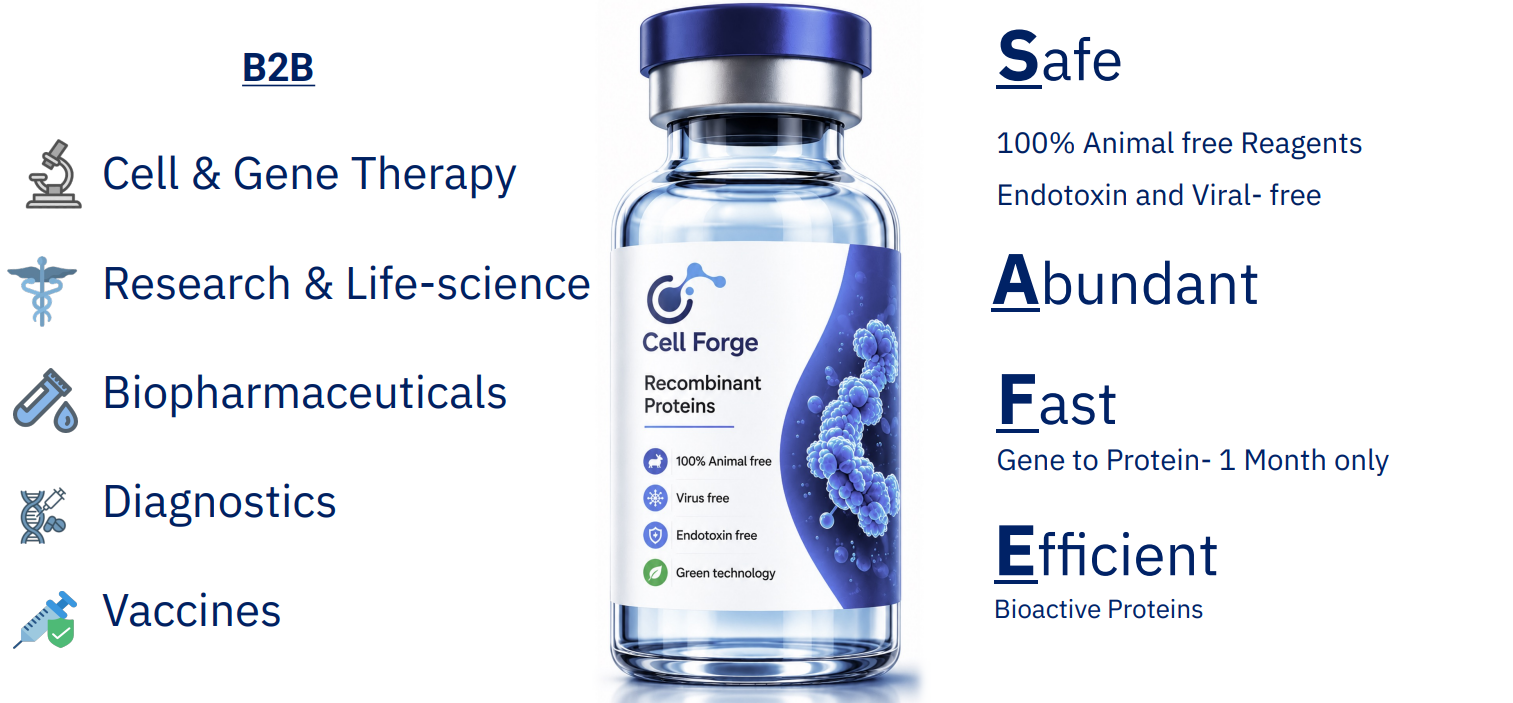
1) What would you like to biomanufacture, and why? — Building a New Chassis for Cytokines
I want to manufacture recombinant cytokines and growth factors used in cell therapy, gene therapy, and stem-cell applications using a non-model microorganism—a ciliate. A ciliate combines eukaryotic machinery capable of producing, folding, and adding mammalian-like post-translational modifications to complex proteins with potentially rapid, economical microbial-like growth, while automation can be used to optimize manufacturing processes faster.
Cytokines are small proteins that instruct cells to grow, survive, activate, or differentiate, making them fundamental ingredients in cell- and stem-cell manufacturing and applications. Although they are used at relatively low concentrations, they can be extraordinarily expensive, with prices of roughly $1,000–$30,000 per milligram, depending on the molecule and supplier, and an estimated $2 billion global market. Because cytokines and growth factors are major components of cell-culture media, reducing their manufacturing cost could meaningfully reduce the cost of cell-therapy manufacturing.
The problem is not simply that cytokines are expensive. Bioactive proteins are difficult to manufacture. A protein must fold into the correct three-dimensional structure to become functional. Bacteria such as E. coli are fast, inexpensive, and highly scalable, but complex human proteins can accumulate in forms requiring recovery and refolding. The process can become:
Make → recover → unfold → refold → purify → hope we did not lose too much.
Each additional step creates opportunities for product loss, variability, contamination, time, CAPEX, and cost. Mammalian and insect systems solve some of these problems but introduce other challenges, including cost, speed, operational complexity, and scalability.
My question is therefore:
What if we stopped asking how to fix the protein after making it and instead chose a factory that could make it correctly in the first place?
2) What living system would you use? — A non-model organism that can produce difficult-to-make proteins
Ciliates are single-celled eukaryotes that sit at a potential middle ground between scalability and biological complexity. They can potentially be grown using economical complex growth media and existing microbial fermentation infrastructure, while their eukaryotic machinery can produce and process complex molecules, including membrane proteins—some of the notoriously difficult proteins to manufacture.
Their sophisticated secretion system could potentially reduce downstream purification complexity and cost, while maintaining high product purity. This hypothesis needs to be experimentally validated for individual cytokines.
The system works on a straightforward concept:
Cytokine DNA → engineered ciliate → growth → expression → secretion → cytokine in broth → purification → functional cytokine.
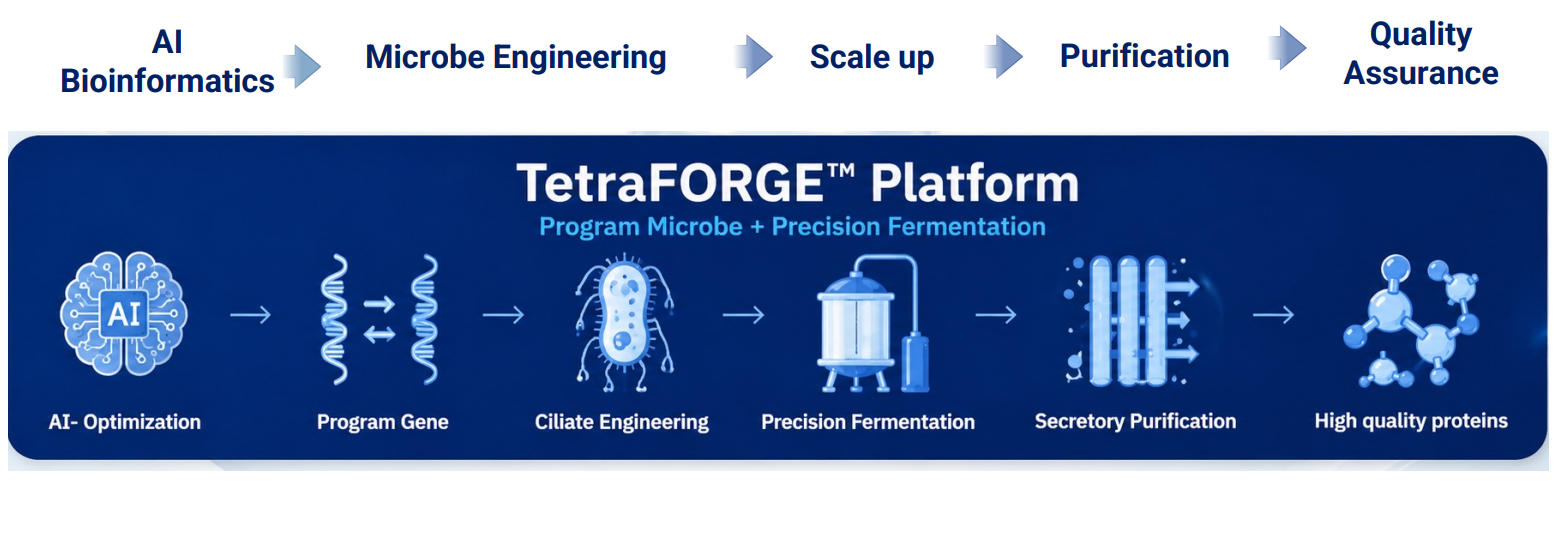
Instead of breaking open cells and recovering intracellular protein, the product would be secreted directly into the culture broth. Purification would still be necessary, but secretion could eliminate an entire class of upstream recovery problems.
A virus-free, endotoxin-free, BSL-1 organism could provide the basis for a potentially safe and regulatory-friendly platform, subject to appropriate validation and regulatory requirements.
3) How would you use automation? — Automation as the discovery engine
After introducing a production DNA construct, the challenge is finding populations that are alive, healthy, stable, and productive. Automation can make this search much faster.
A liquid-handling robot combined with automated imaging could perform media preparation, culture distribution, selection, serial enrichment, transfers, sampling, and parallel experiments. Because ciliates are highly mobile, automated imaging could measure cell density, morphology, motility, and growth in addition to survival.
The goal is to create a closed learning loop:
Experiment → measure → analyze → select the next experiment → repeat.
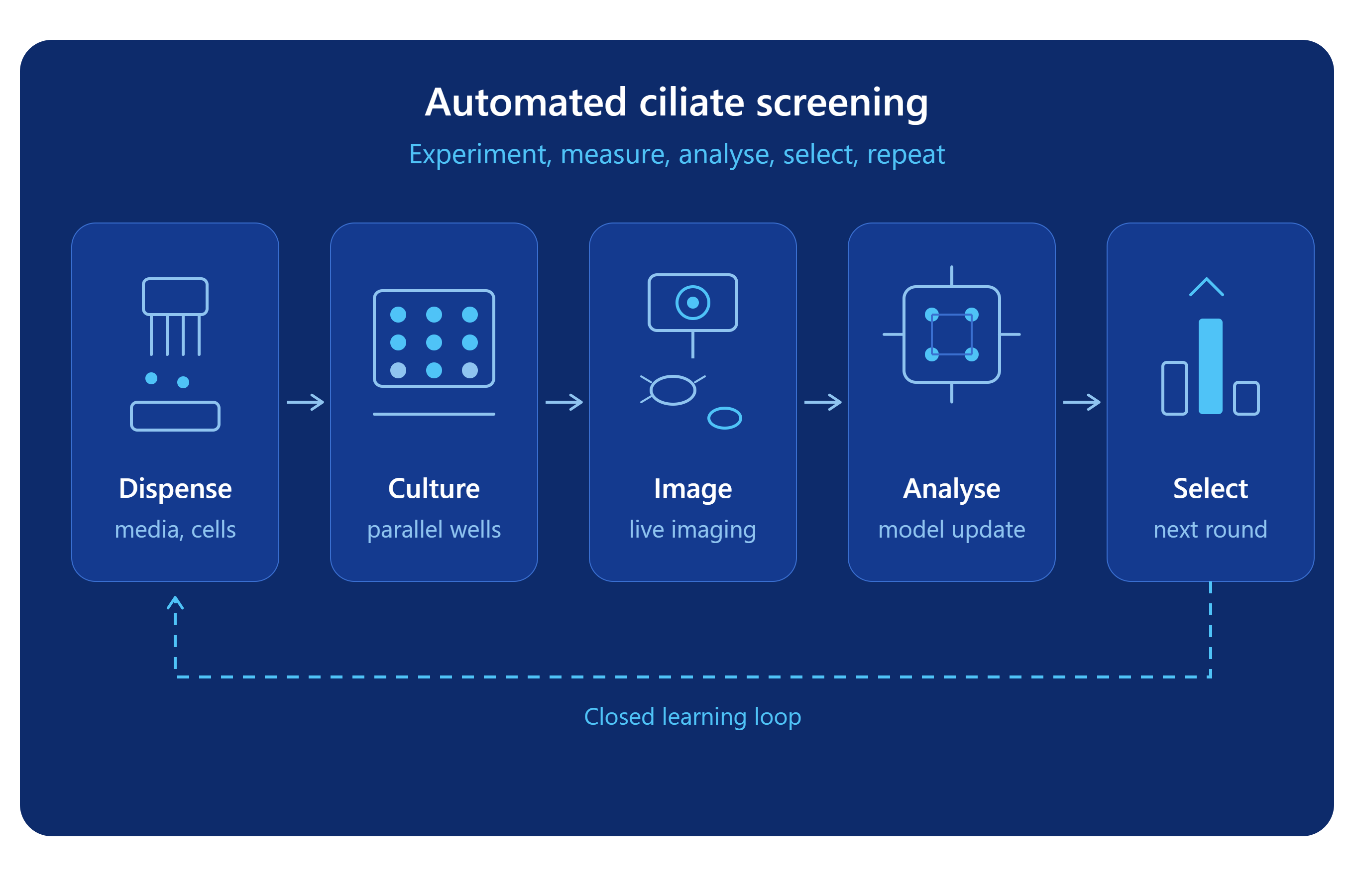
The computer identifies which conditions are worth testing next, while the cells provide the biological answer. This allows many populations and conditions to be evaluated in parallel rather than through sequential manual optimization.
From laboratory fermentation to an automated manufacturing system
At manufacturing scale, the fermenter would become part of an automated biological control system rather than simply a large flask. Sensors could continuously monitor cell density, pH, dissolved oxygen, temperature, nutrient availability, and product formation, allowing the process to operate through:
Sense → analyze → adjust → measure again.
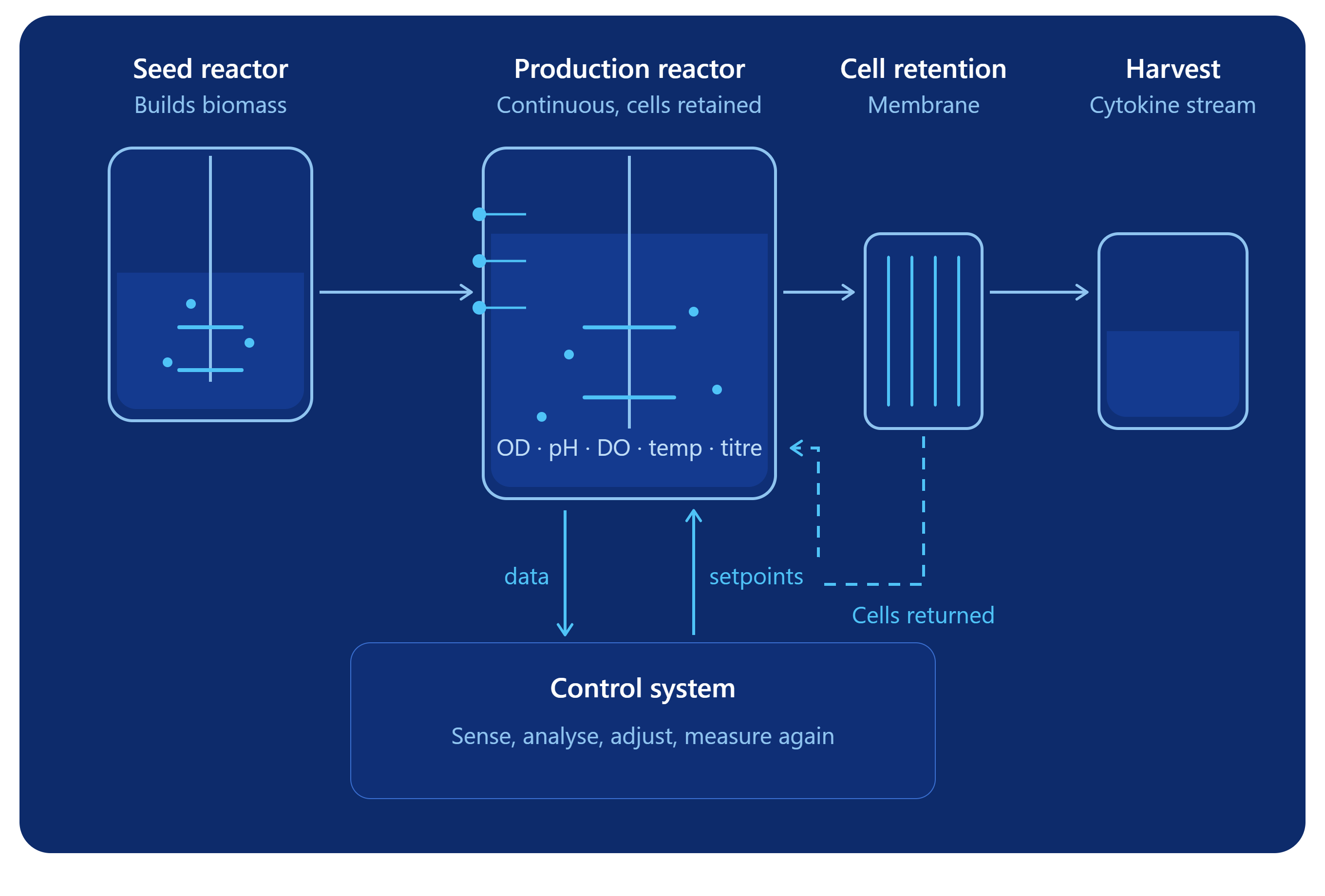
I would take architectural inspiration from emerging continuous-biomanufacturing systems while developing the actual process specifically for ciliates, rather than assuming technologies designed for other organisms can simply be transferred.
4) How much would you need to make, and how long would it take?
(a) How much? — Proof-of-manufacturing scale
The initial goal is **not commercial supply but enough material to complete purification, identity, purity, concentration, and functional-activity verification.
Using McKinsey’s estimate of approximately 2 million potentially addressable CAR-T patients, a 2-L perfusion process producing 113 doses per batch, and a theoretical requirement of 25 µg each of two cytokines per 2-L media bag, the combined cytokine requirement would be approximately 885 mg, or 443 mg of each cytokine, across 2 million doses.
Considering 40% process-related losses (354 mg), 15% QA/QC and batch-consistency requirements (133 mg), and an additional 20% for sampling, inventory loss, and replacements (177 mg), the program would need to produce approximately 1.55 g in total, or approximately 774 mg of each cytokine.
At an assumed 200 mg/L production titer and 60% recovery, this corresponds to approximately 13 L of productive fermentation volume.
At 5-L scale, approximately 2–3 production-equivalent batches would therefore provide the theoretical requirement. A 100-L vessel would provide substantial excess capacity and would primarily support scale-up and process validation rather than being required by the calculated demand.
The ~13 L is only the theoretical production requirement. The development program will require additional fermentation volume for strain and process optimization, seed-train development, scale-up, reproducibility, equipment qualification, and validation.
(b) How long would it take?—Time and parallelization
For a 5-L ciliate production batch, I would plan approximately 4 days for vial revival, seed expansion, and inoculation, followed by approximately 2 days of production fermentation plus 17 hours of induction, giving roughly 7 days to harvest.
Clarification, concentration, purification, dialysis, final formulation, and analytical QA/QC would require approximately 4 additional days, giving an estimated ~11 days from vial revival to characterized recombinant cytokine.
With one 5-L fermenter operated sequentially, three batches would require approximately 27–39 calendar days, although overlapping seed preparation, purification, and QA/QC could reduce elapsed time.
With three 5-L fermenters operating in parallel, the same campaign could theoretically be completed in approximately 9–13 days.
The real challenge is not producing one batch. It is building a process that can repeatedly produce multiple cytokines at the required titer using parallel fermentation units, rather than depending on one enormous vessel.
Capacity can then grow by adding standardized production units while maintaining process control and reducing dependence on a single large fermenter. As the cell- and gene-therapy industry grows, the same platform could expand across multiple cytokines and growth factors.
The goal is to build not simply a better fermenter, but a biological manufacturing system in which the organism, automation, sensing, and process control work together to discover and manufacture complex proteins faster and more efficiently.
5) What don’t you know yet?
1. How much of the secreted cytokine will be lost to extracellular proteolysis?
Although ciliates can secrete recombinant proteins into the culture medium, extracellular proteases may degrade the product during fermentation. We do not yet know the protein-specific degradation rate, which cytokines are most susceptible, or how protease activity changes with growth phase and fermentation conditions. This will determine the actual recoverable yield, rather than simply the expression titer.
We need to determine whether process optimization—such as controlling harvest timing, media composition, culture conditions, and protease activity—or targeted reduction of relevant proteases can substantially improve cytokine recovery.
References
- Low-Cost Production and Purification of Cytokines and Growth Factors for Cell Therapy Products - NIIMBL.
- McKinsey via Statista, Global addressable patient population for CAR-T cell therapies (estimate). https://www.statista.com/statistics/1098463/global-addressable-patient-population-car-t-cell-therapies-estimate/
- Jackson Z. et al., CAR-T Cell Production Using the CliniMACS® Prodigy System. https://www.researchgate.net/publication/336420642_CAR-T_Cell_Production_Using_the_ClinimacsR_Prodigy_System
- Eight-Day Point-of-Care CAR-T Cell Manufacturing, Blood 138 (Supplement 1): 2851. https://ashpublications.org/blood/article/138/Supplement%201/2851/481358/Eight-Day-Point-of-Care-CAR-T-Cell-Manufacturing
- Miltenyi Biotec, CliniMACS Prodigy process presentation, ATMP Manufacturing Conference 2016. https://atmpmanufacture.org/wp-content/uploads/2016/10/AMC2016.pdf
- Market Data Forecast, CAR-T Cell Therapy Market Report (source for the 18% manufacturing failure rate). https://www.marketdataforecast.com/market-reports/car-t-cell-therapy-market
- IndexBox, TGF-Beta Superfamily Market in Latin America and the Caribbean (pricing tiers per 10 µg and per mg). https://www.indexbox.io/store/latin-america-and-the-caribbean-tgf-beta-superfamily-market-analysis-forecast-size-trends-and-insights/
- Grand View Research, Cytokines & Growth Factors – Recombinant Proteins Market Outlook. https://www.grandviewresearch.com/horizon/statistics/recombinant-proteins-market/product/cytokines-growth-factors/global
- IndexBox, Recombinant Human Cytokines Market Forecast to 2035 (GMP vs research-grade price premium). https://www.indexbox.io/blog/recombinant-human-cytokines-market-demand-to-accelerate-by-2035-on-cell-therapy-expansion-and-gmp-standardization/
- IndexBox, United States TGF-Beta Superfamily Market (GMP price differentials and supplier concentration). https://www.indexbox.io/store/united-states-tgf-beta-superfamily-market-analysis-forecast-size-trends-and-insights/
- Good Food Institute, Cultivated meat growth factor volume and cost analysis (2023). https://gfi.org/resource/cultivated-meat-growth-factor-volume-and-cost-analysis/
AI Declaration: AI tools were used solely for conceptual image generation, organizing and structuring the content, improving clarity and readability, and assisting with language editing. The scientific concepts, assumptions, calculations, interpretations, and final content are based on facts.