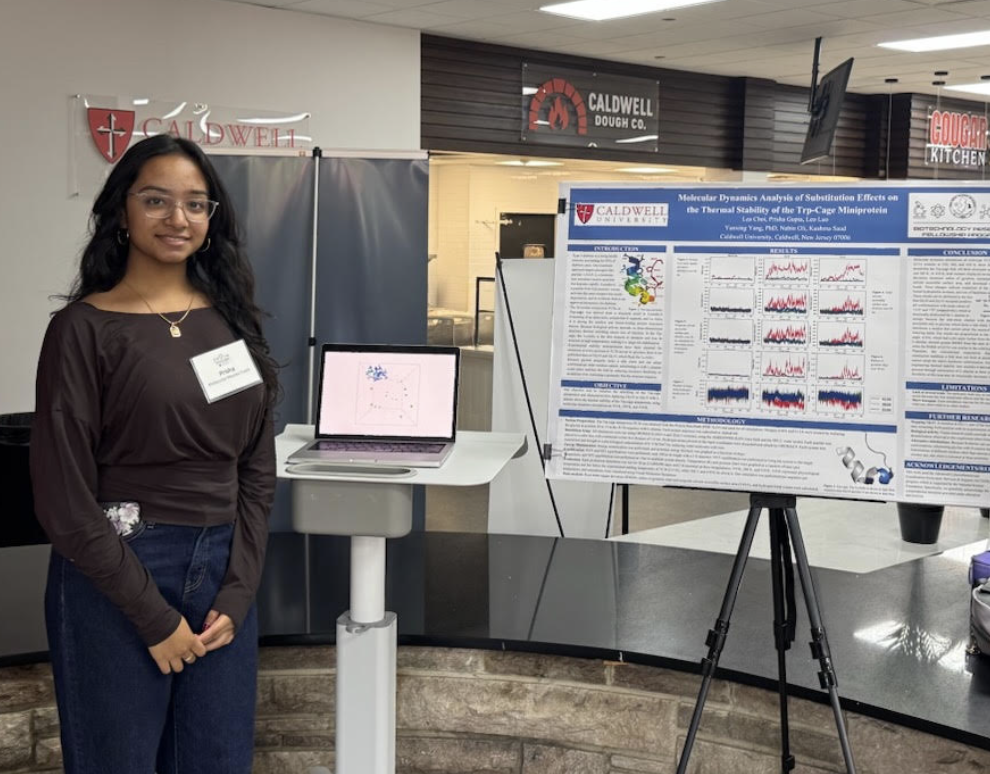
I’m a high school student in New Jersey, USA, and I am interested in biotechnology research, particularly computational molecular modeling and its applications in developing and improving pharmaceutical therapies. I’m especially interested in exploring how computational approaches can contribute to cancer research and drug development.
I’m excited for this opportunity at HTBAA, and I hope to explore how biotechnological ideas are developed, modified, and ultimately turned into physical products through biomanufacturing. I’m excited to learn from the amazing mentors, conduct experiments, explore future possibilities, and ask many questions along the way!
Motivation: Chronic non-healing wounds, such as severe burns and ulcers, present major burdens in the global clinical world.
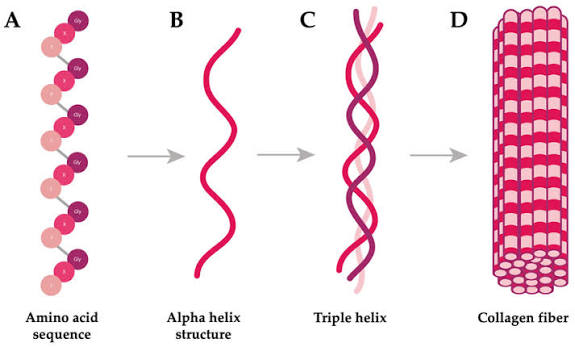
Problem: While animal-extracted collagen provides the structural scaffold necessary for tissue repair, there are risks of batch-to-batch inconsistency, immune rejection, and pathogen transmission. While recombinant human collagen resolves the safety concerns, it denatures at body temperatures(98.6°F- 104°F) and is degraded by elevated protease levels in the chronic wound beds, rendering the scaffold useless. Additionally, natural collagen relies on a host prolyl 4-hydroxylase (P4H) enzyme to modify prolines and stabilize the triple helix. Because standard industrial host cells like E. coli lack P4H, scientists are required to co-express this mutli-subunit human enzyme, which severely reduces production yields and increases manufacturing complexity.
Objective: Produce a sequence-engineered mini-collagen variant designed with mutated triple-helicial domains that maintain structural stability above 107.6°F without requiring post-translational prolyl 4-hydroxylase (P4H) co-expression.
Strategic placement of charged residue pairs to form inter-strand salt bridges will allow for stable triple-helix formation in the absence of P4H modifications.
Automated Instruments: Micro-bioreactors (e.g., BioLector) and Microplate Reader
Automated Screening Workflow
OT-2 Liquid Handler- fill well plates with E. coli variants and extracellular media
Micro-bioreactors- grow the culture under precise, automated control.
OT-2 Liquid Handler- take samples from the cultures and mix them with fluorescent dye.
Plate Reader- heat the samples and identify with variants stay folded when temperature is above 107.6°F
Reason: Manually performing screening of extensive site-saturation mutagenesis libraries is unfeasible. Therefore, automated liquid handlers will perform the tasks like serial dilutions, transfer high-density variant cultures, execute cell density normalizations, and automate thermal denaturation assays. This will allow for rapid screening of many variants eliminating human error within a feasible time.
Production Scale and Manufacturing Timeline
(a) Production Target Calculation
Assumptions and Clinically Accepted Values:
Target Patient Cohort: 10,000 patients suffering from chronic ulcers annually.
Average wound area: 10 cm2
Hydrogel Matrix: 0.01 g mini-collagen per dressing
Dosage: 1 dressing change per week for 4 weeks → 0.04 g collagen per patient
Calculation: Annual Target = 10,000 patients * 0.04 g/patient= 400 grams or 0.4 kg
(b) Manufacturing Time and Rate Estimation
Prototyping phase:
Throughput: Automated 96-well screening cultures(1 mL working volume per well across 6 parallel plates) process up to 500 mini-collagen sequences per DBTL cycle using Opentrons OT-2 (liquid-handling robots).
Yield and Turnaround: Generates 0.01-0.05 g/L secreted protein per well that are analytical quantities within a 2-3 day operational turnaround, allowing for rapid assays.
Production Phase:
After using DBTL strain optimization, the selected variant will be under an optimized fed-batch E. coli fermentation process, targeting a high-density recombinant expression titer of 0.5 g/L of secreted mini-collagen peptide.
Fermentation Volume Required = mass(g)/titer(g/L) = 400 g Target Yield/0.5 g/L Yield Titer = 800 Liters of Extracellular culture media
Manufacturing Timeline:
Batch: Using four parallel 200 L runs to generate 800 L of total fermentation volume.
Fermentation Cycle: Each high-density E. coli fed-batch run will take approximately 2 to 3 days of processing time.
Downstream Processing and Turnaround: Per batch, primary recovery, microfiltration, and purification will add approximately 2 to 3 per batch.
Total time for the 400 g target will roughly be 3 to 4 weeks.
Technical Bottlenecks and Risk Mitigation
The P4H-Free Stability Assumption
Assumption: Engineered charge pairs(salt bridges) alone will be able to provide sufficient thermodynamic stability to keep the mini-collagen triple helix intact at human body temperature without the presence of co-expressed P4H.
Bottleneck/Risk: If the salt-bridge engineering fails to compensate for the lack of P4H in E. coli, the secreted peptides will denature at body temperature.
Yield Bottleneck
Unknown: Can a high-density E. Coli fed-batch culture efficiently transport 0.5 g/L of repetitive structural peptides across the Inner and outer membranes into the extracellular culture media?
Bottleneck/Risk: Recombinant structural proteins often misfold and aggregate. If secretion is bottlenecked by aggregation, the soluble yields will plummet below economic viability.
Citations
Asin-Garcia, E., Fawcett, J. D., Batianis, C., & Martins dos Santos, V. A. P. (2025). A snapshot of biomanufacturing and the need for enabling research infrastructure. Trends in Biotechnology, 43(5), 1000–1014. https://doi.org/10.1016/j.tibtech.2024.10.014
Jie, I. W. K., Lee, K. W. A., Yoon, S. E., Song, J. K., Chan, L. K. W., Lee, C. H., Jeong, E., Kim, J.-H., & Yi, K.-H. (2025). Advancements in clinical utilization of recombinant human collagen: An extensive review. Life, 15(4), 582. https://doi.org/10.3390/life15040582
Persikov, A. V., Ramshaw, J. A. M., & Brodsky, B. (2005). Prediction of collagen stability from amino acid sequence. The Journal of Biological Chemistry, 280(19), 19343–19349. https://doi.org/10.1074/jbc.M501657200
Petzold, C. J., & Mukhopadhyay, A. (2025). From bench to biofactory: High-throughput technologies and automated workflows to accelerate biomanufacturing. Current Opinion in Biotechnology, 94, 103320. https://doi.org/10.1016/j.copbio.2025.103320
AI
Tool Used: Gemini(Google)
Prompts:
Explain the following assignment and check if understanding of the following papers is correct. Explain the following vocabulary, and if any additional vocabulary terms are found, define and explain them.
From the following protein candidates and the research given, evaluate whether collagen would be the best choice for the following objective: Use biomanufacture to identify and engineer a protein for improved properties for wound healing, while considering and improving the biomanufacturing process and feasibility.
Can we design a recombinant mini-collagen peptide sequence expressed in E. coli that maintains triple-helical thermal stability (Tm > 42°C) without requiring prolyl 4-hydroxylase (P4H) co-expression through salt-bridges?
Design a high-throughput Design-Build-Test-Learn (DBTL) screening protocol using an Opentrons OT-2 liquid handler to test 500 mini-collagen variants across 96-well plates. Along with this, outline the operational timeline for four 200 L fed-batch parallel runs for the manufacturing phase, including fermentation cycles, downstream processing(DSP), and quality control testing.
Why would yield bottleneck be a higher concern compared to other bottlenecks, such as Endotoxin (LPS) separation?