Week 1 HW: Final Project Ideas
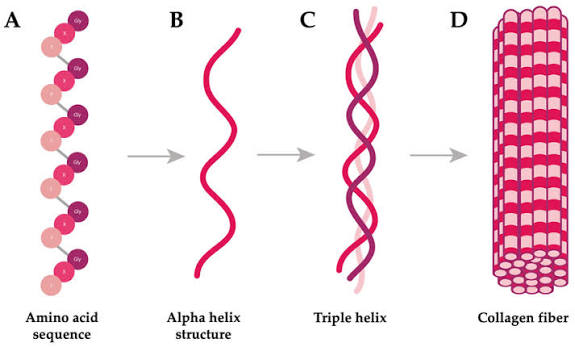
Product Target and Motivation
Target Product: Thermally stable recombinant “mini-collagen”.
Motivation: Chronic non-healing wounds, such as severe burns and ulcers, present major burdens in the global clinical world.
Problem: While animal-extracted collagen provides the structural scaffold necessary for tissue repair, there are risks of batch-to-batch inconsistency, immune rejection, and pathogen transmission. While recombinant human collagen resolves the safety concerns, it denatures at body temperatures(98.6°F- 104°F) and is degraded by elevated protease levels in the chronic wound beds, rendering the scaffold useless. Additionally, natural collagen relies on a host prolyl 4-hydroxylase (P4H) enzyme to modify prolines and stabilize the triple helix. Because standard industrial host cells like E. coli lack P4H, scientists are required to co-express this mutli-subunit human enzyme, which severely reduces production yields and increases manufacturing complexity.
Objective: Produce a sequence-engineered mini-collagen variant designed with mutated triple-helicial domains that maintain structural stability above 107.6°F without requiring post-translational prolyl 4-hydroxylase (P4H) co-expression.
Living system
Chassis Selection: engineered Escherichia coli(E. coli)
Upstream Inputs: Glucose as our carbon source, inorganic nitrogen, and minimal salts media.
Biological Process:
- The host strain reads a synthetic codon-optimized gene with the code for the mini-collagen framework.
- The protein is expressed and secreted into the extracellular culture media(f via an N-terminal signal peptide.
- Extracellular self-essembly yields functional, triple-helical mini-collagen fibrils.
Core Assumption:
Strategic placement of charged residue pairs to form inter-strand salt bridges will allow for stable triple-helix formation in the absence of P4H modifications.
Workflow Automation
Automation Platforms and Instruments:
- Automated Liquid Handling System: Opentrons (OT-2)
- Automated Instruments: Micro-bioreactors (e.g., BioLector) and Microplate Reader
Automated Screening Workflow
- OT-2 Liquid Handler- fill well plates with E. coli variants and extracellular media
- Micro-bioreactors- grow the culture under precise, automated control.
- OT-2 Liquid Handler- take samples from the cultures and mix them with fluorescent dye.
- Plate Reader- heat the samples and identify with variants stay folded when temperature is above 107.6°F
Reason: Manually performing screening of extensive site-saturation mutagenesis libraries is unfeasible. Therefore, automated liquid handlers will perform the tasks like serial dilutions, transfer high-density variant cultures, execute cell density normalizations, and automate thermal denaturation assays. This will allow for rapid screening of many variants eliminating human error within a feasible time.
Production Scale and Manufacturing Timeline
(a) Production Target Calculation
Assumptions and Clinically Accepted Values:
- Target Patient Cohort: 10,000 patients suffering from chronic ulcers annually.
- Average wound area: 10 cm2
- Hydrogel Matrix: 0.01 g mini-collagen per dressing
- Wound matrix hydrogel concentration: 0.005 g/mL
Hydrating dressing thickness: 2 mm
- Wound matrix hydrogel concentration: 0.005 g/mL
- Dosage: 1 dressing change per week for 4 weeks → 0.04 g collagen per patient
Calculation: Annual Target = 10,000 patients * 0.04 g/patient= 400 grams or 0.4 kg
(b) Manufacturing Time and Rate Estimation
Prototyping phase:
- Throughput: Automated 96-well screening cultures(1 mL working volume per well across 6 parallel plates) process up to 500 mini-collagen sequences per DBTL cycle using Opentrons OT-2 (liquid-handling robots).
- Yield and Turnaround: Generates 0.01-0.05 g/L secreted protein per well that are analytical quantities within a 2-3 day operational turnaround, allowing for rapid assays.
Production Phase:
- After using DBTL strain optimization, the selected variant will be under an optimized fed-batch E. coli fermentation process, targeting a high-density recombinant expression titer of 0.5 g/L of secreted mini-collagen peptide.
- Volumetric Requirement: Extracellular culture media/Fermentation volume
Fermentation Volume Required = mass(g)/titer(g/L) = 400 g Target Yield/0.5 g/L Yield Titer = 800 Liters of Extracellular culture media
Manufacturing Timeline:
- Batch: Using four parallel 200 L runs to generate 800 L of total fermentation volume.
- Fermentation Cycle: Each high-density E. coli fed-batch run will take approximately 2 to 3 days of processing time.
- Downstream Processing and Turnaround: Per batch, primary recovery, microfiltration, and purification will add approximately 2 to 3 per batch.
- Total time for the 400 g target will roughly be 3 to 4 weeks.
Technical Bottlenecks and Risk Mitigation
- The P4H-Free Stability Assumption
- Assumption: Engineered charge pairs(salt bridges) alone will be able to provide sufficient thermodynamic stability to keep the mini-collagen triple helix intact at human body temperature without the presence of co-expressed P4H.
- Bottleneck/Risk: If the salt-bridge engineering fails to compensate for the lack of P4H in E. coli, the secreted peptides will denature at body temperature.
- Yield Bottleneck
- Unknown: Can a high-density E. Coli fed-batch culture efficiently transport 0.5 g/L of repetitive structural peptides across the Inner and outer membranes into the extracellular culture media?
- Bottleneck/Risk: Recombinant structural proteins often misfold and aggregate. If secretion is bottlenecked by aggregation, the soluble yields will plummet below economic viability.
Citations
- Asin-Garcia, E., Fawcett, J. D., Batianis, C., & Martins dos Santos, V. A. P. (2025). A snapshot of biomanufacturing and the need for enabling research infrastructure. Trends in Biotechnology, 43(5), 1000–1014. https://doi.org/10.1016/j.tibtech.2024.10.014
- Jie, I. W. K., Lee, K. W. A., Yoon, S. E., Song, J. K., Chan, L. K. W., Lee, C. H., Jeong, E., Kim, J.-H., & Yi, K.-H. (2025). Advancements in clinical utilization of recombinant human collagen: An extensive review. Life, 15(4), 582. https://doi.org/10.3390/life15040582
- Persikov, A. V., Ramshaw, J. A. M., & Brodsky, B. (2005). Prediction of collagen stability from amino acid sequence. The Journal of Biological Chemistry, 280(19), 19343–19349. https://doi.org/10.1074/jbc.M501657200
- Petzold, C. J., & Mukhopadhyay, A. (2025). From bench to biofactory: High-throughput technologies and automated workflows to accelerate biomanufacturing. Current Opinion in Biotechnology, 94, 103320. https://doi.org/10.1016/j.copbio.2025.103320
AI
Tool Used: Gemini(Google)
Prompts:
- Explain the following assignment and check if understanding of the following papers is correct. Explain the following vocabulary, and if any additional vocabulary terms are found, define and explain them.
- From the following protein candidates and the research given, evaluate whether collagen would be the best choice for the following objective: Use biomanufacture to identify and engineer a protein for improved properties for wound healing, while considering and improving the biomanufacturing process and feasibility.
- Can we design a recombinant mini-collagen peptide sequence expressed in E. coli that maintains triple-helical thermal stability (Tm > 42°C) without requiring prolyl 4-hydroxylase (P4H) co-expression through salt-bridges?
- Design a high-throughput Design-Build-Test-Learn (DBTL) screening protocol using an Opentrons OT-2 liquid handler to test 500 mini-collagen variants across 96-well plates. Along with this, outline the operational timeline for four 200 L fed-batch parallel runs for the manufacturing phase, including fermentation cycles, downstream processing(DSP), and quality control testing.
- Why would yield bottleneck be a higher concern compared to other bottlenecks, such as Endotoxin (LPS) separation?