Week 2 HW: DNA Design
Engineering Bacterial Nanocellulose for Bio-skin and Bio-PCB Applications
HTBAA Homework 2
1 Define the Expression Target
1.1 What molecule am I expressing?
My biomanufactured material is bacterial nanocellulose (BNC). BNC is not a protein; it is an extracellular polysaccharide composed of β-1,4-linked glucose chains. It will serve as a common biological material platform for two possible downstream applications:
- a skin-facing structural layer for a modular Bio-skin; and
- a bio-based substrate for a future Bio-PCB.
Because the final material is a polysaccharide, my direct expression target is the set of proteins that synthesizes, transports, and organizes bacterial cellulose. I will focus on the BcsA–BcsB–BcsC–BcsD cellulose-synthesis complex, encoded by the bcsABCD operon.
The four proteins have different roles:
- BcsA is the catalytic cellulose synthase. It polymerizes UDP-glucose into β-1,4-glucan chains.
- BcsB associates with BcsA and supports the cellulose-synthesis complex.
- BcsC forms part of the outer-membrane transport pathway through which the growing cellulose chains are exported.
- BcsD contributes to the organization and crystallization of the cellulose chains into extracellular nanofibers. (Römling & Galperin, 2015).
For Homework 2, I will treat these four proteins as one functional expression target because producing a useful extracellular nanocellulose material requires more than the catalytic activity of BcsA alone.
1.2 What sequences will I use?
I will use the continuous native bcsABCD operon region from Komagataeibacter xylinus E25. This 9,113 bp region is located at positions 474401–483513 in GenBank record CP004360.1. The record is associated with genome assembly GCA_000550765.1 and BioProject PRJNA190024.
| Protein | Gene locus | CDS length | Protein length | NCBI Protein ID |
|---|---|---|---|---|
| BcsA | H845_451 | 2,238 bp | 745 aa | AHI24410.1 |
| BcsB | H845_452 | 2,436 bp | 811 aa | AHI24411.1 |
| BcsC | H845_453 | 3,981 bp | 1,326 aa | AHI24412.1 |
| BcsD | H845_454 | 471 bp | 156 aa | AHI24413.1 |
Sequence source: The bcsABCD sequences were obtained from the NCBI genome record for Komagataeibacter xylinus E25: GenBank CP004360.1, genome assembly GCA_000550765.1, BioProject PRJNA190024, and BioSample SAMN03081456. The individual protein accessions are AHI24410.1, AHI24411.1, AHI24412.1, and AHI24413.1. (National Center for Biotechnology Information [NCBI], n.d.)
The complete four-gene region is 9,113 bp. I will preserve the native coding sequences for the initial design because the genes come from the same organism that I have selected as the host. This avoids unnecessary sequence changes and helps preserve the native codon usage and expression balance among the four proteins. I will still run Kernel’s codon-optimization tool later to compare the original and optimized sequences, but I will not assume that the automatically optimized version is biologically superior.
The native bcsABCD region was imported into Kernel as one 9,113 bp operon module using the “Miscellaneous” part type. The positions of bcsA, bcsB, bcsC, and bcsD are documented in the part description rather than displayed as four separate Kernel parts. Keeping the region continuous preserves the native overlaps and short regions between the genes. Appendix A records the source accessions and coordinates needed to identify the sequence.
1.3 What host or chassis will I use?
My proposed host is Komagataeibacter xylinus E25.
I selected this strain because it naturally produces bacterial nanocellulose and has a complete reference genome. Using a native cellulose-producing host is more realistic than transferring the entire synthesis, transport, and crystallization system into a non-cellulose-producing organism such as E. coli.
The host already contains a native cellulose-synthesis system. For this course design, I will construct a controlled additional bcsABCD expression module to test whether defined expression of the four-gene system can modify or improve BNC production. Because E25 already contains a native cellulose-synthesis system, whether additional bcsABCD expression improves BNC production must be tested experimentally.
1.4 Where does the product need to go?
The final bacterial-nanocellulose product must be extracellular.
The four proteins occupy different parts of the Gram-negative cell envelope:
- BcsA is an inner-membrane cellulose-synthesis protein.
- BcsB is associated with the catalytic complex and extends into the periplasm.
- BcsC contributes to the pathway through the outer membrane.
- BcsD is located in the periplasm and contributes to cellulose organization.
Together, the complex synthesizes glucan chains from intracellular UDP-glucose and transports them through the cell envelope. Outside the cell, the chains assemble into nanofibers and eventually form a visible cellulose pellicle near the air–liquid interface.
I will not add a separate secretion signal peptide to the complete construct in the initial design. The native Bcs protein sequences already contain the membrane-localization and export information needed by the cellulose-synthesis machinery.
After fermentation, the extracellular cellulose pellicle will be harvested, extensively washed, neutralized, and sterilized. The production bacteria will therefore act as the manufacturing system but will not remain alive in the final Bio-skin or Bio-PCB material.
2 Design Your Genetic Parts
2.1 Overall construct
I created a circular construct named E25-bcsABCD-expression for Komagataeibacter xylinus E25.
The parts are arranged in this order:
AraC-pBAD regulatory unit → RBS → bcsABCD operon → terminator → plasmid backbone
The complete construct is 13,356 bp long. Appendix A reports the source accessions, part lengths, and construct coordinates.
2.2 Parts used in the construct
| Kernel part type | Short name | Sequence and source | Why I selected it |
|---|---|---|---|
| Promoter | BBa_K808000 / AraC-pBAD | 1,209 bp. Imported through Kernel from the iGEM Part Registry; occupies nt 1–1209 of the exported construct. | I selected this part because arabinose can be used to control expression of the large bcsABCD operon in a bacterial host. |
| Ribosome binding site | BBa_B0034 / strong RBS | 12 bp: AAAGAGGAGAAA. Imported through Kernel from the iGEM Part Registry. | I selected this RBS because it is a commonly used bacterial RBS that can support translation of the first gene, bcsA. |
| Miscellaneous | E25-bcsABCD-native-operon | 9,113 bp. Taken from K. xylinus E25 GenBank record CP004360.1, positions 474401–483513; occupies nt 1222–10334 of the exported construct. | I selected the continuous native region because it preserves the original overlaps and short spaces between bcsA, bcsB, bcsC, and bcsD. |
| Terminator | BBa_B0015 / double terminator | 129 bp. Imported through Kernel from the iGEM Part Registry; occupies nt 10335–10463 of the exported construct. | I selected this double terminator to provide a reliable end to transcription after the bcsABCD operon. |
| Backbone | BBa_K1321300 / pSEVA331-Bb | 2,893 bp. Imported through Kernel from the iGEM Part Registry; occupies nt 10464–13356 of the exported construct. | I selected this backbone because it provides a broad-host-range pBBR1 origin of replication and a chloramphenicol selection marker for a Gram-negative bacterial host. |
Source note: The standard parts were checked against their iGEM Registry records (iGEM Foundation, n.d.). The pSEVA331 backbone assignment is also consistent with the Standard European Vector Architecture (Silva-Rocha et al., 2013).
2.3 Coding-sequence part type
The bcsABCD region contains four protein-coding sequences: bcsA, bcsB, bcsC, and bcsD. A single-gene design would normally use the Kernel part type CDS (+start +stop).
However, Kernel does not provide an “Operon” or “Composite” part type for this four-gene region. I therefore used the Miscellaneous part type for the complete 9,113 bp sequence. The positions and protein IDs of all four CDSs are recorded in the part description.
Keeping the genes in one continuous sequence avoids accidentally duplicating or deleting bases in their native overlapping regions.
2.4 Targeting decision
I did not add a separate signal peptide or targeting tag.
The Bcs proteins already contain the native information needed to place the cellulose-synthesis machinery in the bacterial cell envelope. BcsA is an inner-membrane protein, while BcsB, BcsC, and BcsD support cellulose synthesis, transport, and organization.
Adding an extra signal peptide could interfere with the natural membrane locations of these proteins. Therefore, no additional targeting part is needed for the initial design.
2.5 How the construct should work
When arabinose is added, AraC activates the pBAD promoter. RNA polymerase then copies the bcsABCD region into RNA. BBa_B0034 helps initiate translation of bcsA. Because the native intergenic regions were preserved, I expect the downstream genes to retain their native translation-initiation signals, but this still needs experimental testing.
BcsA, BcsB, BcsC, and BcsD then work together to synthesize, transport, and organize bacterial cellulose. BBa_B0015 stops transcription after the operon. The pSEVA331-Bb backbone allows the circular construct to be copied and selected inside the bacterial host.
This design does not assume that stronger expression will always produce more cellulose. The construct will still need to be tested because high expression could slow cell growth or disturb the balance among the four Bcs proteins.
3 Assemble the Construct
3.1 Construct assembly
I created a circular construct in Kernel named E25-bcsABCD-expression. The five parts were placed in the following 5’→3’ order:
BBa_K808000 → BBa_B0034 → E25-bcsABCD-native-operon → BBa_B0015 → BBa_K1321300
This corresponds to:
AraC-pBAD regulatory unit → RBS → bcsABCD operon → terminator → pSEVA331-Bb backbone
No additional signal peptide or protein tag was added because the native Bcs proteins already contain the information needed for their locations in the bacterial cell envelope.

Figure 1a. Exported Kernel schematic of the E25-bcsABCD-expression construct. The expression parts are arranged in the intended 5'→3' order.
3.2 Reading-frame check
I checked the four coding sequences in the assembled bcsABCD region. Each CDS has a length divisible by three, contains an expected bacterial start codon, ends with a stop codon, and has no internal in-frame stop codons.
| CDS | Length | Start codon | Stop codon | Internal stop codons |
|---|---|---|---|---|
| bcsA | 2,238 bp | ATG | TGA | None |
| bcsB | 2,436 bp | GTG | TGA | None |
| bcsC | 3,981 bp | ATG | TAA | None |
| bcsD | 471 bp | ATG | TGA | None |
The GTG at the beginning of bcsB is a valid alternative bacterial start codon. The native overlaps and short spaces between the four genes were preserved by importing the operon as one continuous sequence.
3.3 Construct-map check
I reviewed the schematic and sequence map generated by Kernel. The AraC-pBAD regulatory unit is followed by the RBS and the bcsABCD operon. The double terminator is located after the operon, and the pSEVA331-Bb backbone completes the circular construct.
The expression parts are in the intended orientation, and the total construct length is 13,356 bp. Kernel produced some warnings based on eukaryotic features such as Kozak sequences and poly(A) signals. These features are not required for this bacterial construct, which instead uses an RBS and a bacterial terminator.
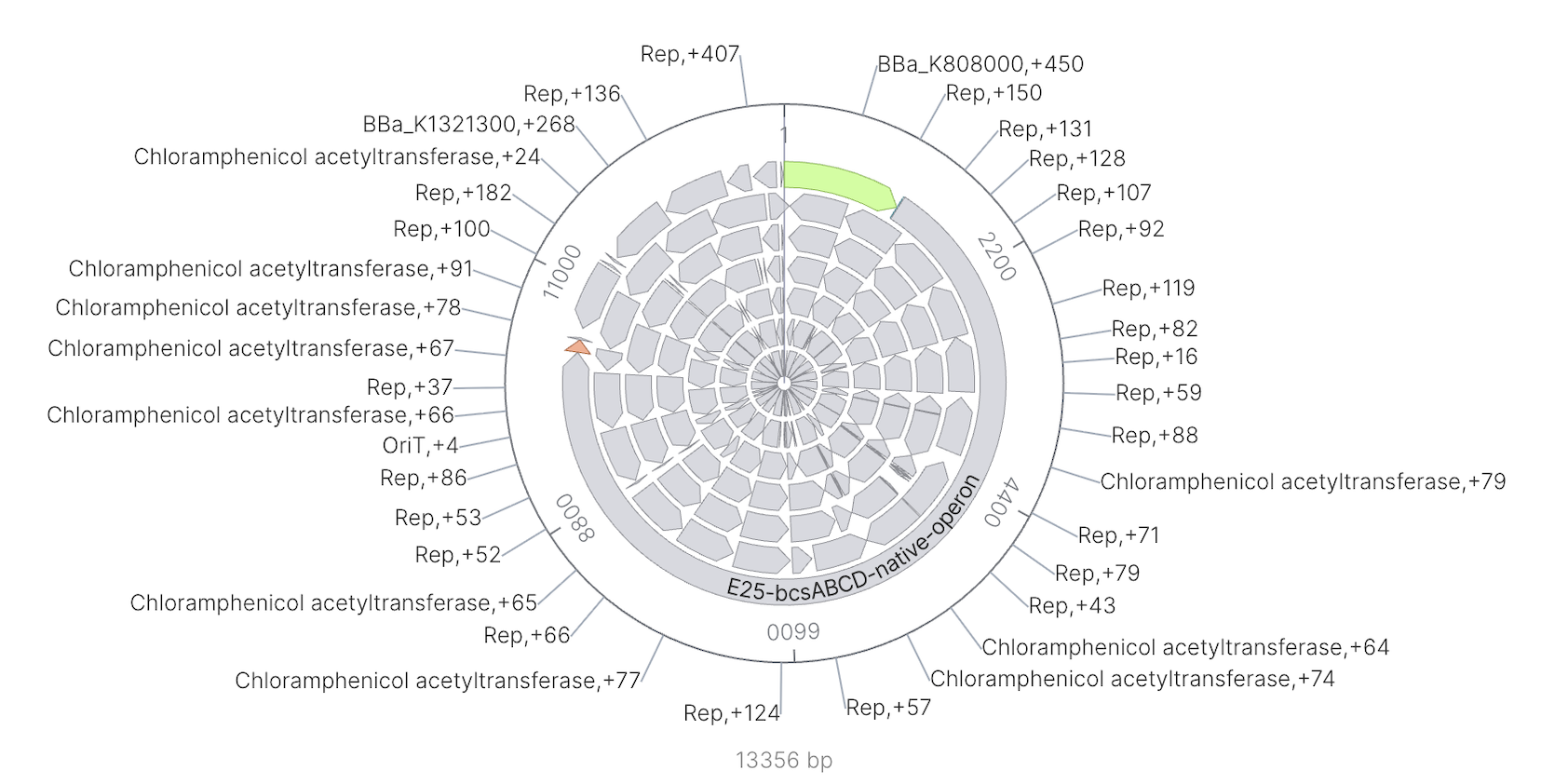
Figure 1b. Kernel circular-map view of the 13,356 bp construct. The five intended top-level parts remain visible. The repeated gray Rep, OriT, and chloramphenicol-acetyltransferase labels are additional annotations rendered by Kernel and were not added as separate top-level parts.
The final construct was exported from Kernel as E25-bcsABCD-expression.gb.
4 Optimize and Quality-Check
4.1 Codon Optimization
I used Kernel’s Simple v0.3 codon optimizer on the 745-amino-acid BcsA protein sequence. Kernel did not provide Komagataeibacter xylinus as an expression organism, so I selected Escherichia coli only as an available bacterial comparison. This does not mean that I changed my final host to E. coli. The optimized sequence encoded the same BcsA protein, but 488 of the 2,235 coding nucleotides and 437 of the 745 codons were changed. The DNA identity between the native and optimized coding sequences was 78.17%, and the coding-region GC content decreased from 58.17% to 45.95%. Codon usage matters because different organisms prefer different synonymous codons, which can affect translation efficiency. I did not apply restriction-site, motif, signal-peptide, or CpG constraints. Kernel reported the codon-usage index and RNA-structure score as N/A. Because my actual host is E25 and the native gene already comes from E25, I kept the native BcsA sequence in the final construct rather than replacing it with the E. coli-oriented sequence. The comparison was still useful because it demonstrated how strongly a host-specific optimizer can rewrite a DNA sequence while preserving the protein and why an automatically optimized sequence should not be accepted when the optimizer’s host does not match the intended production host.
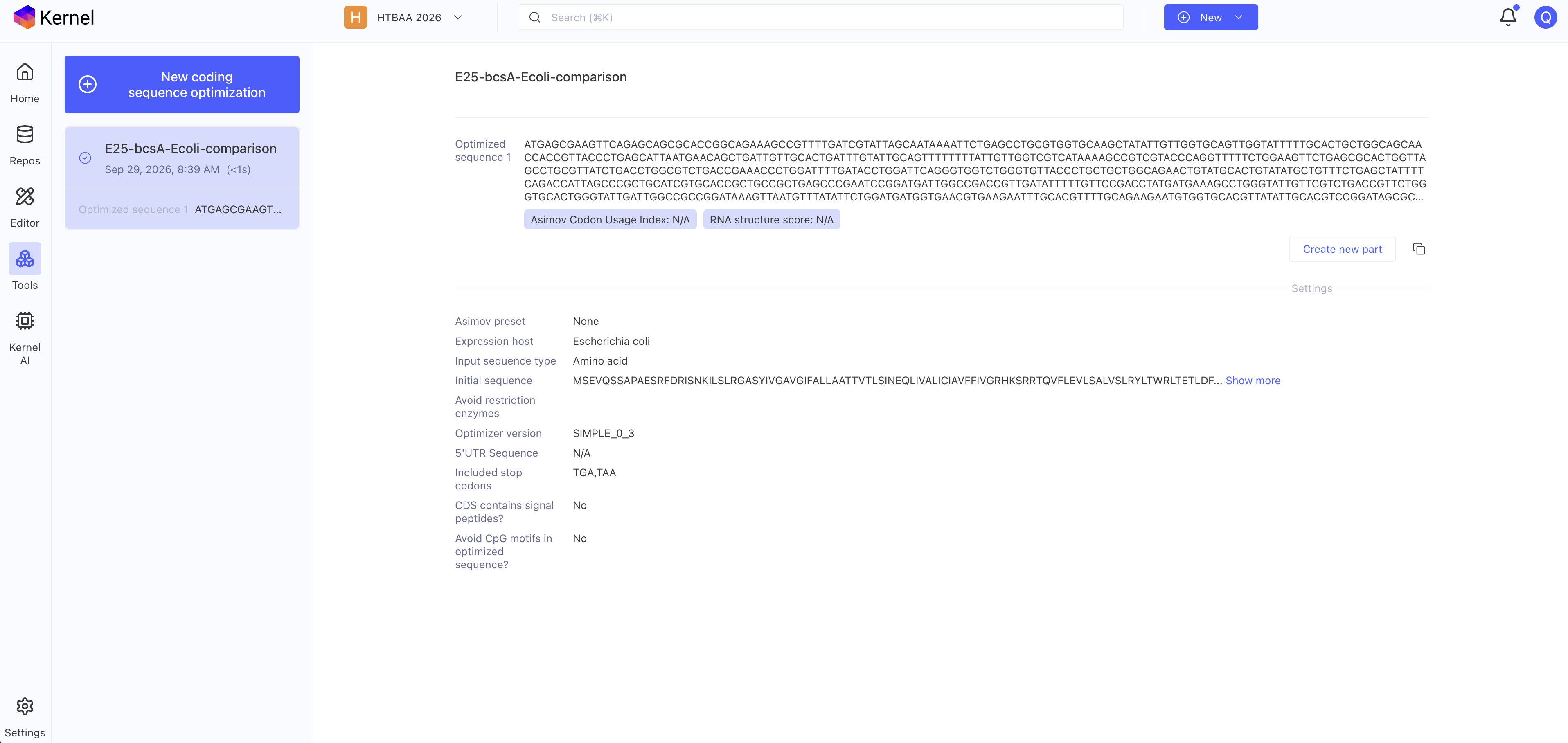
Figure 2. Kernel codon-optimization output for the 745-aa E25 BcsA sequence using E. coli as the comparison host. Kernel reported the codon-usage index and RNA-structure score as N/A.
4.2 BLAST Sequence Search
I searched the native 2,238 bp BcsA coding sequence using NCBI nucleotide BLAST because Kernel’s current toolbox provided pairwise sequence alignment rather than a database BLAST search. I used the region from position 474401 to 476638 of GenBank record CP004360.1 and searched the Core Nucleotide database with megablast. The closest match was Gluconacetobacter xylinus strain E25 cellulose synthase subunit A (bcsA), accession FJ263059.1. The result had 100% query coverage, 99.55% sequence identity, and an E value of 0.0. Gluconacetobacter xylinus is an older name used for Komagataeibacter xylinus. I concluded that my sequence is the expected natural E25 bcsA gene rather than a novel sequence. The BLAST method is described by Camacho et al. (2009).
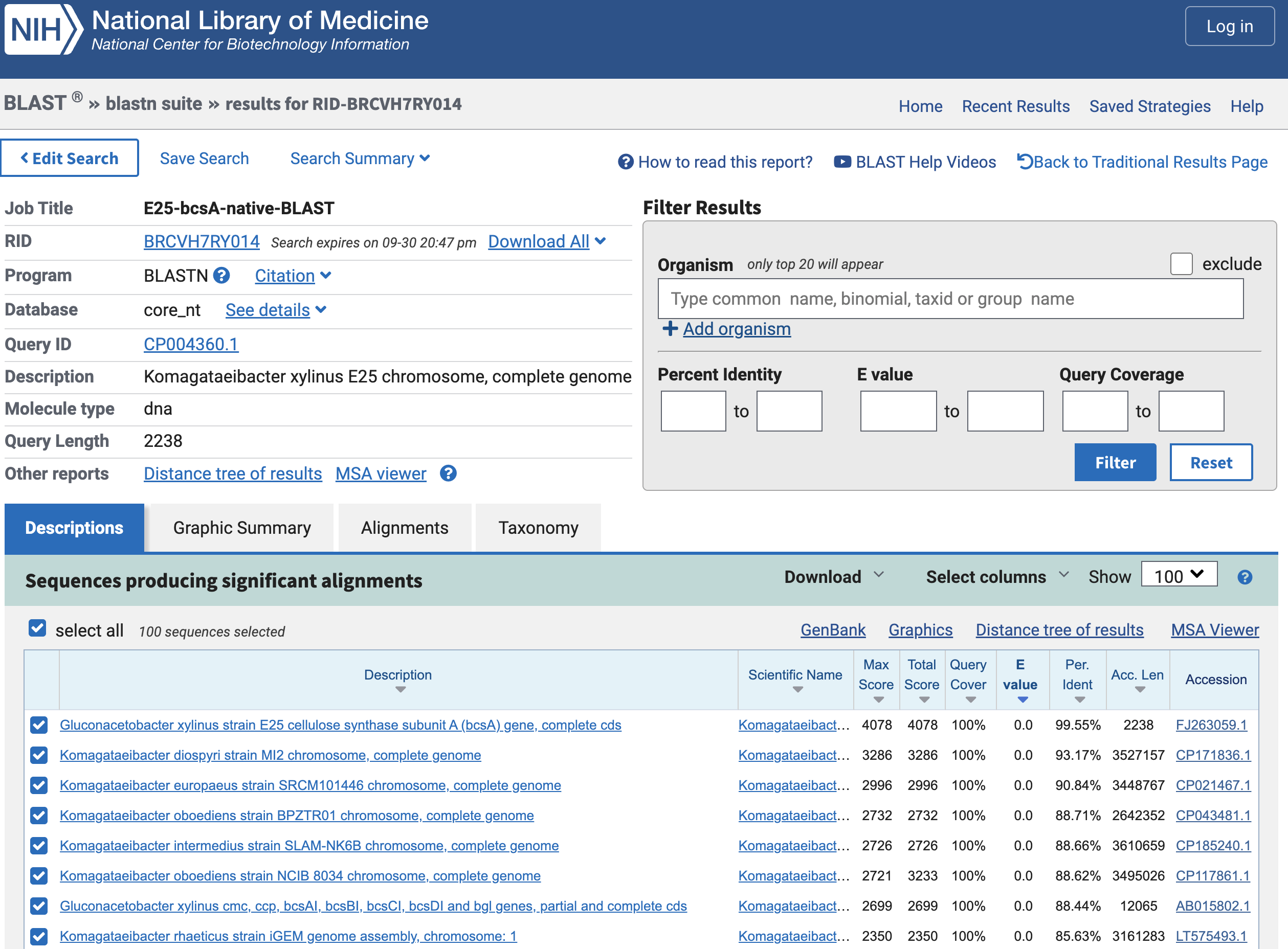
Figure 3. NCBI BLASTN result for the native E25 bcsA CDS. The top hit covered 100% of the query with 99.55% identity and an E value of 0.0.
4.3 Biosecurity Sequence Screening
I submitted the complete 13,356 bp E25-bcsABCD-expression construct to Kernel’s Biosecurity Sequence Scanner. Kernel uses SecureDNA to compare the nucleotide sequence with known hazards and functional variants while protecting the submitted sequence cryptographically (SecureDNA, n.d.). The scanner returned “No flagged sequences detected.” This means that the screening system did not identify a reportable match in the submitted construct at the time of testing. It does not prove that every possible hazard is absent or that laboratory work is risk-free; normal institutional review, containment, training, and safe handling are still required.
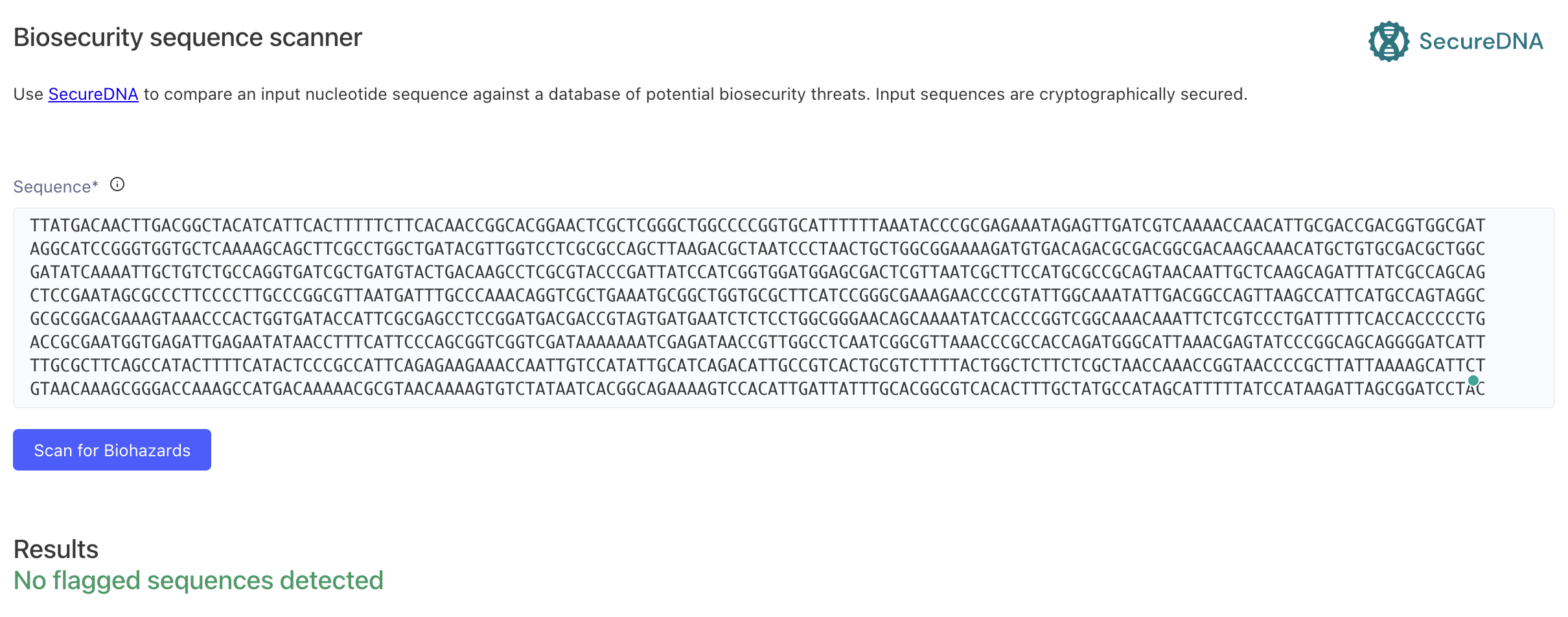
Figure 4. Kernel SecureDNA biosecurity scan of the complete 13,356 bp construct. No flagged sequences were detected.
5 From Design to Build
5.1 How I Would Build the Construct
My final E25-bcsABCD-expression construct is a 13,356 bp circular plasmid. Because it is relatively long and contains a 9,113 bp native operon, I would not try to order the entire plasmid as one synthetic DNA molecule. I would instead obtain several smaller DNA fragments and join them using Gibson assembly.
If genomic DNA from Komagataeibacter xylinus E25 is available, I would use high-fidelity PCR to obtain the native bcsABCD region. Because the operon is long, I would divide it into approximately three overlapping fragments rather than amplify all 9.1 kb in one reaction. The junctions would be designed to preserve the exact native sequence, including the overlaps and short spaces between the four genes. I would obtain the promoter, RBS, terminator, and pBBR1/chloramphenicol-resistance backbone from existing plasmids or individually ordered DNA fragments. Each neighboring fragment would have a unique overlapping end so that Gibson assembly would place the fragments in the intended order.
Gibson assembly is appropriate because it can join multiple DNA fragments without requiring a restriction site at every junction. A 5′ exonuclease exposes complementary ends, the overlapping ends anneal, a polymerase fills remaining gaps, and a ligase seals the DNA. Gibson et al. demonstrated that this method can assemble multiple overlapping DNA molecules and much larger constructs than mine (Gibson et al., 2009).
After assembly, I would first transform the plasmid into E. coli as a cloning host. This step would allow me to obtain enough plasmid DNA and check whether the assembly is correct. I would verify the assembly junctions and preferably the complete plasmid by sequencing. A correctly assembled plasmid would then be transferred into K. xylinus E25, which remains the production host for bacterial nanocellulose.
5.2 Synthesis Constraints and Error Correction
The main challenge is the length of the construct rather than one extremely unusual sequence feature. The complete construct has a GC content of approximately 59.79%. It also contains one run of eight cytosines, but it does not contain extremely long homopolymer runs. The 9.1 kb operon is still difficult to synthesize or amplify as one piece, and the four large coding regions increase the chance that an error could occur somewhere in the construct.
DNA-synthesis errors can include substitutions, insertions, and deletions. Carr et al. showed that the mismatch-binding protein MutS can help remove some incorrect synthetic DNA molecules and reduce the error rate (Carr et al., 2004). However, error correction does not prove that every molecule is correct, so final sequencing is still necessary.
Using smaller fragments would make the process easier to troubleshoot. I could sequence each fragment separately, replace or correct only the fragment containing an error, and then perform the final assembly. I would also avoid placing assembly junctions in difficult repeated regions and would preserve the native reading frames and gene overlaps. After Gibson assembly, I would confirm the fragment junctions, the four coding sequences, and the orientation of the complete construct before using it in E25.
5.3 Prototype Versus Scale
For the first prototype, I would build only one or a few versions of the plasmid using individually obtained DNA fragments and Gibson assembly. I would compare the completed construct with an empty-vector control and test whether induced expression changes BNC production. A chip-synthesized oligo pool would not be my first choice for a single 13,356 bp construct because the mixed oligos would still need to be separated, amplified, assembled, corrected, cloned, and verified.
Kosuri et al. showed that microchip-derived oligo pools are useful when many different genes or sequence variants need to be produced in parallel (Kosuri et al., 2010). Therefore, an oligo pool could become useful later if I wanted to test a large library of promoter or RBS variants. It is less useful for building only one initial construct.
At production scale, I would not repeatedly synthesize the DNA. Instead, I would select one sequence-verified E25 clone and establish a stored master cell bank. Scaling the product would then mainly mean scaling the fermentation and BNC purification processes. If the plasmid became unstable during long cultures or required continued antibiotic selection, a later version could integrate the expression cassette into the E25 chromosome. Chromosomal integration could improve genetic stability, but it would require additional design and testing.
6 What I Do Not Know Yet
6.1 Will the Regulatory Parts Work Properly in E25?
My first uncertainty is whether the AraC-pBAD regulatory part (BBa_K808000) and the RBS (BBa_B0034) will give an appropriate expression level in Komagataeibacter xylinus E25. These parts are commonly used in bacterial genetic engineering, but their behavior has not been confirmed in my specific E25 host. The promoter could be too weak, too strong, or poorly controlled by arabinose in this organism.
I would first test the promoter and RBS with a simple reporter gene, such as GFP, before connecting them to the complete bcsABCD operon. I would grow the cells with several arabinose concentrations and measure fluorescence, cell growth, and background expression without arabinose. I could also use RT-qPCR to measure bcsA transcript levels in the final construct. Based on these results, I would adjust the promoter, RBS, or inducer concentration.
6.2 Will the Large Construct Remain Stable without Harming the Cells?
My second uncertainty is whether the 13,356 bp plasmid will remain stable in E25 and whether expressing four large Bcs proteins will create too much metabolic burden. BcsA and BcsC are membrane-associated proteins, so excessive expression could interfere with cell growth or membrane function. The four proteins may also need to be produced in the correct balance to form a functional cellulose-synthesis and export complex.
I would compare E25 carrying the complete construct with wild-type E25 and an empty-backbone control. I would measure growth rate, final cell density, and plasmid retention over several rounds of culture. Colony PCR or sequencing could show whether the complete bcsABCD region remains intact. If the induced cells grow poorly or lose the plasmid, I would test lower arabinose concentrations, a weaker promoter, a lower-copy backbone, or chromosomal integration.
6.3 Will Additional bcsABCD Expression Improve the BNC Product?
My third and most important uncertainty is whether additional bcsABCD expression will actually increase useful bacterial nanocellulose production. More Bcs proteins do not automatically mean more cellulose. Production could still be limited by UDP-glucose availability, cellular energy, protein-complex assembly, or transport through the cell envelope. Overexpression could also change the structure of the cellulose instead of improving it.
I would culture wild-type E25, the empty-backbone control, and the engineered strain under the same conditions. For each strain, I would measure the dry mass, thickness, and production rate of the purified BNC pellicle. I would also examine fiber structure and test properties relevant to the intended application, such as water absorption and tensile strength. Testing several arabinose concentrations would show whether there is an expression level that improves production without strongly reducing cell growth. If the construct increases gene expression but not BNC production, I would investigate precursor supply and test additional pathway or regulatory changes rather than assuming that further bcsABCD overexpression is the solution.
AI Use Statement
I used OpenAI Codex and Kernel AI as AI assistants while completing this assignment. I used OpenAI Codex to help me understand unfamiliar genetic-engineering terms, organize the assignment requirements, interpret the results shown by Kernel and NCBI BLAST, check sequence information from my exported GenBank file, and revise my explanations into clear writing. I used Kernel AI within the genetic-design platform to help navigate the interface, understand Kernel features, and ask design-related questions while working with parts and constructs.
I personally created the parts and construct in Kernel, ran the codon-optimization and biosecurity tools, submitted the BLAST search, and provided screenshots of the results. Sequence identities, construct length, part order, and reading frames were checked against the Kernel export and the NCBI genome record. I reviewed the explanations and asked follow-up questions when I did not understand a design choice.
Representative prompts included:
- “Help me design the genetic parts required for my bacterial nanocellulose construct using Komagataeibacter xylinus E25 as the host. Make sure the design addresses the promoter, RBS,
bcsABCDcoding region, terminator, replication origin, and selection marker.” - “Guide me through Kernel and explain what each part does. Do not assume that I already understand the difference between a promoter, RBS, coding sequence, and plasmid backbone.”
- “Check whether my assembled construct has the correct part order and explain the warnings reported by Kernel.”
- “Help me compare the native E25 BcsA sequence with a Kernel codon-optimized sequence for E. coli. Explain what remains unchanged and what changes during codon optimization.”
- “Interpret my NCBI BLAST result using the query coverage, percent identity, E value, and closest match.”
- “Explain what ‘No flagged sequences detected’ means for my complete 13,356 bp construct and describe the limitations of this result.”
- “Using the assigned Gibson, Carr, and Kosuri readings, explain how my 13,356 bp construct could be built from smaller DNA fragments and discuss synthesis errors, error correction, and prototype versus scale.”
I treated the AI output as guidance rather than as experimental evidence. The final design decisions—including retaining the native E25 bcsABCD sequence, using the E. coli codon optimization only as a comparison, and keeping E25 as the intended production host—were made after reviewing the sequence sources, Kernel results, assigned readings, and limitations of the design.
AI Reference
OpenAI. (2026). Codex [AI assistant]. OpenAI. Accessed September 29, 2026.
Asimov. (2026). Kernel AI [AI assistant in the Kernel genetic-design platform]. Accessed September 29, 2026. https://docs.kernel.asimov.com/kernel-ai/using-kernel-ai
References
Camacho, C., Coulouris, G., Avagyan, V., Ma, N., Papadopoulos, J., Bealer, K., & Madden, T. L. (2009). BLAST+: Architecture and applications. BMC Bioinformatics, 10, 421. https://doi.org/10.1186/1471-2105-10-421
Carr, P. A., Park, J. S., Lee, Y.-J., Yu, T., Zhang, S., & Jacobson, J. M. (2004). Protein-mediated error correction for de novo DNA synthesis. Nucleic Acids Research, 32(20), e162. https://doi.org/10.1093/nar/gnh160
Gibson, D. G., Young, L., Chuang, R.-Y., Venter, J. C., Hutchison, C. A. III, & Smith, H. O. (2009). Enzymatic assembly of DNA molecules up to several hundred kilobases. Nature Methods, 6(5), 343–345. https://doi.org/10.1038/nmeth.1318
iGEM Foundation. (n.d.). Registry of Standard Biological Parts: BBa_K808000, BBa_B0034, BBa_B0015, and BBa_K1321300. Retrieved September 29, 2026, from https://registry.igem.org/
Kosuri, S., Eroshenko, N., LeProust, E. M., Super, M., Way, J., Li, J. B., & Church, G. M. (2010). Scalable gene synthesis by selective amplification of DNA pools from high-fidelity microchips. Nature Biotechnology, 28(12), 1295–1299. https://doi.org/10.1038/nbt.1716
National Center for Biotechnology Information. (n.d.). Komagataeibacter xylinus E25 chromosome, complete genome (GenBank accession CP004360.1; Assembly GCA_000550765.1; BioProject PRJNA190024; BioSample SAMN03081456) [Data set]. Retrieved September 29, 2026, from https://www.ncbi.nlm.nih.gov/nuccore/CP004360.1
Römling, U., & Galperin, M. Y. (2015). Bacterial cellulose biosynthesis: Diversity of operons, subunits, products, and functions. Trends in Microbiology, 23(9), 545–557. https://doi.org/10.1016/j.tim.2015.05.005
SecureDNA. (n.d.). Frequently asked questions. Retrieved September 29, 2026, from https://securedna.org/faq/
Silva-Rocha, R., Martínez-García, E., Calles, B., Chavarría, M., Arce-Rodríguez, A., de las Heras, A., Páez-Espino, A. D., Durante-Rodríguez, G., Kim, J., Nikel, P. I., Platero, R., & de Lorenzo, V. (2013). The Standard European Vector Architecture (SEVA): A coherent platform for the analysis and deployment of complex prokaryotic phenotypes. Nucleic Acids Research, 41(D1), D666–D675. https://doi.org/10.1093/nar/gks1119
Appendix A: Construct Sequence Record
This appendix provides the source accession, part identities, lengths, orientations, and coordinates used to document and verify the 13,356 bp construct.
Download the complete annotated GenBank file
Table A1. Coordinates of the five parts in the complete construct.
| Part | Position in construct | Length |
|---|---|---|
| BBa_K808000 | nt 1–1209 | 1,209 bp |
| BBa_B0034 | nt 1210–1221 | 12 bp |
| E25-bcsABCD-native-operon | nt 1222–10334 | 9,113 bp |
| BBa_B0015 | nt 10335–10463 | 129 bp |
| BBa_K1321300 | nt 10464–13356 | 2,893 bp |
Table A2. Internal coding-sequence coordinates within the complete construct.
| CDS | Construct coordinates | Length | Boundary with previous CDS |
|---|---|---|---|
| bcsA | 1,222–3,459 | 2,238 bp | First CDS |
| bcsB | 3,446–5,881 | 2,436 bp | 14 bp overlap with bcsA |
| bcsC | 5,884–9,864 | 3,981 bp | 2 bp gap after bcsB |
| bcsD | 9,864–10,334 | 471 bp | 1 bp overlap with bcsC |