Week 8 HW: Biofilm Reproducibility
1. Does the surface material affect how consistently biofilms form?
I would compare glass and polystyrene, a type of plastic. I would put glass pieces in some wells of the same 96-well plate and plastic pieces in others. The pieces would have the same shape and exposed area. I would keep the other conditions the same and use a nonpathogenic teaching strain. I chose the surface material because it can affect how cells attach. Background on surface attachment
I would use several wells for each material. From images, I would measure how much of each piece is covered by the biofilm. I would look for the material that gives more similar coverage across its wells. That would tell me which one gives more consistent results.
2. How active are the cells in the biofilm?
I would use a resazurin test to check how active the cells in the biofilm are. Active cells turn resazurin into a substance that gives off a fluorescent signal. I would use a plate reader to measure that signal and compare the glass and plastic groups. How the resazurin test works
Crystal violet staining shows how much material is attached to the surface. Two samples could have similar crystal violet readings but different resazurin signals. A stronger resazurin signal would tell me that the sample has more metabolic activity overall. That could be because more cells are active or because the cells are more active on average. Background on crystal violet staining
Lab Process
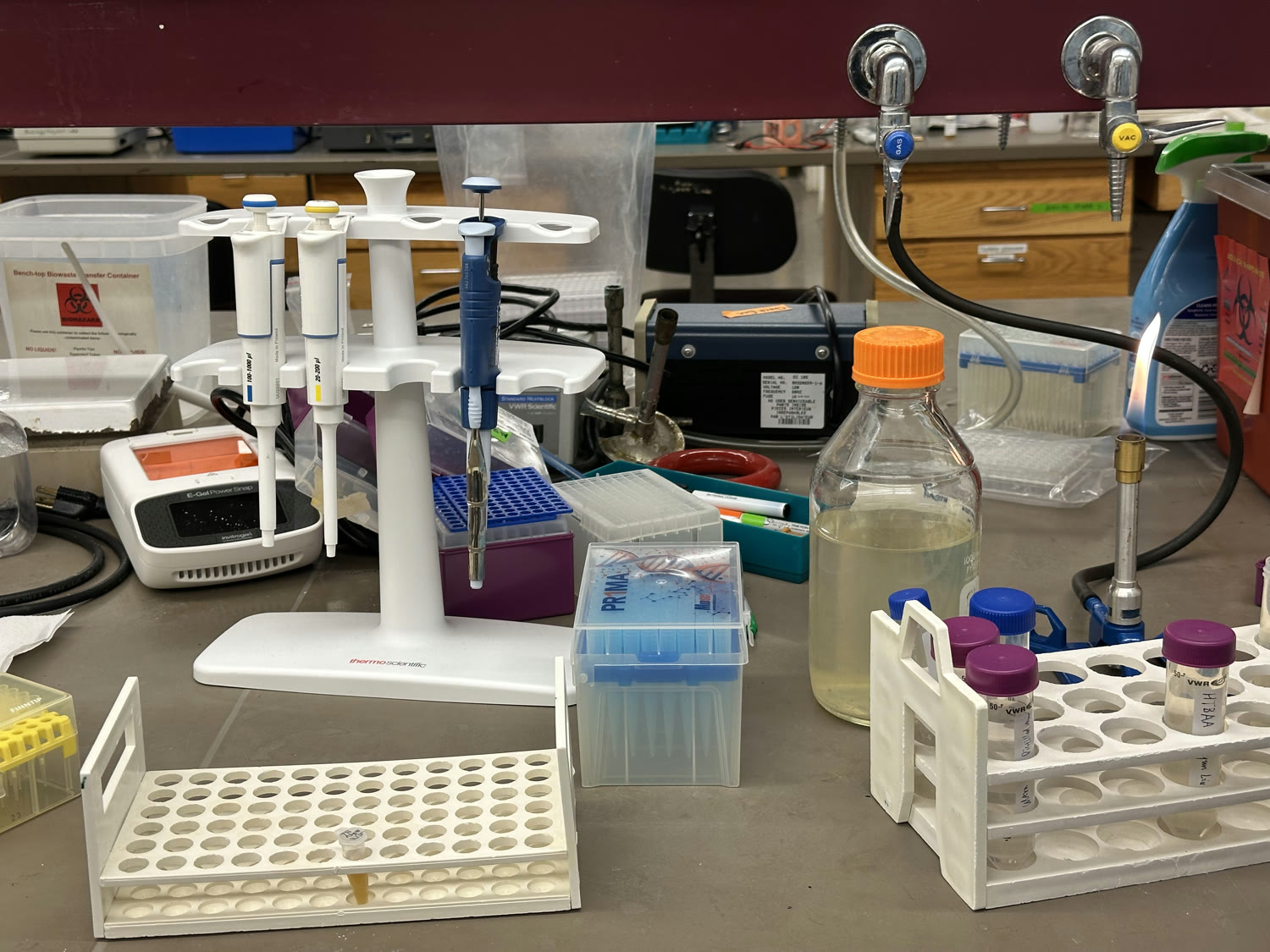
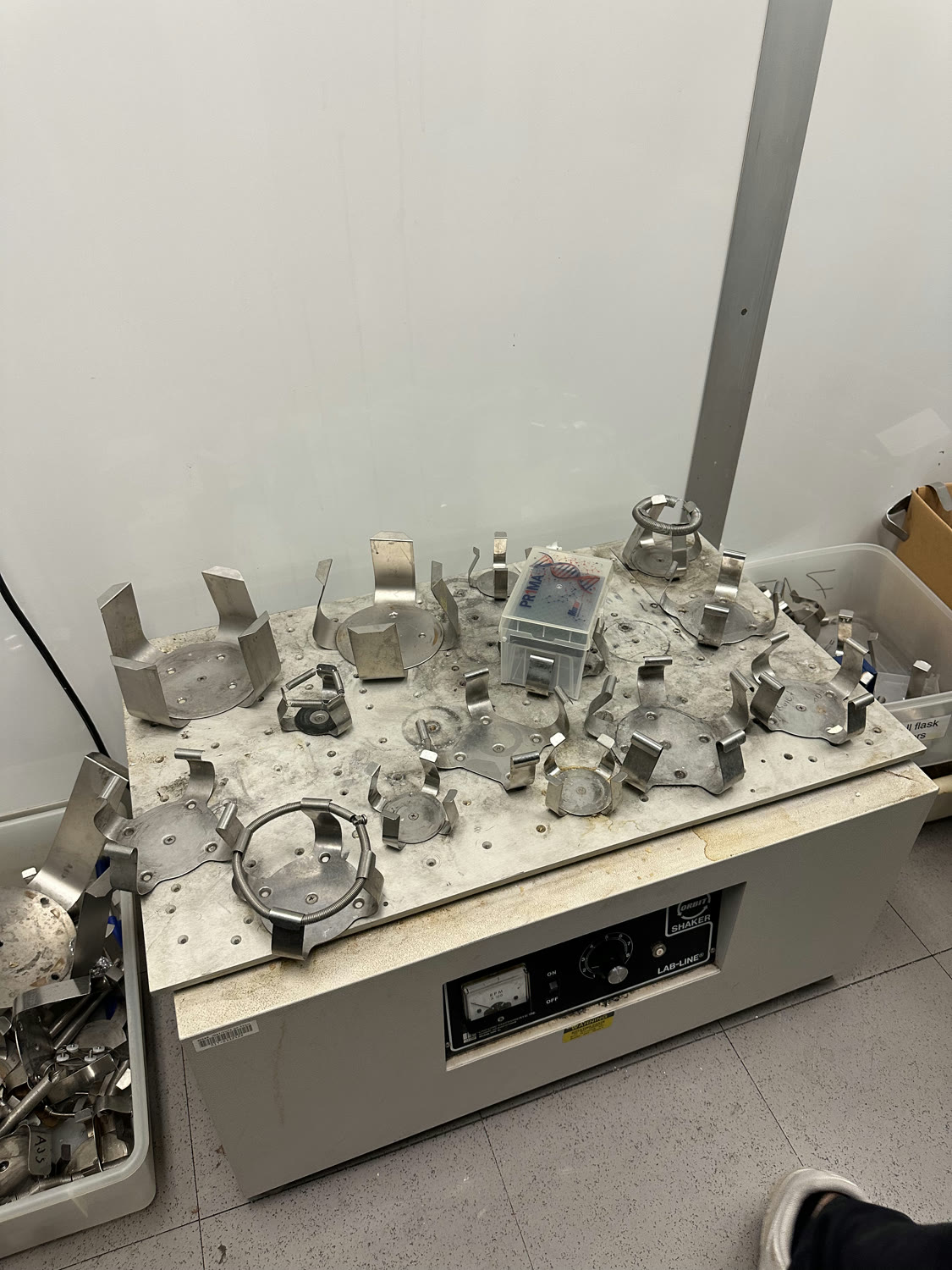
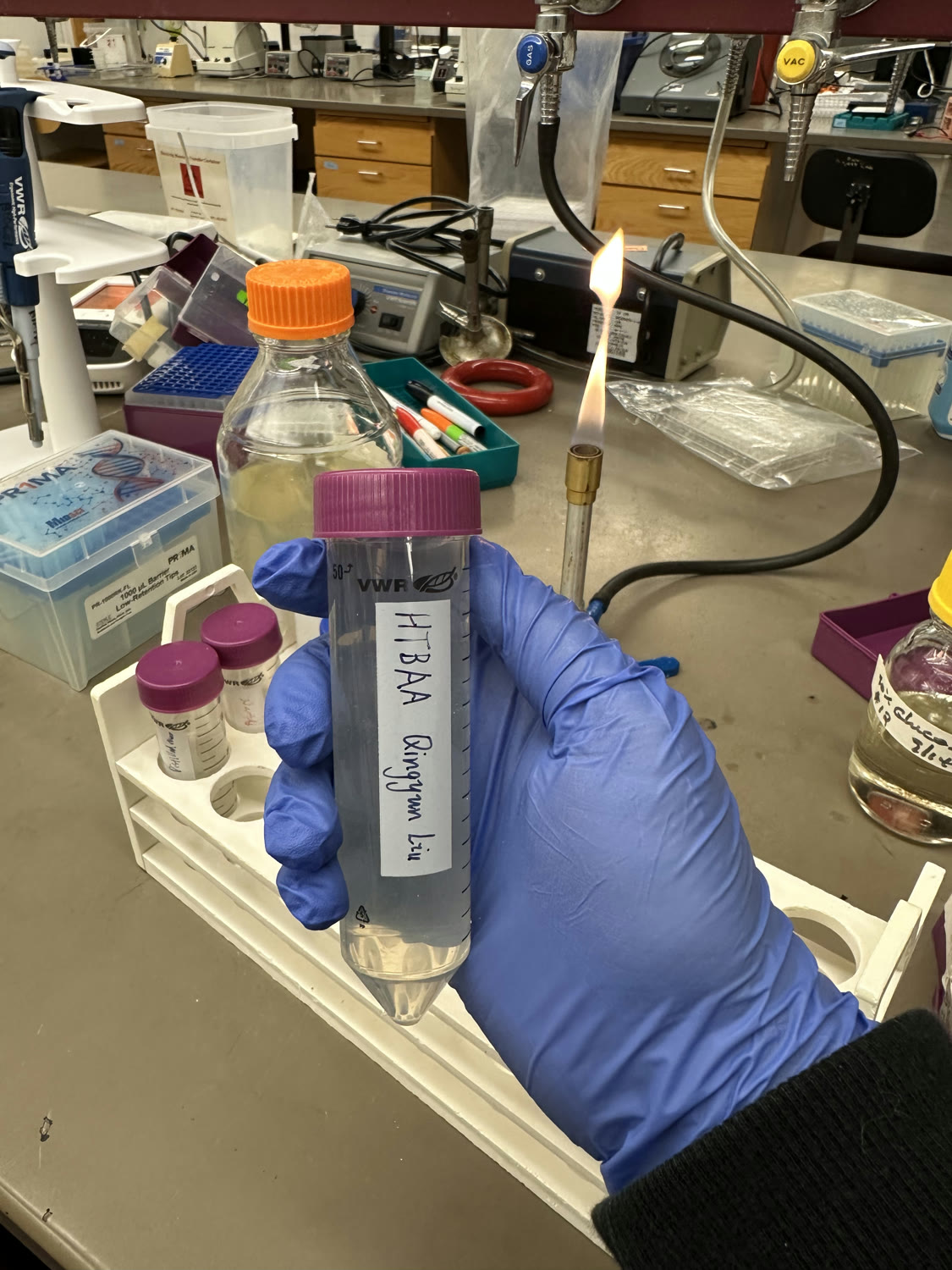
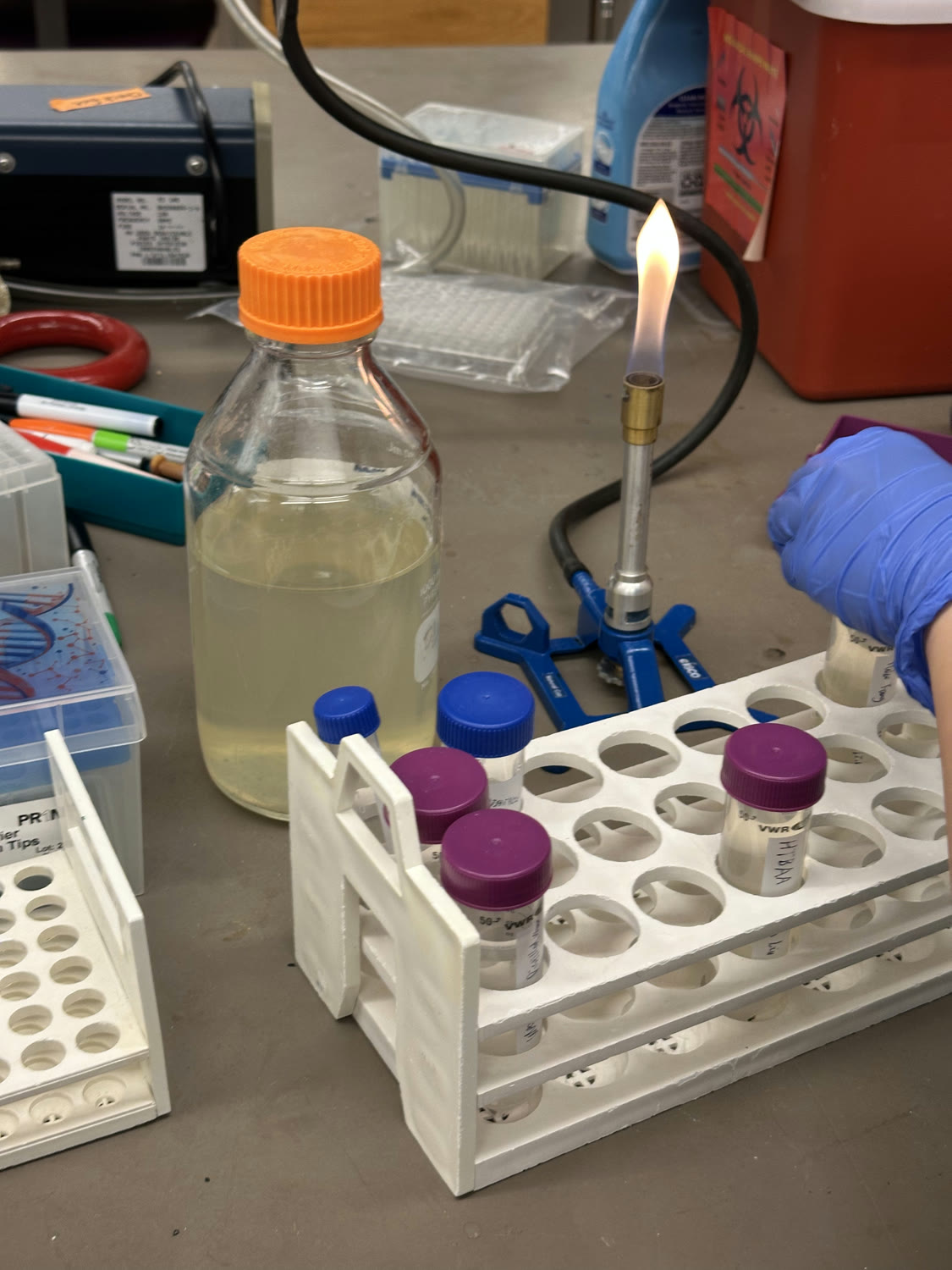
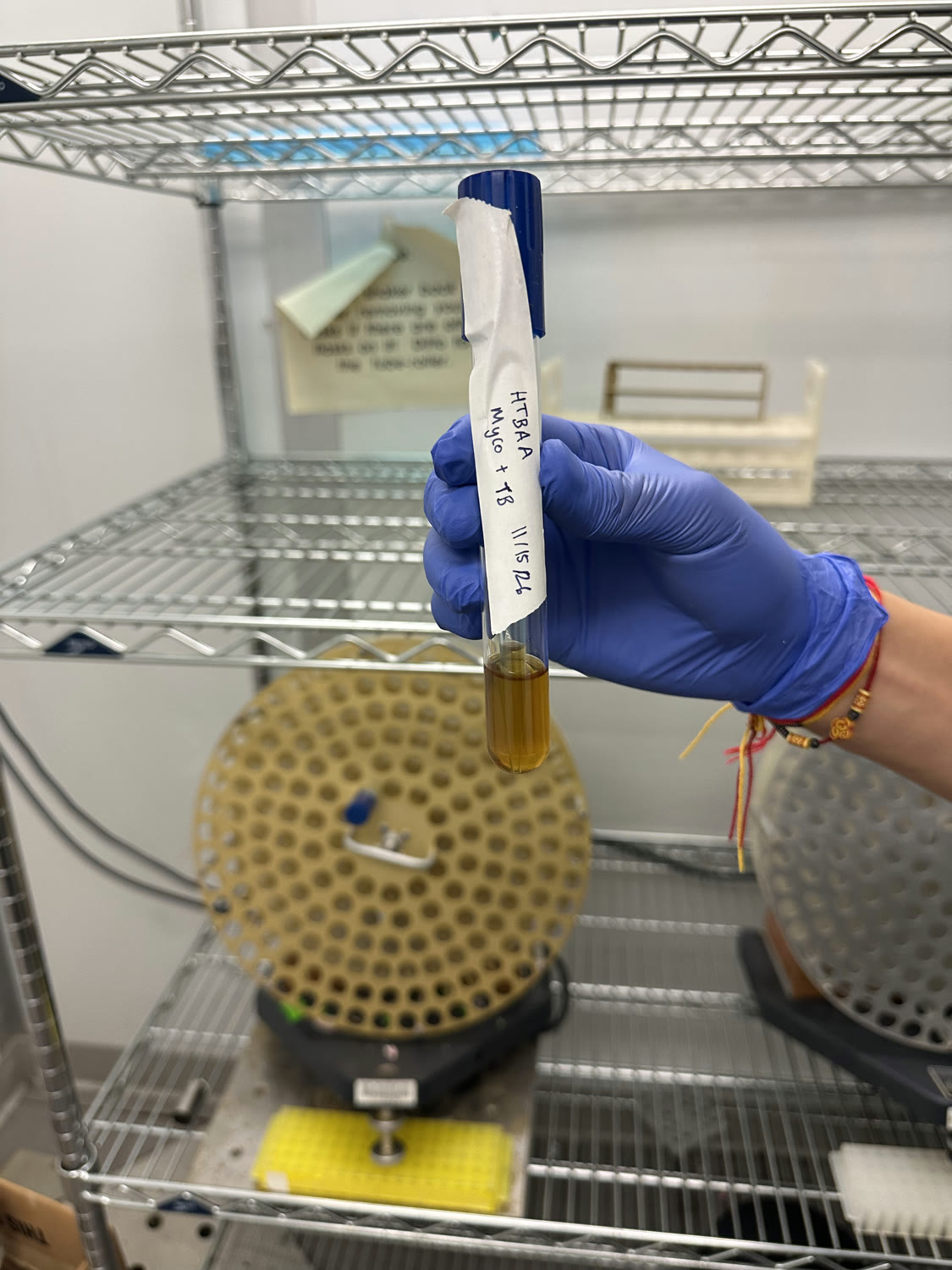
These photos and the video document a separate hands-on lab session. We worked through the preparation by hand. At the point documented here, we had yet to add the microorganisms.