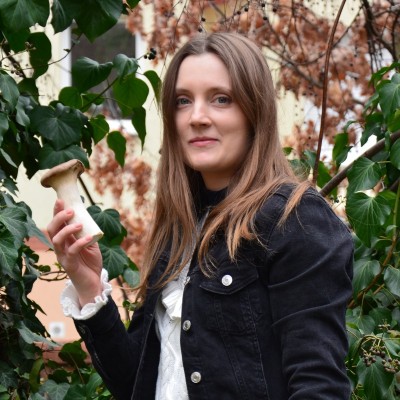
I’m Rebeka Pálfi, based in Budapest, Hungary. I finished my MSc in Industrial Product Design Engineering at Obuda University, and I’ve just started a PhD in Materials Sciences and Technologies there.
I came to biology through design, not the other way around. My background is in product design (and, going further back, garment construction and fashion design). Working with materials made me curious about where they come from and what happens to them after use. That curiosity led me to biodesign and bio-based materials: mycelium composites, agro-waste valorization, and now my PhD topic, fungal chitosan coatings.
Fungi are what hooked me first. I find them fascinating both as decomposers that break down what we consider waste and as organisms that can grow materials. My growing experiments so far have also shaped the way I think. Working with a living organism that follows its own pace has taught me patience and made me much better at planning my time. I’m still learning the biology behind the things I’ve been making, so there’s a lot I don’t know yet.
That’s exactly why I’m excited about HTBAA. I hope the course opens up branches of biology I haven’t encountered yet, and shows me tools and ways of thinking I can bring back into my materials research. I’m looking forward to experimenting and learning from everyone here.
See the nav bar on the left to look through my work for How To
Biomanufacture Almost Anything (Fall 2026)!
Subsections of Rebeka Pálfi — HTBAA Fall 2026
Week 1 HW: Final Project Ideas
Background
I am an industrial product design engineer, and my MSc thesis followed a material-driven design approach, instead of starting from a predefined product, I started by growing mycelium composites myself and letting their behaviour guide the design decisions. I grew Pleurotus mycelium on sawdust, straw, sunflower seed husks, paper and cotton, and other textiles. Also tried to give a nw life to spent mushroom blocks donated by a small artisanal mushroom farm in Budapest. Most of my characterisation was exploratory, I also struggled with contaminaton a lot.
Below I describe two alternative concepts that translate the thesis into a biomanufacturing process. Concept A stays close to what I have actually tested; Concept B is more speculative and extends the idea to textile waste. I have not yet decided which one to develop further, and feedback on that choice would be very welcome.
Concept A: A Mushroom Farm that Harvests Twice
What I want to biomanufacture
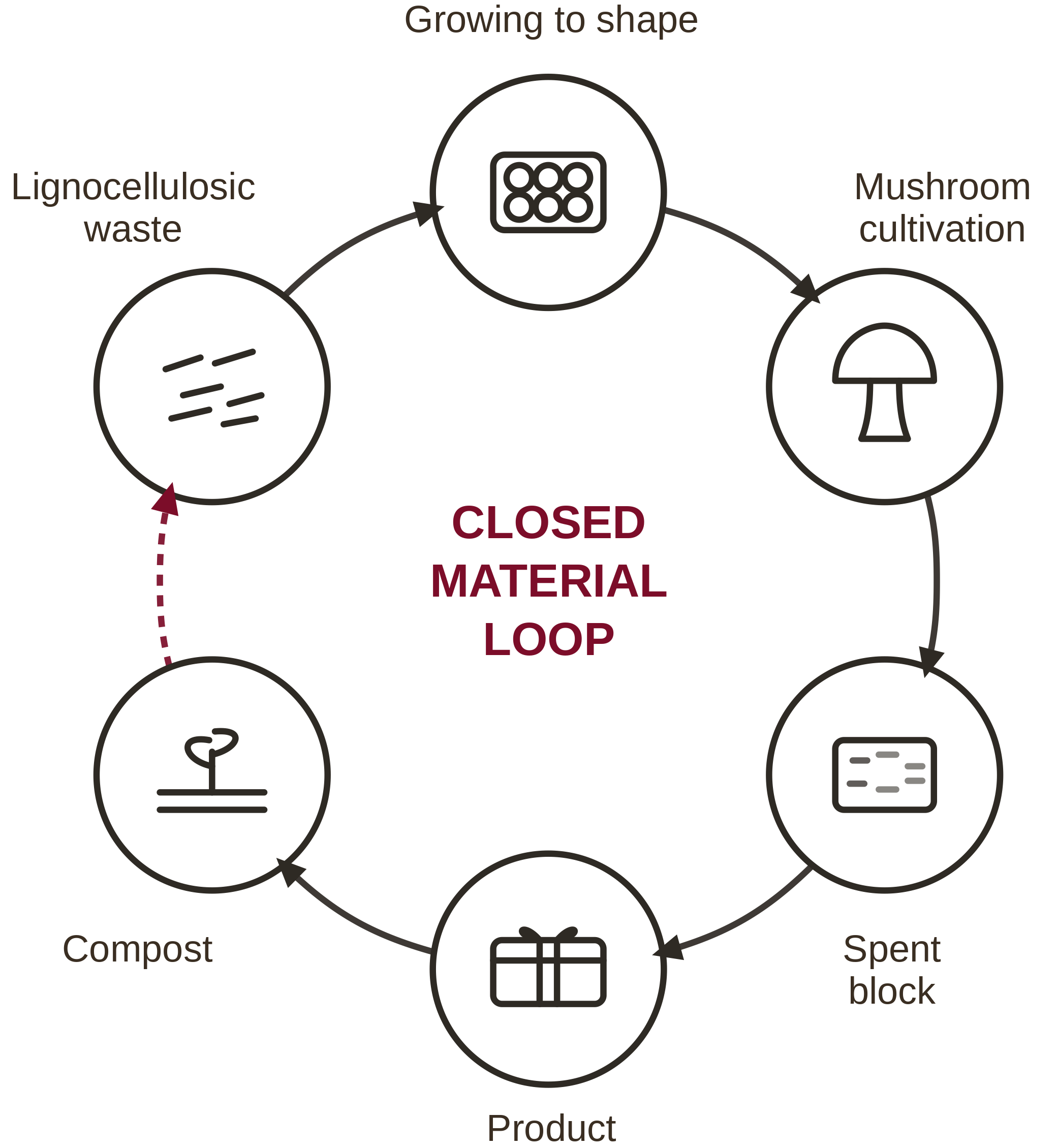
Mushroom farms produce roughly five kilograms of spent substrate for every kilogram of fresh mushrooms, and most of it ends up as a low-value soil amendment. My idea is to fill the substrate into moulds shaped like the final product from the very beginning. The same block first produces edible oyster mushrooms and then, once it is exhausted, is dried into a finished mycelium composite part. One bioprocess yields two product streams: food and material.
The products I have in mind are compostable protective packaging (in my thesis, a gift box that holds six hand-painted Hungarian Easter eggs) and temporary building elements, such as exhibition walls, pavilion blocks or acoustic panels, that can be composted after use.
Why this idea: evidence from my thesis
Two observations led me here. First, the spent blocks from the farm turned out to be a better raw material than fresh substrate: they were already densely colonised, much more resistant to mould contamination, and easier to handle. Second, when I crumbled these blocks and remixed them with a small amount of wheat bran or flour (not sterilised), the mycelium reactivated and formed a new shape, including a soft, leather-like skin on the surface. Reshaping after harvest works, but it costs an extra processing step. Growing the block in its final shape from the start would remove that step.
I also learned that process control matters a lot. My early samples failed because I calculated the 65 % moisture target on a dry basis instead of a wet basis (the correct amount is about 186 g of water per 100 g of dry substrate), and my final prototype was lost to mould because the substrate was over-watered. Both mistakes point towards automated, weight-based dosing.
Figure 1. Closed material loop: food and material production linked in one cycle (Created with Claude AI).
Biological system
Organism: oyster mushroom species (Pleurotus spp.), which are white-rot fungi that degrade lignocellulose, are edible and well documented. I would start with Pleurotus djamor (pink oyster), which grows fastest at around 24–28 °C and therefore needs less cooling and tolerates warm summers.
Feedstock: hardwood sawdust and/or straw supplemented with wheat bran, adjusted to 65 % moisture on a wet basis.
Outputs: fruiting bodies (food) and a porous mycelium–lignocellulose composite (material), in which the hyphal network acts as the binder
Manufacturing workflow
Automated substrate preparation
Sawdust, straw and bran are dosed gravimetrically; water is added under load-cell control to reach 65 % wet-basis moisture; the mix is homogenised and then pasteurised or sterilised.
Automated inoculation and mould filling
Grain spawn is dosed by weight and mixed in, and the substrate is filled into reusable, heat-resistant moulds (stainless steel or glass) whose inner geometry is the product. The moulds have small perforations at defined positions, such as above the future egg cavities, so fruiting happens where surface disruption is either removed later or hidden.
Incubation
Fruiting
Blocks moved to a fruiting room with high humidity, fresh-air exchange and light cues. Cameras observe every block from above.
AI vision and robotic harvesting
A vision model decides when each cluster is ready and triggers a robotic arm to harvest it (more detail in section 5).
Block retirement
The same vision system recognises when a block is exhausted and will not produce another worthwhile flush, and when it is contaminated. Exhausted blocks are sent to the material line; contaminated blocks are sent to composting.
Post-processing
Optional surface reactivation (a thin top-dressing of bran or flour to regrow a dense skin), then drying: first inside the mould at 70–80 °C, which made demoulding easy in my experiments, then out of the mould. Drying at around 40 °C only makes the fungus dormant; about 80 °C or higher is needed to inactivate it. Other optional postprocessing.
Quality control
Mass, dimensions and visual colonisation for every part; compression tests and water uptake on samples from each batch.
-Sale
Compostable protective packaging or temporary construction elements that are composted at the end of their use.
The AI vision component
I see two separate tasks for the vision system. The first is harvest timing: oyster mushrooms should be picked before the cap margins flatten and curl upwards and before heavy spore release. This affects quality. The second is block state classification, based on the history of each block: the number of flushes so far, the yield per flush, shrinkage, discolouration, weak or irregular primordia, and green patches that suggest Trichoderma contamination. The practical output is a single decision: keep fruiting, retire to material, or discard.
Automated mushroom harvesting has been researched for decades, mainly for button mushrooms. Oyster mushrooms grow in irregular, overlapping clusters, which I expect to be harder for both detection and gripping. I do not yet know how much labelled image data this would need or whether one camera angle per block is enough.
What is new here
The mould is shared between food production and material production, and the fungus does the shaping. The mushroom farm becomes a materials factory without a separate growing infrastructure. For food-safety reasons, the fruiting unit and the material-processing unit would be kept in separate buildings on the same site.
Open questions and risksFood versus material trade-off. Every flush consumes substrate that also forms the body of the composite. How will this affect mechanical properties? I have not measured this yet; compression testing on a universal testing machine is one of my next steps.
Geometry. Do perforations reliably control where fruiting bodies form, and does fruiting distort the part?
Economics. The cost of durable moulds and robotics compared with manual work will not be profitable at the scale of a small farm.
Biosafety
The organism is a native, edible, non-genetically-modified species that is already grown commercially. Heat treatment at about 80 °C or higher stops fungal activity in the finished product. The main occupational risk is spore exposure in the fruiting room, which harvesting before sporulation also helps to reduce.
Calculations
A meaningful annual output for one small farm supplying a regional e-commerce or glassware brand is on the order of 10,000 pieces: about 3 tonnes of dry feedstock and 450 kg of spawn, giving 2 tonnes of finished packaging and, as the first harvest from the same blocks, roughly 1.8 tonnes of fresh mushrooms.
Concept B: Mycelium on Textile Waste
What I want to biomanufacture
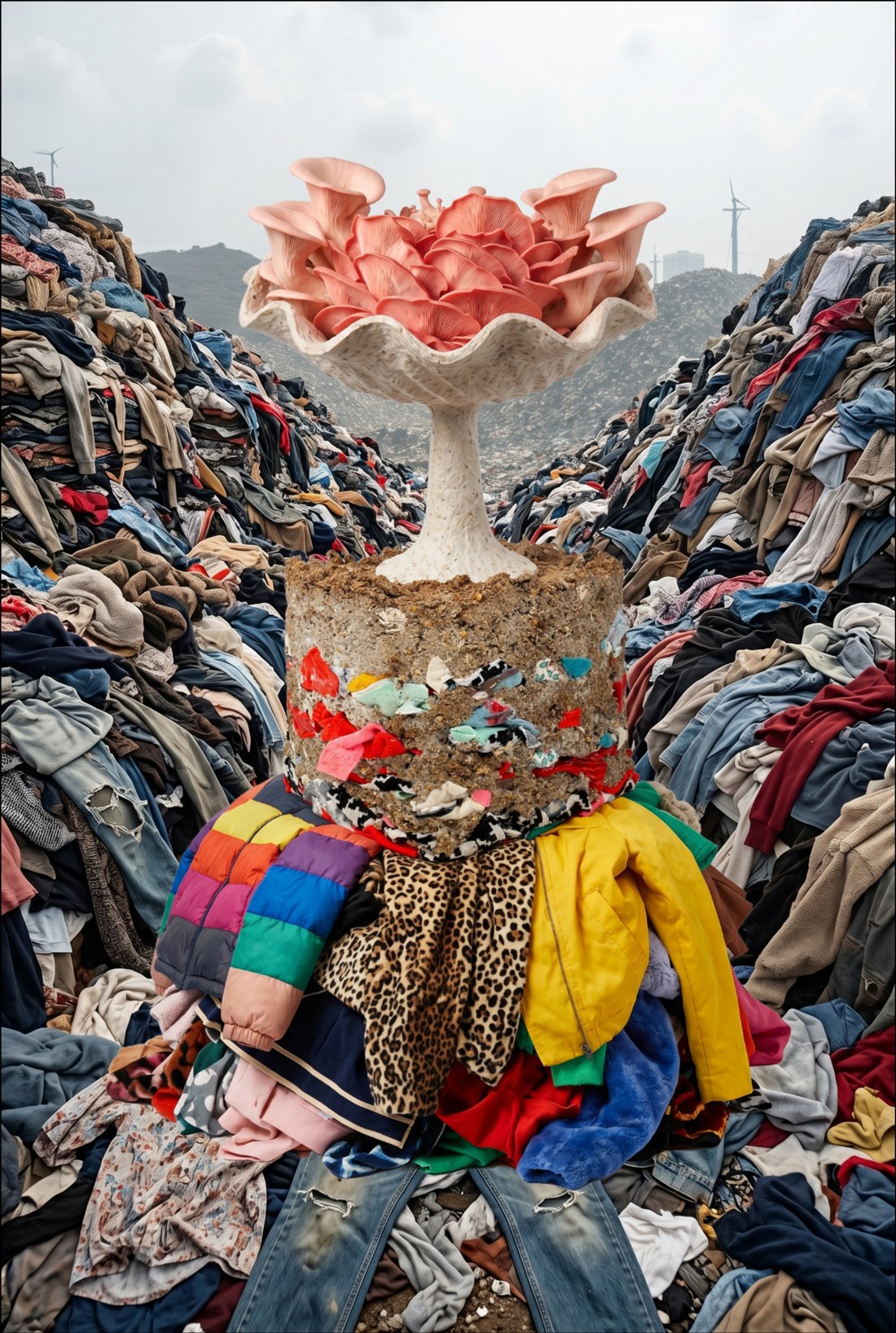
Non-load-bearing thermal and acoustic insulation boards grown from shredded textile waste. The fungus colonises the textile fibres inside panel-shaped moulds and binds them into a rigid, lightweight board without synthetic binders.
The motivation is the scale of the textile waste problem. Since January 2025, EU member states have been required to collect textile waste separately, and in Hungary the collection network is growing quickly. Separating textiles only helps if there is somewhere for them to go. Polyester–cotton blends are the most common and also the hardest to recycle, because the fibres are difficult to separate mechanically or chemically. My secondary school training was in garment construction, and many of my colleagues at the Institute of Product Design come from textile engineering, so this concept connects my own background with theirs. I recently co-authored a review in the Hungarian journal Magyar Textiltechnika on how the role of fungi in the polymer and textile industries is being reinterpreted, from enemy to resource.
Figure 2. Concept illustration: oyster mushrooms fruiting from a mycelium block grown on textile waste (photomontage created with Adobe Firefly).
Biological system and species selection
Primary binder: Pleurotus ostreatus, a white-rot fungus that degrades cellulose efficiently, colonises textile residues and is safe and easy to handle. Trametes versicolor and Ganoderma species are alternatives worth screening, since they are also white-rot fungi with strong oxidative enzyme systems.
The synthetic fraction: this is where I want to be careful. Some fungi have been shown to degrade polyester and polyurethane. However, polyethylene terephthalate (PET), is highly resistant, and I have not found evidence that a binder species degrades it at a useful rate. My assumption is that in a composite the hyphae wrap around synthetic fibres and hold them mechanically rather than digesting them. Two roles, binding and degrading.
Manufacturing workflow
Automated shredding: Shredders and fibre openers reduce the textiles to a defined fibre or particle length. Particle size matters: in my thesis, larger pieces were poorly bound by the mycelium.
Substrate formulation: Textile fibres are dosed together with a nutrient supplement such as wheat bran, and water is added to 65 % wet-basis moisture before mixing and pasteurisation.
Automated inoculation and moulding: Spawn is dosed by weight, and the mix is filled into panel moulds with filter-covered lids for gas exchange.
Solid-state fermentation: Colonisation in the shape of the board under controlled temperature, humidity and CO₂, optionally followed by a short second growth phase after demoulding to form a continuous skin.
Inactivation and densification: Drying, hot-pressing to adjust density and stiffness.
Quality control: Density, thermal conductivity, compressive strength, water uptake and reaction to fire…
Product: Insulation boards for interior partitions and acoustic panels.
Open questions and risks
End of life: If the board contains polyester, it is not compostable, and I should not claim that it is.
Chemical load: Dyes, finishes and flame retardants in waste textiles may inhibit fungal growth or leach into the product and later into soil.
Variability: Mixed waste varies from batch to batch, so sorting and blending will largely determine how consistent the board properties are.
Fire and moisture: Not easy to charecterize beause of the mixed and possibly not consistent substrate.
Calculations
One square metre panel would be about 12 kg of finished material, which needs roughly 15 kg of dry shredded textile and 0.9–2 kg of spawn depending on the inoculation rate. An average Hungarian family house has about 150 m² of external wall, so insulating one house takes 1.8 tonnes of panel, 2.3 tonnes of dry textile waste and 130–320 kg of spawn.
Week 2 HW: DNA Design
Hydrophobin Overexpression in Pleurotus ostreatus
Part 0: Setup in Kernel
Repository: Rebeka_Palfi_week-2_project
Part 1: Expression target
In HW1 I described my concept about connecting the food and packaging production in a mushroom farm. In case of packaging solutions their behavior under wet and humid conditions are critical in many fields of the industry.
So my goal in HW 2 is to overexpress the mushroom’s native hydrophobin. I chose Vmh2, a class I hydrophobin native to Pleurotus ostreatus, expressed specifically in vegetative (non-fruiting) mycelium (Peñas et al. 2002).
As overexpressig hydrophobin can affect the mechanical properties in nn advantegous ways, my plan is to apply this modified strain only to the second, post-harvest growth phase of the already-exhausted substrate block, after the edible fruiting flush is harvested and the block is intervowen by the non modified mycelium. I hope to build up a water-repellent surface layer. The edible fruiting fungus itself stays unmodified (non-GMO).
The host organism would be P. ostreatus itself — homologous overexpression, not a heterologous host.
As my knowledge in this field is not well established, I used Claude AI to collect relevant data, literature and to help me identify the best solutions to my problem.
Regarding localization Claude recommended this: “The native N-terminal signal peptide is retained so the protein exits the cell and self-assembles extracellularly, as in the wild type.”
Part 2: Genetic parts
Collecting the parts I might need to achieve my goal is also done with the help of Claude AI.
Part
Choice
Why this part is needed here (source)
Promoter
P. ostreatus native gpd promoter (with its native intron)
A promoter is required to initiate transcription of the downstream CDS. The native gpd promoter was shown to drive strong, constitutive expression of a fused reporter/marker gene in P. ostreatus itself (Ding et al. 2011; Fabriki-Ourang et al. 2013)
5’UTR
Carried with the gpd promoter fragment (contains one intron)
Sits between the transcription start site and the start codon. In related mushroom species, removing the intron from this region abolished reporter expression — i.e. it is required, not merely optional (Burns et al. 2005)
CDS
vmh2, genomic sequence (with introns)
This is the sequence that actually encodes Vmh2; its exon/intron structure and coding boundaries were determined directly for this gene (Peñas et al. 2002)
Signal peptide
Native Vmh2 N-terminal signal peptide, encoded as part of the CDS
Needed so the protein enters the secretory pathway and reaches the cell surface. Peñas et al. (2002) identified a region compatible with a signal peptide directly within the Vmh2 sequence — the gene already encodes one; it is not an added part
Terminator
CaMV 35S
Needed to terminate transcription and add the poly-A signal. Already used successfully downstream of a gpd-driven cassette delivered by Agrobacterium into P. ostreatus (Fabriki-Ourang et al. 2013)
Selection marker
hph, own CaMV 35S promoter/terminator cassette
Needed to distinguish successfully transformed cells from the (majority) untransformed ones. The same marker/cassette design is already validated with Agrobacterium delivery into P. ostreatus (Ding et al. 2011; Fabriki-Ourang et al. 2013)
Backbone
pCAMBIA1300-type T-DNA binary vector
Needed to physically carry and deliver the cassette into the fungal genome via Agrobacterium. T-DNA-mediated delivery into P. ostreatus mycelium is directly demonstrated (Ding et al. 2011)
Part 3: Assembled construct
Finding the right part in Kernel was difficult for me, I wasn’t able to finalize the construct as I planned in time.
Part 4: Optimize and quality-check
I suppose codon optimization won’t be necessery as I would work with a homologous host.
I still need to build the construct properly to be able to quality check it.
Part 5: From design to build
Assembly: Gibson assembly (Gibson et al. 2009) to join the four fragments — promoter, CDS, terminator, marker cassette — into the backbone. Sequence-independent and isothermal, so it avoids searching for compatible restriction sites across a GC-rich, intron-containing native fragment.
Synthesis fidelity: de novo gene synthesis error rates increase with sequence length and complexity (Tian et al. 2004). Vmh2’s short, cysteine-rich, repetitive coding sequence warrants full sequencing verification of the synthesized fragment before assembly.
Prototype vs. scale: small-scale Agrobacterium-mediated transformation first (following the Ding et al. 2011 / Fabriki-Ourang et al. 2013 protocols), hygromycin selection, then PCR and Southern blot to confirm single-copy integration, before scaling the confirmed strain to a production-size inoculum for the second colonization phase.
Part 6: Open questions and risks
Overexpression assumption: Disruption studies (Han et al. 2023) show that losing Vmh2/Vmh3 reduces surface hydrophobicity, but whether overexpression proportionally increases it is untested.
Sequence verification: Still need direct confirmation in Kernel before the final build.
AI use disclosure
Claude (Anthropic) was used as a tutor and research assistant across multiple sessions to: (1) develop the construct concept from the HF1 project; (2) evaluate and reject a laccase-based alternative; (3) select Vmh2 and justify the homologous-overexpression strategy; (4) research and cite genetic parts (promoter, terminator, backbone, marker) against literature precedent; (5) reason through the assembly order and justify it.
Sources
Peñas, M.M., Rust, B., Larraya, L.M., Ramírez, L., Pisabarro, A.G. (2002). Differentially Regulated, Vegetative-Mycelium-Specific Hydrophobins of the Edible Basidiomycete Pleurotus ostreatus. Appl. Environ. Microbiol. 68(8):3891-3898. Link
Han, J., Kawauchi, M., Schiphof, K., Terauchi, Y., Yoshimi, A., Tanaka, C., Nakazawa, T., Honda, Y. (2023). Features of disruption mutants of genes encoding for hydrophobin Vmh2 and Vmh3 in mycelial formation and resistance to environmental stress in Pleurotus ostreatus. FEMS Microbiology Letters 370:fnad036. Link
Ding, Y., Liang, S., Lei, J., Chen, L., Kothe, E., Ma, A. (2011). Agrobacterium tumefaciens mediated fused egfp-hph gene expression under the control of gpd promoter in Pleurotus ostreatus. Microbiol. Res. 166:314-322. DOI
Fabriki-Ourang, S., Jalali-Javaran, M., Mohammadi-Goltapeh, E., Alizadeh, H., Honari, H. (2013). Optimization of Agrobacterium-mediated transformation in oyster mushroom (Pleurotus ostreatus) by vector containing human pro-insulin gene. Iranian Journal of Genetics and Plant Breeding 2(1). PDF
Burns, C., Gregory, K.E., Kirby, M., Cheung, M.K., Riquelme, M., Elliott, T.J., Challen, M.P., Bailey, A., Foster, G.D. (2005). Efficient GFP expression in the mushrooms Agaricus bisporus and Coprinus cinereus requires introns. Fungal Genet. Biol. 42(3):191-199. DOI
Gibson, D.G., Young, L., Chuang, R.-Y., Venter, J.C., Hutchison, C.A., Smith, H.O. (2009). Enzymatic assembly of DNA molecules up to several hundred kilobases. Nature Methods 6:343-345. DOI
Tian, J., Gong, H., Sheng, N., Zhou, X., Gulari, E., Gao, X., Church, G. (2004). Accurate multiplex gene synthesis from programmable DNA microchips. Nature 432:1050-1054. DOI
Week 3 HW: Cell-Free Protocols
CFPS REACTION DESIGN FOR SFGFP, PETASE, RETEPLASE
Goal: using the collective intelligence of the HTBAA community and accessible AI systems, design novel CFPS reaction compositions for each of the three target proteins: sfGFP, PETase, and Reteplase to reduce the cost per gram of functional protein. Each design should be compatible with the experimental framework described above and should reflect the distinct expression and folding requirements of that protein. You can learn more about the details of the coopetition here.
A. COMPARE CELL-FREE REACTION COMPOSITIONS (20 minutes)
As I don’t have any backgrund in this field, I asked Claude AI (Opus 5) for help. For this I used the following prompt:
Based on the literature provided, answer the following questions:
Why does the concentration of potassium glutamate and magnesium glutamate differ between
compositions? Which is more sensitive?
Explain how a PEP+NTP reaction formulation is different from a Ribose+NMP reaction formulation.
Choose two cell-free reaction compositions from the literature, compare and contrast the choice of
reagents and the concentration of reagents.
Note: A recommended starting point would be to review a least one published formulation, such as PANOx-SP
(Jewett & Swartz 2004), a cost-optimized formulation from Olsen et al. (2026), and/or an AI-designed
formulation from Smith et al. (2026).
How would you explain the answers to a 14 year old kid?
1. Why does the concentration of potassium glutamate and magnesium glutamate differ between compositions? Which is more sensitive?
Two salts show up in the recipes: potassium glutamate and magnesium glutamate. They do completely different jobs.
Potassium is like the water in a swimming pool. Potassium makes the general environment feel right to the molecules, not too salty, not too dilute.
Magnesium is like the screws holding a machine together. Ribosomes literally need magnesium ions to clamp their two halves onto each other. Too few and the machine falls apart; too many and it seizes up.
The numbers back this up. In Jewett and Swartz’s tests, being 4 mM off on magnesium cost them 10–35% of their protein. Being 8 mM off cost them half. Meanwhile potassium could swing by 100 mM — a huge range — with barely any effect.
There’s a wrinkle that explains why magnesium keeps changing between recipes: some ingredients grab magnesium and hold onto it. PEP (one of the fuels) grabs it tightly; pyruvate doesn’t. So when the Stanford team switched fuels, they had to drop magnesium from 20 mM to 8 mM — not because the ribosomes wanted less, but because less was being stolen.
2. Explain how a PEP+NTP reaction formulation is different from a Ribose+NMP reaction formulation.
Building a protein takes energy, the same way your body needs energy to move. Cells carry energy in a molecule called ATP — think of it as a tiny rechargeable battery. Use it, it goes flat, something recharges it.
The old way: buy expensive batteries
Pour in ready-made ATP plus a chemical called PEP that recharges it fast.
It works — for about two hours. Then three things go wrong at once:
Every time PEP recharges a battery, it leaves behind phosphate, which is garbage. Above about 30 mM, phosphate jams the machinery. The reaction poisons itself with its own waste.
The soup turns acidic, down below pH 6.5, which the machines don’t like.
It costs about $4,000 for a gram of protein. PEP alone is most of that.
The new way: buy the parts and let the soup build its own batteries
Don’t add ATP at all. Add cheap raw materials — ribose (a sugar), nucleoside monophosphates (half-built battery pieces), a controlled amount of phosphate — and let the enzymes already floating in the soup assemble batteries themselves, continuously.
It sounds like it shouldn’t work. It does. Within 30 minutes the soup has made just as much ATP as the expensive version, starting from zero. And instead of spiking and crashing, the ATP level stays steady for the whole 20 hours.
The clever bit: phosphate is now an ingredient you add on purpose instead of garbage that builds up. Same chemical, opposite role.
Results: more than double the protein, for $60 a gram instead of $4,000. About 98% cheaper.
The catch. This version runs on the soup’s own breathing machinery, so it needs oxygen. In a deep narrow tube, the liquid at the bottom suffocates. The researchers found that reaction yields depended on the shape of the container — and when they piped pure oxygen in, yields jumped by 45%. That’s a weirdly physical result for a chemistry problem: the shape of your tube matters as much as your recipe.
3. Choose two cell-free reaction compositions from the literature, compare and contrast the choice of reagents and the concentration of reagents.
A team at Ginkgo Bioworks hooked GPT-5 up to a robot laboratory. The AI designed the experiments, robots physically ran them, the data went back to the AI, and it designed the next round. Six months, about 36,000 different recipes, 150,000 measurements. Humans mostly just loaded supplies into the machines.
Compare the AI’s best recipe to the best human one:
Ingredient / result
Human recipe
AI recipe
Cell soup
30%
25%
DNA
8.7 nM
5 nM
Battery parts (NMPs)
about 2.2 mM each
about 1.0 mM each
Spermidine
0.13 mM
1.2 mM
Protein made
2.4 g/L
3.0 g/L
Cost per gram
698 USD
430 USD
Two things stand out.
The AI cut the expensive stuff. The humans had already made the chemicals so cheap that the soup itself and the DNA became over 90% of the cost. So the AI used less soup and less DNA — attacking whatever was most expensive, which is exactly what a good engineer does.
The AI put something back. Spermidine is a cheap molecule that helps stabilise DNA and RNA. The human optimisation had nearly removed it. The AI added it back at nearly ten times the amount — landing almost exactly where the original 2004 paper had put it, twenty-two years earlier.
Note: A recommended starting point would be to review a least one published formulation, such as PANOx-SP (Jewett & Swartz 2004), a cost-optimized formulation from Olsen et al. (2026), and/or an AI-designed formulation from Smith et al. (2026).
B. DESIGN ONE REACTION COMPOSITION FOR EACH OF THE THREE PROTEINS (40 minutes)
Sign in to coopetition.htgaa.org and publish your first unique 20 µL CFPS reaction composition for each of the following (don’t worry, you can resubmit later):
sfGFP
PETase
Reteplase
For each composition, specify the reagents you would adjust from the relevant categories, including salts, energy sources, building blocks, cofactors, and redox components.
As a HTBAA research team, we will have the opportunity to suggest new reagents to add to the cell-free reagent inventory. Contribute (or upvote) at least one reagent to the “Community Reagents” section of the website and provide a short rationale. Include in your homework documentation how you decided on that specific reagent and provide links to any relevant research.
Visit the cfps-coopetition forum page to ensure you will be able to take part in the discussion. Bonus: send a note in the channel about a CFPS optimization idea that you have! If you would like clarification on aspects of the project, please message in this dedicated channel.