Week 1 HW: Final Project Ideas
Project Proposal: On-Demand, Cell-Free Recombinant Antivenom
What do you want to make?
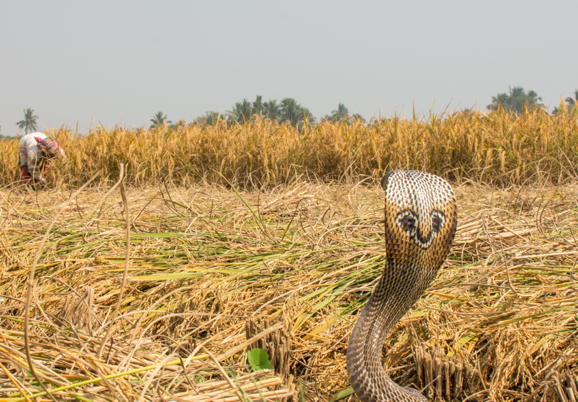
I want to make cell-free on-demand antivenom, specifically for snake venom in India. India accounts for roughly 50,000 to 60,000 snakebite deaths per year (nearly half the global total), predominantly driven by four species— the Spectacled Cobra (Naja naja), Common Krait (Bungarus caeruleus), Russell’s Viper (Daboia russelii), and Saw-scaled Viper (Echis carinatus). The public health centers in remote regions where snake attacks are fairly common lack the ability to store equine-derived polyvalent antivenom in the 2 to 8 degrees celsius conditions due to lack of proper instruments or access to consistent electricity. In addition, the antivenom risks anaphylaxis in the patient, and contains mostly non-specific horse antibodies. Hence, a lyophilized recombinant nanobody cocktail. By coupling nanobodies with cell-free technology, the production shifts from massive centralized livestock facilities to on-demand synthesis at rural clinics, reconstituting freeze-dried reaction tubes with local water whenever a patient arrives.
What living system could make it?
Cell-free protein synthesis based on an engineered E. coli extract could be a suitable cell-free system that could make this form of anti-venom. The system should contain lyophilized cell extract containing cell machinery like ribosomes, elongation factors, and metabolic enzymes. Substrates required for energy and the 20 required amino acids will also be needed for the system. The DNA coding for the anti-toxin nanobodies could be input in the form of a plasmid or a linear expression cassette. Sterile water will also be required.
These ingredients can use cellular machinery (central dogma of molecular biology) to code for the required nanobodies and fold them with the help of chaperone proteins, etc.
The resulting anti-venom will hopefully only require sterilisation through filtration before infusion.
How could automation help you make it?
There are two levels of automation— creating the lyophilised cell-free system that makes the product, and activating the system itself for the production of anti-venom. In the first scenario, a liquid handler could assist in biomanufacturing by setting up hundreds of tiny cell-free recipes by hand and testing different concentrations of various ingredients like DNA or salts to find the optimal ratio and conditions by pipetting them into microplates and running assays.
In the second scenario, a benchtop device at the healthcare facility that incubates the pre-packaged dry and sterile ingredients by dispensing it in the right amounts with water at the required conditions before filter-sterilising the antivenom to be used for the patient would also be ideal.
What would it take to make it at a meaningful scale?
There is no study done to estimate the average number of snake-bite patients at various healthcare facilities in India, but a safe assumption would be that each primary health care facility will not require more than 20 doses a month. Each dose would roughly require 20-60 mg of antivenom, especially because the product does not contain other non-specific (WHO). Therefore, around 800 mg of antivenom is required each month.
Since the manufacturing itself is completed only when necessary, it would not be more than 3 hours per dose of the required concentration. This means, the prepared doses can be stored during seasons where snake bites are more frequent, while in other cases they can prepare the dose before patient arrival when informed.
What we don’t know yet.
Because the lysate is derived from E. coli, residual lipopolysaccharides (endotoxins) could trigger life-threatening septic shock upon intravenous injection. Testing whether using genetically modified LPS-free strains preserves high cell-free yields while keeping up to the clinical standards is unknown.
The nanobodies themselves could be susceptible to renal filtration, so they may require PEGylation, albumin-binding domains or the creation of multivalent versions to stay in the body and neutralise the venom in circulation.
AI Agent used: Google Gemini