Sebastian Calvo is a DPhil student in the Circular Economy and Sustainability Lab within the Department of Engineering Science at the University of Oxford, supervised by Professor Lucia Corsini.
He holds a BS in Mechanical Engineering with a minor in Sustainability from Franklin W. Olin College of Engineering, and an MA in Design Engineering jointly awarded by Brown University and the Rhode Island School of Design. His graduate level work focused on bio-design, exploring novel materials and design approaches that use technology to foster more regenerative relationships between the built and natural environments.
Prior to returning to academia, Sebastian worked in NASA’s Earth Science Division at the Goddard Space Flight Center, where he supported the development and deployment of LiDAR instruments used to study the structure and composition of Earth’s atmosphere in both laboratory and field settings.
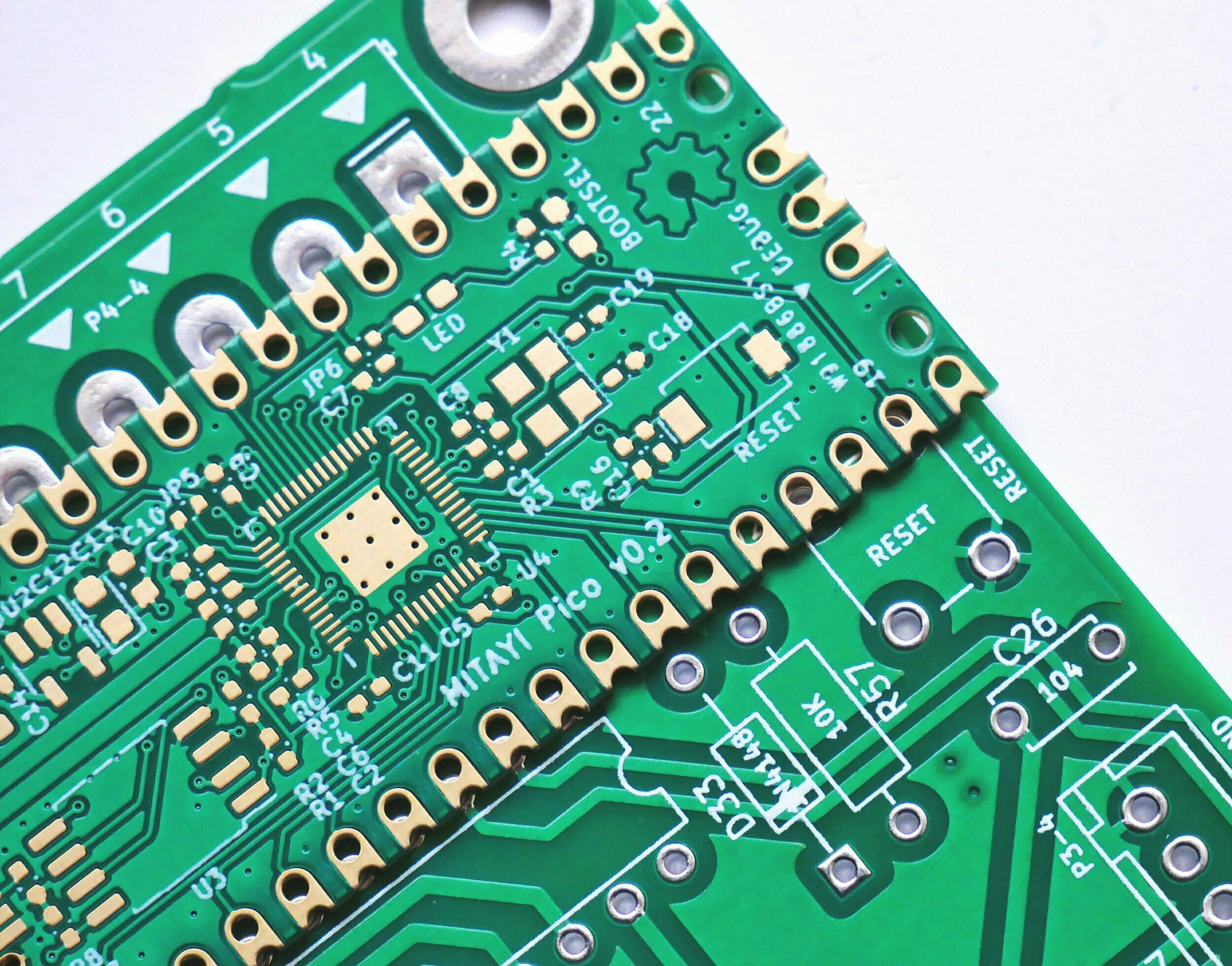
Sebastian’s current research focuses on the circular economy of the Electrical and Electronic Equipment (EEE) sector. In particular, he is investigating emerging bio-based materials as potential alternatives to highly unsustainable printed circuit board (PCB) substrates. His work explores new materials as well as how they might fit into existing and emerging circular systems for PCB production, with an emphasis on digital tools, distributed manufacturing, and design strategies that enable circularity from the outset.
See the nav bar on the left to look through my work for How To
Biomanufacture Almost Anything (Fall 2026)!
Subsections of <Sebastian Calvo> — HTBAA Fall 2026
Week 1 HW: Final Project Ideas
(1) What you would like to biomanufacture and why?
I am interested in exploring the use of bio-manufacturing for creating printed circuit board (PCB) substrate materials. More specifically, at the moment I am interested in exploring microbial cellulose (MC) also referred to as bacterial cellulose (BC). E-waste is one of the fastest growing waste streams globally. Electronic waste is one of the fastest-growing waste streams in the world, with global generation reaching over 62 million tonnes annually, and projected to increase significantly in the coming decades. Less than 25% is formally recycled. Despite the high material value of electronic devices, recovery rates for critical elements remain extremely low, with only a small fraction of rare materials sourced from recycled streams. This represents not only a substantial loss of valuable resources, but also a significant environmental and social burden. The electronics lifecycle involves energy-intensive extraction and processing, often associated with hazardous working conditions and environmental contamination, while improper disposal releases toxic substances such as heavy metals and flame retardants into ecosystems and human populations. These substances include brominated flame retardants (BFRs) and other contaminants that are highly toxic and stable enough to persist and bio-accumulate in the environment over time. Furthermore, despite making up only 4-7% of total e-waste mass, PCBs hold approximately 90% of the economic value of e-waste. While valuable metals can sometimes be recovered from waste PCBs at high energy and infrastructure cost, the non-metallic fraction, typically the majority by mass, is rarely recirculated and is instead landfilled, incinerated, or occasionally downcycled into low-value applications.
Conventional PCB substrates are typically based on FR-4 (flame retardant 4), a glass-fibre-reinforced thermoset epoxy laminate. There are also lower grades of FR materials, such as FR-2, which utilize lower value phenolic resins. This material system has clear engineering advantages, including mechanical rigidity, thermal stability, electrical insulation, and compatibility with established manufacturing processes. However, these same properties also create major barriers to end-of-life solutions. FR-4 is chemically resistant and mechanically robust which makes it extremely difficult to separate, recycle, or degrade at end of life. As a result, the substrate component of PCBs remains one of the most persistent and problematic fractions of electronic waste.
Bio-based PCB substrates have emerged as a potential route to address this challenge at the material level. Bio-based substrates can be understood as part of a broader circular-supplies strategy in electronics, where renewable or biologically derived materials reduce dependence on fossil-derived and non-renewable inputs. In addition to renewability, bio-based substrates may offer sustainability advantages such as reduced environmental impacts and toxicity across substrate life-cycle, compatibility with biodegradation or composting pathways, and improved material and component recovery at end of life. However, these materials still suffer from significant issues when it comes to use as a PCB substrate such as moisture sensitivity, poor copper adhesion, and high flammability.
My PhD research focuses on application focused testing of bio-based PCB substrate alternatives, and I am hoping this course will strengthen and expand my understanding of bio-manufactured materials that may be suitable for this purpose.
(2) What living system would you use?
One promising living system that has started to be explored for use as a PCB substrate material is the use of microbes that create microbial cellulose. Microbial cellulose is a highly pure form of cellulose produced directly by certain bacteria (such as Komagataeibacter species) rather than extracted from plants. The bacteria synthesize cellulose nanofibers extracellularly, forming a three-dimensional network of nanoscale fibrils. It is distinguished by its high crystallinity, exceptional mechanical strength, high water-holding capacity, and absence of lignin and hemicellulose. These properties make bacterial cellulose especially attractive for biomedical applications, food products, flexible electronics, and advanced functional materials.
The production of these materials begins with the culturing and growth of cellulose producing bacteria. They are typically grown in large trays of liquid culture and fed a carbon source such as glucose, sucrose, etc. The microorganisms then convert this carbon source into cellulose chains that are extruded through the cell wall that (during static fermentation) forms a surface mat of hydrogen bonded and entangled cellulose microfibers called a pellicle. Agitated fermentation can produce other forms of cellulose, but for PCB substrate materials, a flat sheet seems preferable.
After several days of growth the pellicle can be harvested. However at this stage it still contains high amounts of water and other non-cellulose materials. The material then needs to be washed, sterilized, and pressed, dried, and otherwise processed to be used as a viable material.
(3) How would you use automation?
Automation can be worked into this process at two phases/scales. One being for development of the material itself, and then again at the scale of industrial production once the material is dialed in.
Use of microbial cellulose as a PCB substrate is still very new, and so there is lots of room for further development. This includes varying things such as bacterial strain, growing conditions, nutrient recipe, pH, etc. This process of testing small alterations in production methods at small scales could be sped up significantly via lab automation technologies like liquid handlers. Automation could be further scaled through the use of a cloud-lab like setup that can move trays of samples with varying solution recipes to different growth chambers with varying conditions. Furthermore, the resulting samples would then need to be tested to compare results. This would also be a tedious process that could benefit greatly from automation technologies such as automated microscopy and potentially even automated testing of dielectric and mechanical properties.
After an optimized production procedure is developed for a microbial cellulose suitable for PCB substrates various larger scale automation methods could be deployed to scale the growth.
(4) How much would you need to make, and how long would it take?
(a) How much?
According to a 2026 report published by MarketPublishers, about 6 - 8 metric tons of FR4 materials are produced annually. However, it is unlikely that bio-based materials will fully replace FR-4 class materials anytime soon. However, there is some evidence in the literature that it could be viable in the short term for low power and short lifetime electronics such as wearable medical sensors, agricultural sensors, RFID tags/’smart’ packaging, etc.
Measuring global production of microbial cellulose can be challenging as there is a lack of distinction between wet food grade MC and dried processed MC. For BC materials and composites some market estimates range from the hundreds to thousands of metric tons per year. Whereas total global production of MC of any kind can be estimated in the hundreds of thousands of metric tons.
Obviously this level of scale is beyond the scope of my project, but I think it is important to understand that the material is potentially scalable should it prove appropriate for use as a PCB substrate. For my project, development of samples of at most a few inches would be sufficient and for initial automation experiments this size could be even further reduced.
(b) How long?
Using the proposed living system and automation technology, I would expect the largest constraint to be the time required for the bacteria to actually produce a sufficiently thick cellulose pellicle. Static microbial cellulose fermentation is commonly carried out over roughly 5-14 days, depending on the strain, medium, and desired material. Recent studies have reported useful cellulose yields after approximately 4-7 days, while other systems continue growing for substantially longer.
Published microbial cellulose yields vary considerably. For example, one static cultivation study reported approximately 2.0 g/L after seven days, while another reported values ranging from approximately 2.7- 4.7 g/L after seven days depending on culture volume and inoculation method. Reviews of the literature show an even wider range of reported production values depending on strain, carbon source, medium, and cultivation system. Therefore, for a rough initial calculation I will assume a dry microbial cellulose yield of approximately 3 g/L after seven days. This is not intended to represent an optimized production process, but instead provides a reasonable starting point for estimating the scale of the system.
For my project, I would initially want to produce samples only a few inches across. Assuming that approximately 5 - 10 g of dry microbial cellulose is sufficient to produce and process a small experimental sheet or several PCB test coupons, a 3 g/L production yield would require roughly 1.7 - 3.3 L of culture or 2 - 4 L for simplicity. The actual amount required would need to be experimentally measured because the final sheet thickness, density, porosity, and material losses during purification and processing are not yet known.
At production scale, I would maintain the same basic static fermentation process rather than switching to an agitated bioreactor. This is important because the desired product is a flat sheet of microbial cellulose. Under static cultivation, cellulose-producing bacteria grow at the air-liquid interface and create a continuous pellicle that takes the approximate shape of the culture vessel. Static cultivation is also already used commercially for bacterial cellulose production, particularly in the food industry. Industrial reviews describe shallow tray fermentation as one of the major commercial methods of producing bacterial cellulose. Scaling this process does not necessarily mean constructing one enormous fermentation tank. Industrial static bacterial cellulose production instead typically uses large numbers of shallow trays containing relatively small volumes of culture medium. A recent study by Yuan et al. (2024) conducted at a commercial nata de coco factory in China describes rectangular trays approximately 45 cm x 30 cm x 12 cm containing only 1.5 - 1.7 L of culture medium. Thousands of these trays can be stacked within fermentation rooms, allowing a very large total fermentation volume while maintaining the large air-liquid surface area required for cellulose production. For a PCB substrate manufacturing facility, the tray dimensions could eventually be redesigned around useful electronics panel sizes rather than the dimensions used for food production.
For a rough scale estimate, I will assume a commercial-style tray containing 1.6 L of culture medium. If the process produces approximately 3 g/L of dry bacterial cellulose over a seven-day fermentation, each tray would produce approximately:
1.6 L x 3 g/L = 4.8 g dry cellulose per tray per batch
This is conveniently close to the amount of dry cellulose that might be required for one small experimental PCB substrate sheet. Therefore, as a first-order estimate, I will assume that one 1.6 L tray produces approximately one small sheet per seven-day batch. The actual relationship between wet pellicle thickness and final dry PCB substrate thickness would need to be experimentally determined. Scaling the process then becomes primarily a question of how many trays and therefore how much total fermentation volume are required. Maintaining our assumption of a microbial cellulose production rate of approximately 3 g/L over a seven-day static fermentation, producing 6 - 8 metric tons (total annual FR-4 production) of dry cellulose annually would require approximately 2.0 - 2.67 million liters of culture medium per year. With approximately 52 seven-day production cycles per year, this corresponds to approximately 38,000 - 51,000 L of active culture at any given time. Assuming an industrial-style shallow fermentation tray containing approximately 1.6 L of culture, this would require roughly 24,000 - 32,000 trays operating simultaneously. Allowing an additional 20% capacity for cleaning, contamination, maintenance, and process turnaround would increase the required facility capacity to approximately 29,000-38,000 trays. This illustrates why industrial static microbial cellulose production relies on large numbers of shallow trays arranged vertically rather than attempting to increase the depth of individual cultures.
(5) What don’t you know yet?
There are several major technical unknowns that would need to be resolved before I could determine whether this concept is actually viable.
The first is the relationship between growth conditions and the final properties of the cellulose. There are many variables that can affect microbial cellulose production, including bacterial strain, carbon source, nutrient concentration, pH, temperature, oxygen availability, and cultivation geometry. Additionally, maximizing cellulose yield is not necessarily the same as producing the best PCB substrate. Growth conditions can also affect structural characteristics of the resulting cellulose. Research has demonstrated changes in properties including pore structure and crystallinity when K. xylinus cultures are exposed to different growth conditions and stimuli. I would therefore need to determine whether changing the biological growth conditions can produce a cellulose structure with the mechanical, dimensional, moisture, and electrical properties needed for a PCB substrate.
The second major unknown is how scalable the static growth process actually is while maintaining consistent material properties. A small laboratory culture with a large surface-area-to-volume ratio may behave very differently from a larger production tray. Oxygen availability is particularly important because the bacteria used for microbial cellulose production are aerobic, and under static cultivation the surface-area-to-volume ratio has a significant influence on oxygen transfer. I would therefore need to experimentally determine whether the material produced in a small automated screening system is representative of material produced at the larger scale required to make useful sheets.
The third major unknown is whether automation can measure useful indicators of cellulose quality before the entire fermentation process is complete. A seven-day fermentation cycle is manageable for individual experiments, but it becomes a significant bottleneck if hundreds of conditions are being tested. Since pellicle formation can begin within approximately 2-3 days, it may be possible to use automated imaging or other sensors to measure early cellulose formation and determine whether those measurements correlate with the final properties of the material. If an early measurement could reliably predict final yield, thickness, morphology, or eventually PCB-relevant material properties, poor-performing experiments could potentially be terminated early and the automated system could move on to more promising conditions.
Overall, the biggest question is not whether microbial cellulose can be grown at useful quantities, since production has already been demonstrated across static cultures and larger bioreactor systems. The more important question for my project is whether the biological production process can be controlled tightly enough to consistently produce a cellulose material with the specific properties required for PCB substrates. Automation could be particularly valuable here because it would allow me to systematically explore the large experimental space needed to answer that question. In order to answer these questions I need to do a much more in depth analysis of the existing literature on the topic and connect with people who know more about working with this material. My background is primarily in mechanical engineering and design and so I have lots to learn on the biological side of things.