See the nav bar on the left to look through my work for How To
Biomanufacture Almost Anything (Fall 2026)!
Subsections of <Sebastian Peñaherrera > — HTBAA Fall 2026
Week 1 HW: Final Project Ideas
Hello, I am Sebastian lovely to be building in Biotech
(1) What would you like to biomanufacture and why?
Over the past century, global life expectancy has increased by more than 40 years, from roughly 32 years in 1900 to 73 years today[1]. I believe the next frontier of medicine will not only extend life further, but increasingly require us to repair, replace, and regenerate damaged tissues. To make that future possible, we need better ways to control the immune response to transplanted cells and tissues.
I want to develop an off-the-shelf, biomanufactured apoptotic mesenchymal stromal cell (MSC) therapy, initially for patients with steroid-refractory acute graft-versus-host disease (SR-aGVHD), a life-threatening complication of hematopoietic stem-cell transplantation.
MSCs have demonstrated the ability to improve clinical responses in SR-aGVHD, although outcomes and manufacturing approaches remain heterogeneous[2,3]. Ryoncil, the first FDA-approved MSC therapy, is indicated for pediatric SR-aGVHD and is administered at 2 × 10⁶ MSC/kg twice weekly for four weeks[4]. Its wholesale acquisition cost was established at 194,000 per infusion, making the initial eight-infusion course approximately 1.55 million per patient[5].
My goal is to change the manufacturing model. If successful, this approach could reduce batch variability and manufacturing costs while preserving the immunoregulatory biology that makes MSC therapy valuable. Ultimately, I want to make regenerative cell therapies manufacturable at a scale and cost that allows many more patients to access them.
(2) What living system would you use?
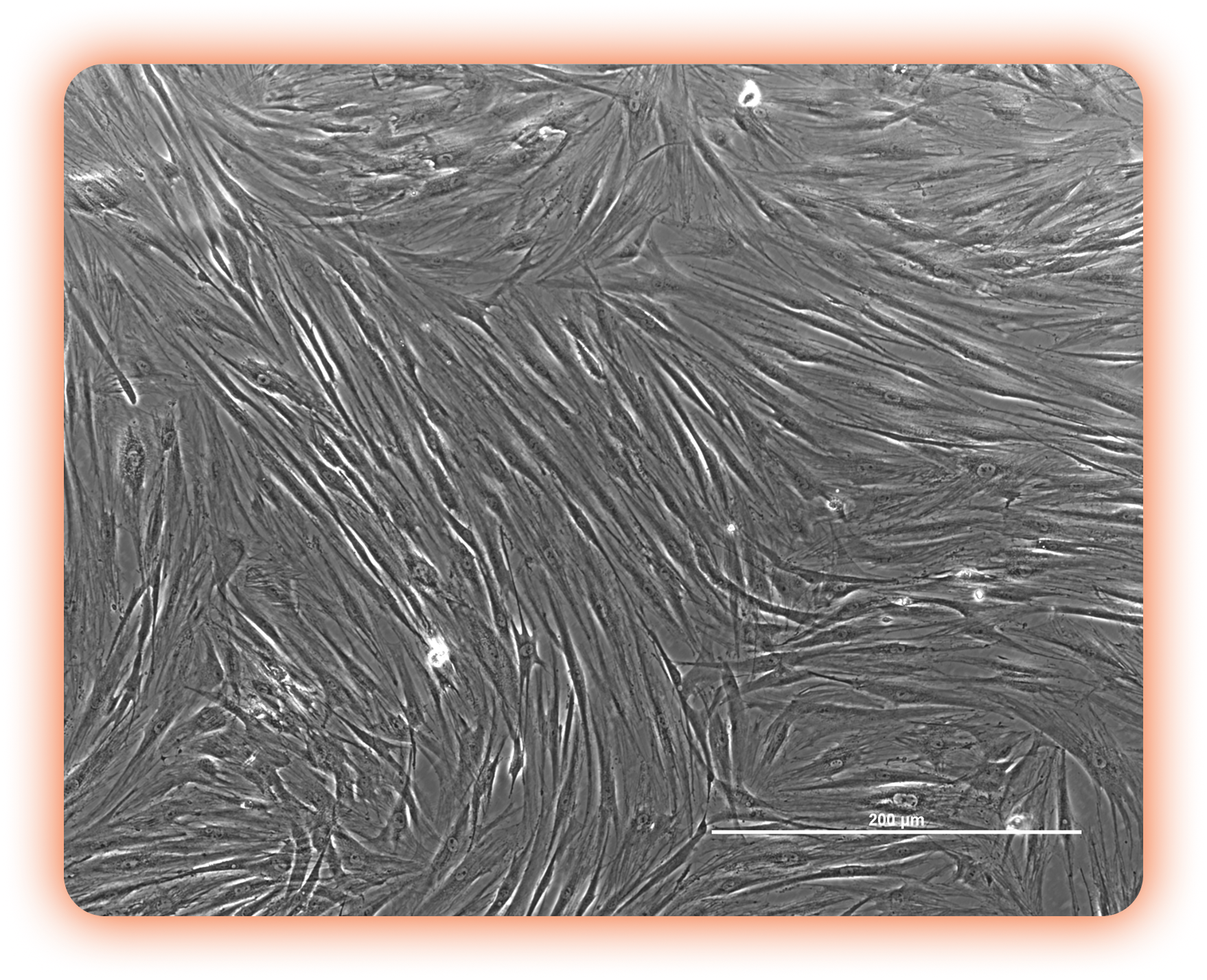
I would use human mesenchymal stromal cells (MSCs) as the living-system manufacturing chassis. Rather than relying on the cells to remain alive and engraft after administration, I would engineer them to enter apoptosis in a controlled and synchronized manner during manufacturing.
The MSCs would be genetically modified with an inducible caspase-9 (iCasp9) circuit, in which human caspase-9 is fused to a modified FKBP12-F36V drug-binding domain. Addition of a small-molecule dimerizer brings iCasp9 molecules together, activating caspase-9 and the downstream caspase cascade that drives apoptosis. This architecture has been demonstrated extensively in engineered human cells[6,7]. A major engineering challenge would therefore be achieving very low basal caspase activity during MSC expansion while maintaining rapid and uniform activation when the inducer is added.
The biological rationale comes from a shift in how MSC therapy is understood. Intravenously administered MSCs do not necessarily need to persist or engraft long term to exert immunomodulatory effects. In experimental GvHD, recipient cytotoxic cells induce MSC apoptosis, and this process has been shown to be important for subsequent immunosuppression[8]. My manufacturing strategy would therefore move this normally variable in-vivo step upstream into the production process, generating apoptotic MSCs (ApoMSCs) before administration.
The therapeutic mechanism would then rely on efferocytosis, the engulfment of apoptotic cells by host monocytes, macrophages, and other professional phagocytes. During apoptosis, phosphatidylserine becomes exposed on the outer MSC membrane. Bridging molecules such as Gas6 and Protein S recognize phosphatidylserine and engage TAM-family receptors including TYRO3, AXL, and MERTK on phagocytes, promoting apoptotic-cell clearance and pro-resolving immune signaling[9].
After engulfing apoptotic MSCs, human monocytes can acquire an immunoregulatory phenotype characterized by increased COX-2/PGE2, IDO, PD-L1, and IL-10 accompanied by suppression of T-cell proliferation and reduced inflammatory signaling[10]. More broadly, efferocytosis promotes anti-inflammatory mediators including IL-10, TGF-β, and prostaglandins[9].
The manufacturing workflow would therefore be:
The resulting product would be a standardized population of MSCs captured in a defined apoptotic state, designed so that a key biological transition normally occurring unpredictably inside the patient instead occurs under controlled manufacturing conditions. My central assumption is that controlling this transition ex vivo will reduce product variability while preserving the host-mediated immunoregulatory mechanism that contributes to MSC therapeutic activity.
(3) How would you use automation?
I would use automation in two parts of the workflow.
First, I would use an Opentrons OT-2 to automate DNA assembly, preparation of transfection mixtures, and screening of different inducible caspase-9 circuit designs in MSCs. The OT-2 is a programmable benchtop liquid-handling platform capable of automated aspiration, dispensing, transfers, and multiwell workflows.[11]. This would help identify constructs with low basal apoptosis and rapid, synchronized activation after induction.
Second, during manufacturing, I would integrate cameras on the operator and environmental sensors to continuously document procedures and monitor cell morphology, confluency, temperature, CO₂, and other culture conditions. This would create a real-time digital record of each batch while reducing the time and cost associated with manual documentation.
Long term, the goal is a system that combines robotics, sensors, computer vision, and software to monitor MSC expansion, determine when cells are ready for induction, track apoptosis, and document the complete manufacturing process.
(4) How much would you need to make, and how long would it take?
(a) How much?
Clinical MSC therapies for GvHD commonly use approximately 1–2 × 10⁶ cells/kg per infusion, although dosing varies among clinical studies[3]. Using the upper end of this range, a 75 kg adult would require:
2 × 10⁶ cells/kg × 75 kg = 1.5 × 10⁸ cells per dose.
Assuming an eight-dose treatment course similar to the initial Ryoncil regimen, approximately 1.2 × 10⁹ cells would be administered per patient4]. Accounting for losses during apoptosis induction, washing, quality control, and formulation, I would initially target manufacturing approximately 1.5 × 10⁹ ApoMSCs per treatment course.
(b) How long?
Starting from a qualified MSC working cell bank, I would target a manufacturing cycle of approximately 3 weeks (taking into account doubling time is about 48 hours). Most of this time would be required for MSC expansion. Once the required cell number is reached, I would aim to complete apoptosis induction and formulation within approximately one day, followed by quality-control testing and cryopreservation.
The long-term goal would be to manufacture ApoMSCs in large batches and cryopreserve individual doses, turning the therapy into an off-the-shelf product.
(5) What don’t you know yet?
The project has two major unanswered questions.
Technical question: What is the best way to induce a controlled therapeutic apoptotic state? I still need to determine whether the most practical approach is a small-molecule inducible circuit, an external stimulus such as UV, or a more sophisticated gene-logic circuit. One possibility is to first use sensing or inducible pathways to prime MSCs into a regenerative/immunoregulatory state and only then trigger apoptosis more closely mimicking what occurs in vivo. I also need to determine how reliably these circuits can be introduced and expressed in primary MSCs rather than cell lines and whether constitutive expression creates sufficient metabolic burden or basal activity to justify a two-stage inducible system.
Biological question: Will controlled ApoMSCs retain—or potentially improve—the therapeutic potency of conventional MSCs? Existing evidence makes this hypothesis plausible,[8,10] but it does not establish whether pre-induced apoptotic MSCs produce the same therapeutic effect, what apoptotic state is optimal, or what dose would be required. A particularly important question is whether ApoMSCs could achieve equivalent efficacy with fewer cells, which would substantially improve the manufacturing economics of the therapy.
References
Herre B. Global average life expectancy has more than doubled since 1900. Our World in Data. Published February 4, 2025. Data based on UN World Population Prospects and other historical demographic sources.
Khan I, Rehman U, Aslam F, et al. Efficacy and safety of mesenchymal stromal cells for steroid-refractory acute graft-versus-host disease: an updated meta-analysis of randomized controlled trials. Stem Cell Rev Rep. 2025;21(7):1997-2009. doi:10.1007/s12015-025-10947-z.
Godoy JAP, Paiva RMA, Souza AM, Kondo AT, Kutner JM, Okamoto OK. Clinical translation of mesenchymal stromal cell therapy for graft versus host disease. Front Cell Dev Biol. 2019;7:255. doi:10.3389/fcell.2019.00255.
U.S. Food and Drug Administration. RYONCIL (remestemcel-L-rknd) prescribing information. Initial U.S. approval: December 2024.
Mesoblast Limited. Mesoblast sets RYONCIL price based on economic value of treatment with planned product availability this quarter: financial results and operational update for half-year ended December 31, 2024. SEC Exhibit 99.1. Published February 26-27, 2025.
Straathof KC, Pulè MA, Yotnda P, et al. An inducible caspase 9 safety switch for T-cell therapy. Blood. 2005;105(11):4247-4254. doi:10.1182/blood-2004-11-4564.
Di Stasi A, Tey SK, Dotti G, et al. Inducible apoptosis as a safety switch for adoptive cell therapy. N Engl J Med. 2011;365(18):1673-1683. doi:10.1056/NEJMoa1106152.
Galleu A, Riffo-Vasquez Y, Trento C, et al. Apoptosis in mesenchymal stromal cells induces in vivo recipient-mediated immunomodulation. Sci Transl Med. 2017;9(416):eaam7828. doi:10.1126/scitranslmed.aam7828.
Boada-Romero E, Martinez J, Heckmann BL, Green DR. The clearance of dead cells by efferocytosis. Nat Rev Mol Cell Biol. 2020;21(7):398-414. doi:10.1038/s41580-020-0232-1.
Cheung TS, Galleu A, von Bonin M, Bornhäuser M, Dazzi F. Apoptotic mesenchymal stromal cells induce prostaglandin E2 in monocytes: implications for the monitoring of mesenchymal stromal cell activity. Haematologica. 2019;104(10):e438-e441. doi:10.3324/haematol.2018.214767.
Opentrons Labworks Inc. Opentrons OT-2 Instruction Manual and Python Protocol API Documentation. 2026.