<Shakera Karolia> — HTBAA Fall 2026
About me
Contact info
Homework, Labs, and Projects
See the nav bar on the left to look through my work for How To Biomanufacture Almost Anything (Fall 2026)!
See the nav bar on the left to look through my work for How To Biomanufacture Almost Anything (Fall 2026)!
Photo by atwena Goodman on Unsplash
Elephants show exceptional long-term social and spatial memory. That’s worth investigating for people affected by Alzheimer’s disease and other dementias, which are devastating for both patients and the families who watch a loved one disappear in front of them. Roughly 55 million people currently live with dementia worldwide, a number projected to almost double to 78 million by 2030 and reach 139 million by 2050 as the world’s population ages, with the majority of cases already occurring in low- and middle-income countries (Alzheimer’s Disease International, 2015).
There is no single “elephant memory chemical” — and it also isn’t simply that elephants have an unusually large hippocampus. The actual MRI and histology study of the African elephant hippocampus (Patzke et al., 2013) found the opposite of the popular claim: the elephant hippocampus is “not unduly enlarged, nor specifically unusual in its internal morphology,” and at 10.84 cm³ is only slightly larger than the human hippocampus (10.23 cm³) despite the elephant’s much larger overall brain. What is distinctive is structural, not size-based: the dentate gyrus has extra sublayers not seen in other mammals, and — critically for this idea — doublecortin staining confirmed ongoing adult neurogenesis in the elephant hippocampus, the continued birth of new neurons into adulthood.
So the target here isn’t “elephant memory juice”, and it isn’t literally “a bigger hippocampus” either. It’s a recombinant peptide that stabilises or mimics the activity of known long-term-memory-maintenance molecules — most plausibly one based on protein kinase M-zeta (PKMζ), shown by Serrano et al. (2008) to be specifically required for maintaining, not just forming, spatial and other long-term memories, and its scaffolding partner KIBRA. Neither is elephant-specific; the elephant’s confirmed adult hippocampal neurogenesis is the loose thread that motivates looking at memory-maintenance and neurogenesis pathways at all, not proof that PKMζ/KIBRA are what makes elephants special.
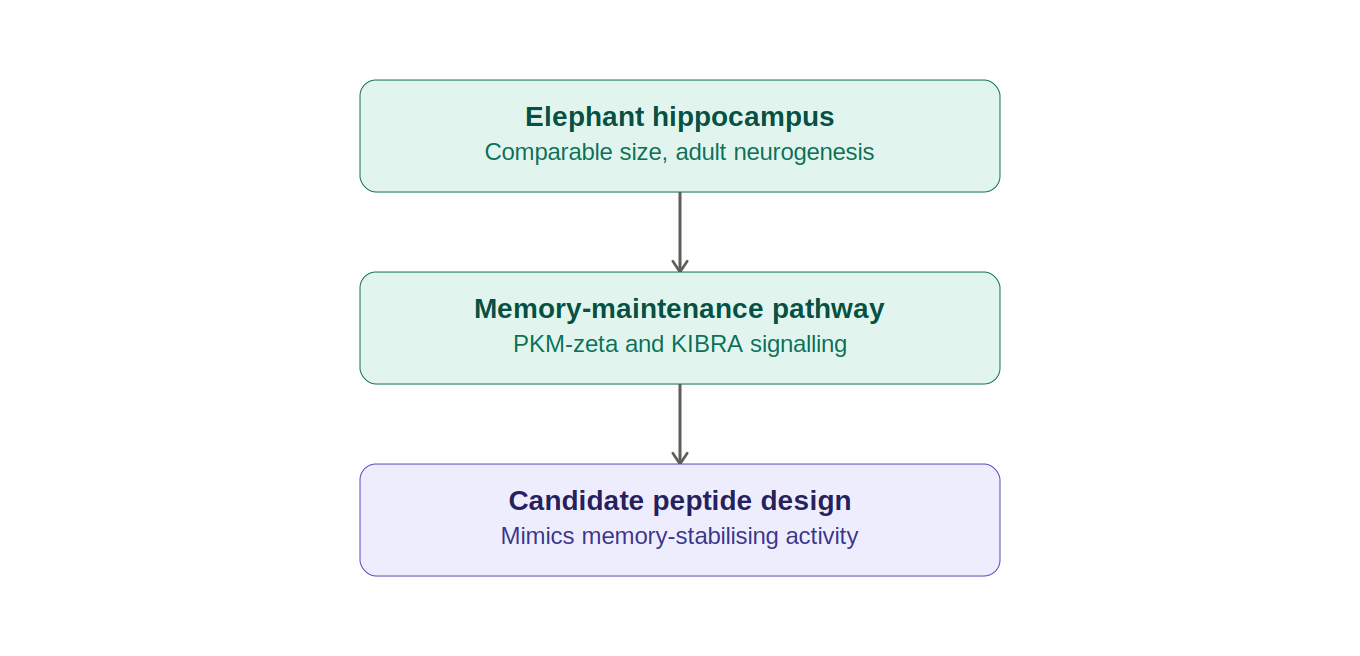
Diagram 1: From elephant biology to a drug candidate — elephant hippocampus → memory-maintenance pathway (PKMζ/KIBRA) → candidate peptide design.
Cell-free protein synthesis (CFPS) — cell lysate loaded with the target gene, ribosomes, and an energy mix — is ideal for rapidly iterating on peptide variants and fits directly with a cell-free biomanufacturing unit. Scale-up would then move to mammalian (CHO) cell culture, since the peptide needs correct folding and post-translational modification to work as a CNS-active biologic. This isn’t a novel category of product to manufacture — recombinant protein drugs made via genetically modified mammalian cell culture (erythropoietin, insulin, growth hormone) are precisely what Zhang, Sun and Ma (2017) call “Biomanufacturing 3.0,” the still-dominant paradigm for protein-drug production since the 1980s. My peptide would sit in that same established category; the open question is the specific target (PKMζ/KIBRA), not the manufacturing platform.
Worth being explicit about what “living system” means here: this is not extraction. I’m not proposing to harvest anything from an actual elephant — that wouldn’t scale and isn’t what biomanufacturing means. The living system (CFPS lysate, then CHO cells) is engineered to produce the peptide itself, the same way erythropoietin or insulin are made today: by giving a cell the gene and letting its own biology manufacture the product, not by extracting a pre-existing substance from a donor organism.
A creative addition on delivery. The single biggest scientific risk in this idea (see “what don’t I know yet,” below) is getting the peptide into the brain at all, since most peptides don’t cross the blood–brain barrier (BBB). Rather than leave that as a pure unknown, I’d propose intranasal delivery as the administration route: spraying the peptide into the nose lets it travel along the olfactory and trigeminal nerves directly into the brain, physically bypassing the BBB rather than trying to cross it. This isn’t a hand-wave — intranasal insulin has already been trialled for memory improvement in Alzheimer’s patients, and a 2025 study specifically delivered a short catalytic peptide (JAL-TA9) nose-to-brain for Alzheimer’s treatment in rats and mice (Hanson and Frey, 2008; Hatakawa et al., 2025). It’s still unproven for this specific peptide, but it converts “we don’t know how this would ever reach the brain” into “here is a plausible, precedented route to test” — which is a stronger place to leave an open question than a dead end.
CFPS screening on a Cloud Lab or desktop liquid handler — testing many peptide variants in parallel, reading out activity/stability — to find the best-performing construct. Production then scales up in a stirred-tank bioreactor. This mirrors what Petzold and Mukhopadhyay (2025) describe as the central role of automation in current biomanufacturing R&D: cloud labs and biofoundries “reshaping the landscape of biomanufacturing research by introducing unprecedented levels of automation, reproducibility, and accessibility,” allowing continuous, round-the-clock experimentation without a scientist physically present, and directly enabling the throughput that the design–build–test–learn (DBTL) cycle needs to search a large space of peptide variants efficiently.
Concretely, this is the same workflow the course itself is about to run in Week 4’s first lab: each student gets assigned a set of wells on a 384-well plate, designs their own CFPS reaction, and the plate is executed by the automation system at MIT or at Ginkgo Bioworks (whose autonomous lab system, Nebula, was highlighted in lecture as already running cell-free protein synthesis reactions at scale). My peptide-screening step is that exact setup with a different readout: instead of optimising for the brightness of a fluorescent reporter protein (this course’s Lab 1 exercise), each well would run a variant of the PKMζ/KIBRA-based peptide and be screened with a binding- or stability-activity assay instead of a fluorescence readout — same plate-based automation, different signal.
What automation can’t do here. Screening and manufacturing are automatable; getting a drug approved is not. Automation genuinely covers the CFPS variant-screening stage and the bioreactor production stage once a construct is chosen. It does not cover, and cannot cover, the preclinical safety testing, human clinical trials, or regulatory review that sit between those two stages — those require human patients, ethics oversight, and years of monitoring by definition, not more robots. That gap is the subject of the next section.
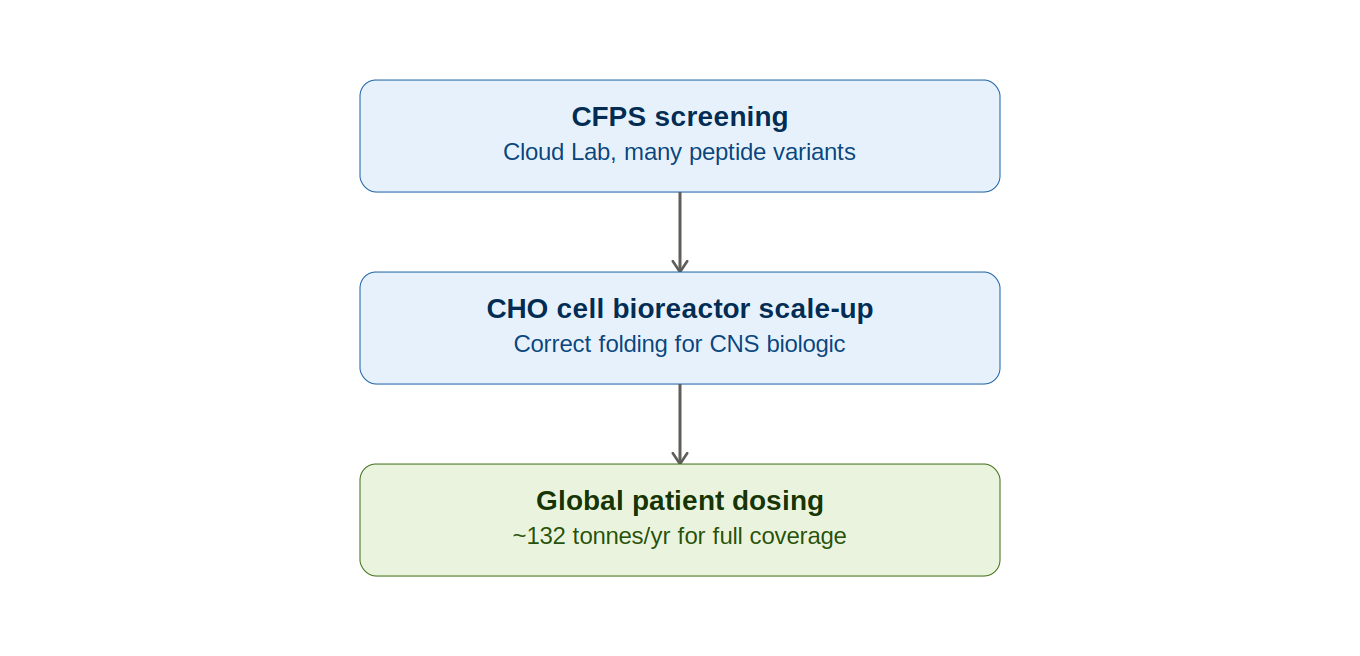
Diagram 2: Biomanufacturing and scale-up pipeline — CFPS screening (Cloud Lab) → CHO cell bioreactor scale-up → global patient dosing.
How much? Biologics for neurological conditions are typically dosed monthly at roughly 100–250 mg. Assuming 200 mg/dose × 12 doses/year = 2.4 g/patient/yr:
How long? Typical CFPS yields are around 1 g/L per batch (Karim and Jewett, 2021). At that titre, 132 tonnes/yr requires roughly 132 million litres of reaction volume per year — clearly beyond CFPS alone, so screening stays in CFPS while production moves to bioreactors. But the jump from lab-scale to an industrial bioreactor is, by the field’s own account, the hard part of biomanufacturing, not a detail to wave past: Asin-Garcia et al. (2025) quote Paul Freemont (Global Alliance of Biofoundries, Imperial College London) that “the big technology barrier [to commercialisation] is how you move from a laboratory-based strain that produces a product towards a 3000 L bioreactor producing the same product at high titre… that’s always been the challenge in industrial biotechnology.” Asin-Garcia et al. also describe this gap as a “Valley of Death” that many promising biomanufacturing projects don’t survive, because few organisations have access to pilot-scale plants to test the transition. Existing published biomanufacturing infrastructure (e.g. VTT, Finland) currently tops out around 1,200 L capability — well short of even a single tonne/yr at CFPS-equivalent titres, let alone the 132 tonnes/yr full-coverage figure above. So this idea’s real bottleneck isn’t chemistry, it’s exactly the scale-up gap the literature itself flags as unsolved industry-wide.
What it would take to get there at all — cost and timeline before “how much/how long” even applies. The 132 tonnes/yr figure above answers “how much would I need to manufacture,” but it assumes an approved, working drug already exists — it says nothing about getting there. That’s a separate, much larger number. Using the widely cited Tufts Center for the Study of Drug Development estimate (DiMasi, Grabowski and Hansen, 2016), taking one biologic from discovery to approval costs on the order of $1–2.6 billion and takes 10–15 years (more recent analyses, e.g. RAND, 2025, put the median lower at roughly $700 million, but multi-hundred-million-to-billion-dollar costs and decade-plus timelines are consistent across every estimate I found). None of that cost or time is automatable: it is preclinical safety testing, Phase 1–3 human trials, and regulatory review, not manufacturing throughput. So the honest shape of this project is: years 1–2 automatable CFPS/Cloud Lab screening (relatively cheap, fast), years 2–12+ non-automatable clinical development (expensive, slow, and not guaranteed to succeed at all), then — only after approval — the 132 tonnes/yr industrial bioreactor scale-up this section opened with. Cost per dose would very likely fall over time as production scales (the standard economics of fixed R&D cost amortised over more units), but the initial capital and time commitment is genuinely on the order of a billion dollars and a decade, not a Cloud Lab afternoon.
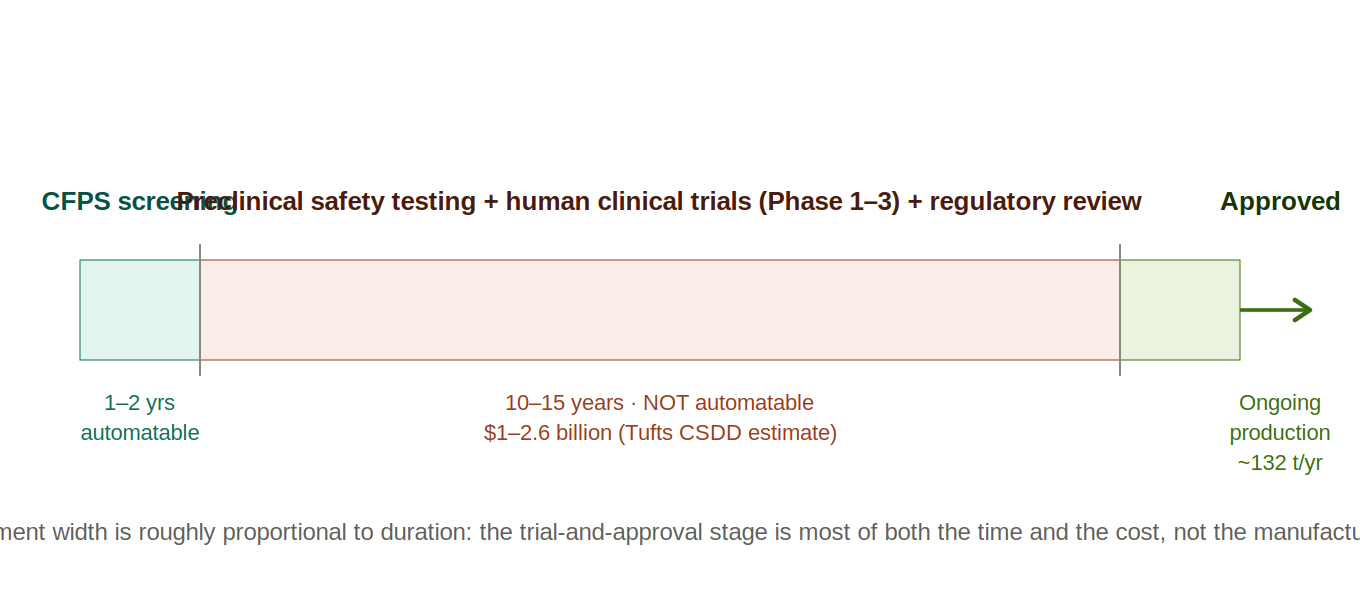
Diagram 3: Development timeline and cost — CFPS screening (1–2 yrs, automatable) vs. preclinical/clinical trials (10–15 yrs, not automatable, $1–2.6 billion — the true bottleneck) vs. approved production (ongoing, ~132 tonnes/yr).
A real-world price comparison, and why it matters. Leqembi (lecanemab), an FDA-approved Alzheimer’s antibody made in CHO cells — the same manufacturing category this idea sits in — launched in January 2023 at $26,500 per patient per year (Stanton, 2023). If my peptide followed similar pricing logic once approved, it would be unaffordable for most of the roughly 55 million people who need it, given that (per the Alzheimer’s Disease International figures cited above) the majority of dementia cases are already in low- and middle-income countries. A biologic that only the wealthiest patients can access doesn’t actually solve the problem this idea sets out to address — that tension between “can be manufactured at global scale” and “can be afforded at global scale” is a real gap in this proposal, not a footnote.
On elephant genetic material specifically — availability, not extraction, and no harm to elephants. As written above, this idea doesn’t actually use any elephant-derived gene at all — PKMζ and KIBRA are proteins studied in rodents (Serrano et al., 2008), not sequenced from an elephant. But it’s worth answering directly, since the question matters for the idea’s honesty: if a future version of this project wanted the actual elephant version of a memory-related gene, would that require extracting anything from a living or dead elephant, and would elephants be harmed? No, on both counts. The African elephant (Loxodonta africana) genome has been fully sequenced and publicly available since 2009 (the Broad Institute’s loxAfr3 assembly), with a newer, higher-quality chromosome-level assembly released in 2023 (NCBI GenBank accession GCA_030020305.1) — both freely searchable through NCBI and Ensembl by anyone, including a student, at no cost. Getting an elephant gene sequence today means looking it up in a public database and ordering a synthetic copy of that DNA sequence from a commercial gene-synthesis company (a routine, few-days-to-weeks service), then cloning it into the CFPS/CHO system already described above — not touching an elephant at all. The original blood or tissue samples used to build that reference genome were collected once, years ago, under standard veterinary sampling protocols (not lethal, not ongoing); every subsequent use of the sequence — including this one — is purely digital and synthetic. So the honest answer is: the elephant genome is already available, no extraction is needed for this project, and no elephant would be harmed by it.
Alzheimer’s Disease International (2015) World Alzheimer Report 2015: The Global Impact of Dementia — An Analysis of Prevalence, Incidence, Cost and Trends. London: Alzheimer’s Disease International. Available at: https://www.alzint.org/u/WorldAlzheimerReport2015-sheet.pdf
Asin-Garcia, E., Fawcett, J.D., Batianis, C. and Martins dos Santos, V.A.P. (2025) ‘A snapshot of biomanufacturing and the need for enabling research infrastructure’, Trends in Biotechnology, 43(5), pp. 1000–1014. Available at: https://doi.org/10.1016/j.tibtech.2024.10.014
DiMasi, J.A., Grabowski, H.G. and Hansen, R.W. (2016) ‘Innovation in the pharmaceutical industry: new estimates of R&D costs’, Journal of Health Economics, 47, pp. 20–33. (Tufts CSDD analysis, widely cited as the source of the ~$2.6 billion / 10–15 year biologic development estimate used above.)
Hanson, L.R. and Frey, W.H. (2008) ‘Intranasal delivery bypasses the blood-brain barrier to target therapeutic agents to the central nervous system and treat neurodegenerative disease’, BMC Neuroscience, 9(Suppl 3), S5. Available at: https://doi.org/10.1186/1471-2202-9-S3-S5
Hatakawa, Y., Tanaka, A., Furubayashi, T., Katsumi, H., Nakamura, R., Konishi, M., Akizawa, T. and Sakane, T. (2025) ‘Efficient nose-to-brain delivery of nine residues peptide (JAL-TA9) exhibiting hydrolytic activity against amyloid-β’, European Journal of Pharmaceutics and Biopharmaceutics, 208, article 114661. Available at: https://doi.org/10.1016/j.ejpb.2025.114661
Karim, A.S. and Jewett, M.C. (2021) ‘Toward sustainable, cell-free biomanufacturing’, Current Opinion in Biotechnology, 69, pp. 136–144. Available at: https://doi.org/10.1016/j.copbio.2020.12.012
National Center for Biotechnology Information (2023) Loxodonta africana genome assembly mLoxAfr1.hap1, GenBank accession GCA_030020305.1. Available at: https://www.ncbi.nlm.nih.gov/datasets/genome/GCA_030020305.1/ (cited for the public availability of the African elephant reference genome; the original loxAfr3 assembly was released by the Broad Institute in 2009.)
Patzke, N. et al. (2013) ‘Organization and chemical neuroanatomy of the African elephant (Loxodonta africana) hippocampus’, Brain Structure and Function. Available at: https://doi.org/10.1007/s00429-013-0587-6 (full author list not confirmed from the accessible abstract — verify before formal submission.)
Petzold, C.J. and Mukhopadhyay, A. (2025) ‘From bench to biofactory: high-throughput technologies and automated workflows to accelerate biomanufacturing’, Current Opinion in Biotechnology, 94, article 103320. Available at: https://doi.org/10.1016/j.copbio.2025.103320
Serrano, P., Friedman, E.L., Kenney, J., Taubenfeld, S.M., Zimmerman, J.M., Hanna, J., Alberini, C., Kelley, A.E., Maren, S., Rudy, J.W., Yin, J.C.P., Sacktor, T.C. and Fenton, A.A. (2008) ‘PKMζ maintains spatial, instrumental, and classically conditioned long-term memories’, PLoS Biology, 6(12), pp. 2698–2706. Available at: https://doi.org/10.1371/journal.pbio.0060318
Stanton, D. (2023) ‘Eisai and Biogen: FDA approve Alzheimer’s mAb lecanemab’, BioProcess International, 9 January. Available at: https://bioprocessintl.com/regulations/eisai-and-biogen-fda-approve-alzheimer-s-mab-lecanemab (cited for the $26,500/yr Leqembi launch price used above.)
Zhang, Y.-H.P., Sun, J. and Ma, Y. (2017) ‘Biomanufacturing: history and perspective’, Journal of Industrial Microbiology & Biotechnology, 44, pp. 773–784. Available at: https://doi.org/10.1007/s10295-016-1863-2
AI client: Claude (Anthropic), used via the Claude.ai chat interface with web search and this project’s uploaded course-reading PDFs.
Prompts used (in sequence, condensed from a longer conversation):
I reviewed every AI-sourced claim and citation myself before submitting and can explain each one in the homework-review chair.
An Elephant-Memory-Inspired Neuroprotective Biologic for Dementia
Shakera Karolia | BioClub Tokyo Node | 29 September 2026
All design work for this assignment was completed in the HTGAA 2026 workspace on Asimov Kernel under the repository SHAKERA_KAROLIA, housed within the folder Karolia-project. The assembled construct is named PKMzeta_CFPS_Expression_Cassette. The GenBank export file (PKMzeta_CFPS_Expression_Cassette.gb) accompanies this submission as a separate file.
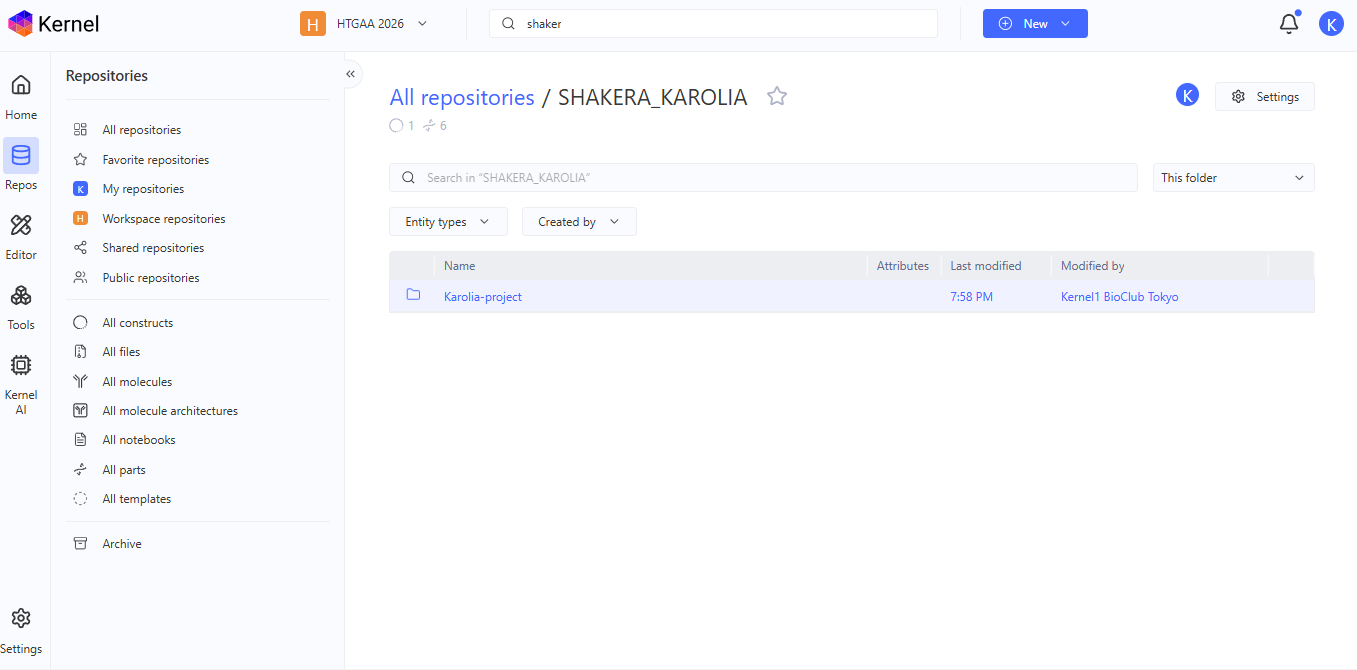
Figure 0: The SHAKERA_KAROLIA repository in the HTGAA 2026 workspace, showing the Karolia-project folder containing the construct and all associated parts.
The expression target is the constitutively active catalytic domain of human protein kinase C zeta (PKCζ), the isoform known as PKMζ. PKMζ is a serine/threonine kinase that is specifically required for the maintenance — rather than the initial formation — of spatial and other long-term memories. Serrano et al. (2008) demonstrated that inhibiting PKMζ activity erases established memories in rats, establishing it as the only molecule known to be specifically necessary for long-term memory maintenance rather than for memory acquisition. This project is motivated by the confirmed presence of adult hippocampal neurogenesis in the African elephant (Loxodonta africana), as documented by Patzke et al. (2013), which provides biological precedent for targeting memory-maintenance and neuroprotective pathways. The PKMζ/KIBRA signalling axis was identified in Homework 1 as the candidate therapeutic target for dementia and Alzheimer’s disease.
The coding sequence encodes residues 211–592 of human PRKCZ (UniProt accession Q05513), corresponding to the 382-amino-acid C-terminal catalytic domain, plus a TGA stop codon. This fragment lacks the N-terminal regulatory and pseudosubstrate domains present in full-length PKCζ (592 amino acids), rendering it constitutively active — a defining characteristic of PKMζ. The DNA coding sequence is 1,149 bp. An N-terminal 6×His purification tag (MHHHHHH, 21 bp) is encoded by a separate upstream part within the construct. Two codons were corrected during design to match the UniProt reference: position 366 (CTC→TTC, leucine to phenylalanine) and position 522 (GGC→GAC, glycine to aspartate). The sequence was not codon-optimised for E. coli in this iteration.
The expression platform is E. coli-based cell-free protein synthesis (CFPS). As proposed in Homework 1, CFPS is well suited to rapid prototyping of protein variants: it requires no cell growth, no transformation, and permits screening in a 384-well plate format using a liquid handler or cloud laboratory (Petzold and Mukhopadhyay, 2025). The lysate is pre-loaded with ribosomes, T7 RNA polymerase, and an energy regeneration system; only the DNA template is supplied externally. Scale-up for clinical production would subsequently transition to CHO (Chinese hamster ovary) cell culture, which provides the eukaryotic folding and post-translational modification environment required for a CNS-active kinase domain.
The protein is directed to the cytoplasm. In a CFPS reaction there is no membrane compartmentalisation; the expressed protein accumulates in the reaction mix and is purified by Ni-NTA affinity chromatography via the N-terminal His6 tag. No signal peptide or secretion sequence is required at this stage. For the eventual therapeutic application, the purified protein would be formulated for intranasal delivery, bypassing the blood-brain barrier via the olfactory and trigeminal nerve routes, as proposed in Homework 1 (Hanson and Frey, 2008).
The construct comprises six parts, assembled 5′→3′ as a linear expression cassette optimised for E. coli CFPS. Each part was created or imported in Kernel with the appropriate part type designation. The table below provides a summary; detailed justifications follow.
| # | Part | Length | Positions | Kernel type | Source |
|---|---|---|---|---|---|
| 1 | T7 promoter | 23 bp | 1–23 | Promoter | iGEM Registry |
| 2 | RBS_B0034 | 12 bp | 24–35 | Ribosome binding site | iGEM BBa_B0034 |
| 3 | Spacer_RBS | 6 bp | 36–41 | Non-coding spacer | Designed |
| 4 | ATG_His6 | 21 bp | 42–62 | CDS (+start −stop) | Designed |
| 5 | PKMzeta_CDS_v2 | 1,149 bp | 63–1211 | CDS (−start +stop) | UniProt Q05513 |
| 6 | Terminator_BBa_B0015 | 129 bp | 1212–1340 | Terminator | iGEM BBa_B0015 |
Source: iGEM Registry; standard T7 promoter consensus sequence.
Justification: The T7 promoter is the standard transcriptional driver for E. coli CFPS systems. Commercial cell-free kits such as PURExpress (New England Biolabs) supply exogenous T7 RNA polymerase, enabling strong, single-subunit transcription independent of the host’s endogenous RNA polymerase machinery. The critical importance of strong, tightly controlled promoters in synthetic E. coli gene circuits was established by Elowitz and Leibler (2000), whose repressilator network demonstrated that promoter strength, transcriptional tightness, and efficient ribosome binding sites are the primary determinants of reliable gene expression dynamics. Those findings underpin the choice of the T7 promoter and a characterised RBS here: both parts have well-defined, quantitative performance characteristics that make expression outputs more predictable than uncharacterised alternatives.
Source: iGEM Registry part BBa_B0034.
Justification: BBa_B0034 is a medium-strength ribosome binding site from the iGEM community collection that has been widely characterised in E. coli expression systems. It provides reliable translation initiation without placing excessive demand on the ribosome pool, which is a finite and non-renewable resource in a CFPS reaction (Karim and Jewett, 2021). The use of orthogonal, pre-characterised parts from curated registries is a foundational principle of synthetic biology design. Stanton et al. (2014) demonstrated this principle at scale by mining prokaryotic genomes for repressor proteins that function orthogonally — that is, without cross-talk with endogenous cellular machinery — enabling the construction of reliable logic gates in E. coli. Their work reinforces the rationale for selecting BBa_B0034: a community-characterised, registry-sourced RBS is more likely to behave predictably in a novel construct context than an ad hoc designed element, because its performance has been empirically validated across multiple genetic backgrounds.
Source: Designed; standard RBS-to-start-codon spacing element.
Justification: This six-nucleotide spacer sets the distance between the Shine-Dalgarno sequence in the RBS and the downstream start codon, which is known to influence translation initiation efficiency in prokaryotic systems. Note: Kernel annotates this element as a CDS part (displaying a spurious Y* translation in the sequence viewer), but it functions as a non-coding spacer and has no effect on the expressed protein.
Source: Designed; encodes Met followed by six histidine residues (MHHHHHH).
Justification: The N-terminal 6×His tag enables one-step purification of the expressed protein by immobilised metal affinity chromatography (IMAC/Ni-NTA). This is essential for isolating the PKMζ catalytic domain from the complex mixture of proteins and nucleic acids present in a CFPS lysate. The tag is small (seven residues, approximately 0.8 kDa) and is not expected to interfere with kinase folding or catalytic activity, although this assumption requires experimental validation.
Source: Human PRKCZ gene, UniProt Q05513, residues 211–592. This region encodes the constitutively active C-terminal catalytic domain of PKCζ, which functions as PKMζ and is specifically required for long-term memory maintenance (Serrano et al., 2008). The part carries no start codon (supplied by ATG_His6 upstream) and terminates with a TGA stop codon. Codons at positions 366 and 522 were corrected to match the UniProt reference.
Justification: The catalytic domain alone is constitutively active because it lacks the N-terminal regulatory and pseudosubstrate domain of full-length PKCζ. Encoding only the catalytic domain (382 amino acids, approximately 42 kDa) keeps the total construct length within comfortable ranges for both CFPS expression and commercial gene synthesis.
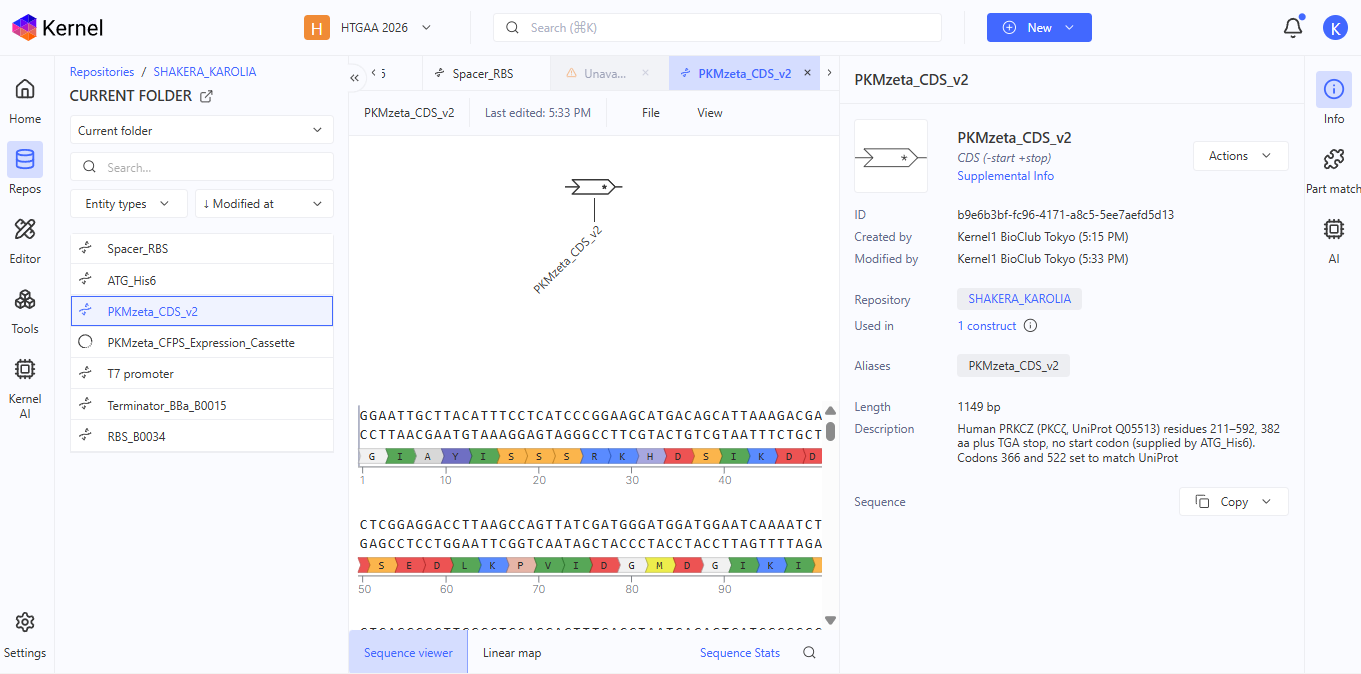
Figure 1: PKMzeta_CDS_v2 part in Kernel — 1,149 bp, annotated as CDS (−start +stop). The sequence viewer confirms the corrected reading frame beginning G-I-A-Y-I-S-S-S-R-K, consistent with human PKCζ residues 211–592 (UniProt Q05513). The part description records the source accession and the two corrected codons.
Source: iGEM Registry part BBa_B0015, a double transcriptional terminator.
Justification: BBa_B0015 combines two sequential terminators and provides robust transcription termination in E. coli. Placing it immediately downstream of the stop codon ensures clean termination of the mRNA transcript and prevents read-through, which would otherwise waste resources in the cell-free reaction.
No vector backbone is included in the current design, as the E. coli-based CFPS platform can utilise linear DNA templates directly without a replication origin or selection marker. Should the project progress to in vivo bacterial expression, the cassette would be cloned into a standard T7 expression vector such as pET-28a (which provides a T7 promoter, kanamycin resistance marker, and ColE1 origin of replication). This cloning step is not required for the CFPS prototyping stage.
The six parts were assembled in Kernel in the following 5′→3′ order:
T7 promoter → RBS_B0034 → Spacer_RBS → ATG_His6 → PKMzeta_CDS_v2 → Terminator_BBa_B0015
The total construct length is 1,340 bp. The expression host was set to Escherichia coli in the Kernel construct metadata.
Reading frame integrity was verified computationally by exporting the GenBank file and translating the complete sequence from the His6 start codon (ATG at position 42). The translated product begins:
M-H-H-H-H-H-H-G-I-A-Y-I-S-S-S-R-K-H-D-S-I-K…
and runs uninterrupted through the entire PKMζ catalytic domain, terminating with …N-P-L-L-L-S-T-E-E-S-V followed by a single TGA stop codon at positions 1209–1211. No internal stop codons are present within the reading frame. The BBa_B0015 terminator begins at position 1212, immediately downstream of the stop codon.
The schematic and sequence views below confirm the correct part order, orientation, and reading frame.

Figure 2: Exported circular construct map from Kernel, showing all six parts in 5′→3′ order.
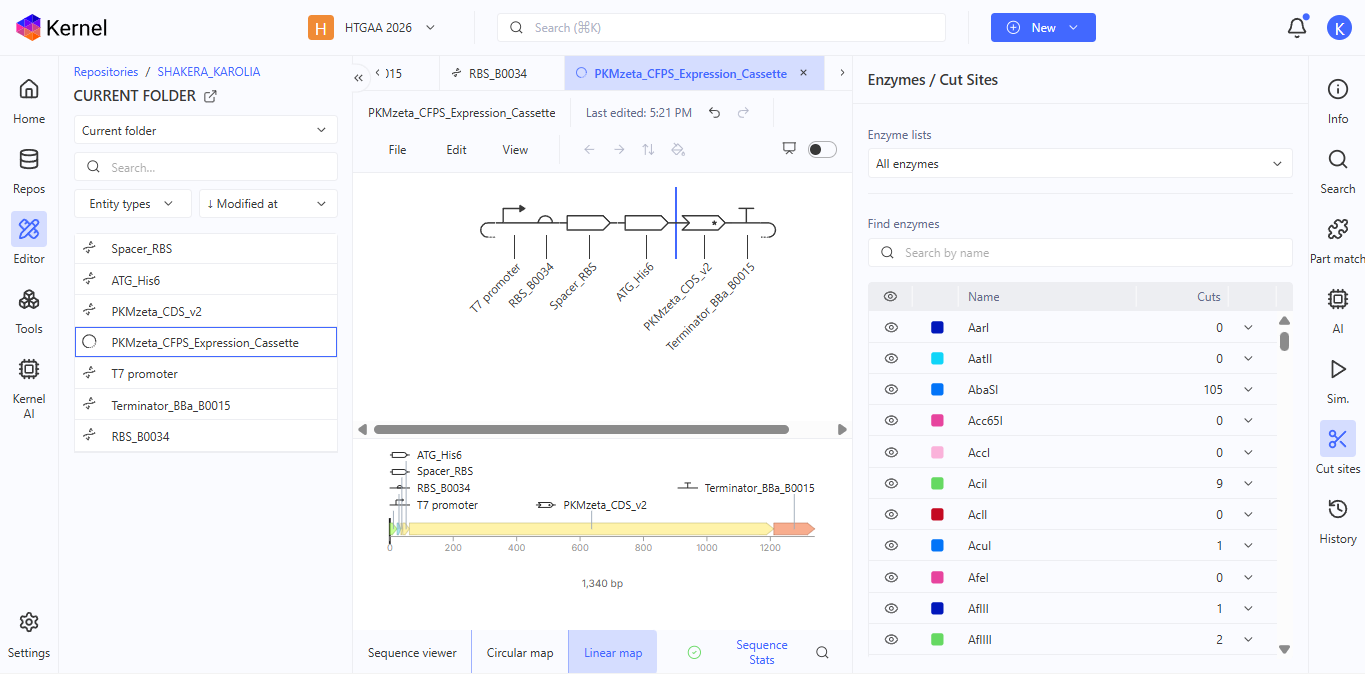
Figure 3: Linear map view of the assembled construct (1,340 bp). The relative lengths of each annotated part are visible, with the PKMzeta_CDS_v2 coding region (1,149 bp) representing the majority of the construct.
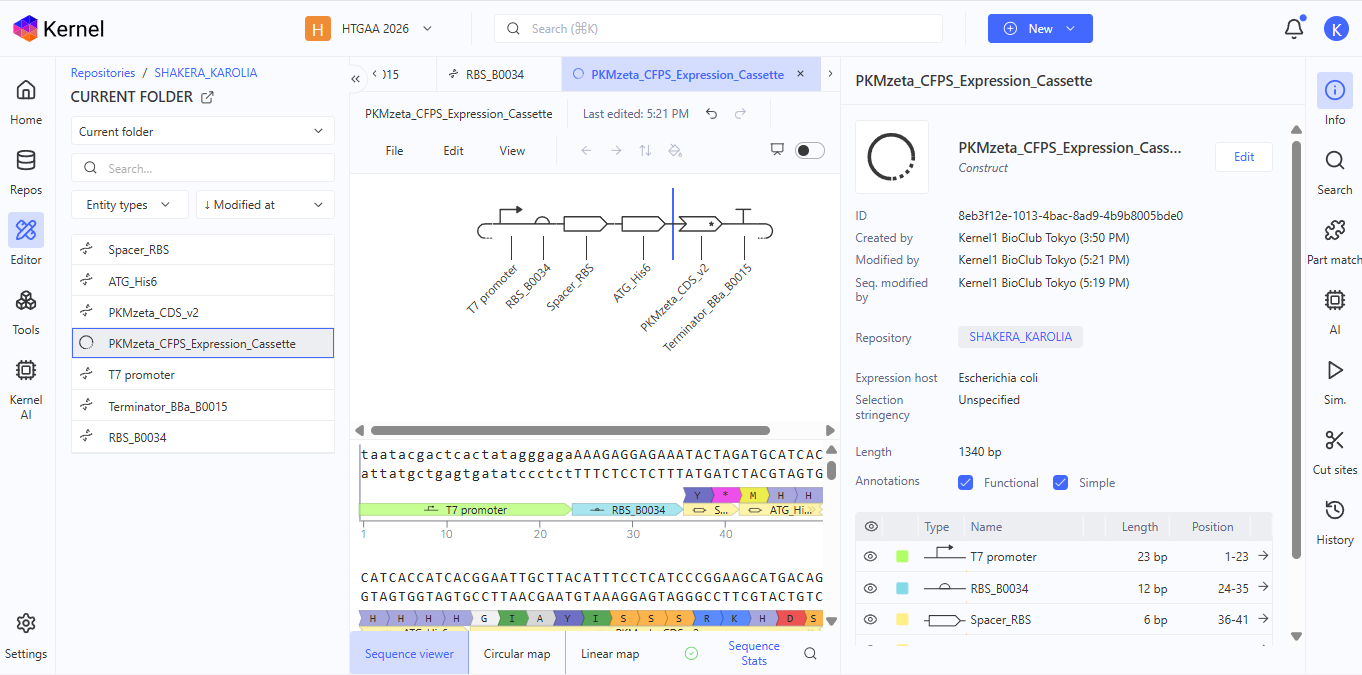
Figure 4: Kernel Info panel for PKMzeta_CFPS_Expression_Cassette confirming: length 1,340 bp; expression host Escherichia coli; part annotations for all six components in correct positions.
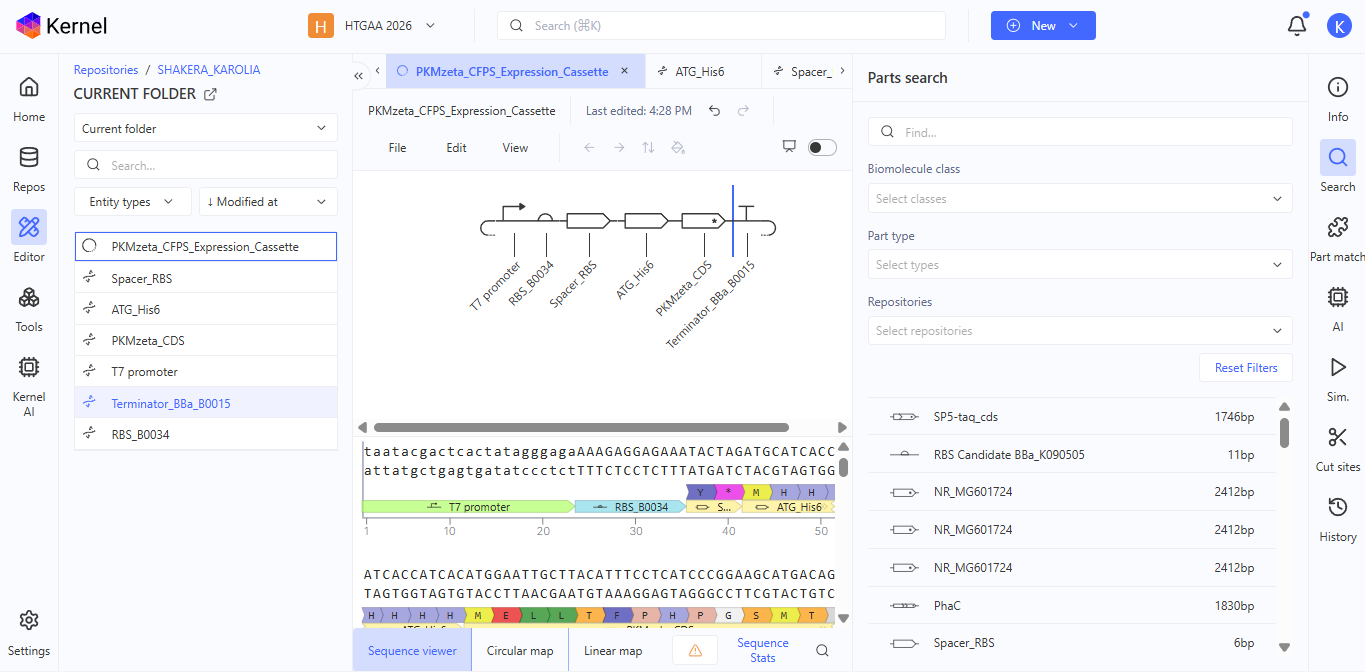
Figure 5: Sequence viewer showing the junction between ATG_His6 and PKMzeta_CDS_v2. The translated sequence reads …H-H-H-H-G-I-A-Y-I-S-S-S-R-K-H-D-S…, confirming that the His6 tag and the PKMζ catalytic domain are in the same reading frame.
GC content was calculated precisely from the exported GenBank file: the full 1,340 bp construct has a GC content of 53.51% (G: 364, C: 353, A: 340, T: 283), with the PKMzeta_CDS_v2 coding region at 54.8% and the regulatory elements ranging from 33.3% (RBS_B0034) to 48.1% (BBa_B0015 terminator). All values lie within the acceptable synthesisable and expressible range for E. coli (typically 40–60%).
The native human coding sequence was retained in this design iteration; however, a codon usage analysis was performed against the E. coli K12 tRNA abundance table (Kazusa database) to identify codons that would benefit from optimisation. The analysis revealed 35 rare codon occurrences across 383 total codons (9.1%), as detailed below:
| Rare codon | Amino acid | Occurrences | E. coli frequency (/1000) | Preferred E. coli replacement |
|---|---|---|---|---|
| AGG | Arg | 6 | 2.4 | CGT (20.8) |
| AGA | Arg | 1 | 3.9 | CGT (20.8) |
| CCC | Pro | 6 | 4.4 | CCG (23.2) |
| ACA | Thr | 7 | 7.0 | ACC (22.5) |
| GGA | Gly | 8 | 8.0 | GGC (29.6) |
| ATA | Ile | 2 | 4.6 | ATC (27.2) |
| CTA | Leu | 1 | 3.4 | CTG (52.8) |
| GTA | Val | 1 | 11.0 | GTG (26.3) |
| CCG | Pro | 3 | 23.2 | CCG retained |
What would change after optimisation: Replacing these 35 codons with preferred E. coli synonyms would reduce translational stalling events, particularly at the six AGG arginine codons and seven ACA threonine codons, which correspond to the rarest tRNA species in E. coli. The GC content of the CDS would shift from 54.8% toward approximately 52–53%, remaining within the optimal range. No new BsaI, BsmBI, BbsI or SapI restriction sites would be introduced, as these were checked as a design constraint.
Why codon usage matters: In E. coli CFPS, the tRNA pool is pre-loaded from the cell lysate and is finite — it is not replenished during the reaction as it would be in a growing cell. Rare codons that correspond to low-abundance tRNAs cause ribosome pausing, which in a CFPS context reduces yield and can cause premature peptide release or misincorporation. Karim and Jewett (2021) highlight tRNA pool management as a key determinant of CFPS expression efficiency, and this is therefore a higher-priority optimisation for the cell-free context than for conventional in-cell expression.
Kernel does not include an integrated BLAST alignment tool. Sequence verification was therefore performed externally by translating the exported GenBank file computationally and aligning the resulting amino acid sequence residue-by-residue against the UniProt Q05513 (KPCZ_HUMAN) reference. Following correction of the two single-nucleotide variants at codons 366 and 522, the translated protein is a perfect match to human PKCζ residues 211–592 across all 382 positions. A BLAST search against the NCBI non-redundant protein database would be expected to return the human PRKCZ mRNA (RefSeq NM_002744) as the top hit with near-100% identity, confirming the sequence identity of the construct as a defined fragment of a well-characterised human kinase.
Kernel’s Construct Checker was run on the assembled construct and returned four warnings:
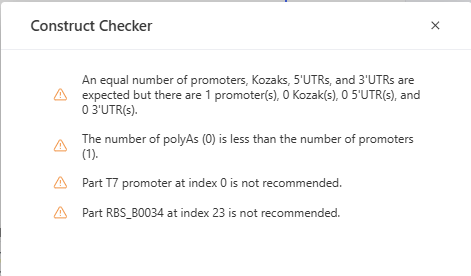
Figure 6: Construct Checker output. All four warnings are attributable to Kernel’s default mammalian expression model and are not relevant to the E. coli CFPS design.
These warnings arise because the Kernel Construct Checker defaults to a mammalian expression model. The construct under assessment is designed for E. coli-based CFPS, in which: the T7 promoter drives transcription via exogenous T7 RNA polymerase supplied in the lysate; BBa_B0034 performs the role of the Kozak sequence and 5′ UTR as the prokaryotic ribosome binding site; and BBa_B0015 performs the role of the poly-A signal as the transcriptional terminator. As noted during the Lecture 2 recitation, the Kernel construct checker is “not going to be super useful” for bacterial constructs, because it checks exclusively for eukaryotic regulatory elements. No design changes are warranted in response to these warnings.
Kernel’s built-in Simulation tool (Sim.) was used to model gene expression dynamics for the assembled construct in an E. coli context. The simulation was configured with the following parameters:
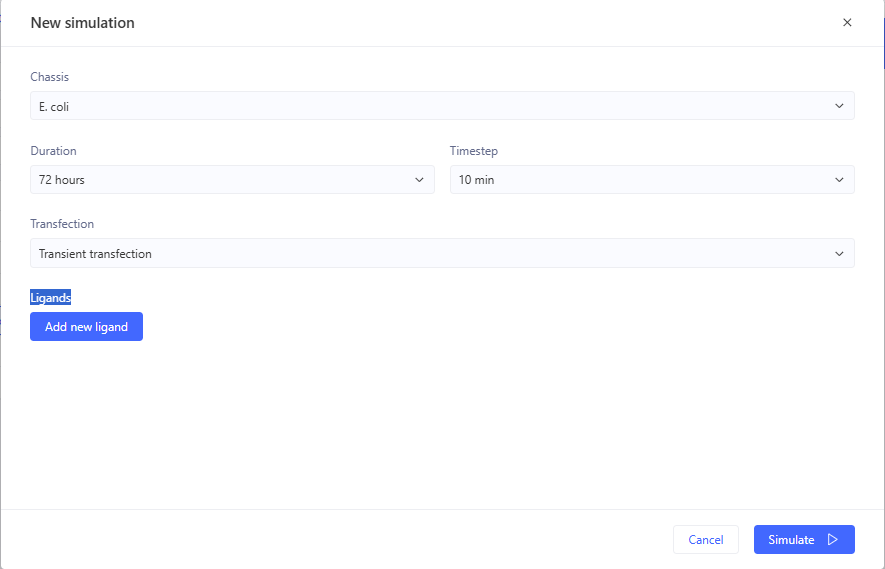
Figure 7: Kernel simulation configuration — E. coli chassis, 72-hour duration, 10-minute timestep, transient transfection mode.
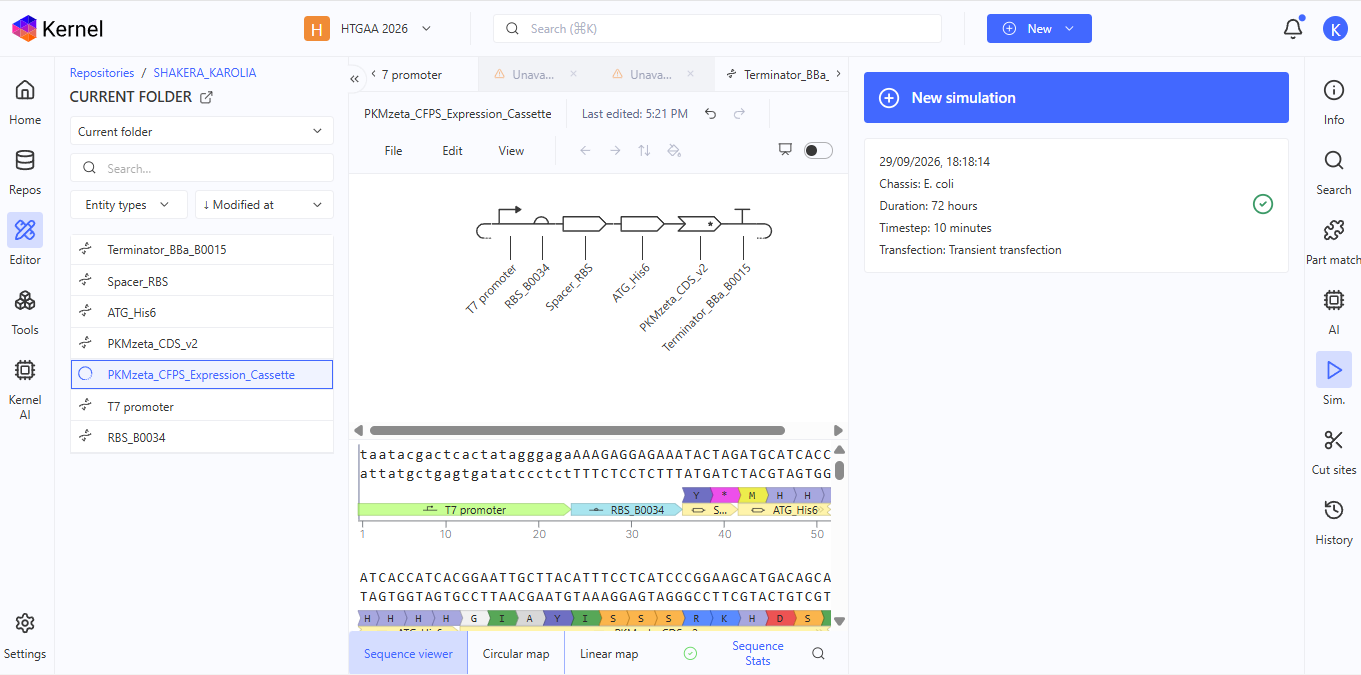
Figure 8: Simulation completed successfully (green checkmark, 29/09/2026, 18:18:14), confirming structural acceptance of the construct by the E. coli simulation model.
The simulation completed without errors, confirming that the construct is structurally valid under the E. coli model used by Kernel. The 72-hour transient transfection mode is appropriate for CFPS, which is a batch process in which the DNA template is not replicated and is gradually consumed or degraded. An important interpretive caveat is that Kernel’s simulation model is calibrated on characterised iGEM Registry parts. PKMzeta_CDS_v2 carries no experimental characterisation data in Kernel, and consequently the simulation reflects the kinetics of the T7 promoter and RBS elements only. It does not predict the yield, solubility, or activity of the PKMζ protein. Experimental validation in an actual CFPS reaction is required before drawing any quantitative conclusions about expression output.
The Enzymes/Cut Sites panel in Kernel was used to screen the full 1,340 bp construct for common Golden Gate (Type IIS) enzyme recognition sites. Results are summarised below:
| Enzyme | Recognition site | Cuts in construct |
|---|---|---|
| BsaI | GGTCTC | 0 |
| BsmBI | CGTCTC | 0 |
| BbsI | GAAGAC | 0 |
| SapI | GCTCTTC | 0 |
The construct contains no recognition sites for any of the four principal Golden Gate enzymes. It is therefore fully compatible with Golden Gate assembly should future cloning into a vector backbone be required.
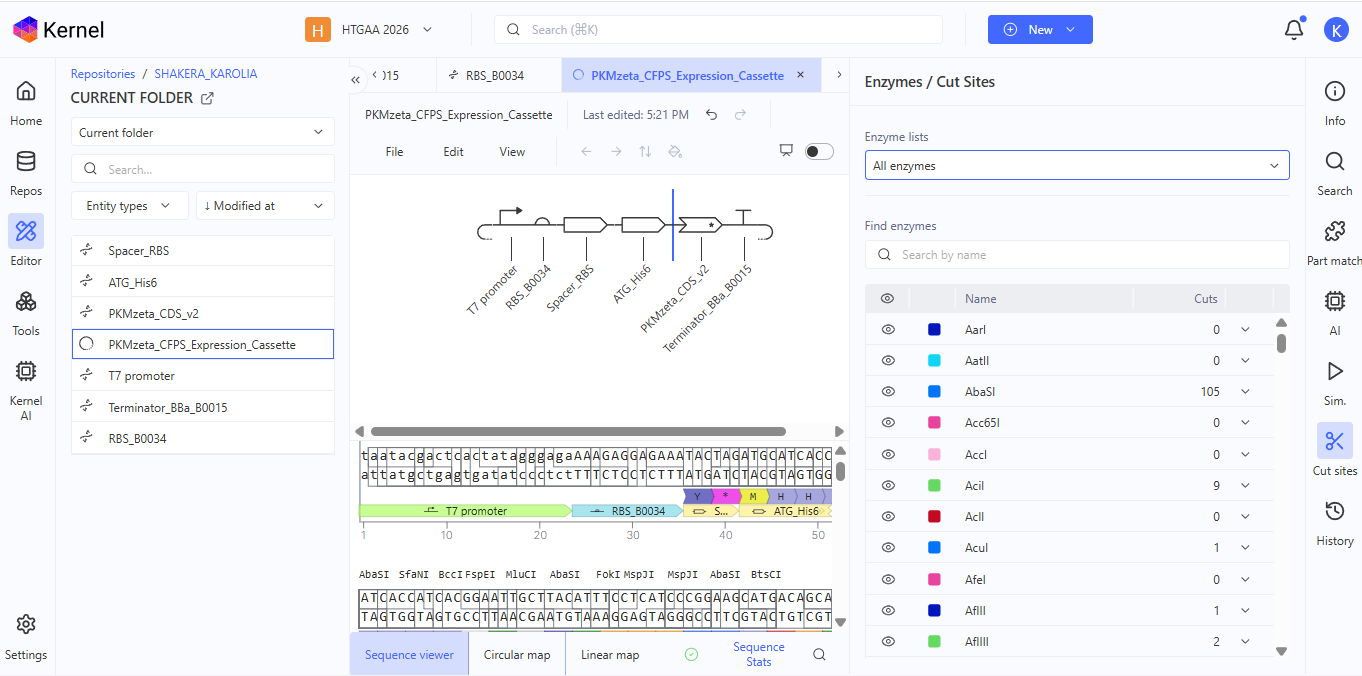
Figure 9: Enzymes/Cut Sites panel in Kernel confirming zero cuts for BsaI, BsmBI, BbsI and SapI in the final 1,340 bp construct.
Kernel does not currently include an integrated biosecurity screening tool. The sequence was assessed against standard screening criteria. The PKMζ catalytic domain is a fragment of PKCζ, a ubiquitous human signalling enzyme expressed in all human cells. It has no known toxicity, pathogenicity, or dual-use concern and does not appear on any select-agent list maintained by the CDC, APHIS, or equivalent regulatory authorities. Commercial DNA synthesis vendors, including Twist Bioscience, perform automated biosecurity screening against the International Gene Synthesis Consortium (IGSC) Harmonised Screening Protocol prior to order fulfilment. No flags would be anticipated for this sequence.
The construct will be ordered as a linear gene fragment rather than a clonal gene in a plasmid vector. This decision rests on three considerations:
1. CFPS compatibility. The expression platform is E. coli-based CFPS, which accepts linear DNA templates directly and does not require a plasmid backbone, origin of replication, or antibiotic resistance marker.
2. Cost. At the current Twist Bioscience published list price of USD 0.07 per base pair for gene fragments (Twist Bioscience, 2026; Armadillo Bio, 2026), the 1,340 bp construct has an estimated cost of approximately USD 93.80. A clonal gene (sequence-verified in a Twist expression vector) is priced at USD 0.09 per base pair plus a USD 55 expression-vector cloning fee, giving an estimated total of approximately USD 175.60 — an 87% premium for a vector backbone that is not required at the prototyping stage. IDT offers comparable gene-fragment pricing at USD 0.07 per base pair (Armadillo Bio, 2026).
3. Turnaround time. Twist gene fragments are shipped in 2–4 business days; clonal genes require 4–10 business days (Twist Bioscience, 2026).
Should the project advance to in vivo expression in E. coli or CHO cells, the cassette would be cloned into a suitable expression vector (e.g. pET-28a for E. coli, or a CMV-driven mammalian vector for CHO). At that stage, a clonal gene order or Gibson assembly into a backbone would be the appropriate approach.
The 1,340 bp expression cassette falls well within the range of commercial gene synthesis services and would be ordered as a single synthetic linear dsDNA fragment — no fragment assembly or oligo pool synthesis is required. Twist gene fragments support lengths from 300 to 5,000 bp; the construct falls comfortably within this window. The synthesised fragment would be delivered lyophilised, resuspended in TE buffer, and used directly as a CFPS template.
Constraints on synthesis are minimal for this construct. The verified GC content of 53.51% lies well within the standard synthesisable range of 25–65%. No long homopolymer runs (eight or more consecutive identical bases), extreme secondary structures, or direct repeats were identified during design. The absence of BsaI, BsmBI, BbsI and SapI sites confirms compatibility with downstream Golden Gate cloning.
Synthesis error rates remain a relevant consideration. Twist Bioscience reports a mean error rate of 1 in 7,500 bp for gene fragments, achieved through enzymatic error correction during manufacture (Twist Bioscience, 2026). At 1,340 bp, the probability of receiving a fragment carrying at least one error is approximately 16%. Sequence verification by Sanger sequencing after cloning is therefore standard practice. Carr et al. (2004) demonstrated that protein-mediated error correction using MutS reduces de novo synthesis error rates to approximately 1 in 10,000 bp, a technique now routinely applied by synthesis vendors. Kong et al. (2007) demonstrated that microfluidic polymerase cycling assembly (PCA) can synthesise genes up to approximately 1,000 bp in parallel, an approach that could reduce per-construct costs substantially if multiple variant constructs were required for screening.
At the prototyping stage, a single linear gene fragment used directly as a CFPS template is the fastest and most cost-effective approach: approximately USD 94, delivered within 2–4 business days, with no cloning, cell culture, or transformation required. The template is added directly to the CFPS lysate and protein production can be assessed within hours.
For scale-up to CHO cell production — as proposed in Homework 1 — the expression cassette would require complete redesign with mammalian regulatory elements (CMV or EF1α promoter, Kozak sequence, poly-A signal, and a mammalian-compatible vector backbone). Gibson assembly (Gibson et al., 2009) would be appropriate for joining a redesigned cassette to a vector backbone; Gibson’s isothermal method joins fragments sharing approximately 20 bp overlapping ends in a single 50 °C reaction, which is mechanistically simpler than restriction-ligation for multi-fragment assemblies.
For large-scale variant screening — testing many PKMζ mutants to optimise activity, thermal stability, or folding in a CFPS context — chip-based oligonucleotide synthesis followed by multiplex gene assembly, as described by Kosuri et al. (2010), would dramatically reduce per-construct costs relative to ordering individual gene fragments. Tian et al. (2004) demonstrated that microchip-synthesised oligonucleotides could reduce gene synthesis costs from approximately USD 0.10 per nucleotide (conventional column synthesis) to as low as USD 0.001 per nucleotide, enabling massively parallel gene construction at a scale appropriate for variant libraries.
This assignment represented a substantial learning experience for a practitioner whose professional background is in product management and cybersecurity rather than molecular biology. Many of the core concepts encountered — reading frames, codon structure, ribosome binding sites, and the distinction between eukaryotic and prokaryotic regulatory elements — were entirely new territory. The BioClub Tokyo Friday session (25 September 2026) proved particularly valuable; Sheila Ramani’s live walkthrough of Kernel and Georg Tremmel’s guidance on design documentation provided an accessible practical foundation.
Reading frame debugging. The most time-consuming challenge involved discovering that the original CDS part (PKMzeta_CDS, 1,151 bp) contained a frame-shift error. The sequence as initially entered into Kernel began with ATGGAATTGCT.... The ATG triplet was initially assumed to constitute a start codon; however, computational analysis revealed that these three nucleotides straddle two codons from the reference protein — the final two bases of an aspartate codon and the first base of the adjacent glycine codon — thereby creating a +2 frame shift. Under this misalignment, the His6 tag and the PKMζ coding sequence were in different reading frames, and the translated product would have been non-functional. Diagnosis required exporting the GenBank file, translating the construct computationally, and comparing the result residue-by-residue against UniProt Q05513. The correction was to remove the first two nucleotides (AT) from the CDS, yielding PKMzeta_CDS_v2 (1,149 bp) and restoring the correct reading frame: His6 → G-I-A-Y-I-S-S-S-R-K (PKCζ residues 211 onwards).
Amino acid mismatches. Even after correcting the frame shift, computational translation identified two amino acid differences from the UniProt reference: leucine at position 366 in place of phenylalanine (codon CTC instead of TTC), and glycine at position 522 in place of aspartate (codon GGC instead of GAC). The origin of these single-nucleotide variants could not be traced, but both were corrected to match the UniProt human reference sequence, as this is the accession cited in the design.
Construct Checker interpretation. The Kernel Construct Checker produced warnings about missing Kozak, UTR, and poly-A elements that were initially difficult to interpret. Review of the Lecture 2 recitation recording — in which the Kernel demonstration noted that the checker “is not going to be super useful” for bacterial constructs — clarified that these warnings apply to mammalian expression models and are not relevant to the E. coli CFPS cassette. The construct metadata was also found to have been pre-populated with Cricetulus griseus (CHO) as the expression host, which was corrected to Escherichia coli.
Learning the Kernel platform. Working with Kernel required developing familiarity with part-type designations (CDS with or without start and stop codons), drag-and-drop construct assembly, sequence viewer interpretation, cut-site analysis, and GenBank export. The BioClub Tokyo session and the Lecture 2 recitation recording were the most useful practical resources.
1. Will the truncated catalytic domain fold correctly in E. coli CFPS? PKMζ is a human kinase that folds in a eukaryotic cellular environment equipped with chaperones and disulphide-bond-forming machinery. E. coli lysate lacks these systems, and the expressed protein may misfold or partition to the insoluble fraction. The experimental test would be a small-scale CFPS reaction (10–50 µL) followed by centrifugation to separate soluble from insoluble fractions, SDS-PAGE to confirm expression and solubility, and a kinase activity assay measuring phosphorylation of a known PKCζ substrate peptide to confirm catalytic function.
2. Does the N-terminal His6 tag interfere with kinase activity? The His6 tag is positioned at the beginning of the catalytic domain. Some N-terminal affinity tags can occlude the active site or disrupt tertiary structure. This question would be addressed by comparing the activity of the His6-tagged protein against tag-cleaved protein, using a TEV protease recognition site (not yet included in the current design). If interference is observed, a C-terminal tag placement or a cleavable-tag design would constitute the next design iteration.
3. Is codon optimisation necessary for adequate expression yield? The native human codon usage may include codons that are rare in E. coli and could cause ribosome stalling, particularly in a CFPS system where the tRNA pool is finite. If initial CFPS yields are insufficient for downstream characterisation, codon optimisation for E. coli using a tool such as IDT’s Codon Optimization Tool or the Kazusa E. coli K12 codon usage table would be the first design modification to implement.
The sequence below is the final verified 1,149 bp coding sequence for PKMzeta_CDS_v2, encoding human PKCζ residues 211–592 (UniProt Q05513). The two corrected codons are indicated in brackets: [TTC] (phenylalanine at position 366) and [GAC] (aspartate at position 522).
AI client: Claude (Anthropic), used via the Claude.ai chat interface with web search, computer tools, and the uploaded course-reading PDFs and lecture transcripts from this project.
Assistance provided by the AI tool:
AT prefix, and generation of the corrected sequence.All design decisions were reviewed and are understood by the author. Each design choice can be defended during the homework review session.
The author would like to thank Yousif Graytee (Teaching Assistant, Designer Cells Node, HTBAA 2026) for providing the cell-free protein synthesis readings by da Silva et al. (2026) and the Keith Pardee laboratory, which informed the CFPS platform choice and construct design approach for this project. Thanks are also due to Sami Ur Rehman (peer, HTBAA 2026, Attock, Pakistan) for advice on cell-free expression systems and peptide project design during the early stages of this work.
Armadillo Bio (2026) Gene synthesis price comparison 2026 — all providers. Available at: https://www.armadillobio.com/compare/gene-synthesis-price-comparison-2026 (Accessed: 29 September 2026).
Elowitz, M. B. and Leibler, S. (2000) ‘A synthetic oscillatory network of transcriptional regulators’, Nature, 403(6767), pp. 335–338. doi: 10.1038/35002125.
Carr, P. A., Park, J. S., Lee, Y.-J., Yu, T., Zhang, S. and Jacobson, J. M. (2004) ‘Protein-mediated error correction for de novo DNA synthesis’, Nucleic Acids Research, 32(20), e162. doi: 10.1093/nar/gnh160.
Gibson, D. G., Young, L., Chuang, R.-Y., Venter, J. C., Hutchison, C. A. and Smith, H. O. (2009) ‘Enzymatic assembly of DNA molecules up to several hundred kilobases’, Nature Methods, 6(5), pp. 343–345. doi: 10.1038/nmeth.1318.
Hanson, L. R. and Frey, W. H. (2008) ‘Intranasal delivery bypasses the blood-brain barrier to target therapeutic agents to the central nervous system and treat neurodegenerative disease’, BMC Neuroscience, 9(Suppl 3), S5. doi: 10.1186/1471-2202-9-S3-S5.
Karim, A. S. and Jewett, M. C. (2021) ‘Toward sustainable, cell-free biomanufacturing’, Current Opinion in Biotechnology, 69, pp. 136–144. doi: 10.1016/j.copbio.2020.12.012.
Kong, D. S., Carr, P. A., Chen, L., Zhang, S. and Jacobson, J. M. (2007) ‘Parallel gene synthesis in a microfluidic device’, Nucleic Acids Research, 35(8), e61. doi: 10.1093/nar/gkm121.
Kosuri, S., Eroshenko, N., Leproust, E. M., Super, M., Way, J., Li, J. B. and Church, G. M. (2010) ‘Scalable gene synthesis by selective amplification of DNA pools from high-fidelity microchips’, Nature Biotechnology, 28(12), pp. 1295–1299. doi: 10.1038/nbt.1716.
Patzke, N., Spocter, M. A., Karlsson, K. Æ., Bertelsen, M. F., Haagensen, M., Chawana, R., Streicher, S., Kaswera, C., Gilissen, E., Alagaili, A. N., Mohammed, O. B., Reep, R. L., Bennett, N. C., Siegel, J. M., Ihunwo, A. O. and Manger, P. R. (2013) ‘Organization and chemical neuroanatomy of the African elephant (Loxodonta africana) hippocampus’, Brain Structure and Function, 220(3), pp. 1813–1830. doi: 10.1007/s00429-013-0587-6.
Petzold, C. J. and Mukhopadhyay, A. (2025) ‘From bench to biofactory: high-throughput technologies and automated workflows to accelerate biomanufacturing’, Current Opinion in Biotechnology, 94, 103320. doi: 10.1016/j.copbio.2025.103320.
Serrano, P., Friedman, E. L., Kenney, J., Taubenfeld, S. M., Zimmerman, J. M., Hanna, J., Alberini, C., Kelley, A. E., Maren, S., Rudy, J. W., Yin, J. C. P., Sacktor, T. C. and Fenton, A. A. (2008) ‘PKMζ maintains spatial, instrumental, and classically conditioned long-term memories’, PLoS Biology, 6(12), pp. 2698–2706. doi: 10.1371/journal.pbio.0060318.
Stanton, B. C., Nielsen, A. A., Tamsir, A., Clancy, K., Peterson, T. and Voigt, C. A. (2014) ‘Genomic mining of prokaryotic repressors for orthogonal logic gates’, Nature Chemical Biology, 10(2), pp. 99–105. doi: 10.1038/nchembio.1411.
Tian, J., Gong, H., Sheng, N., Zhou, X., Gulari, E., Gao, X. and Church, G. (2004) ‘Accurate multiplex gene synthesis from programmable DNA microchips’, Nature, 432(7020), pp. 1050–1054. doi: 10.1038/nature03151.
Twist Bioscience (2026) Gene fragments — product page. Available at: https://www.twistbioscience.com/products/genes (Accessed: 29 September 2026).
UniProt Consortium (2026) UniProt entry Q05513 (KPCZ_HUMAN): Protein kinase C zeta type, Homo sapiens. Entry version 255. Available at: https://www.uniprot.org/uniprotkb/Q05513/entry (Accessed: 29 September 2026).
| Deliverable | Status |
|---|---|
| Kernel repository and folder identified | ✓ Part 0 |
| Expression target defined — molecule, sequence, host, localisation | ✓ Part 1 |
| Genetic parts designed with sources and justifications | ✓ Part 2 |
| Construct assembled in Kernel in correct part order | ✓ Part 3 |
| Construct maps exported — circular and linear | ✓ Figures 2–3 |
| Reading frame and stop codon verified computationally | ✓ Part 3 |
| Sequence viewer showing His6–CDS junction | ✓ Figure 5 |
| Codon optimisation discussed | ✓ Part 4 |
| Sequence search / BLAST discussed | ✓ Part 4 |
| Construct Checker run and interpreted | ✓ Part 4, Figure 6 |
| Simulation run and interpreted | ✓ Part 4, Figures 7–8 |
| Restriction site analysis completed (BsaI, BsmBI, BbsI, SapI) | ✓ Part 4, Figure 9 |
| Safety screen assessed | ✓ Part 4 |
| Build strategy justified with ≥2 assigned readings cited | ✓ Part 5 (Carr 2004; Gibson 2009; Kong 2007; Kosuri 2010; Tian 2004) |
| Prototype vs. scale discussed | ✓ Part 5 |
| Template format decided with vendor cost comparison | ✓ Part 5 (Twist: ~USD 94 linear vs. ~USD 176 clonal) |
| 2–3 design unknowns identified with proposed experiments | ✓ Part 6 |
| GenBank file exported | ✓ Accompanying file |
| AI use disclosed with specific prompts | ✓ AI Disclosure |
Section 3 (A–C) report — for submission on the homework website (version 2, 13 October 2026)
Targets: sfGFP · PETase (TfCut2) · Reteplase Objective: lowest specific cost — $ per gram (sfGFP) or $ per unit of activity (PETase, Reteplase)
Reading notes. All costs use the coopetition price list. Items marked [VERIFY] are not yet confirmed and are listed in Section 11. The three designs are hypotheses with stated tests, not predicted winners. Companion files: the workbook
HTBAA_HW3_CFPS_Costing.xlsx(every figure below is a live formula there) and the CFPS Design Toolkit web page (Section 8), which recomputes these designs and checks them against this report.
| Protein | Starting recipe (known formulation) | What I change | Total cost | Hypothesis |
|---|---|---|---|---|
| sfGFP | Smith et al. composition 1793122_35 (“GPT-5 #35”) | GMP 1.0 mM → guanine 0.2 mM; spermidine 1.2 → 1.5 mM | $1,290.93 /L ($0.0258 per 20 µL reaction) | A cheaper nucleotide source at equal titer; a polyamine at its reported optimum may raise titer |
| PETase | Designer plate “PETase Ribose” | DsbC 5 → 0.125 µM (one variable) | $8,374.33 /L ($0.1675 per reaction) | TfCut2 has one disulfide bond and tolerates reducing conditions, so 5 µM DsbC is unlikely to pay for itself |
| Reteplase | Designer plate “Reteplase PEP” | DsbC 5 → 1 µM (one variable) | $59,877.49 /L ($1.1976 per reaction) | Nine disulfide bonds need DsbC, but 1 µM may keep enough activity at one-fifth of the DsbC cost |
| Community reagent | — | Upvote Bis-Tris (pH buffer) | — | pH control is a shared bottleneck across all three proteins |
Three findings drive every decision:
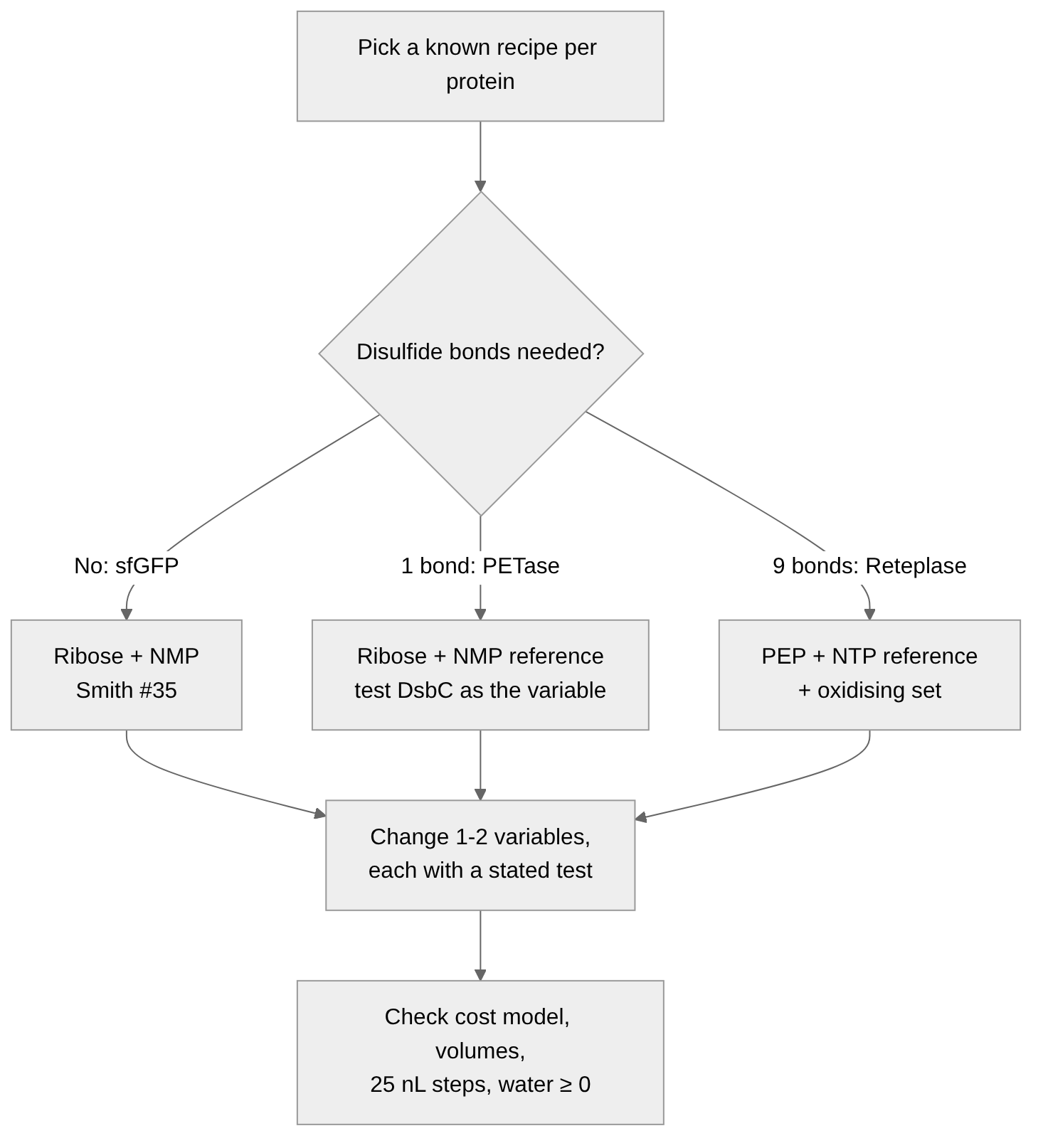
Figure 1. How a known recipe is chosen for each protein, and the checks every design must pass. SVG version
| Requirement (Section 3 of the brief, as I read it) | Where it is answered | Status |
|---|---|---|
| A1. Potassium and magnesium glutamate: why they differ, which is more sensitive | Section 3, A1 | Done in this report |
| A2. PEP+NTP versus Ribose+NMP | Section 3, A2 | Done |
| A3. Compare two literature compositions | Section 3, A3 | Done |
| B1. One 20 µL composition each for sfGFP, PETase and Reteplase | Section 4, B1a–B1c (concentrations in designer units, with nL volumes) | Designed. You must enter and publish them in the designer |
| B2. Add or upvote a Community Reagent, with rationale and links | Section 4, B2 | Rationale and links done. You must cast the vote |
| B3. Check forum access (bonus: post an idea) | Section 4, B3 | Idea drafted. You must confirm access and post |
| C. (Optional) T7 plasmids in the Asimov Kernel; bonus helper plasmid | Section 5 | Sequence checks and plan only. Not built in the Kernel |
| Cite the AI client and the prompts | Section 10 | Client named. Paste your exact prompts |
| Be ready to defend every design at recitation | Section 9, and the toolkit’s recitation tab | Prepared |
| Project brief: costing, manufacturing principles, cybersecurity, legislation, constraints | Sections 2, 6, 7 and 8 | Done |
Cell-free protein synthesis (CFPS) makes protein in a tube from a broken-open cell extract, with no living cells. The E. coli lysate (the clarified liquid left after the cells are broken and spun) supplies ribosomes, tRNAs and metabolic enzymes. It also supplies T7 RNA polymerase (a fast single-protein viral enzyme that copies DNA to mRNA, but only from a T7 promoter), because the BL21 Star (DE3) strain carries its gene. The reaction mix must supply building blocks (amino acids, nucleotides), an energy system that keeps ATP topped up, salts that keep ribosomes and RNA stable, and, for disulfide-bonded proteins, a redox system.
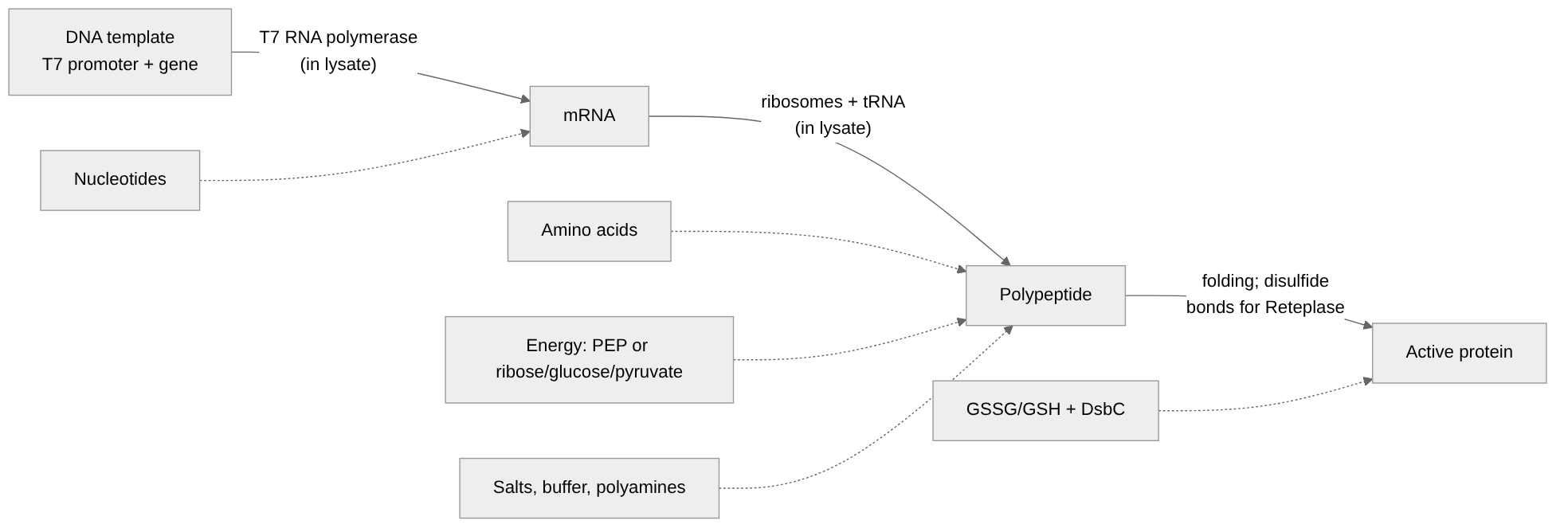
Figure 2. How a cell-free reaction makes protein, and which reagent groups feed each step. SVG version
| Item | Rule |
|---|---|
| Reaction volume | 20 µL (20,000 nL) |
| Fixed (9,000 nL) | 5,000 nL lysate (25%), 2,000 nL DNA template, 2,000 nL base buffer |
| Variable | 11,000 nL from the reagent menu; nuclease-free water tops up to 20,000 nL |
| Granularity | every volume a multiple of 25 nL |
| Base buffer already supplies (final) | 30 mM HEPES-KOH, 200 mM K-glutamate, 2.6 mM Mg-glutamate, 1 mM of each of 18 amino acids, 1 mM cysteine |
| Scoring | Staged screen: 384-well → 96-well → 2 mL tube; the best tube result wins |
Reading the designer’s numbers. Each concentration the designer shows is a total in the 20 µL reaction, including what the base buffer supplies. I tested this: with that reading, my volume arithmetic reproduces the designer’s water row for all 12 reference plates, within 0.005 µL (rounding).
| Term | What it is and how it works | Why it matters |
|---|---|---|
| Titer | Amount of product per litre (g/L for sfGFP) | Denominator of specific cost |
| Specific cost | Total reaction cost ÷ titer: $/g (sfGFP) or $ per µM† of activity (enzymes) | The score; a cheap recipe that makes little protein loses |
| µM† | The designer’s activity unit for PETase and Reteplase, from an activity assay | Used only to rank enzyme recipes; the exact definition is unconfirmed [VERIFY] |
| Disulfide bond | A covalent S–S link between two cysteines that locks a protein’s fold | sfGFP: none (2 free cysteines). TfCut2: 1. Reteplase: 9 |
| GSSG / GSH | Oxidised and reduced glutathione: a redox pair. GSSG helps form disulfide bonds; GSH can break wrong ones | Sets the redox potential for Reteplase |
| DsbC | An E. coli enzyme that rearranges wrongly paired disulfide bonds into correct ones. $5,632/mL | The biggest cost line in any design that contains it |
| DSB lysate / IAM | Lysate made without DTT and treated with iodoacetamide (IAM), which caps free thiols (–SH) | Gives Reteplase an oxidising starting point |
| NTPs / NMPs | Nucleoside tri- / monophosphates: the letters of RNA with three or one phosphate. NMPs are 20–50× cheaper per mL; lysate enzymes add the phosphates | NTPs cost ~$939/L; the NMP set about $77/L |
| PEP | Phosphoenolpyruvate: a high-energy phosphate donor that regenerates ATP directly. $2.202/mL | $661/L at 30 mM |
| Ribose, glucose, pyruvate | Cheap sugars and a sugar-derived acid that the lysate’s metabolism turns into ATP | The cheap energy route |
| Polyamines (spermidine, putrescine) | Positively charged molecules that bind RNA and ribosomes and stabilise them | Cheap titer lever |
| HEPES, phosphate, Bis-Tris | pH buffers (pKa ≈ 7.5, ≈ 7.2 and ≈ 6.8). Phosphate also feeds ATP and nucleotide synthesis | pH control; see B2 |
| Catalase | An enzyme that converts hydrogen peroxide to water and oxygen | Part of Smith #35 |
| Worked example | Calculation | Result |
|---|---|---|
| Lysate | 0.005 mL × $4.00 × 50,000 | $1,000/L |
| sfGFP DNA | 0.002 mL × $1.933 × 50,000 | $193.30/L |
| Base buffer | 0.002 mL × $0.22 × 50,000 | $22.00/L |
| PEP at 30 mM | 6,000 nL → 0.006 mL × $2.202 × 50,000 | $660.60/L |
| DsbC at 1 µM | 200 nL → 0.0002 mL × $5,632 × 50,000 | $56,320/L |
Fixed cost per litre: sfGFP $1,215.30 · PETase $1,229.80 · Reteplase $1,250.40.
Validation. My model’s specific cost versus Smith et al.’s published values: #77 $414 vs $422; #26 $419 vs $425; #35 $426 vs $430; #74 $441 vs $446; 1793119_36 $461 vs $466. The model reads 1–2% low consistently, which fits small unitemised costs. Oxalic acid has no list price and is modelled at $0, so PEP-plate totals are slightly understated [VERIFY].
Reference plates in the designer, costed with this model:
| Plate | Reagents $/L | Total $/L | Titer / activity | Specific cost |
|---|---|---|---|---|
| sfGFP PEP | 2,288 | 3,503 | 0.61 g/L | $5,743/g |
| sfGFP Ribose | 105 | 1,320 | 0.46 g/L | $2,869/g |
| Smith #35 | 80 | 1,295 | 3.04 g/L | $426/g |
| PETase PEP | 283,888 | 285,118 | 314.6 µM† | $906/µM† |
| PETase Ribose | 281,705 | 282,934 | 274.8 µM† | $1,030/µM† |
| Reteplase PEP | 283,907 | 285,157 | 10.9 µM† | $26,161/µM† |
| Reteplase Ribose | 281,699 | 282,949 | 0.81 µM† | $349,320/µM† |
Implication. Because the fixed cost is about $1,215–1,250/L, a 10% titer gain cuts $/g by about 9%, while removing $75/L of reagents saves under 6%. A reagent earns its place if its share of the total cost is smaller than the titer gain it produces.
Evidence. Jewett & Swartz (2004), Table II, PANOx-SP, fraction of maximum chloramphenicol acetyltransferase (CAT) yield, one solute varied at a time:
| Mg-glutamate (mM) | 8 | 12 | 16 | 20 | 24 | 28 |
|---|---|---|---|---|---|---|
| Relative yield | 0.54 | 0.76 | 0.90 | 1.00 | 0.73 | 0.39 |
| K-glutamate (mM) | 100 | 125 | 150 | 175 | 200 | 225 |
|---|---|---|---|---|---|---|
| Relative yield | 0.63 | 0.79 | 0.93 | 1.00 | 0.94 | 0.92 |
The Cytomim system shows the same pattern: Mg optimum 8 mM (0.62 at 4 mM, 0.41 at 16 mM), K optimum 130 mM (0.95 even at 200 mM).
| Formulation | K-glutamate (mM) | Mg-glutamate (mM) |
|---|---|---|
| PANOx-SP (Jewett 2004) | 175 | 20 (+ ~3.3 from the extract) |
| Cytomim (Jewett 2004) | 130 | 8 |
| RFopt (Olsen 2026, as tabulated by Smith) | 362 | 8 |
| Smith compositions (preprint Table 2) | 273–313 | 7.0–8.8 |
| Designer reference plates (all 12) | 200 | 8.85 |
Answer.
| PEP + NTP | Ribose + NMP | |
|---|---|---|
| ATP regeneration | PEP donates its phosphate to ADP directly (fast, one step) | The lysate’s sugar metabolism builds ATP over many steps; needs oxygen and buffered phosphate |
| RNA building blocks | Pre-built CTP, GTP, UTP (plus ATP) | Monophosphates (AMP, CMP, GMP, UMP); the lysate adds phosphates. Guanine + ribose can replace GMP; adenosine can partly replace AMP; CMP/UMP cannot be replaced by nucleosides (Smith) |
| Extra cofactors in the designer references | Folinic acid, CoA, NAD, putrescine, spermidine, oxalic acid | Nicotinamide, sometimes spermidine and catalase |
| Reagent cost (sfGFP) | $2,288/L (NTPs ≈ $939, PEP $661, CoA $520, NAD $125) | $105/L (Smith’s best: $43–80/L) |
| Known risk | Phosphate released from PEP builds up and inhibits synthesis; pH drifts below 6.5 (Jewett) | Phosphate must be buffered (Smith); NMP mixes can precipitate (Olsen kept them warm) |
| Where it wins | Reteplase: about 13× the reference activity of the ribose plate (10.9 vs 0.81 µM†) | sfGFP: 22× lower reagent cost; also PETase below ~0.24 µM DsbC |
Olsen and Smith both conclude that NTPs are not cost-effective for sfGFP; the Reteplase result is the exception because activity, not reagent price, is the limiting factor.
| PANOx-SP (Jewett & Swartz 2004) | Smith 1793122_35 (Smith et al. 2026, preprint) | |
|---|---|---|
| Energy system | PEP 33 mM | Ribose 40 mM, glucose 8.3 mM, pyruvate 9.1 mM |
| Nucleotides | NTPs | NMPs (AMP 0.5; CMP, GMP, UMP 1.0 mM) + adenosine 0.4 mM |
| K-glutamate / Mg-glutamate | 175 / 20 mM | 273.2 / 8.8 mM (Smith’s table; see A1) |
| NH4-glutamate | 10 mM | none |
| Polyamines | Spermidine 1.5 mM, putrescine 1 mM | Spermidine 1.2 mM |
| Oxalate | 2.7 mM | none |
| Buffer | — | HEPES 67.5 mM + 15 mM K-phosphate |
| Other | — | Nicotinamide 4 mM, catalase 187.5 U/mL |
| Result | ~700 µg/mL CAT (15 µL, 3 h, a different protein) | 3.04 g/L sfGFP in 2 mL tubes; $430/g |
Contrast. PANOx-SP is a PEP-driven system with a heavy salt and nucleotide load and 20 mM Mg. Smith #35 swaps PEP and NTPs for sugars and NMPs, drops Mg to 8.8 mM, and adds a pH buffer and nicotinamide. Both keep a polyamine and glutamate salts. Yields are not directly comparable (different protein, scale and time); the comparison is of formulation logic and cost structure.
The brief asks for novel designs; a first pass starts from a known formulation and changes a small number of variables, each with a stated mechanism and a test that could prove it wrong. All designs were checked for non-negative water and 25 nL steps. Enter values in the designer’s units (total final concentration).
Why #35 and not the cheapest, #77. From Smith Table 1 (tube cost; titers in g/L by format):
| Composition | $/g (tube) | Tube | 96-well | 384-well |
|---|---|---|---|---|
| #77 | $422 | 3.04 | 0.66 | 0.29 |
| #26 | $425 | 3.01 | 0.86 | 0.33 |
| #35 | $430 | 3.04 | 1.52 | 0.72 |
| #74 | $446 | 2.92 | 1.31 | 0.49 |
| 1793119_36 | $466 | 2.77 | 1.28 | 0.78 |
#77 is cheapest in tubes but weakest in 384-well plates, which is the stage that decides what advances. Choosing it would risk early elimination for an $8/g advantage. (384-well error bars are large, e.g. 0.72 ± 0.38, so this is a risk judgement, not a certainty.)
Changes
| Change | Mechanism and evidence | Cost effect |
|---|---|---|
| GMP 1.0 mM → guanine 0.2 mM | Olsen and Smith report guanine + ribose can replace GMP without titer loss (confirmed in #77 and #74). Ribose (40 mM) is already present | about −$5.3 |
| Spermidine 1.2 → 1.5 mM | Jewett’s optimum is 1.5 mM (0.92 at 1 mM, 0.54 at 5 mM); Smith finds spermidine runs have roughly double the median titer (a correlation) | +$1.31 |
| Net | −$4.00/L ($1,294.93 → $1,290.93) |
Composition (water 3,875 nL; reagents 7,125 nL)
| Reagent | Enter | nL | $/L |
|---|---|---|---|
| K-glutamate / Mg-glutamate | 200 / 8.85 mM | 0 / 250 | 0 / 0.81 |
| Amino acids / Tyrosine / Cysteine | 4.8 / 1.2 / 5.0 mM | 1,525 / 75 / 400 | 6.33 / 0.04 / 0.48 |
| HEPES pH 7.5 | 67.5 mM | 750 | 4.88 |
| K-phosphate di:mono / mono:di | 7.5 / 7.5 mM | 300 / 300 | 0.36 / 0.27 |
| Glucose / Sodium pyruvate / Ribose | 8.3 / 9.1 / 40 mM | 150 / 200 / 1,200 | 0.02 / 1.64 / 10.80 |
| Nicotinamide / Spermidine | 4 / 1.5 mM | 800 / 125 | 0.08 / 6.53 |
| AMP / CMP / UMP | 0.5 / 1 / 1 mM | 100 / 200 / 200 | 3.50 / 12.70 / 8.39 |
| Adenosine / Guanine | 0.4 / 0.2 mM | 325 / 150 | 0.03 / 0.02 |
| Catalase | 187.5 U/mL | 75 | 18.75 |
| Reagents / Total | 7,125 nL | $75.63 / $1,290.93 |
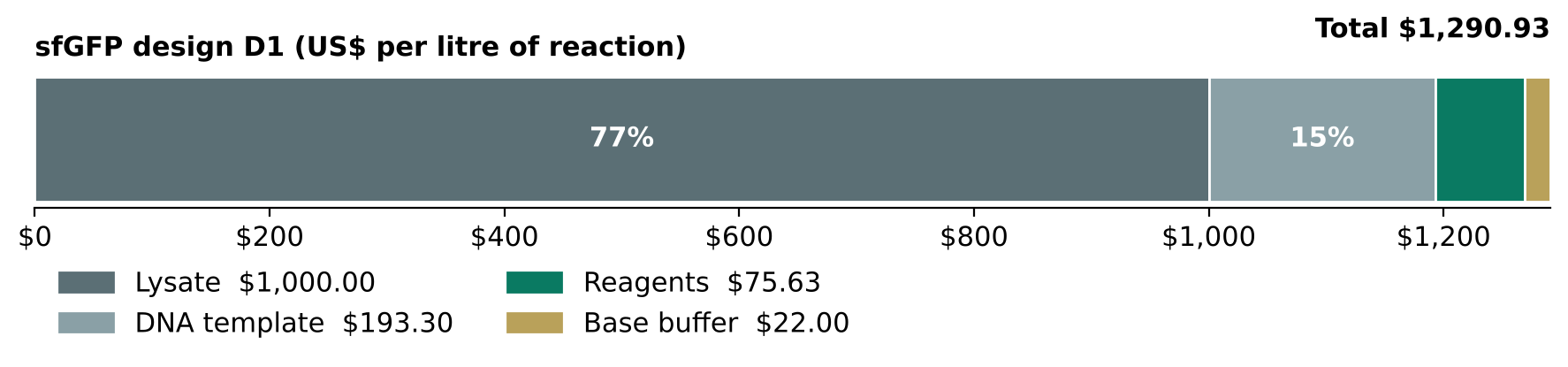
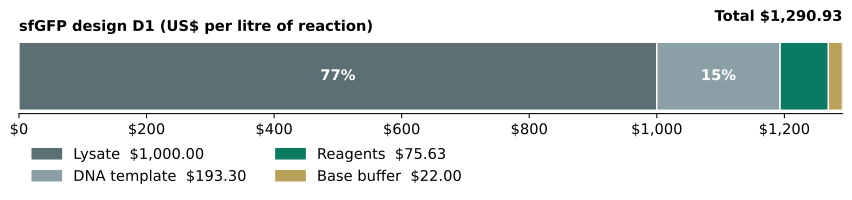
Figure 3. Where each litre of the sfGFP design (D1) costs money: the fixed block is 94%. SVG version
At #35’s tube titer (3.04 g/L) this would be about $425/g; that is the baseline’s titer, not a prediction.
Test that could prove it wrong. D1 fails if its titer is below #35’s on the same plate. Because the design is cost-neutral, any real gain must come from titer.
Why not the alternatives
| Option | Reason rejected |
|---|---|
| PEP + NTP (reference plate, $5,743/g) | 14× the reagent cost; titer 0.61 vs 3.04 g/L |
| sfGFP Ribose reference ($2,869/g) | 7× worse specific cost than #35 |
| #77, #26 | Cheaper in tubes but 0.29–0.33 g/L in 384-well plates |
| CMP/UMP → nucleosides | Smith reports it failed |
| Sodium hexametaphosphate | Smith reports no benefit |
| Adding CoA ($104/mL), NAD ($33/mL), folinic acid | $520, $125 and $22 per litre with no evidence of payback in ribose systems |
| Changing K or Mg | K cannot go below 200 mM; Mg needs a fine scan (A1) |
Change. DsbC 5 → 0.125 µM (25 nL). Everything else is identical to the reference.
Why. The brief states TfCut2 has one disulfide bond and that the standard reducing formulation remains compatible with it. At the reference 5 µM, DsbC is 99% of the cost. I confirmed from the supplied sequence that TfCut2 has two cysteines (one bond).
Composition (water 3,450 nL; reagents 7,550 nL)
| Reagent | Enter | nL | $/L |
|---|---|---|---|
| K-glutamate / Mg-glutamate | 200 / 8.85 mM | 0 / 250 | 0 / 0.81 |
| Amino acids (Tyr, Cys stay at 1 mM) | 5 mM | 1,600 | 6.64 |
| HEPES pH 7.5 | 75 mM | 900 | 5.85 |
| K-phosphate mono:di | 15 mM | 600 | 0.54 |
| Ribose / Nicotinamide | 49.96 / 4 mM | 1,500 / 800 | 13.50 / 0.08 |
| AMP / CMP / GMP / UMP | 3 / 2.125 / 2.125 / 2.125 mM | 600 / 425 / 425 / 425 | 20.97 / 26.99 / 11.33 / 17.83 |
| DsbC | 0.125 µM | 25 | 7,040 |
| Reagents / Total | 7,550 nL | $7,144.53 / $8,374.33 |
Test that could prove it wrong, in cost terms
Why one variable only. A single change keeps any difference attributable to DsbC; bundling other changes would confound it. A group member is testing the PEP PETase reference at 3.75 µM, so my design does not duplicate that.
Why not the alternatives
| Option | Reason rejected |
|---|---|
| Copy the 5 µM reference unchanged | DsbC is 99% of cost and nothing is learned |
| PEP backbone | Cheaper per unit activity only above ~0.24 µM DsbC (see B1d); D2 sits below that |
| Oxidising set (IAM lysate, extra GSSG) | The brief says reducing conditions are compatible; Olsen found oxidising additions cut sfGFP yield by 75–97% in RFopt |
| No DsbC | Kept as the lower bound for the next round; one disulfide could still need assistance |
Change. DsbC 5 → 1 µM (200 nL). Everything else is identical to the reference.
Why PEP+NTP. The two Reteplase references differ 13-fold in activity (10.9 vs 0.81 µM†) while their costs without DsbC differ only 2.6-fold ($3,557 vs $1,349 per litre). Even with DsbC at zero, PEP is about 5× cheaper per unit activity. Caveats: single plates, and the µM† unit is unconfirmed.
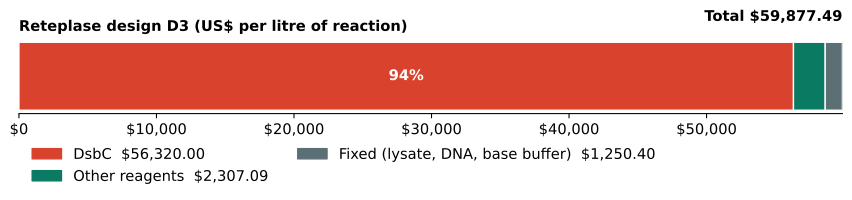
Why 1 µM DsbC. DsbC is 94% of this design’s cost. At 1 µM it costs one-fifth as much as at 5 µM. The literature level quoted on the course forum from Yin & Swartz (2004) is 75 µg/mL, which at DsbC’s 25.5 kDa is about 2.9 µM. So lowering from 5 µM has support, but 1 µM is below that level. A peer states DsbC saturates near 1 µM, but the passage quoted does not say so, so I treat it as a hypothesis. D3 is a deliberate cost test; 2.5 µM is the safer alternative but needs about 51% of the reference activity to break even versus 21% at 1 µM.
Composition (water 1,400 nL; reagents 9,600 nL)
| Reagent | Enter | nL | $/L |
|---|---|---|---|
| Mg-glutamate / NH4-glutamate | 8.85 / 10 mM | 250 / 200 | 0.81 / 7.20 |
| Amino acids (Tyr, Cys stay at 1 mM) | 2 mM | 400 | 1.66 |
| HEPES pH 7.5 | 57.5 mM | 550 | 3.58 |
| PEP | 30 mM | 6,000 | 660.60 |
| Folinic acid / CoA / NAD | 0.025 mg/mL / 0.25 / 0.375 mM | 50 / 100 / 75 | 22.45 / 520.00 / 125.05 |
| Putrescine / Spermidine / Oxalic acid | 1.25 / 1.5625 / 3.75 mM | 50 / 125 / 150 | 1.09 / 6.53 / 0 (unpriced) |
| GSSG / GSH | 4.0375 / 1 mM | 475 / 200 | 17.34 / 1.70 |
| DsbC | 1 µM | 200 | 56,320 |
| ATP / CTP / GTP / UTP | 1.25 / 0.875 each mM | 250 / 175 each | 19.24 / 244.45 / 344.25 / 331.15 |
| Reagents / Total | 9,600 nL | $58,627.09 / $59,877.49 |
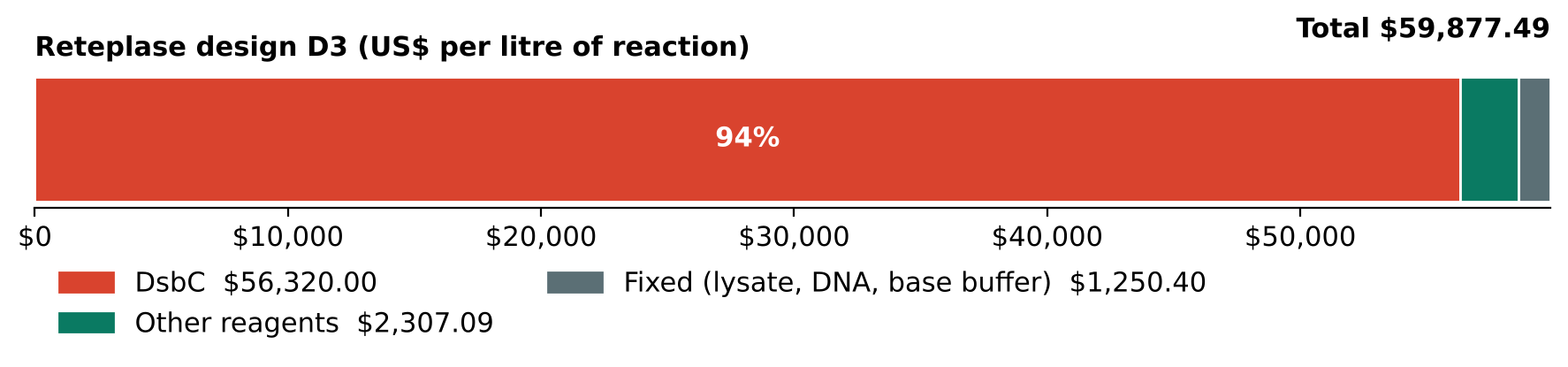
Figure 4. Where each litre of the Reteplase design (D3) costs money: DsbC is 94%. SVG version
Test that could prove it wrong. D3 needs about 21% of the reference’s activity (2.3 µM† of 10.9) to match the reference’s specific cost. Below that, 1 µM does not pay back.
Why keep everything else (CoA, NAD, NTPs, oxalate, polyamines). It is the known formulation. CoA + NAD + NTPs total about $1,600/L, under 3% of D3, so removing them cannot decide the outcome now; they are second-round tests.
Why not the alternatives
| Option | Reason rejected |
|---|---|
| Ribose backbone | 13× lower reference activity |
| DsbC 5 µM | 99% of cost; nothing learned |
| DsbC 0.25 µM ($17,637/L) | Higher risk of near-zero activity for a nine-bond protein; kept for the ladder |
| Raising HEPES | Olsen’s pH problem was in the ribose formulation and was fixed by raising the buffer’s pH, which the designer already sets to 7.5 |
| NTP → NMP swap ($58,984/L, saves $893) | Only 1.5% while DsbC is present, and adds a second variable |
| No DsbC | High risk of an uninformative zero |
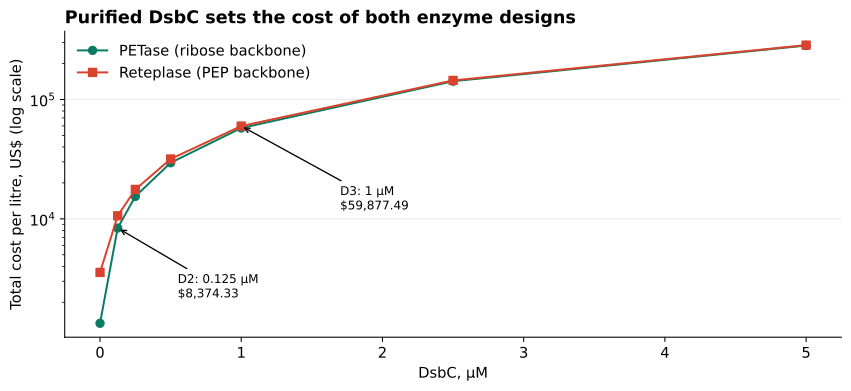
| DsbC (µM) | nL | $/L | Activity multiple needed — Reteplase | — PETase ribose |
|---|---|---|---|---|
| 0.125 | 25 | 7,040 | 3.0× | 6.3× |
| 0.25 | 50 | 14,080 | 5.0× | 11.6× |
| 0.5 | 100 | 28,160 | 8.9× | 22.1× |
| 1 | 200 | 56,320 | 16.8× | 43.2× |
| 2.5 | 500 | 140,800 | 40.6× | 106.5× |
| 5 | 1,000 | 281,600 | 80.2× | 212.0× |
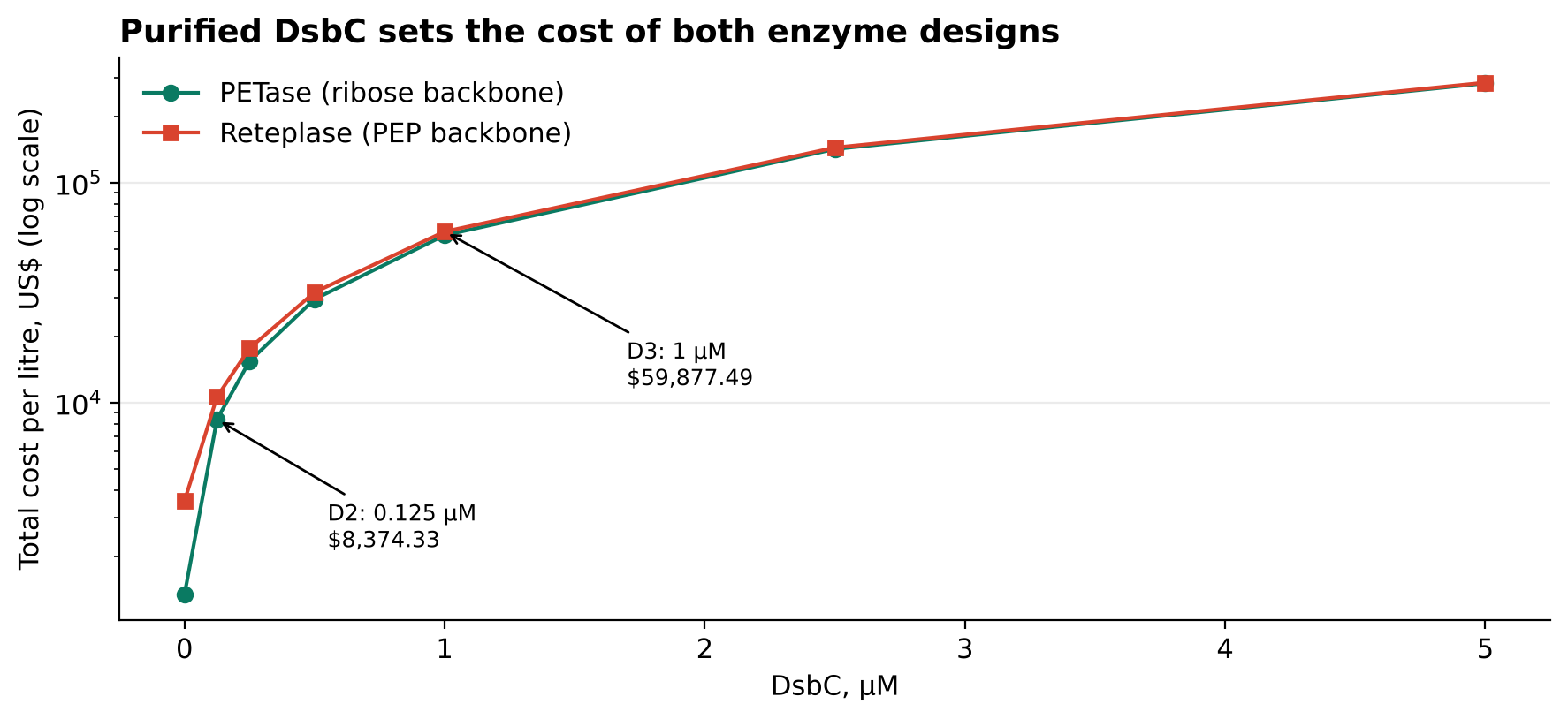
Figure 5. Total cost per litre against DsbC level for both enzyme designs (log scale); D2 and D3 are marked. SVG version
Backbone crossover (assuming activity does not change with DsbC level, a simplification): setting (C_ribose + d)/T_ribose = (C_PEP + d)/T_PEP gives 0.24 µM DsbC for PETase (ribose cheaper below it, PEP above it) and a negative value for Reteplase, so PEP wins at every DsbC level.
Decision. I upvote the existing Bis-Tris proposal [confirm it is on the Community Reagents list and add your vote]. If it is not listed, I propose it with the rationale below.
What it is. Bis-Tris is a buffer with a pKa of about 6.8 (near-neutral pH), which resists pH change in the 6–7.2 range. It is a stable small molecule with no activity to lose, no cold chain, and no protein-sourcing delay.
How I chose it. I screened candidates against three criteria: cost-effective, stable, and useful for more than one protein.
| Candidate | Cost-effective | Stable | Multi-protein | Verdict |
|---|---|---|---|---|
| Bis-Tris | likely cheap (commodity buffer; price not on my list [VERIFY]) | Yes | Yes (pH matters for all three) | Chosen |
| Skp (chaperone) | Unknown; protein reagent | Less (protein) | Reteplase only | Reasonable alternative; Yin & Swartz report it raised active vtPA yield, but it fails my stability and breadth tests |
| PEG-8000 (crowding agent) | Probably cheap | Yes | Yes | Weak evidence in the sources; a viscous solution may be hard to dispense in 25 nL droplets (my inference) |
| tRNA | No price in my files; likely costly | Moderate | Yes | Not evidenced as cost-effective |
| DsbA | Protein | Less | Reteplase only | GSSG already oxidises non-enzymatically; the bottleneck is untangling wrong pairings, which only DsbC does |
Evidence and links
Caveat. Olsen found that adding a buffer on its own to the minimal formulation did not improve yield, so Bis-Tris is a plausible low-risk test, not a proven gain.
One reagent or several? I kept it to one. The brief asks for at least one with a rationale, I must be able to defend every choice at recitation, and reagents come from a limited shared pool where duplicating an existing proposal wastes a slot.
| Item | Detail | Action |
|---|---|---|
| JSON names | A peer’s working names: GSSG = oxidized_glutathione, GSH = reduced_glutathione, DsbC = dsbc_ecoli | Take every other name from the repo’s example JSON or the website export |
| PEP display bug | Re-opening a submitted design can drop the PEP amount (two PEP entries in the database); the organiser says submitted designs are unaffected | D3 contains PEP; after submitting, check the export still shows 6,000 nL [VERIFY] |
| Salt Optima | A peer asked what this setting does and I saw no answer | Confirm the water row for D1–D3 reads 3.875, 3.45 and 1.40 µL in the live designer [VERIFY] |
Check of the supplied sequences. I counted residues and cysteines:
| Protein | Residues (with tags) | Cysteines | Consistent with |
|---|---|---|---|
| sfGFP | 240 | 2 | no disulfide (2 free thiols) |
| TfCut2 | 309 | 2 | 1 disulfide bond |
| Reteplase | 399 | 18 | 9 disulfide bonds |
The lengths match the overview document (240, 309 and 399). Tags in the sequences: a Strep II tag (WSHPQFEK) at the C-terminus of sfGFP; an N-terminal Strep II tag + linker + TEV site on PETase and Reteplase; and a C-terminal HiBiT tag (VSGWRLFKKIS) on both.
Layout to reproduce (from Ginkgo’s own plasmids, 2,511 / 2,696 / 2,966 bp): backbone (origin and selection marker, for propagation only) → T7 promoter (TAATACGACTCACTATAGGG) → ribosome binding site and spacer → ATG, coding sequence, stop codon → T7-type terminator → backbone.
Kernel steps: (1) codon-optimise each protein for E. coli; (2) remove stray restriction sites for the chosen cloning method; (3) avoid internal terminator-like hairpins and strong internal RBS motifs; (4) confirm the reading frame across the tags and a single stop codon; (5) check GC content and repeats for synthesis; (6) translate the final sequence back and match it to the brief. I have not run the Kernel; this step must be done in the tool.
Design. A second T7 plasmid expressing the mature E. coli DsbC (without its periplasmic signal peptide, so it is made in the cytoplasm-like reaction), with the same RBS and terminator as the target plasmid, and a tag (for example HiBiT or Strep II) to follow it.
Why DsbC and not the alternatives. DsbC is the enzyme that fixes wrong pairings, which is Reteplase’s bottleneck. DsbA only forms disulfides, and GSSG already does that; Yin & Swartz (as quoted on the forum) found PDI, GroEL/GroES, DnaK/DnaJ/GrpE and DsbA gave no significant benefit.
Cost logic (a calculation, not a result).
Why it might not work.
| Area | Risk | Control |
|---|---|---|
| Credentials | gcloud auth login --update-adc stores application-default credentials locally | Dedicated account; never commit credential files; log out after upload |
| Supply chain | git clone and uv sync pull code and dependencies from the internet | Use the official ginkgobioworks/autonomous-cfps repo; review and pin dependencies; isolated environment |
| Input integrity | A tampered or malformed JSON could drive an automated lab | Validate with the Pydantic model; keep a SHA-256 hash of each submitted file |
| Confidentiality | Human-team designs and results are shared among teams | Nothing confidential in sample IDs or notes |
| AI-assisted design | LLM output can contain wrong volumes or reagents | Re-check every design against the designer’s CSV; cite AI use (required) |
| Personal data | Account and course data are personal information | POPIA (Protection of Personal Information Act 4 of 2013, South Africa) |
| Biosafety / GMO | The experiments run at Ginkgo; my part is in silico | If local wet work is ever added, South Africa’s Genetically Modified Organisms Act 15 of 1997 may apply [VERIFY] |
| Therapeutic regulation | Reteplase is an approved human drug | Any real production for human use falls under biologics regulation (for example FDA, EMA, SAHPRA); this exercise yields research material only |
| Public posts | Forum posts and screenshots can expose tokens, email addresses or file paths | Post design values only; scan any pasted text for secrets first (the toolkit’s scanner does this); no credentials in screenshots |
| Fingerprints | A hash shows a design file changed, not who changed it | Record the hashes in Section 8 and keep them apart from the submitted files |
| Academic integrity | AI-assisted work must be disclosed, and peer ideas credited | Section 10 names the AI client and prompts; peer and forum claims are labelled as such; follow the stricter of the course and university AI rules [VERIFY] |
Manufacturing and quality principles applied: start from a known baseline; change one or two variables; write the hypothesis and the failure criterion in advance; replicates (n = 4) and controls on every plate; compare only within the same plate format; keep traceable records (design ID, file hash, date); cost every option before choosing it.
This section lists what could limit or break the designs, and where they push beyond what the sources show. The cost model cannot see any of it.
| Item | What I know | What I do not know | Action |
|---|---|---|---|
| Deadline | Course due date 6 October; Ginkgo’s official submission window runs to 20 October | Whether the course accepts late work | Ask the TA |
| Scoring metric | The objective is lowest specific cost ($/g or $ per µM†) | Whether ranking uses measured yield, cost, or a mix, and how an untested design is treated | Ask which metric counts. D2 and D3 are written as cost tests |
| Activity unit | The designer ranks enzymes in µM† | Its exact definition | Ask the course team |
| Risk | Why it matters | Designs affected | What I did or would do |
|---|---|---|---|
| Small-volume dispensing | A fixed pipetting error is a larger share of a small volume. D2’s DsbC is 25 nL, the smallest step the designer allows. Under the toolkit’s assumed error model (3% CV plus 15 nL standard deviation, my placeholder, not a lab specification) the concentration error is about 60% at 25 nL, about 8% at 200 nL (D3’s DsbC) | D2 most; D3’s small additions (putrescine 50 nL, folinic acid 50 nL) | Ask Ginkgo for the real dispensing specification; read D2’s result against replicate scatter; the 0.25 µM rung (50 nL) is the fallback |
| Precipitation (magnesium with phosphate-rich mixes, oxalate) | A precipitate can remove reagents or block assays | D3 (PEP, NTPs, oxalate, Mg 8.85 mM) | D2 and D3 keep every salt of their reference plates unchanged, so this risk belongs to the reference, not to my change |
| Activity is not expression | Protein made is not protein active; Reteplase has nine bonds to form correctly | D2, D3 | The break-even figures state how much activity each DsbC level must keep (3.0% for D2, about 21% for D3); below that the saving is not worth it |
| Plate format | Titers differ by format (Smith #35: 3.04 g/L in tubes, 1.52 in 96-well, 0.72 in 384-well) | All | Compare only within one plate format |
| Lysate batch | Olsen re-optimised magnesium and phosphate for each new lysate | All | I start from the references run in the designer, so batch effects are shared |
| Untested changes | Two of three designs change an expensive additive for which my sources give indirect evidence only | D2, D3 | Each design has a stated failure test (Section 4) |
| Design | Basis | Assessment | |
|---|---|---|---|
| Pushes | D2: DsbC 0.125 µM, 40× below the reference | The brief says TfCut2 has one disulfide bond and tolerates the reducing formulation. I found no direct dose data for it | A genuine hypothesis; the no-DsbC version (cost $1,334.34/L) is the lower bound for round two |
| Pushes | D3: DsbC 1 µM | The forum-quoted literature level is about 2.9 µM (for a related protein, vtPA). A peer claims saturation near 1 µM, which the quoted passage does not state | Deliberate cost test; 2.5 µM is the safer alternative |
| Conservative | D1: two small changes to Smith #35 | Evidence for guanine as a GMP replacement; Jewett’s spermidine optimum | Cost-neutral (−$4.00/L); any gain has to come from titer |
| Conservative | Everything else in all three designs | Unchanged from known formulations | Keeps any difference attributable |
| Tool | What it is | Supports |
|---|---|---|
Costing workbook HTBAA_HW3_CFPS_Costing.xlsx | Sheets: Summary, Designs (R01–R12 references, D1–D3 submissions, A1–A3 alternatives), DsbC_Breakeven, Prices. Every figure is a live formula | Sections 2 and 4 |
| CFPS Design Toolkit (web page) | Nine tabs: Design & cost; Optimise (cheapest cuts first, DsbC ladder); Sensitivity (tornado chart, price shock); Dispensing (Monte Carlo of pipetting error); Scale-up ($/g, batch cost, plates); Sequence (promoter, frame, cysteines, tags, terminator, restriction sites); Integrity & secrets (SHA-256 fingerprint, credential scanner); Assumptions register; Recitation trainer | Sections 4, 5, 6, 7 and 9 |
Figures. Figures 1–5 are supplied as PNG and SVG files in the images/ folder beside this report; keep the folder structure when uploading to the website.
How the toolkit was checked. When it loads it recomputes D1–D3 and compares them with this report: $1,290.93, $8,374.33 and $59,877.49 per litre, and water rows of 3.875, 3.45 and 1.40 µL. It also tests its own SHA-256 routine against a known value. Its DsbC ladder reproduces the break-evens in B1d.
What it is not. It is a planning model of the designer, not the designer. Its optimiser trades cost against departure from a known recipe and cannot predict yield. Its dispensing figures use placeholder error values. The final designs must be entered in the live designer, where the water row should match.
Design fingerprints (SHA-256 of the toolkit’s canonical JSON for each design, with label “D1 sfGFP”, “D2 PETase” and “D3 Reteplase” and date 2026-10-13; recomputed independently in Python and matching):
| Design | SHA-256 |
|---|---|
| D1 sfGFP | b0709ffeff68c2a82700a516a8ce5be160f15daa0c79f3ae83e5135324d43c6a |
| D2 PETase | 147b290f5aaf6845266033229d33b8c3b04fc2d940e2d0258066de02a18b8871 |
| D3 Reteplase | fab3201e2592b424ff7a613da2e1027332fe659cd48fc54d0baf0d6893ec9c3a |
A hash shows that the content later differs; it does not show who changed it. The toolkit link is private until its owner shares it, so share it before putting a link on a public page.
What. I designed one 20 µL cell-free reaction for each target by taking a known recipe and changing as little as possible: sfGFP (Smith #35 with guanine replacing GMP and spermidine at 1.5 mM), PETase (the ribose reference with DsbC cut from 5 to 0.125 µM), and Reteplase (the PEP reference with DsbC cut to 1 µM). For the community reagent I chose Bis-Tris.
Why. The score is cost per gram or per unit of activity. Lysate and DNA fix about $1,215–1,250/L, so for sfGFP the lever is titer, and for the two enzymes the lever is purified DsbC, which at 5 µM is 99% of the reference cost. Each change targets either titer or the DsbC line, and each comes with a written hypothesis and a result that would prove it wrong.
How. I built a cost model from the price list and the reaction rules, checked it against all 12 designer reference plates (water row within 0.005 µL) and against Smith’s published $/g (within 2%), then used it to compare options, compute break-even activity for DsbC and choose baselines. Every rejected option has a numeric or evidence-based reason.
| Question | Answer |
|---|---|
| Why not copy the cheapest sfGFP recipe? | #77 is cheapest in tubes ($422/g) but reaches only 0.29 g/L in 384-well plates versus 0.72 for #35, and 384-well is the stage that decides advancement |
| Why change spermidine and GMP? | Both have evidence and cost little: Jewett’s spermidine optimum is 1.5 mM, and guanine + ribose replacing GMP was confirmed in #77 and #74. Net −$4/L |
| Why is Mg unchanged if it is the most sensitive? | Changing the narrowest-optimum variable without a scan is a gamble; it is a second-round fine scan. All 12 references share 8.85 mM |
| Why only one change for each enzyme? | So any difference can be attributed to DsbC |
| Is 1 µM DsbC supported? | Partly. The literature level quoted is 75 µg/mL (about 2.9 µM) versus the 5 µM reference; a peer claims a plateau near 1 µM but the passage quoted does not say so. D3 is a deliberate test, with 2.5 µM as the safer alternative |
| Why keep CoA, NAD and NTPs in Reteplase? | Known formulation; together they are under 3% of D3, so they cannot decide the outcome now |
| What would show you are wrong? | sfGFP titer below #35’s; PETase activity below 3% of the reference; Reteplase activity below about 21% of the reference |
| Weakest assumptions? | Oxalic acid priced at $0; µM† undefined; activity assumed independent of DsbC in the crossover maths; the K-glutamate discrepancy |
| Why Bis-Tris? | Stable, probably cheap, and pH control matters for all three proteins; Jewett, Olsen and Smith all point to pH or buffering |
| Why not a helper plasmid? | Optional and speculative: one-template limit, ribosome and ATP competition, lag, and unclear permission |
| Next steps? | A six-point DsbC ladder crossed with the PEP/ribose backbone, a Mg fine scan, then NTP→NMP and CoA/NAD removal in Reteplase once DsbC is lowered |
| What if 25 nL of DsbC is dispensed badly in D2? | It is the smallest step the designer allows, so any fixed pipetting error is a large share of it. Under my assumed error model the concentration error is about 60% (about 8% for D3’s 200 nL). I would read D2 against replicate scatter and fall back to 0.25 µM |
| Why trust numbers produced with AI help? | They were cross-checked: the water row of all 12 reference plates reproduced within 0.005 µL; model $/g within about 2% of Smith’s; sequence cysteine counts match the expected bonds; the toolkit re-derives D1–D3 on every load; the design hashes were recomputed independently |
| Oxalic acid is unpriced. Does that change the answer? | It is modelled at $0, so PEP-plate totals are slightly low. Oxalate is a small addition (150 nL in D3) against a cost dominated by DsbC, so the conclusions hold; I flag it rather than hide it |
AI client: Claude (Anthropic), Claude Sonnet 5.5, used through a claude.ai Project, to read the brief, papers and lecture material, build the cost model and workbook, and draft this report. I verified the numerical claims against the course PDFs, the draft coopetition overview and the designer’s CSV export. The toolkit’s code was also written with Claude and tested in a headless browser against the report’s totals; I did not independently audit the code.
Prompts used (replace with your exact wording before submitting):