Week 2 HW: DNA Design
An Elephant-Memory-Inspired Neuroprotective Biologic for Dementia
Shakera Karolia | BioClub Tokyo Node | 29 September 2026
Part 0: Set up in Kernel
All design work for this assignment was completed in the HTGAA 2026 workspace on Asimov Kernel under the repository SHAKERA_KAROLIA, housed within the folder Karolia-project. The assembled construct is named PKMzeta_CFPS_Expression_Cassette. The GenBank export file (PKMzeta_CFPS_Expression_Cassette.gb) accompanies this submission as a separate file.
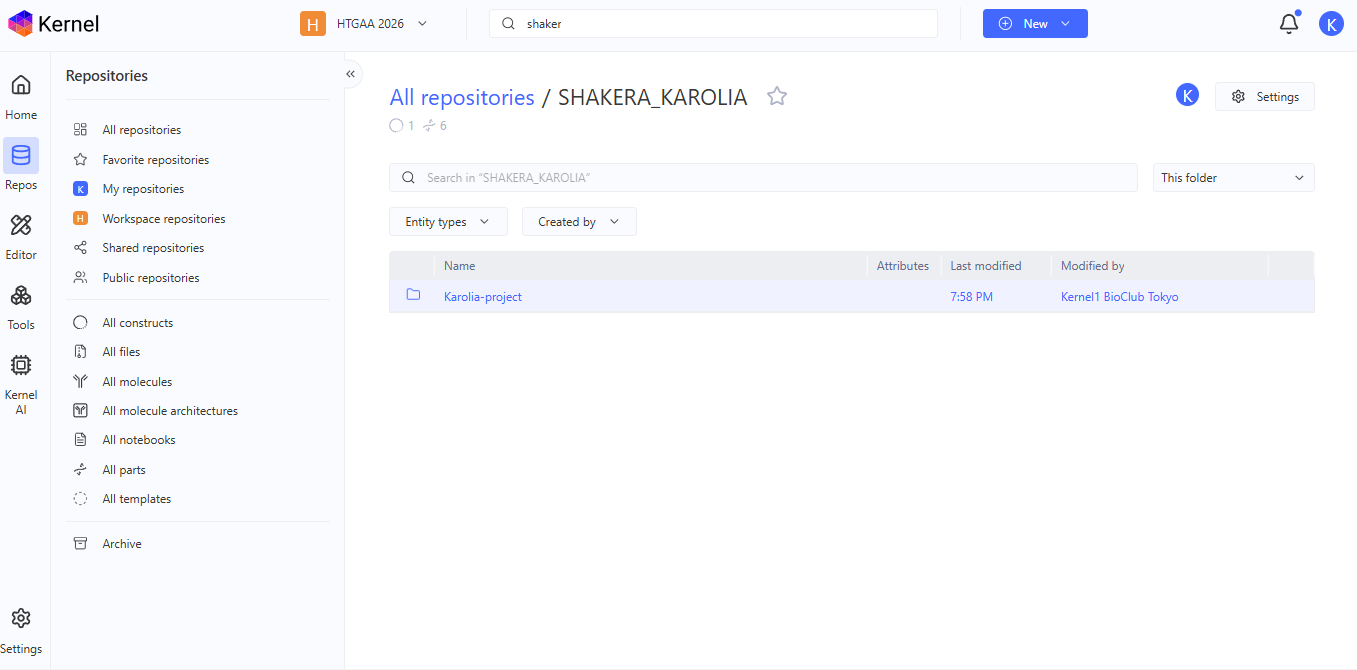
Figure 0: The SHAKERA_KAROLIA repository in the HTGAA 2026 workspace, showing the Karolia-project folder containing the construct and all associated parts.
Part 1: Expression Target
What molecule is being expressed?
The expression target is the constitutively active catalytic domain of human protein kinase C zeta (PKCζ), the isoform known as PKMζ. PKMζ is a serine/threonine kinase that is specifically required for the maintenance — rather than the initial formation — of spatial and other long-term memories. Serrano et al. (2008) demonstrated that inhibiting PKMζ activity erases established memories in rats, establishing it as the only molecule known to be specifically necessary for long-term memory maintenance rather than for memory acquisition. This project is motivated by the confirmed presence of adult hippocampal neurogenesis in the African elephant (Loxodonta africana), as documented by Patzke et al. (2013), which provides biological precedent for targeting memory-maintenance and neuroprotective pathways. The PKMζ/KIBRA signalling axis was identified in Homework 1 as the candidate therapeutic target for dementia and Alzheimer’s disease.
What is the sequence?
The coding sequence encodes residues 211–592 of human PRKCZ (UniProt accession Q05513), corresponding to the 382-amino-acid C-terminal catalytic domain, plus a TGA stop codon. This fragment lacks the N-terminal regulatory and pseudosubstrate domains present in full-length PKCζ (592 amino acids), rendering it constitutively active — a defining characteristic of PKMζ. The DNA coding sequence is 1,149 bp. An N-terminal 6×His purification tag (MHHHHHH, 21 bp) is encoded by a separate upstream part within the construct. Two codons were corrected during design to match the UniProt reference: position 366 (CTC→TTC, leucine to phenylalanine) and position 522 (GGC→GAC, glycine to aspartate). The sequence was not codon-optimised for E. coli in this iteration.
What host or chassis?
The expression platform is E. coli-based cell-free protein synthesis (CFPS). As proposed in Homework 1, CFPS is well suited to rapid prototyping of protein variants: it requires no cell growth, no transformation, and permits screening in a 384-well plate format using a liquid handler or cloud laboratory (Petzold and Mukhopadhyay, 2025). The lysate is pre-loaded with ribosomes, T7 RNA polymerase, and an energy regeneration system; only the DNA template is supplied externally. Scale-up for clinical production would subsequently transition to CHO (Chinese hamster ovary) cell culture, which provides the eukaryotic folding and post-translational modification environment required for a CNS-active kinase domain.
Where does the product need to go?
The protein is directed to the cytoplasm. In a CFPS reaction there is no membrane compartmentalisation; the expressed protein accumulates in the reaction mix and is purified by Ni-NTA affinity chromatography via the N-terminal His6 tag. No signal peptide or secretion sequence is required at this stage. For the eventual therapeutic application, the purified protein would be formulated for intranasal delivery, bypassing the blood-brain barrier via the olfactory and trigeminal nerve routes, as proposed in Homework 1 (Hanson and Frey, 2008).
Part 2: Genetic Parts Design
The construct comprises six parts, assembled 5′→3′ as a linear expression cassette optimised for E. coli CFPS. Each part was created or imported in Kernel with the appropriate part type designation. The table below provides a summary; detailed justifications follow.
| # | Part | Length | Positions | Kernel type | Source |
|---|---|---|---|---|---|
| 1 | T7 promoter | 23 bp | 1–23 | Promoter | iGEM Registry |
| 2 | RBS_B0034 | 12 bp | 24–35 | Ribosome binding site | iGEM BBa_B0034 |
| 3 | Spacer_RBS | 6 bp | 36–41 | Non-coding spacer | Designed |
| 4 | ATG_His6 | 21 bp | 42–62 | CDS (+start −stop) | Designed |
| 5 | PKMzeta_CDS_v2 | 1,149 bp | 63–1211 | CDS (−start +stop) | UniProt Q05513 |
| 6 | Terminator_BBa_B0015 | 129 bp | 1212–1340 | Terminator | iGEM BBa_B0015 |
T7 promoter (23 bp, positions 1–23)
Source: iGEM Registry; standard T7 promoter consensus sequence.
Justification: The T7 promoter is the standard transcriptional driver for E. coli CFPS systems. Commercial cell-free kits such as PURExpress (New England Biolabs) supply exogenous T7 RNA polymerase, enabling strong, single-subunit transcription independent of the host’s endogenous RNA polymerase machinery. The critical importance of strong, tightly controlled promoters in synthetic E. coli gene circuits was established by Elowitz and Leibler (2000), whose repressilator network demonstrated that promoter strength, transcriptional tightness, and efficient ribosome binding sites are the primary determinants of reliable gene expression dynamics. Those findings underpin the choice of the T7 promoter and a characterised RBS here: both parts have well-defined, quantitative performance characteristics that make expression outputs more predictable than uncharacterised alternatives.
RBS_B0034 (12 bp, positions 24–35)
Source: iGEM Registry part BBa_B0034.
Justification: BBa_B0034 is a medium-strength ribosome binding site from the iGEM community collection that has been widely characterised in E. coli expression systems. It provides reliable translation initiation without placing excessive demand on the ribosome pool, which is a finite and non-renewable resource in a CFPS reaction (Karim and Jewett, 2021). The use of orthogonal, pre-characterised parts from curated registries is a foundational principle of synthetic biology design. Stanton et al. (2014) demonstrated this principle at scale by mining prokaryotic genomes for repressor proteins that function orthogonally — that is, without cross-talk with endogenous cellular machinery — enabling the construction of reliable logic gates in E. coli. Their work reinforces the rationale for selecting BBa_B0034: a community-characterised, registry-sourced RBS is more likely to behave predictably in a novel construct context than an ad hoc designed element, because its performance has been empirically validated across multiple genetic backgrounds.
Spacer_RBS (6 bp, TACTAG, positions 36–41)
Source: Designed; standard RBS-to-start-codon spacing element.
Justification: This six-nucleotide spacer sets the distance between the Shine-Dalgarno sequence in the RBS and the downstream start codon, which is known to influence translation initiation efficiency in prokaryotic systems. Note: Kernel annotates this element as a CDS part (displaying a spurious Y* translation in the sequence viewer), but it functions as a non-coding spacer and has no effect on the expressed protein.
ATG_His6 (21 bp, positions 42–62)
Source: Designed; encodes Met followed by six histidine residues (MHHHHHH).
Justification: The N-terminal 6×His tag enables one-step purification of the expressed protein by immobilised metal affinity chromatography (IMAC/Ni-NTA). This is essential for isolating the PKMζ catalytic domain from the complex mixture of proteins and nucleic acids present in a CFPS lysate. The tag is small (seven residues, approximately 0.8 kDa) and is not expected to interfere with kinase folding or catalytic activity, although this assumption requires experimental validation.
PKMzeta_CDS_v2 (1,149 bp, positions 63–1211)
Source: Human PRKCZ gene, UniProt Q05513, residues 211–592. This region encodes the constitutively active C-terminal catalytic domain of PKCζ, which functions as PKMζ and is specifically required for long-term memory maintenance (Serrano et al., 2008). The part carries no start codon (supplied by ATG_His6 upstream) and terminates with a TGA stop codon. Codons at positions 366 and 522 were corrected to match the UniProt reference.
Justification: The catalytic domain alone is constitutively active because it lacks the N-terminal regulatory and pseudosubstrate domain of full-length PKCζ. Encoding only the catalytic domain (382 amino acids, approximately 42 kDa) keeps the total construct length within comfortable ranges for both CFPS expression and commercial gene synthesis.
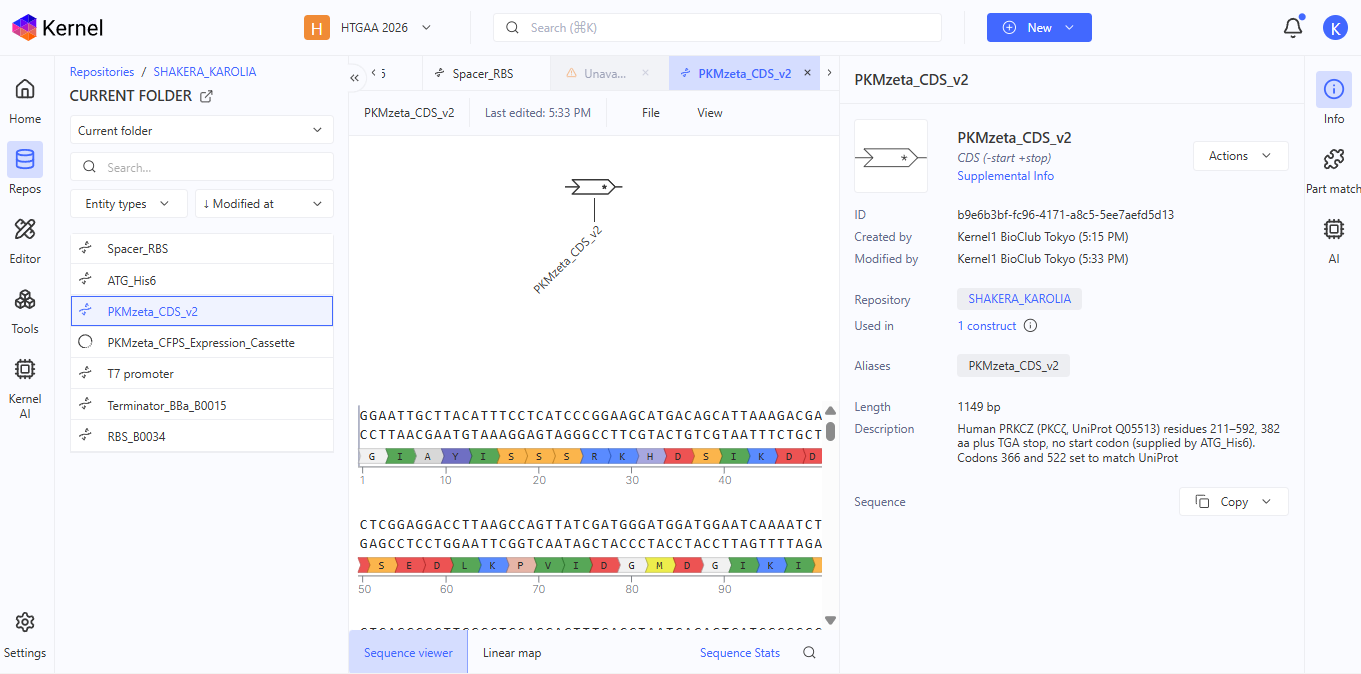
Figure 1: PKMzeta_CDS_v2 part in Kernel — 1,149 bp, annotated as CDS (−start +stop). The sequence viewer confirms the corrected reading frame beginning G-I-A-Y-I-S-S-S-R-K, consistent with human PKCζ residues 211–592 (UniProt Q05513). The part description records the source accession and the two corrected codons.
Terminator_BBa_B0015 (129 bp, positions 1212–1340)
Source: iGEM Registry part BBa_B0015, a double transcriptional terminator.
Justification: BBa_B0015 combines two sequential terminators and provides robust transcription termination in E. coli. Placing it immediately downstream of the stop codon ensures clean termination of the mRNA transcript and prevents read-through, which would otherwise waste resources in the cell-free reaction.
Vector backbone
No vector backbone is included in the current design, as the E. coli-based CFPS platform can utilise linear DNA templates directly without a replication origin or selection marker. Should the project progress to in vivo bacterial expression, the cassette would be cloned into a standard T7 expression vector such as pET-28a (which provides a T7 promoter, kanamycin resistance marker, and ColE1 origin of replication). This cloning step is not required for the CFPS prototyping stage.
Part 3: Construct Assembly
The six parts were assembled in Kernel in the following 5′→3′ order:
T7 promoter → RBS_B0034 → Spacer_RBS → ATG_His6 → PKMzeta_CDS_v2 → Terminator_BBa_B0015
The total construct length is 1,340 bp. The expression host was set to Escherichia coli in the Kernel construct metadata.
Reading frame verification
Reading frame integrity was verified computationally by exporting the GenBank file and translating the complete sequence from the His6 start codon (ATG at position 42). The translated product begins:
M-H-H-H-H-H-H-G-I-A-Y-I-S-S-S-R-K-H-D-S-I-K…
and runs uninterrupted through the entire PKMζ catalytic domain, terminating with …N-P-L-L-L-S-T-E-E-S-V followed by a single TGA stop codon at positions 1209–1211. No internal stop codons are present within the reading frame. The BBa_B0015 terminator begins at position 1212, immediately downstream of the stop codon.
The schematic and sequence views below confirm the correct part order, orientation, and reading frame.

Figure 2: Exported circular construct map from Kernel, showing all six parts in 5′→3′ order.
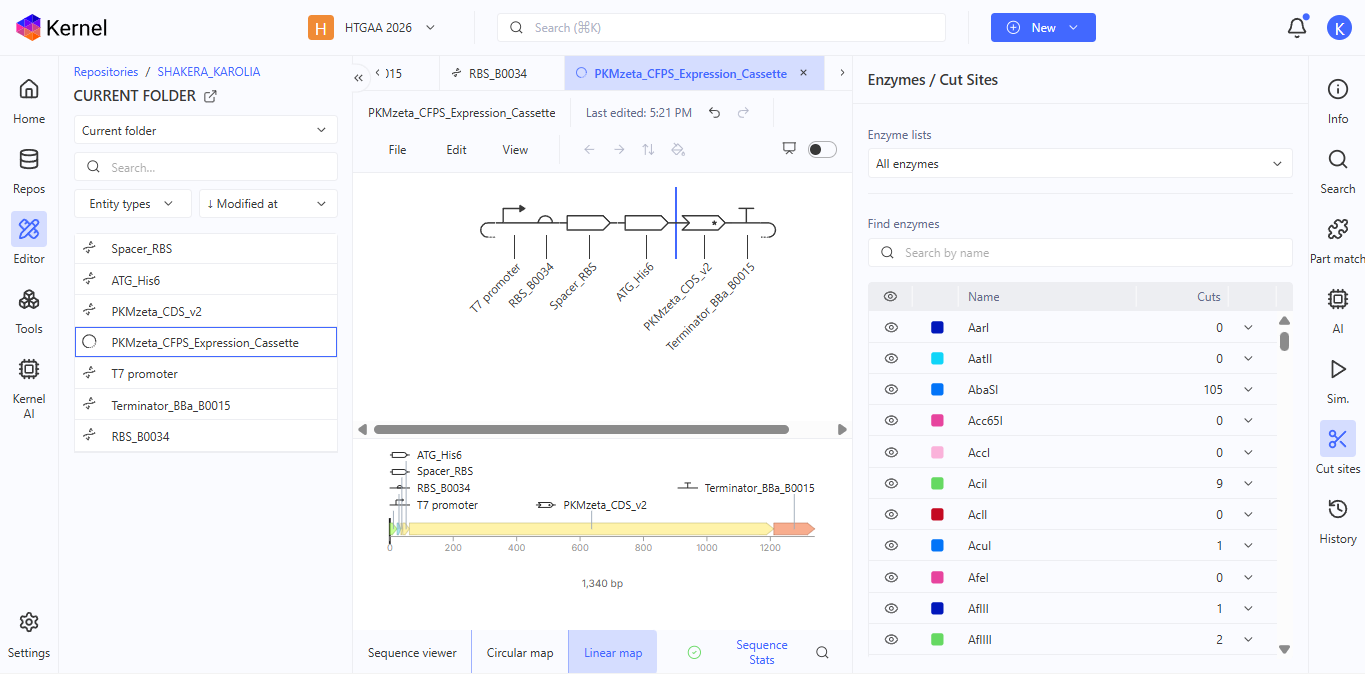
Figure 3: Linear map view of the assembled construct (1,340 bp). The relative lengths of each annotated part are visible, with the PKMzeta_CDS_v2 coding region (1,149 bp) representing the majority of the construct.
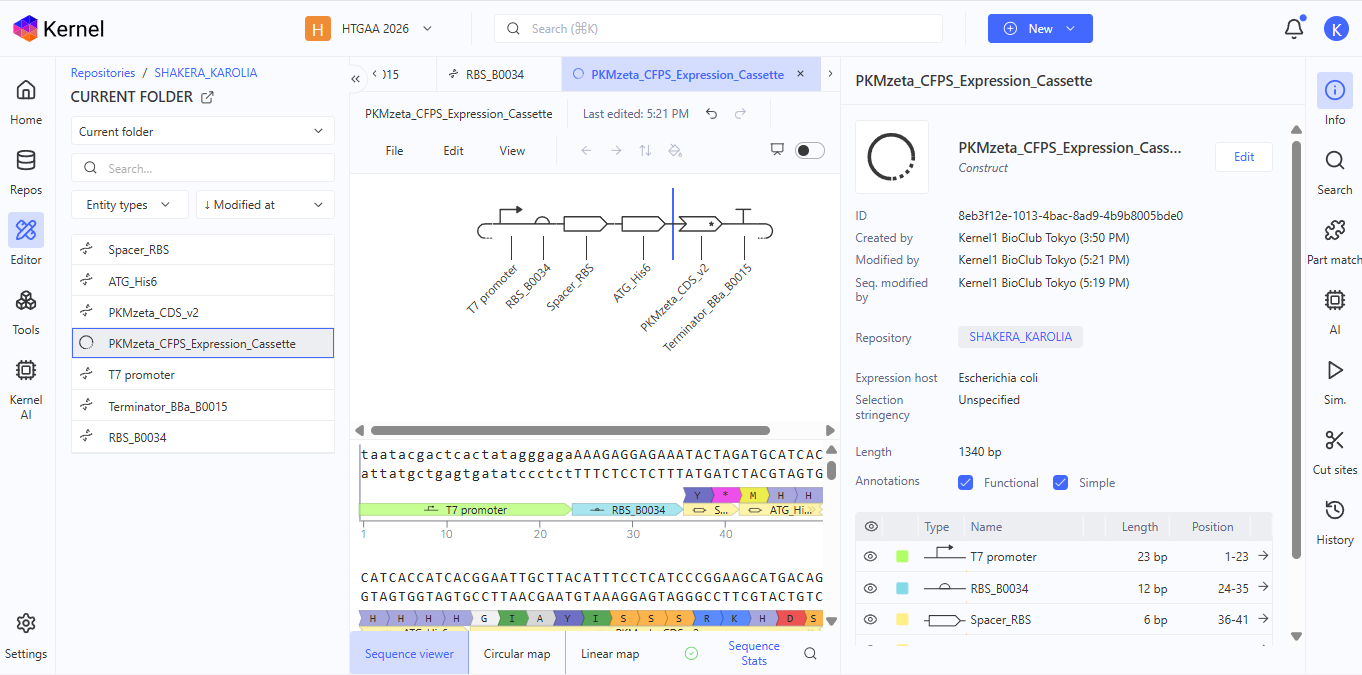
Figure 4: Kernel Info panel for PKMzeta_CFPS_Expression_Cassette confirming: length 1,340 bp; expression host Escherichia coli; part annotations for all six components in correct positions.
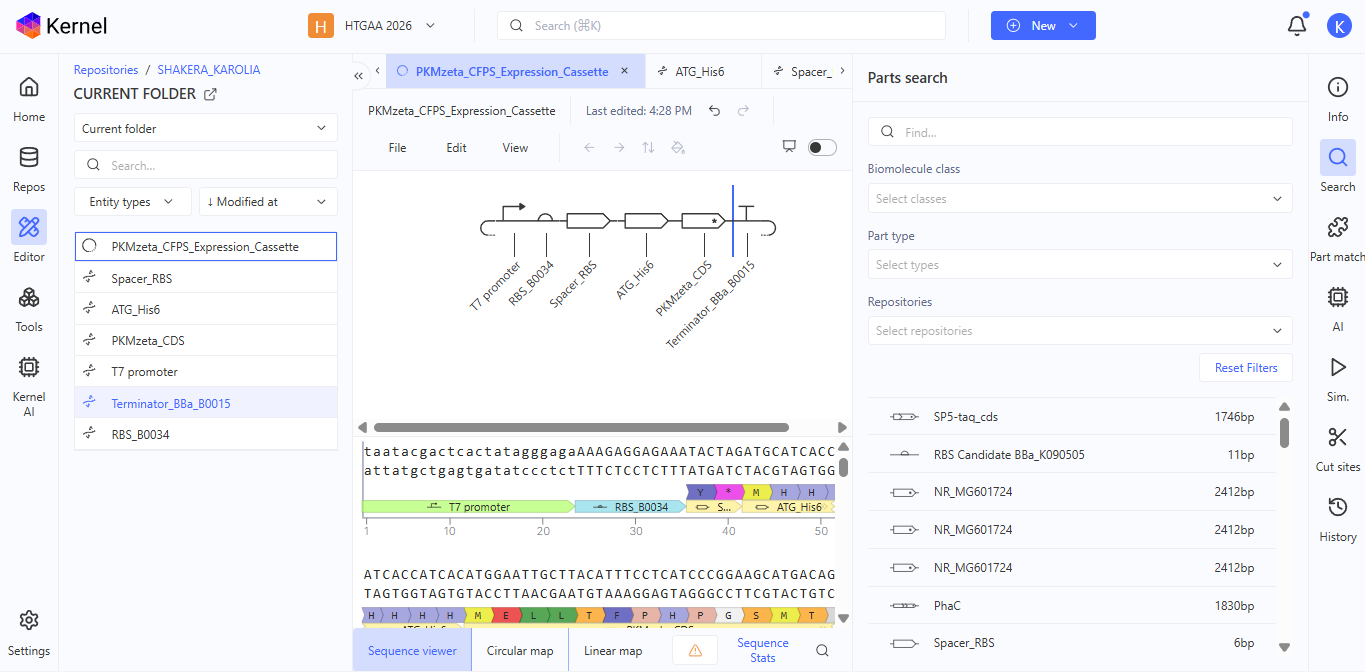
Figure 5: Sequence viewer showing the junction between ATG_His6 and PKMzeta_CDS_v2. The translated sequence reads …H-H-H-H-G-I-A-Y-I-S-S-S-R-K-H-D-S…, confirming that the His6 tag and the PKMζ catalytic domain are in the same reading frame.
Part 4: Optimisation and Quality Control
Codon optimisation
GC content was calculated precisely from the exported GenBank file: the full 1,340 bp construct has a GC content of 53.51% (G: 364, C: 353, A: 340, T: 283), with the PKMzeta_CDS_v2 coding region at 54.8% and the regulatory elements ranging from 33.3% (RBS_B0034) to 48.1% (BBa_B0015 terminator). All values lie within the acceptable synthesisable and expressible range for E. coli (typically 40–60%).
The native human coding sequence was retained in this design iteration; however, a codon usage analysis was performed against the E. coli K12 tRNA abundance table (Kazusa database) to identify codons that would benefit from optimisation. The analysis revealed 35 rare codon occurrences across 383 total codons (9.1%), as detailed below:
| Rare codon | Amino acid | Occurrences | E. coli frequency (/1000) | Preferred E. coli replacement |
|---|---|---|---|---|
| AGG | Arg | 6 | 2.4 | CGT (20.8) |
| AGA | Arg | 1 | 3.9 | CGT (20.8) |
| CCC | Pro | 6 | 4.4 | CCG (23.2) |
| ACA | Thr | 7 | 7.0 | ACC (22.5) |
| GGA | Gly | 8 | 8.0 | GGC (29.6) |
| ATA | Ile | 2 | 4.6 | ATC (27.2) |
| CTA | Leu | 1 | 3.4 | CTG (52.8) |
| GTA | Val | 1 | 11.0 | GTG (26.3) |
| CCG | Pro | 3 | 23.2 | CCG retained |
What would change after optimisation: Replacing these 35 codons with preferred E. coli synonyms would reduce translational stalling events, particularly at the six AGG arginine codons and seven ACA threonine codons, which correspond to the rarest tRNA species in E. coli. The GC content of the CDS would shift from 54.8% toward approximately 52–53%, remaining within the optimal range. No new BsaI, BsmBI, BbsI or SapI restriction sites would be introduced, as these were checked as a design constraint.
Why codon usage matters: In E. coli CFPS, the tRNA pool is pre-loaded from the cell lysate and is finite — it is not replenished during the reaction as it would be in a growing cell. Rare codons that correspond to low-abundance tRNAs cause ribosome pausing, which in a CFPS context reduces yield and can cause premature peptide release or misincorporation. Karim and Jewett (2021) highlight tRNA pool management as a key determinant of CFPS expression efficiency, and this is therefore a higher-priority optimisation for the cell-free context than for conventional in-cell expression.
Sequence verification
Kernel does not include an integrated BLAST alignment tool. Sequence verification was therefore performed externally by translating the exported GenBank file computationally and aligning the resulting amino acid sequence residue-by-residue against the UniProt Q05513 (KPCZ_HUMAN) reference. Following correction of the two single-nucleotide variants at codons 366 and 522, the translated protein is a perfect match to human PKCζ residues 211–592 across all 382 positions. A BLAST search against the NCBI non-redundant protein database would be expected to return the human PRKCZ mRNA (RefSeq NM_002744) as the top hit with near-100% identity, confirming the sequence identity of the construct as a defined fragment of a well-characterised human kinase.
Construct Checker
Kernel’s Construct Checker was run on the assembled construct and returned four warnings:
- Missing Kozak sequence, 5′ UTR, 3′ UTR, and poly-A signal.
- T7 promoter at index 0 is “not recommended.”
- RBS_B0034 at index 23 is “not recommended.”
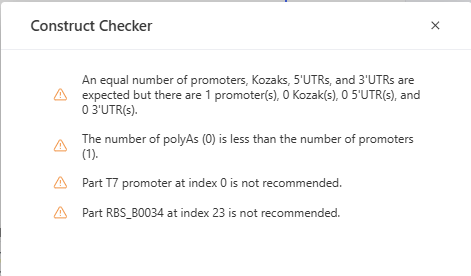
Figure 6: Construct Checker output. All four warnings are attributable to Kernel’s default mammalian expression model and are not relevant to the E. coli CFPS design.
These warnings arise because the Kernel Construct Checker defaults to a mammalian expression model. The construct under assessment is designed for E. coli-based CFPS, in which: the T7 promoter drives transcription via exogenous T7 RNA polymerase supplied in the lysate; BBa_B0034 performs the role of the Kozak sequence and 5′ UTR as the prokaryotic ribosome binding site; and BBa_B0015 performs the role of the poly-A signal as the transcriptional terminator. As noted during the Lecture 2 recitation, the Kernel construct checker is “not going to be super useful” for bacterial constructs, because it checks exclusively for eukaryotic regulatory elements. No design changes are warranted in response to these warnings.
Simulation
Kernel’s built-in Simulation tool (Sim.) was used to model gene expression dynamics for the assembled construct in an E. coli context. The simulation was configured with the following parameters:
- Chassis: E. coli
- Duration: 72 hours
- Timestep: 10 minutes
- Transfection mode: Transient transfection
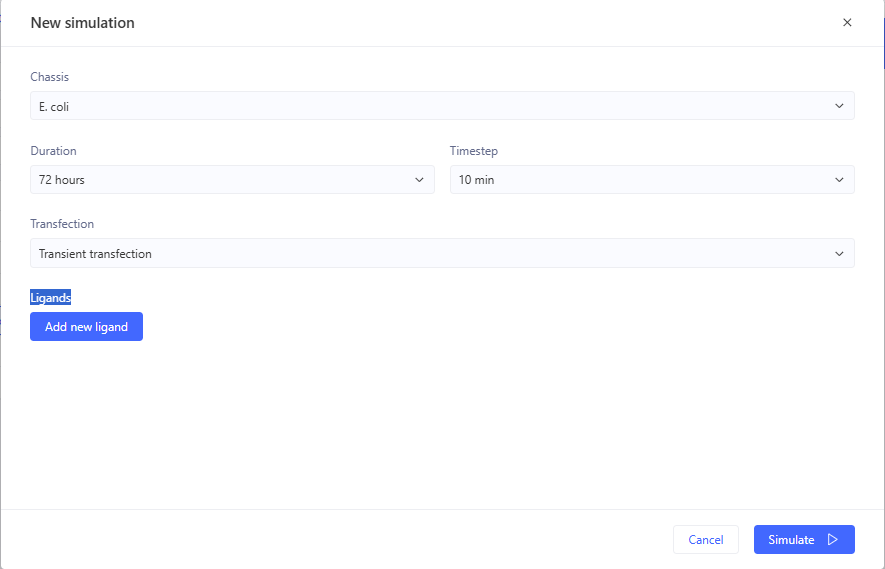
Figure 7: Kernel simulation configuration — E. coli chassis, 72-hour duration, 10-minute timestep, transient transfection mode.
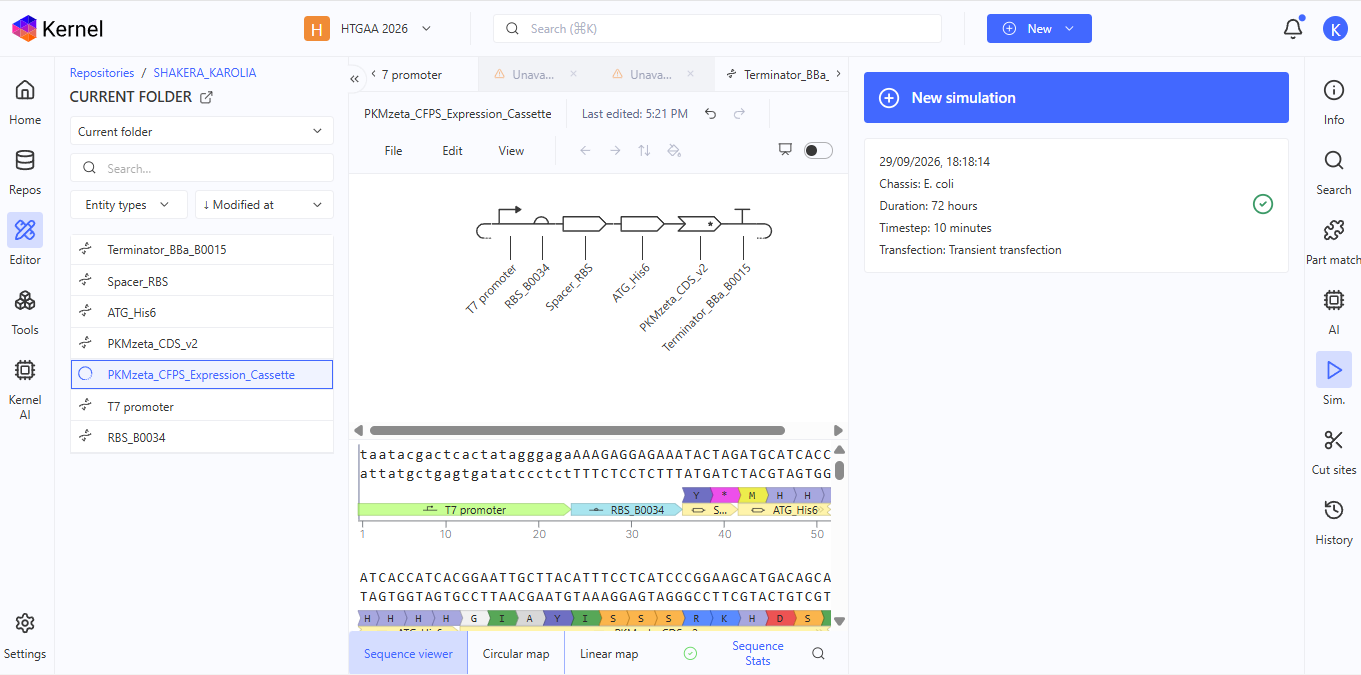
Figure 8: Simulation completed successfully (green checkmark, 29/09/2026, 18:18:14), confirming structural acceptance of the construct by the E. coli simulation model.
The simulation completed without errors, confirming that the construct is structurally valid under the E. coli model used by Kernel. The 72-hour transient transfection mode is appropriate for CFPS, which is a batch process in which the DNA template is not replicated and is gradually consumed or degraded. An important interpretive caveat is that Kernel’s simulation model is calibrated on characterised iGEM Registry parts. PKMzeta_CDS_v2 carries no experimental characterisation data in Kernel, and consequently the simulation reflects the kinetics of the T7 promoter and RBS elements only. It does not predict the yield, solubility, or activity of the PKMζ protein. Experimental validation in an actual CFPS reaction is required before drawing any quantitative conclusions about expression output.
Restriction site analysis
The Enzymes/Cut Sites panel in Kernel was used to screen the full 1,340 bp construct for common Golden Gate (Type IIS) enzyme recognition sites. Results are summarised below:
| Enzyme | Recognition site | Cuts in construct |
|---|---|---|
| BsaI | GGTCTC | 0 |
| BsmBI | CGTCTC | 0 |
| BbsI | GAAGAC | 0 |
| SapI | GCTCTTC | 0 |
The construct contains no recognition sites for any of the four principal Golden Gate enzymes. It is therefore fully compatible with Golden Gate assembly should future cloning into a vector backbone be required.
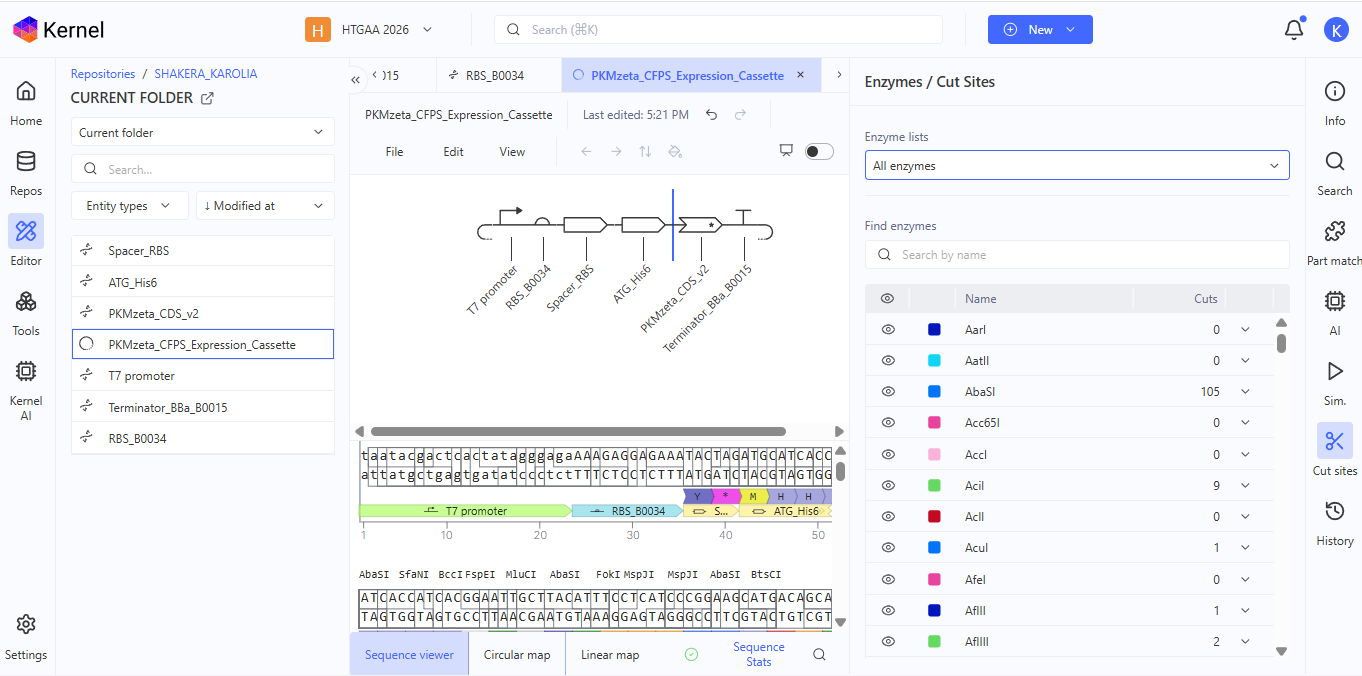
Figure 9: Enzymes/Cut Sites panel in Kernel confirming zero cuts for BsaI, BsmBI, BbsI and SapI in the final 1,340 bp construct.
Safety screen
Kernel does not currently include an integrated biosecurity screening tool. The sequence was assessed against standard screening criteria. The PKMζ catalytic domain is a fragment of PKCζ, a ubiquitous human signalling enzyme expressed in all human cells. It has no known toxicity, pathogenicity, or dual-use concern and does not appear on any select-agent list maintained by the CDC, APHIS, or equivalent regulatory authorities. Commercial DNA synthesis vendors, including Twist Bioscience, perform automated biosecurity screening against the International Gene Synthesis Consortium (IGSC) Harmonised Screening Protocol prior to order fulfilment. No flags would be anticipated for this sequence.
Part 5: From Design to Build
Template format decision: linear gene fragment
The construct will be ordered as a linear gene fragment rather than a clonal gene in a plasmid vector. This decision rests on three considerations:
1. CFPS compatibility. The expression platform is E. coli-based CFPS, which accepts linear DNA templates directly and does not require a plasmid backbone, origin of replication, or antibiotic resistance marker.
2. Cost. At the current Twist Bioscience published list price of USD 0.07 per base pair for gene fragments (Twist Bioscience, 2026; Armadillo Bio, 2026), the 1,340 bp construct has an estimated cost of approximately USD 93.80. A clonal gene (sequence-verified in a Twist expression vector) is priced at USD 0.09 per base pair plus a USD 55 expression-vector cloning fee, giving an estimated total of approximately USD 175.60 — an 87% premium for a vector backbone that is not required at the prototyping stage. IDT offers comparable gene-fragment pricing at USD 0.07 per base pair (Armadillo Bio, 2026).
3. Turnaround time. Twist gene fragments are shipped in 2–4 business days; clonal genes require 4–10 business days (Twist Bioscience, 2026).
Should the project advance to in vivo expression in E. coli or CHO cells, the cassette would be cloned into a suitable expression vector (e.g. pET-28a for E. coli, or a CMV-driven mammalian vector for CHO). At that stage, a clonal gene order or Gibson assembly into a backbone would be the appropriate approach.
How would the construct be built?
The 1,340 bp expression cassette falls well within the range of commercial gene synthesis services and would be ordered as a single synthetic linear dsDNA fragment — no fragment assembly or oligo pool synthesis is required. Twist gene fragments support lengths from 300 to 5,000 bp; the construct falls comfortably within this window. The synthesised fragment would be delivered lyophilised, resuspended in TE buffer, and used directly as a CFPS template.
Synthesis constraints
Constraints on synthesis are minimal for this construct. The verified GC content of 53.51% lies well within the standard synthesisable range of 25–65%. No long homopolymer runs (eight or more consecutive identical bases), extreme secondary structures, or direct repeats were identified during design. The absence of BsaI, BsmBI, BbsI and SapI sites confirms compatibility with downstream Golden Gate cloning.
Synthesis error rates remain a relevant consideration. Twist Bioscience reports a mean error rate of 1 in 7,500 bp for gene fragments, achieved through enzymatic error correction during manufacture (Twist Bioscience, 2026). At 1,340 bp, the probability of receiving a fragment carrying at least one error is approximately 16%. Sequence verification by Sanger sequencing after cloning is therefore standard practice. Carr et al. (2004) demonstrated that protein-mediated error correction using MutS reduces de novo synthesis error rates to approximately 1 in 10,000 bp, a technique now routinely applied by synthesis vendors. Kong et al. (2007) demonstrated that microfluidic polymerase cycling assembly (PCA) can synthesise genes up to approximately 1,000 bp in parallel, an approach that could reduce per-construct costs substantially if multiple variant constructs were required for screening.
Prototype versus scale
At the prototyping stage, a single linear gene fragment used directly as a CFPS template is the fastest and most cost-effective approach: approximately USD 94, delivered within 2–4 business days, with no cloning, cell culture, or transformation required. The template is added directly to the CFPS lysate and protein production can be assessed within hours.
For scale-up to CHO cell production — as proposed in Homework 1 — the expression cassette would require complete redesign with mammalian regulatory elements (CMV or EF1α promoter, Kozak sequence, poly-A signal, and a mammalian-compatible vector backbone). Gibson assembly (Gibson et al., 2009) would be appropriate for joining a redesigned cassette to a vector backbone; Gibson’s isothermal method joins fragments sharing approximately 20 bp overlapping ends in a single 50 °C reaction, which is mechanistically simpler than restriction-ligation for multi-fragment assemblies.
For large-scale variant screening — testing many PKMζ mutants to optimise activity, thermal stability, or folding in a CFPS context — chip-based oligonucleotide synthesis followed by multiplex gene assembly, as described by Kosuri et al. (2010), would dramatically reduce per-construct costs relative to ordering individual gene fragments. Tian et al. (2004) demonstrated that microchip-synthesised oligonucleotides could reduce gene synthesis costs from approximately USD 0.10 per nucleotide (conventional column synthesis) to as low as USD 0.001 per nucleotide, enabling massively parallel gene construction at a scale appropriate for variant libraries.
Challenges and Learning Journey
This assignment represented a substantial learning experience for a practitioner whose professional background is in product management and cybersecurity rather than molecular biology. Many of the core concepts encountered — reading frames, codon structure, ribosome binding sites, and the distinction between eukaryotic and prokaryotic regulatory elements — were entirely new territory. The BioClub Tokyo Friday session (25 September 2026) proved particularly valuable; Sheila Ramani’s live walkthrough of Kernel and Georg Tremmel’s guidance on design documentation provided an accessible practical foundation.
Reading frame debugging. The most time-consuming challenge involved discovering that the original CDS part (PKMzeta_CDS, 1,151 bp) contained a frame-shift error. The sequence as initially entered into Kernel began with ATGGAATTGCT.... The ATG triplet was initially assumed to constitute a start codon; however, computational analysis revealed that these three nucleotides straddle two codons from the reference protein — the final two bases of an aspartate codon and the first base of the adjacent glycine codon — thereby creating a +2 frame shift. Under this misalignment, the His6 tag and the PKMζ coding sequence were in different reading frames, and the translated product would have been non-functional. Diagnosis required exporting the GenBank file, translating the construct computationally, and comparing the result residue-by-residue against UniProt Q05513. The correction was to remove the first two nucleotides (AT) from the CDS, yielding PKMzeta_CDS_v2 (1,149 bp) and restoring the correct reading frame: His6 → G-I-A-Y-I-S-S-S-R-K (PKCζ residues 211 onwards).
Amino acid mismatches. Even after correcting the frame shift, computational translation identified two amino acid differences from the UniProt reference: leucine at position 366 in place of phenylalanine (codon CTC instead of TTC), and glycine at position 522 in place of aspartate (codon GGC instead of GAC). The origin of these single-nucleotide variants could not be traced, but both were corrected to match the UniProt human reference sequence, as this is the accession cited in the design.
Construct Checker interpretation. The Kernel Construct Checker produced warnings about missing Kozak, UTR, and poly-A elements that were initially difficult to interpret. Review of the Lecture 2 recitation recording — in which the Kernel demonstration noted that the checker “is not going to be super useful” for bacterial constructs — clarified that these warnings apply to mammalian expression models and are not relevant to the E. coli CFPS cassette. The construct metadata was also found to have been pre-populated with Cricetulus griseus (CHO) as the expression host, which was corrected to Escherichia coli.
Learning the Kernel platform. Working with Kernel required developing familiarity with part-type designations (CDS with or without start and stop codons), drag-and-drop construct assembly, sequence viewer interpretation, cut-site analysis, and GenBank export. The BioClub Tokyo session and the Lecture 2 recitation recording were the most useful practical resources.
Part 6: Open Questions and Design Risks
1. Will the truncated catalytic domain fold correctly in E. coli CFPS? PKMζ is a human kinase that folds in a eukaryotic cellular environment equipped with chaperones and disulphide-bond-forming machinery. E. coli lysate lacks these systems, and the expressed protein may misfold or partition to the insoluble fraction. The experimental test would be a small-scale CFPS reaction (10–50 µL) followed by centrifugation to separate soluble from insoluble fractions, SDS-PAGE to confirm expression and solubility, and a kinase activity assay measuring phosphorylation of a known PKCζ substrate peptide to confirm catalytic function.
2. Does the N-terminal His6 tag interfere with kinase activity? The His6 tag is positioned at the beginning of the catalytic domain. Some N-terminal affinity tags can occlude the active site or disrupt tertiary structure. This question would be addressed by comparing the activity of the His6-tagged protein against tag-cleaved protein, using a TEV protease recognition site (not yet included in the current design). If interference is observed, a C-terminal tag placement or a cleavable-tag design would constitute the next design iteration.
3. Is codon optimisation necessary for adequate expression yield? The native human codon usage may include codons that are rare in E. coli and could cause ribosome stalling, particularly in a CFPS system where the tRNA pool is finite. If initial CFPS yields are insufficient for downstream characterisation, codon optimisation for E. coli using a tool such as IDT’s Codon Optimization Tool or the Kazusa E. coli K12 codon usage table would be the first design modification to implement.
Corrected CDS Sequence (PKMzeta_CDS_v2)
The sequence below is the final verified 1,149 bp coding sequence for PKMzeta_CDS_v2, encoding human PKCζ residues 211–592 (UniProt Q05513). The two corrected codons are indicated in brackets: [TTC] (phenylalanine at position 366) and [GAC] (aspartate at position 522).
AI Use Disclosure
AI client: Claude (Anthropic), used via the Claude.ai chat interface with web search, computer tools, and the uploaded course-reading PDFs and lecture transcripts from this project.
Assistance provided by the AI tool:
- Design of the expression cassette architecture (T7 → RBS → spacer → His6 → CDS → terminator) for E. coli CFPS.
- Identification and resolution of the reading-frame error in the original PKMzeta_CDS part: translation of the exported GenBank sequence, identification of the +2 frame shift arising from the spurious
ATprefix, and generation of the corrected sequence. - Identification of two single-nucleotide variants (F366L, D522G) relative to UniProt Q05513 and provision of the corrected codons (CTC→TTC; GGC→GAC).
- Interpretation of the Construct Checker warnings as eukaryote-specific and not applicable to the bacterial CFPS design.
- Verification of the final exported GenBank file: reading frame integrity, stop codon placement, and restriction site analysis.
- Retrieval of current gene synthesis pricing from Twist Bioscience and IDT to support the template format decision.
- Drafting and professional editing of this report.
All design decisions were reviewed and are understood by the author. Each design choice can be defended during the homework review session.
Acknowledgements
The author would like to thank Yousif Graytee (Teaching Assistant, Designer Cells Node, HTBAA 2026) for providing the cell-free protein synthesis readings by da Silva et al. (2026) and the Keith Pardee laboratory, which informed the CFPS platform choice and construct design approach for this project. Thanks are also due to Sami Ur Rehman (peer, HTBAA 2026, Attock, Pakistan) for advice on cell-free expression systems and peptide project design during the early stages of this work.
References
Armadillo Bio (2026) Gene synthesis price comparison 2026 — all providers. Available at: https://www.armadillobio.com/compare/gene-synthesis-price-comparison-2026 (Accessed: 29 September 2026).
Elowitz, M. B. and Leibler, S. (2000) ‘A synthetic oscillatory network of transcriptional regulators’, Nature, 403(6767), pp. 335–338. doi: 10.1038/35002125.
Carr, P. A., Park, J. S., Lee, Y.-J., Yu, T., Zhang, S. and Jacobson, J. M. (2004) ‘Protein-mediated error correction for de novo DNA synthesis’, Nucleic Acids Research, 32(20), e162. doi: 10.1093/nar/gnh160.
Gibson, D. G., Young, L., Chuang, R.-Y., Venter, J. C., Hutchison, C. A. and Smith, H. O. (2009) ‘Enzymatic assembly of DNA molecules up to several hundred kilobases’, Nature Methods, 6(5), pp. 343–345. doi: 10.1038/nmeth.1318.
Hanson, L. R. and Frey, W. H. (2008) ‘Intranasal delivery bypasses the blood-brain barrier to target therapeutic agents to the central nervous system and treat neurodegenerative disease’, BMC Neuroscience, 9(Suppl 3), S5. doi: 10.1186/1471-2202-9-S3-S5.
Karim, A. S. and Jewett, M. C. (2021) ‘Toward sustainable, cell-free biomanufacturing’, Current Opinion in Biotechnology, 69, pp. 136–144. doi: 10.1016/j.copbio.2020.12.012.
Kong, D. S., Carr, P. A., Chen, L., Zhang, S. and Jacobson, J. M. (2007) ‘Parallel gene synthesis in a microfluidic device’, Nucleic Acids Research, 35(8), e61. doi: 10.1093/nar/gkm121.
Kosuri, S., Eroshenko, N., Leproust, E. M., Super, M., Way, J., Li, J. B. and Church, G. M. (2010) ‘Scalable gene synthesis by selective amplification of DNA pools from high-fidelity microchips’, Nature Biotechnology, 28(12), pp. 1295–1299. doi: 10.1038/nbt.1716.
Patzke, N., Spocter, M. A., Karlsson, K. Æ., Bertelsen, M. F., Haagensen, M., Chawana, R., Streicher, S., Kaswera, C., Gilissen, E., Alagaili, A. N., Mohammed, O. B., Reep, R. L., Bennett, N. C., Siegel, J. M., Ihunwo, A. O. and Manger, P. R. (2013) ‘Organization and chemical neuroanatomy of the African elephant (Loxodonta africana) hippocampus’, Brain Structure and Function, 220(3), pp. 1813–1830. doi: 10.1007/s00429-013-0587-6.
Petzold, C. J. and Mukhopadhyay, A. (2025) ‘From bench to biofactory: high-throughput technologies and automated workflows to accelerate biomanufacturing’, Current Opinion in Biotechnology, 94, 103320. doi: 10.1016/j.copbio.2025.103320.
Serrano, P., Friedman, E. L., Kenney, J., Taubenfeld, S. M., Zimmerman, J. M., Hanna, J., Alberini, C., Kelley, A. E., Maren, S., Rudy, J. W., Yin, J. C. P., Sacktor, T. C. and Fenton, A. A. (2008) ‘PKMζ maintains spatial, instrumental, and classically conditioned long-term memories’, PLoS Biology, 6(12), pp. 2698–2706. doi: 10.1371/journal.pbio.0060318.
Stanton, B. C., Nielsen, A. A., Tamsir, A., Clancy, K., Peterson, T. and Voigt, C. A. (2014) ‘Genomic mining of prokaryotic repressors for orthogonal logic gates’, Nature Chemical Biology, 10(2), pp. 99–105. doi: 10.1038/nchembio.1411.
Tian, J., Gong, H., Sheng, N., Zhou, X., Gulari, E., Gao, X. and Church, G. (2004) ‘Accurate multiplex gene synthesis from programmable DNA microchips’, Nature, 432(7020), pp. 1050–1054. doi: 10.1038/nature03151.
Twist Bioscience (2026) Gene fragments — product page. Available at: https://www.twistbioscience.com/products/genes (Accessed: 29 September 2026).
UniProt Consortium (2026) UniProt entry Q05513 (KPCZ_HUMAN): Protein kinase C zeta type, Homo sapiens. Entry version 255. Available at: https://www.uniprot.org/uniprotkb/Q05513/entry (Accessed: 29 September 2026).
Submission Checklist
| Deliverable | Status |
|---|---|
| Kernel repository and folder identified | ✓ Part 0 |
| Expression target defined — molecule, sequence, host, localisation | ✓ Part 1 |
| Genetic parts designed with sources and justifications | ✓ Part 2 |
| Construct assembled in Kernel in correct part order | ✓ Part 3 |
| Construct maps exported — circular and linear | ✓ Figures 2–3 |
| Reading frame and stop codon verified computationally | ✓ Part 3 |
| Sequence viewer showing His6–CDS junction | ✓ Figure 5 |
| Codon optimisation discussed | ✓ Part 4 |
| Sequence search / BLAST discussed | ✓ Part 4 |
| Construct Checker run and interpreted | ✓ Part 4, Figure 6 |
| Simulation run and interpreted | ✓ Part 4, Figures 7–8 |
| Restriction site analysis completed (BsaI, BsmBI, BbsI, SapI) | ✓ Part 4, Figure 9 |
| Safety screen assessed | ✓ Part 4 |
| Build strategy justified with ≥2 assigned readings cited | ✓ Part 5 (Carr 2004; Gibson 2009; Kong 2007; Kosuri 2010; Tian 2004) |
| Prototype vs. scale discussed | ✓ Part 5 |
| Template format decided with vendor cost comparison | ✓ Part 5 (Twist: ~USD 94 linear vs. ~USD 176 clonal) |
| 2–3 design unknowns identified with proposed experiments | ✓ Part 6 |
| GenBank file exported | ✓ Accompanying file |
| AI use disclosed with specific prompts | ✓ AI Disclosure |