Week 1 HW: Final Project Ideas
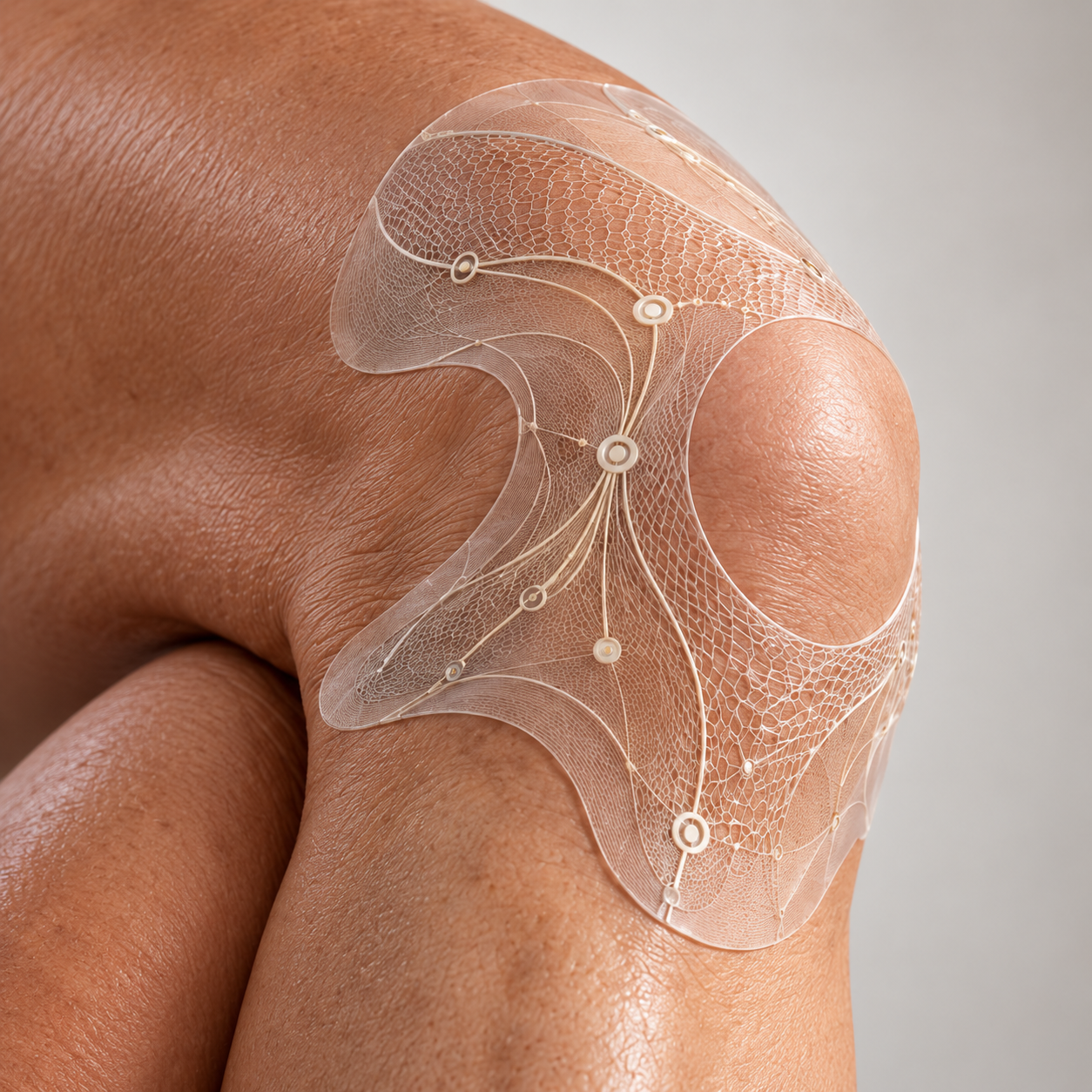
(1) What would you like to biomanufacture and why? I would like to biomanufacture a biodegradable second-skin rehabilitation patch for perimenopausal women. Many women experience more joint pain, tendon discomfort, and reduced confidence in exercise during perimenopause. This can make them less likely to continue rehabilitation or strength training. The patch would use recombinant spider silk as a soft, flexible, skin-like material. It would monitor joint movement during rehabilitation and could eventually include biosensing of inflammatory biomarkers such as IL-6. The goal is to make rehabilitation feel less clinical and more comfortable, while helping women better understand how their body responds to exercise.
(2) What living system would you use? I would use an engineered microorganism, such as E. coli or yeast, to produce recombinant spider-silk proteins. The cells would be genetically engineered with genes encoding spider-silk proteins. During fermentation, they would produce the silk protein, which could then be purified and processed into a thin film or fiber. The spider silk would act as the main biodegradable and flexible structure of the patch. I would then add a conductive sensing layer. When the knee bends, the patch stretches and the electrical resistance of the conductive material changes. This can be measured to estimate movement and joint angle. A future version could also include an IL-6 biosensor. IL-6 would bind to a specific antibody or aptamer, creating an electrochemical signal that could be measured by the patch.
(3) How would you use automation? I would use automation to test different spider-silk production and sensing conditions. For example, a liquid-handling robot could test different: nutrient concentrations induction conditions fermentation conditions silk protein concentrations conductive material concentrations I could then compare the strength, flexibility, conductivity, and sensing response of each material. I could also use an automated bending system to repeatedly bend the patch and test whether the electrical signal changes consistently at different joint angles.
(4) How much would you need to make, and how long would it take? (a) How much? For an early pilot in Hong Kong, I would first produce around 100 patches rather than manufacture at a large scale. If one patch uses around 0.5 g of processed spider-silk material, 100 patches would require: 100 × 0.5 g = 50 g Adding around 20% extra material for testing, failed samples, and manufacturing waste, I would estimate needing around 60 g of processed spider silk. This is only an early estimate and would depend on the final thickness and size of the patch. . (b) How long? Producing recombinant spider-silk protein would involve: growing the engineered microorganism protein expression purification forming the silk material adding the conductive sensing layer testing The fermentation itself may only take a few days, but purification and material fabrication would take longer. I would estimate around 1–2 weeks for one small production and testing cycle once the process is optimized.
(5) What don’t you know yet? The main things I still need to find out are: Which microorganism is best for producing recombinant spider silk? Can the spider-silk material remain flexible and strong after repeated bending? Or is there any other bio-material cheaper and more suitable? How accurately can resistance changes measure joint movement? Can IL-6 other biomarkers actually provide useful information about rehabilitation response in perimenopausal women? How could I eliminate other factors to make use of it’s a response to inflammations?
AI: Chatgpt-5.6-sol for refine my words and understanding of concepts Gemini notebook for learning biological concepts