Week 1 HW: Final Project Ideas
What to biomanufature and why?
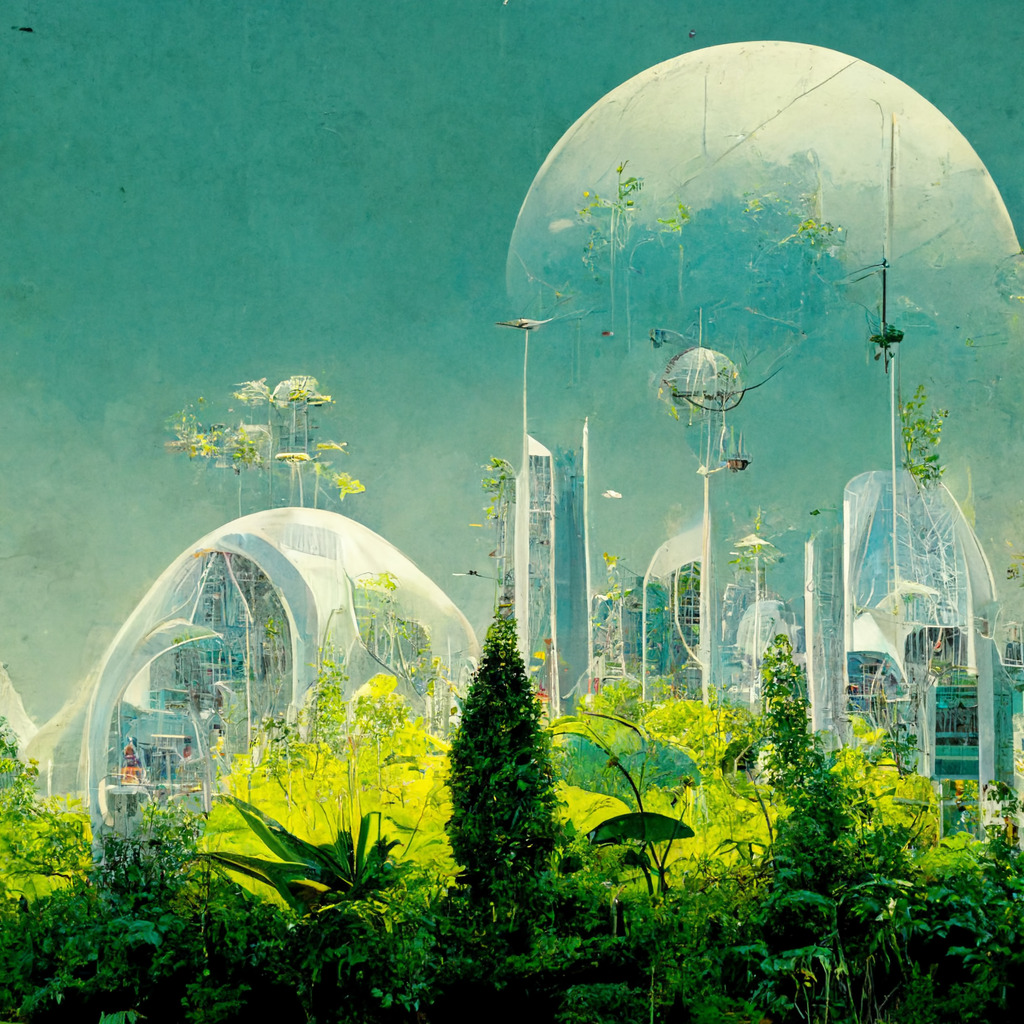
As the human population grows, the demand for vital resources such as food and water becomes ever so much higher. Increased shelter and space are also needed, requiring the clearing of land and extraction of natural resources important for sustaining life on Earth. In particular, due to more construction, the increase in emissions and decrease of natural carbon sinks in the area creates a carbon emission disbalance. Through my proposed project, I want to create a material that can be used within a construction that can function as a carbon sink with as high, if not higher, efficiency than the organisms displaced during the construction.
I envision either some sort of bio-manufactured concrete or perhaps a type of finishing that could be applied functionally and aesthetically to a building or any piece of infrastructure. This material would be able to absorb and metabolize carbon dioxide emissions into oxygen or another non-harmful byproduct. The material would help in reducing excessive carbon emissions from air pollution and create viable carbon sinks for our planet.
The living system
There are at least two ways I propose making this biological system. Both methods involve using the C4 photosynthetic pathway, a more efficient pathway than the C3 pathway. Plants that use the C4 pathway include corn, sugarcane, and various cacti.
The first approach I am thinking of is using the proteins and structures involved making a C4 pathway possible in the respective plants, and transfer the genes responsible into some sort of chassis like a cyanobacteria like Leptolyngbya boryana which is already used in engineered living material. The genes could be inserted into a plasmid and replicated in a cyanobacteria chassis to produce C4-like photosynthesis. Another approach is to use C4 living plant cells themselves and provide a way for them to sustain life without the physical parts of a plant.
https://www.ediblegeography.com/the-photosynthetic-habits-of-highly-effective-plants/ https://www.sciencedirect.com/science/article/abs/pii/S0950061823019323
Automation
I would use a large-scale Cloud lab to accelerate and enhance the R&D process. Through this automation, we would be able to develop, synthesize, and scale our project in a relatively cost efficient manner. Ideally, I would like to automate as much of the process as possible, but at least in the initial stages, automating the optimization and testing. This would be best so that we can have lower margins for error and a higher overall quality product to ensure that the biomaterial upholds its function.
How much and how long?
General R&D costs for this type of project would cost around the tens of millions of dollars. A C4 rice project which transferred the C4 pathway to rice plants took around a $100M dollars in funding with a timescale of more than 10 years. However, this project was conceived in the late 1900s, and the project was renewed around the mid 2000s and 2010s. From our advances in technology and greatly superior automation, this cost can also likely be driven down. Additionally, since this work is already being done, the barrier to entry is lower since we have a better foundation to work off of from previous projects. The timescale of this project could also be greatly reduced because of automation, likely taking around 5-6 years to develop and another 1-2 years to pilot the technology. We would first introduce this technology on a smaller scale, perhaps a newly developing city or suburb area to get real world testing and demonstrate the effects of this biotechnology.
AI: Claude Sonnet 5 Prompt: Do a back of the envelope calculation. No real numbers, no big calculations. How much would it take to manufacture such a material in terms of R&D as well as implementing it into actual building material. Let’s start off in the US first and do it based off of that. Extrapolate your numbers from ongoing projects of a similar nature. Again, JUST approximations. I do not want exact numbers. Do the same thing for time frame. How long will it take from start to finish, from idea to implementation?
https://cas.wsu.edu/2020/01/09/a-funding-boost-to-develop-rice-for-the-future/ https://www.mpimp-golm.mpg.de/2390948/c4-rice-project
What do we not know?
Along the way, I am making quite a few assumptions. One of the assumptions is whether the cyanobacteria chassis would be compatible to accommodate a C4 photosynthesis pathway. This would require lots of time testing and developing the appropriate parts to ensure not only that it works, but it also sustains itself and maintains the efficiency of a native C4 plant. Another assumption I am making is how this material would be integrated into buildings and infrastructure and whether it would be able to function in all sorts of environments.