week-03-HW-cell-free
3. ASSIGNMENT: CFPS REACTION DESIGN FOR SFGFP, PETASE, RETEPLASE
A. COMPARE CELL-FREE REACTION COMPOSITIONS (20 minutes)
Why does the concentration of potassium glutamate and magnesium glutamate differ between compositions? Which is more sensitive?
Potassium glutamate (~50-130+ mM): K⁺ and glutamate are the main ions in E. coli cytoplasm. At these high levels they set the ionic strength and osmotic balance that transcription and translation need.
Magnesium glutamate (~4-20 mM): Mg²⁺ stabilizes ribosomes, nucleic acids and enzyme active sites. Because it is divalent and tightly coordinated, small changes in free Mg²⁺ can sharply reduce or stop protein synthesis.
• Magnesium glutamate is substantially more sensitive to variations in concentration. • Optimization profiles and mathematical modeling of in-vitro transcription-translation (IVTT) demonstrate that system performance exhibits a sharp, narrow peak for magnesium concentration. Small deviations (a few millimoles too high or too low) result in complete loss of protein yield, whereas the system tolerates a much broader range of potassium glutamate concentrations.
Explain how a PEP+NTP reaction formulation is different from a Ribose+NMP reaction formulation.
Energy regeneration
PEP + NTP: Pyruvate kinase transfers phosphate from PEP straight to ADP/GDP, regenerating ATP/GTP in one step. Ribose + NMP (+ glucose): The extract’s own metabolism (glycolysis, the pentose phosphate pathway, and kinases such as adenylate kinase) turns cheap NMPs into NTPs.
Phosphate crash (longevity)
PEP + NTP: Each ATP regenerated releases one inorganic phosphate (Pi). Pi builds up, binds Mg²⁺, and stalls ribosomes, so the reaction stops early. Ribose + NMP: Central metabolism recycles Pi, so Mg²⁺ stays available and synthesis can run much longer (reported up to ~20 h in batch).
Cost
PEP + NTP: PEP and NTPs are expensive and unstable, which is a barrier at scale. Ribose + NMP: NMPs and sugars are far cheaper and more stable, so the reaction is more economical.
Choose two cell-free reaction compositions from the literature, compare and contrast the choice of reagents and the concentration of reagents.
I consider these two paers for comparison as they talk about optimising and reducing the cost of the cell free reaction.PANOx-SP (Jewett & Swartz 2004), a cost-optimized formulation from Olsen et al. (2026).
Reagent Choice & Concentration Comparison
| Reagent Class / Role | PANOx-SP Formulation (2004) | RF_opt Formulation (Olsen et al., 2026) |
|---|---|---|
| Secondary Energy Substrate | Phosphoenolpyruvate (PEP): High concentration (~33 mM) to regenerate ATP dynamically without exogenous enzymes. | Completely Removed: Relies entirely on low-cost, non-phosphorylated substrates like Glucose or specialized carbon intermediates. |
| Energy & Mass Building Blocks | Nucleoside Triphosphates (NTPs): ATP (1.2 mM), GTP (0.86 mM), UTP (0.86 mM), CTP (0.86 mM). Extremely expensive. | Nucleosides/Nitrogenous Bases: Utilizes raw nucleotides/nitrogenous bases + Ribose to dynamically self-synthesize NTPs in situ. |
| Cofactors & Metabolic Helpers | Complex Mix: Includes NAD+ (0.33 mM), Coenzyme A (CoA, 0.27 mM), and Oxalic Acid (2.7 mM) to block PEP degradation. | Streamlined Components: Complex cofactors like CoA and NAD+ are heavily reduced or omitted based on algorithmic screening. |
| Crowding Agents & Buffers | Eliminated: Intentionally removed unnatural polymers like Polyethylene Glycol (PEG) and traditional organic buffers to favor native extract conditions. | Re-introduced / Re-optimized: Strictly constrained to 12 core components total, optimizing precise salt and structural buffer limits. |
1.The Thermodynamic Strategy: High-Energy PEP vs. In Situ Synthesis
• PANOx-SP: Relies heavily on Phosphoenolpyruvate (PEP) as its metabolic engine. While PEP efficiently pumps high-energy phosphate groups onto ADP to regenerate ATP, it requires a massive concentration (33 mM) and accumulates free inorganic phosphate ((\text{P}_{\text{i}})) rapidly. This accumulation alters pH balances, contributing to premature reaction termination. • RF_opt (Olsen et al.): Bypasses costly phosphorylated compounds altogether. It provides raw nitrogenous bases and ribose, leveraging the residual metabolic pathways active inside the E. coli lysate to engineer its own NTPs natively. This change lowers baseline system costs by 84% to 99% while maintaining a stable internal pH.
- Reagent Complexity Minimization
• PANOx-SP: Operates as a hyper-complex chemical cocktail. The incorporation of individual amino acids, four isolated NTPs, and auxiliary cofactors (like CoA and NAD+) demands painstaking, multi-step compounding. • RF_opt: Leverages algorithmic automation to aggressively prune the reagent cocktail down to a highly robust 12-component layout. Rather than blindly trying to recreate the intracellular cellular network (biomimicry), it only supplies what the translational machinery absolutely requires to run, shifting the system’s economic floor down to roughly $36–$60 per gram of protein synthesized
B. DESIGN ONE REACTION COMPOSITION FOR EACH OF THE THREE PROTEINS (40 minutes)
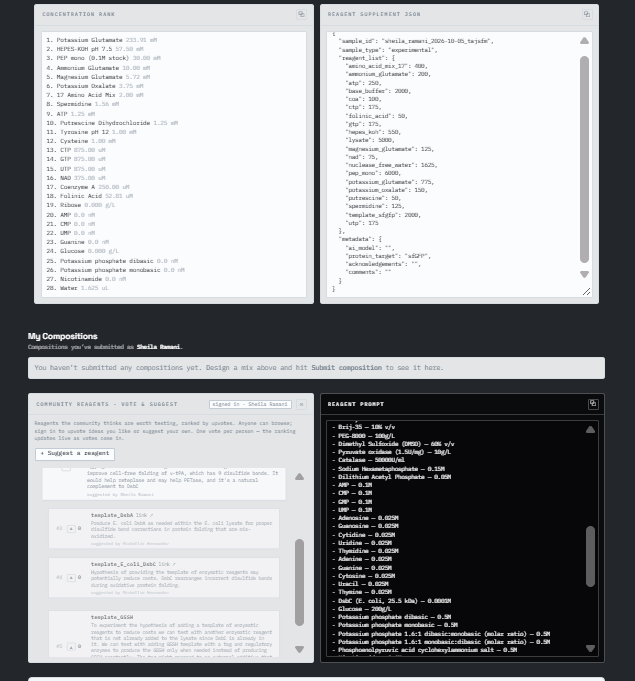
Sign in to coopetition.htgaa.org and publish your first unique 20 µL CFPS reaction composition for each of the following (don’t worry, you can resubmit later): sfGFP PETase Reteplase
Note: if you’re unable to login with your HTGAA keycloak account, please post in Zulip so that you can participate in the coopetition!
For each composition, specify the reagents you would adjust from the relevant categories, including salts, energy sources, building blocks, cofactors, and redox components.
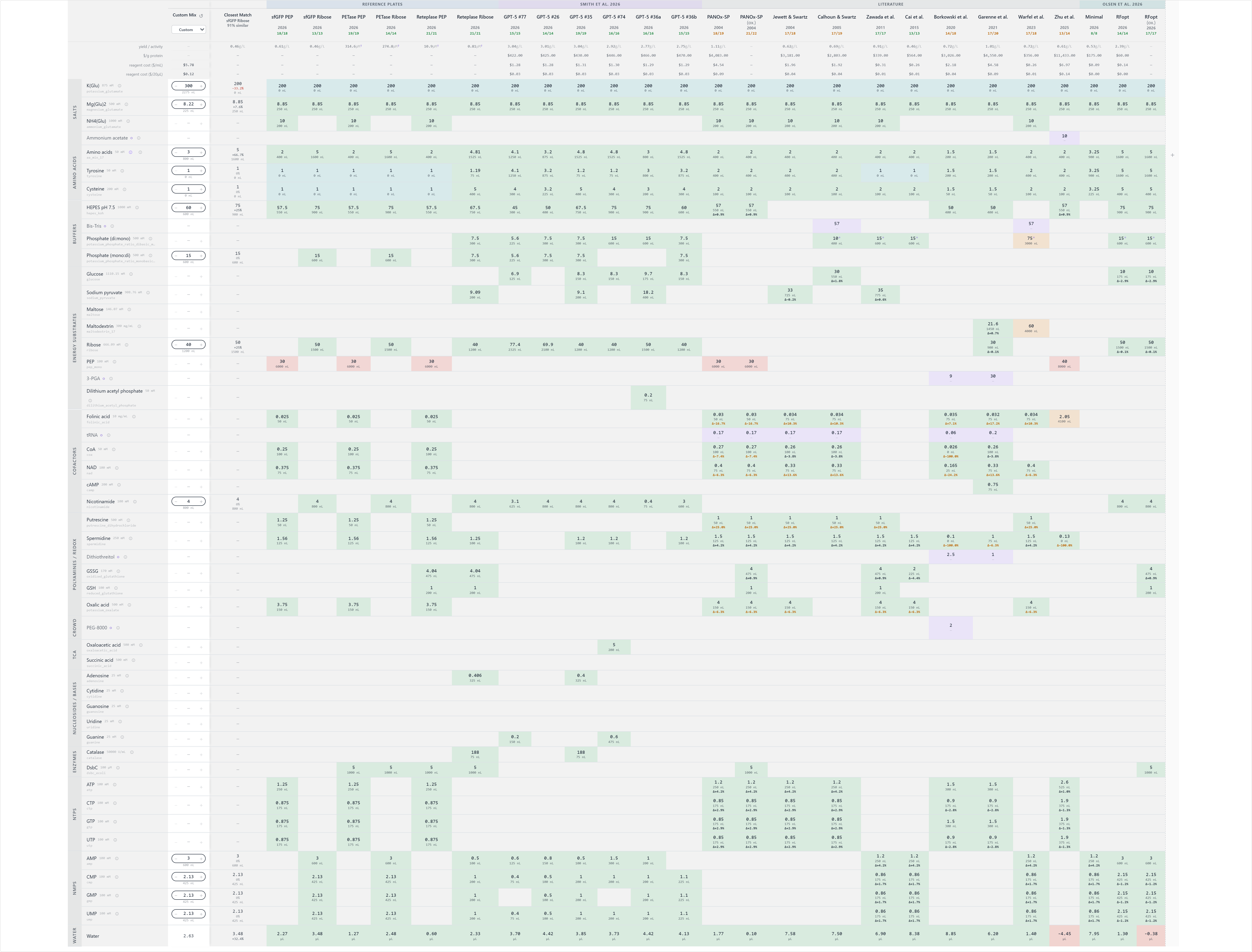
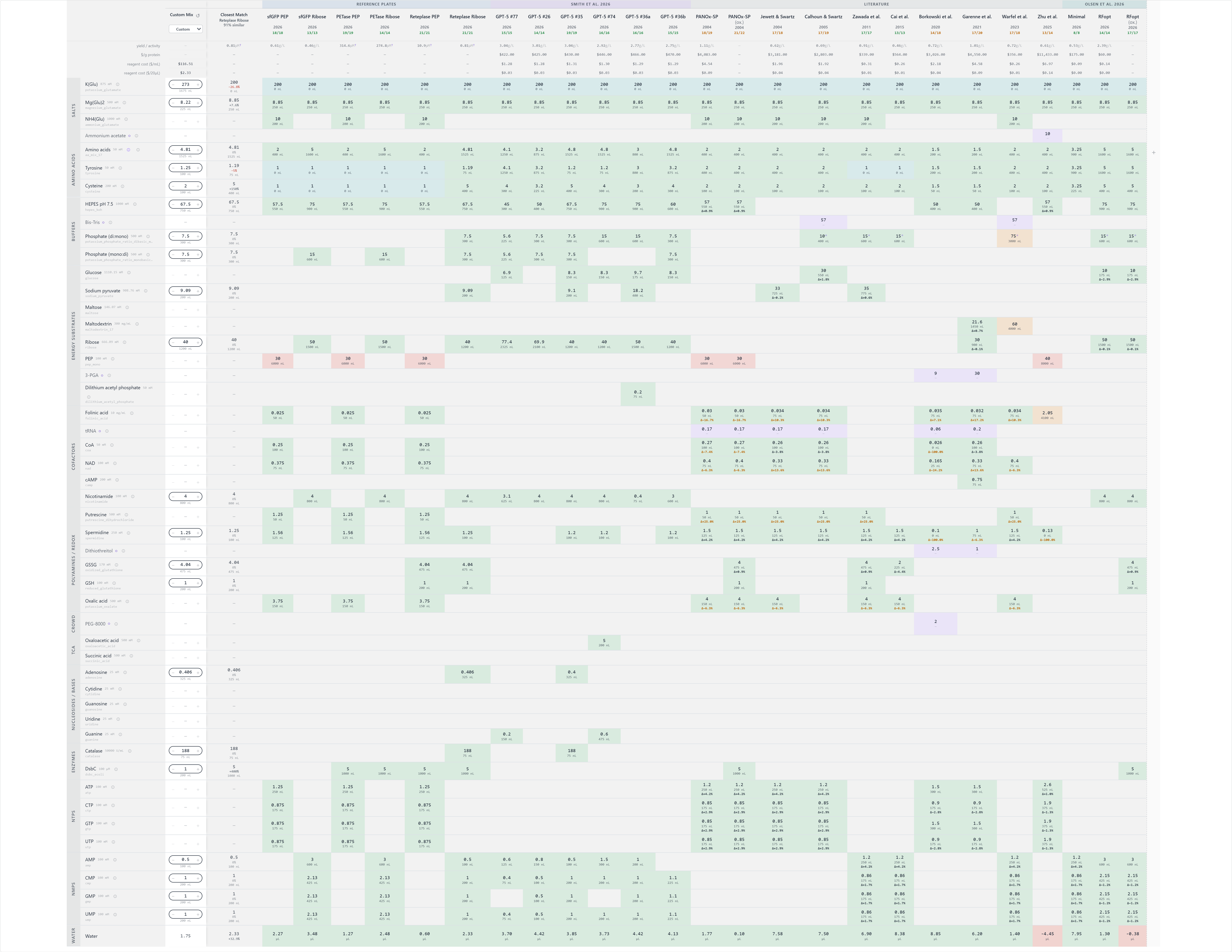
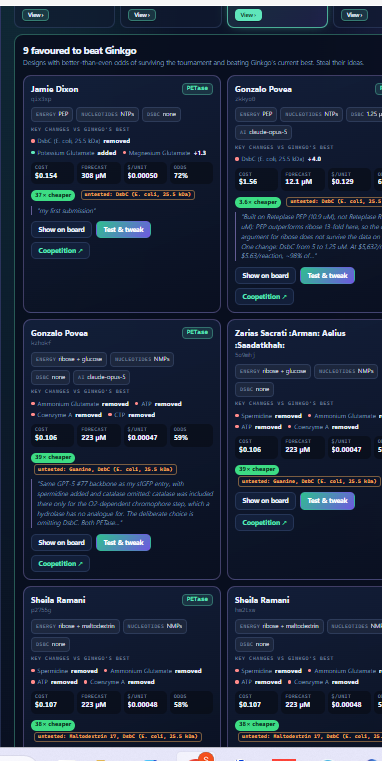
Co-opetition at that moment!!! very exciting phase:9 favoured to beat Ginkgo. Thanks Clinton for this CFPS arena!!
Reasoning for each
sfGFP: It has no disulfides, so the design maximizes plain expression yield: high K⁺/Mg²⁺, energy from PEP plus maltodextrin (the maltodextrin feeds a slower, phosphate-recycling route, which helps avoid the phosphate crash), and no redox components, since an oxidizing buffer would only cost yield.
PETase: It has two disulfides (C203-C239, C273-C289), so I used a mild oxidizing buffer and low DsbC. I lowered Mg²⁺ slightly because glutathione and extra phosphate also bind Mg²⁺.
Reteplase: It has 9 disulfides. The 4 mM GSSG / 1 mM GSH ratio and about 75 µg/mL of DsbC come from published v-tPA cell-free work, and I raised DsbC higher because the correct pairing is the hard part. Spermidine is kept at 1.5 mM, which matches what the v-tPA work used.
As a HTBAA research team, we will have the opportunity to suggest new reagents to add to the cell-free reagent inventory. Contribute (or upvote) at least one reagent to the “Community Reagents” section of the website and provide a short rationale. Include in your homework documentation how you decided on that specific reagent and provide links to any relevant research.
Community reagent suggestion
Suggest: Skp (periplasmic chaperone). If it’s already listed, upvote it instead.
How I decided on it: The inventory already has DsbC and the glutathione pair for disulfides, but nothing that keeps unfolded reteplase from aggregating while it folds. I searched for cell-free work on v-tPA, the reteplase-like domain with 9 disulfides, and found that the published system combined IAM-treated extract, GSSG, DsbC and Skp. The text says protein folding was significantly enhanced with the chaperone Skp, used at 300 µg/mL.
Rationale to paste: “Skp is a holdase chaperone that binds unfolded protein and reduces aggregation. It was used together with DsbC and glutathione to improve cell-free folding of v-tPA, which has 9 disulfide bonds. It would help reteplase and may help PETase, and it’s a natural complement to DsbC.”
References Claude-sonnet-5.5
Visit the cfps-coopetition forum page to ensure you will be able to take part in the discussion. Bonus: send a note in the channel about a CFPS optimization idea that you have! If you would like clarification on aspects of the project, please message in this dedicated channel.
C. ASIMOV KERNAL (OPTIONAL)
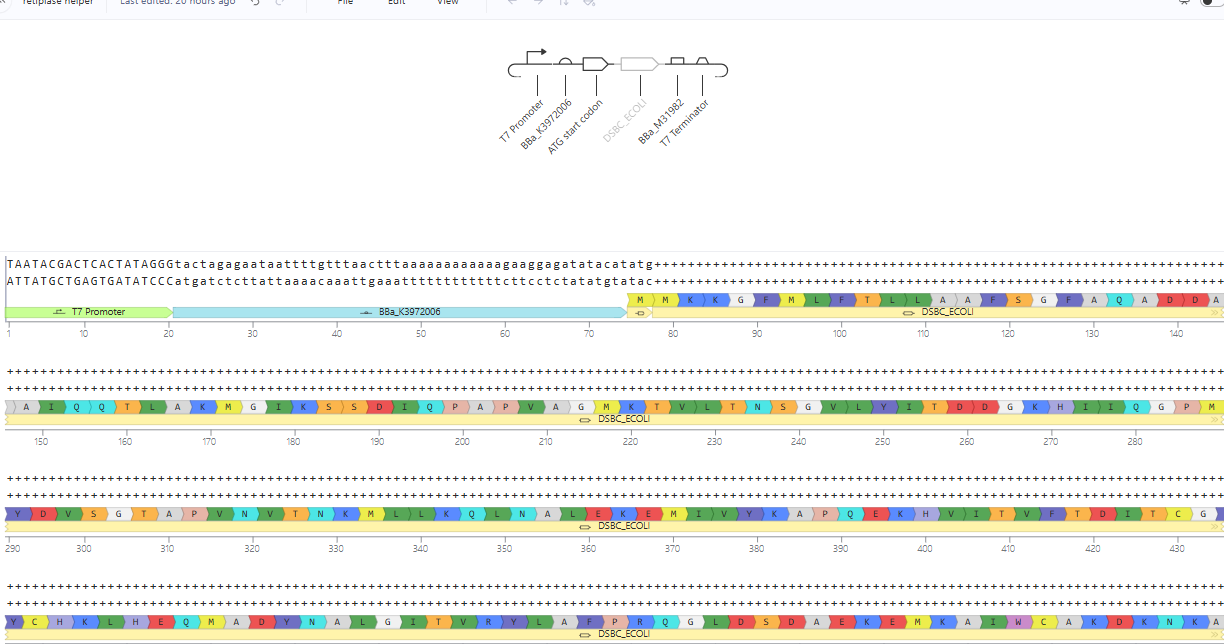
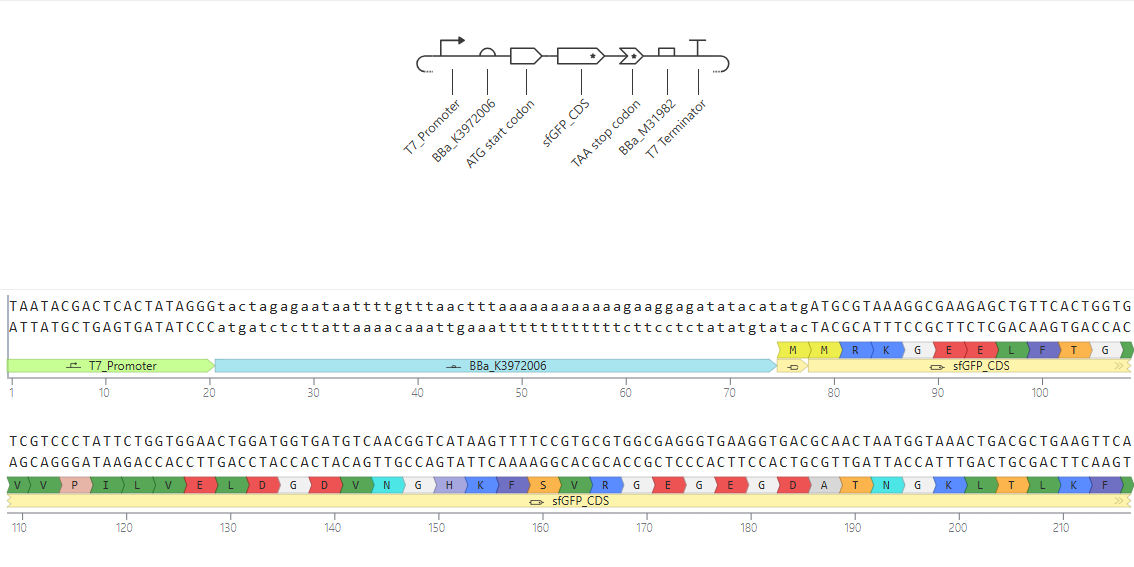
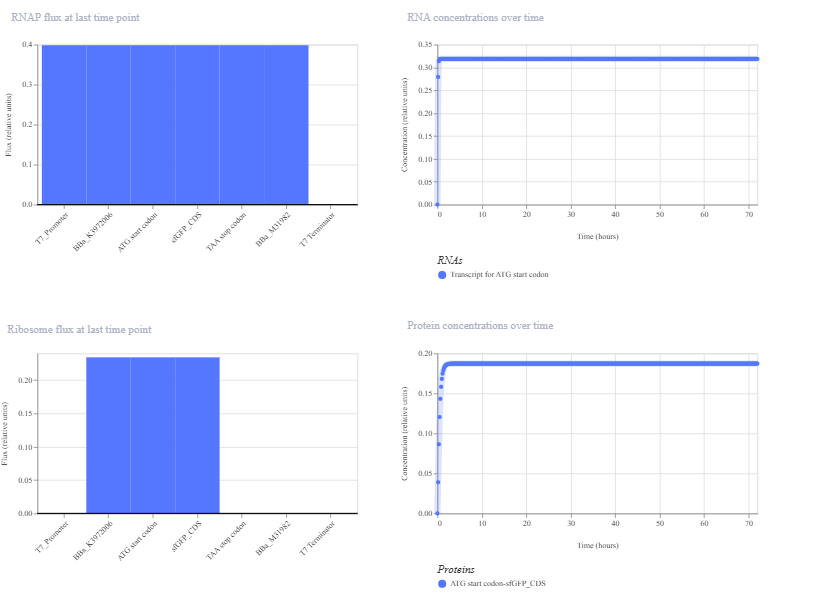
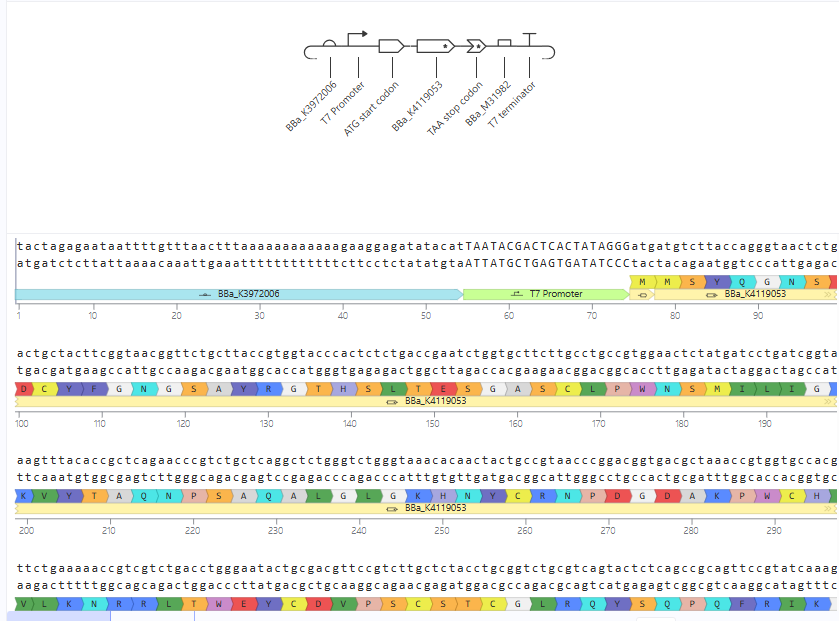
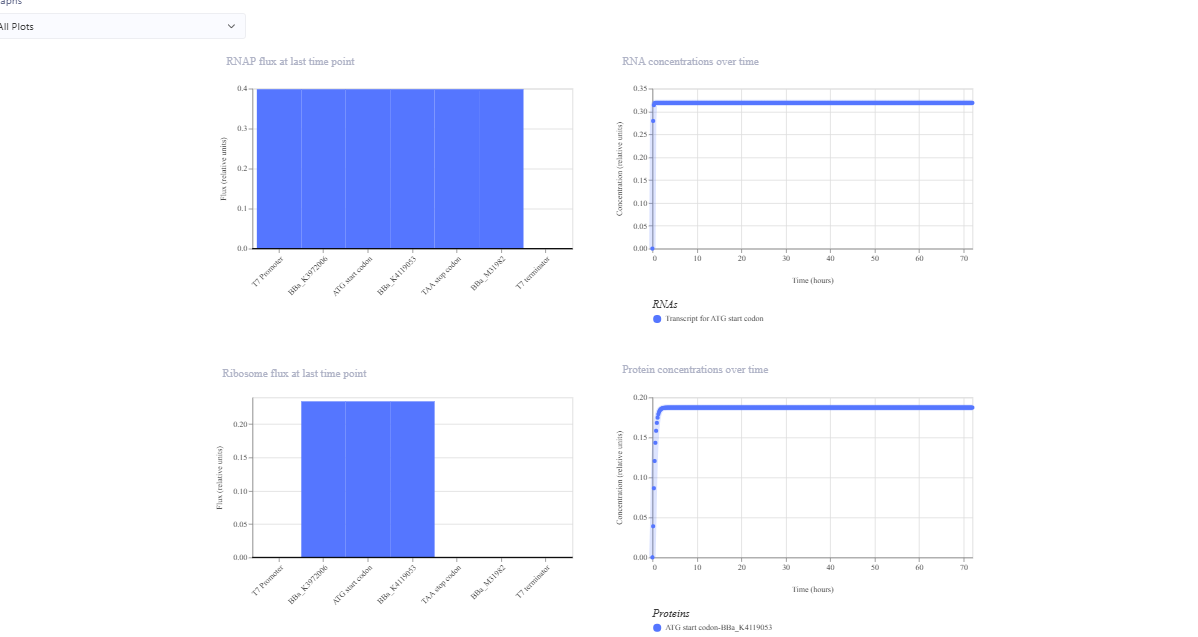
Build T7 compatible plasmids for cell-free expression using the amino acid coding sequences below:
sfGFP MSKGEELFTGVVPILVELDGDVNGHKFSVRGEGEGDATIGKLTLKFICTTGKLPVPWPTLVTTLTYGVQCFSRYPDHMKRHDFFKSAMPEGYVQERTISFKDDGKYKTRAVVKFEGDTLVNRIELKGTDFKEDGNILGHKLEYNFNSHNVYITADKQKNGIKANFTVRHNVEDGSVQLADHYQQNTPIGDGPVLLPDNHYLSTQTVLSKDPNEKGTRDHMVLHEYVNAAGITWSHPQFEK
PETase MEKKIWSHPQFEKGGSGENLYFQSGGASPAGGGANPYERGPNPTDALLEASSGPFSVSEENVSRLSASGFGGGTIYYPRENNTYGAVAISPGYTGTEASIAWLGERIASHGFVVITIDTITTLDQPDSRAEQLNAALNHMINRASSTVRSRIDSSRLAVMGHSMGGGGTLRLASQRPDLKAAIPLTPWHLNKNWSSVTVPTLIIGADLDTIAPVATHAKPFYNSLPSSISKAYLELDGATHFAPNIPNKIIGKYSVAWLKRFVDNDTRYTQFLCPGPRDGLFGEVEEYRSTCPFGGSGVSGWRLFKKIS
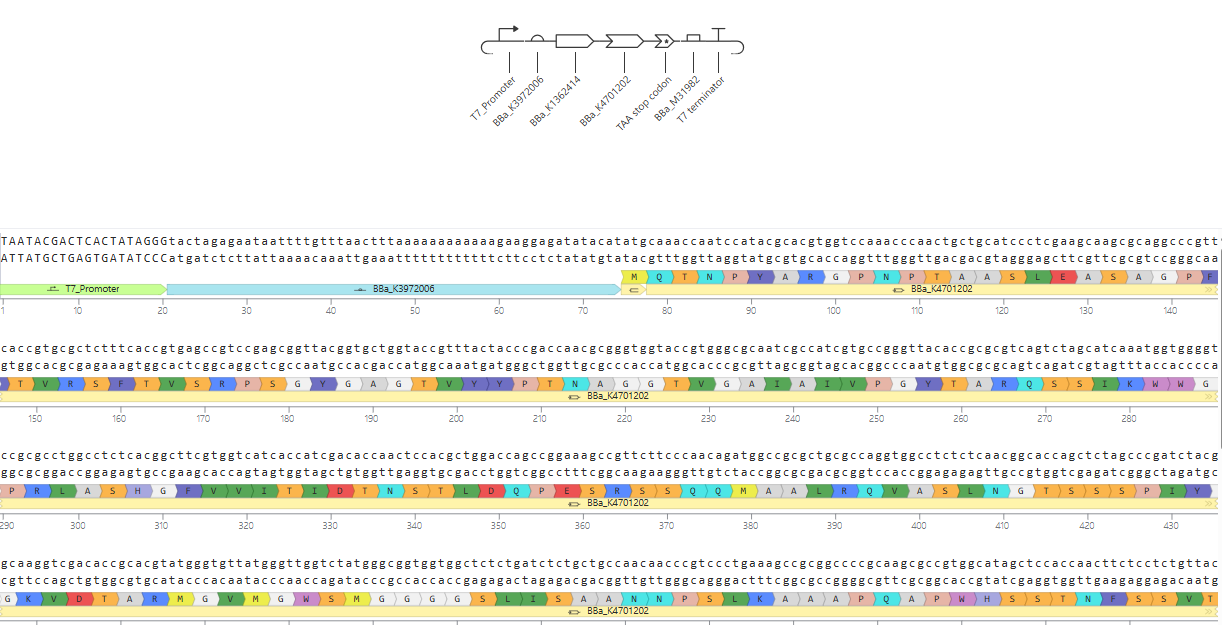
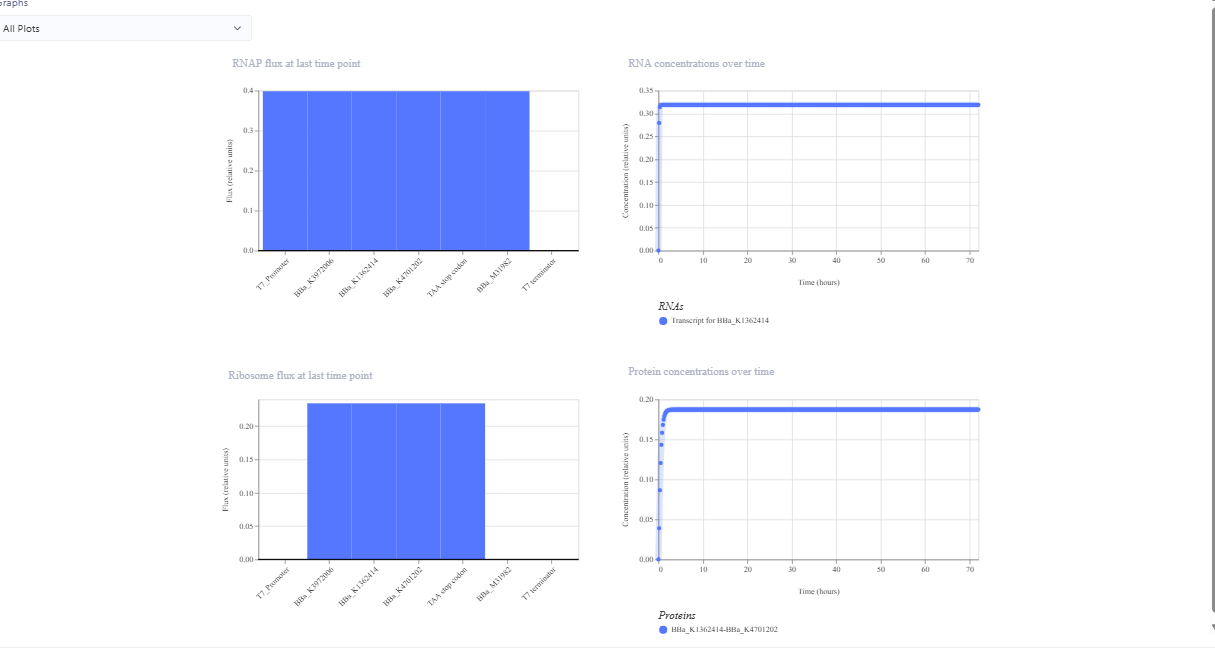
Reteplase MEKKIWSHPQFEKGGSGENLYFQSGGASPAGGGNSDCYFGNGSAYRGTHSLTESGASCLPWNSMILIGKVYTAQNPSAQALGLGKHNYCRNPDGDAKPWCHVLKNRRLTWEYCDVPSCSTCGLRQYSQPQFRIKGGLFADIASHPWQAAIFAKHRRSPGERFLCGGILISSCWILSAAHCFQERFPPHHLTVILGRTYRVVPGEEEQKFEVEKYIVHKEFDDDTYDNDIALLQLKSDSSRCAQESSVVRTVCLPPADLQLPDWTECELSGYGKHEALSPFYSERLKEAHVRLYPSSRCTSQHLLNRTVTDNMLCAGDTRSGGPQANLHDACQGDSGGPLVCLNDGRMTLVGIISWGLGCGQKDVPGVYTKVTNYLDWIRDNMRPGGSGVSGWRLFKKIS
Bonus question: design a T7 helper plasmid that you could add to the cell-free reaction to improve the yield of functional reteplase (general chaperones, disulfide-bond machinery, etc).