Week 2 HW: DNA Design & Applications
Here’s a link to the created folder: https://kernel.asimov.com/htgaa-2026/repositories/repository/ac213b04-6666-415f-a63e-a313df44690a/folder/8dea22af-bfa2-4e02-9b92-9adb7c61c1a8 Repository: Lifefabs HTBAA 2026; folder: rakitina-bc.
Part 1: Define your expression target
Okay, so to reinstate it again what I want to do is to make a swappable bacterial cellulose (BC) sensor insert for a wearable, sort of mouse-like input device, with Komagataeibacter (possibly) producing the cellulose and an engineered melanin-producing organism providing pigmentation/conductive functionality. This also made me realise that I have 2 parts to my overall manufacturing system. One should be designed for enhancing/controlling bacterial cellulose production in Komagataeibacter xylinus, and then also there’s one for melanin production in engineered E. coli. As for the final material, I’m going to co-culture them to get a melanised BC sensor.
PATH A
Part 1
I’m expressing a protein called TyrMut_Pm, which type is an engineered acid-tolerant tyrosinase. What it does is catalyse reactions involved in melanin biosynthesis. The goal is to produce melanin during BC formation
This sequence usually uses an E.coli https://www.sciencedirect.com/science/article/pii/S2772397626000407
So therefore it becomes: E. coli -> expresses TyrMut_Pm ->produces melanin -> melanin becomes incorporated into/associated with the BC-producing system -> melanised bacterial cellulose
Part 2
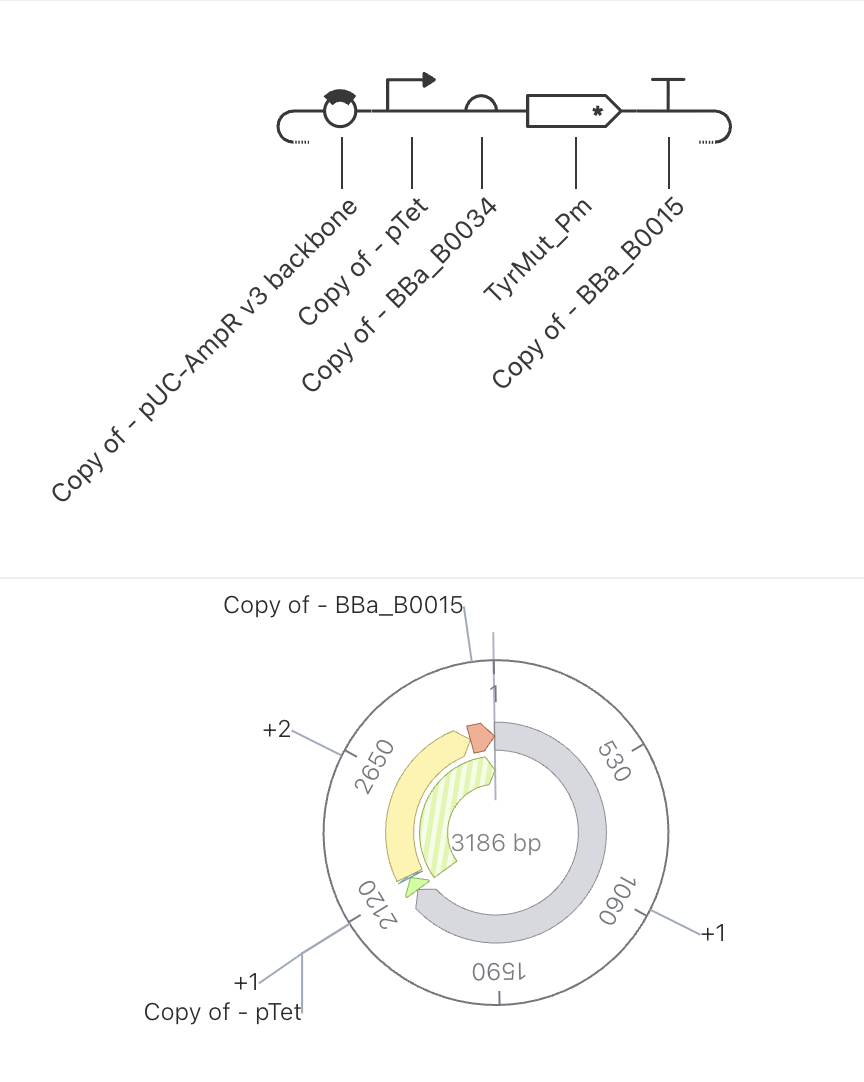
General plan here is to try to do this Promoter → RBS → TyrMut_Pm CDS → Terminator → Backbone
So for my promoter I’d probably want an inducable one so I could control it better and can’t really pick anything from the mammalian ones because that wouldnt make sense
So here are my present options BBa_R0062 pLambdaCI pLacI pTetR BBa_J23110 BBa_K346002 pTet BBa_J23101 BBa_J23119
Choices here are either inducable or constitutive like BBa_J23101 which would be a bit boring as it would start the reaction straight away but I would want it to be more customisable for use as a material. Therefore my choices are pLacI or pTetR.
I selected the characterized pTet promoter because it provides inducible control of TyrMut_Pm expression in E. coli. This allows melanin-producing enzyme expression to be initiated at a chosen stage of the biomanufacturing process instead of requiring constitutive expression throughout growth.
Then i needed rbs for which i chose BBa_B0034 because Kernel’s description specifically identifies it as an RBS used to define RBS efficiency and notes that there are no secondary structures within the provided RBS region. For my purposes, that’s a more straightforward generic translation-initiation part (more than an RBS specifically described as being for AmtR.)
for terminator BBa_B0015 — Terminator I selected BBa_B0015 because it is a characterized bacterial double terminator composed of BBa_B0010 and BBa_B0012, providing a pretty defined transcriptional endpoint for the TyrMut_Pm expression cassette.
For sequence search/part I found the original TyrMut_Pm from the paper and just used that.
Part 3
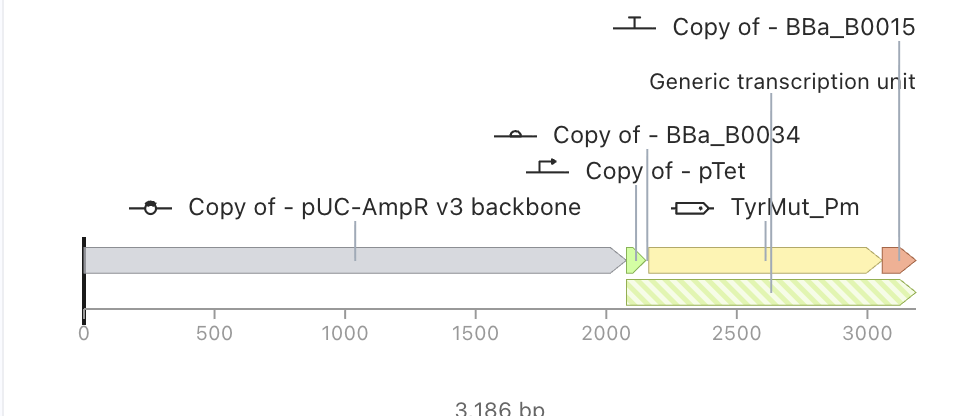
Here’s the design in Kernel that I ended up getting.
Part 4
For sequence search/part Match I searched the original TyrMut_Pm CDS against all available repositories and part types, requiring matches of at least 50 bp and 90% sequence identity. Kernel returned no matches under these criteria. Shorter searches produced only 7–8 bp matches, which were too short to establish identity. Thus, the Part Match search did not identify TyrMut_Pm as an existing Kernel part.
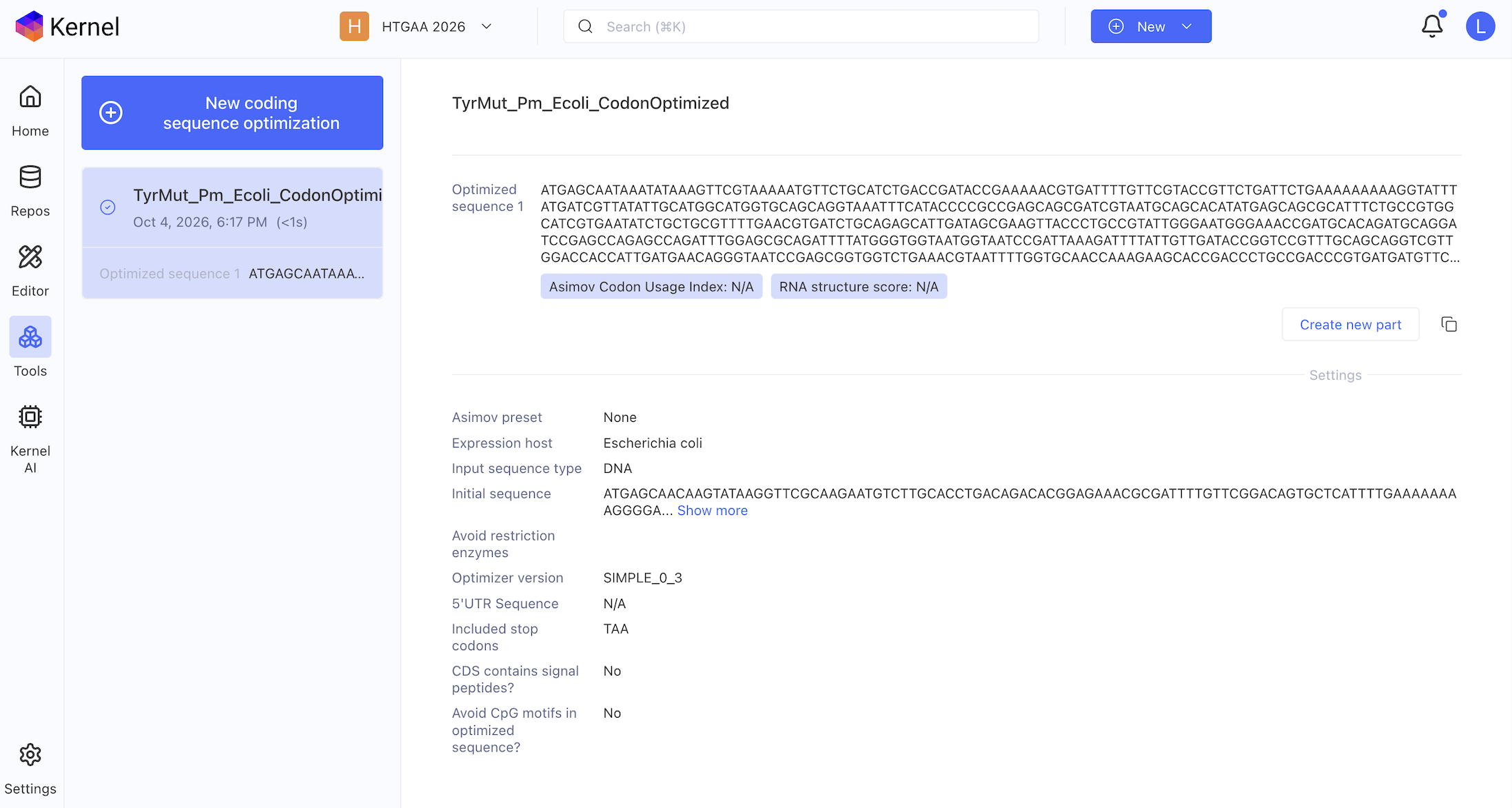
I then also optimised my protein
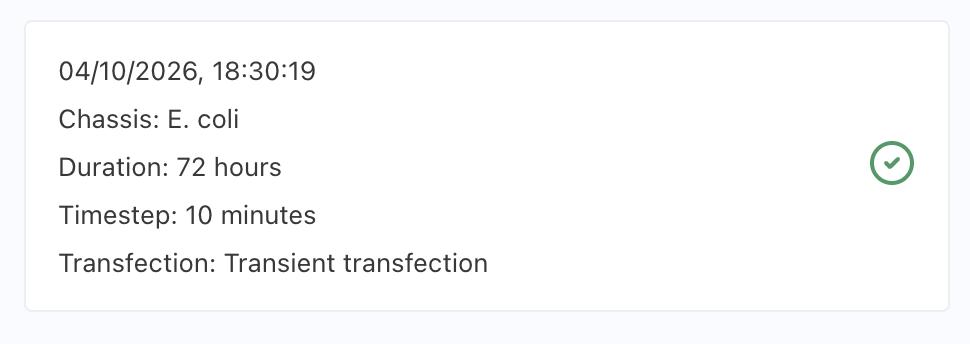
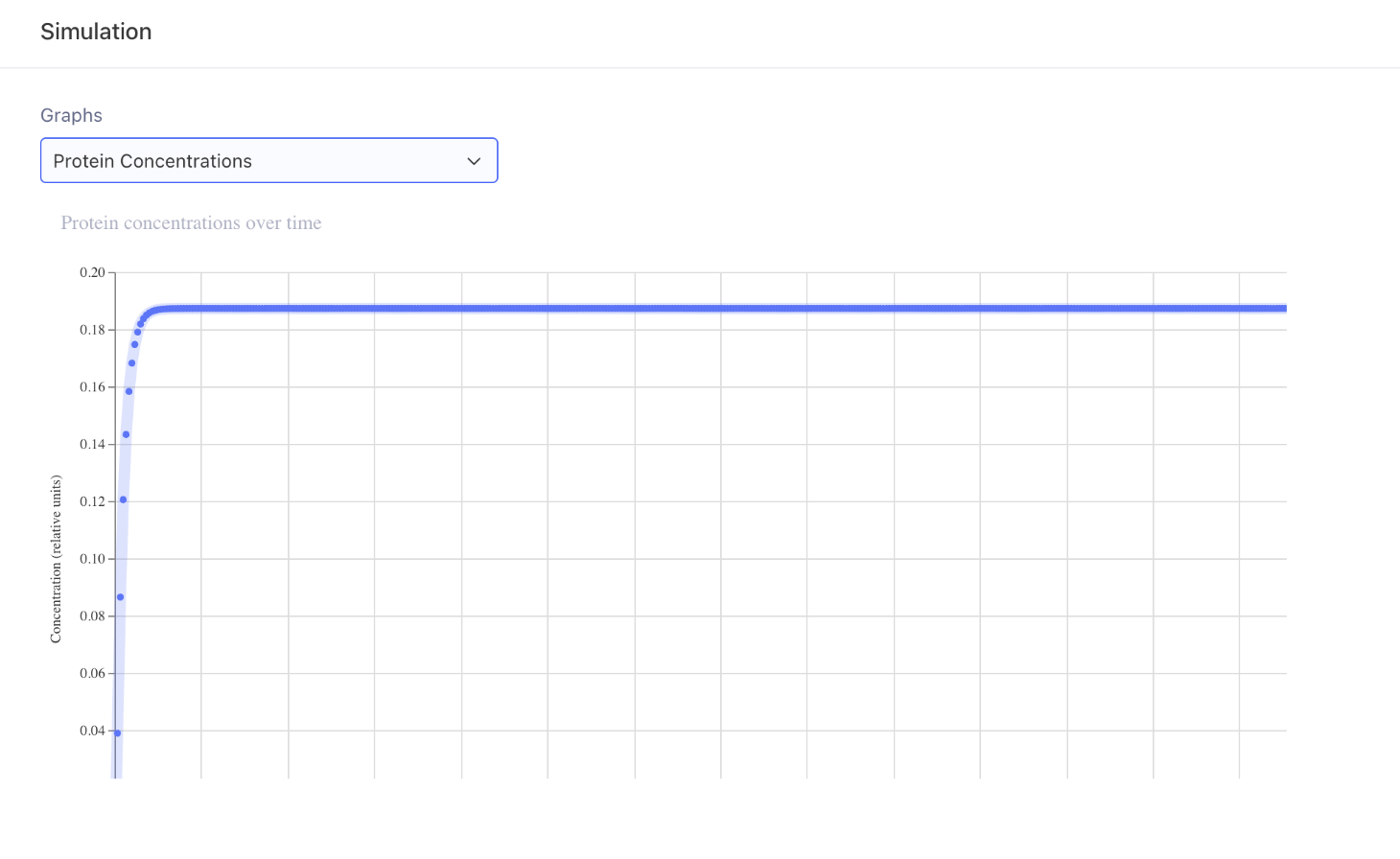
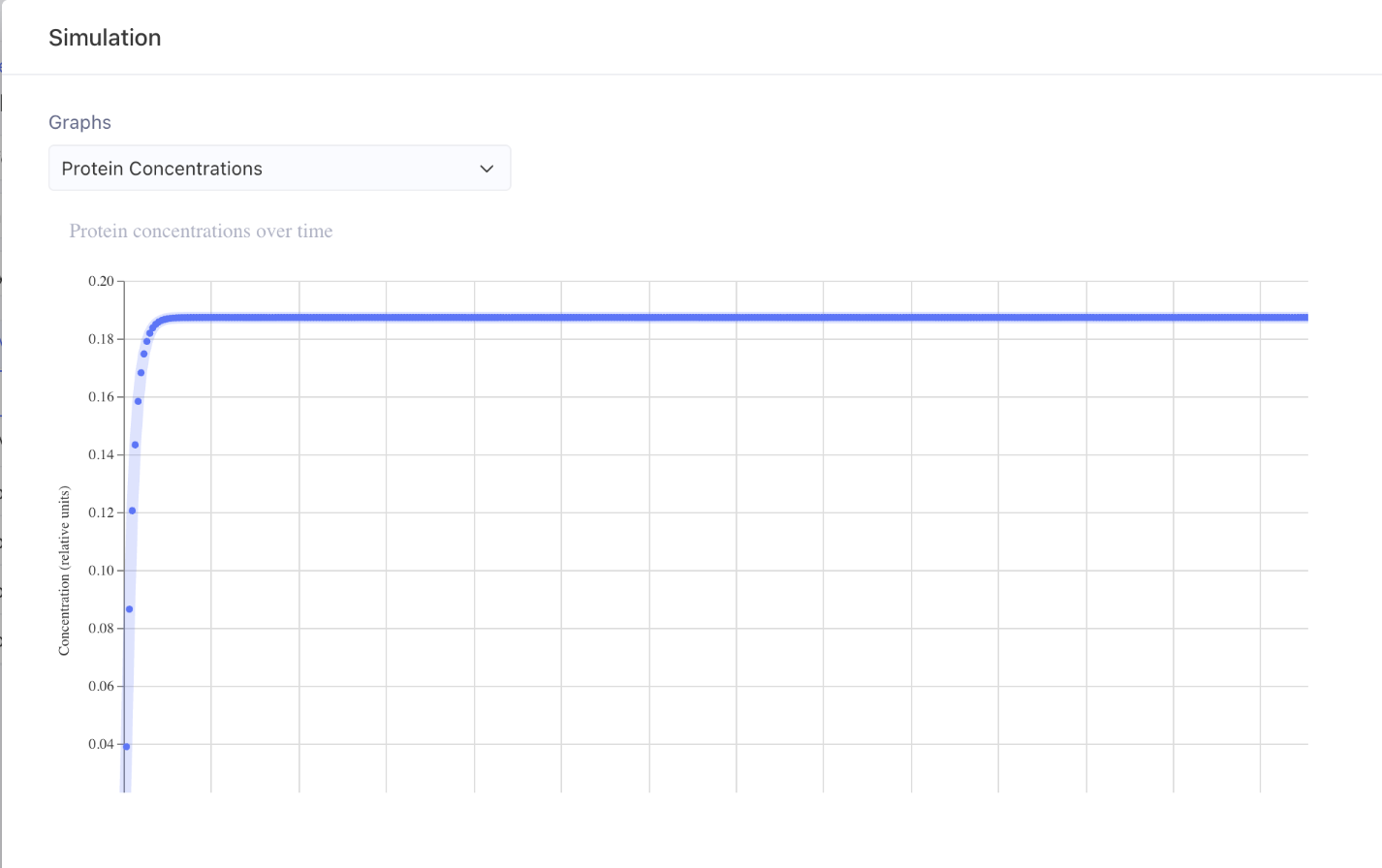
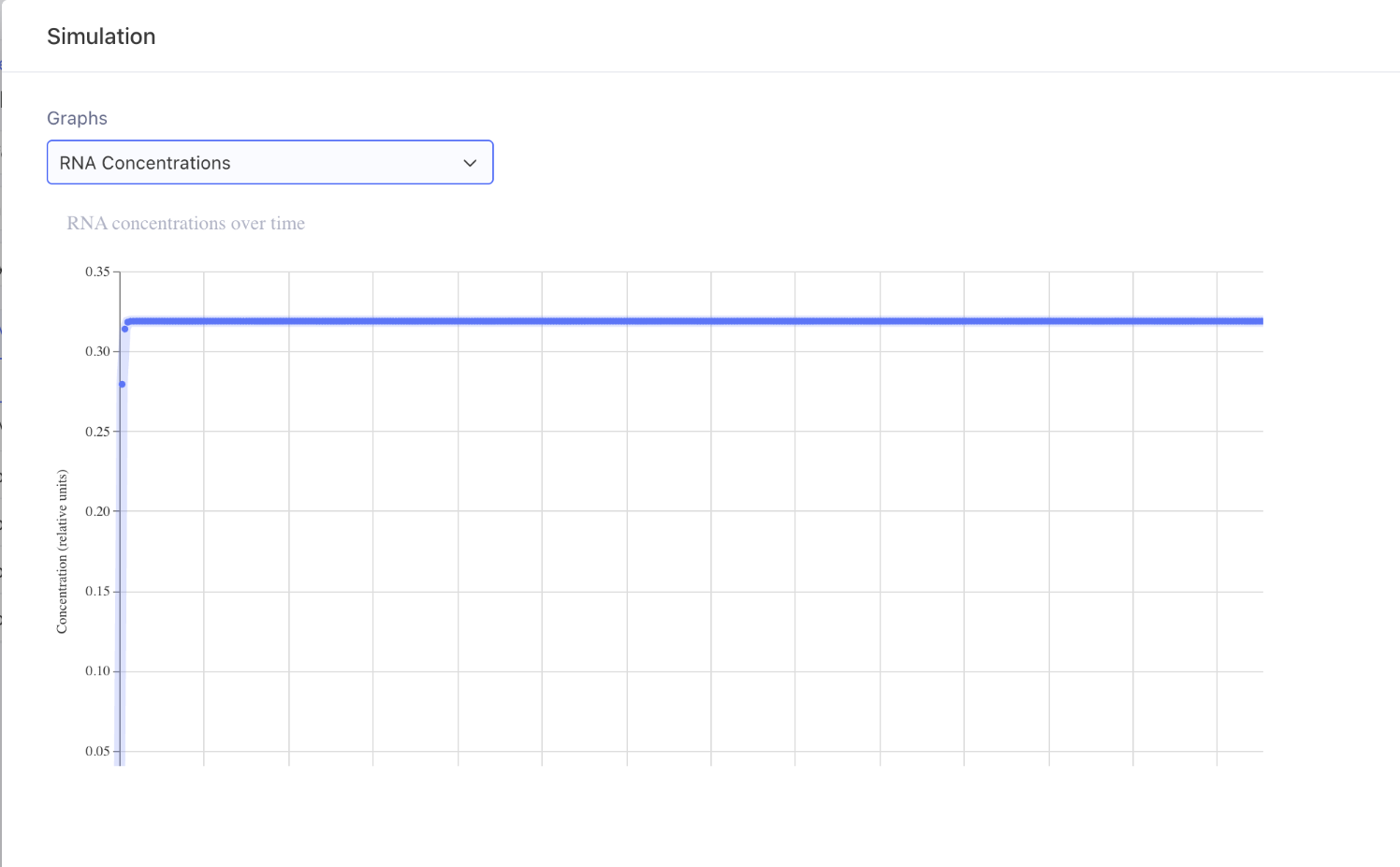
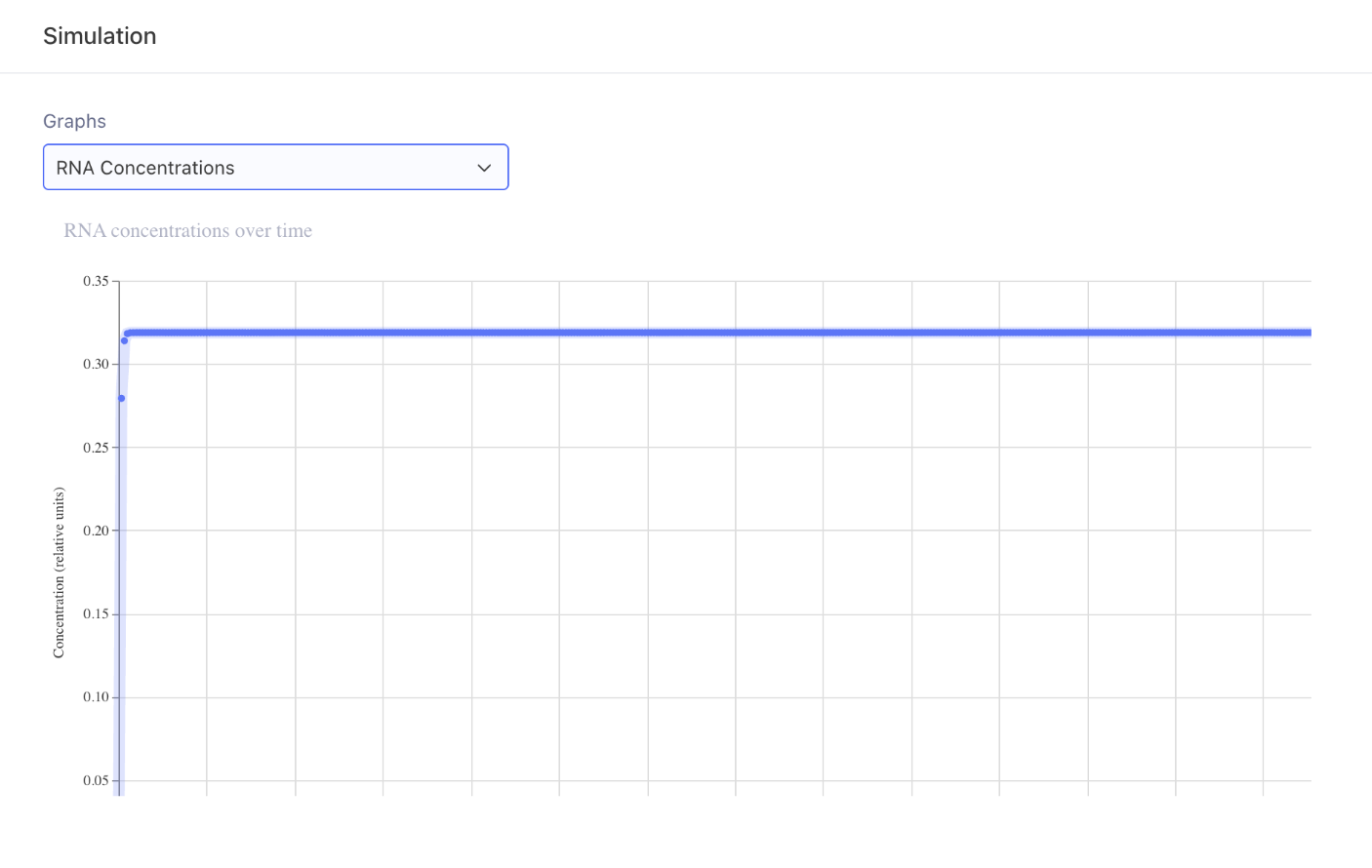
I simulated both the original and E. coli-codon-optimized TyrMut_Pm constructs under the same conditions. The predicted RNA and protein concentration profiles were essentially unchanged. This suggests that, within Kernel’s simulation model, the codon optimization did not substantially alter the predicted expression dynamics, even though it changed the underlying DNA sequence.
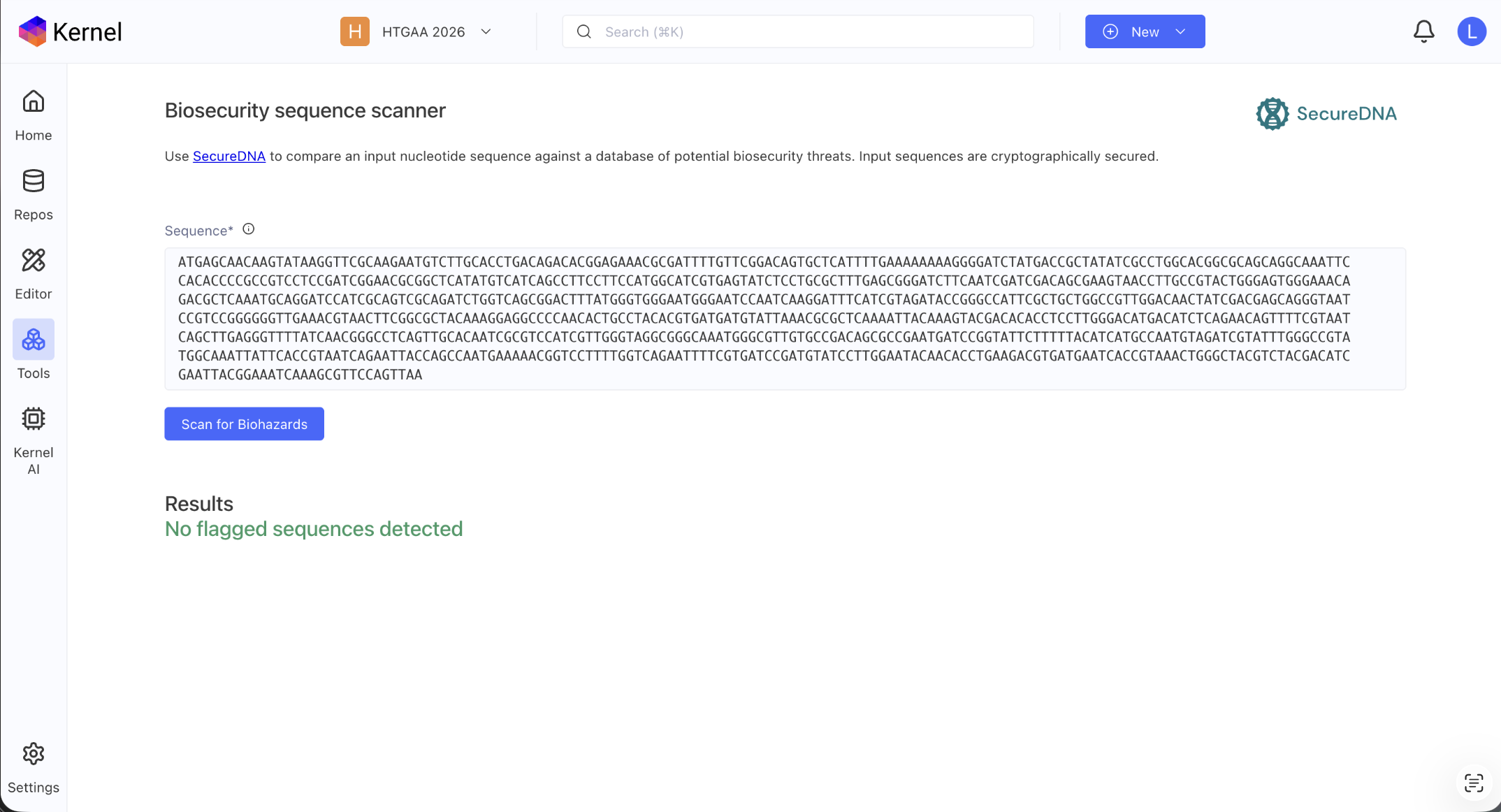
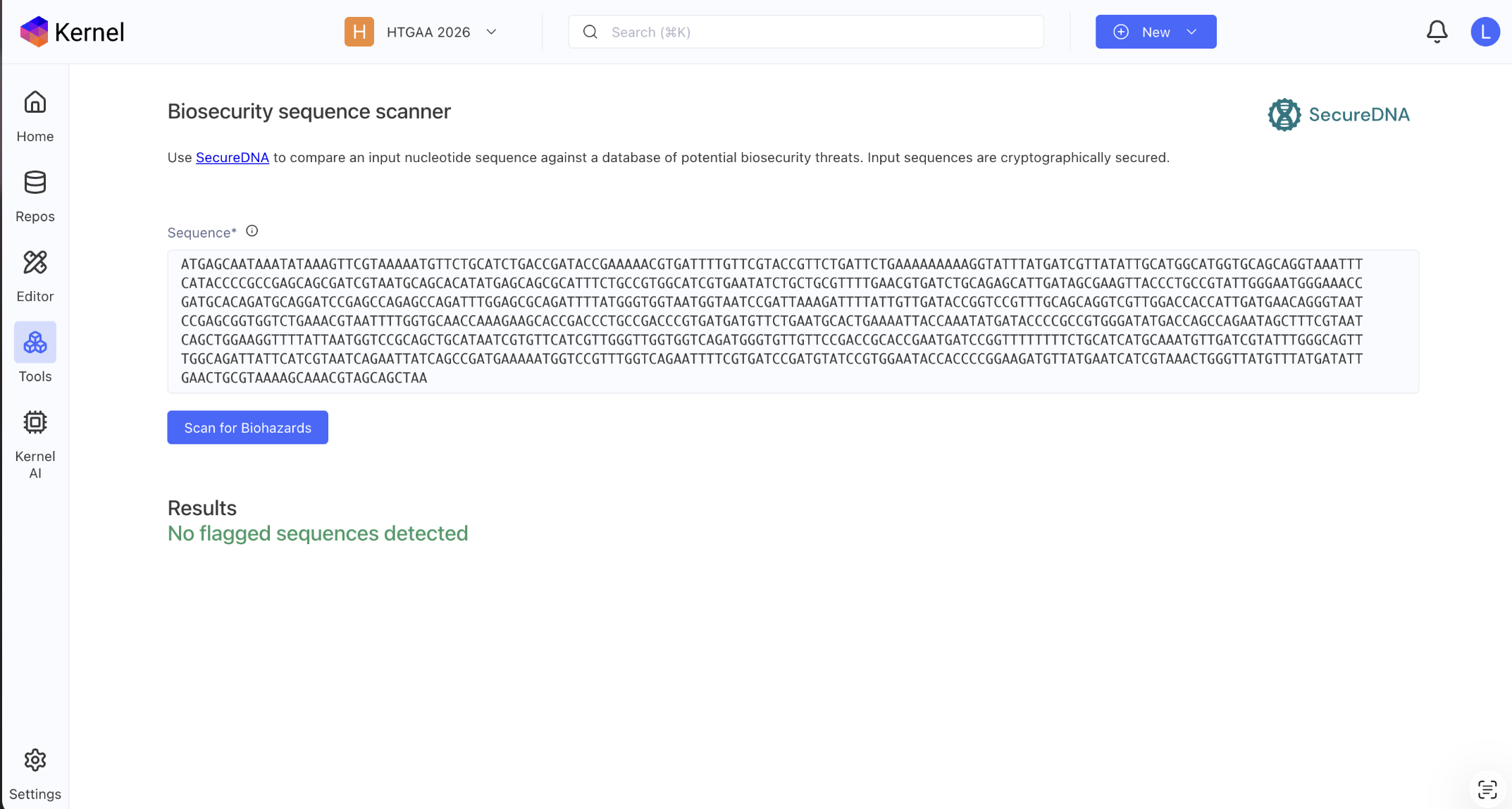
I also ran safety checks for both of these
Part 5
For an initial prototype, I would use TWIST or alternatively commercially synthesized DNA for the TyrMut_Pm coding sequence and assemble it with the expression backbone. Fragment-based assembly such as Gibson assembly would be better if the construct were divided into multiple fragments or if synthesis constraints made a single fragment inconvenient. (Gibson et al. (2009) and Carr et al. (2004))
Part 6
I haven’t done the other part of my manufacturing system yet a lot of questions about that