Week 1 HW: Final Project Ideas
What you would like to biomanufacture and why?
I would like to biomanufacture a wearable made from bacterial cellulose where color, thickness, transparency and surface pattern are influenced by a person’s brain activity.
I am interested in this idea because many of the brain to computer interfaces translate brain activity into numbers, images and sound but not really something you can feel. With this idea, I hope to explore what happens when brain activity instead influences a material that grows slowly and can be touched.
What living system would you use?
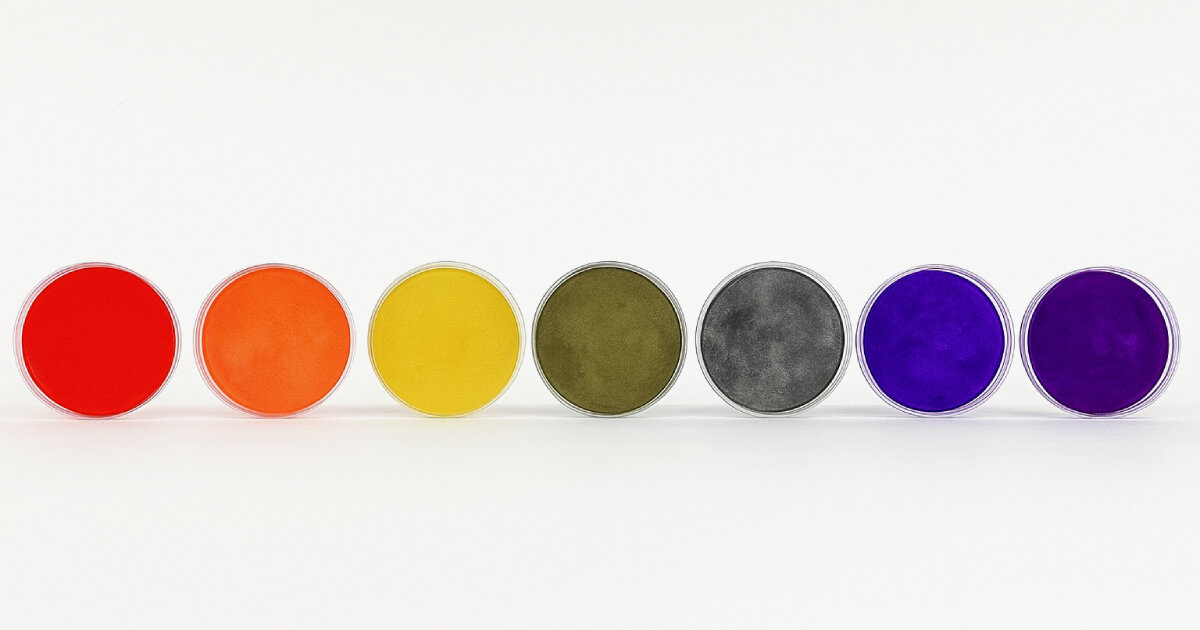
From my preliminary research, I would be using bacterial cellulose and/or microalgae that then would be dyed by machine based on the brain wave. I have found that aerobic bacteria will convert sugars in a growth medium which is then into nanoscale cellulose fibers. In this process the fibers will accumulate into a physical material. From my initial assesment, I believe the system will incorporate the following:
- Cellulose producing bacteria
- A scaffold or mold where oxygen can pass through
- Pigment producting bacteria or microorganism
How would you use automation?
I would be using EEG processing, machine learning, digital fabrication and automated liquid handling in this process. The start of the process would be an EEG device recording brainwave of a participent during a short activity. A computational system would then extract features from the data to create the pattern and color of the growing environment. With the pattern produced, a liquid handling robot will dispense bacterial cultures and different concentrations of growth medium into multiwell plates or small culture chambers based on the data previously collected.
How much would you need to make, and how long would it take?
With it being a wearable/art piece, I’m estimating it to be the size of a forearm, which would be in the size:
- Length : 12in
- Avg. Forearm Length: 9.5in
Some calculations supported by Chat GPT:
The required surface area would be: 12\ \x{in} \times 9.5\ \x{in} = 114\ \x{in}^2
In addition to adding approximately 20% extra material for seams, overlap, shrinkage, trimming, and unsuccessful regions:
114\ \x{in}^2 \times 1.20 = 136.8\ \x{in}^2
I would therefore need to manufacture approximately 137 square inches of finished bacterial-cellulose material.
For an initial estimate, I will assume that the dried bacterial-cellulose material has a target areal mass of approximately 0.026 grams per square inch. This is equivalent to approximately 40 grams per square meter.
The total amount of dry bacterial cellulose required would therefore be: 137\ \x{in}^2 \times 0.026\ \x{g/in}^2 = 3.56\ \x{g}
What don’t you know yet?
Honestly there is still so much I need to know but I think some of the main questions would be the following:
- How can EEG creating meaningful material pattern and is it the most effective way?
- How precise the calculation need to be to fully reflect the pattern design by machine?
- Will the method for growing the most effective and can it be controlled?
- Is it safe to wear such material?