Week 2 HW: DNA Design
Part 1 : Expression Target
I would express MscL (large conductance mechanosensitive channel) from E. coli as the primary mechanosensing protein. MscL is a membrane protein that opens in response to mechanical tension in the cell membrane, which allows mechanical stimulation to be converted into an intracellular ionic signal. In my proposed idea, a person’s physiological state would be measured electronically and translated by a machine into controlled fluid flow and shear stress. The goal is to use MscL as the first biological interface through which cells can sense this mechanically encoded human information.
For an initial proof of concept, MscL mediated mechanosensing will eventually be coupled to a visible reporter which allows for different mechanical inputs to produce measurable cellular outputs. In later iterations, it can be replaced with a protein or other pathway that produces a visible and persistent change on a textile scaffold. The E. coli MscL protein, as of now, is encoded by mscL (UniProt P0A742; RefSeq NP_417749.1) and is a 136-amino-acid inner-membrane protein.
Part 2 : Genetic Parts
| Part type | Short name | Sequence / Source | Justification |
|---|---|---|---|
| Promoter | J23110 | Sequence from the iGEM Registry / Kernel standard part library | J23110 is a constitutive bacterial promoter that allows continuous transcription of mscL in E. coli without requiring an external chemical inducer. |
| Ribosome Binding Site (RBS) | B0034 | Sequence from the iGEM Registry / Kernel standard part library | B0034 is a commonly used bacterial RBS that provides efficient translation initiation in E. coli. |
| Coding Sequence (CDS) | mscL | E. coli K-12 mscL; UniProt P0A742; RefSeq NP_417749.1 | mscL encodes the large conductance mechanosensitive channel MscL, which responds to membrane tension and serves as the mechanosensing protein in the proposed interface. |
| Targeting / Signal peptide | None | Not required | MscL is an integral inner membrane protein whose native transmembrane domains direct membrane localization, so an additional secretion signal is unnecessary. |
| Terminator | B0015 | Sequence from the iGEM Registry / Kernel standard part library | B0015 provides transcription termination downstream of mscL, producing a defined expression cassette. |
| Vector backbone | pSB1C3 | iGEM standard plasmid backbone; use existing Kernel/backbone sequence | pSB1C3 provides an E. coli-compatible origin of replication and chloramphenicol-resistance selection for maintaining the construct. |
Part 3 : Assembled Construct
Kernel file has been saved under name Wang - Hw2 DNA Design
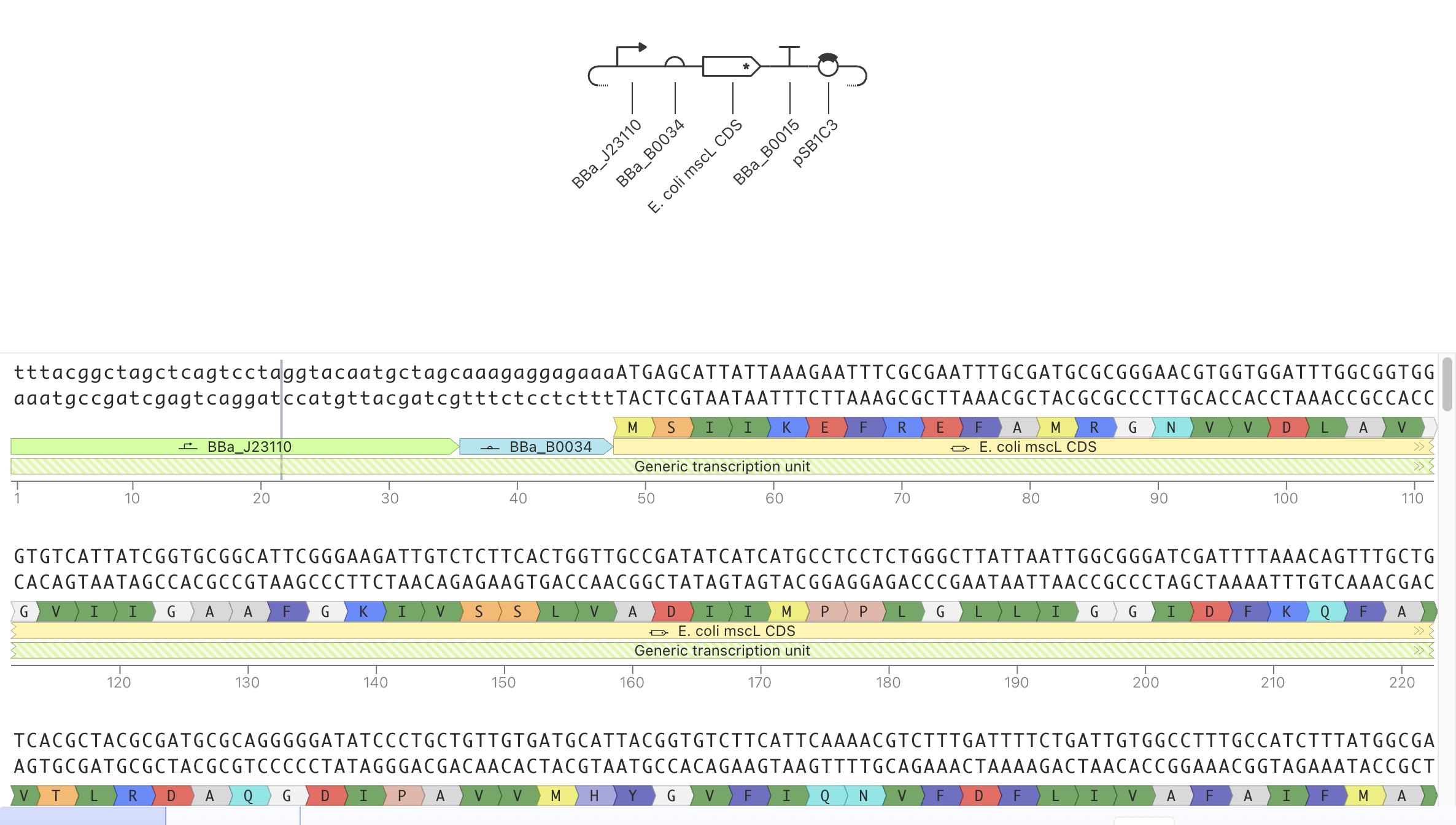
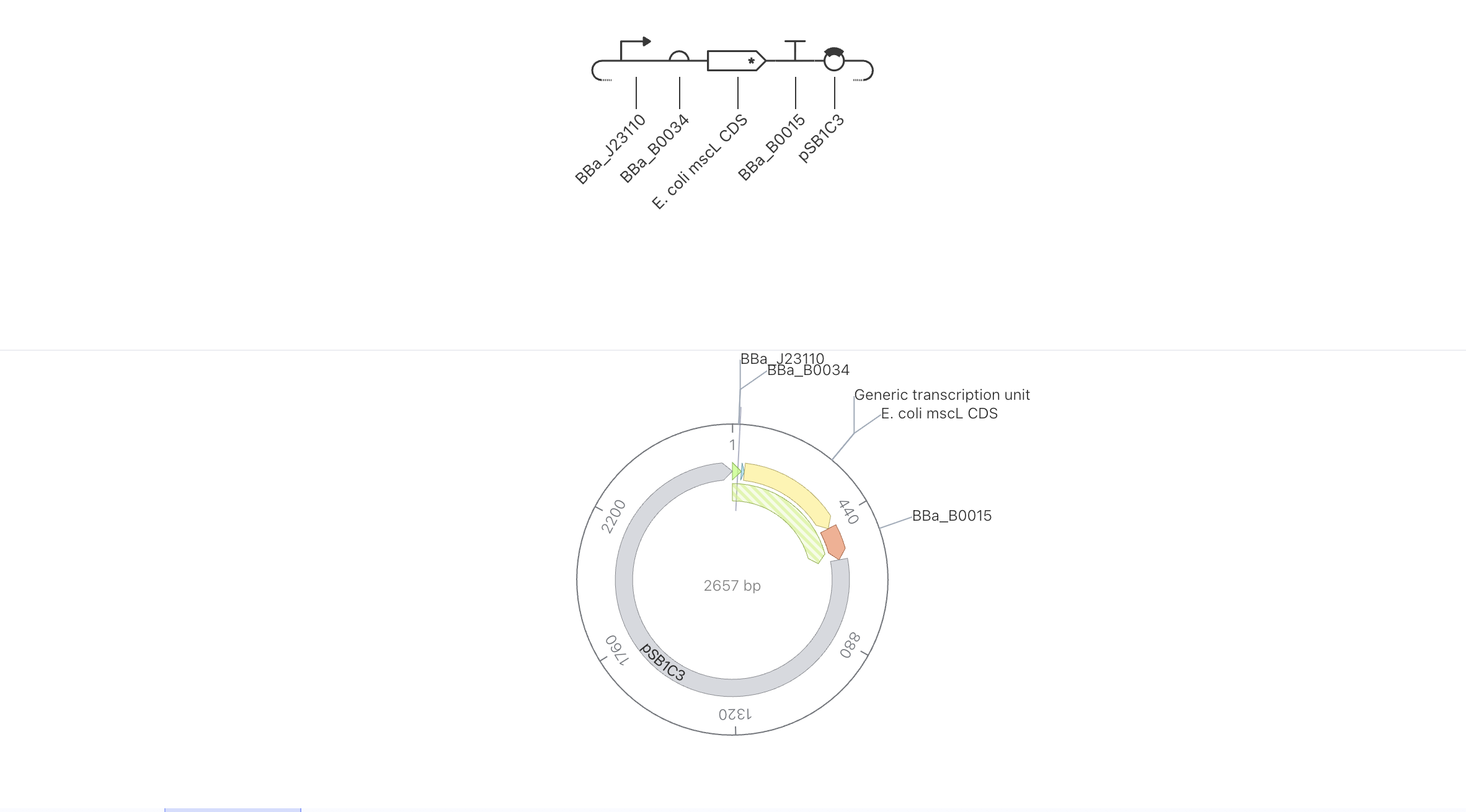
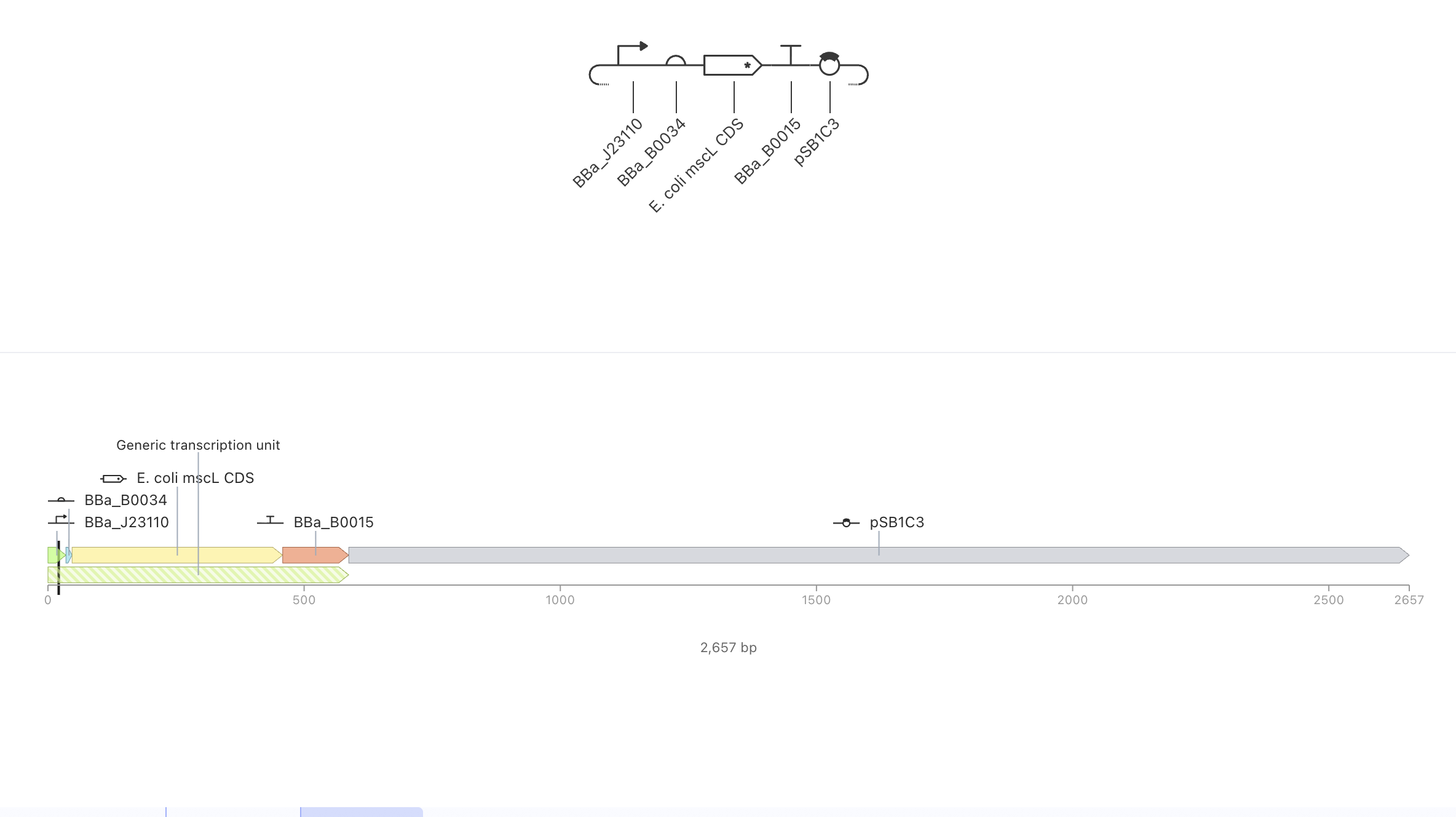
Part 4 : Optimize & Quality Check
Condon Optimizer
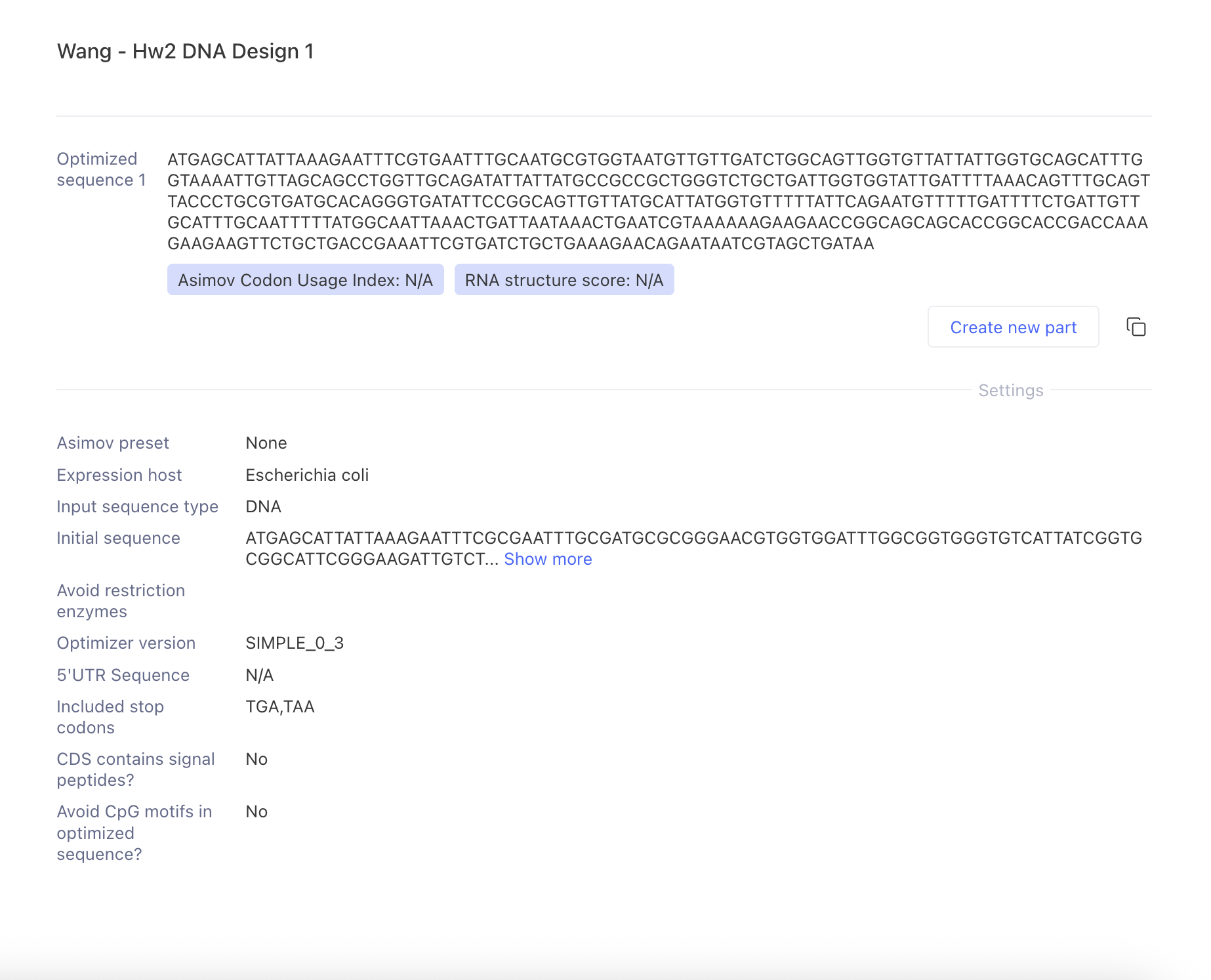
I have codon optimized the mscL coding sequence for expression in Escherichia coli using Kernel’s SIMPLE_0_3 optimizer. The original sequence was the native mscL gene from E. coli K-12, but Kernel still redesigned synonymous codons according to its E. coli expression parameters. These nucleotide changes are intended to improve compatibility with host codon usage while preserving the MscL amino-acid sequence. I did not apply additional restriction-enzyme or motif-avoidance constraints, allowing me to evaluate codon usage independently. Kernel did not report a Codon Usage Index or RNA structure score for this run (both were listed as N/A).
Sequence Search
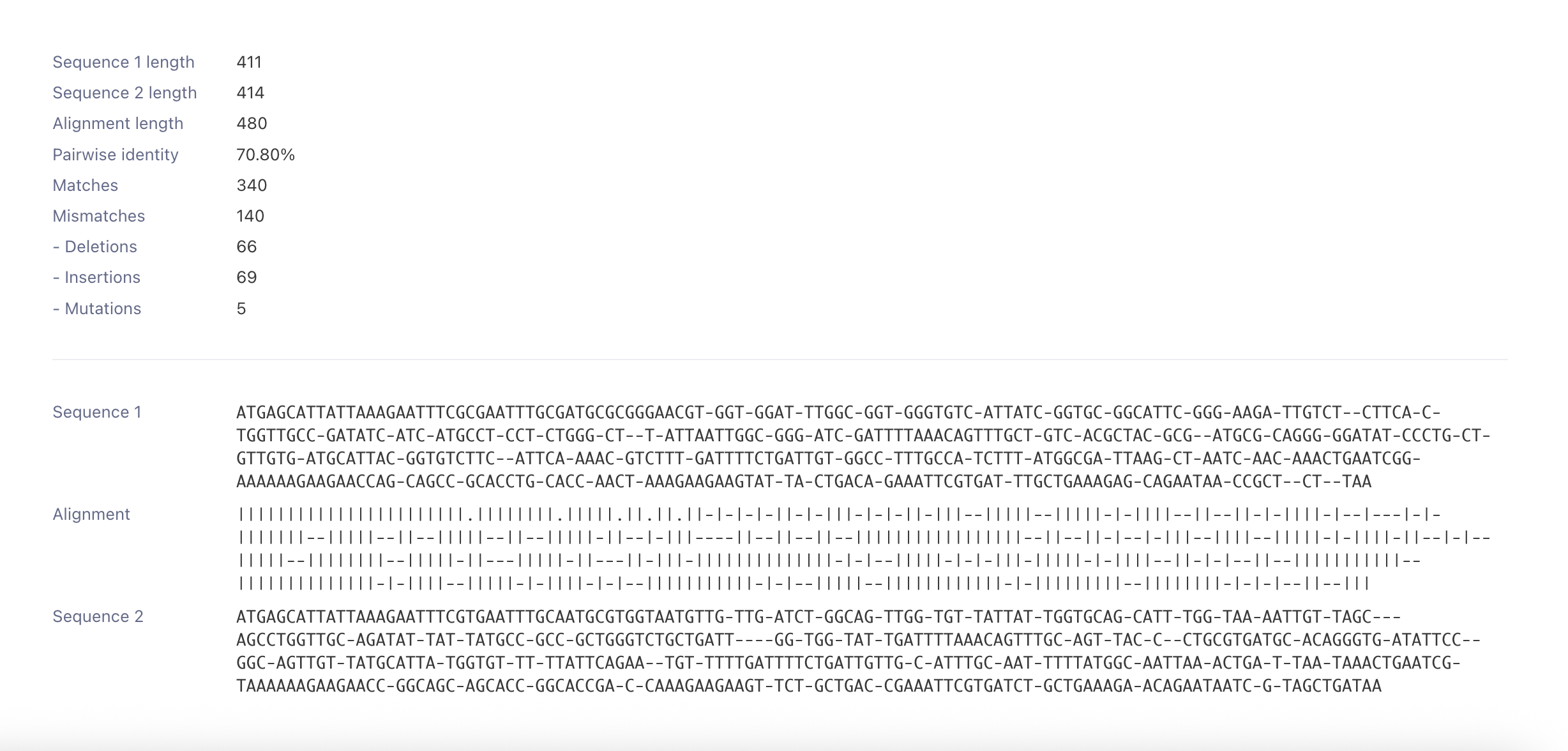
The alignment between the native and Kernel optimized mscL sequences showed substantial nucleotide level redesign. The native sequence was 411 bp, while the optimized sequence was 414 bp, and the pairwise nucleotide identity was 70.80%. This indicates that Kernel changed many codons during optimization rather than making only a few nucleotide substitutions. Because codon optimization is intended to alter DNA codon usage while preserving the encoded protein, I would verify the translated amino acid sequence before using the optimized CDS experimentally.
Security Search
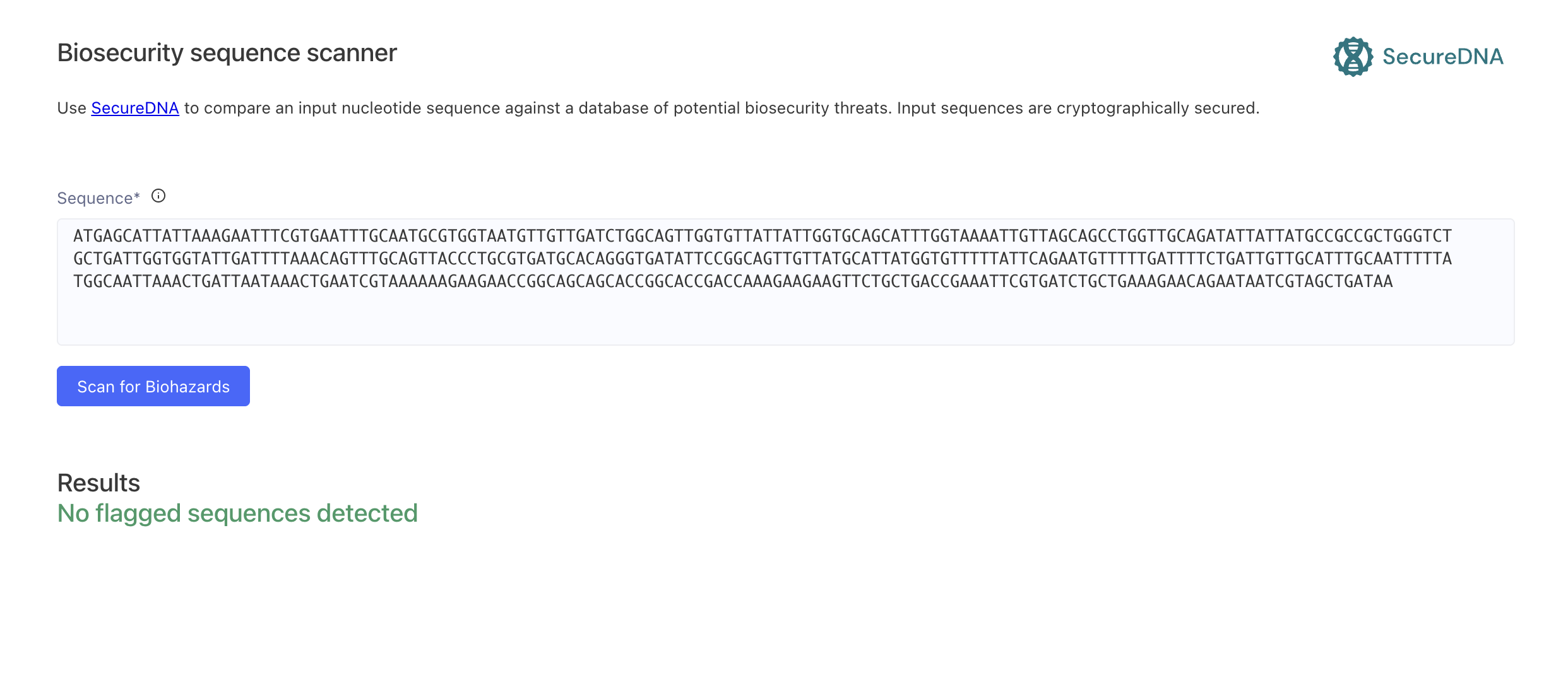
I ran the new mscL sequence through Kernel’s SecureDNA Biosecurity Sequence Scanner, which screens nucleotide sequences against a database of potential biosecurity threats. The scan returned “No flagged sequences detected.” This indicates that the MscL coding sequence did not trigger any biosecurity flags in the screening system, so no sequence changes were required based on this result.
Part 5 : Design to Build
How to build?
I would start with the mscL expression cassette as synthetic DNA and assemble it into the existing pSB1C3 backbone. With the mscL CDS being only 411 bp and the complete expression cassette is relatively small, creating it as one DNA fragment may be more practical and effective than producing it from a large pool of short oligonucleotides. I would use Gibson Assembly to join the synthetic insert and plasmid backbone using overlapping ends. The reading mentioned that overlapping DNA fragments can assemble seamlessly in a single isothermal reaction, allowing this method to be effective for inserting a small synthetic expression cassette into an existing vector.
What does synthesis constrain?
The synthesized construct would need sequence verification before being used. Through the reading, it is to my understanding that mismatched binding proteins such as MutS can selectively remove error containing products and substantially improve the fidelity of de novo DNA synthesis.
My construct, I believe, it is comparatively shorter and does not intentionally contain long repetitive regions, so I’m hoping it to provide me less space for constrain. However, if errors or problematic sequence regions are produced, the cassette could potentially be synthesized in smaller fragments, error corrected or sequence verified which can be assembled in the end.
Prototype vs. scale.
For my idea in a prototype form, I believe commercial synthesis followed by assembly into pSB1C3 is enough. In large scale production, it would be more difficult as it may require producing a library of MscL variants or different mechanosensing circuits instead of repeating one identical construct. In that situation, oligonucleotide pool or microchip based synthesis could become practical. Through the reading, I was inspired that complex pools of chip synthesized oligonucleotides can be selectively amplified and assembled into many genes in paralle as using error correction strategies to address the higher error rates associated with pooled synthesis.
Part 6 : Questions
- Will externally applied shear stress actually activate MscL?
- If MscL will, how will the activation perform a visible output?
- Is constitutive MscL expression at the right level?
Use of AI
I have used ChatGPT in support of explaination of sequence and DNA construct.