Week 2 HW: Genetic Design of Human ELN Expression for Functional Bladder Tissue
HTBAA Homework #2
Genetic Design of Human ELN Expression for Functional Bladder Tissue
Part 0: Set up in Kernel
I created my project in the HTBAA 2026 workspace using the Functional Bladder Tissue repository and the ELN Expression folder. Before assembling my own expression design, I used Kernel to investigate the available genetic parts and constructs.
The final construct was named ELN Expression Construct.
The design was developed as a mammalian expression cassette intended to express human elastin (ELN) in the context of a functional bladder-tissue project.

Figure 1. Kernel project structure showing the HTBAA 2026 workspace, the Functional Bladder Tissue repository, and the ELN Expression folder.
Part 1: Define the Expression Target
Target molecule
The molecule I am expressing is human tropoelastin, the precursor protein encoded by the ELN (elastin) gene. Elastin is an extracellular matrix protein and a major component of elastic fibres. Because elastic properties are important for tissues that undergo repeated expansion and recoil, ELN was selected as the protein target for this functional bladder-tissue project (Wise & Weiss, 2009; Ozsvar et al., 2021).
The NCBI ELN gene record describes elastin as a component of elastic fibres in the extracellular matrix and lists NM_000501.4 as an mRNA RefSeq corresponding to human ELN transcript variant 1 (NCBI, n.d.).
Sequence and origin
The coding sequence initially provided in Kernel is the Human ELN CDS, annotated as a CDS (+start +stop) with a length of 2,178 bp.
The sequence is associated with human ELN. I used the NCBI RefSeq record NM_000501.4, Homo sapiens elastin (ELN), transcript variant 1, mRNA, as a reference for the human ELN gene (NCBI, n.d.).
However, I did not assume that the 2,178-bp Kernel sequence was nucleotide-identical to the RefSeq record. The Kernel sequence was treated as the actual sequence used in the design, while NM_000501.4 was used as an external reference for human ELN.
I also carried out nucleotide sequence searches using NCBI BLASTN. An initial BLAST analysis of the original human ELN sequence returned matching human ELN reference sequences, including NM_000501.4. A later BLAST analysis performed during the optimization process returned:
No significant similarity found.
These were separate sequence-search runs, so I report the two observations separately rather than treating them as contradictory results from the same query.
The later result may reflect differences between the sequence submitted in that run and the reference sequences detected in the earlier analysis. In particular, a nucleotide sequence can encode the same protein while differing at synonymous codon positions.
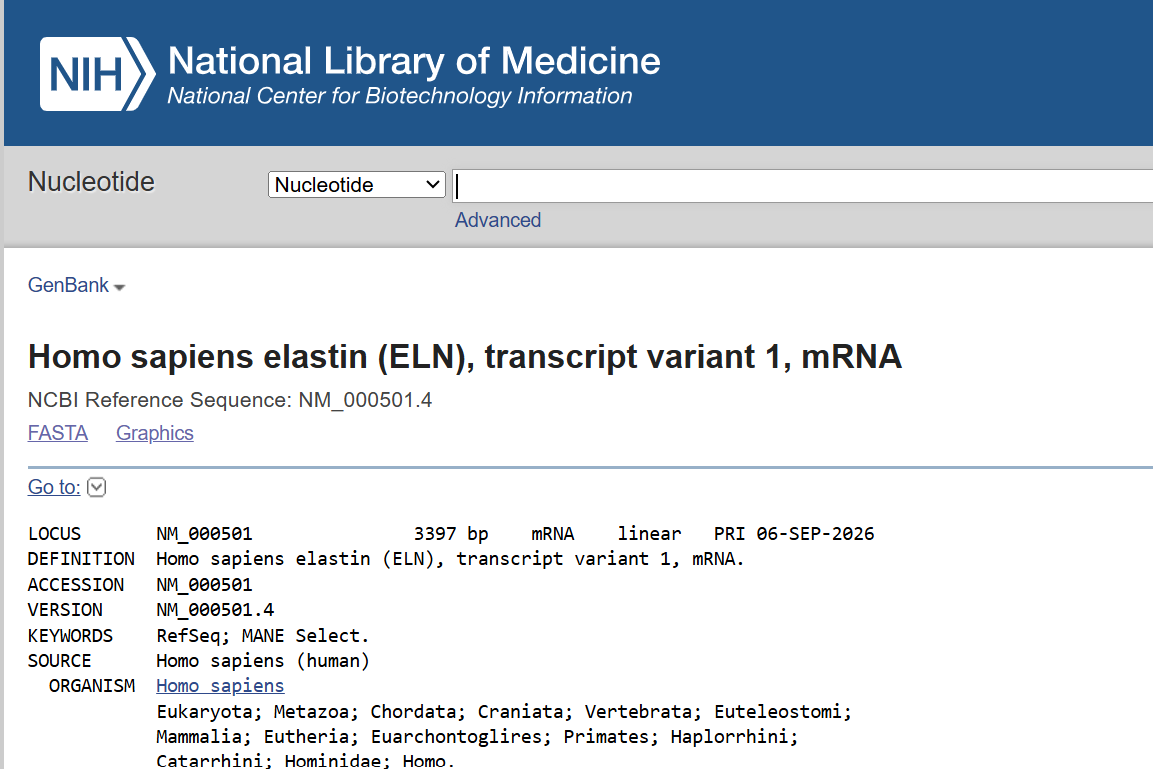
Figure 2. NCBI RefSeq record for human ELN transcript variant 1 (NM_000501.4), used as the reference sequence for this project.
Host/chassis
The intended expression system is mammalian, specifically human bladder cells in the context of functional bladder tissue.
For this reason, the expression design uses a mammalian promoter and a 5′ UTR containing a Kozak sequence, rather than a bacterial ribosome-binding site.
The coding-sequence optimization tool in Kernel was also run using Homo sapiens as the host.
Product localization
The intended destination of the protein is the extracellular environment.
Human elastin is synthesized as a secretory-pathway protein, and the human ELN protein sequence contains an N-terminal signal peptide in the reference protein sequence (UniProt, n.d.; Wise & Weiss, 2009).
In the Kernel design, I did not add a separate artificial secretion signal. Instead, I retained the N-terminal region of the ELN coding sequence supplied by Kernel and treated the targeting information as part of the native ELN sequence.
This is a design assumption rather than experimental evidence of secretion. The actual efficiency of secretion would need to be tested experimentally in the intended cell type.
The reason for this design is that tropoelastin needs to reach the extracellular environment in order to participate in extracellular-matrix assembly.
Part 2: Design the Genetic Parts
I created a simple mammalian expression cassette in Kernel.
The functional elements of the expression cassette are:
| Layer | Part | Type | Length | Source | Reason for selection |
|---|---|---|---|---|---|
| Transcription start | Short HsEef1a1 promoter | Promoter | 233 bp | Kernel | Provides a mammalian promoter for transcription of the ELN expression cassette. |
| Translation start | Unspecified 5′ UTR with Kozak | 5′ UTR with Kozak | 30 bp | Kernel | Provides a mammalian translation-initiation context. |
| Coding sequence | Human ELN CDS | CDS (+start +stop) | 2,178 bp | Human ELN sequence in Kernel | Encodes the ELN protein used as the target of the design. |
| Targeting | Native ELN N-terminal sequence | Included within CDS | — | Human ELN | No separate artificial secretion signal was added. |
| Transcription termination | BBa_K2217005 | Terminator | 122 bp | Kernel / existing part | Provides a downstream transcription termination element. |
| Polyadenylation | Unspecified Poly(A) signal | Poly(A) signal | 30 bp | Kernel | Provides the 3′ polyadenylation signal. |
The short HsEef1a1 promoter is annotated in Kernel with functional features including a G-rich element, an Sp1/GC box, a TATA box, and a transcription start site. These annotations are features within the 233-bp promoter and are not additional parts that were separately added to the cassette.
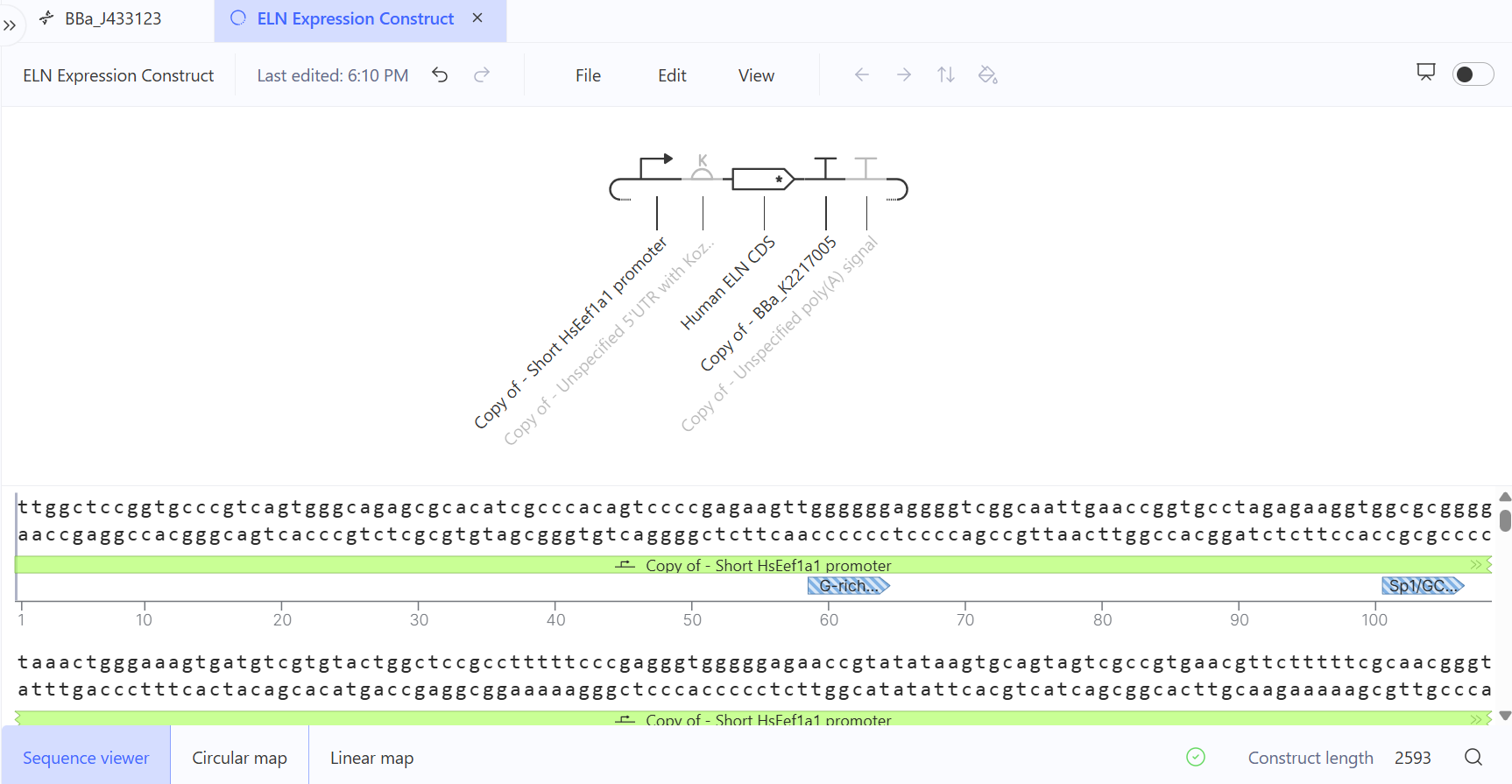
Figure 3. Kernel view showing the genetic parts selected for the ELN expression cassette.
Vector context
The design uses the BBa_J433123 / AmpR-ColE1 backbone as the vector context in Kernel.
The backbone is considered separately from the expression cassette. The expression cassette contains the components directly involved in transcription, translation, ELN coding, termination, and polyadenylation. The BBa_J433123 / AmpR-ColE1 backbone provides the plasmid context, including the elements associated with plasmid propagation and selection.
Therefore, the overall design can be represented as:
BBa_J433123 / AmpR-ColE1 vector backbone + ELN expression cassette
The backbone is not an additional element inserted between the promoter, 5′ UTR/Kozak sequence, CDS, terminator, and poly(A) signal. It is therefore not included in the calculated length of the expression cassette.
Part 3: Assemble the Construct
I assembled the ELN expression design in Kernel using the BBa_J433123 / AmpR-ColE1 backbone as the vector context.
Within the vector, the expression cassette follows the intended 5′→3′ organization:
Short HsEef1a1 promoter
↓
5′ UTR with Kozak
↓
Human ELN CDS (+start +stop)
↓
BBa_K2217005 terminator
↓
Poly(A) signal
The expression-cassette components have the following lengths:
- Short HsEef1a1 promoter: 233 bp
- 5′ UTR with Kozak: 30 bp
- Human ELN CDS: 2,178 bp
- BBa_K2217005 terminator: 122 bp
- Poly(A) signal: 30 bp
The total expression-cassette length is therefore:
233 + 30 + 2,178 + 122 + 30 = 2,593 bp
The value of 2,593 bp refers only to the expression cassette and does not include the BBa_J433123 / AmpR-ColE1 backbone.
Final construct map
The final Kernel construct map should show both the vector context and the expression cassette in its intended orientation.
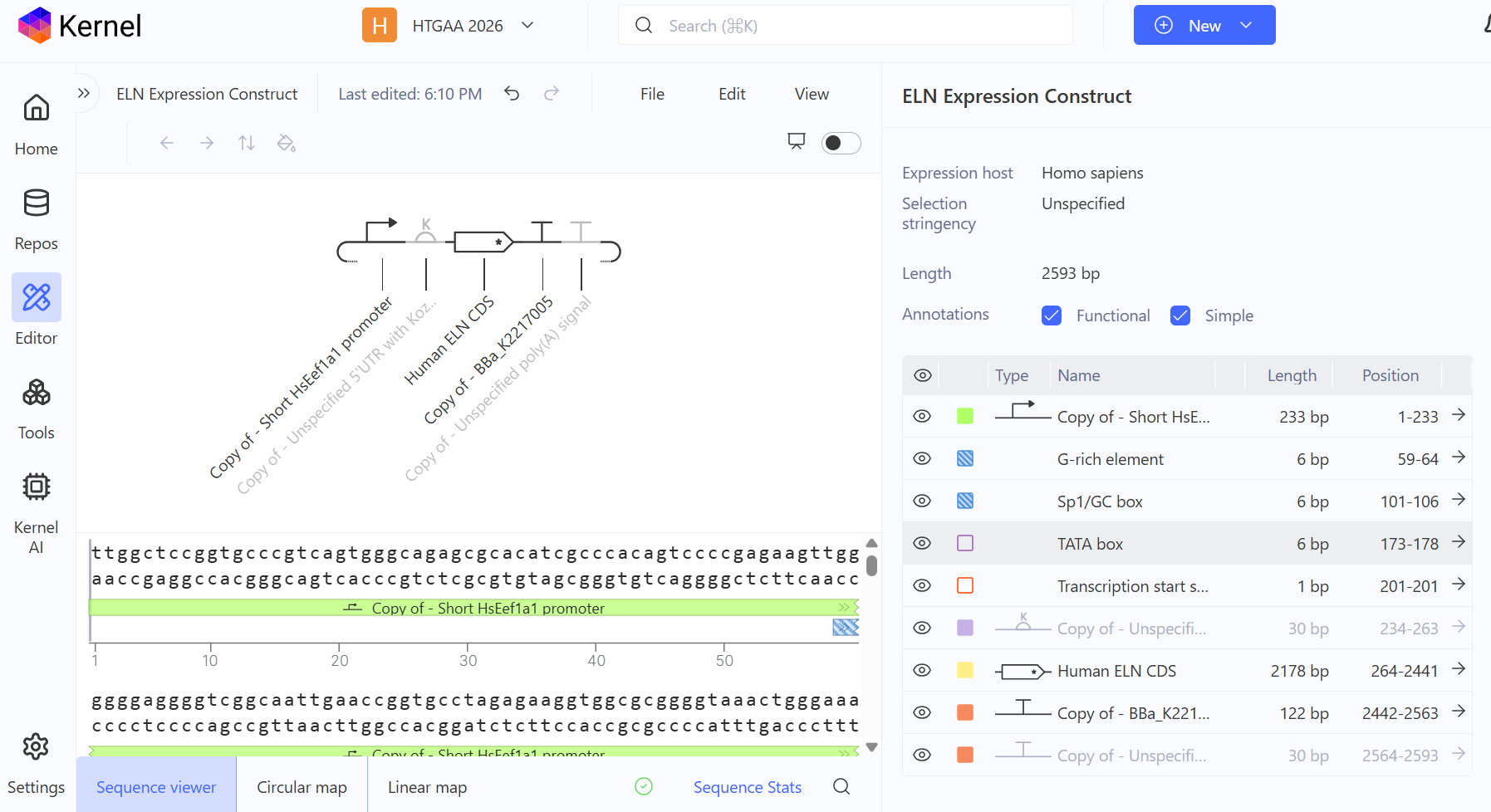
Figure 4. Final ELN Expression Construct assembled in Kernel. The map shows the BBa_J433123 / AmpR-ColE1 backbone together with the mammalian ELN expression cassette.
Sequence-level checks
Kernel lists the Human ELN sequence as a CDS with both a start and a stop. The coding sequence begins with an ATG start codon and terminates with a stop codon.
The CDS length is 2,178 bp, which is divisible by three:
2,178 / 3 = 726 codons
Because the CDS is annotated as including both the start and stop codons, this value should be interpreted as 726 codons including the terminal stop codon, rather than 726 amino acids.
I therefore do not use this calculation to claim that the Kernel sequence corresponds exactly to the canonical human elastin protein sequence. The external UniProt reference contains multiple ELN isoforms and reports a canonical human elastin sequence of 786 amino acids (UniProt, n.d.). The exact relationship between the Kernel CDS and a particular reference isoform should therefore be established by direct sequence alignment rather than inferred from CDS length alone.
The Kernel sequence also contains the N-terminal region of the ELN coding sequence, so no separate artificial secretion signal was added.
Part 4: Optimize and Quality-Check
4.1 Codon optimization
I applied Kernel’s Coding Sequence Optimization tool to the Human ELN CDS.
The final optimization run used:
- Host: Homo sapiens
- CO version: Simple v0.3
- SP strategy: Asimov standard
- Avoid CpG motifs: No
- Stop codons: TGA, TAA
The initial Human ELN CDS had a length of 2,178 bp, and the sequence returned by the optimization tool was also 2,178 bp.
I compared the nucleotide sequence entered into the optimization run with the sequence returned under optimized sequences. In this final run, the two sequences were identical.
Therefore, I cannot claim that Kernel introduced specific nucleotide substitutions during this final optimization run. The appropriate conclusion is that the optimization workflow was completed using the selected mammalian host and settings, but the final run produced no nucleotide-level change in the CDS.
Codon optimization can be useful because synonymous codons are not used at identical frequencies by all organisms, and sequence composition can influence aspects of heterologous expression. However, in this particular run there was no before-and-after nucleotide difference that could be attributed to codon optimization.
The ELN coding sequence also contains substantial repetitive sequence character. Tropoelastin has a compositionally distinctive sequence containing repeated regions enriched in residues such as glycine, proline, alanine, and valine (Wise & Weiss, 2009; Keeley, 2025). This repetitive character is relevant when considering subsequent DNA synthesis and sequence verification.
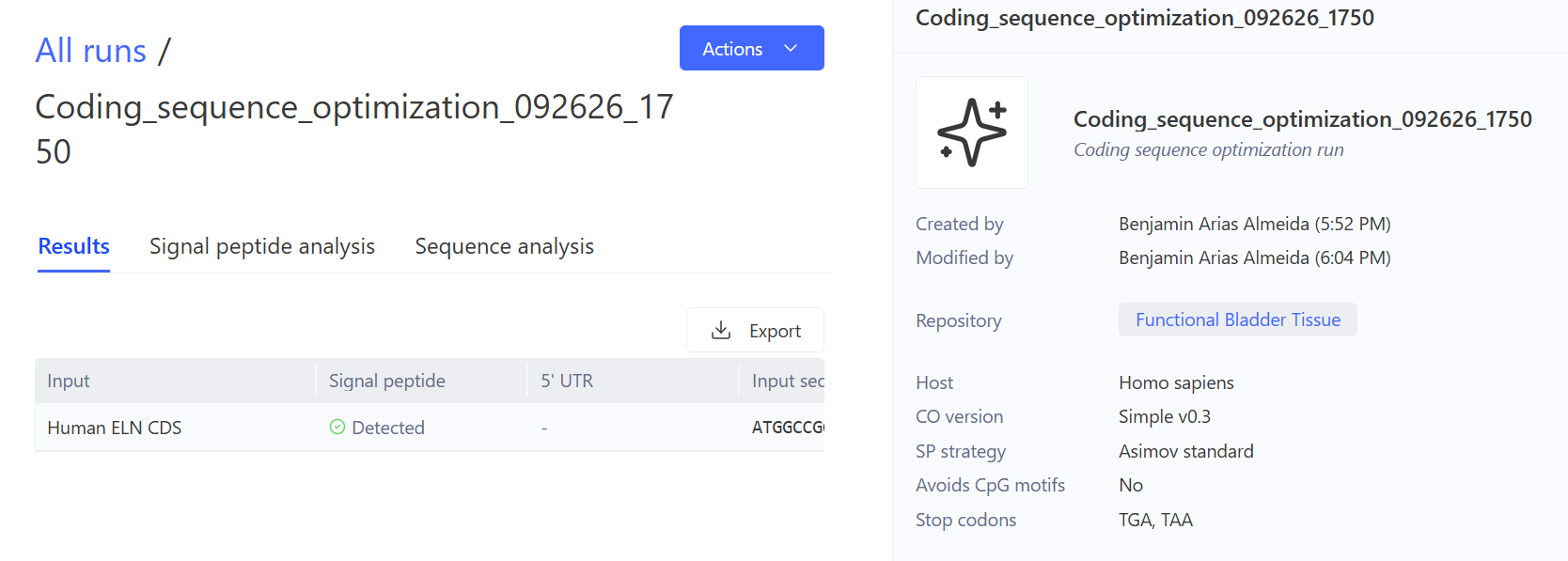
Figure 5. Kernel Coding Sequence Optimization settings used for the final ELN optimization run.
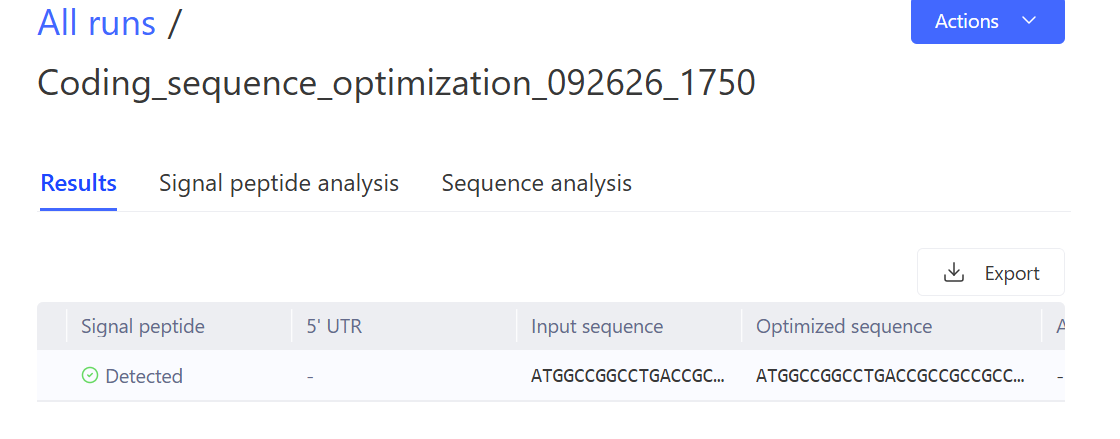
Figure 6. Kernel optimized-sequence output showing the final optimization result. The input and optimized sequences were identical in this final run.
4.2 BLAST / sequence search
I carried out a nucleotide sequence search using NCBI BLASTN against the core_nt database.
The query sequence used in the BLAST run, identified by RID BFXSCTE2014, had a length of 2,178 bp.
The reported result was:
No significant similarity found.
The correct interpretation of this result is that no significant nucleotide similarity was detected under the conditions of this particular search. It does not by itself demonstrate that the sequence is unrelated to human ELN.
This result differs from the earlier BLAST analysis, in which human ELN reference sequences including NM_000501.4 were identified.
One possible reason for the difference is that the sequences submitted in the two searches were not identical. A nucleotide sequence can also encode the same protein while differing at synonymous positions. Therefore, protein identity and nucleotide-level identity should not be treated as equivalent.
For this reason, I report the two BLAST observations separately rather than choosing one result as the definitive description of the sequence.
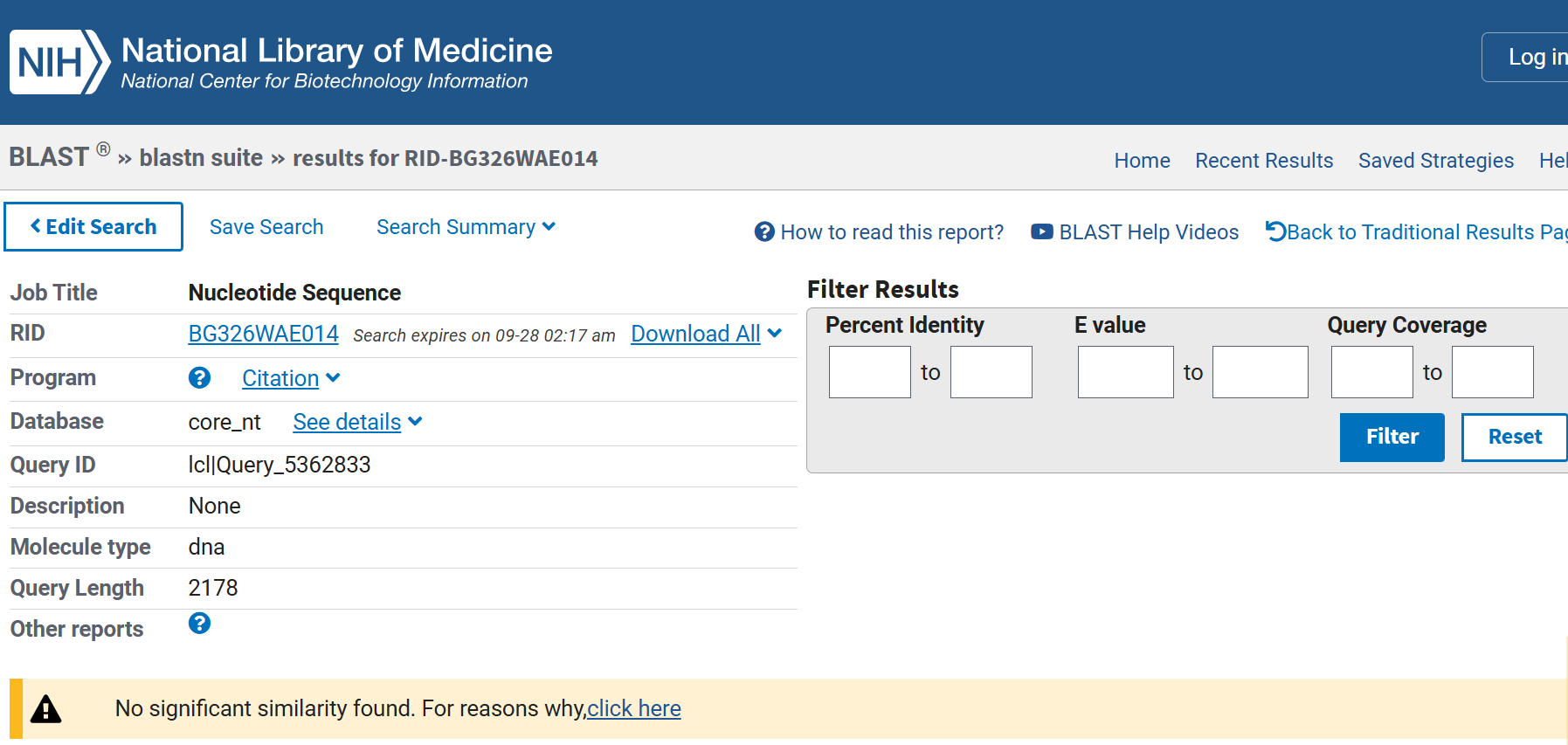
Figure 7. NCBI BLASTN result for the 2,178-bp sequence used in the later analysis, showing “No significant similarity found.”
4.3 Biosecurity sequence screen
I also analysed the sequence using the Biosecurity Sequence Scanner.
The reported result was:
No flagged sequences detected.
Thus, the submitted sequence did not produce a flagged result in this screening step.
This should be interpreted specifically as a screening result. It is not a general biological-safety certification and does not establish that a construct is universally safe. It only records the result produced by the screening system for the sequence that was submitted.
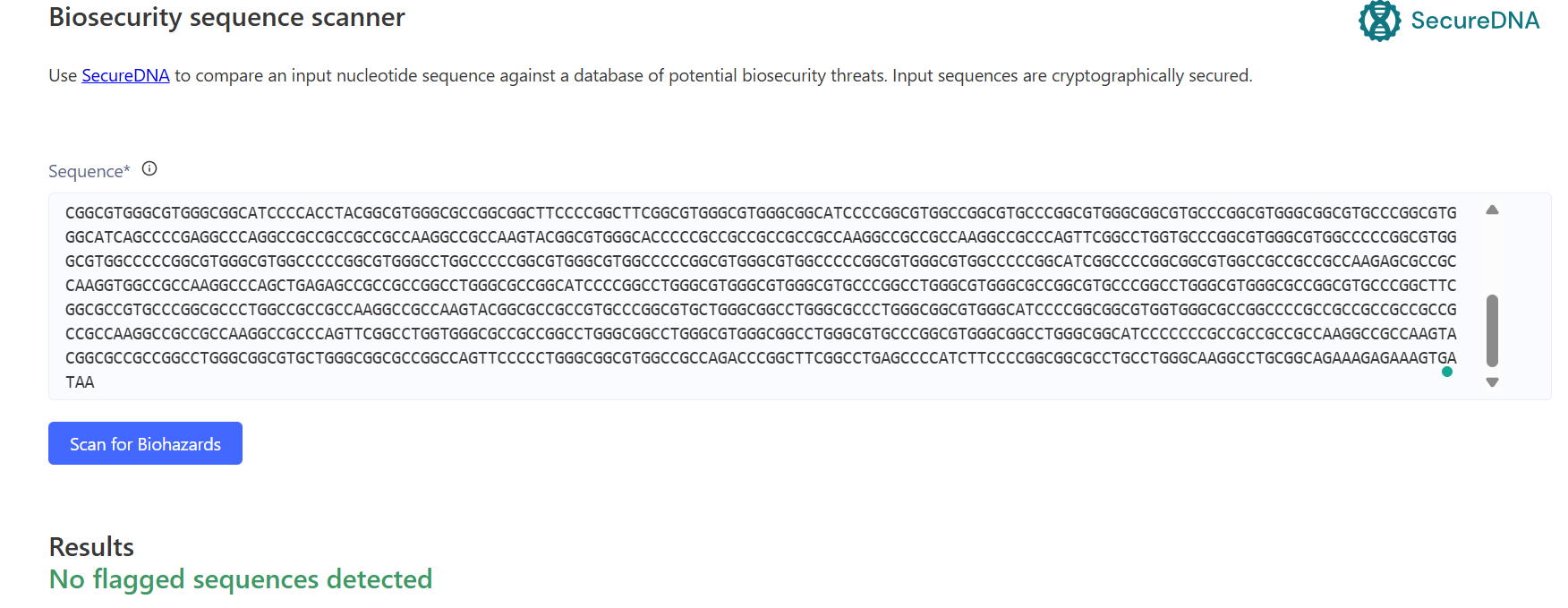
Figure 8. Biosecurity Sequence Scanner result for the submitted sequence, showing “No flagged sequences detected.”
Part 5: From Design to Build
5.1 How would I go from the design to an initial prototype?
The expression cassette is approximately 2.59 kb, with most of its length corresponding to the ELN CDS.
For an initial prototype, the designed DNA could be obtained as synthetic DNA and incorporated into the intended vector context. Because the ELN coding sequence has a repetitive sequence composition, synthesis fidelity and sequence verification would be important considerations.
Rather than assuming that one uninterrupted synthetic fragment is always optimal, the design could also be considered as a set of DNA fragments that can subsequently be assembled into the desired construct.
The HTBAA DNA-design workflow similarly distinguishes between a DNA insert/expression cassette and its plasmid backbone, emphasizing that the cassette can be designed separately before being placed into a vector context (HTGAA, 2026).
5.2 What does synthesis constrain?
The main sequence-level consideration for this design is the repetitive character of the ELN coding sequence.
Errors introduced during DNA synthesis are particularly important for a coding sequence because nucleotide changes can alter the encoded protein or disrupt the reading frame.
Carr et al. (2004) demonstrated a protein-mediated error-correction approach for synthetic DNA and showed that error correction can improve the fidelity of de novo DNA synthesis, including for constructs on the scale of a few kilobases.
The repetitive nature of the ELN sequence therefore makes synthesis fidelity and subsequent sequence verification important considerations for this design.
If synthesis of a single continuous fragment proved problematic, dividing the design into smaller fragments would provide an alternative assembly strategy. Gibson assembly, for example, was developed to join overlapping DNA fragments into larger constructs (Gibson et al., 2009).
5.3 Prototype versus scale
For the first prototype, the main objective would be to determine whether the designed expression cassette produces human tropoelastin and whether the protein reaches the extracellular environment.
At this stage, the objective is to evaluate the biological design rather than to optimize large-scale production.
For future scale-up, DNA manufacturing, assembly fidelity, sequence verification, reproducibility, and production throughput would become additional considerations. Kosuri et al. (2010) described a scalable gene-synthesis approach combining DNA microchips, selective amplification, gene assembly, and enzymatic error correction.
Thus, the priorities differ between the prototype and a potential scale-up stage: the prototype focuses on validating the biological concept, whereas later development would also require optimization of manufacturing and reproducibility.
Part 6: What Don’t You Know Yet?
Several important questions remain unresolved by the sequence design alone.
1. Will the construct produce sufficient amounts of tropoelastin?
The presence of a promoter, Kozak sequence, and ELN CDS does not establish the expression level that will actually be obtained in the intended bladder-cell context.
How I would test it:
I would evaluate ELN expression at the RNA level and measure the resulting tropoelastin protein.
This would distinguish successful transcription from successful protein production.
2. Will the native ELN targeting sequence result in efficient secretion?
The design does not contain an additional artificial secretion signal. The ELN coding sequence retains its native N-terminal region, and reference human elastin sequences contain an N-terminal signal peptide.
However, identifying a signal peptide from a sequence does not demonstrate how efficiently the resulting protein will be secreted in the intended cellular context.
How I would test it:
I would compare the amount of tropoelastin associated with the cells with the amount detected in the extracellular medium and verify the identity of the detected protein.
3. Will secreted tropoelastin contribute to a functional extracellular matrix?
Expression and secretion of tropoelastin do not by themselves demonstrate the formation of a functional elastic matrix.
Extracellular assembly, crosslinking, organization, and tissue-level properties are additional biological questions.
How I would test it:
I would characterize extracellular-matrix formation and evaluate structural and functional properties of the resulting tissue construct.
These experiments would distinguish between a construct that simply expresses ELN and one that contributes to the intended functional bladder-tissue phenotype.
AI Use Disclosure
I used ChatGPT as an AI-assisted learning and writing tool to help organize the report according to the HTBAA Homework #2 requirements, review the logic of the genetic design, identify inconsistencies in the written interpretation, and improve the presentation of sequence-analysis results.
Example prompt:
“Can you help me organize the report according to the HTBAA Homework #2 protocol?”
The final construct design, sequence information, Kernel settings, BLAST result, and Biosecurity Sequence Scanner result were checked against my actual Kernel outputs and sequence-analysis results.
References
Carr, P. A., Park, J. S., Lee, Y.-J., Yu, T., Zhang, S., & Jacobson, J. M. (2004). Protein-mediated error correction for de novo DNA synthesis. Nucleic Acids Research, 32(20), e162.
Gibson, D. G., Young, L., Chuang, R.-Y., Venter, J. C., Hutchison, C. A., III, & Smith, H. O. (2009). Enzymatic assembly of DNA molecules up to several hundred kilobases. Nature Methods, 6, 343–345.
Keeley, F. W. (2025). Evolutionary constraints on positional sequence, collective properties and sequence style of tropoelastin dictated by fundamental requirements for formation and function of the extracellular elastic matrix. Matrix Biology Plus, 28, 100183.
National Center for Biotechnology Information. (n.d.). Homo sapiens elastin (ELN), transcript variant 1, mRNA (NCBI Reference Sequence: NM_000501.4). NCBI Nucleotide.
Ozsvar, J., Yang, C., Cain, S. A., Baldock, C., Tarakanova, A., & Weiss, A. S. (2021). Tropoelastin and elastin assembly. Frontiers in Bioengineering and Biotechnology, 9, 643110.
UniProt Consortium. (n.d.). Elastin (ELN_HUMAN), UniProtKB P15502. UniProt.
Wise, S. G., & Weiss, A. S. (2009). Tropoelastin. International Journal of Biochemistry & Cell Biology, 41(3), 494–497.