Week 1 HW: Final Project Ideas
(1) What you would like to biomanufcture and why?
I would like to biomanufacture an evolved enzyme that has better fluorinase activity for the production of lenacapavir.
Lenacapavir is an effective drug used to treat HIV infection. One of its characteristics is that it has a lot of fluorine atoms. Incorporating them into the molecule is difficult, but having enzymes that can do that would make the process of producing lenacapavir much more efficient.
(2) What living system would you use?
I would use, at first, an initial panel of wild-type fluorinases, taking each gene from the bacteria that naturally produce them and later modifying bacteria to express them.
Later I would use tools like machine learning, directed evolution and AlphaFold to evolve the enzymes.
(3) How would you use automation?
I would use liquid-handling robots to isolate the genes encoding fluorinases, AI to make predictions about their structures, and, once I have the correct genes for the evolved enzyme, I would use automation to culture bacteria that express the enzyme.
(4) How much would you need to make, and how long would it take?
a. How much?
Lenacapavir maintenance requires about 1.854 g per patient per year, so 1,000 patients would require approximately 1.85 kg of lenacapavir, equivalent to about 1.91 mol. Assuming one fluorinated precursor molecule is needed per lenacapavir molecule and an overall biotransformation yield of 80%, approximately 2.4 mol of precursor would need to be processed.
If the evolved fluorinase reaches a target total turnover number (TTN) of 1,000, then about 1,9x10⁻³ mol of enzyme would be required. With a fluorinase molecular mass of approximately 32.3 kDa, this corresponds to about 62 g of enzyme, or roughly 75 g including a 20% operational margin. Published recombinant fluorinase expression in E. coli is around 50 mg/L, which would require roughly 2,100 L of culture after allowing for purification losses; if expression were optimized to an assumed 0.5 g/L, the required culture volume would fall to approximately 210–250 L.
b. How long?
For large-scale manufacture, assuming an optimized recombinant E. coli process producing about 0.5 g/L soluble fluorinase, a 250-L fed-batch fermentation could generate enough enzyme in a single batch. A reasonable estimate would be about 36–48 hours for cell growth, protein expression, harvest, lysis, and enzyme recovery.
For the fluorination reaction itself, if the evolved enzyme achieves a Kcat close to 1 min⁻¹ and a TTN of 1,000, the theoretical minimum reaction time would be around 17 hours under ideal saturated conditions. Allowing for substrate limitations, enzyme deactivation, mixing, and scale-up effects, I would estimate approximately 24 hours for the biotransformation, giving a total manufacturing time of about 3–4 days per production campaign once the strain and process are established.
The prototyping phase would take much longer because the enzyme first has to be evolved. Using automated liquid handling, microplate expression, LC-MS screening, and ML-guided library design, one directed-evolution round could take roughly 7–10 days. Three iterative rounds plus confirmation and kinetic characterization would reasonably require about 6–8 weeks before moving to the manufacturing stage.
(5) What I don’t know yet:
I’m not sure about the mechanism that the substrate undergoes, I’m not entirely sure how to evolve an enzyme or what kinds of biological constraints this project has.
Week 2 HW: DNA Design
Part 1: Define your expression target
What molecule are you expressing?
I’m expressing fluorinase. Ideally, I would be expressing an evolved version of this protein.
What is the sequence?
The sequence of the native/wild type protein can be found in this page from the ncbi:
https://www.ncbi.nlm.nih.gov/nuccore/HG428740.1?from=3343&to=4242
What host or chassis?
I’m going to use E.Coli, speciffically the BL21(DE3) strain, because this was the strain used to evolve fluorinase in [1]
Where does the product need to go?
The protein is localized in the cytoplasm, wich means that ther is no need to include a signal peptide in the fluorinase sequence.
Part 2: Design your genetic parts
Transcription start: T7 promoter
Operon: LacO, which allows me to control fluorinase expression using IPTG
Translation initiation: An RBS containing the Shine-Dalgrano sequence.
Coding sequence: Includes the start and stop codon.
Transcription stop: T7 terminator.
Vector context: I decided to include the following cassettes in the plasmid:
Ampiciline resistance.
Gentamicine resistance.
LacI (the repressor of the lac operon)
I opted for the pBR322 origin of replication, which is expected to mantein a low-to-medium plasmid copy number, since protein expression is already hihg due to the use of the T7 promoter.
Part 3: Assemble your construct
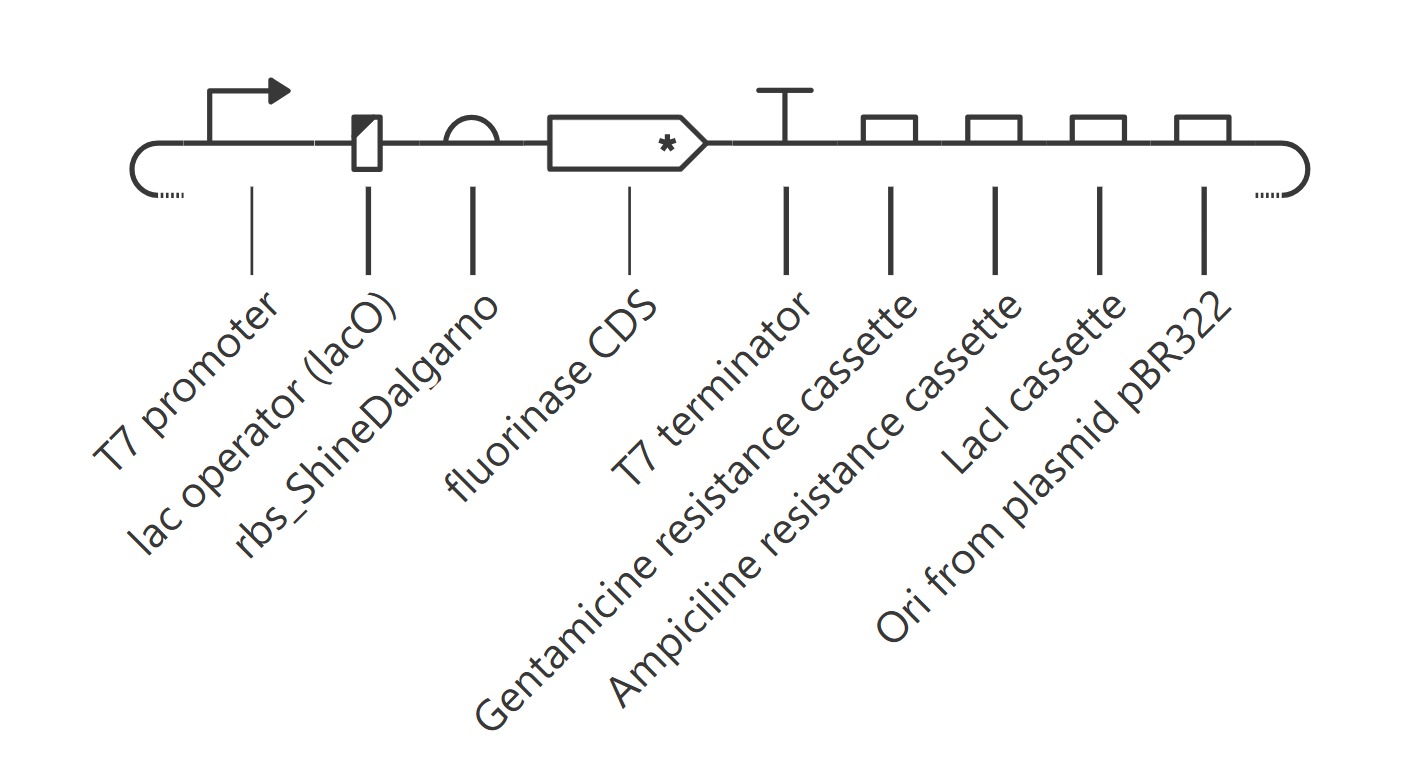
A plasmid expression vector based on the T7 system was designed for the heterologous production of the fluorinase enzyme in Escherichia coli BL21(DE3).
The vector contains a T7 promoter, a lac operator (lacO), and a Shine-Dalgarno sequence (RBS), which enable the regulation of fluorinase expression through IPTG induction. The coding sequence (CDS) of the enzyme is followed by a T7 transcription terminator.
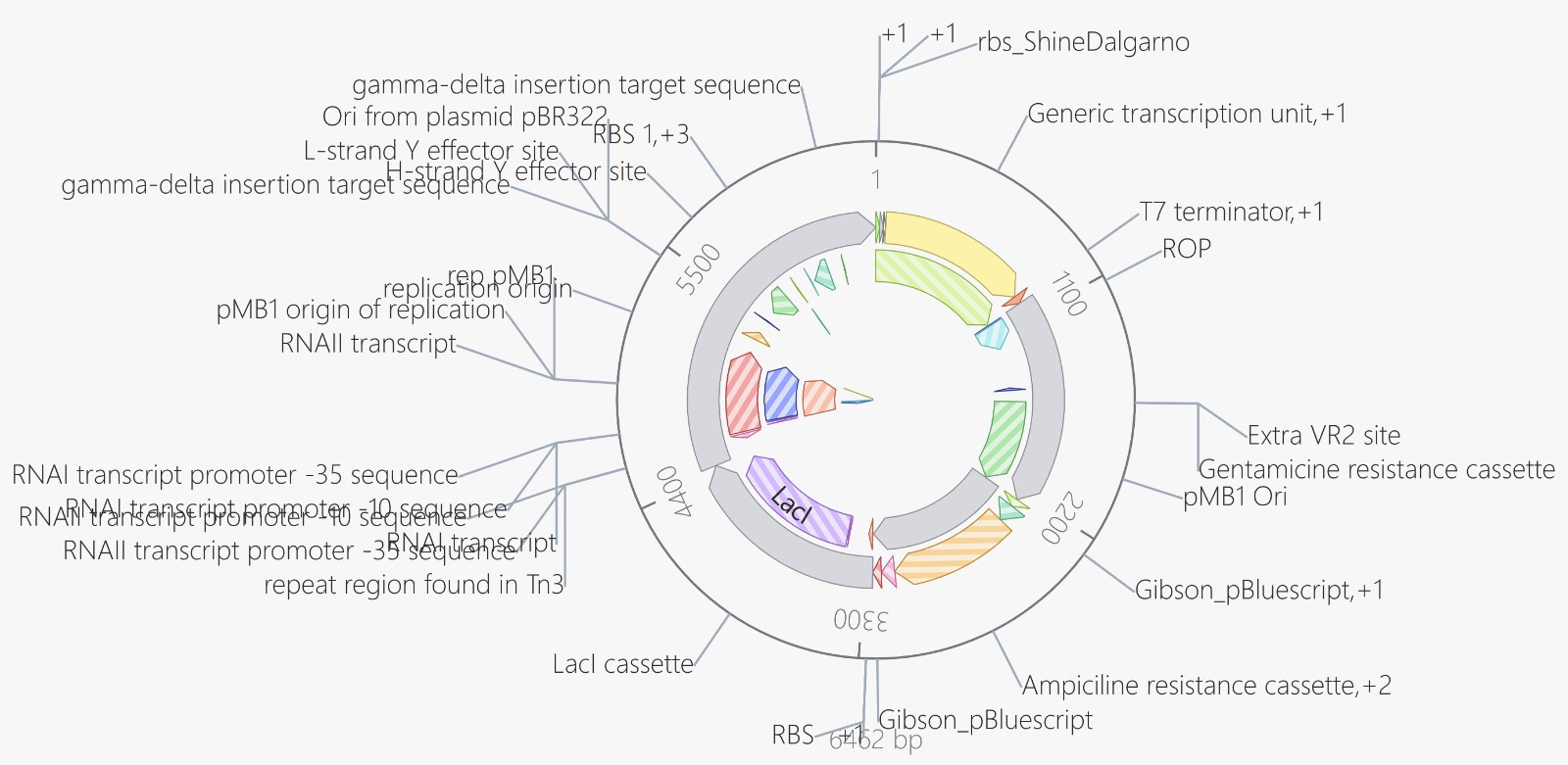
Additionally, the vector incorporates a replication origin belonging to the pMB1 family, allowing its maintenance in E. coli, and a LacI expression cassette responsible for repressing the system in the absence of the inducer. Finally, it contains ampicillin and gentamicin resistance cassettes, which serve as bacterial selectable markers.
Part4: Optimize and quality-check
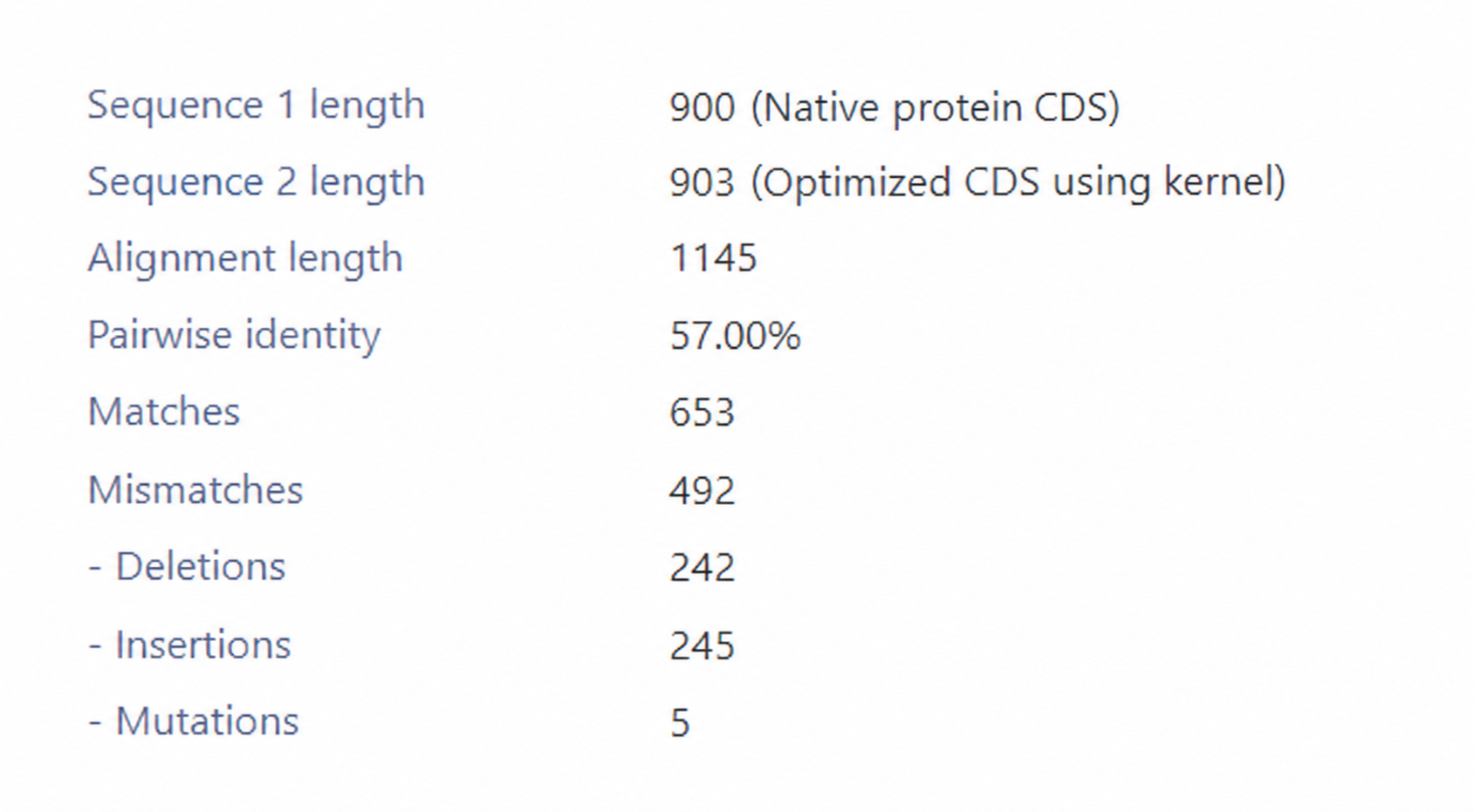
Codon optimization: The protein sequence output was identical before and after, but individual codons changed, plus, the program recommends and writes two stop codons.
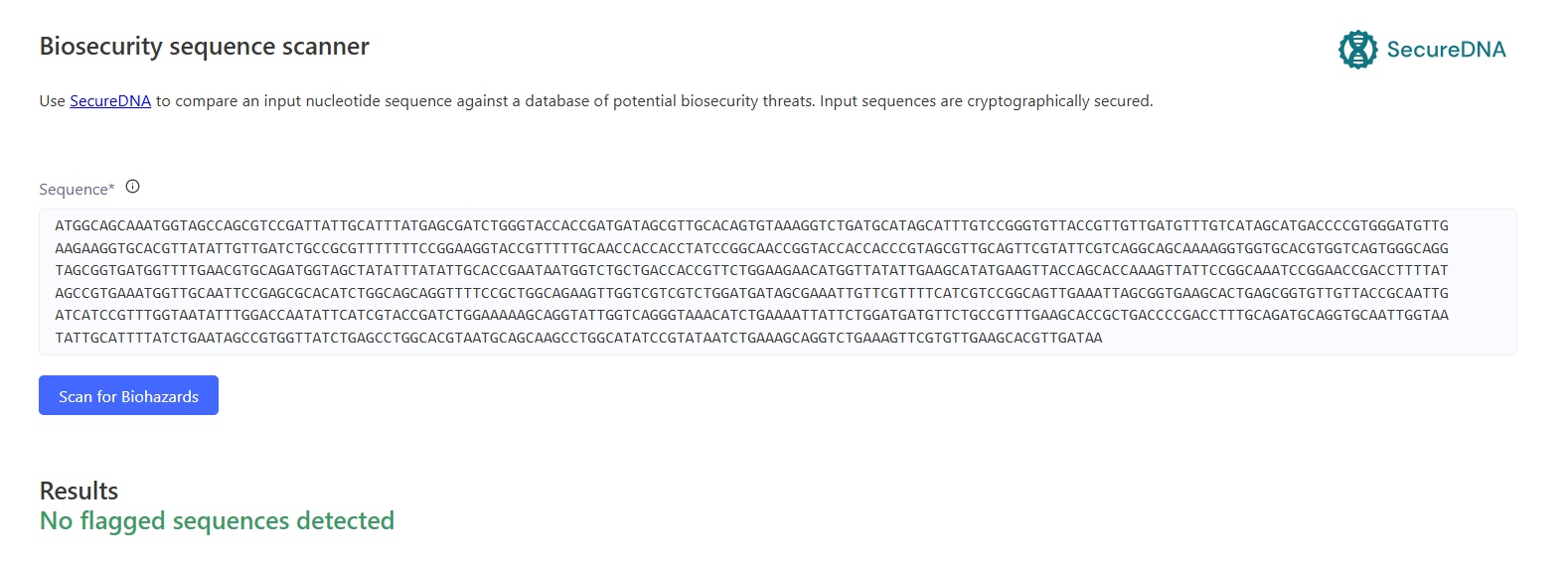
Safety screen: There was no flagged sequence.
Part 5: From desing to build.
How would you built it:
I would favor a modular construction strategy using synthetic DNA fragments and Gibson Assembly. Ideally, we would reuse an existing, sequence-verified plasmid backbone containing compatible replication and selection elements and synthesize only the fluorinase expression region.
Gibson et al. (2009) demonstrated that overlapping DNA molecules can be assembled through the combined action of an exonuclease, DNA polymerase, and DNA ligase, including the assembly of circular DNA molecules of comparable size.
What does synthesis constrain?:
The physical synthesis of our construct may be constrained by its length, GC-rich regions, repetitive sequences, homopolymers, and sequences capable of forming stable secondary structures. These features can interfere with DNA synthesis, amplification, and assembly.
The fluorinase CDS and the junctions between different plasmid components would therefore need to be analyzed for sequence complexity before construction. In addition, any synonymous sequence optimization should preserve the intended amino acid sequence and essential regulatory features.
Another major limitation is the accumulation of errors during DNA synthesis, including substitutions, insertions, and deletions. These errors become particularly important when constructing long DNA molecules.
Carr et al. (2004) demonstrated that mismatch-recognition methods based on MutS can substantially reduce synthesis errors. Tian et al. (2004) also demonstrated error reduction through hybridization-based selection of synthetic oligonucleotides.
We would address these limitations by selecting appropriate fragment boundaries, using sequence-verified synthetic DNA where possible, and verifying the final plasmid by sequencing. Enzymatic error correction could also be considered when assembling DNA from unverified oligonucleotide pools.
Prototype vs. scale:
For initial prototyping, our priority would be to construct a single sequence-verified plasmid and evaluate fluorinase expression and enzymatic activity in E. coli BL21(DE3).
For industrial-scale fluorinase production, the strategy would differ. Once a functional and genetically stable construct had been obtained, the verified production strain could be propagated for larger-scale cultivation. Repeated chemical synthesis of the entire plasmid would not be necessary for each production batch.
Part 6: What I don’t know yet.
I’m not sure whether my CDS will produce an mRNA that forms secondary structures that could interfere with translation.
I don’t know at what level protein expression becomes toxic to the host (E.Coli). That’s why I’m using a strain that carries lacI in it’s chromosome and a vector that also contains LacI.
References (excluding the assigned readings):
[1] https://doi.org/10.1002/anie.201606722