Week 2 HW: DNA Design
Part 1: Define your expression target
What molecule are you expressing?
I’m expressing fluorinase. Ideally, I would be expressing an evolved version of this protein.
What is the sequence?
The sequence of the native/wild type protein can be found in this page from the ncbi: https://www.ncbi.nlm.nih.gov/nuccore/HG428740.1?from=3343&to=4242
What host or chassis?
I’m going to use E.Coli, speciffically the BL21(DE3) strain, because this was the strain used to evolve fluorinase in [1]
Where does the product need to go?
The protein is localized in the cytoplasm, wich means that ther is no need to include a signal peptide in the fluorinase sequence.
Part 2: Design your genetic parts
Transcription start: T7 promoter
Operon: LacO, which allows me to control fluorinase expression using IPTG
Translation initiation: An RBS containing the Shine-Dalgrano sequence.
Coding sequence: Includes the start and stop codon.
Transcription stop: T7 terminator.
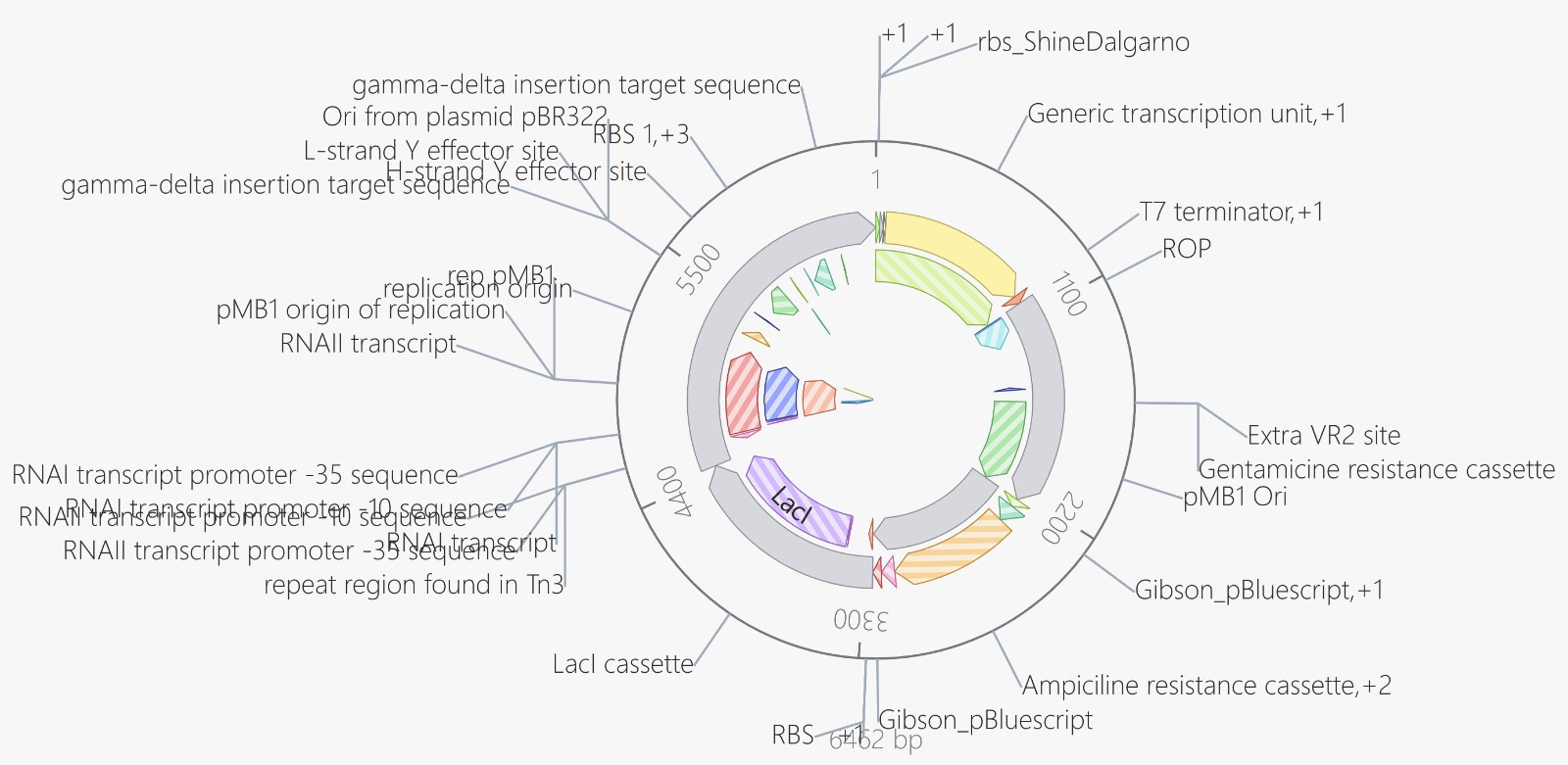
Vector context: I decided to include the following cassettes in the plasmid: Ampiciline resistance. Gentamicine resistance. LacI (the repressor of the lac operon) I opted for the pBR322 origin of replication, which is expected to mantein a low-to-medium plasmid copy number, since protein expression is already hihg due to the use of the T7 promoter.
Part 3: Assemble your construct
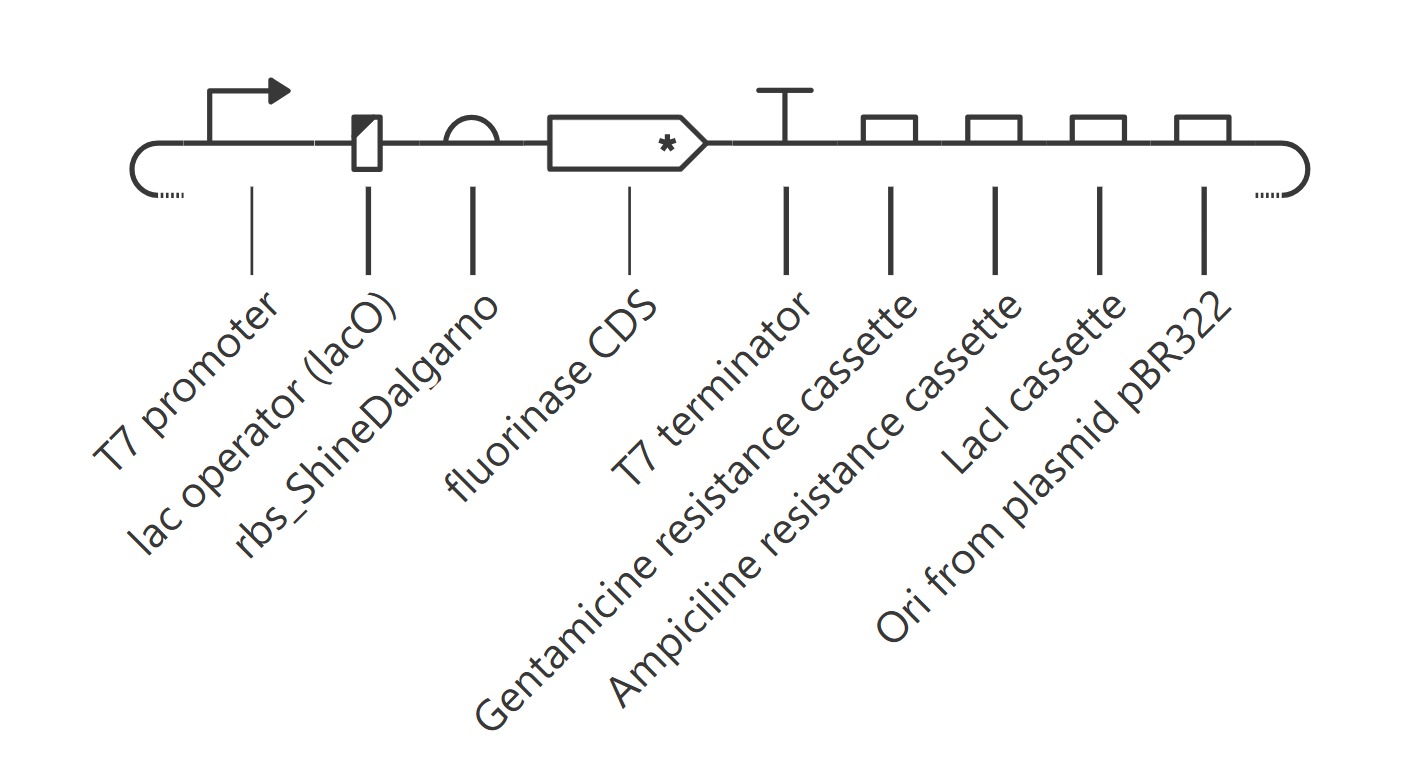
A plasmid expression vector based on the T7 system was designed for the heterologous production of the fluorinase enzyme in Escherichia coli BL21(DE3). The vector contains a T7 promoter, a lac operator (lacO), and a Shine-Dalgarno sequence (RBS), which enable the regulation of fluorinase expression through IPTG induction. The coding sequence (CDS) of the enzyme is followed by a T7 transcription terminator. Additionally, the vector incorporates a replication origin belonging to the pMB1 family, allowing its maintenance in E. coli, and a LacI expression cassette responsible for repressing the system in the absence of the inducer. Finally, it contains ampicillin and gentamicin resistance cassettes, which serve as bacterial selectable markers.
Part4: Optimize and quality-check
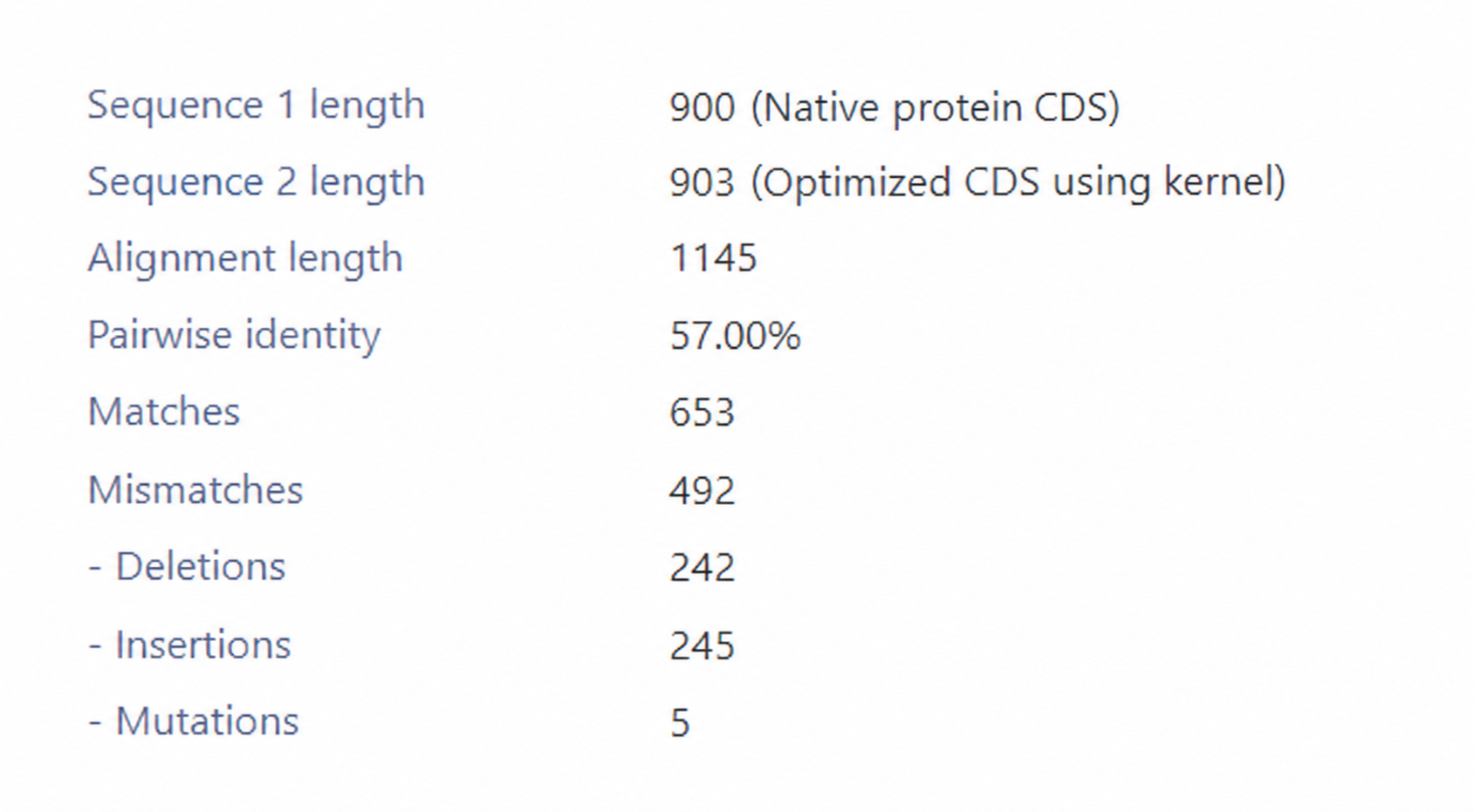
Codon optimization: The protein sequence output was identical before and after, but individual codons changed, plus, the program recommends and writes two stop codons.
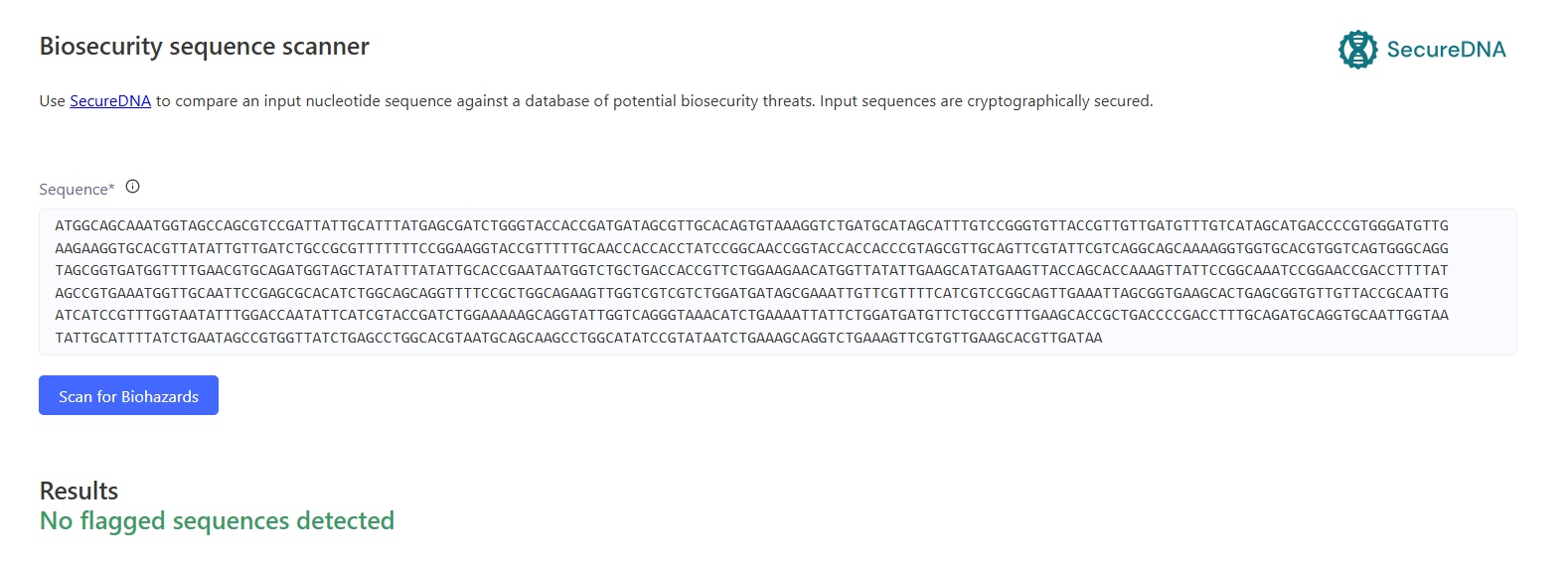
Safety screen: There was no flagged sequence.
Part 5: From desing to build.
How would you built it:
I would favor a modular construction strategy using synthetic DNA fragments and Gibson Assembly. Ideally, we would reuse an existing, sequence-verified plasmid backbone containing compatible replication and selection elements and synthesize only the fluorinase expression region. Gibson et al. (2009) demonstrated that overlapping DNA molecules can be assembled through the combined action of an exonuclease, DNA polymerase, and DNA ligase, including the assembly of circular DNA molecules of comparable size.
What does synthesis constrain?:
The physical synthesis of our construct may be constrained by its length, GC-rich regions, repetitive sequences, homopolymers, and sequences capable of forming stable secondary structures. These features can interfere with DNA synthesis, amplification, and assembly.
The fluorinase CDS and the junctions between different plasmid components would therefore need to be analyzed for sequence complexity before construction. In addition, any synonymous sequence optimization should preserve the intended amino acid sequence and essential regulatory features.
Another major limitation is the accumulation of errors during DNA synthesis, including substitutions, insertions, and deletions. These errors become particularly important when constructing long DNA molecules.
Carr et al. (2004) demonstrated that mismatch-recognition methods based on MutS can substantially reduce synthesis errors. Tian et al. (2004) also demonstrated error reduction through hybridization-based selection of synthetic oligonucleotides.
We would address these limitations by selecting appropriate fragment boundaries, using sequence-verified synthetic DNA where possible, and verifying the final plasmid by sequencing. Enzymatic error correction could also be considered when assembling DNA from unverified oligonucleotide pools.
Prototype vs. scale:
For initial prototyping, our priority would be to construct a single sequence-verified plasmid and evaluate fluorinase expression and enzymatic activity in E. coli BL21(DE3).
For industrial-scale fluorinase production, the strategy would differ. Once a functional and genetically stable construct had been obtained, the verified production strain could be propagated for larger-scale cultivation. Repeated chemical synthesis of the entire plasmid would not be necessary for each production batch.
Part 6: What I don’t know yet.
I’m not sure whether my CDS will produce an mRNA that forms secondary structures that could interfere with translation. I don’t know at what level protein expression becomes toxic to the host (E.Coli). That’s why I’m using a strain that carries lacI in it’s chromosome and a vector that also contains LacI.
References (excluding the assigned readings):