Week 2 HW: DNA Design
Repository name: Tan Rendy
Part 1: Define your expression target
What molecule are you expressing? A protein, an RNA, or an enzyme (or small set of enzymes) for a pathway. If your HW1 product is a material, food, or chemical, identify the protein(s) that produce it and design for those.
The target is poly(3-hydroxybutyrate) (PHB), a biodegradable bioplastic produced through a biosynthetic pathway. Since PHB is a polymer rather than a protein, the design will express three enzymes involved in its biosynthesis: phaA (β-ketothiolase), phaB (acetoacetyl-CoA reductase), and phaC (PHA synthase). These enzymes work together to convert acetyl-CoA into PHB. The goal is to increase PHB production in Halomonas bluephagenesis TD02.
What is the sequence? Give the protein or RNA sequence, or the specific gene, you will encode, and say where it comes from (a database accession such as UniProt or NCBI, a known part, or de novo). Cite it.
>NZ_GL949763.1:11969-13156 bktB [protein_accession=WP_009724931.1] [organism=Halomonas sp. TD01] [name=beta-ketothiolase BktB] [gene=bktB]
ATGCAACTGGATAGCGTTGTTATTGTAAGCGGTGCTCGCACCGCCATTGGTGGGTTTGGTGGGTCGCTCTCATCTTTCGCGCCCCATGAGTTAGGCACTATCACTGCCCAGGAAGCATTGCGCCGTGCGGGCATTGCTGGCGCTGATATCGACCACTCTGTGTATGGCCATATTATTACCACTAGCCCAGAAGATGCCTATCTTGCCCGTCATATCGCGTTGAGTGCGGGAGTGCCGAAAGAAGCGGGTGCCTTTAATGTTAACCGGTTATGTGGTTCTGGCGTGCAGGCGGTTATATCGGCGGCGCAGCAAATCGCTCTGGGCGACAGCCGCTTAGCACTAGCGGGTGGGGCTGAGTCGATGTCGCGAGGTGCTTATCTACTGCCGCCCCAAGCACGCAATGGGATACGCCTAGGCGATGCCAATATCCAGGATCTTACCCTTGGCATTCTTAGTGATCCATTTGGCAGCGGGCATATGGGGATGACCGCTGAAAATATCGCCAAGCAGTATGGCTTAAGCCGCGAGCAGCTAGATCAGTTTGCGGTGGATAGCCATCGTAAGGCGGCAAAAGCGATTGCAGAAGGGCGTTTTGACGAGCAAATCGTGCCTGTTGAAGTGACAAAAGGAAAACAGACGGTTTCCTTTGCCCGTGATGAGCATGTGCGTGAAGGCGTTGAGTTAAGTGATTTAGCACGGCTTAAGCCGGCCTTTAAAAAAGAAGGAATAGTAACGGCAGGAAACGCCTCTGGGATCAACGATGGCGCAGCGACCTTGGTGCTGGCGCATGCCGATGAAGCACAGCAGCGCAATTTAACGGTTAGGGCGCGACTTCGCGTGGCAGCCACCGCCGGTGTGGAGCCTTCGGTAATGGGGTTAGGACCAATCCCCGCGGTGAAACGCTGCCTCCAACAGGCAGGGCTGACGATCAATGATATTGATGTGATTGAGTCCAATGAAGCGTTCGCGGCACAAGCGATGGCCGTTGCCGATACGCTGGGCTTCCCATTGGAAAAACTGAACCCGAATGGTGGCGCCGTGGCGCTTGGTCATCCGGTAGGAGCGACCGGTGCCATCTTGATCCTAAAAGCCTTACACGAATTGGAGCGACGTCAGGGCCGCTATGGTTTGATCACGCTGTGTATTGGCGGTGGGCAGGGCATTGCGCTGTTAATAGAACGCGAATAA

>NZ_RRZC01000005.1:c191798-191052 phbB [protein_accession=WP_192527228.1] [organism=Halomonas citrativorans] [name=acetoacetyl-CoA reductase] [gene=phbB]
ATGGCCAATCAAGCCCCCGTCGCCTGGGTAACTGGTGGAACTGGTGGAATCGGCACGGCAATTTGTCGTTCGTTGGCAGATGCGGGTTATAGGGTAGTGGCAGGGTATAACAATCCCGAAAAAGCCAAAACCTGGCTGGACACCCAGCAAGCTGCCGGTTATCAGAAGATTACAACACTCGGGGTCGACCTGTCTGACCATAACGCATGCCTGGATGCTGCGCGTGAGATCCACGAACAGTACGGTCCAATTAGCGTGCTGGTAAACTGTGCTGGCATTACCCGCGACGGCACGATGAAAAAAATGGCCTACGAACAGTGGTATCAGGTCATCGATACCAACCTTAATAGCGTCTTTAATACTTGCCGTAGCGTGATCGAGATGATGCTCGAAAATGGCTATGGTCGAATTATTAATATCTCCTCCATCAATGGCCGTAAAGGGCAGTTTGGCCAGGTTAACTACGCTGCCGCTAAAGCCGGTATGCACGGCTTAACCATGTCGCTGGCGCAGGAAACGGCCACCAAAGGCATTACGGTAAATACCGTATCGCCTGGCTATATTGCCACCGACATGATTATGAAAATTCCGGAGTCAGTGCGTGAAGCCATTCGCGAAACGATTCCGGTAAAACGCTACGGTACGCCGGAAGAAATTGGTCGATTGGTGACGTTCCTTGCCGATAAAGAGTCTGGTTTTATTACCGGCGCCAACATCGATATTAACGGTGGGCAATTTATGGGCTAG

>NZ_CP045399.1:c2855814-2853985 phaC [protein_accession=WP_152479541.1] [organism=Halomonas sp. THAF12] [name=class I poly(R)-hydroxyalkanoic acid synthase] [gene=phaC]
ATGCAGCCAGGGAGTGAAGCATTCTCGCAGGCCGAACTGGAGGCCTGGAGCGCCCAGATCCAGGCGATCGGCGAGGAGTACAAGGCCCTCCTGGAGGACCTGATTCCGCGGATGGTGCCGGATGACGCGGCCCAGTCCGTCCATGCCCACATGCGCGAGGCCTTCCAGGCCGGGGCGGAATCGCTGATGCAGGATCCGACCCTGCTGTGGGAGACCCAGGCGCGCCTGGTGCAGGACCAGTTCCAGCTGTGGCAGAACGGCATGCGCGCCCTGGCCGGCGAGGCCGTGGAGCCGCTGATCACGCCGGCCAGGGGGGATCGCCGCTTCCAGGACGAGGCCTGGACCAGCGACCCGCACTATCTCGCCATCATGCAGCAGTACCTGCTGTTCTCGCGCTGGGTCGAGGAGCTGATCGAGCGCCTCGACGGGCTGTCCGCCGAGCAGAAACGCAACCTGGCCTTCTACGCGCGCCAGCTGGTCAACGCCATGGCGCCGACCAACTTCGTCTCCACCAATCCCGAGGTCATGCGCCGCACCATCGAGACCCGCGGCGAGAATCTGGTCGAGGGGCTGGCCCGGCTGCGCCAGGACCTGCTGGCCTCCGCCGAGGGGCTGAATGTCACCATGACCGACCGCAGCGCCTTCACCGTGGGCGAGAACATCGCCGTCACGCCGGGCTCGGTGGTGTACGAGAACGAGCTGATCCAGCTGATCCAGTACGCGCCGACCACCGAGCAGACGTTCAAGACGCCGCTGTTGATCGTGCCGCCTTGGATCAACAAGTACTACATCCTCGACCTTCGCCAGGACAACTCCCTGGTCAAGTGGCTGGTGGACCAGGGCCACACCGTGTTCCTGATCTCGTGGCGCAATCCCGGCCCCGAACAGGGTGACTTGACCTGGGCCGACTACATGCAGCTGGGCCCGATCAGCGCCATGGAGGCGATCGAGCAGGCTACCGGCGAGAAGTCGGTCAACCTGCTGAGCTATTGCGTCGGCGGCACCCTGGCCGGCTCCACGGTGGCCTACCTGACCAGCACCCGGCGCGGGCGCAAGGTCAAGTCGGCGACCTACATGACCAGCCTGTGGGACTTCCGCGATCCCGGCGAGATCGGTGTCTTCCTCGGCGAGCCGGTGCTCAGCGGCATCGAGGCCAAGCTCGAGCAGGACGGCTACCTGGACGGGCGCATCATGGCCTACTCCTTCAACCTGCTGCGCGAGAACGACCTGTTCTGGTCCTTCTACATCAACAACTACCTCAAGGGCGACATTCCGGCGCCCTTCGACCTGCTGTACTGGAACACCGACGGCACCAACCTGCCGGCGGCCACCCATGGCTGGTATCTGCGCCATCTCTATGCCGAGAACCGCCTGGTCGAGCCCGGCGGCATCGAGCTCGATGGCGTGAAGATCGACCTGCGCAAGATCTCGGTGCCGAGCTACTTCGTCTCCACCCGCGACGATCACATCGCCAAGTGGAACAGCACCTACTACGGGGCCCTGCTGCCCAAGGGGCCGGTGAAGTTCGTGCTGGGCGGGTCCGGCCATATCGCCGGTATCGTCAATCCGCCGCACAAGAACAAGTACGGCTTCTGGACCAACGACGCGCTGCCGCCGACCCCGGAGGAGTGGCTGGAAGGGGCCGAGGCCCACGAAGGCTCGTGGTGGCCGAACTGGCAGGCCTGGATGACCGACAACGGCTACGCCGACGCCGAGAAGATGGTGCCGGCGCGCCAGCCGGGCGACGGCGAGCTGGATATCCTCGAGCCGGCGCCCGGGCGCTTCGTGCGCATGACCATCCCCGAGGTGCTGGGCGAGCCCCAGGCCTGA
What host or chassis? The living system from HW1, for example E. coli, S. cerevisiae, CHO or another mammalian line, or a cell-free system. Your host drives almost every part choice that follows.
The primary production chassis is Halomonas TD02, a derivative of wild-type Halomonas TD01 with deletions in the restriction-modification system genes hsdRMS, re1, and re2. These deletions were introduced to reduce restriction of incoming foreign DNA and improve genetic accessibility. The strain is intended to serve as the host for the PHB-production pathway. Escherichia coli S17-1 λpir will serve as the conjugation donor, carrying the vector for transfer into the Halomonas recipient.
Where does the product need to go? Cytoplasm, secreted, membrane, or a compartment? This decides whether you need a signal peptide or targeting sequence.
The PhaA, PhaB, and PhaC enzymes will function in the cytoplasm of Halomonas TD02. PHB is synthesized intracellularly and accumulates as polymer granules within the bacterial cells. Therefore, the construct does not require a secretion signal peptide or a membrane-targeting sequence.
Part 2: Design your genetic parts
| Element | Choice | Source | Reasoning |
|---|---|---|---|
| Promoter | H. bluephagenesis TD01 porin promoter (Pporin) | iGEM Registry BBa_K5226030 | A host-derived promoter with a basis in Halomonas expression systems. It has been used in previous research for genetic engineering purposes. |
| Ribosome-binding site (RBS) | BBa_B0034 (RBS 034) | iGEM Registry BBa_B0034 (Elowitz 1999) | A commonly used synthetic RBS intended to promote translation initiation. |
| Gene of interest 1 | phaA | NZ_OV350343 | Encodes β-ketothiolase, which catalyzes the condensation of acetyl-CoA to form acetoacetyl-CoA, an early step in PHB biosynthesis. |
| Gene of interest 2 | phaB | WP_192527228.1 | Encodes acetoacetyl-CoA reductase, which converts acetoacetyl-CoA to 3-hydroxybutyryl-CoA, a PHB precursor. |
| Gene of interest 3 | phaC | WP_152479541.1 | Encodes PHA synthase, which polymerizes 3-hydroxybutyryl-CoA into PHB. |
| Transcription terminator | A02 (H. bluephagenesis TD01) | ON646278.1 | A characterized terminator reported to have approximately 97.6% termination efficiency in its tested context. |
| Backbone | pSEVA341 | JX560334.1 | Reported as high copy number vector and carrying a chloramphenicol-resistance (cat) marker for selection. Its origin of transfer supports conjugative DNA delivery. |
Part 3: Assemble your construct

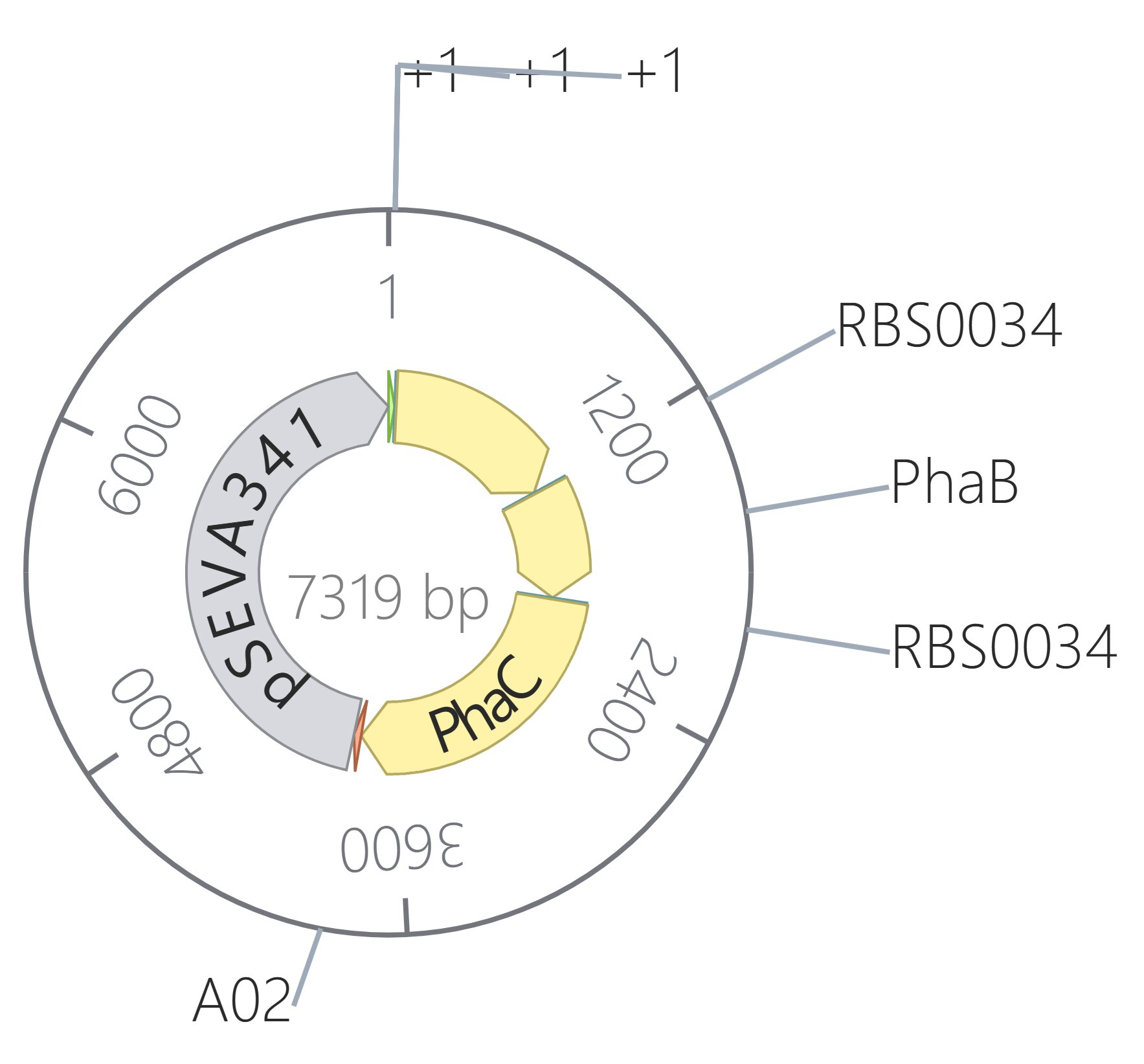
The TD01 porin promoter drives transcription, BBa_B0034 RBS elements support translation initiation for PhaA, PhaB, and PhaC, and the native TD01 A02 terminator limits transcriptional read-through. The pSEVA341 vector provides the genetic backbone, including a chloramphenicol-resistance marker and transfer element for conjugative delivery using _E. col_i S17-1 λpir as the donor.
Part 4: Optimize and quality-check
Codon-optimize your CDS for your chosen host. Compare before and after: what changed, and why does codon usage matter for expression in this organism? Note any constraints you applied (e.g. avoiding certain restriction sites, GC content).
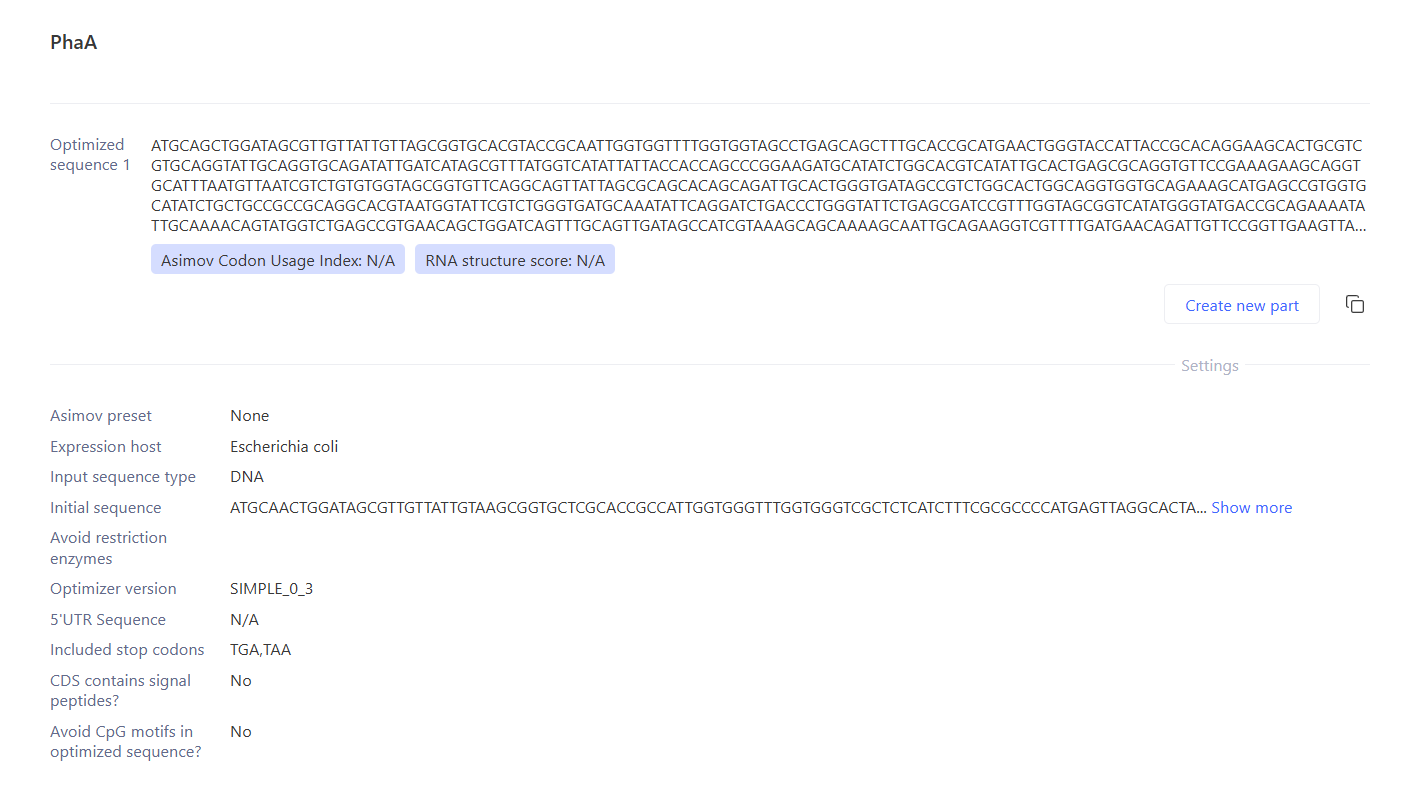
The optimized sequence produced by the software may be considered suitable for expression in E. coli because it was generated according to the specified optimization parameters, including the selected E. coli host strategy and avoidance of CpG motifs. Compared with the original Halomonas coding sequence, the optimized version is intended to improve compatibility with the target host while maintaining the required coding information.
Search your sequence (BLAST / sequence search) against known sequences. Is your CDS what you think it is? Is it identical to a natural gene, or novel? What is the closest match?
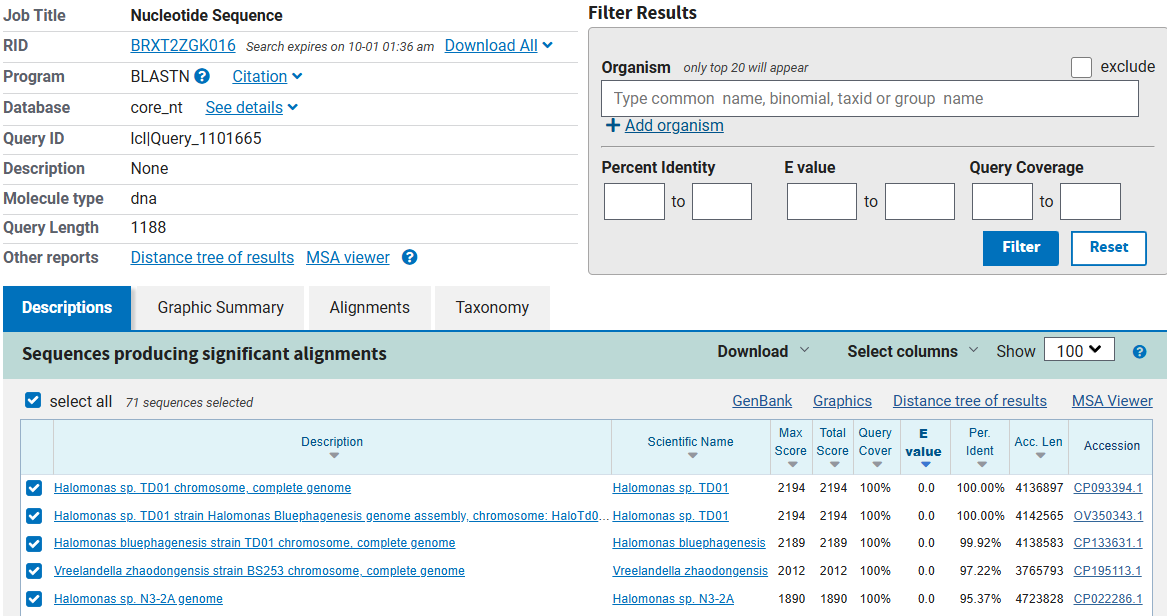
The BLAST result for phaA shows that the selected coding sequence matches a naturally occurring gene from Halomonas listed in the database. The result shows 100% query coverage, 100% sequence identity, and an E-value of 0, indicating that the entire query sequence aligns with the reference sequence and that the aligned nucleotides are identical. These results support the identification of the selected sequence as the native phaA gene. The BLAST result for phaB and phaC showed the same outcome.
Run the safety screen on your construct. Summarize what it checks for and what it reports. If it flags something, explain whether it is expected for your design and how you would respond.
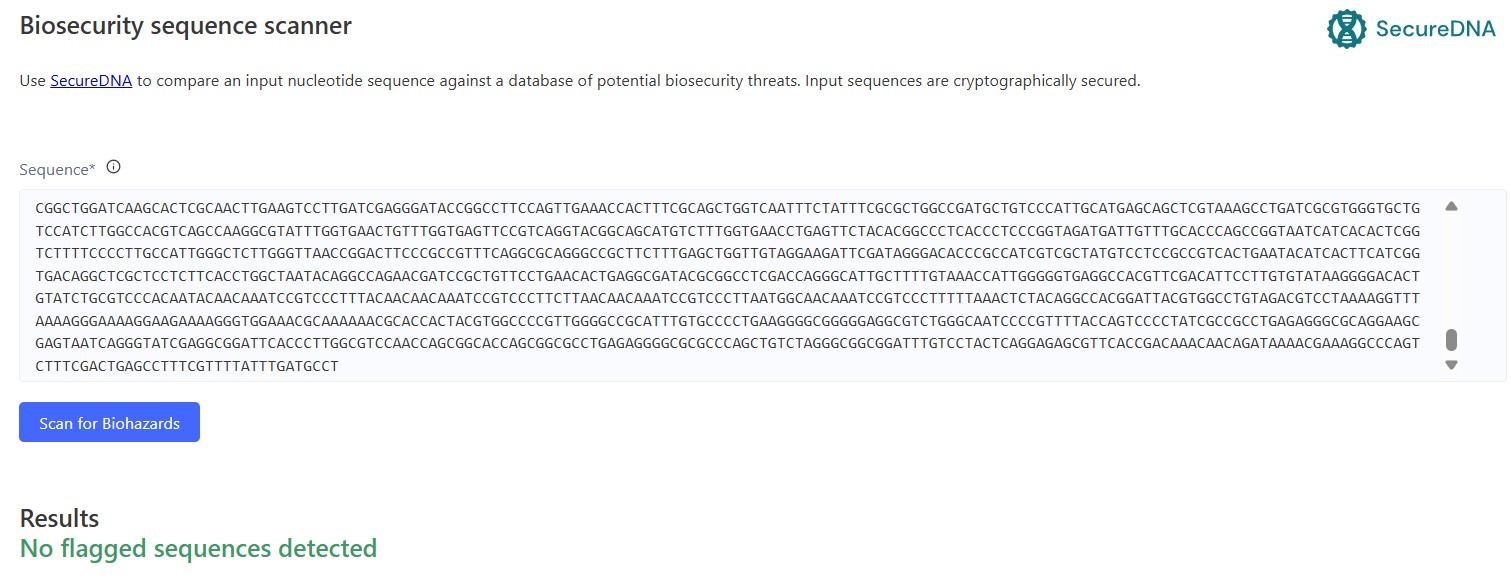
The biosecurity screening result indicated that no flagged sequences were detected. This means that the software did not identify any sequence features that met its predefined criteria for biosecurity concern during the screening process.
Part 5: From design to build
How would you build it? Would you order it as synthetic DNA, assemble it from smaller fragments (e.g. Gibson assembly), or build it from a pool of oligos synthesized on a chip? Justify your choice given your construct’s length and complexity. What does synthesis constrain? Synthesis has error rates and struggles with certain sequences. Does your design contain anything hard to synthesize? How would error correction or fragment-based assembly change your approach? Prototype vs. scale. Mirroring HW1: the way you’d build one construct to test your idea may differ from how you’d produce DNA at the scale your product needs. Briefly describe both if they differ.
For the initial construct, I would first consider ordering the sequence as synthetic DNA because it provides a relatively straightforward way to obtain the designed construct for testing. However, I have not yet fully evaluated the sequence for synthesis constraints, so this choice is still preliminary. If the analysis shows that the construct is difficult (synthesis errors, repetitive regions) or expensive to synthesize as one piece, I would consider dividing it into smaller fragments and assembling them using Gibson assembly. If Gibson assembly is more cost-effective and the assembly can be performed reliably, it could also be a practical option even if it requires more steps. Therefore, the final construction strategy would depend on the construct length, sequence complexity, synthesis feasibility, cost, and the number of assembly steps required.
For the prototype stage, obtaining a single commercially synthesized construct would be the simplest approach for testing the design. If the design were eventually required at larger scale, the production strategy could be changed to a more standardized and cost-efficient DNA manufacturing process. Thus, the method used to validate one construct does not necessarily have to be the same method used for larger-scale production.
Part 6: What don’t you know yet?
The expression levels of the three genes arranged in a polycistronic conformation are still unknown, and one gene may be expressed at a different level from the others. Additionally, combining the promoter, multiple RBSs, three coding sequences, terminator, and vector creates a relatively large construct. The native sequences may contain features that make DNA synthesis or assembly more difficult, even though they are biologically appropriate for TD02. Another uncertainty is whether the sequence would be easy and cost-effective to synthesize. The synthesis constraints have not been fully evaluated yet, so it is not clear whether direct synthesis would be practical. A synthesis-feasibility check would help identify any difficult regions or potential synthesis problems. If direct synthesis were not practical, the sequence could instead be divided into smaller fragments and assembled using a method such as Gibson assembly.
AI Use Disclosure
ChatGPT (OpenAI was used to help me understand different parts and kinds of the genetic construct. I also used it to clarify concepts such as polycistronic gene expression, codon optimization, and DNA synthesis scalability.
References
Li, T., Li, T., Ji, W., Wang, Q., Zhang, H., Chen, G., Lou, C., & Ouyang, Q. (2015). Engineering of core promoter regions enables the construction of constitutive and inducible promoters in Halomonas sp. Biotechnology Journal, 11(2), 219–227. https://doi.org/10.1002/biot.201400828
Tan, D., Wu, Q., Chen, J., & Chen, G. (2014). Engineering Halomonas TD01 for the low-cost production of polyhydroxyalkanoates. Metabolic Engineering, 26, 34–47. https://doi.org/10.1016/j.ymben.2014.09.001
Ye, J., & Chen, G. (2021). Halomonasas a chassis. Essays in Biochemistry, 65(2), 393–403. https://doi.org/10.1042/ebc20200159
Xu, M., Chang, Y., Zhang, Y., Wang, W., Hong, J., Zhao, J., Lu, X., & Tan, D. (2022). Development and Application of Transcription Terminators for Polyhydroxylkanoates Production in Halophilic Halomonas bluephagenesis TD01. Frontiers in Microbiology, 13, 941306. https://doi.org/10.3389/fmicb.2022.941306